

Table of Contents
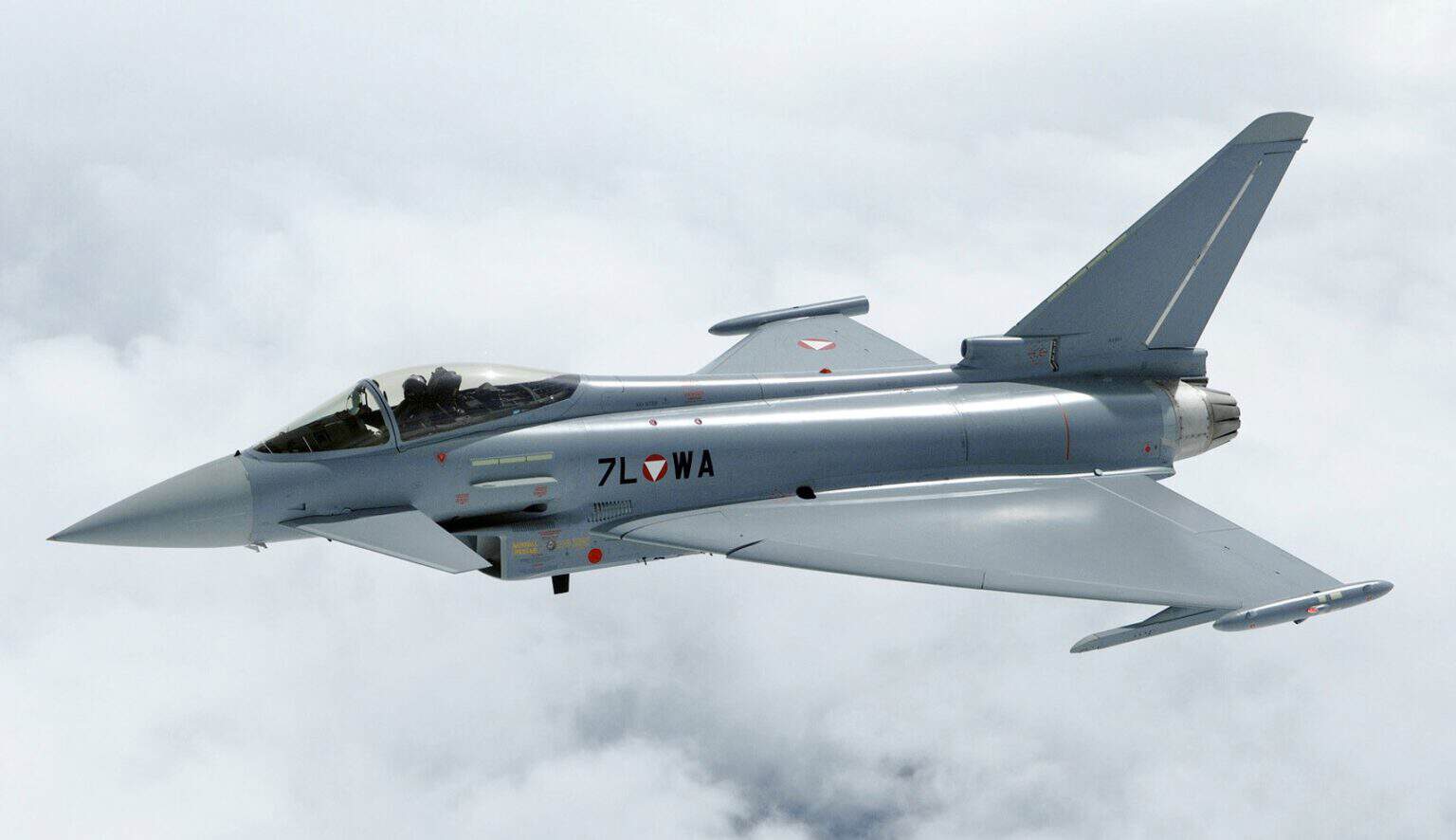
The Austrian Air Force’s only fighter is the Eurofighter Typhoon. It has 15, all single-seaters delivered between 2007 and 2009, and they fly from Zeltweg in Styria to police the airspace of a country that is neutral by law.
The jets have to retire between 2032 and 2037. The air force wants 36 new ones, but Finance Minister Markus Marterbauer said in March 2026 he saw no room for purchases beyond what had already been agreed, and no successor had been chosen as of November 2026.
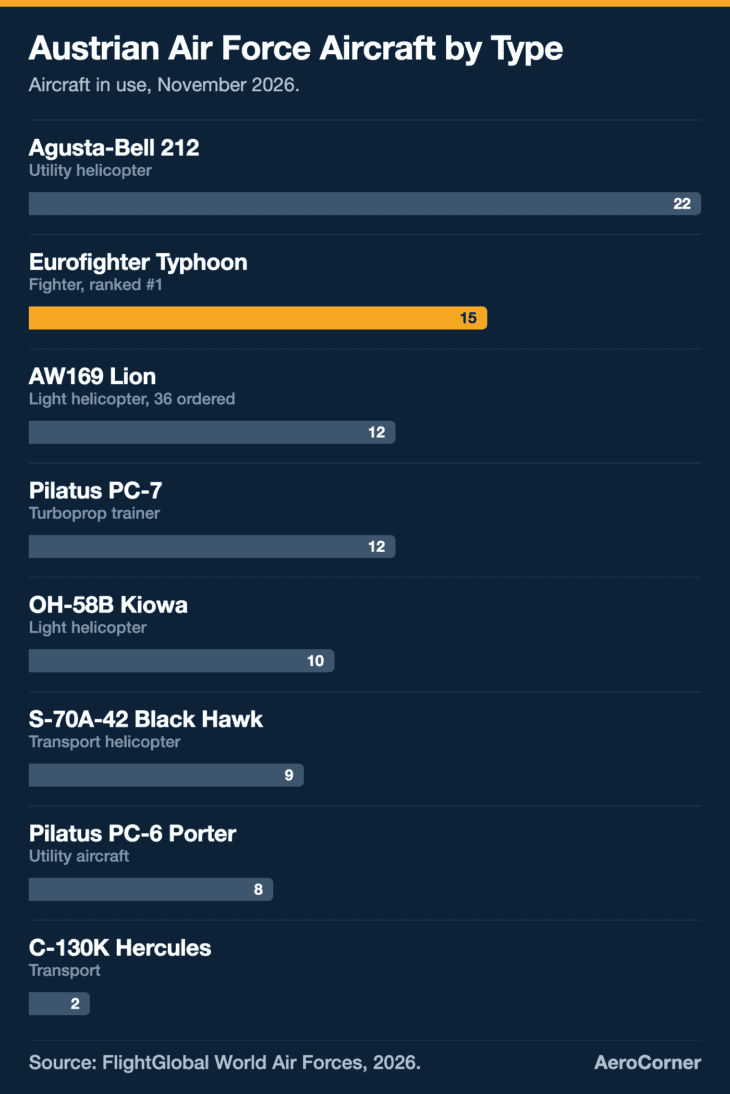
This guide ranks every aircraft type the Österreichische Luftstreitkräfte flies by its weight in Austrian air power, as of November 2026. Counts come from FlightGlobal’s World Air Forces 2026, which lists 90 aircraft in use, updated where a newer delivery or retirement is on record.
| Rank | Aircraft | Role | In use | Status |
|---|---|---|---|---|
| 1 | Eurofighter Typhoon | Fighter, air policing | 15 | To retire 2032 to 2037, successor not chosen |
| 2 | S-70A-42 Black Hawk | Medium transport helicopter | 9 | 15 more on order (12 UH-60M, 3 UH-60L) |
| 3 | C-130K Hercules | Airlift | 2 | One retired November 2025; 4 C-390s due from 2028 |
| 4 | AW169 Lion | Light utility helicopter | 12 | 36 ordered, all due by the end of 2028 |
| 5 | Agusta-Bell 212 | Utility helicopter | 22 | To retire toward the end of the decade |
| 6 | OH-58B Kiowa | Light helicopter | 10 | To retire in 2028 |
| 7 | Pilatus PC-6 Porter | Short-takeoff utility aircraft | 8 | In service |
| 8 | Pilatus PC-7 and DA40 NG | Trainers | 12 PC-7, 4 DA40 NG | No jet trainer since the Saab 105 retired |
| Next | Leonardo M-346 F Block 20 | Light fighter and jet trainer | 0 (12 contracted) | First delivery 2028 |
How this ranking works
Aircraft are ranked by their weight in Austrian air power in November 2026: the fighter first, then helicopters and transports by how much of the air force’s work they carry, then trainers. Counts come from FlightGlobal’s World Air Forces 2026 directory, which lists only aircraft in day-to-day use, drawn on October 1, 2025. Listed is not the same as flyable: Austria does not publish readiness figures. The M-346 is covered after the Eurofighter but not ranked, because none has been delivered.
1. Eurofighter Typhoon: Austria’s Only Fighter
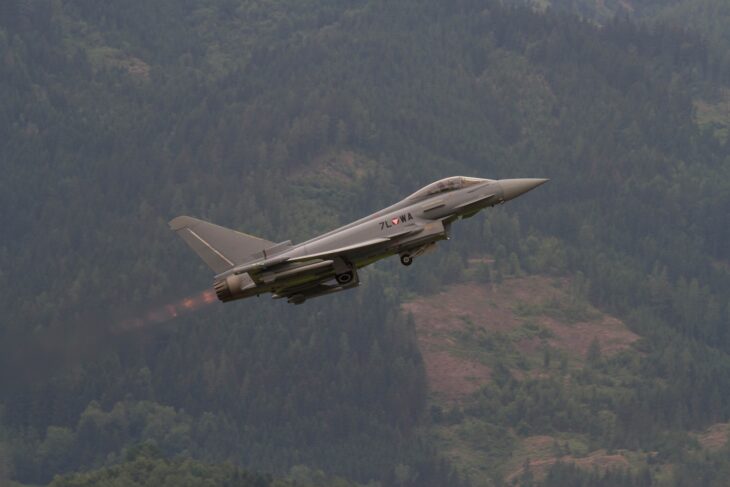

Austria signed for 18 Eurofighter Typhoons in 2003 and later cut the order to 15, Georg Mader wrote for European Security & Defence. The first arrived at Zeltweg on July 12, 2007, and Wikipedia records the 15th and last on September 24, 2009.
They are early-production single-seaters, and Austria bought them stripped down. Mader notes that electronic countermeasures, the infrared search and track sensor and beyond-visual-range AMRAAM missiles were all dropped from the original order, and that the force had only 16 fighter pilots in 2024.
The jets still scramble. On May 10 and 11, 2026, Eurofighters intercepted US Air Force U-28A and PC-12 special operations aircraft over Upper Austria that lacked diplomatic clearance and turned them back toward Munich, Army Recognition reported, citing Welt.
In October 2026, the jets deployed to Klagenfurt for the 20th time to fly live air policing from a second airfield, according to Migflug. Thirteen of those 20 deployments came in roughly the last 12 months.
The Eurofighter Successor: 36 Jets Wanted, No Money Agreed
The fleet must be retired between 2032 and 2037, Der Standard reported in 2026. Mader put the plan in 2024 as a contract by 2029 and a successor landing at Zeltweg around 2033, with the F-35A, the Gripen E/F and the newest Eurofighter as the candidates.
The air force wants 36 supersonic jets, the number in an internal study called “Luftverteidigung 2032+”. Its commander, Gerfried Promberger, told the APA news agency on March 22, 2026, that the figure came from military necessity, “not prestige or luxury”, ORF reported.
The money is the fight. Marterbauer told the Kronen Zeitung he saw “keinen Spielraum”, no room, for additional purchases beyond what was agreed, and Chief of the General Staff Rudolf Striedinger warned that without a replacement, Austrian airspace would be effectively unprotected from 2035 at the latest, Salzburg24 reported.
"Air threats don't keep office hours"
That is how Promberger put it in March 2026, arguing that part of the fleet must be on readiness around the clock. For a neutral country, he added, neutrality must never turn into defenselessness. Austria is not in NATO, so it cannot lean on alliance air policing the way a member can.
Next: Leonardo M-346 F Block 20, 12 on Order
Austria’s second jet type is on its way. Leonardo signed a contract on December 17, 2025, for 12 M-346 aircraft in the new M-346 F Block 20 standard, with the first due in 2028.
The jets replace the Saab 105, retired in 2020 after 50 years, and bring jet training home. Since then Austrian student pilots have trained in Italy and Germany, The Aviationist reported.
The Austrian defense ministry put the unit price at €80 million and the whole package, with weapons, simulators, training and maintenance, at about €1.5 billion. The deal carries options for 12 more in two batches of six, and the jets will be based at Linz-Hörsching.
2. S-70A-42 Black Hawk: The Avalanche Helicopters
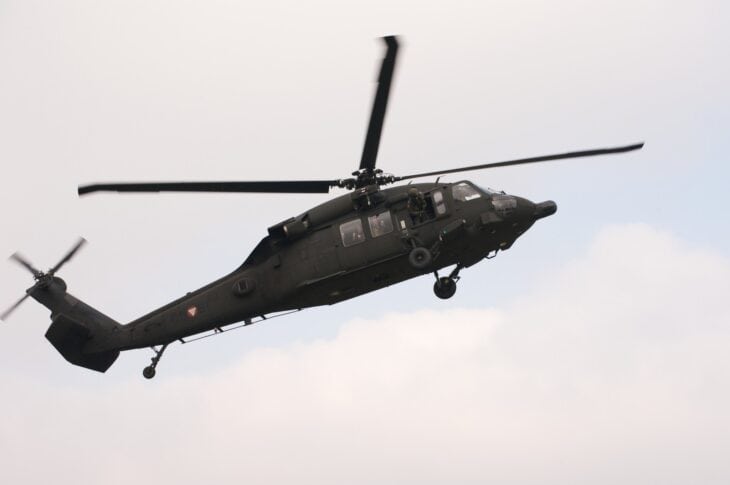
Austria bought its nine S-70A-42 Black Hawks after the 1999 avalanche at Galtür, Wikipedia records, and flies them from Langenlebarn, near Tulln. They are the force’s heaviest helicopters and its main tool for alpine rescue and disaster relief.
The fleet is growing to 24. Austria signed for 12 new UH-60M Black Hawks in June 2024 within a €715 million program budget, and the first, serial 24-27529, went to the US Army in May 2026 for military fit-out, aeroTELEGRAPH reported.
The UH-60Ms are due from 2028 and will be based at Linz-Hörsching. Three refurbished ex-US Army UH-60Ls come first, one in 2026 and two in 2027, bought after a plan to take three from Jordan failed on US export rules, Migflug records.
3. C-130K Hercules and the C-390 Coming to Replace It
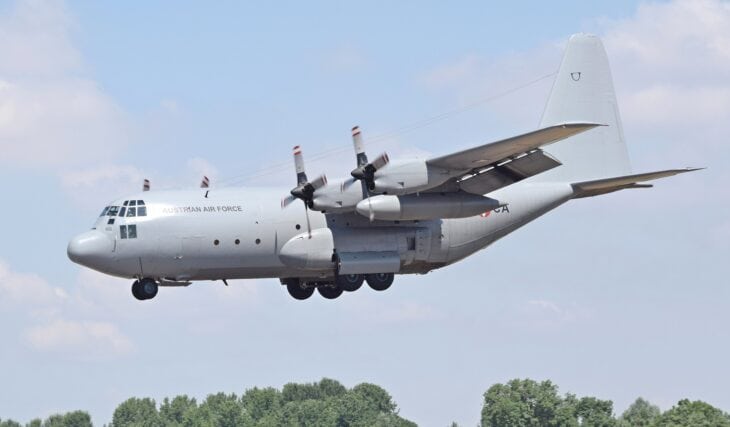

Austria’s only large transports are three C-130K Hercules bought from Britain’s Royal Air Force in 2003. FlightGlobal still lists three, but Migflug records that the first was retired in November 2025.
Their replacement is the Embraer C-390 Millennium. Austria is buying four, and the first is now scheduled for May 2028, with the second in July 2028, Vol.at reported in April 2026.
That is two years later than first hoped. When Austria picked the type in 2023, Defense News reported a deal expected to be worth more than €500 million and first aircraft as soon as 2026, with Austria planning to piggyback on the Dutch order to keep costs down.
4. AW169 Lion: 36 New Helicopters
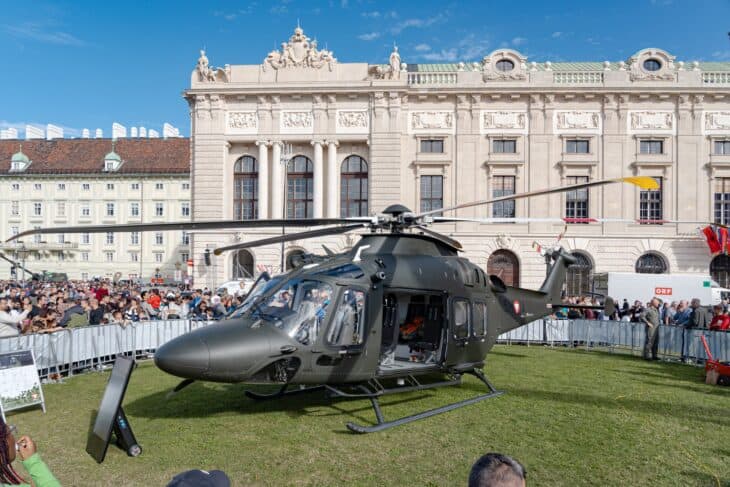

The Leonardo AW169 is the biggest new program in the force. Austria chose 18 in September 2020 and later doubled the order to 36, for a program cost of €873 million including infrastructure and simulators, aeroTELEGRAPH reported.
The first was handed over at Langenlebarn on December 21, 2022, ORF reported, and the 12th landed at Aigen im Ennstal in September 2026, a third of the fleet. The first armed version, the AW169 MA, is due in December 2026.
When all 36 are delivered by the end of 2028, 12 will be at Aigen and 24 at Langenlebarn. They replace the Alouette III, which Austria flew from 1967 until operational flying ended on December 31, 2023, according to the Styrian state government, and the OH-58 Kiowa.
5. Agusta-Bell 212: The Largest Fleet

With 22 helicopters, the Agusta-Bell 212 is Austria’s largest fleet, split between two light transport helicopter squadrons of 11 at Linz-Hörsching, according to Wikipedia.
It has served since 1980 and is to be retired toward the end of the decade, as the UH-60Ms arrive, aeroTELEGRAPH reported. That makes the Black Hawk, not the 212, the backbone of the 2030s fleet.
6. OH-58B Kiowa: The Last of the Light Helicopters
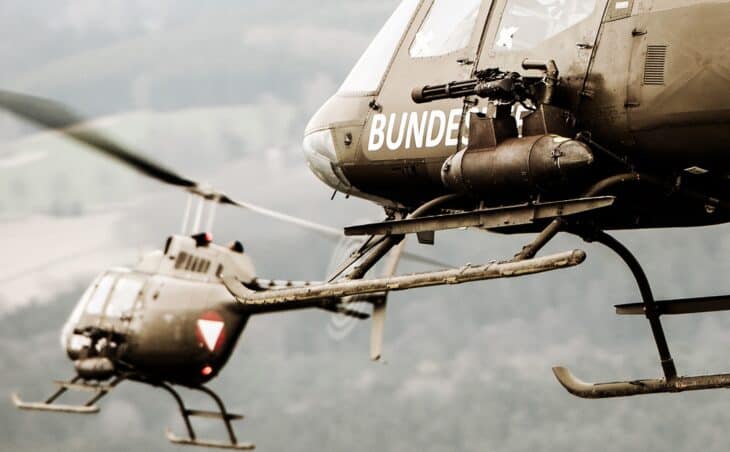

FlightGlobal counts 10 OH-58B Kiowas, flown as light utility helicopters from Langenlebarn. They are the next type to go: Migflug reports they leave service in 2028, replaced by the AW169.
7. Pilatus PC-6 Porter: The Mountain Workhorse
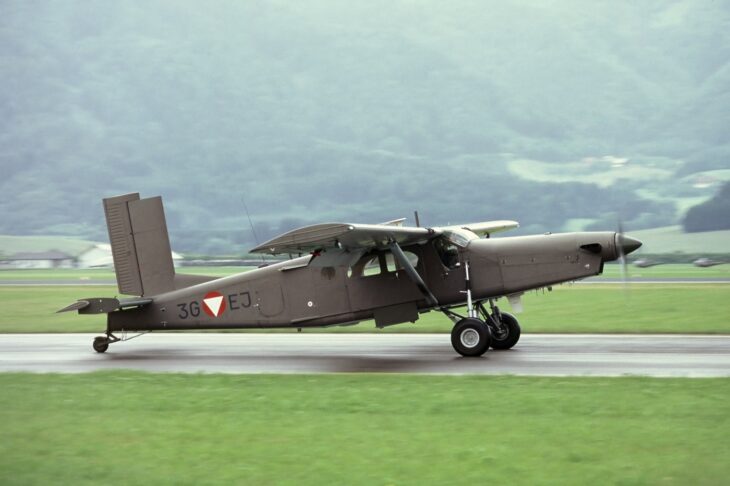
Austria flies eight Pilatus PC-6 Porters from Langenlebarn, by FlightGlobal’s count. The Swiss-built single-engine plane is designed to take off and land on very short strips, which suits a mountain country.
No replacement has been announced, and no retirement date has been published.
8. Pilatus PC-7 and DA40 NG: Where Pilots Start
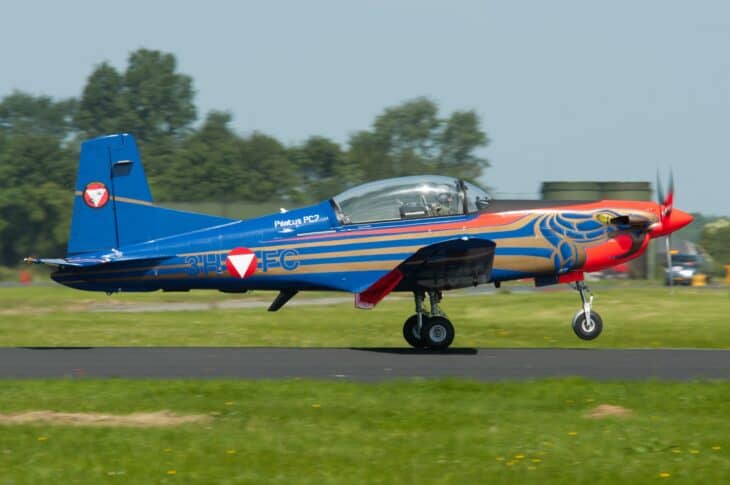

Every Austrian military pilot begins at Zeltweg, home of the Airplane Training Squadron and its 12 Pilatus PC-7 turboprop trainers. Wikipedia also lists four Diamond DA40 NG piston trainers.
The gap sits after the PC-7. With the Saab 105 gone, future fighter pilots finish their training abroad, which is what the M-346 is meant to end from 2028.
From Soviet Yaks to the Eurofighter: A Short History
Austria had an air force from 1927 to 1938, before annexation by Nazi Germany. The present force dates from 1955, and its first trainers were four Yak-11s and four Yak-18s donated by the Soviet Union, Wikipedia records.
Sweden supplied the jets for the next half century: 30 second-hand Saab 29 Tunnans in the early 1960s, 40 Saab 105s from 1970, and 28 reconditioned Saab 35 Drakens from 1988. The Drakens retired in 2005, and Austria leased 12 F-5E Tigers from Switzerland until the Eurofighters arrived.
Why isn't Austria in NATO?
Its own constitution rules it out. The Declaration of Neutrality, enacted on October 26, 1955, says Austria will not join any military alliance or allow foreign military bases on its soil. Austria joined NATO’s Partnership for Peace in 1995 and the European Sky Shield air defense initiative on July 7, 2023, but neither is an alliance. That is why it must police its own sky.
How Strong Is the Austrian Air Force?
For its size, it is a helicopter force with a small fighter wing attached. FlightGlobal lists 90 aircraft, about 4,300 people serve in it according to Wikipedia, and only 15 of the aircraft are combat jets.
Its neutral neighbor is in a similar spot. The Swiss Air Force is replacing its Hornets with F-35s, while the German Air Force and the Italian Air Force fly far more Eurofighters, including the later versions Austria never bought.
Our ranking of the best air forces in the world shows where small, well-run forces sit against the giants.
FAQ
Sources and references used for research and fact-checking.
- FlightGlobal, World Air Forces 2026 directory
- European Security & Defence, Austria's fighter dilemma
- Der Standard, Bei Eurofightern steht Milliardenentscheidung an
- ORF, Kommandant warnt vor Sicherheitslücke bei Luftverteidigung
- Salzburg24, Hitziger Streit um neue Eurofighter: Ist unser Luftraum bald ungeschützt?
- Army Recognition, Austrian Eurofighters intercept USAF U-28A Draco and PC-12 aircraft
- Migflug, Austrian Eurofighters Deploy to Klagenfurt for the 20th Time
- Leonardo, Leonardo signs contract for 12 M-346 F Block20 aircraft for Austria
- The Aviationist, Austria Finalizes M-346FA Acquisition
- aeroTELEGRAPH, Österreichs neue Black-Hawk-Ära beginnt in Florida
- Army Recognition, US approves Austria Black Hawk helicopter FMS sale
- Migflug, Austrian Air Force
- aeroTELEGRAPH, Der zwölfte Löwe ist da: So wächst Österreichs neue Hubschrauberflotte
- Migflug, Austria's Twelfth AW169 Lion Lands, a Third of the Fleet Done
- ORF, Erster Leonardo-Hubschrauber an Bundesheer übergeben
- Land Steiermark, Alouette III flog ihren letzten Einsatz
- Vol.at, Austrian Armed Forces Pilots Trained for Embraer C-390
- Defense News, Austria to buy four Embraer C-390 cargo planes for over $500 million
- Wikipedia, Austrian Air Force
- Wikipedia, Declaration of Neutrality
Get the Newsletter
The latest aviation news and stories sent to your inbox.
About the Author

Tim is the owner and lead editor of AeroCorner since 2019, overseeing aviation content covering aircraft, airlines, airports, and the broader aviation industry. Through years of researching, writing, editing, and publishing aviation-focused content, he has developed extensive practical knowledge of commercial aviation and air travel. Based in Asia and a frequent traveler himself, Tim also brings firsthand passenger experience to AeroCorner’s coverage. Outside of publishing, he has also explored aviation firsthand through hands-on flight training in New Zealand.