Private Single Engine
Pilatus PC-12NGX
ICAO: PC12
The Pilatus PC-6 Porter is the Swiss single-engine STOL workhorse that has flown skydivers, aid workers, soldiers and Air America cargo off short, rough strips since 1959, and that holds the record for the highest fixed-wing landing on Earth.
Updated: by Tim de Vries
The latest aviation news and stories sent to your inbox.
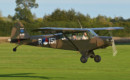
The Pilatus PC-6 Porter is a single-engine Swiss utility aircraft built to take off and land on strips that stop most other airplanes. Pilatus built it at Stans from 1959 to 2022, and about 600 were delivered, including roughly 90 under licence in the United States. It carries up to 10 people or a load of cargo, parachutists, supplies or casualties into mountain, jungle and polar airstrips, and it holds the record for the highest fixed-wing landing, on a Himalayan glacier.
Live Fleet Activity (PC6T)
Fetching live data…
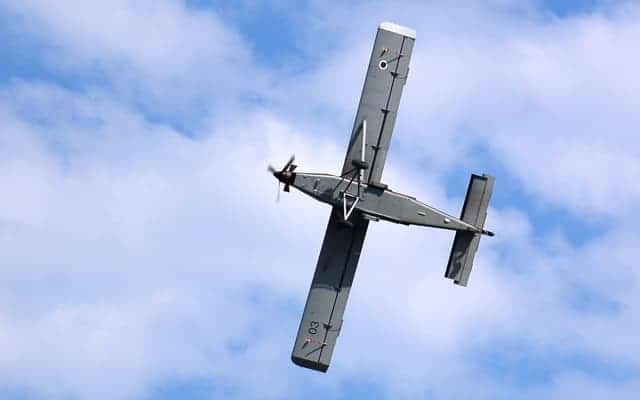
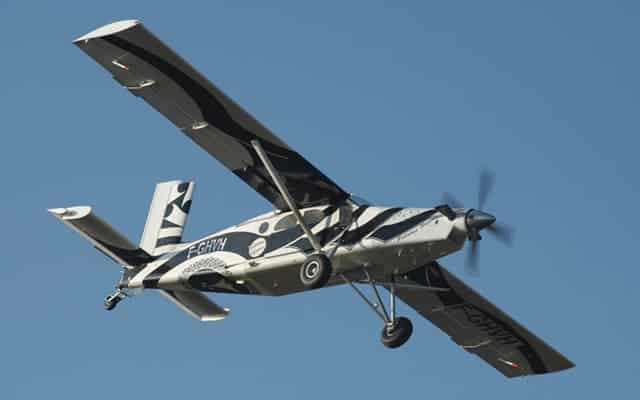
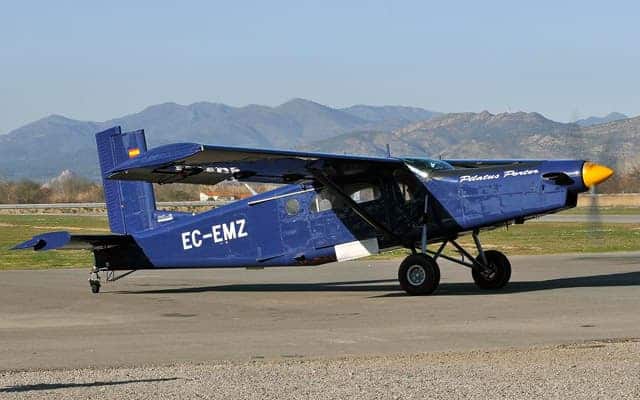
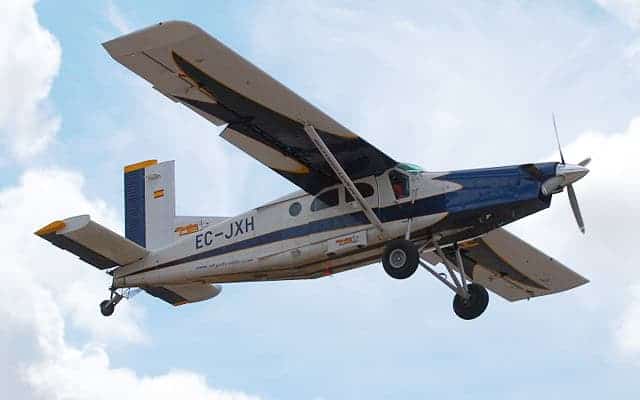
The Pilatus PC-6 Porter is a single-engine, high-wing utility aircraft built in Switzerland for short takeoff and landing (STOL). It flew for the first time on 4 May 1959 and stayed in production for 63 years. Pilatus delivered the last one in December 2022.
It is the aircraft people mean when they say “flying Swiss Army knife”. It lands on glaciers, gravel bars, jungle strips and ski slopes, and it carries up to 10 people or a heavy load of cargo.
Pilatus designed the Porter at Stans for Alpine work, from glacier landings to supply runs. The first aircraft used a piston engine, and the type flew on 4 May 1959.
The first turboprop Turbo Porter flew in early May 1961 with a Turbomeca Astazou II. That engine had reliability problems, and some operators, including Air America, retrofitted the Garrett TPE331.
The first Pratt & Whitney Canada PT6A-powered Porter flew in May 1966. The PT6A became the standard engine, and it is the one this page’s specifications describe.
The early piston Porters were the PC-6/340 and /350. The turboprop line began with the PC-6/A series on Astazou engines, followed by the PC-6/B and B1 with a 550 shp PT6A.
The PC-6/B2-H2 used a PT6A-27 at its full rating, and the B2-H4 added a stronger airframe and extended, upturned wingtips. Fairchild Industries built a TPE331 version as the PC-6/C.
Pilatus also flew a twin-engine PC-8D Twin Porter in 1967, but it never went into production.
The full specification table for the Porter is on this page, so rather than repeat it, here is what a few of the figures mean.
The stored range is the ferry range with no payload. With a full load, the PC-6 B2 manages about 450 mi (730 km), which is a much more honest picture of how it works.
The takeoff and landing distances come from a 2,646 lb (1,200 kg) payload demonstration. Real strips, density altitude and pilot technique change them, and the Porter’s reputation comes as much from its pilots as its wing.
The top speed is modest, and the Porter was never built for speed. A fixed gear, a big wing and a derated engine trade speed for the ability to land where no other aircraft can.
Production ran from 1959 to 2022 and totalled about 600 airframes. The pc-6.com production list counts 603: 511 built by Pilatus, plus 92 built under licence by Fairchild Hiller in the United States.
Pilatus announced it would close the line in 2017 so it could concentrate on the PC-12 and PC-24. Delays pushed the end from 2019 to 2022, and serial number 1019 went to Indonesian charter operator Smart Aviation. Pilatus has committed to supporting existing operators for at least 20 years.
The Porter has worked for militaries, police forces, missionaries and skydivers. Austria has flown it since 1976, and other military users include Switzerland, Argentina, Mexico, Peru, Thailand and the U.S. Army Special Operations Command.
The CIA-linked airline Air America flew up to 23 Porters in Southeast Asia in the 1960s and 1970s. The Fairchild AU-23A Peacemaker added a side-firing 20 mm cannon, and about 15 were built, but it did poorly in service.
In civil use, Susi Air, Tara Air, Mount Cook Ski Planes and Mission Aviation Fellowship fly Porters. In the early 1990s, around 40% of Europe’s PC-6s were jumping skydivers.
A PC-6 holds the record for the highest fixed-wing landing, at 18,865 ft (5,750 m) on the Dhaulagiri glacier in Nepal.
The Porter’s low stall speed and strong PT6A are what make landings on slopes and snow possible. Skis and floats are common options.
The Porter’s accident history is dominated by skydiving and rough-field flying. Several wing failures in turbulence or after stalls, including EC-JXH in Spain in 2008 and an aircraft over Beja, Portugal in 2016, led to scrutiny of airframe fatigue on older aircraft.
A Porter crashed after takeoff from Nancy-Essey, France on 28 June 2026, with no survivors among the 11 aboard. The source we used gave no cause, so treat any cause you read elsewhere as unconfirmed until investigators report.
Pilatus no longer sells new Porters. Wikipedia gives the unit cost as about $1.9 million in 2010.
Used aircraft listed for sale in October 2026 ranged from about $800,000 for a 1986 airframe with more than 11,000 hours to $1.6 million for a 2017 B2-H4. Prices depend heavily on airframe hours and avionics.
No. Pilatus delivered the last PC-6 Porter in December 2022 after 63 years. It is still widely flown, and Pilatus has said it will support operators for at least 20 years.
There is no new price, because production has ended. Used examples seen listed in October 2026 ranged from about $800,000 to $1.6 million.
Pilatus builds its aircraft in Stans, Switzerland. Fairchild Hiller built about 90 Porters under licence in the United States.
It is used for parachute dropping, cargo, bush and mountain transport, humanitarian flights, police work and military liaison. Its STOL ability lets it use strips most aircraft cannot.
No. The PC-12 is a larger, pressurised single-engine turboprop that Pilatus introduced later, while the PC-6 is an unpressurised STOL utility aircraft with fixed landing gear.
Sources and references used for research and fact-checking.