

Fighter Jets
Saab J-29 Tunnan
ICAO: SB29
The Saab 35 Draken was Sweden's double-delta Cold War interceptor, a Mach 2 fighter built to operate from public roads that never fired in anger.
Updated: by Tim de Vries
The latest aviation news and stories sent to your inbox.
The Saab 35 Draken (Swedish for “the kite” or “the dragon”) was a single-engine supersonic interceptor that flew for the Swedish Air Force from 1960 until 1999. Saab built 651 of them between 1955 and 1974, and exports went to Denmark, Finland and Austria. Its double-delta wing, tailless layout and road-base design made it one of the most distinctive fighters of the Cold War.
Live Fleet Activity (SB35)
Fetching live data…





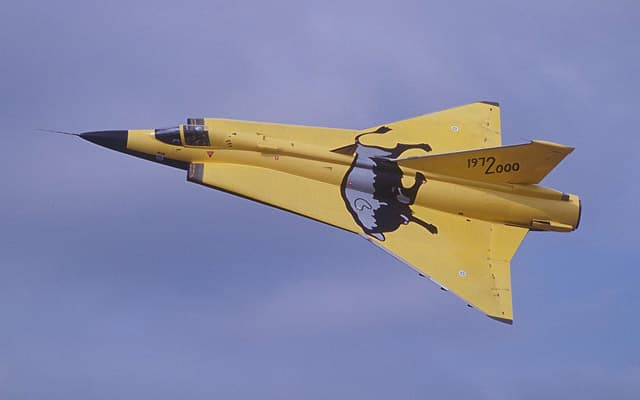
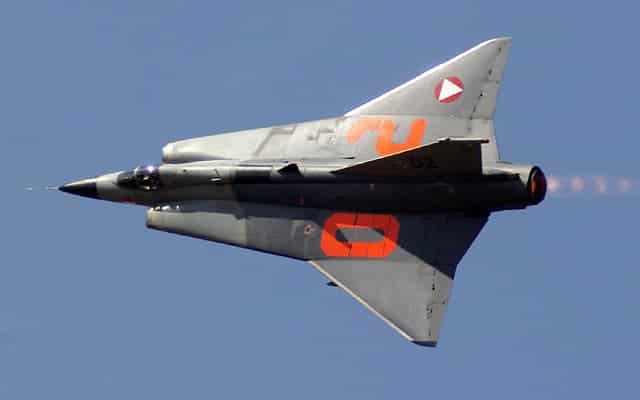
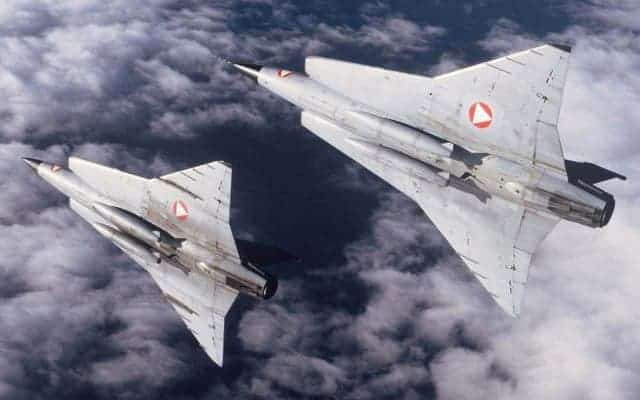
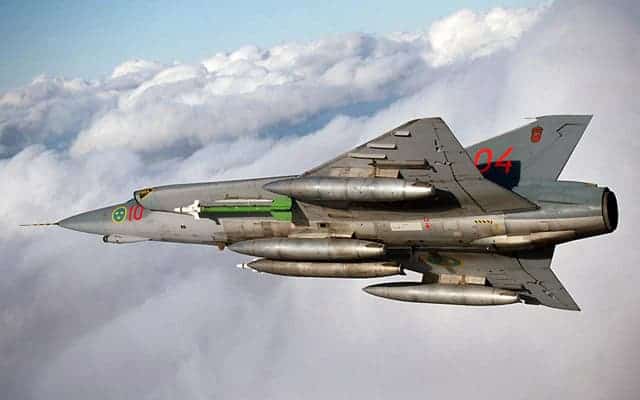
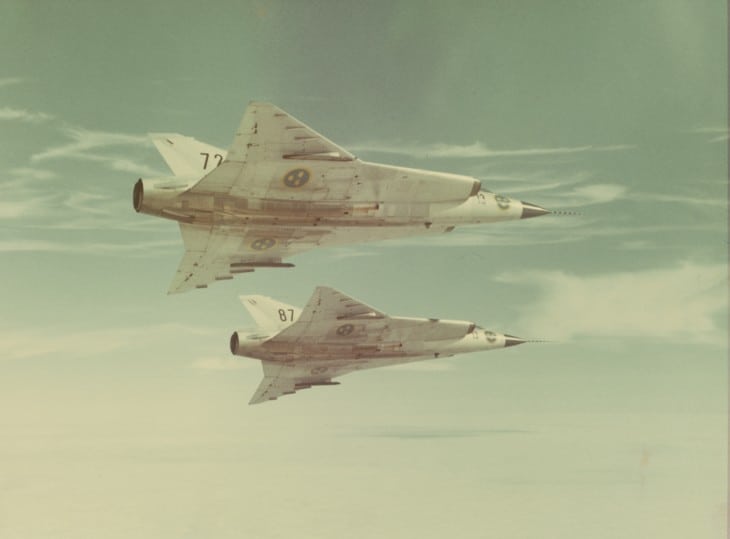
The Saab 35 Draken is a Swedish single-seat fighter-interceptor built by Saab between 1955 and 1974. The name means both “the kite” and “the dragon” in Swedish, and the prototype was said to look like a paper kite from above.
Saab built 651 Drakens. They served in Sweden, Denmark, Finland and Austria, and none of them was ever used in combat.
The full specification table for the aircraft is on this page, so this article covers the story behind the numbers.
In September 1949 the Swedish Air Force asked for a supersonic interceptor that could catch high-altitude bombers. The first requirement called for Mach 1.4 to 1.5. It was raised to Mach 1.7 to 1.8 in 1956 and to Mach 2 in 1959.
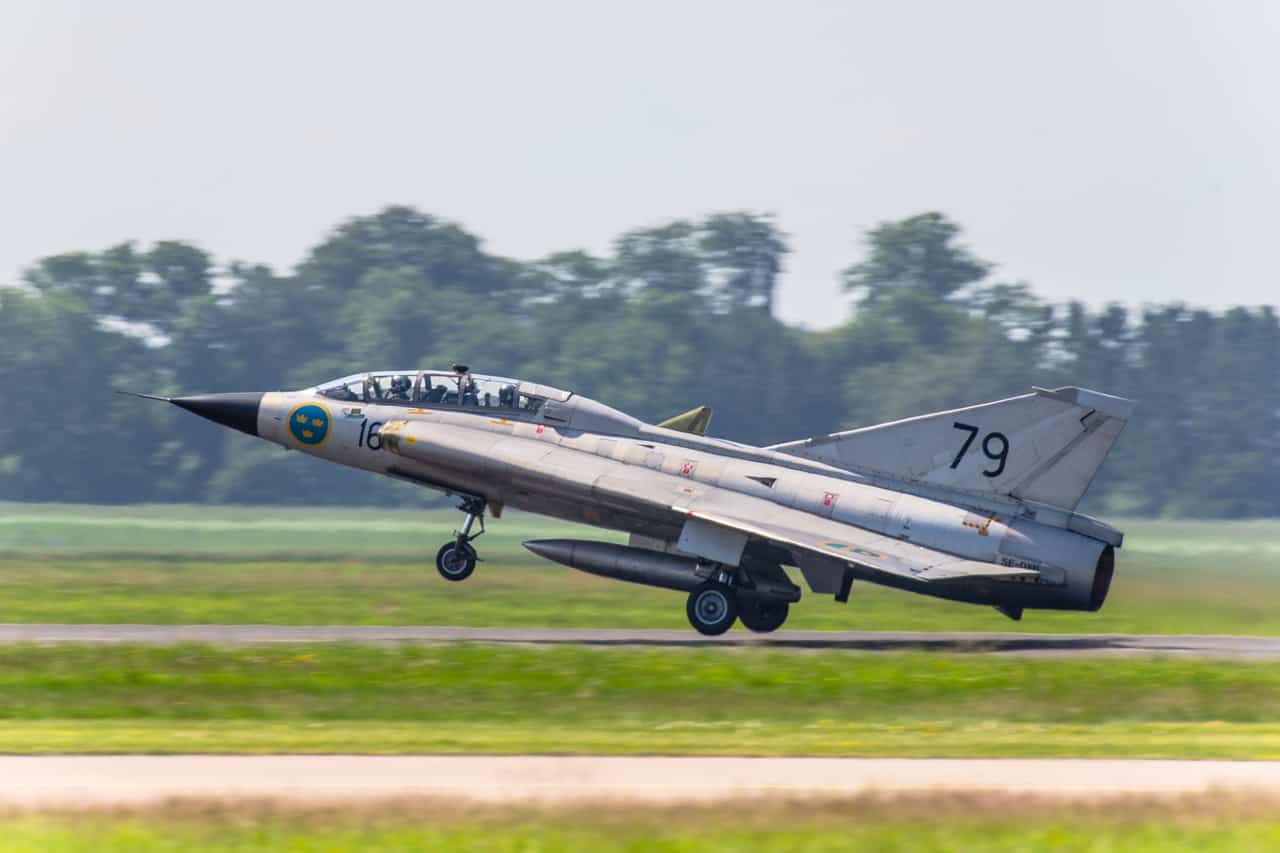
The jet also had to be flown by one pilot in any weather, and it had to operate from reinforced public roads that Sweden planned to use as wartime airbases. Conscripts with minimal training had to refuel and rearm it in no more than ten minutes.
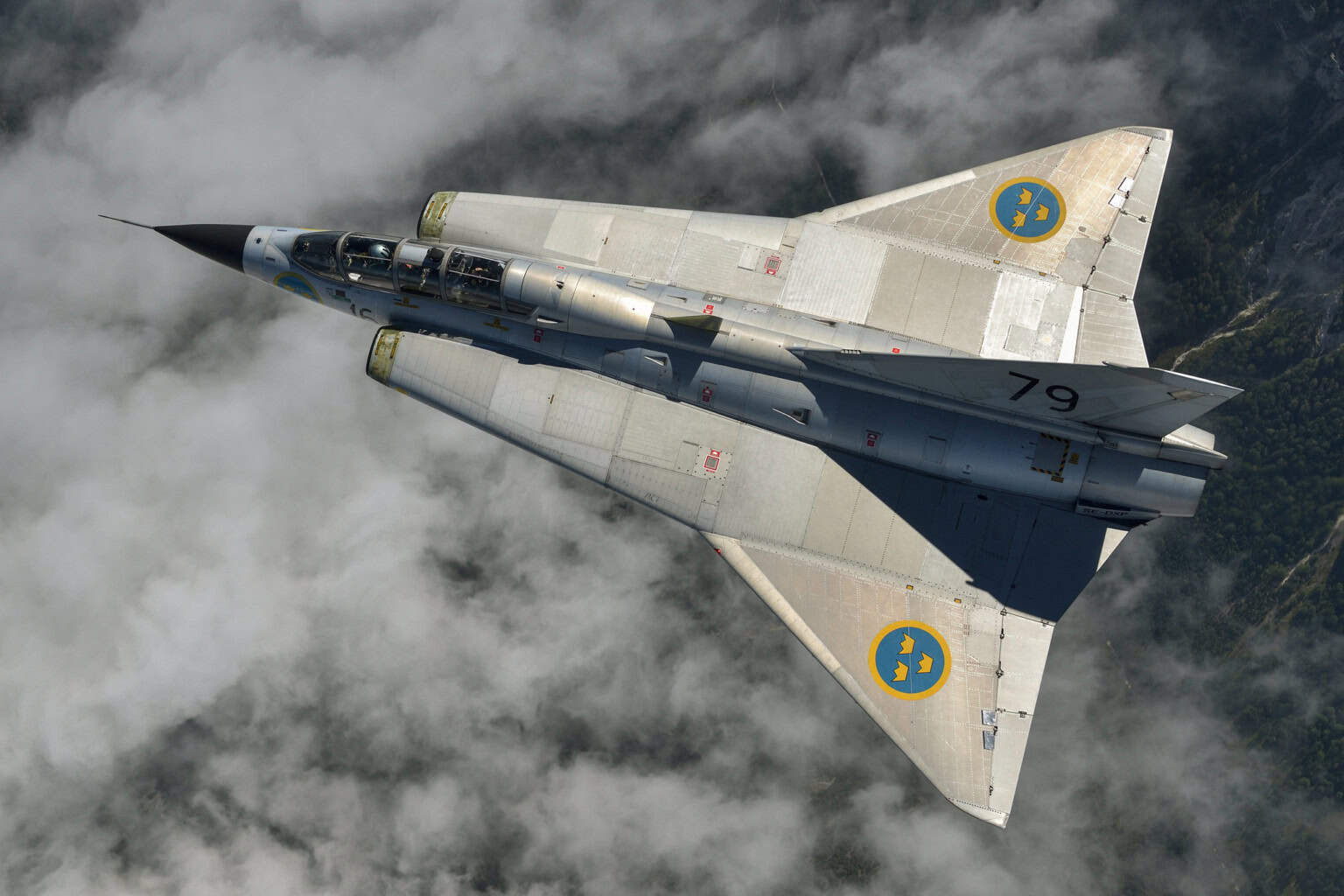
Saab engineer Erik Bratt led the design team. Their answer was a double delta wing, with the inner leading edge swept back 80 degrees for speed and the outer wing swept 60 degrees for better low-speed handling.
The wing was so new that Saab first built a small test aircraft, the Saab 210, nicknamed “Lilldraken” (the little dragon). It flew on 21 January 1952.

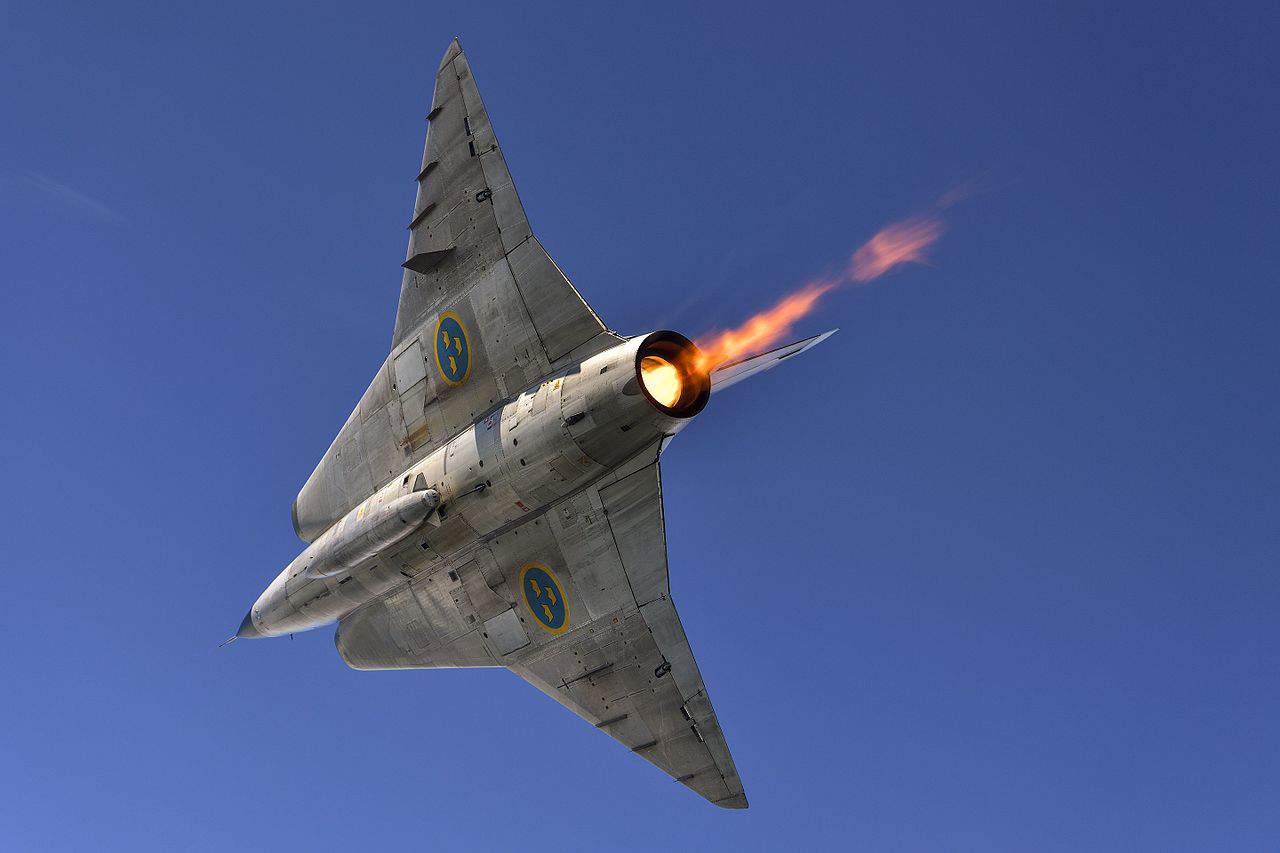
With the fuselage and wing blended together, the Draken needed no horizontal tail. The control surfaces were elevons on the trailing edge, worked by hydraulic jacks.
The first full-size prototype flew on 25 October 1955 without an afterburner. The second prototype, with an afterburner, unintentionally went supersonic on one early flight.
The first production J 35A was ordered in 1956 and flew on 15 February 1958. Test pilot Erik Dahlström took a J 35B prototype to Mach 2 for the first time on 14 January 1960.
The Draken used a single Svenska Flygmotor RM6 turbojet, a licence-built version of the Rolls-Royce Avon. A drogue parachute shortened the landing roll, and a small ram air turbine under the nose gave emergency power.
Armament varied by model. Swedish jets carried one or two 30 mm ADEN cannon and up to four AIM-9 Sidewinder missiles, which Sweden called Robot 24. The J 35F added the Hughes Falcon, called Robot 27 and 28.
Deliveries began at the end of 1959, and fighter wing F 13 at Norrköping was the first unit to receive the J 35A. Several wings were operational by the end of 1960.
Swedish Drakens went through six versions, from the J 35A to the J 35F and the upgraded J 35J. The J 35J was largely a life-extension programme, because the JAS 39 Gripen was delayed. Budget cuts and high maintenance costs ended it, and Sweden retired the Draken in December 1999.
The unstable double-delta layout made early Drakens hard to land, and the wing could fall into a “super stall” at high angles of attack. Swedish pilots were trained to recover from it.
That training produced what the Swedes called kort parad (short parry), now known as the Cobra manoeuvre. It was used first to teach recovery, then as a way to make a pursuing fighter overshoot.

Denmark used the Draken as a strike aircraft with Bullpup missile capability and extra fuel. The Royal Danish Air Force flew 51 and retired the last in 1993.
Finland operated 50 and replaced them with F/A-18 Hornets in 2000. Austria bought 24 refurbished J 35Ds in 1985 and flew them into 2005, the last military Drakens in service.
Austria’s jets were first limited to cannon because of a missile ban in the 1955 Austrian State Treaty. Sidewinder missiles were added after Austria declared that clause obsolete in the 1990s.

Switzerland tested a Saab 35H in 1958 but chose the Mirage III. That procurement ended in a budget scandal that cost three senior Swiss officials their jobs.
No. The Draken was a Cold War deterrent and it never saw combat. It was designed as a high-altitude interceptor, but pilots found it a capable dogfighter for the era, with good quick-turn ability and high speed at all altitudes.
The Draken left military service in 2005. Some airframes remain with civilian owners, mainly in the United States, and many are preserved in museums in the countries that flew them.
The National Test Pilot School in the United States flew six former Danish Drakens until 2009. The aircraft is unrelated to Draken International, a US company that supplies contract fighters for training.

Yes, by Cold War standards. It reached Mach 2, climbed fast, and could operate from short road strips. Early models were tricky to land, and pilots had to learn to avoid the super stall.
Saab built 651 between 1955 and 1974. Sweden, Denmark, Finland and Austria flew them.
It is Swedish for “the dragon” or “the kite”. The kite meaning is said to come from the prototype’s shape seen from above.
Draken International is a US company that provides contract fighter aircraft for training. It is not connected to Saab or the Saab 35.
Not in military service. Austria retired the last ones in 2005. A small number still fly with civilian owners, mainly in the United States.
Some former military aircraft have been sold to private owners, mostly in the US, and several others sit in museums. The airframes are rare and costly to maintain.
Sources and references used for research and fact-checking.
.jpg)