

Table of Contents
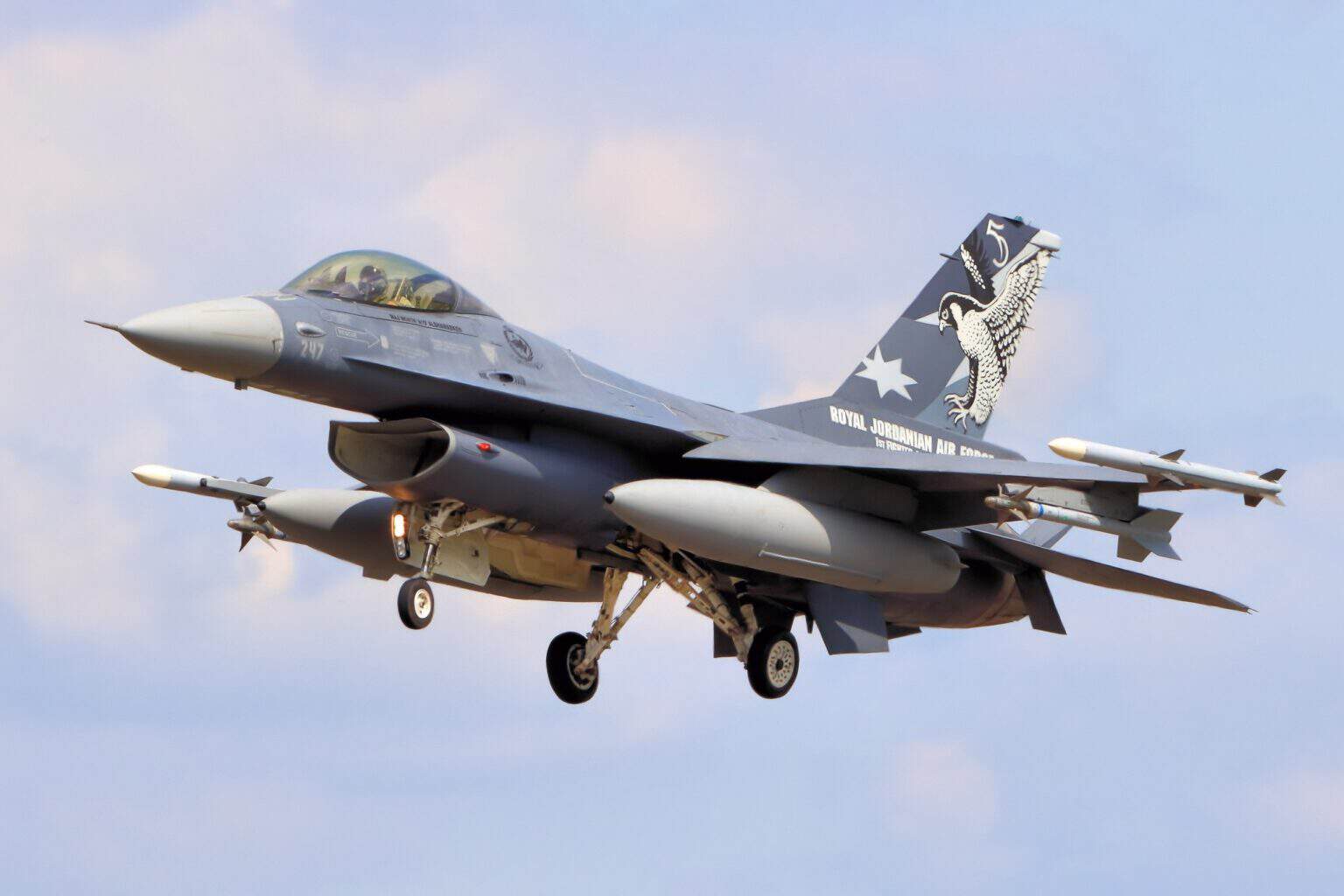
Jordan’s front line in 2026 is a fleet of upgraded, second-hand F-16s. Janes World Air Forces counts 43 single-seat F-16As and 18 two-seat F-16Bs, 61 jets that came from the US, Belgium and the Netherlands between 1997 and 2013.
The first new fighters Jordan has bought in decades are not there yet. Lockheed Martin turned Jordan’s order into a contract for 12 F-16 Block 70s in January 2024, and the first are due in 2027.
This guide ranks every type the Royal Jordanian Air Force flies by its weight in Jordanian defense as of November 2026. It also covers the bases, the war of 1967 and the 2026 Iran war, when Jordan’s own sky became a battlefield.
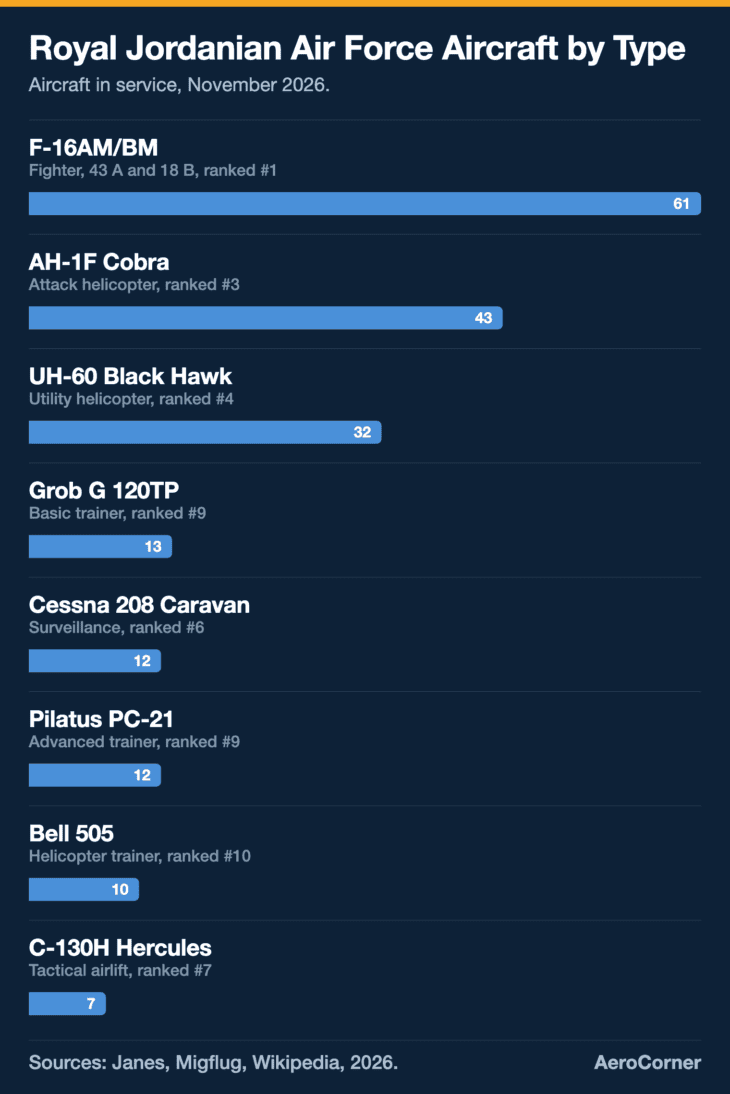
| Rank | Aircraft | Role | Fleet | Status |
|---|---|---|---|---|
| 1 | F-16AM/BM Fighting Falcon (MLU) | Multirole fighter | 61 (43 A, 18 B); some counts reach 64 | In service since 1997 |
| 2 | F-16C/D Block 70 | Multirole fighter | 12 under contract | Contract January 2024; due from 2027 |
| 3 | AH-1F Cobra | Attack helicopter | 43 (32 AH-1F, 11 upgraded) | In service; about 16 came from Israel in 2015 |
| 4 | UH-60A/L/M Black Hawk | Utility, special operations | 32, plus 4 UH-60M ordered | In service |
| 5 | MD 530F and AH530 | Light attack helicopter | 6 older MD 530F, plus 6 new AH530 | In service |
| 6 | AC-235, Cessna 208 and AT-802 | Gunship, surveillance, light strike | 2 AC-235, 12 Cessna 208, 10 armed AT-802 | In service |
| 7 | C-130H Hercules | Tactical airlift | 7 | In service; flew the Gaza airdrops |
| 8 | Mi-26T2 | Heavy-lift helicopter | 4 | In service since 2018 |
| 9 | Pilatus PC-21 and Grob G 120TP | Pilot trainers | 12 PC-21, 13 G 120TP | In service at Mafraq |
| 10 | Bell 505 | Helicopter trainer | 10 | Delivered 2023 to 2024 |
How this ranking works
Aircraft are ranked by their weight in Jordanian defense in November 2026: fighters first, then attack and utility helicopters, the surveillance and gunship fleet, airlift and trainers. Jordan does not publish fleet numbers, so counts come from Janes World Air Forces and open inventories, and where sources disagree we say so. Royal transport jets, drones and ground-based air defense are left out.
1. F-16AM/BM Fighting Falcon: Jordan’s Only Fighter
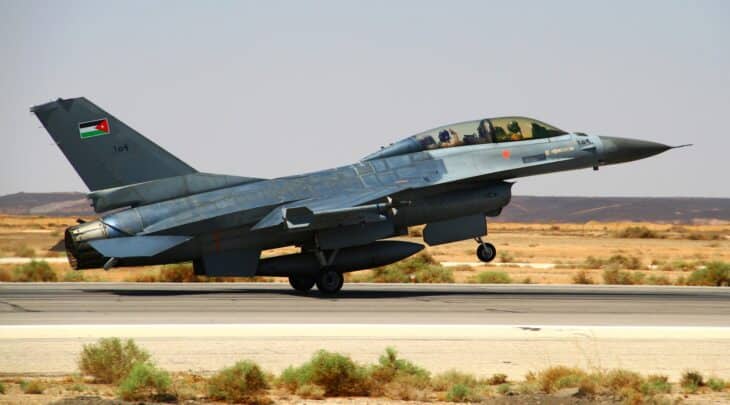

Every fighter Jordan flies is an F-16, and every one of them flew for someone else first. The first 16, leased from the US under Peace Falcon I, arrived in 1997 and 1998.
More came in batches called Peace Falcon II to VI: 17 more from the US, then used jets already upgraded to the F-16AM/BM standard from the Belgian Air Force and the Netherlands, the last of them in 2013.
Counts differ. Janes World Air Forces gives 43 F-16As and 18 F-16Bs, Wikipedia 62 and Army Recognition 64 in March 2026. All of them fly from Muwaffaq Salti Air Base at Azraq, and Jordan has added Link 16 datalinks, Sniper targeting pods and DB-110 reconnaissance pods to them.
On March 2, 2026, Jordanian F-16s armed with AIM-120C AMRAAM and AIM-9M Sidewinder missiles were scrambled against Iranian drones crossing the country, Army Recognition reported. For a fleet bought to fight insurgents on the ground, air defense became the main job.
2. F-16C/D Block 70: 12 New Jets, None Delivered
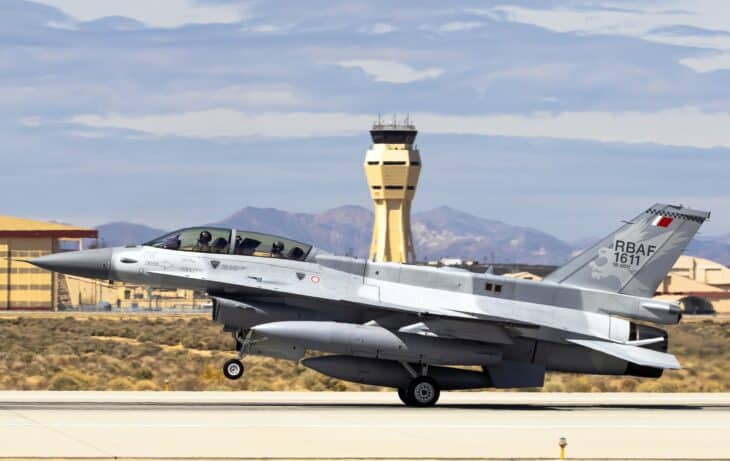

On February 3, 2022, the US State Department approved the sale of 12 single-seat F-16Cs and four two-seat F-16Ds, a package estimated at $4.21 billion. Jordan then signed a Letter of Offer and Acceptance in June 2022, and Lockheed Martin said it covered eight jets.
On January 11, 2024, Lockheed told Janes the deal had become a contract for 12 Block 70s, without saying how many are two-seaters. The jets are built in Greenville, South Carolina, with the APG-83 AESA radar, conformal fuel tanks and the Automatic Ground Collision Avoidance System.
Migflug, which checked the record in October 2026, has the first due in 2027. Until then, every fighter in Jordan is a decades-old airframe with a modern upgrade.
3. AH-1F Cobra: The Border Gunships
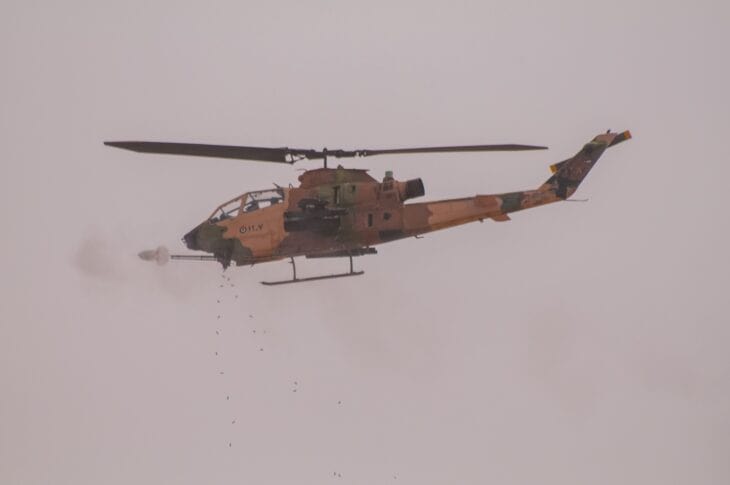

Jordan’s AH-1F Cobras guard the borders with Syria and Iraq. Open inventories count 32 standard AH-1Fs and 11 upgraded ones that carry Hellfire missiles and laser-guided APKWS rockets.
Some of them came from an unexpected place. In July 2015 Reuters reported, citing a US official, that Israel had given Jordan about 16 retired Cobras at no cost, refurbished by the US Army, to help fight the Islamic State.
Israeli, Jordanian and US officials declined to comment. FlightGlobal’s fleet database had counted 31 Jordanian AH-1Fs before the transfer.
4. UH-60 Black Hawk: Special Operations and Border Lift
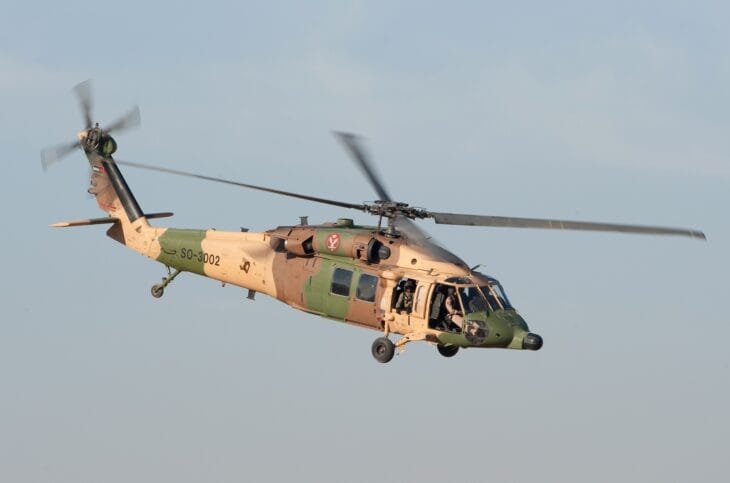

Jordan flies three generations of Black Hawk: eight UH-60Ls bought in 2007 for special operations, eight UH-60As delivered in 2015 and 2016, and 16 UH-60Ms, four of them in VIP configuration.
Twelve of the UH-60Ms arrived between March and December 2017, and Jordan marked the handover in January 2018 with a hostage-rescue drill attended by the head of US Central Command. Four more UH-60Ms were ordered in 2024.
5. MD 530F and AH530: The Light Attack Helicopters
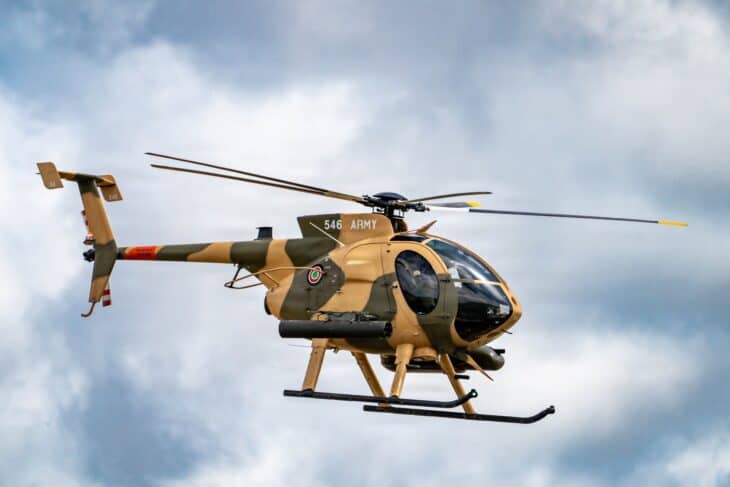

Six MD 530F light helicopters have flown with Jordan’s special operations aviation since 2006. Jordan once signed a letter of intent with Boeing for the AH-6i version, but never placed a contract.
In August 2023 MD Helicopters won a contract for six new MD 530F Cayuse Warrior Plus helicopters and cockpit upgrades to six older ones, for a Middle Eastern customer it would not name. Open inventories list Jordan as the buyer, with six AH530s delivered in December 2024 and June 2025.
6. AC-235, Cessna 208 and AT-802: The Surveillance and Gunship Wing
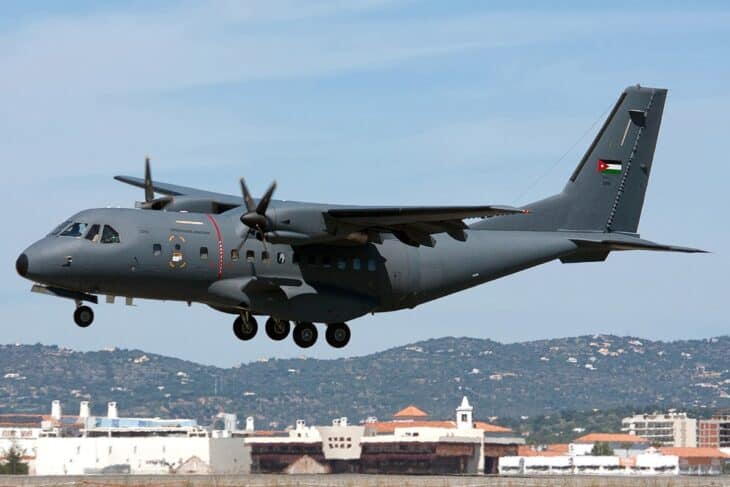

Jordan has built an unusual strike fleet out of transport and farm aircraft. Two CN-235 transports were turned into AC-235 gunships by Jordan’s design bureau and Orbital ATK, armed with a 30 mm chain gun, Hellfire missiles and APKWS rockets.
Twelve Cessna 208 Caravans fly surveillance, and ten armed Air Tractor AT-802 crop dusters carry sensors and weapons. Six of the AT-802s were a gift from the United Arab Emirates in 2014; four were built for Yemen and went to Jordan in 2016.
7. C-130H Hercules: The Airdrop Fleet
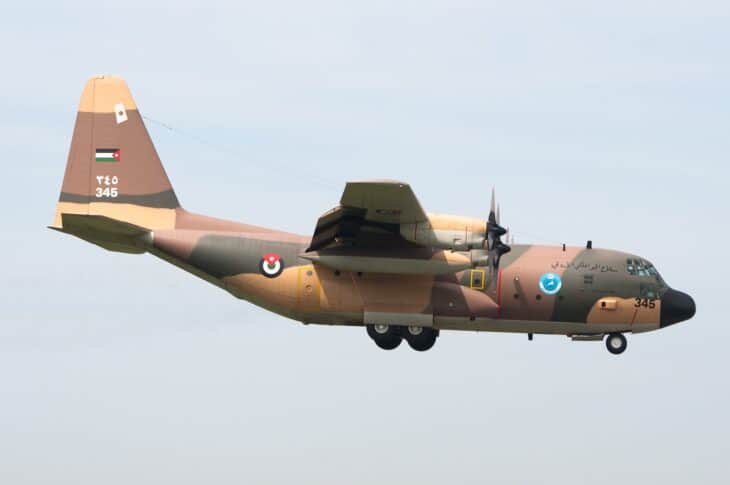

Seven C-130H Hercules are Jordan’s tactical airlifters: four delivered in the 1980s and three ex-US Air Force aircraft that arrived in 2021 and 2022.
They flew Jordan’s first airdrops into Gaza with France in January 2024, and the largest, to 11 sites, on February 26, 2024. Two leased Il-76TDs and two PZL M28 Skytrucks complete the transport fleet.
8. Mi-26T2: Russian Heavy Lift in an American Fleet
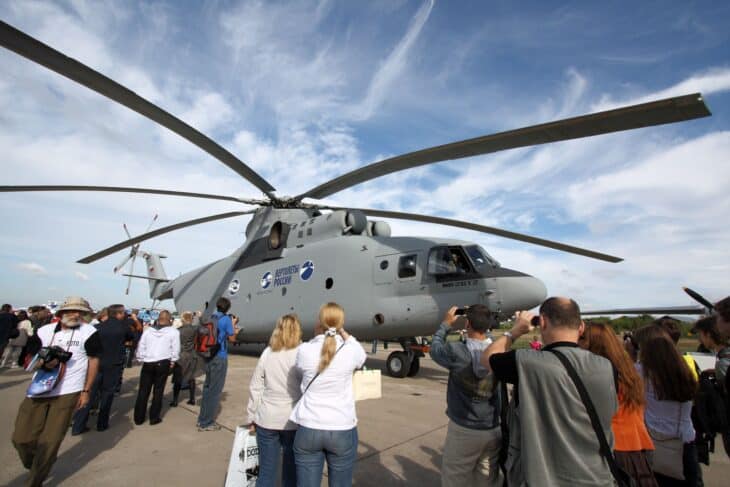

Four Mi-26T2s, the world’s largest production helicopter, were delivered in 2018 and 2019. They are among the few Russian aircraft in a fleet that is otherwise almost entirely American and European.
The air force also flies Super Pumas, EC635s and AW139s, which carry troops, VIPs and air ambulance patients.
9. Pilatus PC-21 and Grob G 120TP: Where Jordan’s Pilots Learn
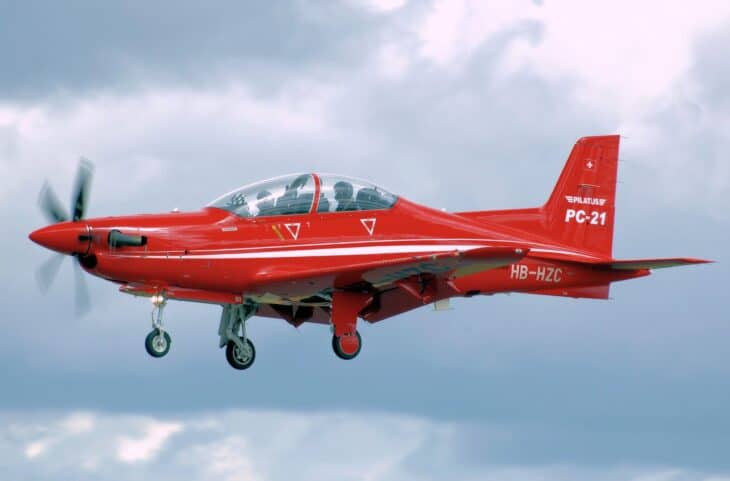

Fixed-wing pilots start on the Grob G 120TP and move to the Pilatus PC-21 at the King Hussein Air College in Mafraq. Jordan bought PC-21s in 2016, adding two more in a December 2016 order, and open inventories count 12.
Sixteen Grobs were delivered between 2016 and 2018, and three have been lost in crashes, the latest in February 2024. Thirteen remain.
10. Bell 505: The Newest Aircraft in the Fleet
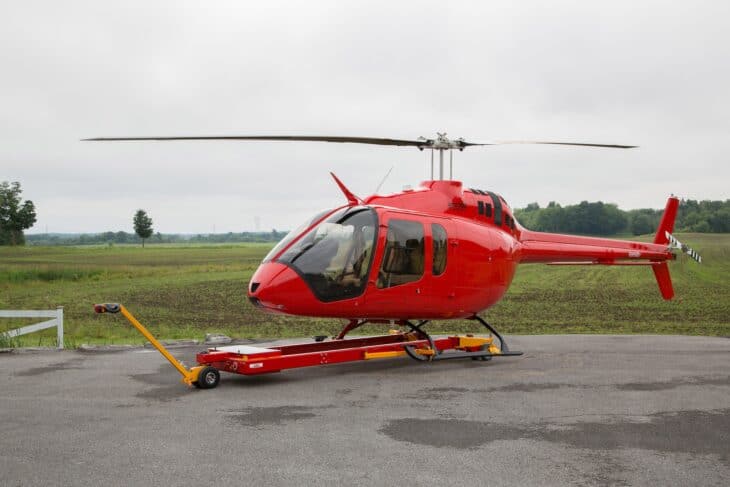

Jordan ordered ten Bell 505 training helicopters at the SOFEX show in Aqaba on November 1, 2022, to replace its Robinson R44s. The first five arrived in November 2023 and the last five in July 2024.
“The delivery of the final Bell 505 helicopters represents a major milestone in our training program,” said air force commander Brig. Gen. Mohammad Hiyasat at the handover.
Isn't Jordan getting 16 new F-16s?
No. The 16 jets, 12 F-16Cs and four F-16Ds, were what the US approved in February 2022, not what Jordan bought. Jordan first signed for eight, and the contract Lockheed confirmed in January 2024 is for 12. None had been delivered by November 2026, so every Jordanian fighter in the sky is still a used F-16A or F-16B.
Where the Royal Jordanian Air Force Is Based
The F-16s fly from Muwaffaq Salti Air Base at Azraq, in the eastern desert. The Cobras, Black Hawks, gunships and surveillance aircraft are at King Abdullah II Air Base near Zarqa, with detachments at Rweished, close to the Iraqi and Syrian borders.
Headquarters, the transports and the royal squadron are at King Abdullah I Air Base, the military side of Amman’s old Marka airport. The flying college is at King Hussein Air Base in Mafraq, and Prince Hassan Air Base (H5) hosts the fighter weapons school.
Muwaffaq Salti also hosts US Air Force jets, which made it one of Iran’s main targets in 2026. On the night of September 8 to 9, Jordan said its defenses destroyed 18 of 20 ballistic missiles fired at the country, yet a US A-10 lost a wing and about eight F-15Es were damaged on the ground.
The 2026 Iran War Over Jordan
Jordan lies between Iran and Israel, and it hosts American aircraft. On February 28, 2026, the first day, Jordanian air defenses intercepted 49 drones and missiles, including 13 ballistic missiles, according to the Jordanian military as summarized by Wikipedia.
Jordanian officials said on March 7 that Iran had launched 119 missiles and drones at sites in Jordan in a week, and that 108 were intercepted. US forces also fire Patriot interceptors from Jordan, so not every interception was made by Jordanian jets or batteries.
The air force was still shooting in the summer. On July 22, 2026, the Jordanian state news agency Petra said Royal Jordanian Air Force aircraft had shot down four Iranian drones aimed at Jordanian territory, with no casualties.
A Short History of the Royal Jordanian Air Force
The air force became a separate service on September 25, 1955, out of the British-trained Arab Legion Air Force. The Hawker Hunter made it a fighting force in the early 1960s, and King Hussein was himself a pilot.
The base at Azraq is named after Lieutenant Muwaffaq Salti, a Hunter pilot shot down and killed over Samu on November 13, 1966.
An air force wiped out in one afternoon
On June 5, 1967, the first day of the Six-Day War, Israeli jets struck Mafraq and Amman shortly before 12:30. By Israel’s own account they destroyed all 21 of Jordan’s Hunters, six transports and two helicopters on the ground, in two waves. Jordanian pilots kept fighting from Iraqi bases with what was left.
Jordan rebuilt with Hunters from Britain and Saudi Arabia, then F-104 Starfighters, F-5s and 36 Mirage F1s built for Jordan. The 1990s were lean, and seven F-5Es were sold to Singapore to pay for upgrades before the F-16s arrived.
Jordan joined the US-led air campaign against the Islamic State in September 2014. On December 24, 2014, an F-16 came down near Raqqa and its pilot, Muath al-Kasasbeh, was captured; after the group released a video of his killing, 20 Jordanian F-16s struck Raqqa on February 5, 2015.
Today the air force has about 14,000 personnel, according to the IISS. Its neighbors are covered in our guides to the Royal Saudi Air Force, the Iraqi Air Force and the Syrian Air Force, and the regional picture in our ranking of the largest air forces in the world.
FAQ
Sources and references used for research and fact-checking.
- Janes, Jordan places new F-16s under contract
- Janes, Jordan approved for further F-16 purchase
- Lockheed Martin, Jordan to Join F-16 Block 70 Program
- Shephard, Jordan to order F-16 Block 70s after signing LoA
- Migflug, Royal Jordanian Air Force
- Wikipedia, Royal Jordanian Air Force
- Wikipedia, 2026 Iranian strikes on Jordan
- Army Recognition, Jordan scrambles F-16 fighter jets to intercept Iranian drones over its airspace
- Petra News Agency, Jordan Air Defense Systems Intercept, Neutralize Four Iranian Drones
- FlightGlobal, Jordan acquires ex-Israeli Cobra attack helicopters
- Aviation Week, Jordan's Cobra gunships fighting Daesh are a gift from Israel
- Associated Press via Fox News, Jordan marks handover of 12 US Black Hawk helicopters
- Janes, Update: MDH to deliver new, upgraded MD 530F helos to Middle Eastern customer
- Breaking Defense, Royal Jordanian Air Force inks deal to procure 10 Bell 505 trainer helicopters
- The Defense Post, Bell Textron Completes Jet Ranger X Helicopter Delivery to Jordan
- AVweb (Pilatus release), Pilatus Sells 21 PC-21s
Get the Newsletter
The latest aviation news and stories sent to your inbox.
About the Author

Tim is the owner and lead editor of AeroCorner since 2019, overseeing aviation content covering aircraft, airlines, airports, and the broader aviation industry. Through years of researching, writing, editing, and publishing aviation-focused content, he has developed extensive practical knowledge of commercial aviation and air travel. Based in Asia and a frequent traveler himself, Tim also brings firsthand passenger experience to AeroCorner’s coverage. Outside of publishing, he has also explored aviation firsthand through hands-on flight training in New Zealand.