

Table of Contents
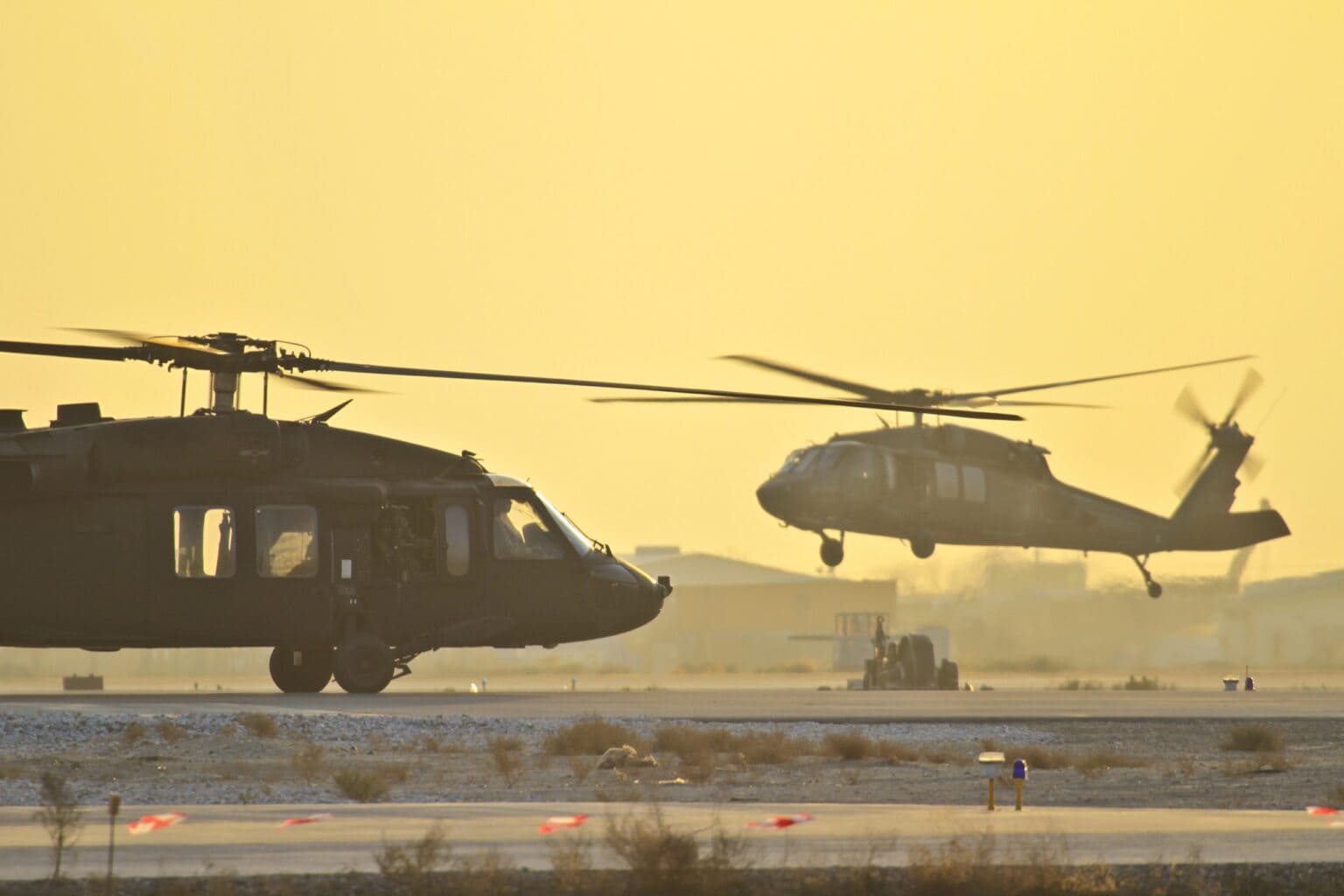
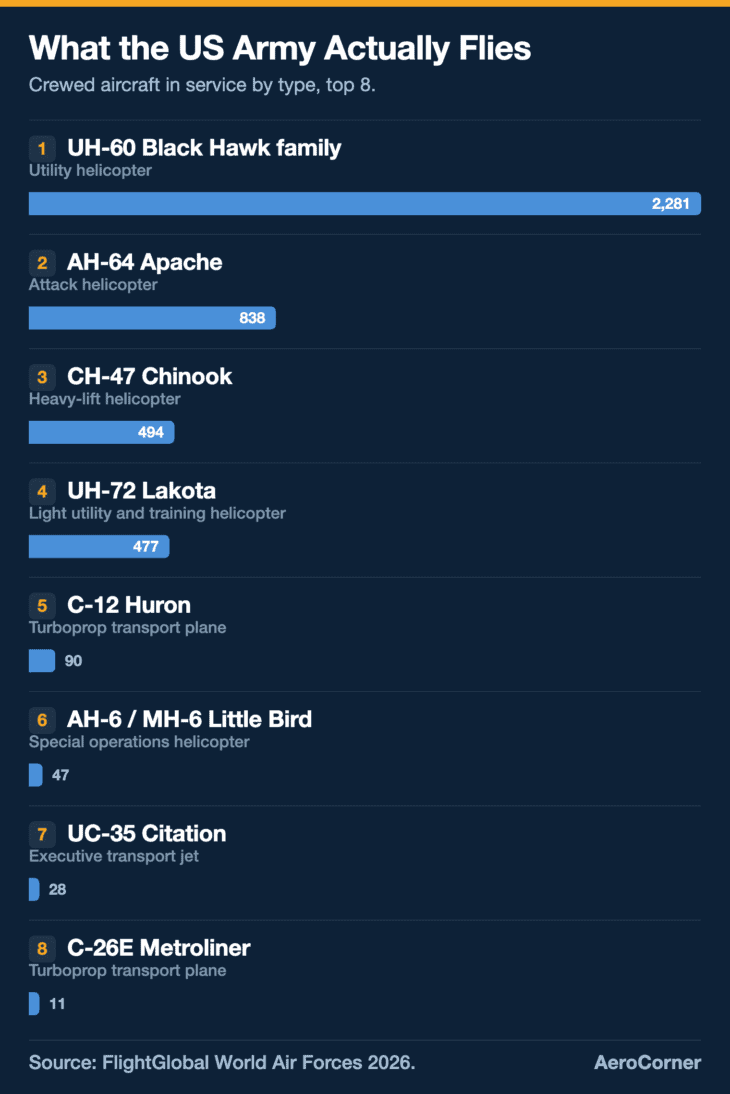
The US Army flies nearly 4,400 crewed aircraft, and about 93% of them are helicopters. The single most common Army aircraft is the UH-60 Black Hawk, with 2,281 in the family, more than every other Army type combined.
This list ranks every Army aircraft type by how many are in service, using FlightGlobal’s World Air Forces 2026 directory. It covers the helicopters, the small fixed-wing fleet most people never see, the new spy jet, the MV-75 tiltrotor coming next, and the drones, with status checked as of November 2026.
| Rank | Aircraft | Type | Main job | In service |
|---|---|---|---|---|
| 1 | UH-60 Black Hawk family | Helicopter | Utility, medevac, special operations | 2,281 |
| 2 | AH-64 Apache | Helicopter | Attack | 838 |
| 3 | CH-47 Chinook | Helicopter | Heavy lift | 494 |
| 4 | UH-72 Lakota | Helicopter | Light utility, training | 477 |
| 5 | C-12 Huron | Turboprop plane | Utility transport | 90 |
| 6 | AH-6 / MH-6 Little Bird | Helicopter | Special operations | 47 |
| 7 | UC-35 Citation | Business jet | Executive transport | 28 |
| 8 | C-26E Metroliner | Turboprop plane | National Guard transport | 11 |
| 9 | C-27J Spartan | Turboprop plane | Special operations airlift | 7 |
| 10 | C-41A (CASA 212) | Turboprop plane | Special operations airlift | 5 |
| 11 | ME-11B HADES | Business jet | Deep-sensing spy plane | 3, plus 3 on order |
| 12 | MV-75 Cheyenne II | Tiltrotor | Long-range assault | In development |
How this ranking works
Types are ranked by the number in Army service in FlightGlobal’s World Air Forces 2026 directory, whose data was drawn on October 1, 2025. Variants are grouped into families (UH-60, HH-60 and MH-60 count as one Black Hawk family). Status lines are updated to November 2026 from Army and defense press sources. Contractor-owned jets, a handful of one-off types and the drones are covered after the main list.
Helicopters get a short entry each here, because our guide to every helicopter the US Army flies covers them in depth. The airplanes, spy jets and drones get the detail most lists skip.
1. UH-60 Black Hawk
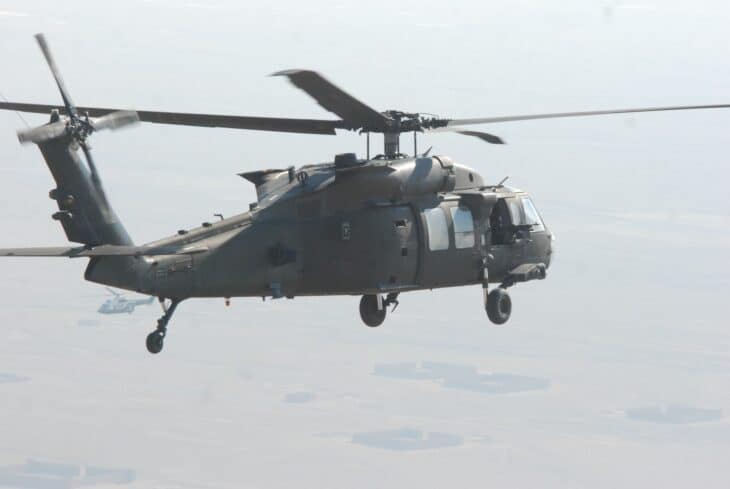

The Black Hawk is the Army’s workhorse, with 2,281 aircraft across the UH-60 utility, HH-60 medical evacuation and MH-60 special operations models. FlightGlobal lists another 114 on order plus 87 options.
The current UH-60M Black Hawk cruises at 152 kt (175 mph) and carries a squad of soldiers, cargo or casualties. It is the aircraft the MV-75 is meant to take some missions from, though the Army says no Black Hawks are being retired to make room.
2. AH-64 Apache
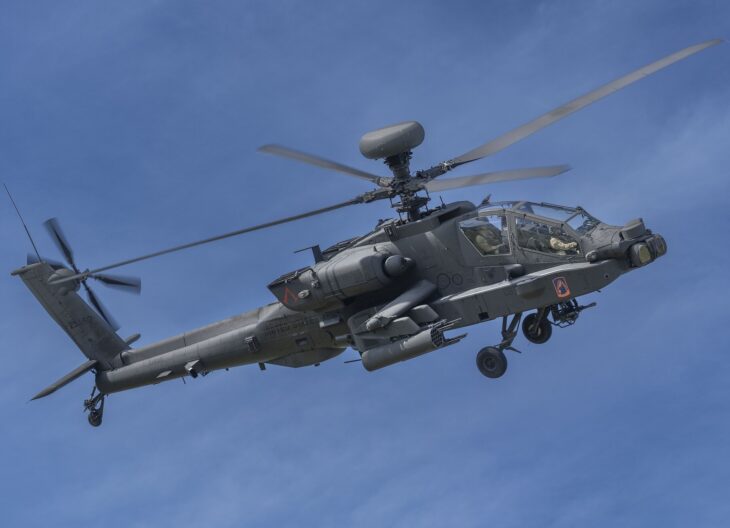

The Apache is the Army’s main attack helicopter, with 838 AH-64D and AH-64E models in service. Boeing rates its maximum level speed at more than 150 knots.
That number is falling. The Army’s May 2025 transformation order canceled procurement of the older AH-64D, and in April 2026 the service said it had divested nearly 60% of its D models in a single year, leaving the AH-64E as the future fleet.
3. CH-47 Chinook
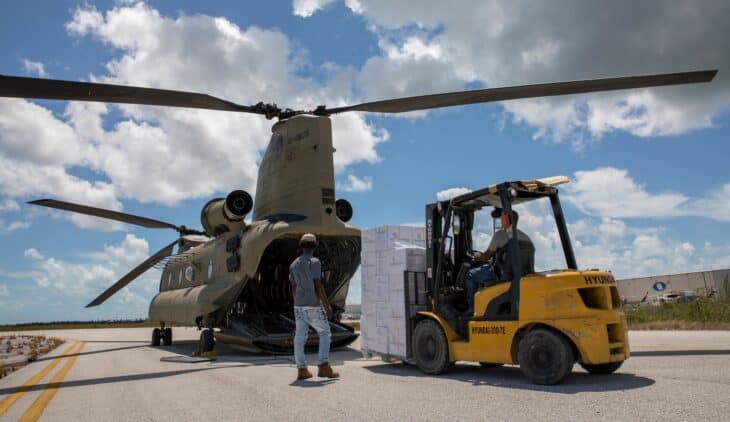

The twin-rotor Chinook moves artillery, vehicles and troops, with 494 CH-47D, CH-47F and special operations MH-47G helicopters in Army service. Boeing gives the CH-47F Chinook a cruise speed of 157 knots and a useful load of 27,700 pounds (12,565 kg).
The Army took delivery of the last CH-47F Block I, airframe number 8494, on April 13, 2026. New production now shifts to the heavier-lifting Block II.
4. UH-72 Lakota
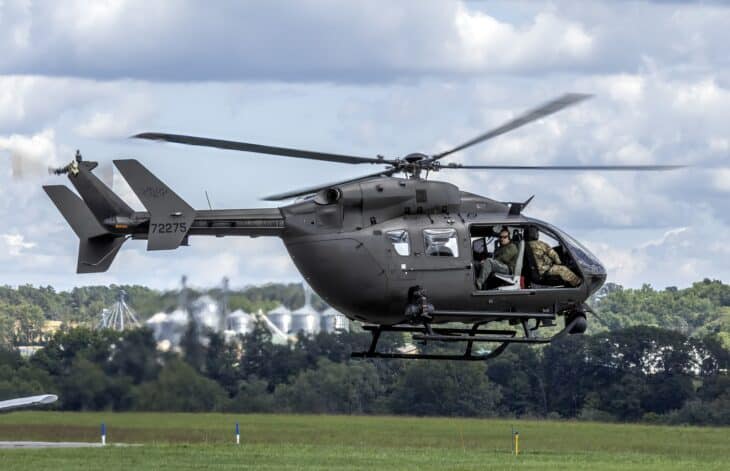

The Airbus-built Lakota is the Army’s light utility helicopter and, until now, its primary trainer: 390 operational UH-72A and UH-72B helicopters plus 87 UH-72A trainers. Airbus says it has delivered 463 UH-72As to the Army, the National Guard and, for a time, the Navy.
Its role is changing in both directions. In August 2026 the Army ordered up to 12 more UH-72Bs for $115.4 million, and the same month picked the Robinson R66 for its new contractor-run flight school, a clear break from training on the Lakota.
5. C-12 Huron
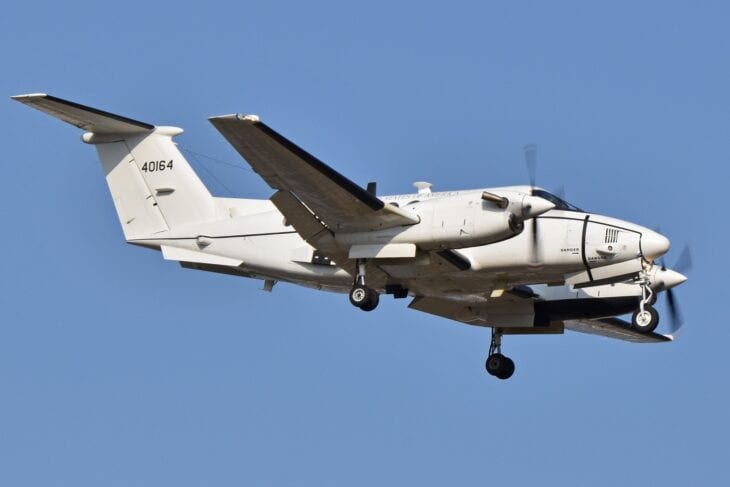

The C-12 Huron is the Army’s biggest airplane fleet, and it is a Beechcraft King Air in uniform. FlightGlobal counts 90 King Air 200 and 350 transports, which fly people and priority cargo between bases.
The King Air 350 cruises at 292 kt (336 mph) and reaches 35,000 feet. In November 2026 the Army said it had fitted 35 C-12s with new Garmin cockpits and would keep modernizing the fleet, so the Huron is not going anywhere.
The Army's spy King Airs are already gone
FlightGlobal’s directory still shows 49 MC-12 and RC-12 surveillance King Airs, but its data dates from October 2025. The Army flew the last Guardrail mission in July 2025 and the last EMARSS mission in September 2025, ending four decades of turboprop spy planes.
6. AH-6 and MH-6 Little Bird
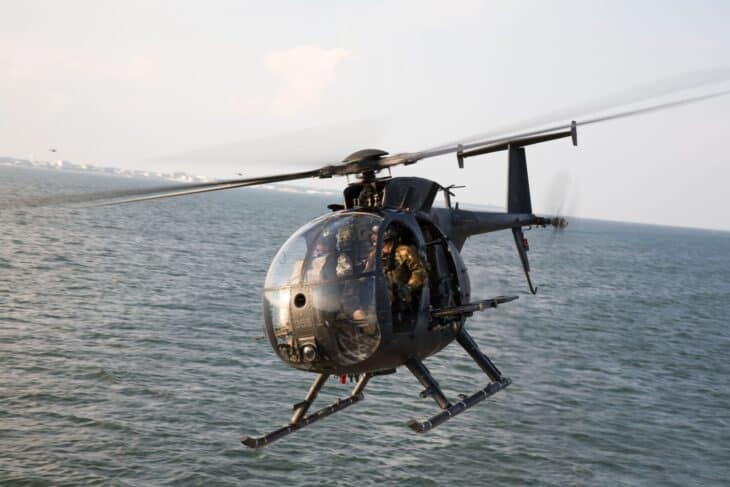

The tiny Little Bird belongs to the 160th Special Operations Aviation Regiment, the Night Stalkers, with 47 in service. The MH-6M carries special operators into tight spots, and the AH-6M is the armed version.
The MH-6M Little Bird tops out at 152 kt (175 mph). FlightGlobal lists 74 more as orders or options.
7. UC-35 Citation
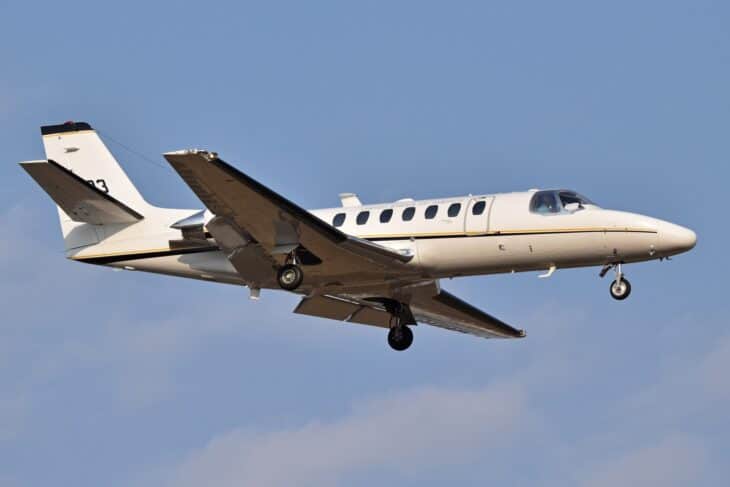

Yes, the Army flies business jets. Its 28 UC-35s are Cessna Citation Ultras and Encores, used to move senior officers and small teams quickly across the country.
The Citation Encore has a maximum cruise speed of 428 kt (493 mph) and a ceiling of 45,000 feet. The UC-35 fleet is maintained under the same Army contract as the C-12s and C-26s, and no replacement has been announced.
8. C-26E Metroliner
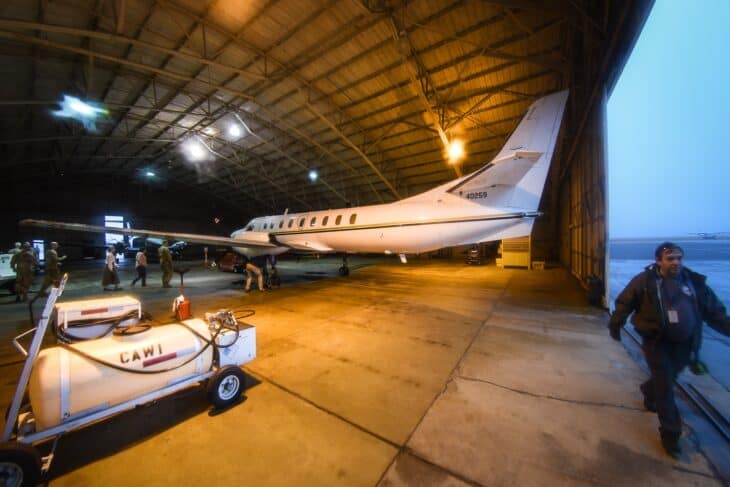
The Army National Guard flies 11 C-26E Metroliners, twin-turboprop commuter planes used for personnel and cargo runs between Guard units. They are flown in a shared pool with the Guard’s C-12s.
The Air National Guard retired its RC-26 surveillance Metroliners, but the Wisconsin Guard said that decision did not touch the Army’s C-26 transports.
9. C-27J Spartan
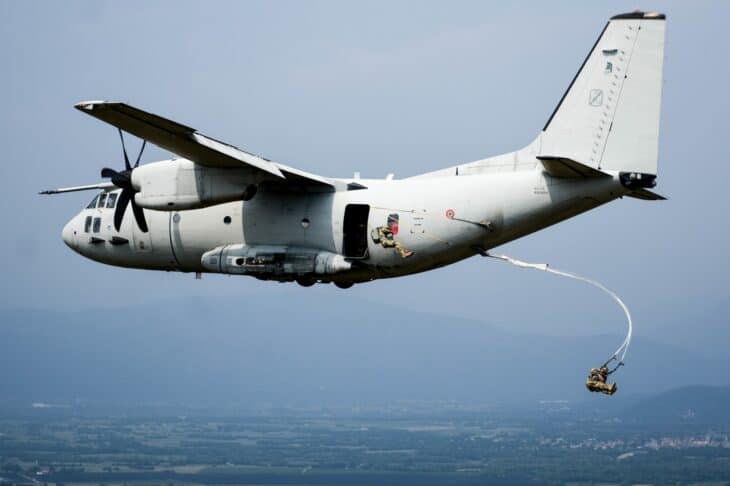

The Army’s biggest transport plane is the C-27J Spartan, a twin-turboprop tactical transport, and it has only seven. US Army Special Operations Command received them in 2014.
They support special operations from North Carolina, with a detachment at Yuma Proving Ground in Arizona. The C-27J Spartan cruises at 315 kt (362 mph).
10. C-41A (CASA 212)
Five C-41As, the Army name for the Spanish-built CASA 212, still appear in the 2026 directory. These boxy twin-turboprops are the special operations transports the C-27J was bought to replace.
In early 2024 the USASOC Flight Company was still flying them alongside the Spartans. Expect this line to disappear in a future count.
11. ME-11B HADES
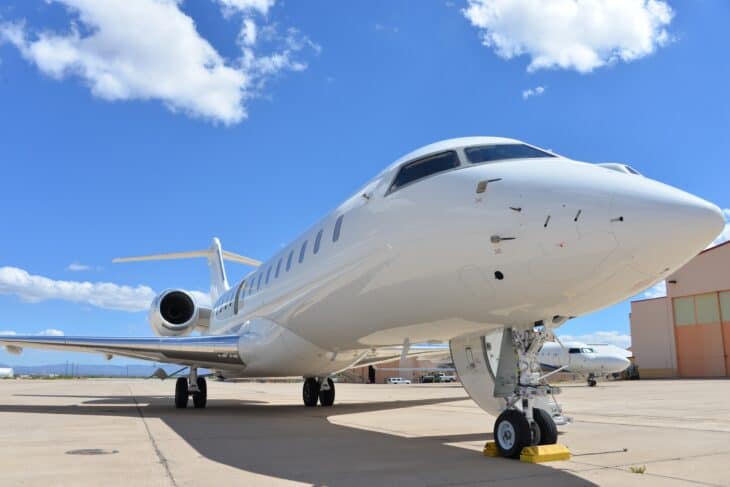

The Army’s newest spy plane is a Canadian business jet. The High Accuracy Detection and Exploitation System, or HADES, is a Bombardier Global 6500 converted by Sierra Nevada Corporation and designated ME-11B, with three listed in service and three more on order.
It cruises at up to 504 kt (580 mph), flies at 51,000 feet and has a range of 6,600 nm (7,600 miles), so it can listen deep into hostile territory from a safe distance. The first prototype flew on September 11, 2026, the Army announced on October 30.
How many HADES jets the Army will end up with is unsettled: a January 2026 request for information named an acquisition objective of 14 aircraft. The backstory, including a presidential threat to ban Bombardier sales, is in our story on the Army’s Canadian-built spy jet.
12. MV-75 Cheyenne II (coming next)
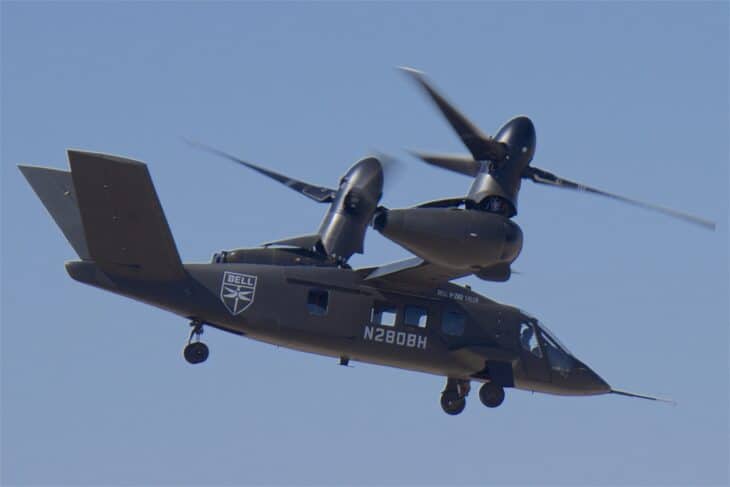

The MV-75 Cheyenne II is a tiltrotor developed from the Bell V-280 Valor, which reached its 280-knot cruising speed in 2019. The Army named it on April 15, 2026, calling it the first entirely new platform in its inventory since the 1980s.
It is meant to fly twice as fast and twice as far as a Black Hawk, carrying 14 troops and a crew of four. Bell is building the first three prototypes, and the 101st Airborne Division is slated to be the first unit.
The dates are slipping, not shrinking. In October 2026 the Army said it was no longer pursuing further schedule acceleration and could not say when soldiers would get the first aircraft, and no first flight had been confirmed as of November 2026.
The other Army aircraft most lists miss
Below the main fleets sits a long tail of one-offs. FlightGlobal’s 2026 directory lists 10 Russian-designed Mi-8 and Mi-17 helicopters and a single Mi-24 in Army hands, plus five Bell 407s and one H125.
The fixed-wing tail includes three C-12J Beech 1900s, one C-20H Gulfstream IV and four T-6D trainers. Contractor CAE USA also runs six G120TP and 11 King Air trainers for Army flight training.
The Golden Knights parachute team flies its own planes too: two C-147As, the military name for the Dash 8-315, delivered by 2019, and Viking UV-18C Twin Otters, three of which were ordered in 2013.
Then there are the contractor-owned, contractor-operated spy jets filling the gap until HADES arrives: two Challenger 650 ARTEMIS jets and five Global 6500s flying as ARES, ATHENA-R and ATHENA-S.
The drones the Army flies in 2026
The Army’s drone fleet is in the middle of a complete turnover. The RQ-7B Shadow, once the standard brigade drone with about 500 airframes, was retired at a ceremony on March 19, 2024, and its planned replacement, the Future Tactical UAS, was canceled in 2025.
The big drone is the MQ-1C Gray Eagle, a Predator derivative, with about 200 in the fleet according to a 2024 Congressional Budget Office count. The Army stopped buying it for the active force in 2025, and older Gray Eagles are expected to retire around fiscal 2028 even as some move to the National Guard.
The growth is all in small drones. A May 2026 Congressional Research Service brief lists the Skydio X10D and Teal Black Widow as the Army’s short-range reconnaissance quadcopters, company-level systems from Anduril, Performance Drone Works and AeroVironment, and first-person-view attack drones for platoons.
The hand-launched RQ-11 Raven, fielded by the thousands, is being phased out. For how the Army’s drones compare with the Air Force and Navy’s, see our ranking of the US military drones that matter.
Army aircraft retired since 2022
The Army retired every one of its turboprop surveillance planes in four years. The Dash 8-based ARL-E went in 2022, and the RC-12X Guardrail, the Dash 7-based ARL-M and the MC-12S EMARSS-M followed between fiscal 2023 and fiscal 2025.
The Army’s own reason was blunt: the turboprops had “limited speed, range, altitude, power, and payload carrying capacity for deep sensing.” That is why their replacement is a jet that flies 16,000 feet higher.
The force is also shrinking overall. A 2024 Congressional Budget Office report found the Army had nearly 5,000 crewed aircraft in 2000 and about 3,900 in 2023, and in 2025 the Army announced it would cut 6,500 active-duty aviation jobs over two years.
Why the Army doesn’t fly fighter jets
The short answer is a series of turf deals with the Air Force. The Key West Agreement of April 21, 1948, divided roles among the services soon after the Air Force became independent, and committed the Army not to duplicate functions assigned to the Air Force.
In the early 1950s the Pace-Finletter rules capped Army fixed-wing aircraft at an empty weight of 5,000 pounds (2,270 kg). Then the 1966 Johnson-McConnell agreement settled it: the Army handed its CV-2 Caribou and CV-7 Buffalo transports to the Air Force, and the Air Force gave up its claims to helicopters.
Is it illegal for the Army to fly armed planes?
No. This is a common myth. No law bars the Army from flying fixed-wing aircraft, and the 1966 deal itself carved out administrative support planes, which is why the C-12 and UC-35 exist. What keeps the Army out of fighters is the agreement not to duplicate Air Force roles and the budget fights that follow, not a statute. That is also why the Army poured its money into helicopters, which make up about 93% of its fleet today.
The Air Force side of the story, with every jet it flies, is in our guide to every aircraft in the US Air Force.
FAQ
Sources and references used for research and fact-checking.
- FlightGlobal, World Air Forces 2026
- Defense News, Report shows a smaller US Army aircraft fleet with fewer flying hours
- Military Times, Army to cut 6,500 active-duty aviation jobs over next 2 years
- U.S. Army, Letter to the Force: Army Transformation Initiative
- Breaking Defense, Army making significant headway in ATI aviation overhaul, divesting Apache AH-64D fleet
- Boeing, AH-64 Apache
- Boeing, H-47 Chinook
- U.S. Army, Final CH-47F Block I Chinook delivered
- The Defense Post, US Army orders more Lakota helicopters
- The War Zone, Army to use Robinson R66 for its new helicopter pilot training concept
- U.S. Army, Army C-12 modernization effort marks 1,000th Garmin King Air retrofit
- U.S. Army, Army completes A-ISR turboprop fleet divestment
- The War Zone, Army to retire all of its turboprop surveillance planes by the end of the year
- National Guard Association of the United States, Fleet need
- Amentum, Amentum awarded $946M contract to manage U.S. Army fixed-wing aircraft fleet
- The Aviationist, Let's have a look at the rarely seen C-27Js of the U.S. Army Special Operations Command
- The Aviationist, U.S. Army's HADES prototype completes first flight
- U.S. Army, Army selects Sierra Nevada Corporation as lead system integrator for HADES
- The War Zone, ME-11B official designation of Army's new intelligence gathering business jets
- U.S. Army, Army names FLRAA the MV-75 Cheyenne II
- Breaking Defense, Army introduces MV-75 as Cheyenne II, won't commit to first flight, production dates
- Stars and Stripes, Army MV-75 Cheyenne II tiltrotor
- Bell, Bell V-280 Valor reaches 280 knots
- Defense News, Army aviation charts new course as it grapples with surprise cuts
- U.S. Army, RQ-7B Shadow retirement
- Congressional Research Service, Army Small Uncrewed Aircraft Systems (IF12668)
- Defense War Room, Gray Eagle funding for the Arizona National Guard
- Air & Space Forces Magazine, Roles and missions: the Key West Agreement
- Modern War Institute at West Point, Restoring landpower's wings: the case for Army fixed-wing airlift
- War on the Rocks, Slaying the unicorn: the Army and fixed-wing attack
- U.S. Army, Army parachute team welcomes new plane
- U.S. Army, Golden Knights accept first of three new aircraft
Get the Newsletter
The latest aviation news and stories sent to your inbox.
About the Author

Tim is the owner and lead editor of AeroCorner since 2019, overseeing aviation content covering aircraft, airlines, airports, and the broader aviation industry. Through years of researching, writing, editing, and publishing aviation-focused content, he has developed extensive practical knowledge of commercial aviation and air travel. Based in Asia and a frequent traveler himself, Tim also brings firsthand passenger experience to AeroCorner’s coverage. Outside of publishing, he has also explored aviation firsthand through hands-on flight training in New Zealand.