Tilt Rotors
Bell Boeing V-22 Osprey
ICAO: V22
The 280-knot tiltrotor demonstrator that became the Army's MV-75 Cheyenne II
Updated: by Tim de Vries
The latest aviation news and stories sent to your inbox.
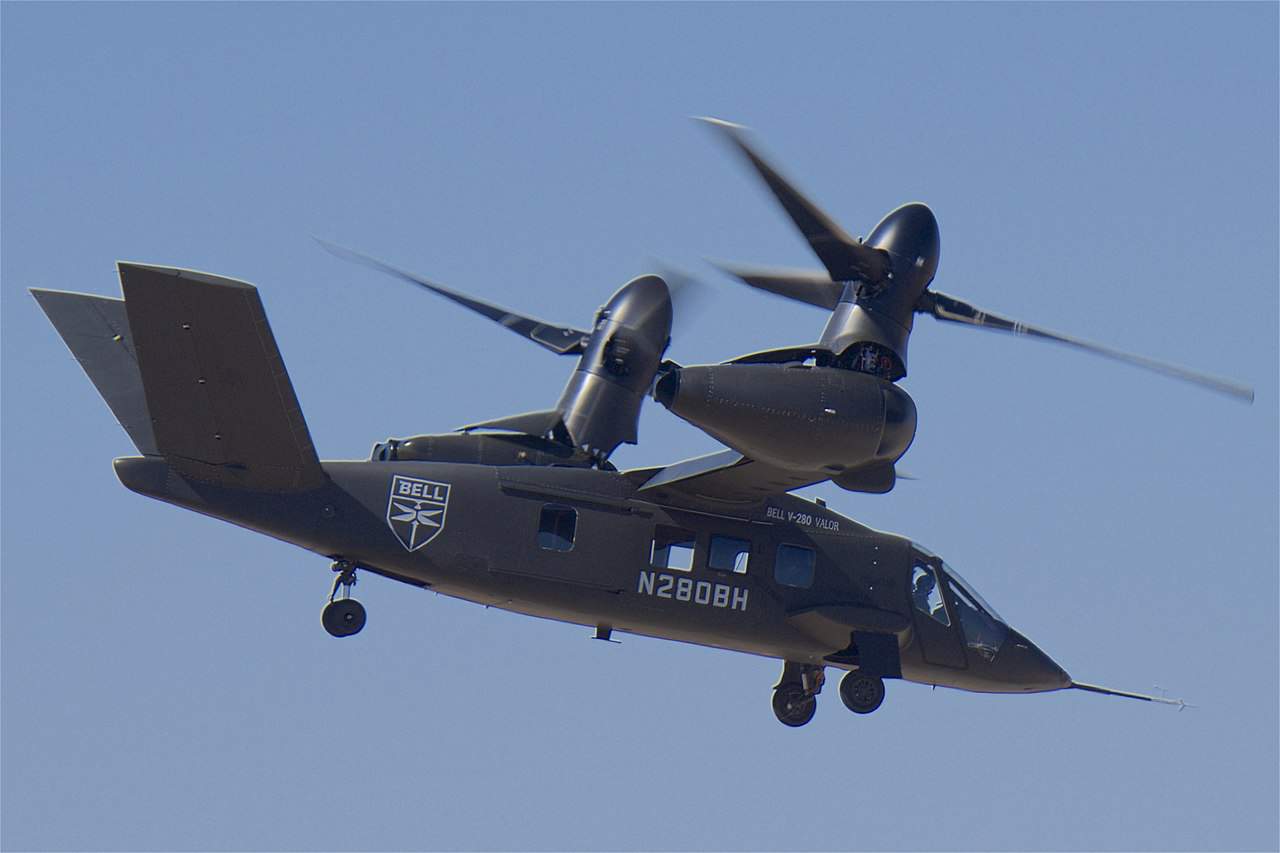
The Bell V-280 Valor is the tiltrotor the U.S. Army selected in December 2022 to replace much of its Black Hawk fleet under the Future Long Range Assault Aircraft program. The single demonstrator first flew on December 18, 2017, reached 305 knots and logged more than 214 flight hours before retiring in June 2021. The production version is the MV-75 Cheyenne II, with eight test aircraft being built in 2026.
Live Fleet Activity (V280)
Fetching live data…


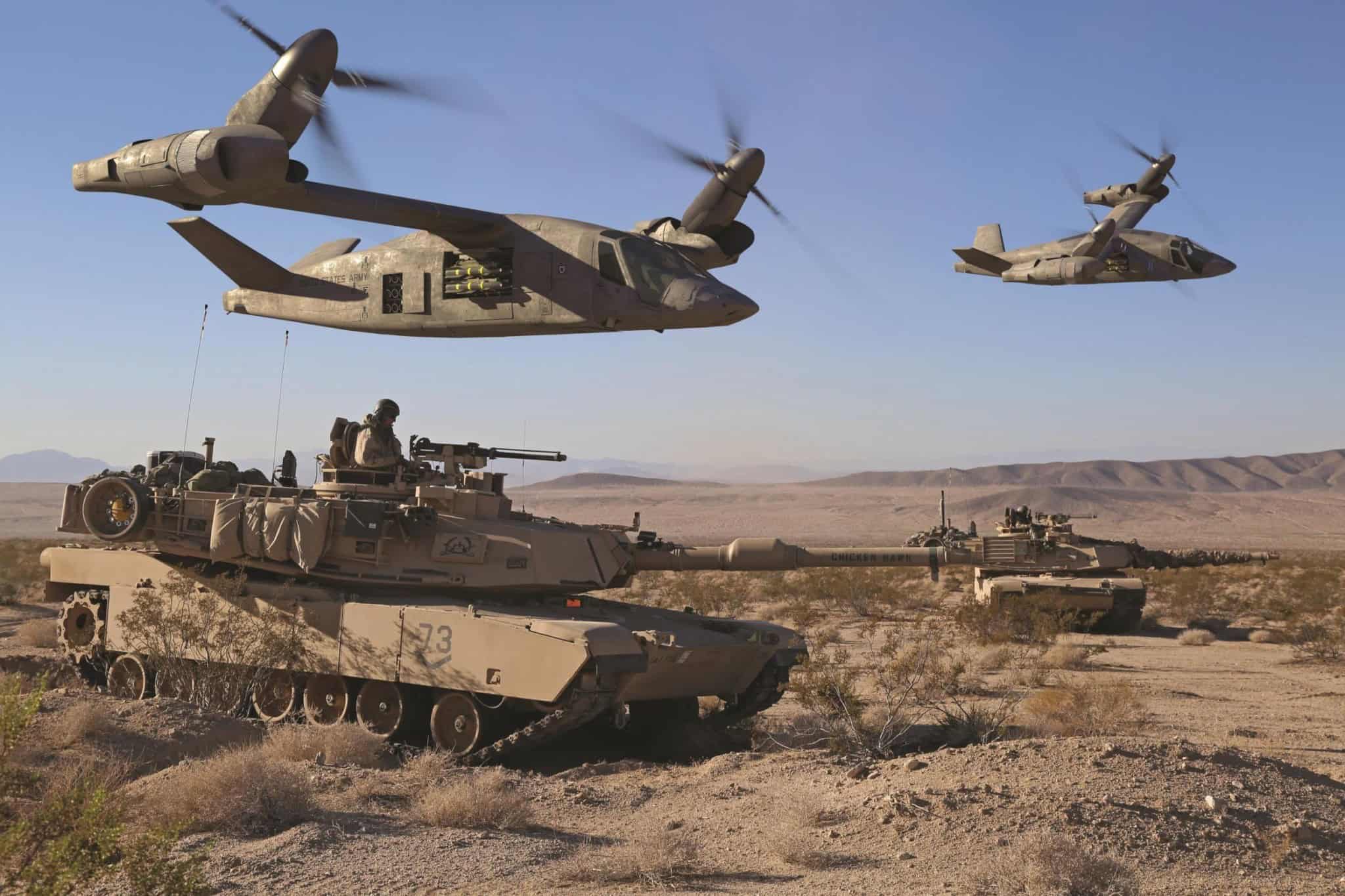


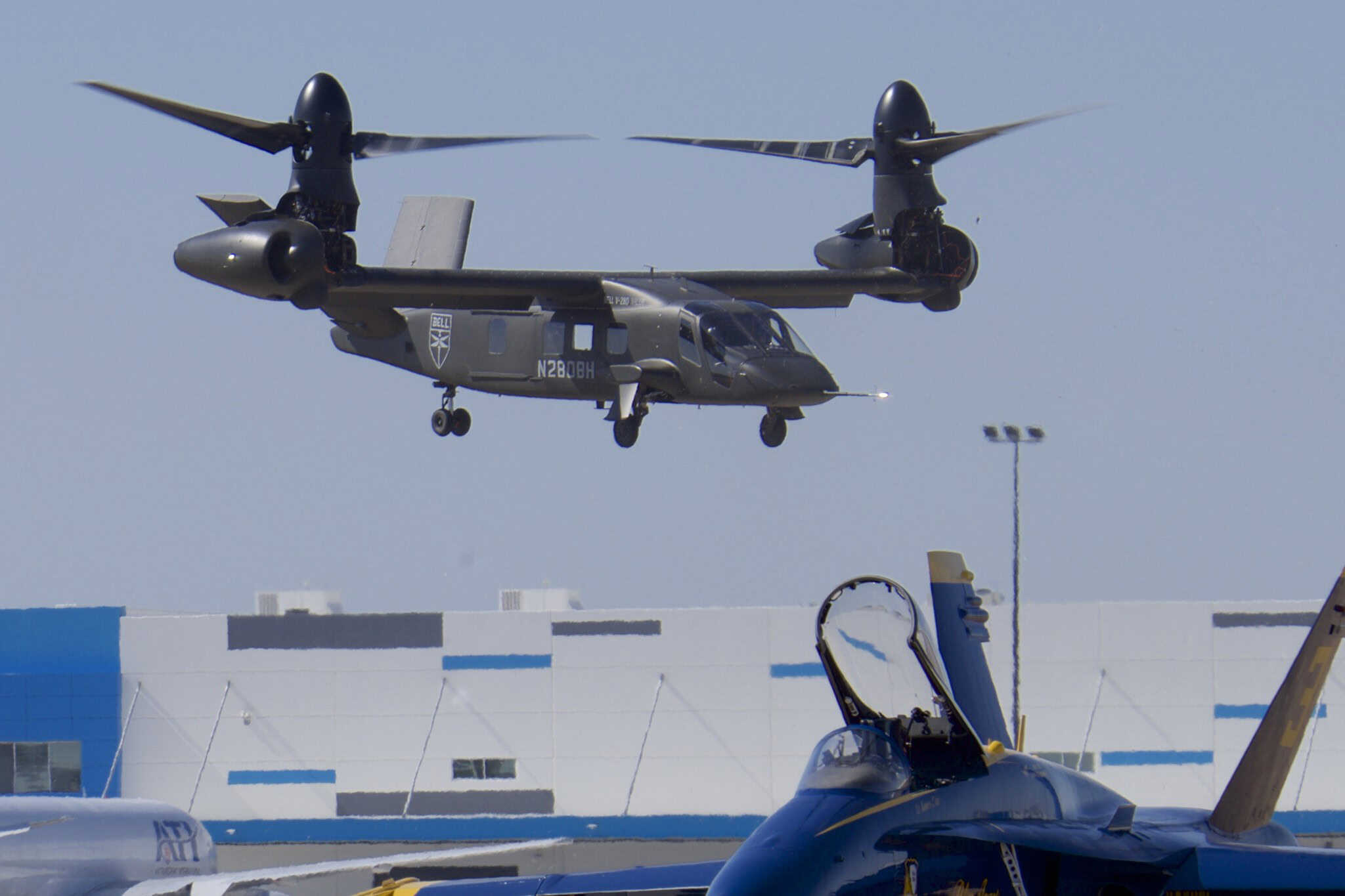


The Bell V-280 Valor is the tiltrotor that won the U.S. Army’s contest to replace much of the Black Hawk fleet. The single demonstrator first flew on December 18, 2017, and the production version now being built is the MV-75 Cheyenne II.
It takes off and lands like a helicopter, then tilts its rotors forward to cruise at 280 knots (322 mph). That is roughly twice the speed and reach of the helicopters it is meant to succeed.
Bell unveiled the V-280 design in 2013. That June, Bell announced the Army had selected it for the Joint Multi-Role Technology Demonstrator, the research phase that came before the Future Vertical Lift program.
In September 2013 Lockheed Martin joined as the partner for avionics, sensors and weapons. Moog took the flight controls, Spirit AeroSystems the composite fuselage, GKN the V-tail, and Israel Aerospace Industries the nacelle structures.
In October 2014 the Army confirmed the V-280 and the Sikorsky-Boeing SB-1 Defiant as the two designs that would be built and flown. Spirit delivered the first V-280 fuselage in September 2015, just 22 months after design work began.
On December 5, 2022, the Army chose the V-280 over the Sikorsky-Boeing Defiant X for the Future Long Range Assault Aircraft (FLRAA) program. Sikorsky protested, and the Government Accountability Office denied the protest on April 6, 2023.
The program passed Milestone B in August 2024, which made it an official program of record and started engineering and manufacturing development. The Army revealed the MV-75 designation in May 2025: “M” for multi-mission, “V” for vertical takeoff, and “75” for the Army’s founding year of 1775.
On April 15, 2026, the Army named the aircraft Cheyenne II in Nashville, honoring the Northern Cheyenne Tribe of Montana and the Cheyenne and Arapaho Tribes of Oklahoma. The “II” refers back to the Lockheed AH-56 Cheyenne, a high-speed attack helicopter of the late 1960s that never went ahead.
The V-280 flew for the first time on December 18, 2017, at Bell’s Amarillo, Texas, facility. It flew in airplane mode by the end of April 2018 and reached its 280-knot cruise target in January 2019.
Testing then moved on to low-speed agility, steep bank angles and autonomous flight, which Bell demonstrated in December 2019. By December 2020 the aircraft had logged more than 200 flight hours across 159 flights.

Bell retired the demonstrator in June 2021 after more than 214 flight hours. Its top speed in testing was 305 knots (351 mph), against an Army threshold for FLRAA expected in the 230 to 250 knot range.
Five Army experimental test pilots flew it over 15 sorties before the retirement. The airframe was then taken apart to inspect its internal components and later partly reassembled as a display aircraft.
The obvious comparison is the Bell Boeing V-22 Osprey, the tiltrotor already in U.S. military service. The V-280 is a second-generation design that changes several things the Osprey does.
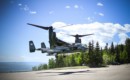
The biggest change is at the wingtips. On the V-22 the entire engine nacelle tilts, while on the V-280 the engines stay fixed and only the proprotors and driveshafts rotate.
A driveshaft runs through the straight wing, so either engine can turn both rotors if the other one fails. The flight controls are triple-redundant fly-by-wire.
The V-280 also has lower disk loading and a longer wing than the Osprey, which improves both hover and cruise efficiency. Its one-piece carbon-fiber wing uses bonded honeycomb construction and was designed to cost about a third less than a V-22 wing of the same size.
The wing sits more than 7 feet (2.1 m) above the ground. That lets soldiers step straight out of two 6-foot (1.8 m) wide side doors and gives door gunners a wide field of fire.
The full specification table for the V-280 is on this page. It describes the demonstrator that flew from 2017 to 2021, and a few of its figures need context.
Speed. The name comes from the design cruise speed of 280 knots true airspeed (322 mph, 519 km/h). The panel’s top speed is the 305 knots (351 mph) the demonstrator actually reached in testing.
Range. The range figure is the 2,100 nautical mile (2,420 mile, 3,890 km) self-deployment range, the distance it can fly itself to a theater without a ship or cargo plane. Loaded with troops, Bell quotes a combat range of 500 to 800 nautical miles (575 to 921 miles).
Width. Bell publishes no wing-only span, so the panel leaves wingspan blank. Measured tip to tip across both 35-foot (10.7 m) proprotors, the V-280 is about 81 feet 9 inches (24.93 m) wide.
Hover. The 6,000-foot figure often quoted for the V-280 is a hover out of ground effect at 6,000 feet (1,830 m) on a 95°F (35°C) day. That is a hot-and-high hover condition, not a service ceiling, and some spec sheets list it as one.
Engines. The demonstrator used two GE T64-GE-419 turboshafts of nearly 5,000 shp each. In October 2021 Bell switched the production design to the Rolls-Royce AE 1107F, a derivative of the Osprey’s engine, for more power and lower sustainment cost.
The V-280 carries a crew of four and up to 14 troops. Its fuselage is roughly the size of a Black Hawk, the medium-lift helicopter it is designed to outfly.
Dual cargo hooks let it carry a 10,000-pound (4,540 kg) M777A2 howitzer as a sling load at 150 knots (173 mph). Bell demonstrated sling loads, along with a tactical data link, in December 2020.

Bell and Lockheed Martin have also described an attack variant, the AV-280. It could launch rockets, missiles or small drones forward or aft, even in cruise mode with the rotors forward.
The Army, which leads the program, wants separate aircraft for utility and attack. The Marine Corps has shown interest in one aircraft covering both jobs.
No MV-75 had flown as of September 2026. Bell is building eight test aircraft, and six were in various stages of assembly in June 2026.
The first MV-75 wing was finished in February 2026. Bell says it took 90% fewer labor hours than the first V-22 wing, and the second wing cut another 40%.

In January 2026 the Army said the first prototype was due for delivery at the end of 2026, with testing to begin in early 2027.
By April, program leaders declined to commit to a first-flight date. “It’s going to happen when it’s going to happen,” said Maj. Gen. Clair Gill.
Fielding dates have moved too. Reporting in 2026 has ranged from an Army aim of about 2030 to unit deliveries in 2031 to 2032, with the 101st Airborne Division named as the first unit.
There is no public flyaway price for the MV-75 yet. Bell has said it expects the aircraft to cost about the same as an AH-64E Apache or MH-60M Black Hawk.
The initial FLRAA contract obligated $232 million, with a ceiling of $1.3 billion if all options are exercised. The Army put the development and low-rate production phase at roughly $7 billion.
If the Army buys the full fleet over the aircraft’s life, it estimated the program could reach about $70 billion, including potential foreign sales.
Yes. The single V-280 demonstrator stopped flying in June 2021, but the design continues as the Army’s MV-75 Cheyenne II, which is in engineering and manufacturing development with eight test aircraft being built.
No. The demonstrator’s retirement in 2021 is sometimes read as a cancellation, but it had finished its test program. The Army selected the design for FLRAA in December 2022.
No V-280 crash is on record. The only V-280 built was retired intact in June 2021 after more than 214 flight hours, then disassembled for inspection and later used as a display airframe.
On the V-280 the engines stay fixed and only the rotors tilt, while the V-22 rotates its entire engine nacelles. The V-280 also has a straight one-piece composite wing, lower disk loading, a V-tail and triple-redundant fly-by-wire.
The demonstrator reached 305 knots (351 mph) in testing. Its design cruise speed, which gives the aircraft its name, is 280 knots (322 mph).
The demonstrator flew with two GE T64-GE-419 turboshafts. The production MV-75 uses the Rolls-Royce AE 1107F, a derivative of the engine in the V-22 Osprey.
No unit price has been published. Bell has said it expects a cost similar to an AH-64E Apache or MH-60M, and the Army has estimated the whole program at up to about $70 billion over its life.
The main risks are schedule and cost rather than performance. The Army would not commit to a first-flight or production date in April 2026, the program relies on about 300 tier-one suppliers, and it will not replace the Black Hawk one for one.
The V-280 is an assault transport, not an attack aircraft. Among the types of military helicopters, the Army’s main attack helicopter is the AH-64 Apache, which leads most rankings of the best attack helicopters.
Sources and references used for research and fact-checking.