

Table of Contents
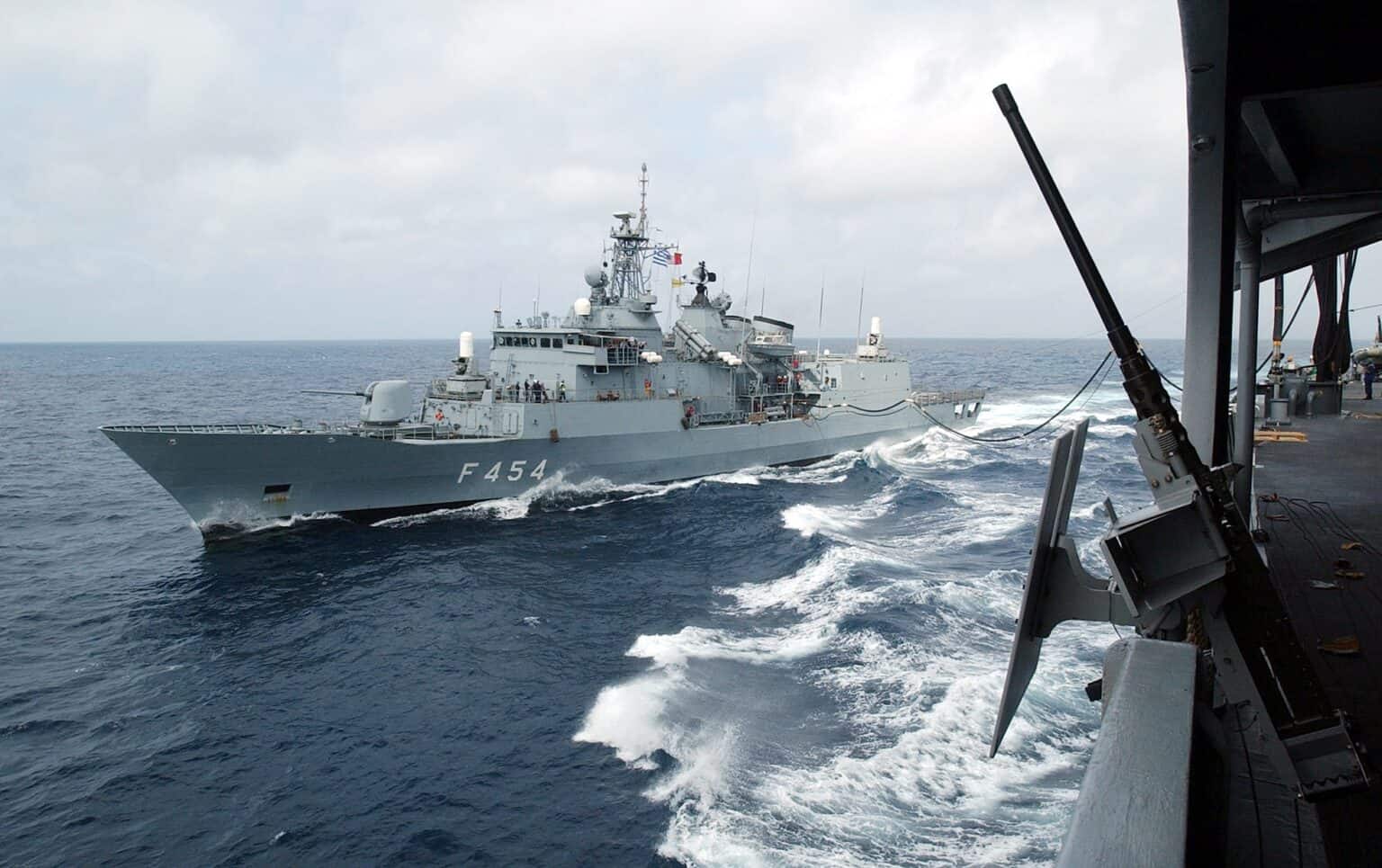
The Hellenic Navy, Greece’s navy, is led by its new Kimon-class frigates, French-built air defense ships of about 4,460 tons. The second of them, HS Nearchos, was handed over in Lorient on October 30, 2026, and the third is due before the end of the year.
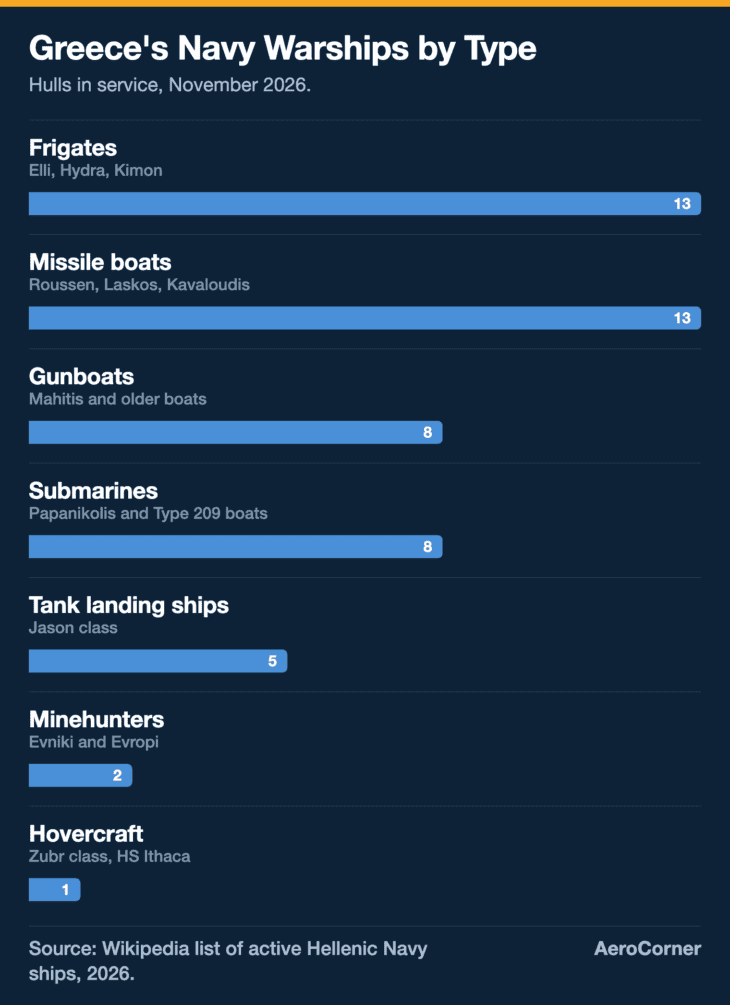
Behind them sail 13 frigates in all, eight submarines, 13 missile boats and five tank landing ships. GlobalFirepower’s 2026 index counts 186 naval assets and ranks Greece 15th in the world for fleet size, but it lists zero destroyers and zero aircraft carriers.
This guide ranks every major class Greece sails by fighting value as of November 2026, with hull counts, the ships that joined and left this year, the helicopters that fly from the fleet, and the Italian frigates Greece has just bought.
| Rank | Class | Type | Hulls in service | Status, November 2026 |
|---|---|---|---|---|
| 1 | Kimon (FDI HN) | Frigate | 2 | Nearchos delivered October 30, 2026 |
| 2 | Papanikolis (Type 214) | Attack submarine, air-independent | 4 | Mid-life upgrade agreed April 2026 |
| 3 | Hydra (MEKO 200HN) | Frigate | 4 | Modernization contracts signed 2026 |
| 4 | Elli (Kortenaer) | Frigate | 7 | Two retired in 2026 |
| 5 | Roussen (Super Vita) | Missile boat | 7 | Modernization under way |
| 6 | Okeanos, Poseidon and Glavkos (Type 209) | Attack submarine | 4 | Poseidon retired December 2025 |
| 7 | Jason and Zubr | Tank landing ship, hovercraft | 6 | Active |
| 8 | Laskos and Kavaloudis (La Combattante III) | Missile boat | 6 | Active |
| 9 | Mahitis and older gunboats | Gunboat | 8 | Active |
| 10 | Evniki and Evropi | Minehunter | 2 | Kalypso retired July 2025 |
How this ranking works
Classes are ranked by fighting value in November 2026: how modern each one is, what it carries, and how much it changes what the fleet can do. A single new air defense frigate ranks above a dozen gunboats. Hull counts come from open-source lists checked against 2026 delivery and retirement reports. Transports, survey ships, special operations craft, tugs and auxiliaries are left out of the ranking.
1. Kimon Class: The New French Frigates
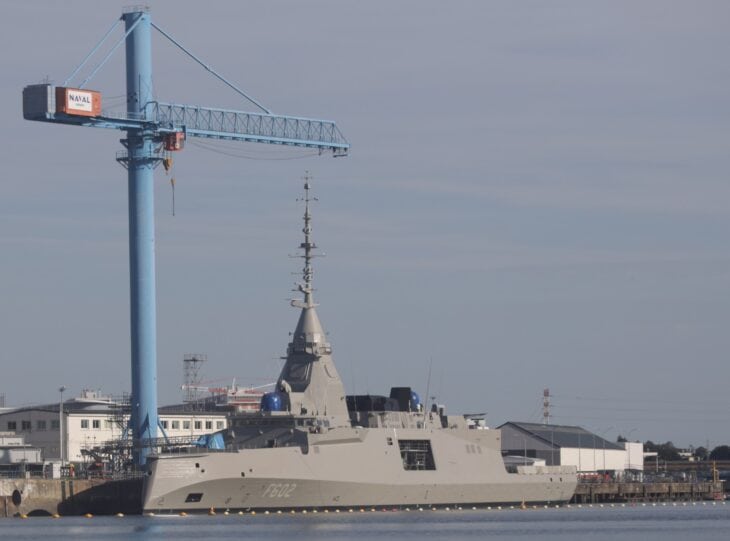

The Kimon class is Greece’s version of France’s Defense and Intervention Frigate (FDI), often called the Belharra. Each ship is about 400 feet (122 m) long, displaces about 4,460 tons and has a range of 5,000 nautical miles at 15 knots.
HS Kimon (F-601) was handed over on December 18, 2025, and reached Greece on January 15, 2026. HS Nearchos (F-602) followed on October 30, 2026, the first Greek ship delivered in the Standard 2 configuration, with more air defense capability than Kimon.
At full fit, each ship is planned to carry 32 Aster 30 air defense missiles, a 21-round RAM launcher for close-in defense, eight Exocet anti-ship missiles and MU90 torpedoes. That makes them the first Greek warships built for area air defense since the navy retired its Charles F. Adams-class destroyers.
HS Formion is due by the end of 2026, and a fourth ship, Themistokles, was added to the order in 2025 for delivery in 2028.
2. Papanikolis Class: The Air-Independent Submarines
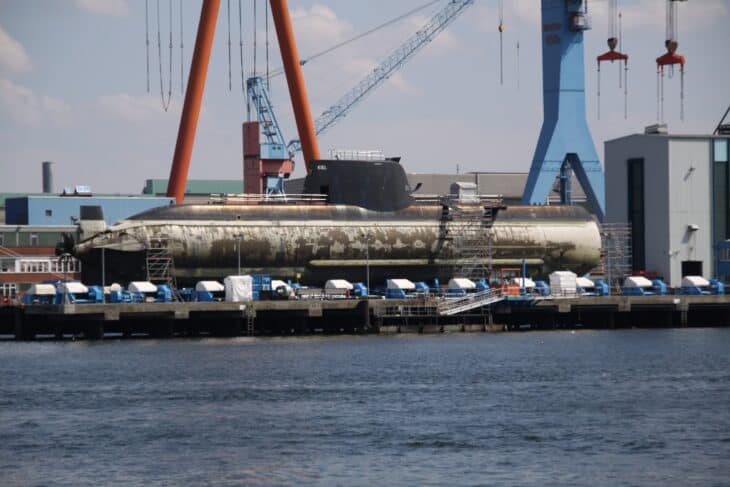

Greece’s four Papanikolis-class boats are German Type 214 submarines with fuel-cell air-independent propulsion, which lets them stay submerged far longer than a conventional diesel boat. Each is 213 feet (65 m) long and displaces about 1,690 tons surfaced.
Papanikolis was built in Kiel and commissioned in 2010. Pipinos, Matrozos and Katsonis were built at Hellenic Shipyards near Athens and joined in 2014 and 2016.
The submarine Greece refused
In sea trials, the first boat, Papanikolis, heeled as much as 46 degrees while on the surface, even after the builder shifted 21 tons of material from the top of the boat to the bottom. The Hellenic Navy refused to accept it, and it sat in Kiel harbor for years while Greece and the German builder argued over the faults and the bill.
The problems were fixed, and the four boats are now the most capable submarines in the Aegean. In April 2026, TKMS and Skaramangas Shipyards agreed to carry out their mid-life upgrade, with much of the work in Greece.
3. Hydra Class: The MEKO Frigates
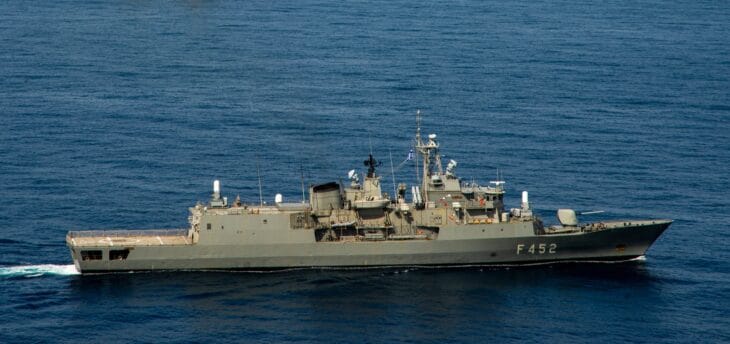

The four Hydra-class frigates, Hydra, Spetsai, Psara and Salamis, are German MEKO 200 designs commissioned from 1992 to 1998. The first was built by Blohm+Voss in Hamburg and the other three in Greece.
Each is about 385 feet (117.5 m) long, displaces 3,360 tons standard and can reach 31 knots on gas turbines. A 2008 upgrade let all four fire the ESSM air defense missile.
A deeper modernization was approved by parliament in 2023, but the main contracts with Thales and Greek industry were only signed between May and July 2026. Psara also carries an unusual cargo: reliquaries holding the hearts of two War of Independence admirals, Konstantinos Kanaris and Andreas Miaoulis.
4. Elli Class: The Dutch Workhorses
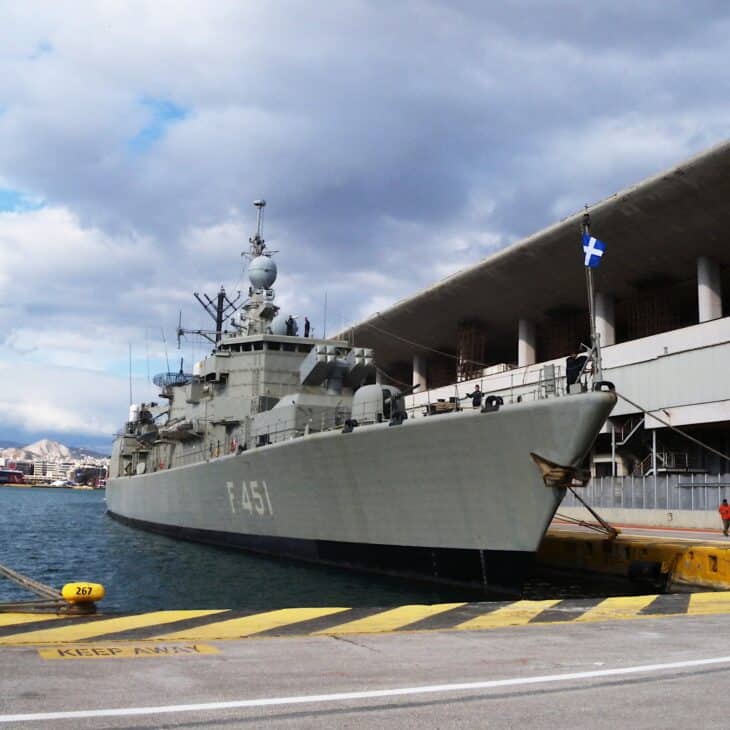

The Elli class is the largest group of frigates in the fleet. They are Dutch Kortenaer-class ships, about 427 feet (130 m) long and 3,500 tons standard, and they can carry one S-70B or two AB 212 helicopters.
Elli and Limnos were built for Greece, and the rest came second-hand from the Royal Netherlands Navy in the 1990s and early 2000s. The oldest, HS Kountouriotis, was commissioned in 1978.
The class is shrinking as the Kimons arrive. Themistoklis was retired on March 20, 2026, and Kanaris was decommissioned in November 2026 after 24 years in Greek service, leaving seven.
5. Roussen Class: The Super Vita Missile Boats
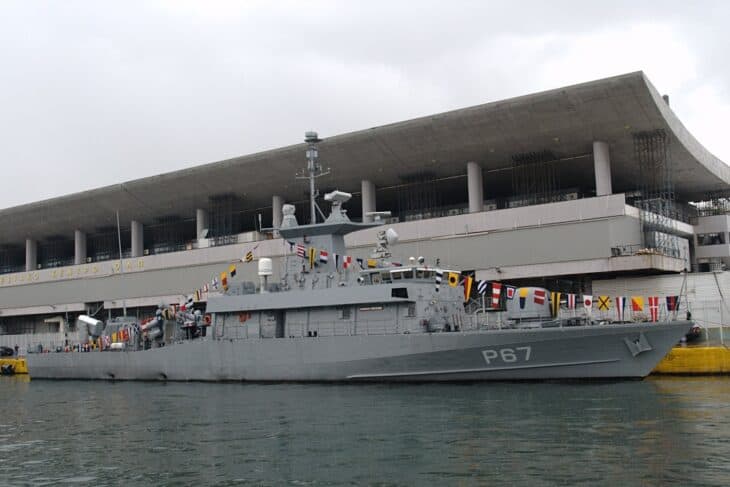

The seven Roussen-class boats, also called Super Vita, are the most heavily armed small ships in the fleet. Each is 203 feet (62 m) long, displaces 668 tons fully loaded and can reach 35 knots.
They carry eight Exocet MM40 anti-ship missiles, a 76 mm gun and a 21-round RAM launcher, a lot of firepower for a boat built to dash between Aegean islands. The design is British, by Vosper Thornycroft, and the boats were built at Elefsis Shipyards.
The shipyard’s money troubles delayed the last two boats by about a decade: the sixth was commissioned in July 2020 and the seventh on September 29, 2022.
6. Okeanos, Poseidon and Glavkos: The Type 209 Boats
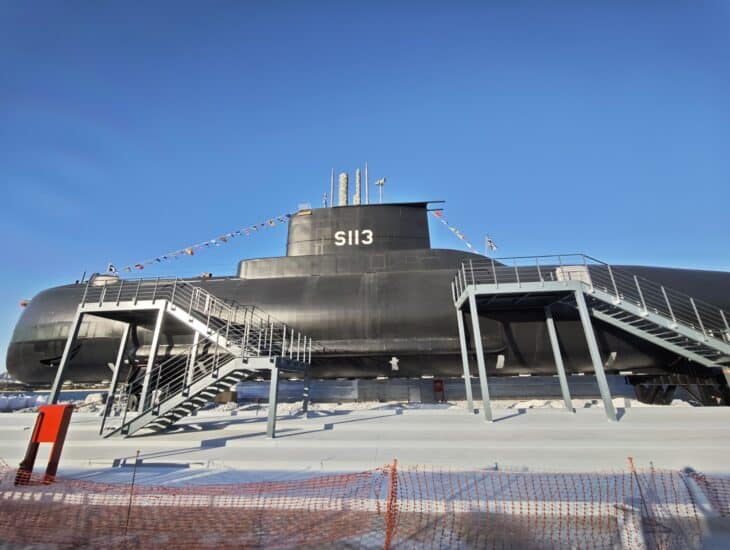

Greece’s other four submarines are older German Type 209s. HS Okeanos is the most capable, because it was rebuilt with an air-independent propulsion section and returned to service in 2014.
Only Okeanos got that upgrade, after a dispute with the builder stopped the program. Amfitriti and Pontos remain much as they were built in 1979 and 1980, and HS Nireus, commissioned in 1972, is the oldest submarine still in Greek service.
The class is near its end. Triton was retired in May 2025 and Poseidon in December 2025.
7. Jason Class and the Last Zubr: The Amphibious Force
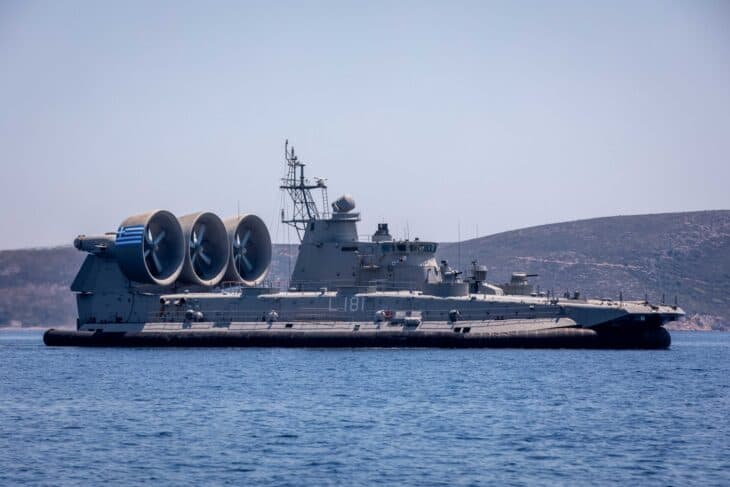

The five Jason-class tank landing ships were designed and built in Greece, at Elefsis Shipyards with the National Technical University of Athens. Each is about 381 feet (116 m) long, displaces 4,470 tons fully loaded and can carry up to 22 main battle tanks.
Alongside them sits HS Ithaca, the last of Greece’s Zubr hovercraft, a Soviet design 187 feet (57 m) long that can top 60 knots. Its sisters Cephalonia, Corfu and Zakynthos have been decommissioned.
8. Laskos and Kavaloudis: The Older Missile Boats
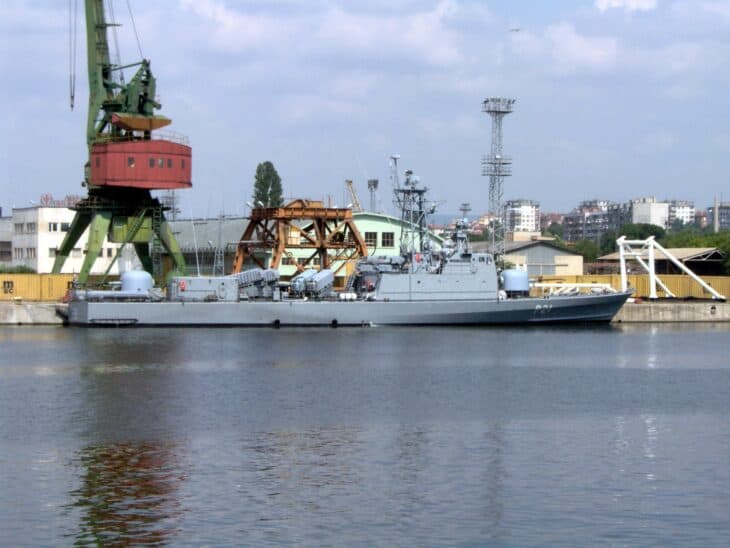

Six French-designed La Combattante III boats still serve: four of the Laskos class and two of the Kavaloudis class, Degiannis and Starakis.
They do the same job as the Roussens, fast missile strikes among the islands, with older weapons and sensors. With them, Greece has 13 missile boats, as many as it has frigates.
9. Mahitis and the Gunboats
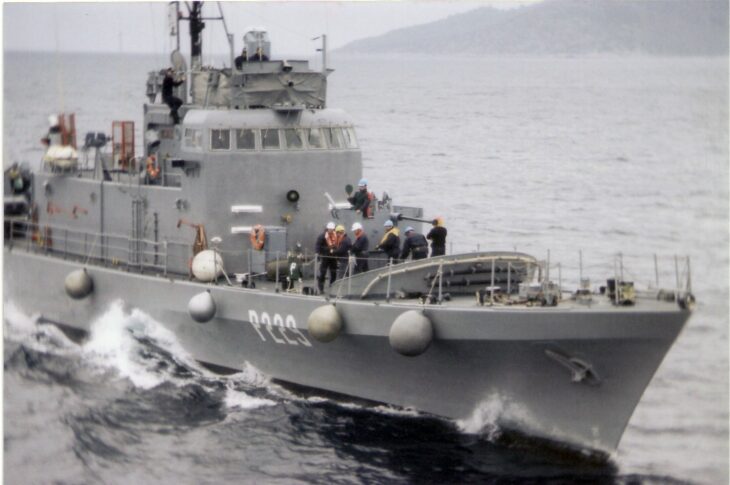

Eight gunboats patrol the islands. The four Mahitis-class boats, built in Greece from 2003 to 2005, are the newest and carry Spike NLOS missile launchers.
The rest are older: two HSY-55 boats, one Osprey 55 and HS Tolmi, a former US Navy Asheville-class gunboat from 1969 that Greece received in 1989.
10. Evniki and Evropi: The Last Two Minehunters
Greece’s mine countermeasures force is down to two ships. HS Evniki is a former US Navy Osprey-class coastal minehunter bought in 2007, and HS Evropi is a former Royal Navy Hunt-class ship.
Evniki’s sister Kalypso was decommissioned in July 2025, and Evropi’s sister Kallisto was broken in two by a container ship collision off Piraeus in October 2020.
The Aircraft of the Hellenic Navy
The navy flies its own helicopters. The backbone is 11 S-70B-6 Aegean Hawks, which entered service between 1994 and 2005 and fly from the frigates.
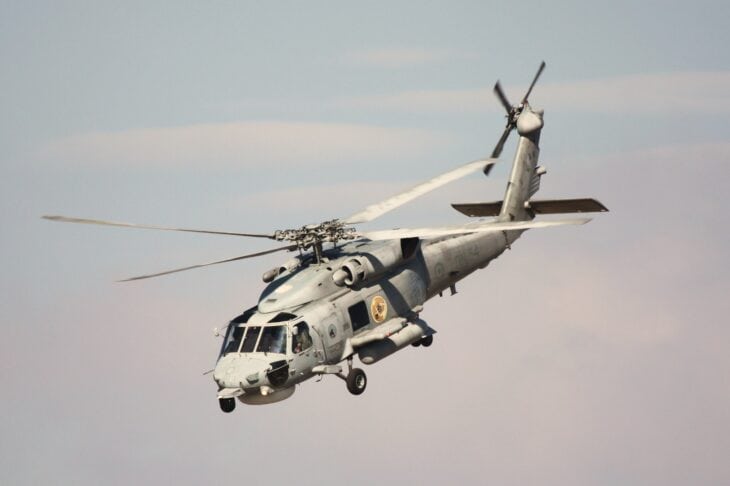

Their replacement is the MH-60R Seahawk, ordered in 2020 and 2021. Three arrived in March 2024, two more in fall 2026, and the last two of seven are due by the end of 2026. They fly alongside seven older AB 212 anti-submarine helicopters.
For long-range patrol, the navy has one reactivated P-3B Orion in service and four more being modernized by Hellenic Aerospace Industry, the first of which began test flights in September 2025. Fighters and the rest of Greece’s airpower belong to the Hellenic Air Force.
What Greece Is Buying: More Kimons and Italian FREMMs
On September 8, 2026, Greece and Italy signed the agreement for two second-hand Italian FREMM frigates, Carlo Bergamini and Virginio Fasan. They are scheduled to join the Hellenic Navy in 2028 and 2029, with an option for two more.
By early 2030, Naval News expects Greece to operate four Kimon-class frigates, two FREMMs, the modernized Hydras and two or three remaining Elli-class ships. That is a smaller frigate force than today’s 13, but a far younger and better-armed one.
The pressure behind the spending is across the Aegean. Our guide to the Turkish Navy in 2026 covers the drone carrier, frigates and destroyers Greece’s main rival is building.
Does Greece have destroyers or an aircraft carrier?
No. GlobalFirepower’s 2026 index lists zero destroyers, zero helicopter carriers and zero aircraft carriers for Greece. The navy received four ex-US Charles F. Adams-class destroyers in 1991 and 1992 but retired them after only about ten years, and since then its largest warships have all been frigates. The new Kimons are the closest thing Greece has to a destroyer: at about 4,460 tons, they are built for the air defense role destroyers usually fill.
Greece also keeps two famous ships in commission that never fight: the armored cruiser Georgios Averof, commissioned in 1911 and now a museum ship, and Olympias, a 1987 reconstruction of an ancient Athenian trireme.
Olympias is the only commissioned vessel of its kind in any navy, a reminder of how far back Greek sea power goes, and of how it compares with the largest navies in the world today.
FAQ
Sources and references used for research and fact-checking.
- Wikipedia, List of active Hellenic Navy ships
- GlobalFirepower, Greece Military Strength 2026
- Naval News, Hellenic Navy Receives Its Second FDI Frigate Built by Naval Group
- Wikipedia, Kimon-class frigate
- Naval News, Greece and Italy Ink Deal for Two FREMM Frigates
- Wikipedia, Type 214 submarine
- Wikipedia, Hydra-class frigate
- Wikipedia, Elli-class frigate
- RaillyNews, Greek Navy's Frigate Kanaris Retired
- Wikipedia, Roussen-class fast attack craft
- Wikipedia, Jason-class tank landing ship
- Wikipedia, Zubr-class LCAC
- Wikipedia, Hellenic Navy
- Wikipedia, Crete Naval Base
- Wikipedia, Greek cruiser Georgios Averof
- Wikipedia, Olympias (trireme)
Get the Newsletter
The latest aviation news and stories sent to your inbox.
About the Author

Tim is the owner and lead editor of AeroCorner since 2019, overseeing aviation content covering aircraft, airlines, airports, and the broader aviation industry. Through years of researching, writing, editing, and publishing aviation-focused content, he has developed extensive practical knowledge of commercial aviation and air travel. Based in Asia and a frequent traveler himself, Tim also brings firsthand passenger experience to AeroCorner’s coverage. Outside of publishing, he has also explored aviation firsthand through hands-on flight training in New Zealand.