

Table of Contents
The most powerful part of the Swedish Navy is its three Gotland-class submarines, the first in the world built with Stirling air-independent propulsion. In a 2005 exercise off California, one of them got close enough to the aircraft carrier USS Ronald Reagan to photograph it.
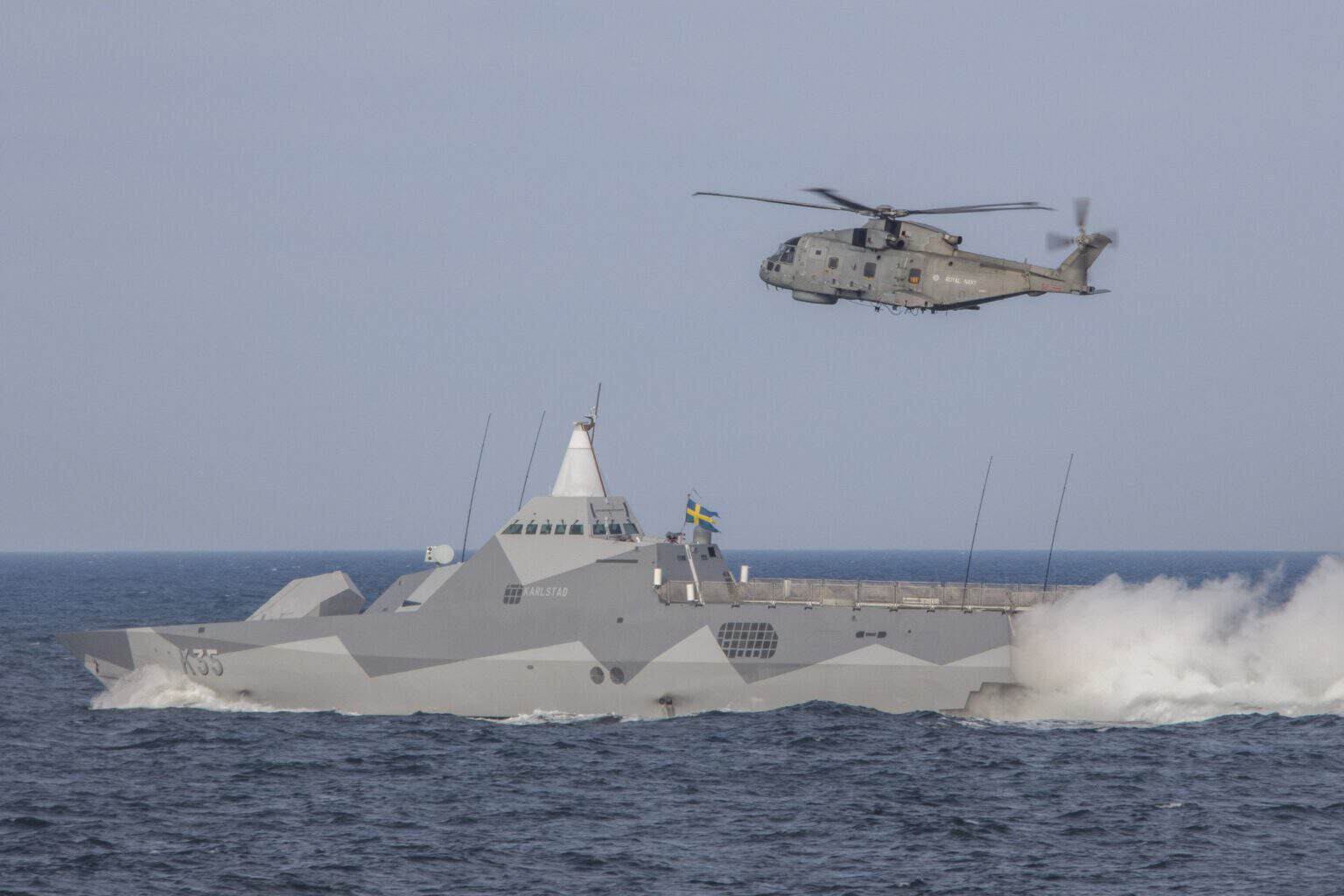
Behind them come five Visby-class stealth corvettes, the ships most people picture when they think of the Swedish fleet. The navy, founded on June 7, 1522, has no destroyers or frigates at all, and has had none for decades.
This list ranks every major class by fighting value as of November 2026, then covers the frigates and submarines on order, the Amphibious Corps, and where the fleet is based.
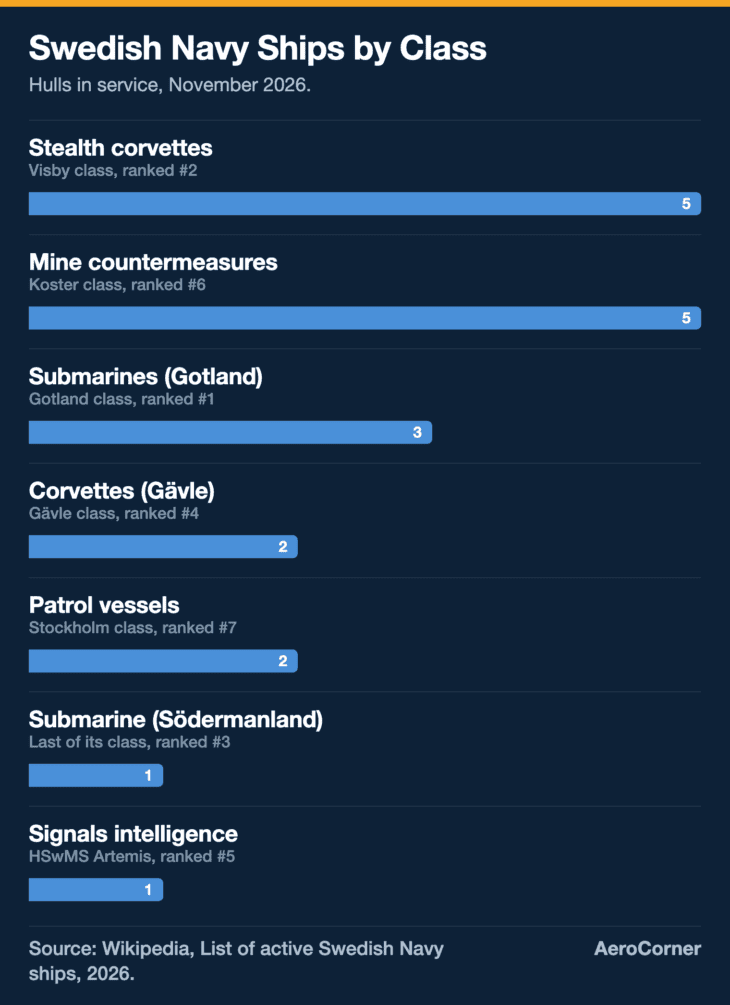
| Rank | Class | Type | In service | Since |
|---|---|---|---|---|
| 1 | Gotland | Attack submarine (AIP) | 3 | 1996 |
| 2 | Visby | Stealth corvette | 5 | 2009 |
| 3 | Södermanland | Attack submarine (AIP) | 1 | 1989 |
| 4 | Gävle | Corvette | 2 | 1990 |
| 5 | Artemis | Signals intelligence ship | 1 | 2023 |
| 6 | Koster | Mine countermeasures vessel | 5 | 1986 |
| 7 | Stockholm | Patrol vessel | 2 | 1986 |
| 8 | Stridsbåt 90 (CB90) | Combat boat | 98 | 1991 |
How this ranking works
Each class is ranked by the fighting value it adds in November 2026: what it can do in a war in the Baltic, how hard it would be to replace, and how many Sweden has. Counts are hulls in service. Tugs, training ships, landing craft and the frigates and submarines still being built sit outside the ranking and are covered further down.
1. Gotland Class: The Submarines That Changed the Game
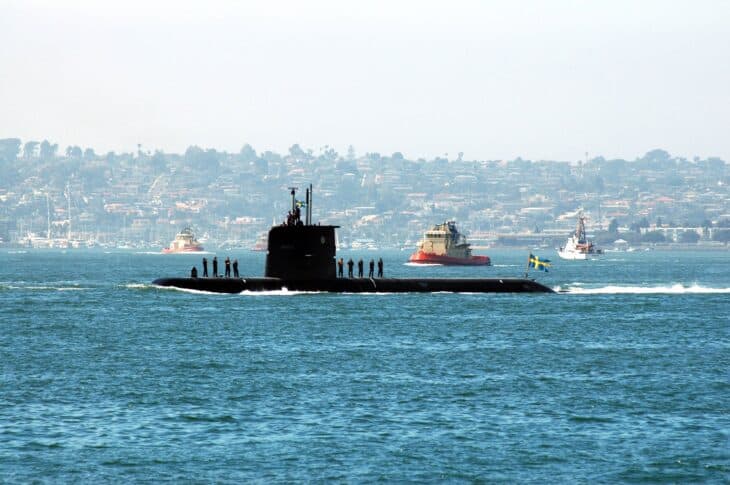

Gotland, Uppland and Halland were launched between 1995 and 1996 and entered service from 1996. Each displaced 1,599 metric tons submerged and was 198 feet (60.4 m) long when new, carrying four 533 mm and two 400 mm torpedo tubes, plus up to 48 mines in an external belt.
What made them famous is the engine room. Two Kockums Stirling engines let them stay submerged without surfacing or snorkeling to charge batteries, at about 5 knots, which makes a diesel-electric boat far harder to find.
The day a Swedish submarine "sank" USS Ronald Reagan
In 2005 the US Navy leased HSwMS Gotland, with its Swedish crew, to train its own sub hunters out of San Diego. During a Pacific wargame that year the submarine photographed the carrier USS Ronald Reagan, proof that it had reached a firing position. The lease was extended, and Gotland did not sail home until July 2007.
All three have now been through a mid-life upgrade that stretched each hull by about 7 feet (2 m), fitted upgraded Stirling engines, a new sonar and a new mast, with the last boat back by 2025. They will have to last: their replacements are years late, as covered below.
How they compare with the nuclear giants is in our ranking of the largest submarines in the world.
2. Visby Class: The Stealth Corvettes
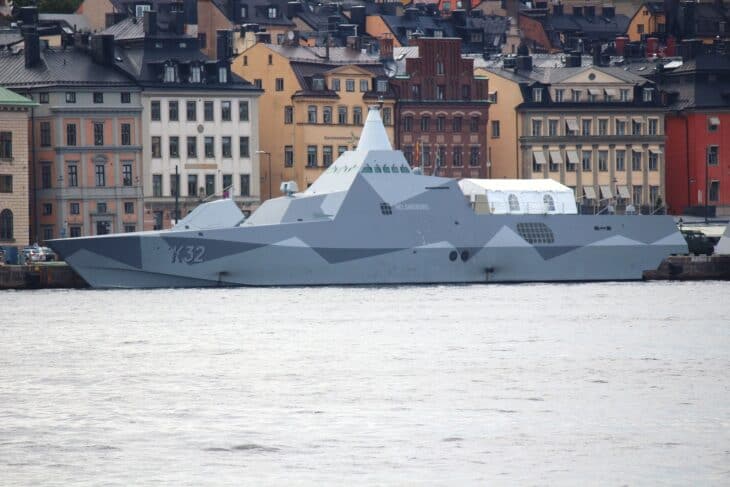

Visby, Helsingborg, Härnösand, Nyköping and Karlstad are 238 feet (72.7 m) long, displace 640 metric tons and make more than 35 knots on gas turbines and waterjets. Each carries a crew of 43, a 57 mm gun, eight RBS15 anti-ship missiles, torpedoes and mines.
The hull is the point. It is a sandwich of PVC foam and carbon fiber with no steel, which makes it non-magnetic for mine hunting and gives it sharply angled surfaces. Its designer, Jan Nilsson, said the shape cuts the radar cross-section by 99%.
The ships were handed over between 2009 and 2015, but their weakness was that the 57 mm gun was their only air defense. That is now being fixed: in May 2025 Sweden gave Saab a SEK 1.6 billion (about $166 million) contract to fit all five with MBDA’s CAMM missile, known in Sweden as Luftvärnsrobotsystem 31.
Härnösand sailed from Berga to Saab’s Karlskrona yard in July 2026 as the first ship in, gaining nine CAMM cells with a range of about 16 miles (25 km). The upgrade also prepares the class for the newer RBS15 Mk4 Gungnir missile and the Torped 47 lightweight torpedo.
3. Södermanland: The Last Boat of Its Class
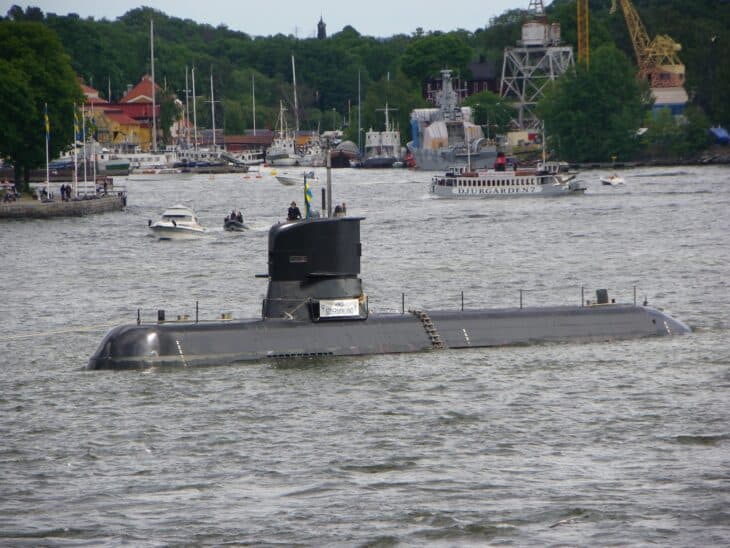

HSwMS Södermanland, commissioned in 1989, is 198 feet (60.5 m) long and displaces about 1,500 metric tons submerged. It was rebuilt in 2003 with a 39-foot (12 m) Stirling engine section, and its sister Östergötland was decommissioned in 2021.
It ranks third because a fourth submarine matters in a fleet of four. A 2022 to 2024 life extension keeps it in service until about 2030, but it will spend part of that time under another flag: in November 2025 Sweden agreed to lend it to Poland, with access from around 2027.
That loan bridges Poland’s wait for its own Swedish boats, a story told in our ranking of the Polish Navy.
4. Gävle Class: The Upgraded Corvettes
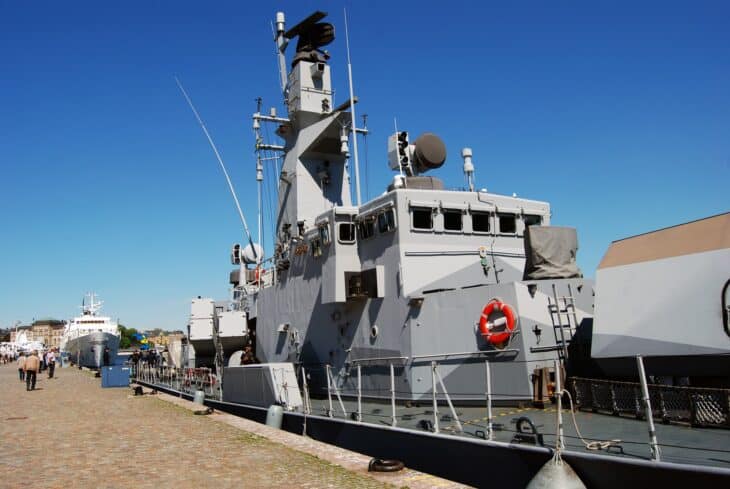

Gävle and Sundsvall are the two survivors of the four-ship Göteborg class of the early 1990s, the other two now mothballed. Each is 187 feet (57 m) long, displaces 380 to 425 metric tons and makes 30 knots.
A mid-life upgrade brought both back in 2022, to the same combat-system standard as the Visby class. They carry eight RBS15 missiles in four twin launchers, a 57 mm gun and 400 mm anti-submarine torpedoes, and they rank below Visby only because they lack its stealth hull.
5. HSwMS Artemis: The Spy Ship
Artemis, a signals intelligence ship of about 3,000 metric tons, was delivered by Saab Kockums in 2023 and replaced the 1984-built Orion. It carries no missiles: its job is to collect radio and radar signals in the Baltic.
That makes it one of the hardest ships to replace in the fleet. Orion was retired in 2025 and is due to return by 2028 as a test vessel.
6. Koster Class: The Mine Hunters
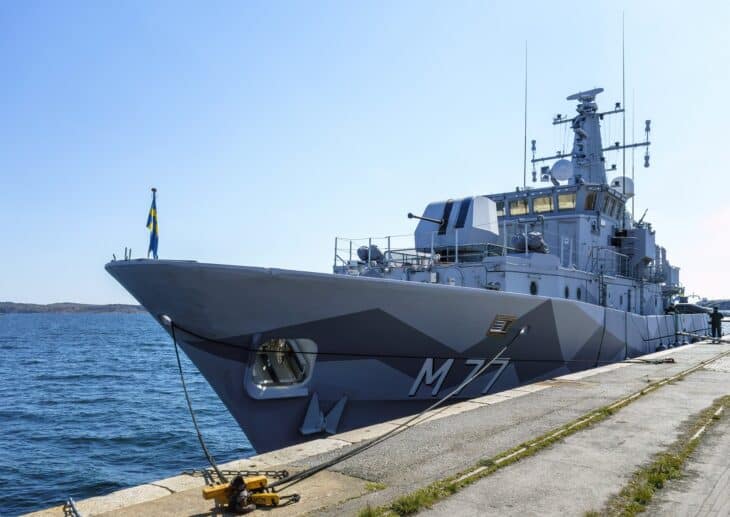
Koster, Kullen, Vinga, Ven and Ulvön were commissioned between 1986 and 1992 as Landsort-class ships, then rebuilt from 2004 with a new mine countermeasures system and renamed the Koster class. Each is 156 feet (47.5 m) long, displaces 350 metric tons and makes 15 knots.
The rebuild fitted Atlas Elektronik’s IMCMS mine countermeasures system and the Link 16 data link used across NATO. Two Spårö-class diving support ships back them up.
7. Stockholm Class: The Patrol Ships
Stockholm and Malmö, both commissioned in May 1986, are 380-ton ships that were classed as corvettes until the navy moved them to patrol duty. Both have served with the EU’s anti-piracy Operation Atalanta off Somalia.
They still carry RBS15 launchers, but at 40 years old they are the oldest surface combatants in service. Eleven 62-ton Tapper-class boats handle the inshore patrol work below them.
8. Stridsbåt 90: The Combat Boats
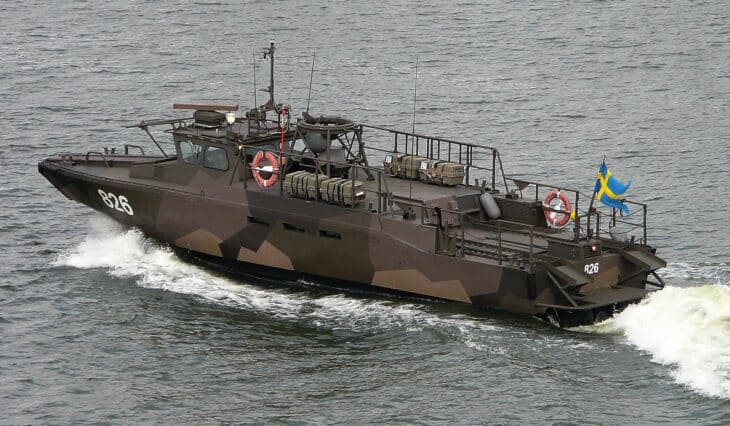

The Combat Boat 90 is the fast, 20.5-ton assault craft that carries Swedish marines through the archipelago. Sweden has 98 of the armed 90H, 90HS and 90HSM versions, after donating 32 to Ukraine.
It is the most numerous craft in the navy and still being bought: Saab delivered 18 new 90HSMs between 2019 and 2022, 10 more were ordered to replace the boats sent to Ukraine, and another 22 were ordered in 2025.
Does Sweden have destroyers or frigates?
Not today. In 1972 the government decided that merchant shipping would be protected by non-military means, and that decision led to all of the navy’s destroyers and frigates being decommissioned. Sweden rebuilt its surface fleet around small, fast corvettes for the archipelago instead. Its first frigates in decades, the Luleå class, are now on order.
On Order: Luleå-Class Frigates
On May 19, 2026, the government picked France’s Naval Group and its FDI design for four frigates, about SEK 40 billion (around $4.25 billion), over bids from Navantia and Babcock. Defense Minister Pål Jonson pointed to the mature design, faster delivery and air defense already built in.
Luleå, Norrköping, Trelleborg and Halmstad are due between 2030 and 2034. At 400 feet (122 m) and 4,460 metric tons, each will be about seven times the displacement of a Visby, with Aster 30 and CAMM-ER air defense missiles, RBS15 Mk4 Gungnir, Saab’s 9LV combat system and an NH90 helicopter.
On Order: The Late A26 Submarines
Blekinge and Skåne, the two Blekinge-class (A26) submarines ordered from Saab Kockums in 2015, are 217 feet (66.1 m) long and displace 2,100 metric tons submerged. They are the Gotland class’s replacement.
They are also the navy’s biggest headache. The 2021 renegotiation set delivery for 2027 and 2028, and an October 2025 agreement pushed it to 2031 and 2033 under a fixed ceiling price of about SEK 25 billion. Poland ordered three of the same design in June 2026.
The Rest of the Fleet
The largest ship in Swedish service is not a warship. HSwMS Belos, a 6,150-ton former offshore diving vessel, joined the navy in 1992 as its submarine rescue ship and carries the URF rescue submersible.
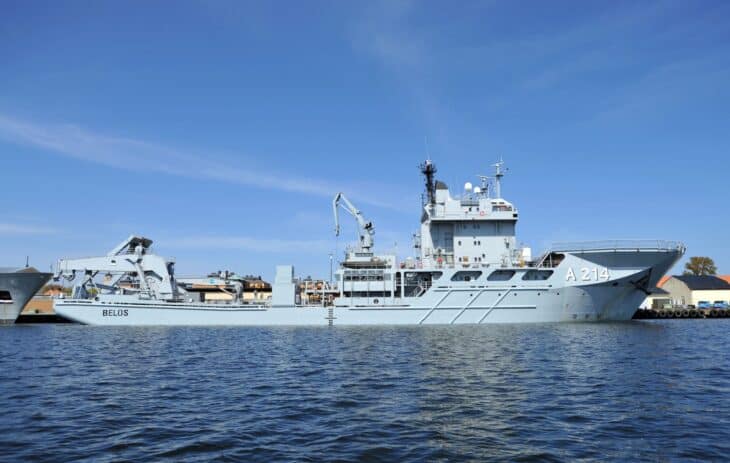

HSwMS Carlskrona, a 3,150-ton former minelayer commissioned in 1982 and given a helicopter deck in 2005, served as flagship of the EU’s Somalia anti-piracy force in 2010. HSwMS Trossö supports the marines, and the schooners Gladan and Falken, both from 1947, train cadets.
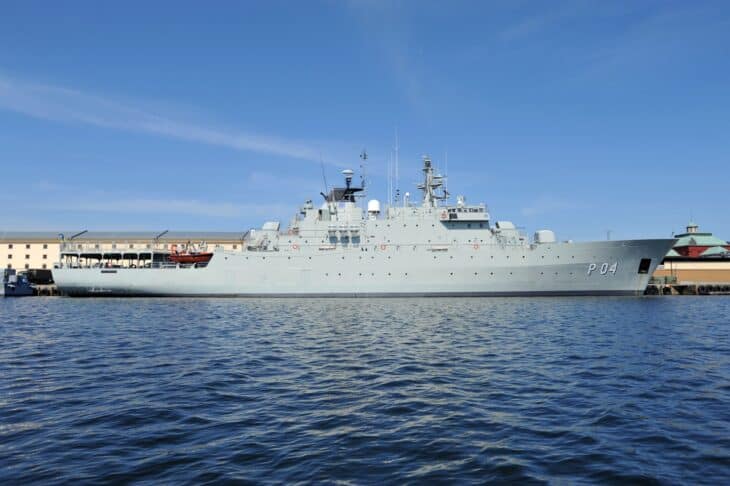

How these ship types differ is explained in our guide to types of navy ships.
Swedish Navy Helicopters
The navy does not fly its own aircraft. Its helicopters belong to the Swedish Air Force’s helicopter wing, and the maritime type is the Hkp 14F, the naval version of the NH90.
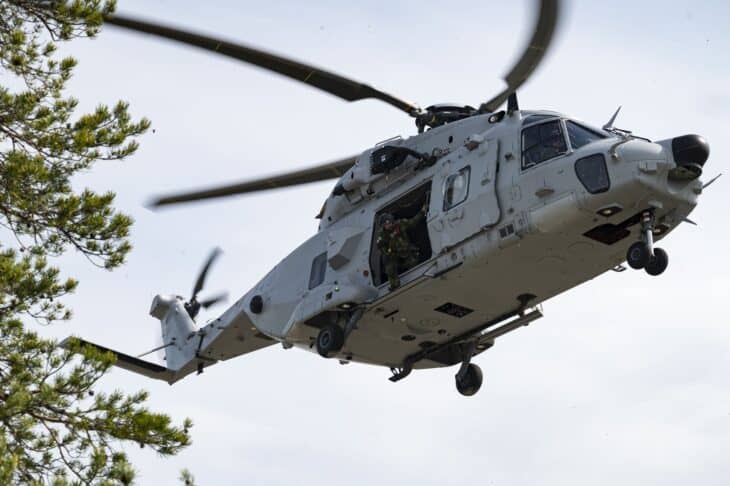

In August 2026 Sweden said it would retire its land-based NH90s from 2027 and buy more Black Hawks, but keep the maritime Hkp 14F until a replacement naval helicopter is bought. The rest of the fleet is covered in our guide to the Swedish Air Force.
The Amphibious Corps
Sweden’s marines, the Amfibiekåren, grew out of the Coastal Artillery and took their current name in 2000. Their role is coastal defense: their main weapons are controlled mines, mortars and the Rbt 17 anti-ship missile, carried around the islands by CB90s.
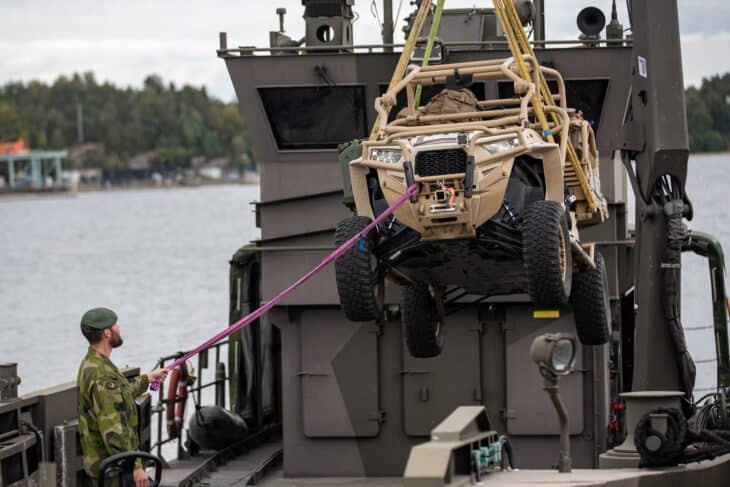

The Stockholm Marine Regiment (Amf 1) at Berga includes the 202nd Coastal Ranger Company, and the 4th Marine Regiment (Amf 4) in Gothenburg was re-established in 2021 as the corps expanded.
A Navy Founded in 1522, and a Submarine on the Rocks
The navy dates its founding to June 7, 1522, when Gustav Vasa bought ships from the Hanseatic town of Lübeck, a year after Sweden left the Kalmar Union. It celebrated its 500th anniversary in 2022 and marks July 9, the anniversary of the Battle of Svensksund, every year.
Its best-known Cold War moment came on October 27, 1981, when the Soviet Whiskey-class submarine U 137 ran aground about 6 miles (10 km) southeast of Karlskrona, inside a military protection zone. Prime Minister Thorbjörn Fälldin told the public it was probably carrying nuclear weapons, and the submarine left Swedish waters on November 6.
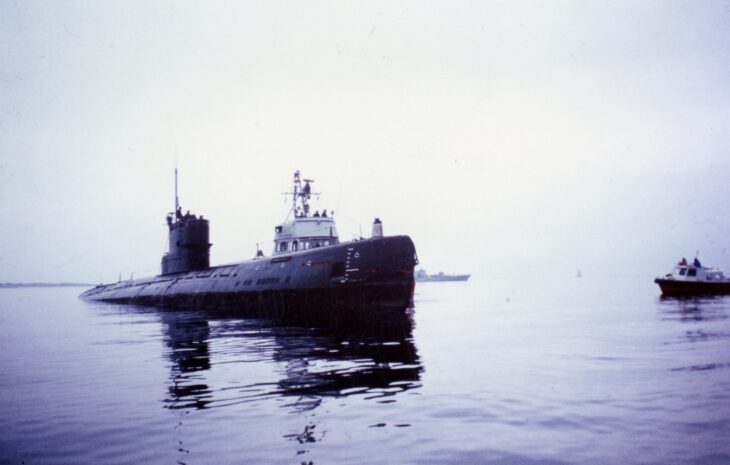

Where the Swedish Navy Is Based
Navy headquarters has been at Muskö, south of Stockholm, since September 2019. Karlskrona Naval Base in the south is the main base, home to the 1st Submarine Flotilla and the 3rd Naval Warfare Flotilla, with detachments at Berga, Gothenburg and Skredsvik.


The 4th Naval Warfare Flotilla sails from Berga. Since Sweden joined NATO in March 2024, those ships also guard the alliance’s eastern flank in the Baltic, and how the fleet stacks up is in our ranking of the largest navies in the world.
FAQ
Sources and references used for research and fact-checking.
- Wikipedia, Swedish Navy
- Wikipedia, List of active Swedish Navy ships
- Wikipedia, Gotland-class submarine
- Wikipedia, Visby-class corvette
- Naval News, Saab wins contract to integrate Sea Ceptor system on Visby-class corvettes
- Defence Industry Europe, Sweden begins mid-life upgrade of first Visby-class corvette to add CAMM air defence missiles
- Wikipedia, Södermanland-class submarine
- Wikipedia, Göteborg-class corvette
- Wikipedia, Koster-class mine countermeasures vessel
- Naval Today, Sweden picks French design for new Luleå-class frigates
- Wikipedia, Luleå-class frigate
- Defence Industry Europe, Sweden updates A26 submarine agreement with Saab, securing long-term naval capability
- Wikipedia, Blekinge-class submarine
- The Aviationist, Sweden phasing out NH90 TTH by 2027
- Wikipedia, Swedish Amphibious Corps
- Visit Karlskrona, U137: Whiskey on the rocks
- USNI News, Sweden's NATO membership unlocks the Baltic Sea for alliance
Get the Newsletter
The latest aviation news and stories sent to your inbox.
About the Author

Tim is the owner and lead editor of AeroCorner since 2019, overseeing aviation content covering aircraft, airlines, airports, and the broader aviation industry. Through years of researching, writing, editing, and publishing aviation-focused content, he has developed extensive practical knowledge of commercial aviation and air travel. Based in Asia and a frequent traveler himself, Tim also brings firsthand passenger experience to AeroCorner’s coverage. Outside of publishing, he has also explored aviation firsthand through hands-on flight training in New Zealand.