

Table of Contents
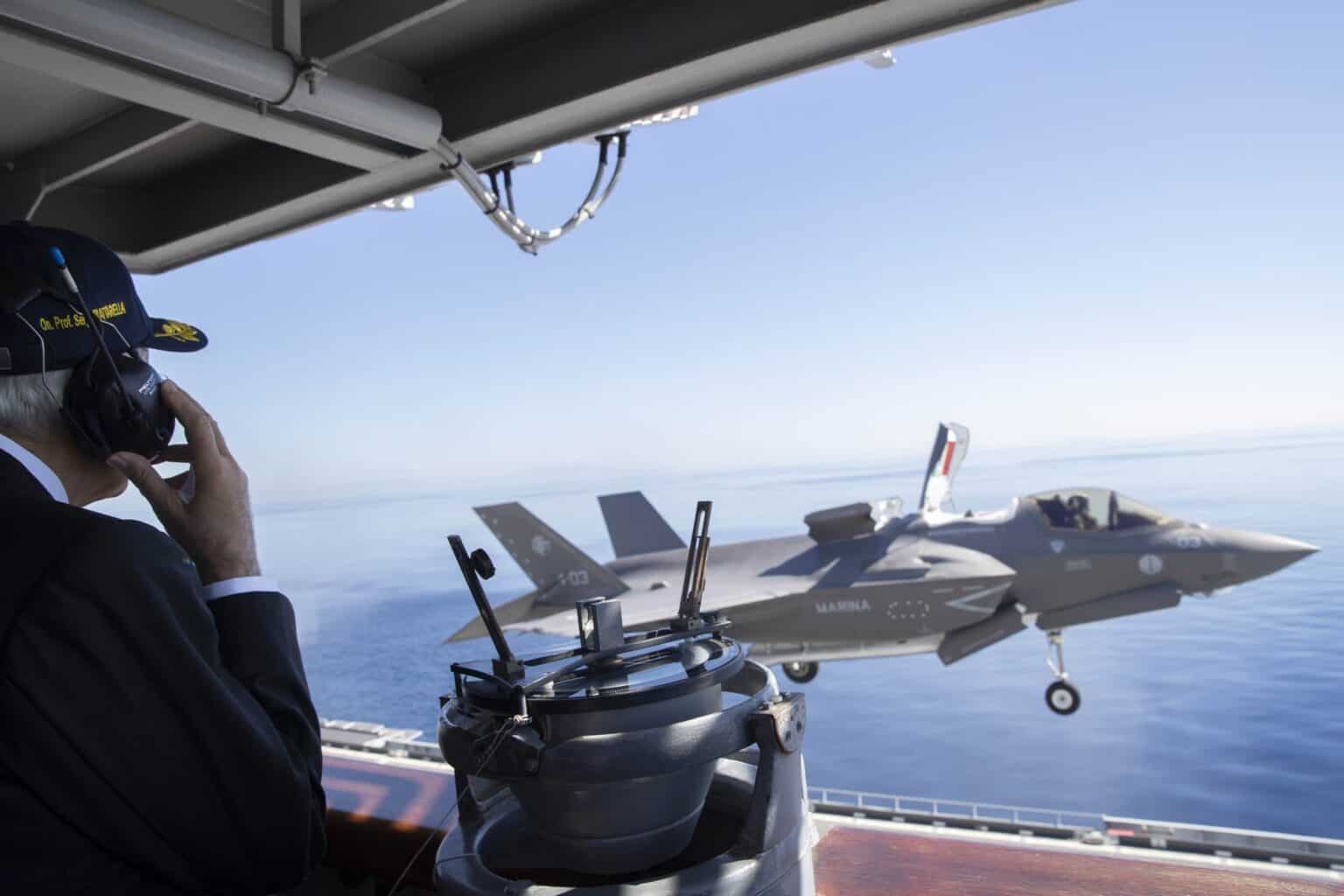
The most powerful ship in the Italian Navy is the aircraft carrier Cavour, which flies F-35B stealth fighters from an 800-foot ship. The largest is the new Trieste, an amphibious assault ship commissioned in December 2024 that can also launch F-35Bs.
The Marina Militare has about 30,000 people, 2 flat-tops, 2 air defense destroyers, 10 FREMM frigates, 5 large patrol frigates and 8 diesel-electric submarines. Italy is also the navy that keeps selling or donating its own warships: two new frigates to Egypt, two patrol ships to Indonesia, its old carrier Giuseppe Garibaldi to Indonesia in September 2026 and two more frigates to Greece by 2029.
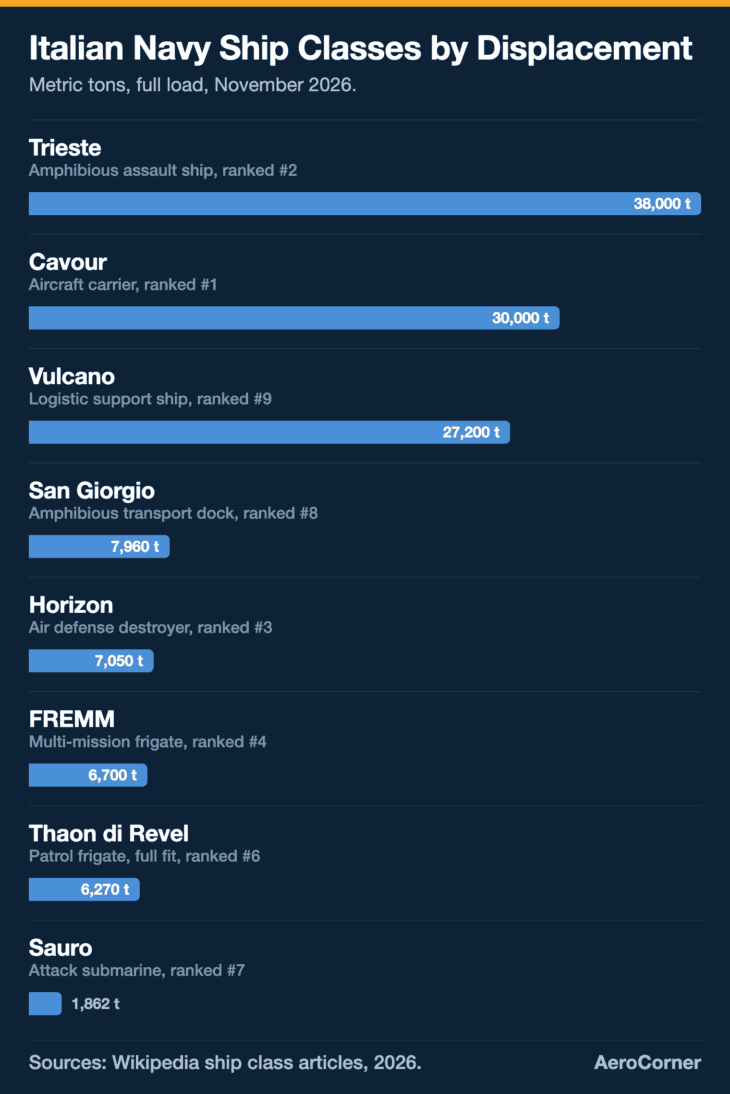
This list ranks every major class by fighting value as of November 2026, then covers the navy’s aircraft, its history and the ships on order.
| Rank | Class | Type | Ships | Displacement |
|---|---|---|---|---|
| 1 | Cavour | Aircraft carrier | 1 | 30,000 t |
| 2 | Trieste | Amphibious assault ship (LHD) | 1 | 38,000 t |
| 3 | Horizon (Andrea Doria) | Air defense destroyer | 2 | 7,050 t |
| 4 | FREMM (Bergamini) | Multi-mission frigate | 10 | 6,700 t |
| 5 | Todaro (Type 212A) | Attack submarine with AIP | 4 | 1,830 t submerged |
| 6 | Thaon di Revel (PPA) | Multipurpose patrol frigate | 5 | Up to 6,270 t |
| 7 | Sauro | Attack submarine | 4 | 1,862 t |
| 8 | San Giorgio | Amphibious transport dock | 3 | 7,960 t |
| 9 | Vulcano | Logistic support ship | 2 | 27,200 t |
| 10 | Gaeta and Lerici | Minehunter | 10 | 720 t (Gaeta) |
How this ranking works
Each class is ranked by the fighting value it adds in November 2026: what it can do in a war, how hard it would be to replace, and how many Italy has. Counts are ships in commission. Offshore patrol vessels of the Comandanti, Sirio and Cassiopea classes, patrol boats, survey ships, tugs and sail training ships sit outside the ranking. The Coast Guard is part of the Navy in Italy but is not counted here.
1. Cavour: The Flagship and F-35B Carrier
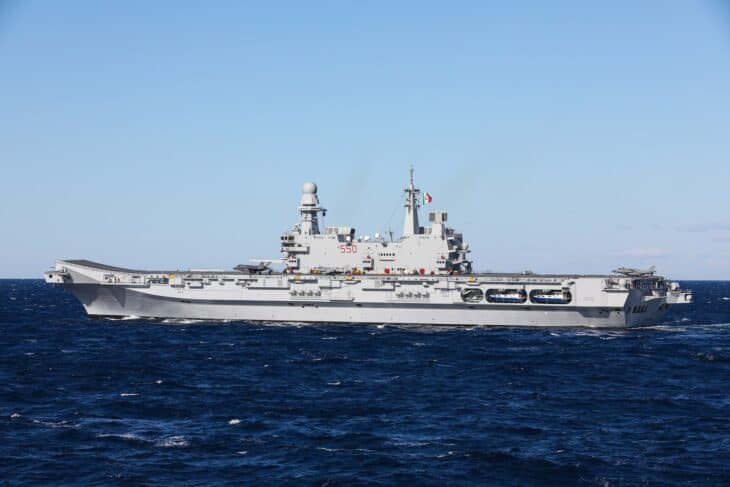

Cavour was commissioned on March 27, 2008, and has been the fleet flagship ever since. It is 800 feet (244 m) long, displaces about 30,000 metric tons at full military load and makes 29 knots, with a crew of 1,202.
Its hangar holds 10 F-35B Lightning II fighters and 12 AW101 helicopters, and it doubles as a vehicle hold for up to 24 main battle tanks. After a refit for the F-35B, the ship spent four weeks of flight trials off the US East Coast in 2021.
On August 28, 2024, moored at Yokosuka in Japan, the Navy declared initial operational capability for its embarked F-35Bs after more than 2,600 flight hours. Eight jets were aboard, two of them from the Italian Air Force, which flies the same model.
It ranks first because it is the one Italian ship that can strike from the sea with stealth jets. From October 16 to November 5, 2026, it led one of three maritime strike groups in NATO’s Neptune Strike 26-4 in the Mediterranean, escorted by the destroyer Andrea Doria and the frigate Virginio Fasan.
Turkish drones for an Italian carrier
On March 25, 2026, the Navy’s chief told the Italian Senate that the service is preparing to buy the Bayraktar TB3, a Turkish armed drone with folding wings, to fly from Cavour. Italy would be the first European operator of the TB3.
2. Trieste: The Biggest Ship in the Fleet
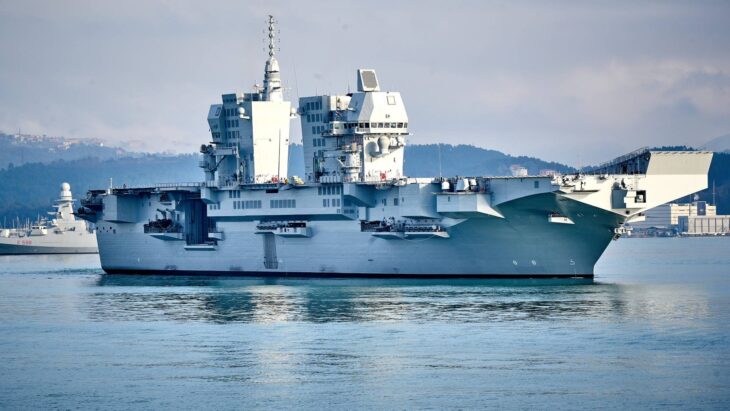

Trieste was commissioned at Livorno on December 7, 2024, after a delivery originally expected in 2022. At 804 feet (245 m) and about 38,000 metric tons fully loaded, it is the largest ship in the Italian fleet, bigger than the carrier it ranks behind.
It is an amphibious assault ship first. A floodable well deck takes four LC23 landing craft, each able to carry an Ariete tank or 300 soldiers, and the ship has a hospital with operating rooms and 28 intensive-care beds.
Its 755-foot (230 m) flight deck has nine spots and a ski jump, and the ship can carry 30 to 34 aircraft in full operation, including F-35Bs. That gives Italy two ships able to fly fixed-wing jets, and it is why Trieste ranks second: it is the backup carrier as well as the amphibious flagship.
It sits alongside the other big decks in our ranking of the best aircraft carriers in the world.
3. Horizon Class: The Air Defense Destroyers
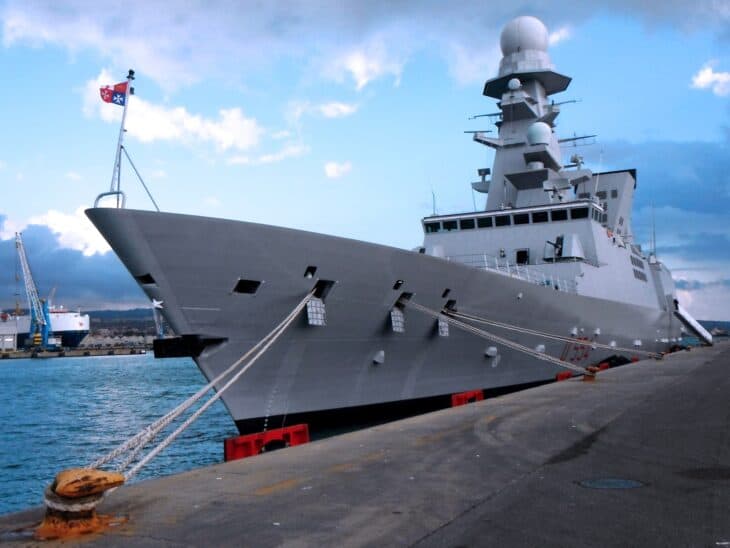

Andrea Doria, accepted in December 2007, and Caio Duilio, commissioned in 2009, are Italy’s only modern destroyers. Each is 502 feet (152.87 m) long, displaces 7,050 metric tons fully loaded, makes more than 29 knots and has a crew of 255.
Their job is to shield the carriers. A 48-cell Sylver launcher holds Aster 15 and Aster 30 missiles of the PAAMS air defense system, backed by eight TESEO anti-ship missiles and three 76 mm guns, a heavier gun fit than the two French ships of the same class.
Both are in a mid-life update to be finished between 2027 and 2029. The older Luigi Durand de la Penne was decommissioned on October 1, 2024, after 31 years, which leaves the fleet thin on air defense ships.
4. FREMM Frigates: The Backbone of the Fleet
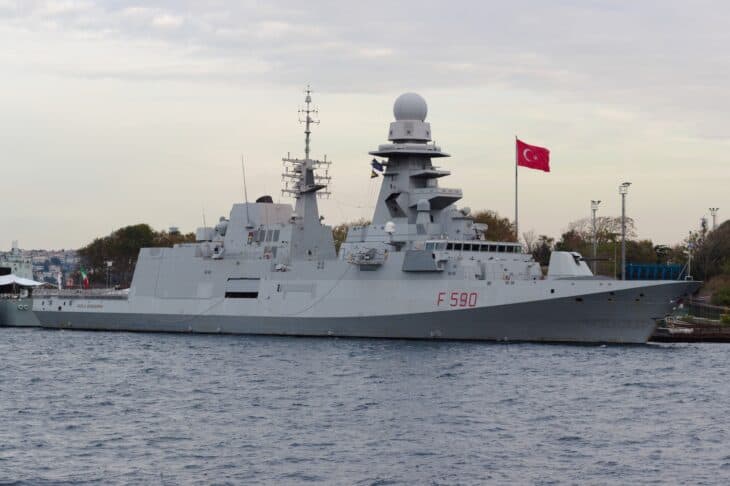

Italy has 10 FREMM frigates of the Bergamini class, its largest group of major warships. Four are general-purpose ships, four are anti-submarine ships, and the last two, Spartaco Schergat and Emilio Bianchi, were delivered on April 15 and July 31, 2025, in an enhanced anti-submarine version.
Each is 472 feet (144 m) long and displaces about 6,700 metric tons, with two helicopter hangars. All ten carry Aster 15 and Aster 30 missiles, so an Italian FREMM can defend a wider area than most frigates its size.
They are also the ships Italy sells. The first ships named Spartaco Schergat and Emilio Bianchi were sold to Egypt in 2020, and the two delivered in 2025 are their replacements.
On September 8, 2026, Italy and Greece signed the deal that sends the lead ship, Carlo Bergamini, to the Hellenic Navy in the first half of 2028 and Virginio Fasan in the first half of 2029, for under €500 million for the pair. Two FREMM EVO frigates, due in 2029 and 2030, keep Italy’s count at 10.
5. Todaro Class: The Fuel-Cell Submarines
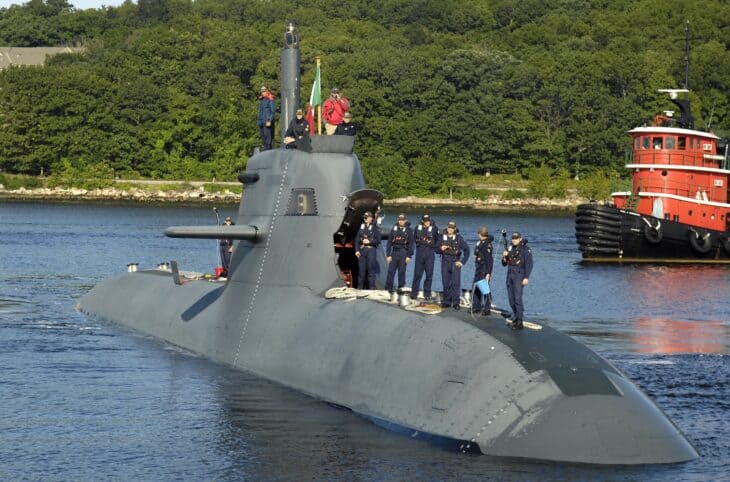

Salvatore Todaro, Scirè, Pietro Venuti and Romeo Romei entered service in 2006, 2007, 2016 and 2017. They are Italy’s version of the German-Italian Type 212A: about 184 feet (56 m) long and 1,830 metric tons submerged.
Hydrogen fuel cells give them air-independent propulsion, so they can stay submerged for up to three weeks with almost no exhaust heat. Six torpedo tubes fire Italian Black Shark heavyweight torpedoes, and the boats can carry 24 mines outside the hull.
They rank above Italy’s patrol frigates because a quiet submarine is the hardest threat for an enemy to find in the Mediterranean. Todaro spent more than six months in 2008 training with the US Navy in American waters.
6. Thaon di Revel Class: Patrol Ships Built Like Frigates
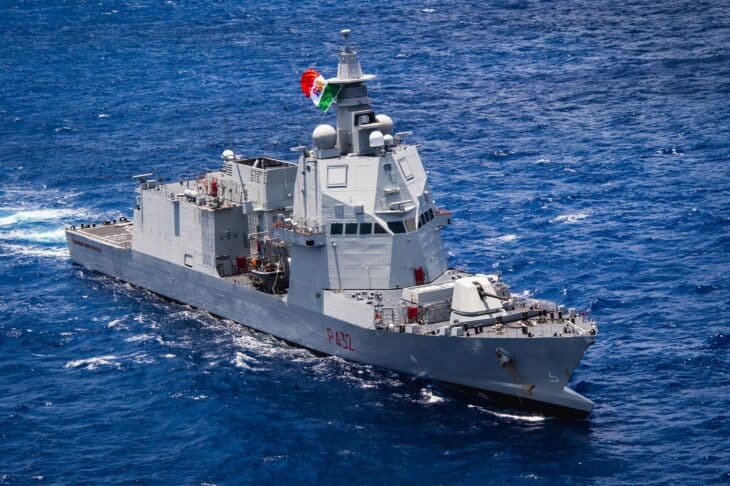

Italy calls them multipurpose offshore patrol vessels (PPA), but at 469 feet (143 m) and up to 6,270 metric tons they are frigates in all but name. They reach 31.6 knots and carry two helicopters.
Five are in service: Paolo Thaon di Revel (March 2022), Francesco Morosini (October 2022), Raimondo Montecuccoli (September 2023), Giovanni delle Bande Nere (October 2024) and Domenico Millelire, commissioned on September 24, 2026. The first three were delivered with lighter equipment, and an April 2026 contract brings every ship to the full fit.
A full-fit ship carries 16 Aster missiles, eight TESEO EVO anti-ship missiles, torpedoes, a towed sonar, and both a 127 mm and a 76 mm gun. They rank sixth only because three are still waiting for that upgrade.
Two more hulls were sold to Indonesia in a €1.18 billion contract signed in March 2024. Replacements named Marcantonio Colonna and Ruggiero di Lauria, after the ships sold, are due in 2029 and 2030.
7. Sauro Class: The Older Submarines
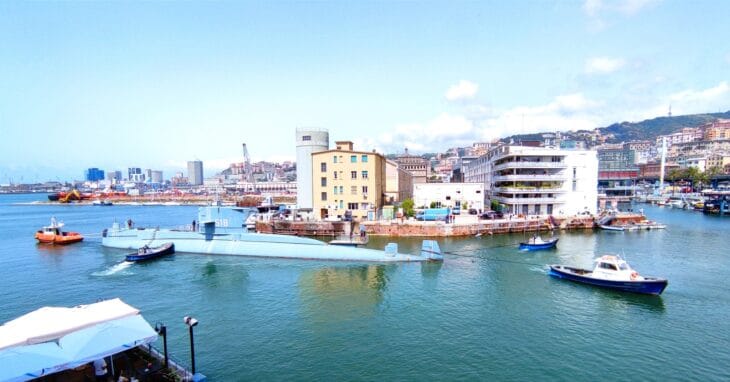

Four improved Sauro-class boats remain: Salvatore Pelosi (1988), Giuliano Prini (1989), Primo Longobardo (1993) and Gianfranco Gazzana Priaroggia (1995). Each displaces about 1,862 metric tons and has six torpedo tubes.
They are diesel-electric boats without the Todaro class’s fuel cells, which is why they rank lower. Their replacements, the U212 NFS (Near Future Submarine), are under construction: the keel of the first was laid at Muggiano on February 27, 2026, with deliveries planned for 2027 and 2029 and a third boat at the end of 2030.
How these small boats compare with nuclear submarines is in our ranking of the largest submarines in the world.
8. San Giorgio Class: The Amphibious Ships
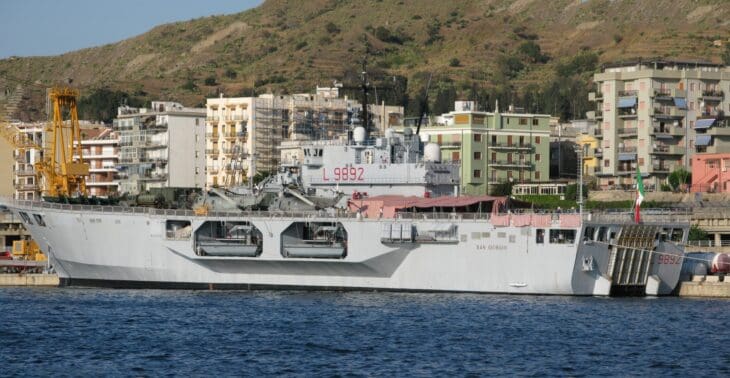

San Giorgio, San Marco and San Giusto are amphibious transport docks commissioned in 1988, 1988 and 1994. Each is 436 feet (133 m) long, displaces 7,960 metric tons fully loaded and can carry a battalion of troops and up to 36 armored vehicles.
They are based at Brindisi on the Adriatic coast. San Giorgio and San Marco were rebuilt with full-length flight decks, while San Giusto usually serves as a training ship.
Two 16,500-ton replacements are planned for 2028 to 2030. Until then, Trieste carries most of the amphibious load.
9. Vulcano Class: The Fleet Supply Ships
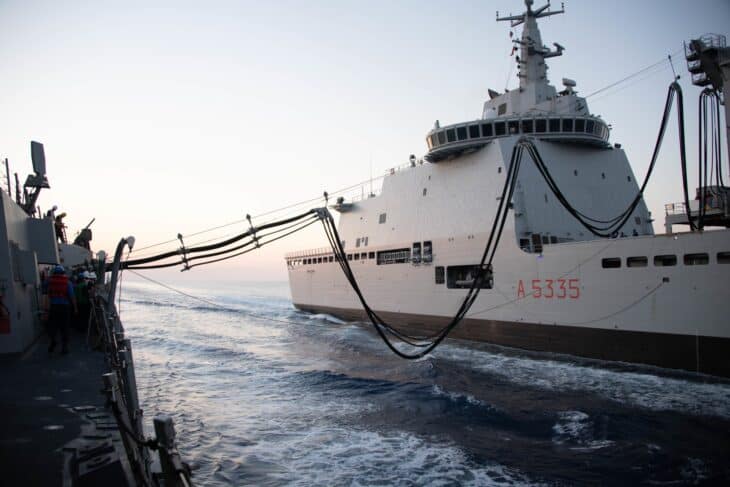

A carrier group cannot stay at sea without fuel and stores. Vulcano entered service on March 12, 2021, and its sister Atlante followed in 2025, each 633 feet (193 m) long and 27,200 metric tons fully loaded.
Four are planned, and the older replenishment ship Etna remains in service. France liked the design enough to order its own version, the Jacques Chevallier class, through the European procurement agency OCCAR.
10. Gaeta and Lerici Classes: The Minehunters
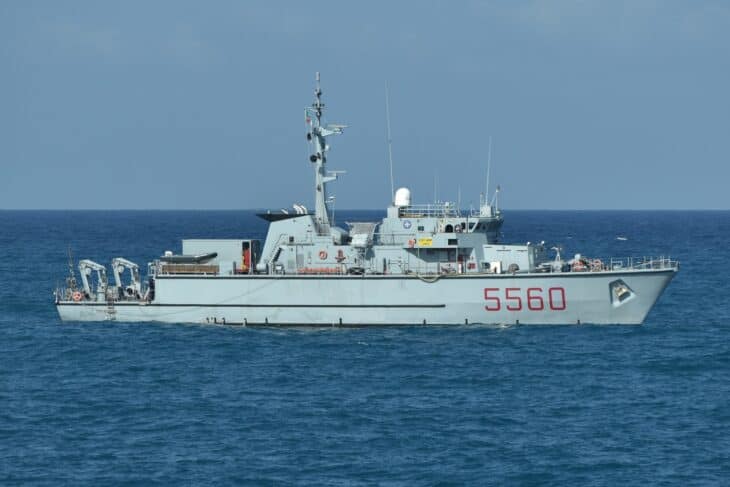

Italy keeps 10 minehunters: eight of the Gaeta class, commissioned from 1992 to 1996 at 720 metric tons, and two older Lerici-class ships from 1985. The Mediterranean’s shallow straits make mine clearance a real wartime job.
Twelve new-generation minehunters are funded to replace them: eight coastal ships of about 800 tons and four ocean-going ships of about 1,300 tons.
Italian Naval Aviation
The Aviazione Navale has about 10 F-35Bs in service out of 20 ordered, 15 in 2012 and 5 more in 2024. They are replacing 11 AV-8B Harrier II jets, which still flew from Cavour in October 2026.
The helicopter fleet is larger: 45 SH-90A submarine hunters, the Italian version of the NH90 NFH, plus 10 MH-90A transports, 22 AW101s and 22 older AB-212s. ScanEagle and Camcopter S-100 drones round it out.
Italy’s land-based F-35Bs belong to the Air Force, which shares the type with the Navy, as covered in our guide to the Italian Air Force.
Doesn't Italy have three carriers?
Not anymore. Giuseppe Garibaldi, commissioned in 1985 and the first Italian ship built to fly fixed-wing jets, was decommissioned on October 1, 2024. Italy then gave it to Indonesia: it left Taranto on August 24, 2026, reached Jakarta on September 18 and became KRI Sriwijaya on September 24. Italy now has two ships that can fly jets, Cavour and Trieste.
From the Regia Marina to the Marina Militare
Italy’s navy was formed as the Regia Marina, or Royal Navy, in 1861, when the Kingdom of Italy was proclaimed. At the start of World War II it was the fourth-largest navy in the world.
The 1947 peace treaty banned Italy from owning battleships, aircraft carriers and submarines, and handed several of its warships to the victors. The bans were lifted by the end of 1951, after Italy joined NATO in 1949.
The service took its current name, Marina Militare, after the June 2, 1946, referendum that ended the monarchy. A 1937 law had given every fixed-wing military aircraft to the Air Force, and the Navy was not allowed fixed-wing jets again until 1989.
Four republics on one flag
The Italian naval ensign is the national flag with a coat of arms of the four medieval maritime republics: Venice, Genoa, Amalfi and Pisa. On the Navy’s version, the winged lion of Venice holds a sword instead of the open book shown on the civil ensign, a Venetian sign of wartime.
Italy’s Navy by the Numbers, and What Comes Next
In March 2025, the Navy’s then chief, Admiral Enrico Credendino, said the service had about 30,000 people and was short about 9,000. He noted that the French and British navies have about 10,000 more people each with a similar number of ships.
The biggest new ships are two DDX destroyers. In September 2026, Italy awarded a €3.7 billion contract for the pair, each 591 feet (180 m) long and 13,500 metric tons, with deliveries in 2033 and 2035.
Italy still sits behind fleets with nuclear submarines in most rankings. See where it lands among the largest navies in the world, and compare it with our ranking of Britain’s Royal Navy.
FAQ
Sources and references used for research and fact-checking.
- Wikipedia, Italian Navy
- Wikipedia, List of active Italian Navy ships
- Wikipedia, Italian aircraft carrier Cavour
- The Aviationist, Italian Navy Declares Initial Operational Capability For The Embarked F-35B Component
- The Aviationist, Three maritime strike groups spearhead NATO's Neptune Strike 26-4
- Naval News, Italian Navy to fly TB3 drones from Cavour aircraft carrier
- Wikipedia, Italian landing helicopter dock Trieste
- Wikipedia, Horizon-class frigate
- Wikipedia, Italian destroyer Luigi Durand de la Penne
- Wikipedia, FREMM multipurpose frigate
- Naval News, OCCAR delivers the 10th FREMM frigate to the Italian Navy
- Naval News, Greece and Italy Ink Deal for Two FREMM Frigates
- Wikipedia, Type 212A submarine
- Baird Maritime, Keel laid for Italian Navy's first U212 NFS submarine
- Wikipedia, Sauro-class submarine
- Wikipedia, Thaon di Revel-class patrol vessel
- Baird Maritime, First steel cut for new Italian Navy patrol ship
- Wikipedia, San Giorgio-class amphibious transport dock
- Wikipedia, Vulcano-class logistic support ship
- Wikipedia, Italian Naval Aviation
- Wikipedia, List of active Italian military aircraft
- Wikipedia, Italian aircraft carrier Giuseppe Garibaldi
- Al Jazeera, Indonesia acquires first aircraft carrier amid military upgrade
- Open, Marina militare, l'ammiraglio Credendino: mancano 9mila uomini
- Breaking Defense, OCCAR awards $4.2B DDX destroyer contract to Fincantieri-Leonardo joint venture
Get the Newsletter
The latest aviation news and stories sent to your inbox.
About the Author

Tim is the owner and lead editor of AeroCorner since 2019, overseeing aviation content covering aircraft, airlines, airports, and the broader aviation industry. Through years of researching, writing, editing, and publishing aviation-focused content, he has developed extensive practical knowledge of commercial aviation and air travel. Based in Asia and a frequent traveler himself, Tim also brings firsthand passenger experience to AeroCorner’s coverage. Outside of publishing, he has also explored aviation firsthand through hands-on flight training in New Zealand.