

Table of Contents
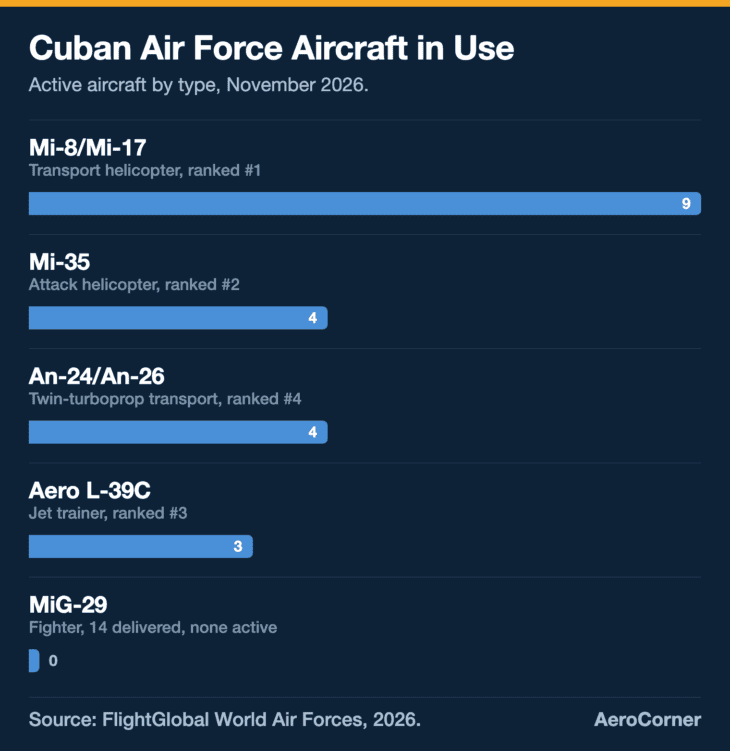
The Cuban Air Force still flies about 20 aircraft, and not one of them is a fighter jet. FlightGlobal’s World Air Forces 2026 directory counts nine Mi-8 and Mi-17 helicopters, four Mi-35 attack helicopters, four An-24 and An-26 transports and three L-39 jet trainers in active use.
In 1990 the same force was described as the best equipped in Latin America, built on hundreds of Soviet MiGs. Many of those MiGs still sit in shelters at San Antonio de los Baños, but experts quoted by CNN in June 2026 say nearly all are likely now dysfunctional.
This guide ranks what the force, officially the Defensa Antiaérea y Fuerza Aérea Revolucionaria (DAAFAR), can still put in the air as of November 2026. Then it covers the grounded fighters, the drones Washington says Cuba has been buying and how the force fell this far.
| Rank | Aircraft | Role | Active | Status |
|---|---|---|---|---|
| 1 | Mi-8 and Mi-17 | Transport helicopter | 9 | The aircraft Cuba shows most often |
| 2 | Mi-35 | Attack helicopter | 4 | The only armed type counted as active |
| 3 | Aero L-39C Albatros | Jet trainer | 3 | The only jets counted as active |
| 4 | An-24 and An-26 | Twin-turboprop transport | 4 | Soviet-era airlift |
| 5 | MiG-29 Fulcrum | Fighter | 0 | 14 delivered; none believed flying |
| 6 | MiG-23 | Fighter and attack jet | 0 | More than 50 once operated; stored or scrapped |
| 7 | MiG-21 | Fighter | 0 | About 270 sent to Cuba; stored or scrapped |
| 8 | Drones | Attack and surveillance | Not disclosed | US intelligence claims 300+ from Russia and Iran |
How this ranking works
Aircraft are ranked by what they add to Cuban air power in November 2026. Types FlightGlobal counts as active come first, ordered by role: helicopters, then the armed helicopter, the jet trainer and the transports. The stored MiG fighters follow, newest first, then the drones that US intelligence says Cuba has bought. Cuba publishes no order of battle, so where sources disagree, both figures are given.
1. Mi-8 and Mi-17: The Aircraft Cuba Still Shows Off
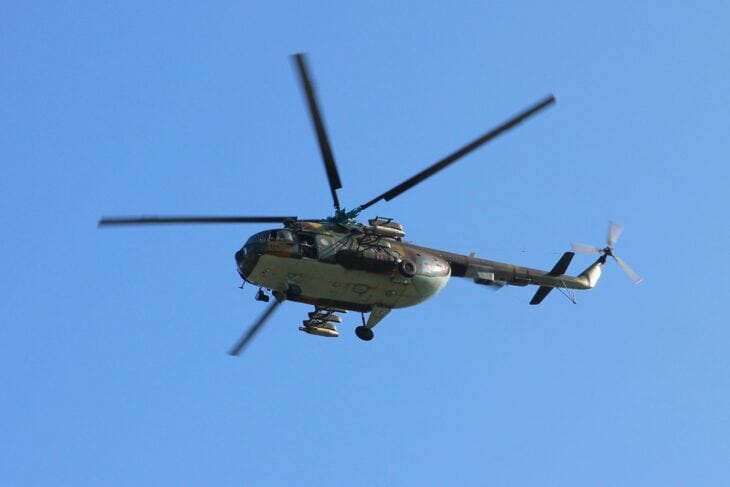

The biggest fleet in the Cuban Air Force is a Soviet transport helicopter. FlightGlobal counts nine Mi-8 and Mi-17 helicopters in active use, almost half of everything the force flies.
They are also the aircraft Havana chooses to show. CNN reviewed hundreds of videos and images released by Cuba’s military in 2026 and found the Air Force rarely appears, except for the occasional Mi-17 on low-risk training flights or humanitarian aid missions.
That makes a utility helicopter the closest thing Cuba has to a frontline aircraft. It moves troops and supplies, supports aid operations and carries no fighter-grade weapons.
2. Mi-35: The Last Armed Aircraft on the List
The Mi-35, the export version of the Mi-24 Hind gunship, is the only combat type FlightGlobal still counts as active in Cuba. There are four.
Four attack helicopters are a ground-support force, not an air defense. In the footage CNN reviewed, the Mi-17 was the only aircraft Havana showed with any regularity.
3. Aero L-39C Albatros: Cuba’s Only Flying Jets
Cuba’s only jets in active use are three Czechoslovak-built Aero L-39C Albatros trainers, according to FlightGlobal. The L-39 is a two-seat jet trainer, the step between basic training and a MiG cockpit.
In Cuba it now outlasts the MiGs it was meant to feed. Luis Domínguez, a researcher at the Foundation for Human Rights in Cuba, told ADN Cuba in June 2026 that the force has “some training aircraft that fly occasionally,” while not a single MiG is flying.
Three trainers, zero fighters
Cuba’s three L-39C trainers are its entire active jet fleet. In 2007 the IISS counted 41 combat-capable aircraft and about 189 in storage. By FlightGlobal’s 2026 count, the combat-capable number is zero.
4. An-24 and An-26: The Airlift
Four Soviet-era Antonov twin-turboprops make up Cuba’s military airlift. FlightGlobal groups them as An-24/26, and the Wikipedia table drawn from that count splits them into one An-24 and three An-26s.
They fly from a shrinking base network. Domínguez says only two air bases in western Cuba still operate, San Antonio de los Baños and Playa Baracoa, and most other military airfields were closed or abandoned in the 1990s.
Cuba’s neighbor to the west shows the contrast: our guide to the Mexican Air Force counts more than 300 aircraft, but only three fighter jets.
5. MiG-29 Fulcrum: 14 Delivered, None Believed Flying
The MiG-29 was the last modern fighter Cuba ever received. It first sought 35 to 40, enough for a full regiment, but the order was cut to 14 for economic reasons: 12 single-seat MiG-29As and two MiG-29UB two-seaters, delivered from October 1989.
Deliveries were still incomplete when the Soviet Union collapsed in 1991, and the parts, engines and training stopped with it. Domínguez says repairing a single MiG-29 engine costs millions of dollars.
FlightGlobal’s 2026 directory lists no MiG-29 in active use, and none is believed to be flying. Domínguez says many of Cuba’s MiGs sit in hardened underground shelters at San Antonio de los Baños, and many have been “completely stripped for parts.”
One Cuban MiG-29 is famous for a single mission. On February 24, 1996, a MiG-29UB shot down two unarmed Cessna 337s flown by the Miami exile group Brothers to the Rescue, with a MiG-23 nearby, killing all four men aboard.
Cuba said the planes had entered its airspace and had been warned. The International Civil Aviation Organization concluded they were shot down over international waters. On May 20, 2026, the US Justice Department unsealed an indictment of Raúl Castro, Cuba’s defense minister in 1996, and five others, including Lorenzo Alberto Pérez-Pérez, one of the pilots who fired.
6. MiG-23: The Jet Cuba Took to Angola
Cuba once flew more than 50 MiG-23s, the swing-wing fighter and ground-attack jet it began receiving in 1978. Only three were confirmed operational in 2011, and none is listed today.
The MiG-23 is the jet Cuban pilots took to war. In Angola, Cuban MiG-23MLs met South African Mirage F1s, and on September 27, 1987, a Cuban missile damaged the Mirage of Captain Arthur Piercy.
It is also the jet Cuban pilots used to leave. On March 20, 1991, Major Orestes Lorenzo Pérez flew his MiG-23BN to Naval Air Station Key West, and on September 23, 1993, another pilot landed his MiG-23 at the US base at Guantánamo Bay.
7. MiG-21: About 270 Sent, None Flying
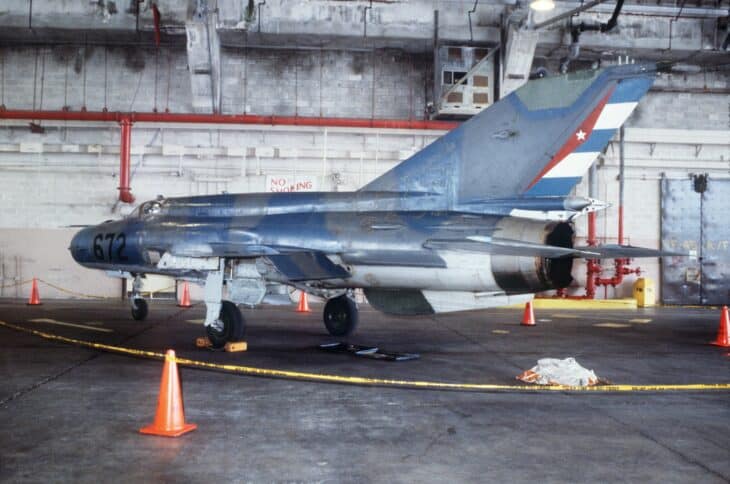

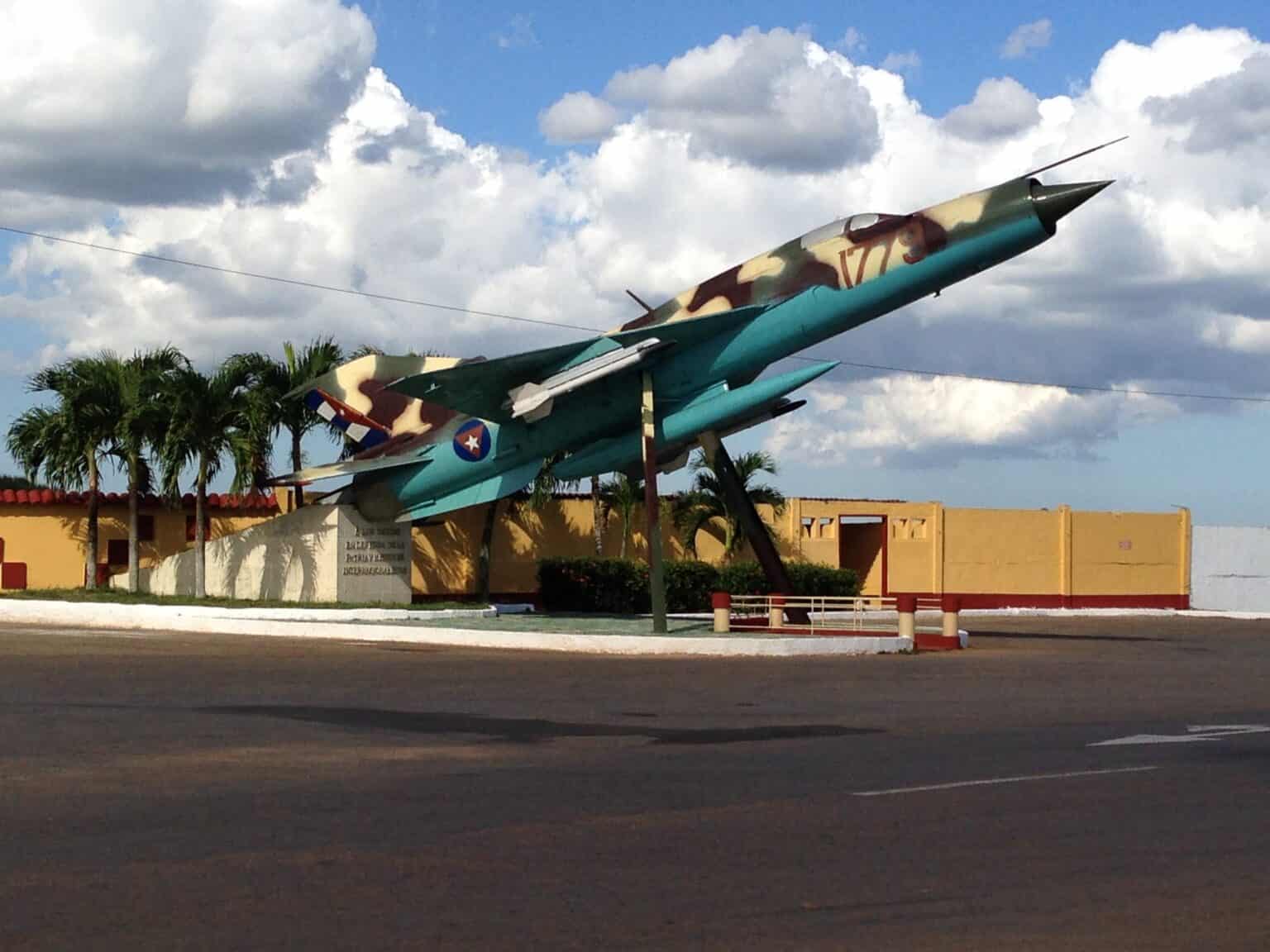
No fighter shaped the Cuban Air Force more than the MiG-21. The first 44 MiG-21F-13s were handed over in 1962, the year of the missile crisis, and Cuban sources put the total sent at about 270 across every version.
After 1991, the fleet shrank fast as jets were cannibalized for parts. The radar-less MiG-21F-13s were all retired in 1995, and the MiG-21s that remain are stored, not flying. On September 17, 1993, Captain Enio Ravelo Rodríguez defected in one to Key West.
8. Drones: The Claimed 300
The one part of Cuban air power that may be growing is the part no one has seen. In May 2026, Axios reported that classified US intelligence shows Cuba has acquired more than 300 military drones from Russia and Iran since 2023.
US officials told Axios that Cuban officials had discussed using them against the naval base at Guantánamo Bay, US military vessels and possibly Key West. Cuba’s Foreign Minister Bruno Rodríguez called it “a fraudulent case” to justify economic war on Cuba.
No images of those drones had surfaced by June, CNN found, only a handful of clips of troops training with small consumer drones. Domínguez says the drones Cuba has are commercial ones used for observation, so treat the 300 as a US claim, not a confirmed fleet.
Did Cuba really retire every fixed-wing aircraft in 2026?
No. Several Wikipedia aircraft pages now say Cuba retired all its fixed-wing aircraft in 2026, citing an aggregator site. FlightGlobal still counts three L-39C jets and four An-24 and An-26 transports in active use. What is true is narrower: no Cuban fighter is counted as active, and none is believed to be flying.
How the Cuban Air Force Got Here
Cuban military aviation dates to July 5, 1913, when the army’s aviation corps formed with a single Curtiss flying boat. The revolutionary air force was born in 1959, after Fidel Castro took power, and the Soviet Union then rebuilt it with jets.
1913
An air arm with one plane. The Cuban Army’s aviation corps forms on July 5 with a single Curtiss F flying boat.
1959
The revolution’s air force. The Fuerza Aérea Revolucionaria is created from the old air force’s aircraft and the rebels’ own.
April 1961
Bay of Pigs. The surviving Cuban aircraft attack the exile landings, sinking the transport Rio Escondido and forcing the damaged Houston aground.
1962
The MiG-21 era begins. The first 44 MiG-21F-13s are transferred to Cuba, the year of the missile crisis.
1975
Angola. A Cuban air contingent deploys with MiG-17Fs and MiG-21MFs and fights in Angola until 1988.
1989
The last new fighter. Deliveries of 14 MiG-29s begin in October, against a hoped-for 35 to 40.
1991
The Soviet collapse. Parts, engines and training stop. Cannibalization of the MiG fleet begins.
Feb. 24, 1996
The Brothers to the Rescue shootdown. A MiG-29UB downs two Cessna 337s, killing four men.
2007
Mostly in storage. The IISS counts 41 combat-capable aircraft and about 189 stored.
2026
No active fighters. FlightGlobal’s directory lists about 20 aircraft and no fighter. On May 20, the US indicts Raúl Castro over the 1996 shootdown.
At its peak in the early 1990s, Cuba’s military had more than 235,000 active-duty personnel, CNN reports, and experts now put it at no more than 50,000. The last significant delivery of modern equipment arrived in 1990, Domínguez says.
Its jets were never far from Florida, which is why Cuban aviation runs through so many US stories. A U-2 found the Soviet missiles in 1962, a story told in our piece on the U-2 photos of the Cuban Missile Crisis.
Why Cuba’s Fighters Stopped Flying
Fuel is the short answer. Frank Mora, a Cuba policy expert, told CNN that it is hard to fly a fourth-generation Russian fighter jet with no gas, and in 2026 Cuba has very little.
Venezuelan oil, which had kept the island running, stopped after the US operation in Caracas in January 2026. The US has since imposed a fuel blockade on Cuba and tightened sanctions on countries that supply it, leaving the island with collapsing power grids and disrupted air travel.
The longer answer is 35 years without a patron. Jane’s Defence Weekly already reported fewer than 24 operational MiG fighters in 1998, and every year since has taken more jets for parts.
On the ground, Cuba has shifted its plans. CNN found its forces now train in guerrilla tactics, and the Soviet anti-aircraft guns in its drills are sometimes towed by oxen. For how size and strength diverge across the world’s militaries, see our ranking of the largest air forces in the world.
FAQ
Sources and references used for research and fact-checking.
- FlightGlobal, World Air Forces 2026 directory
- CNN, What hundreds of military videos reveal about Cuba's military capabilities
- ADN Cuba, Cuba's armed forces have no operational MiG fighter jets, experts say
- Wikipedia, Cuban Revolutionary Air and Air Defense Force
- Wikipedia, Mikoyan MiG-29
- Wikipedia, Mikoyan-Gurevich MiG-23
- Wikipedia, List of Mikoyan-Gurevich MiG-21 operators
- Wikipedia, List of Cold War pilot defections
- Wikipedia, 1996 shootdown of Brothers to the Rescue aircraft
- WLRN (NPR), U.S. grand jury indicts Raúl Castro, former Cuban president
- WLRN, U.S. intelligence shows Cuba acquiring 300+ drones, weighs possible U.S. attack, Axios reports
- Migflug, Cuban Revolutionary Air and Air Defense Force
Get the Newsletter
The latest aviation news and stories sent to your inbox.
About the Author

Tim is the owner and lead editor of AeroCorner since 2019, overseeing aviation content covering aircraft, airlines, airports, and the broader aviation industry. Through years of researching, writing, editing, and publishing aviation-focused content, he has developed extensive practical knowledge of commercial aviation and air travel. Based in Asia and a frequent traveler himself, Tim also brings firsthand passenger experience to AeroCorner’s coverage. Outside of publishing, he has also explored aviation firsthand through hands-on flight training in New Zealand.