Fighter Jets
Mikoyan MIG-31E Foxhound
ICAO: MG31
Soviet swing-wing fighter, more than 5,000 built
Updated: by Tim de Vries
The latest aviation news and stories sent to your inbox.
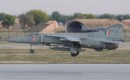
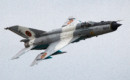
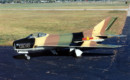
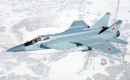
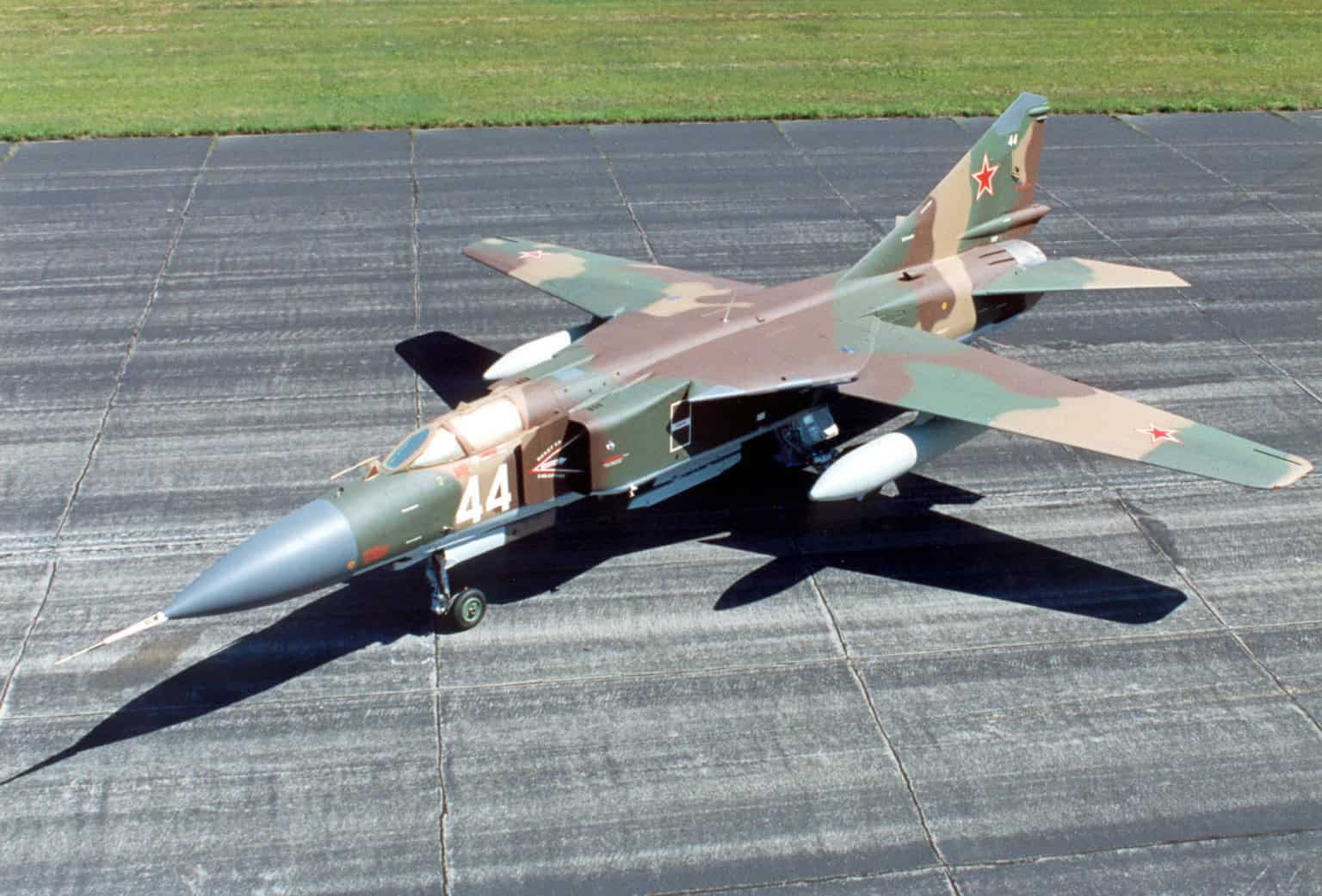
The MiG-23 (NATO reporting name Flogger) is a single-engine, variable-sweep fighter designed by the Mikoyan-Gurevich bureau. It was the first Soviet fighter with a look-down/shoot-down radar, and more than 5,000 were built, the most of any swing-wing aircraft in history.
Live Fleet Activity (MG23)
Fetching live data…


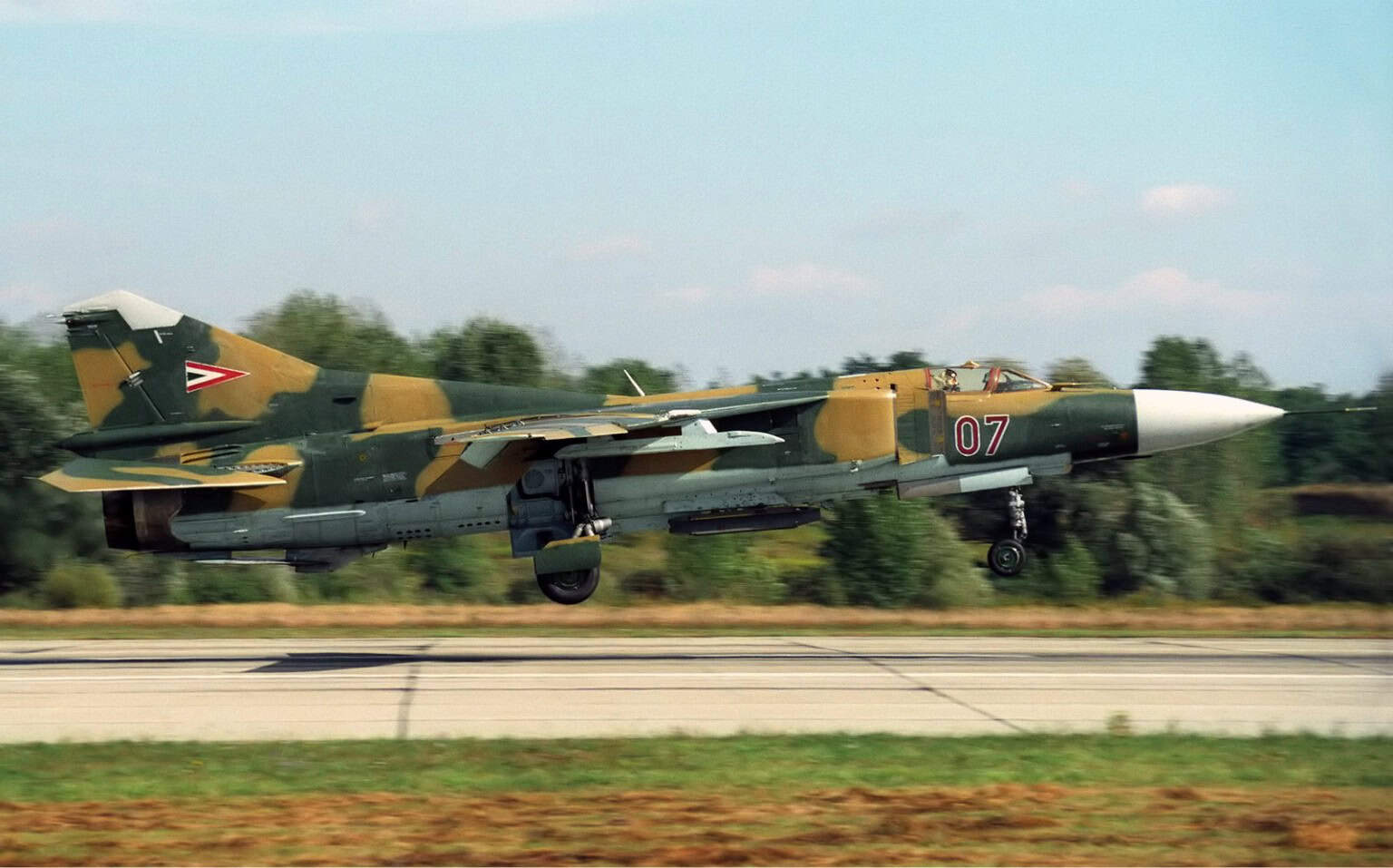


The MiG-23 (NATO reporting name Flogger) is a single-engine, supersonic fighter whose wings change sweep in flight. Mikoyan-Gurevich designed it in the 1960s to replace the MiG-21.
It was the first Soviet fighter to field a look-down/shoot-down radar, the RP-23 Sapfir, and one of the first armed with beyond-visual-range missiles. More than 5,000 were built, which makes it the most produced variable-sweep aircraft in history.
The American F-4 Phantom II and F-111 were the main Western influences on the design. The same basic airframe also became the MiG-27 ground-attack aircraft.
The specification panel on this page describes the MiG-23MLD, the final single-seat fighter version.
The MiG-21 was fast and agile, but it had a primitive radar, short range and a small weapons load. Work on its replacement began in the early 1960s.
The Soviet Air Force wanted better performance and range, beyond-visual-range missiles, and a much shorter takeoff run. Mikoyan weighed two ways to get there: lift jets, or variable-geometry wings.
The lift-jet design, the 23-01, first flew on April 3, 1967. It proved unsatisfactory, because the lift jets became dead weight once the aircraft was airborne.
The swing-wing prototype, the 23-11, made its first flight on June 10, 1967, flown by test pilot Aleksandr Fedotov. Series production was ordered in December 1967, and the first production MiG-23S flew on May 21, 1969.
The Soviet Air Force formally commissioned the MiG-23 on January 4, 1974.
The pilot moved the wings with a small hydraulic lever beneath the throttle. Three main settings were used: 16 degrees for takeoff, landing and cruise at or below Mach 0.7, 45 degrees for maneuvering and low-altitude intercepts, and 72 degrees for high-altitude intercepts and high-speed dashes.
From the 1971 production edition the wing area grew by 20 percent and the true angles became 18, 47 degrees 40 minutes and 74 degrees 40 minutes. Cockpit indicators and manuals kept the original labels.
The MiG-23MLD added a fourth setting at 33 degrees, meant to tighten turns. In practice the jet was harder to handle and accelerated poorly there, so experienced pilots used it and combat manuals still stressed 45 degrees.
The wings carry spoilers rather than ailerons at the 16 and 45 degree settings, and the two tailerons handle pitch and roll. The drop-tank pylons sit under the movable wing panels, so tanks could only be carried with the wings fully spread and had to be jettisoned before sweeping them.
The family splits into first-generation fighters, second-generation fighters, trainers and the ground-attack line that led to the MiG-27.
The first production model, the MiG-23S, used an interim radar and about 60 were built. Reliability problems forced it out of front-line service quickly.
The MiG-23M became the definitive first-generation fighter, with the Sapfir-23D look-down/shoot-down radar. About 1,300 were built between 1972 and 1978, and the export MiG-23MF followed.
The second-generation MiG-23ML (the L stands for lightweight) cut empty weight by 2,760 lb (1,250 kg) by removing the No. 4 fuselage fuel tank. It also got the R-35 engine and a stronger wing pivot rated for 8.5 g, and first flew on January 21, 1975.
More than 1,100 MiG-23MLs and derivatives, including the improved MiG-23MLA, were built between 1978 and 1983.
The MiG-23P was an air-defense interceptor for the Soviet PVO, with around 500 built from 1978 to 1981. It was never exported, and the last units served until 1998.
The MiG-23MLD was the last fighter version, aimed at the type’s chief weakness, handling at high angle of attack. It added vortex generators on the pitot boom, saw-toothed wing roots, a stick-stop device borrowed from the MiG-29, and the Sapfir-23MLA-II radar.
That radar could detect a bomber-sized target at medium to high altitude at 43 miles (70 km). The MLD also carried the SPO-15L Beryoza radar warning receiver and chaff and flare dispensers.
No new-build MLDs went to the Soviet Air Force. Instead 560 ML and MLA aircraft were converted between May 1982 and May 1985, while Bulgaria and Syria received new-build export versions.
The ground-attack MiG-23BN was built from 1973 to 1985, with 624 produced and most exported. The two-seat MiG-23UB trainer first flew on April 10, 1970, and more than 1,000 were built, 760 of them for Soviet forces.

Several proposed versions never entered production, including a carrier-borne MiG-23K that died with the cancelled Soviet carrier project and a late-1990s MiG-23-98 upgrade package offered to export customers.
The full specification table for the aircraft is on this page. A few of its figures need context.
The top speed is Mach 2.35 at altitude. Near sea level the same airframe tops out at about Mach 1.14, or 870 mph (1,400 km/h).
Range depends on the configuration. Wikipedia’s MiG-23MLD data lists 1,200 miles (1,900 km) clean and 900 miles (1,450 km) as a combat range with standard armament and no drop tanks.
The range in the panel is the ferry figure, flown with three 210-gallon (800-liter) drop tanks.
The panel shows the engine’s dry thrust. With afterburner the R-35-300 produces 28,660 lbf (127.49 kN).
The payload in the panel is the MiG-23MLD figure. The earlier MiG-23M could carry up to 3,000 kg (6,600 lb) of bombs and rockets, but the MLD’s maximum bomb load is listed as 2,000 kg, with four 500 kg (1,100 lb) bombs as the standard loadout.
The takeoff and landing distances reflect a design goal. The Soviet Air Force demanded a much shorter takeoff run than the MiG-21 managed, which is a large part of why the wing sweeps at all.
The jet carries one 23 mm GSh-23L autocannon with 200 rounds and six hardpoints: two under the fuselage, two on the wing gloves and two on wing pylons. Missile options include the R-60, R-73, R-23 and R-24, and the Kh-23 Grom air-to-surface missile.

The cockpit was more ergonomic than earlier Soviet fighters, but pilot workload was still high. Rearward visibility was poor, so a small periscope mirror sat in the canopy rail.
The control column carried a “knuckle rapper” that struck the pilot’s hand as the aircraft neared a 17 degree angle of attack. The KM-1 ejection seat was not zero-zero and needed a minimum speed of 90 knots.

The United States got its first look in the summer of 1977, when Egypt supplied MiG-23MS and MiG-23BN aircraft that were tested under programs named HAVE PAD and HAVE BOXER. Others went into the secret Constant Peg training program, which gave American pilots a Soviet jet to fight.
The tests overturned early U.S. assumptions. The MiG-23 turned about as well as an early F-4E, and an F-15 or a slatted F-4E could out-turn it.
It became unstable near high angle of attack and could depart controlled flight. Its acceleration was tremendous, especially below 10,000 feet (3,000 m).
The HAVE PAD verdict was that the MiG-23 was a poor dogfighter but a good interceptor for hit-and-run attacks. Constant Peg pilots nicknamed it the “Looping Hog,” because one of the few fighting moves it could do well was a huge loop.
The MiG-23 also had a poor safety record. In the 1980s the Soviet Air Force lost an average of 12.5 aircraft per 100,000 flying hours, and some Warsaw Pact users did worse, such as 24.3 major mishaps per 100,000 hours in Hungary.
Many Soviet pilots were disappointed to find that the MiG-23 would lose a turning fight to the MiG-21. What it offered instead was a high-energy fighter with radar and beyond-visual-range missiles, which the MiG-21 simply lacked.
For years the Soviet Air Force flew it as a high-speed point-defense interceptor guided from the ground, the same way it flew the MiG-21. Only with the MiG-23MLD did Soviet pilots begin to use it as a true air-superiority fighter.
India followed a similar path. The Indian Air Force was at first disappointed in the air-defense models but pleased with the strike versions, and its MiG-23MFs became its first aircraft equipped with beyond-visual-range missiles, the R-23R and R-23T.
Combat claims on the MiG-23 conflict heavily by source, and Western and Russian historians often disagree. The details below are the better documented ones.
Syria received its first MiG-23s in April 1974. Operating them was hard because of poor build quality, unreliability and missing documentation, and by the end of that year up to 13 Syrian MiG-23s had been written off.
In the Iran-Iraq War, Iraqi MiG-23 pilots claimed around 20 aerial victories, of which seven were confirmed against Iranian records. Iraq’s own post-war documents list 38 MiG-23BNs lost, while the figures for interceptor versions are thought to be understated.
In 1987, during Operation Moduler in Angola, Cuban MiG-23 pilots fired missiles at South African Mirage F1s. One R-23R exploded close enough to damage the landing hydraulics of one Mirage.
In 1989, two Libyan MiG-23MFs were shot down by U.S. Navy F-14A Tomcats in the Second Gulf of Sidra incident.
During the 1991 Gulf War, Iraqi MiG-23s damaged two EF-111A Ravens with R-60 missiles. The U.S. Air Force reported downing eight Iraqi MiG-23s with F-15s, and Iraqi documents confirm 43 MiG-23s destroyed from all causes.
In Afghanistan, Soviet MiG-23s flew escort and close air support missions. After heavy losses in 1984 and 1985, attack minimum altitudes were raised to 11,480 feet (3,500 m) and later to 14,760 feet (4,500 m), and there were no losses during 1986.
Syrian MiG-23BNs bombed Aleppo on July 24, 2012, the first use of fixed-wing aircraft for bombing in the Syrian civil war. On March 23, 2014, a Turkish F-16 shot down a Syrian MiG-23 with an AIM-9 Sidewinder near Kessab.
The MiG-23 was also involved in a famously strange accident. On July 4, 1989, a Soviet MiG-23M flew some 600 miles (900 km) with no one at the controls after its pilot ejected shortly after takeoff, and crashed into a house in Belgium, killing one person.
The MiG-23 remains in limited service with a handful of export customers. Wikipedia’s operator list gives these counts in service: North Korea 56 (December 2024), Cuba 24 (December 2023), Angola 22 (December 2024) and Ethiopia 9 (December 2024).
It also lists two MiG-23BNs with Libya’s internationally recognized government and two MiG-23MLs with the Libyan National Army (February 2024), plus three MiG-23MS and UB aircraft in Sudan (December 2023). These are inventory counts, not confirmed numbers of flyable aircraft.
Syria’s status is uncertain. The air force was listed with 87 MiG-23s in December 2024, but the Assad government fell that year and Israeli strikes followed. FlightGlobal’s World Air Forces 2026 report dropped Syria’s aircraft entirely, so whether any Syrian MiG-23 can fly is questionable.
Most Warsaw Pact users retired the type years ago. The last Russian MiG-23P left service on May 1, 1998, and Poland and Bulgaria retired theirs in 1999 and 2004.
The American relationship with the MiG-23 began with the Egyptian aircraft of 1977. Through Constant Peg, from 1977 to 1988, the U.S. Air Force flew a small number of MiG-23s from Nellis Air Force Base, designated YF-113, as test aircraft and aggressors for fighter-pilot training.
Some ended up in private hands. Wikipedia, citing the FAA, reported 11 privately owned MiG-23s in the United States in 2009.
The FAA registry database, downloaded on October 9, 2026, lists four active registrations under MiG-23 model names: three MiG-23UB two-seaters and one entry listed simply as “MiG 23.” A registration does not mean the aircraft is airworthy.
One former Bulgarian Air Force MiG-23MLD shows how a jet arrives here. It was delivered to Bulgaria on February 20, 1985, made its last flight on October 3, 2001, and was bought by American investors in 2007 or 2008. It was stored outdoors in northern Texas until 2019, when it was donated to the Wings Over the Rockies museum, whose restoration team is working on it.
The type’s best-known recent American accident came on August 13, 2023, when a MiG-23UB crashed at the Thunder Over Michigan air show at Willow Run Airport. Both crew members ejected at about 350 feet above ground, and the jet crashed in the parking lot of an apartment complex, hitting several unoccupied vehicles without injuring anyone on the ground.
The NTSB’s probable cause was “a reported partial loss of engine power while maneuvering for reasons that could not be determined.”
Yes, in limited numbers. Operators with MiG-23s in service include North Korea, Cuba, Angola, Ethiopia, Sudan and Libya, though the most recent counts we found date from December 2024 and are inventory counts rather than confirmed flyable aircraft.
A few privately owned MiG-23s also exist in the United States. Syria’s fleet is an open question after the 2024 fall of the Assad government.
It was a mixed design. U.S. evaluators found it out-accelerated American fighters at low altitude, and it gave the Soviet Air Force a look-down radar and beyond-visual-range missiles, but early models were unstable at high angle of attack, and U.S. test pilots rated it a poor dogfighter.
The second-generation MiG-23ML and the final MiG-23MLD addressed many of these problems with a stronger airframe and better handling at high angle of attack.
It depends on the job. The MiG-21 was the better turning fighter, while the MiG-23 had a more capable radar and the ability to fire beyond-visual-range missiles.
Soviet pilots were disappointed that the MiG-23 would lose a turning fight to the MiG-21, but it gave the Soviet Air Force capabilities the MiG-21 lacked.
The FAA registry database, downloaded on October 9, 2026, shows four active registrations under MiG-23 model names: three MiG-23UB two-seat trainers and one listed as “MiG 23.” Wikipedia reported 11 privately owned MiG-23s in 2009, citing the FAA.
A registration does not prove that the aircraft can fly.
More than 5,000, which makes it the most produced variable-sweep aircraft in history. The count includes the fighter, ground-attack and trainer versions, for example 624 MiG-23BNs and more than 1,000 MiG-23UBs.
Yes. Two Libyan MiG-23MFs were shot down by U.S. Navy F-14As over the Gulf of Sidra in 1989, and the U.S. Air Force reported shooting down eight Iraqi MiG-23s with F-15s in the 1991 Gulf War.
Sources and references used for research and fact-checking.