Fighter Jets
Mikoyan MIG-31E Foxhound
ICAO: MG31
The Mikoyan-Gurevich MiG-19 Farmer was the first Soviet fighter to go supersonic in level flight, a twin-engine interceptor built in more than 2,000 examples and flown against U.S. aircraft over Vietnam through its Chinese J-6 copy.
Updated: by Tim de Vries
The latest aviation news and stories sent to your inbox.
The MiG-19 (NATO name Farmer) was the Soviet Union’s first production fighter able to exceed the speed of sound in level flight. Two Tumansky afterburning turbojets, swept wings and a slab tail made it faster than the MiG-17 and a sharp-turning rival to the F-100 Super Sabre. It entered service in 1955, and Chinese-built copies flew in combat for decades.
Live Fleet Activity (MiG19)
Fetching live data…


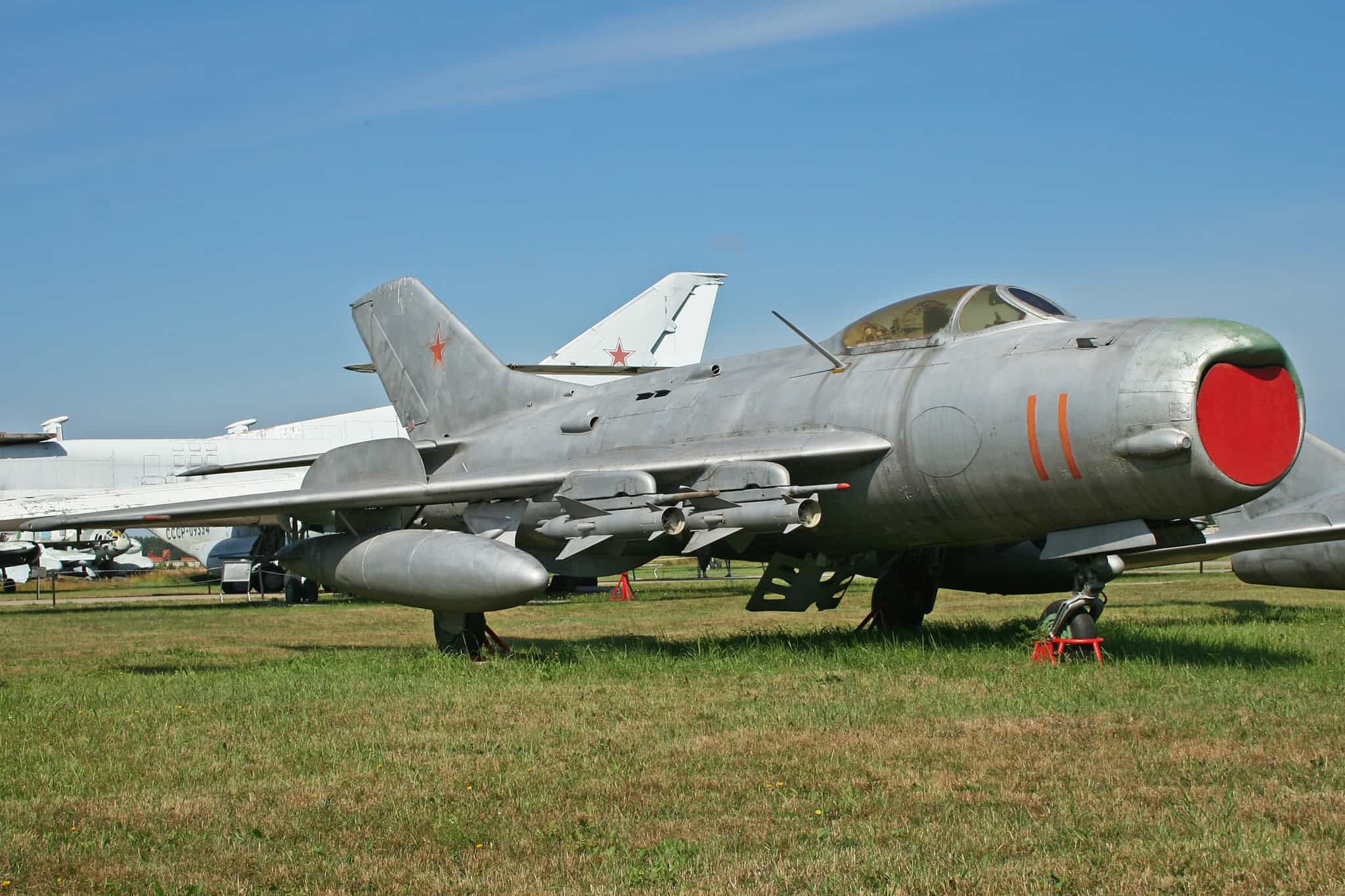
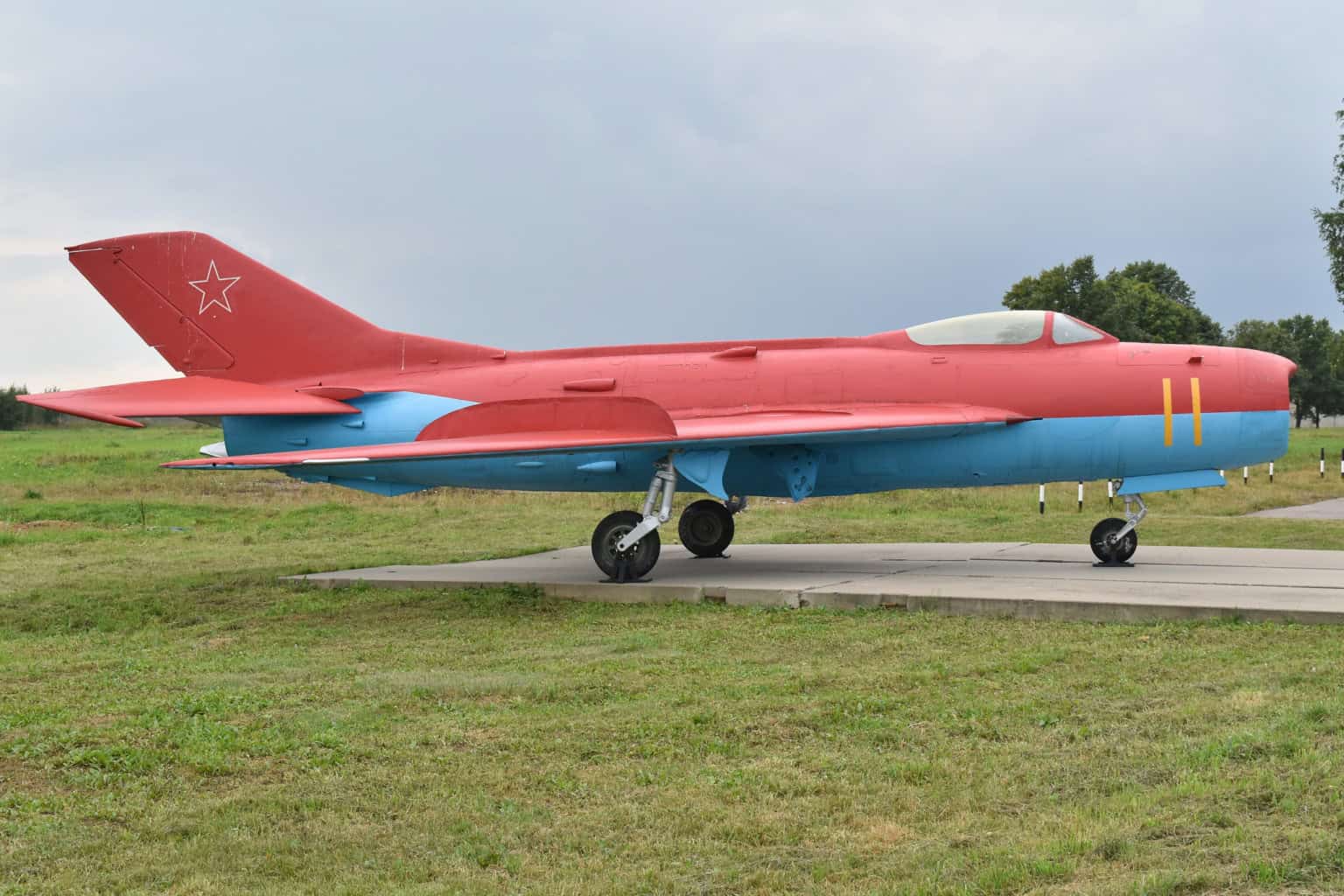


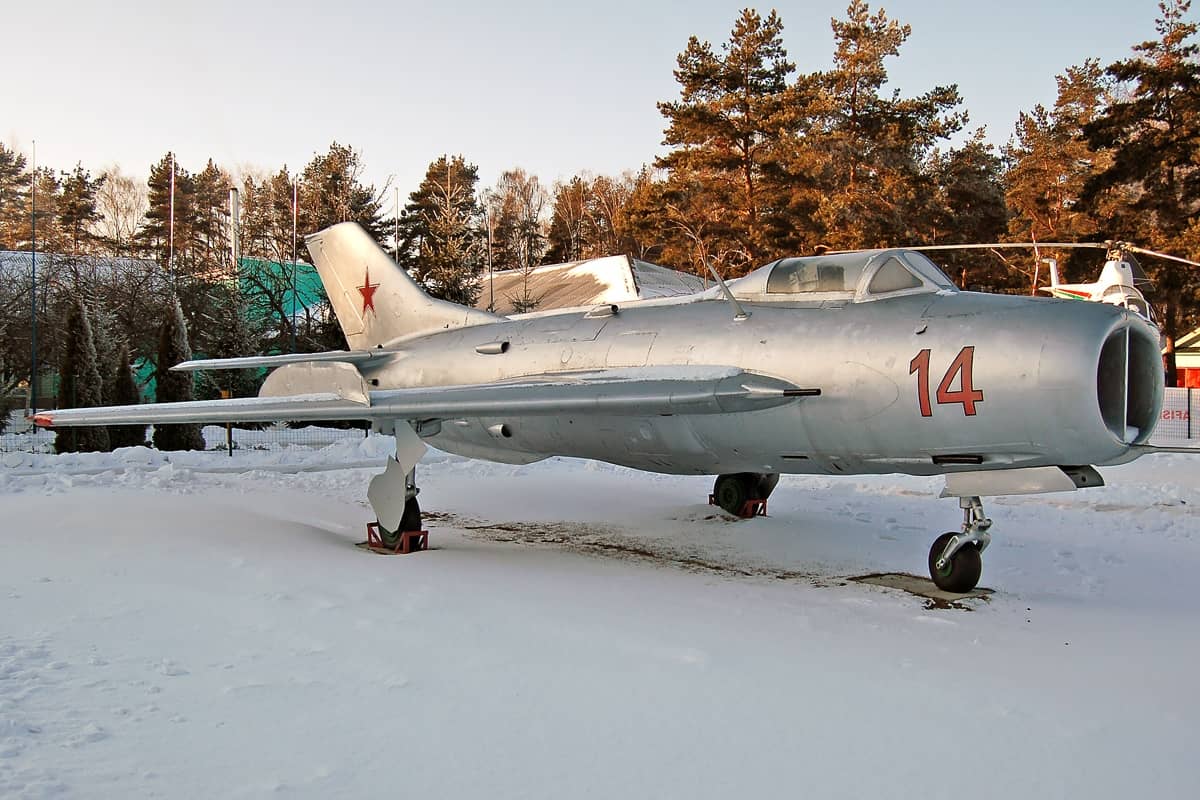
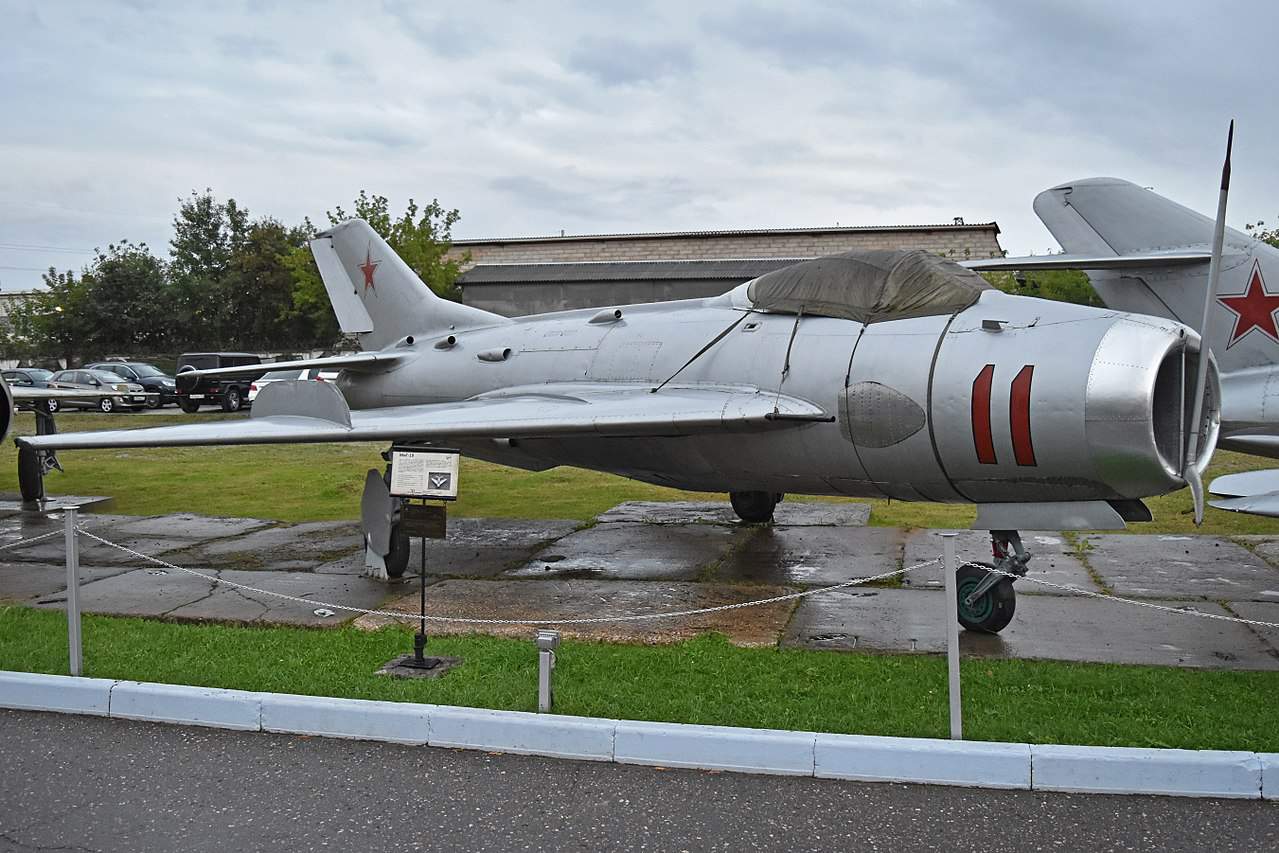

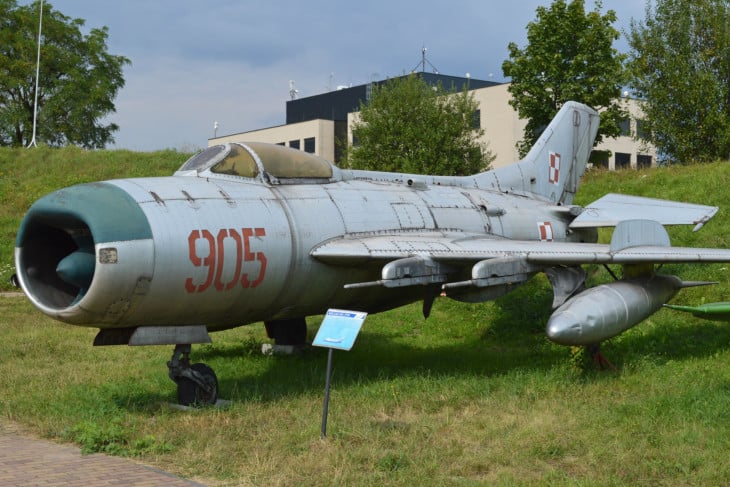
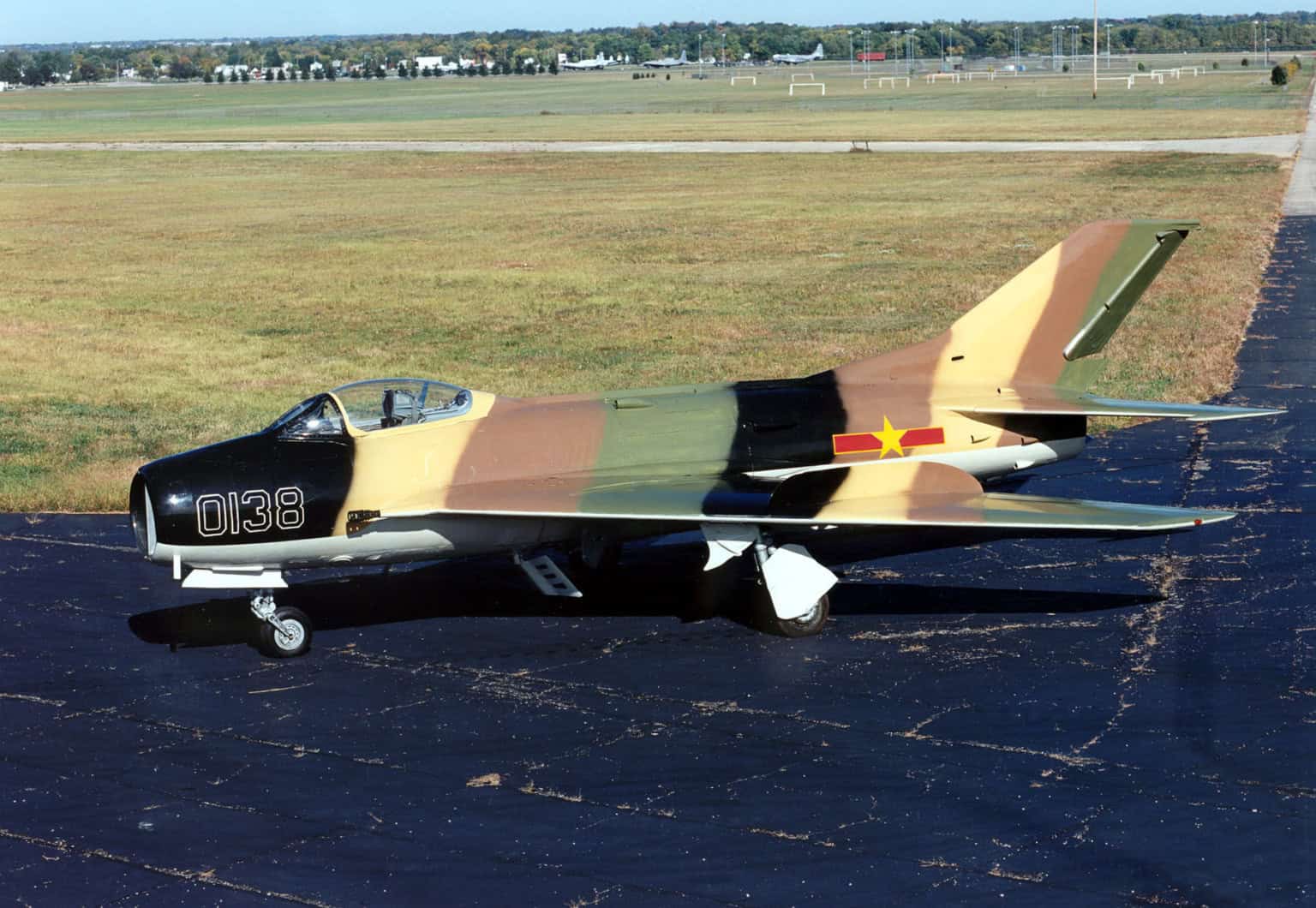
The Mikoyan-Gurevich MiG-19, known to NATO as the Farmer, was a single-seat, twin-engine Soviet fighter. It was the first Soviet production aircraft that could fly faster than sound in level flight.
It entered service in 1955 and fought mostly against the F-4 Phantom II and F-105 Thunderchief over North Vietnam, through its Chinese copy, the Shenyang J-6. About 2,172 Soviet-built aircraft were made, not counting Czechoslovak and Chinese production.
The full specification table for the aircraft is on this page, so the sections below explain what the numbers mean in practice.
Work began in 1950 at the Mikoyan-Gurevich bureau (OKB-155). The goal was a fighter with more range than the MiG-15 and MiG-17 that could also break the sound barrier in level flight.
The design used two Mikulin AM-5 axial engines, a smaller cousin of the engine in the Tu-16 bomber. A MiG-17 airframe with two AM-5s served as the SM-1 test bed in 1951.
The real prototype was the SM-2, which flew on May 24, 1952. Its thin wings were swept back 55 degrees and carried a fence on each side. Early flights showed a tendency to spin at high angles of attack, so engineers lowered the tail and reworked the air brakes.
Even with afterburners the Mikulin engines lacked thrust, so the bureau switched to the AM-9B, later called the Tumansky RD-9. The SM-9 with that engine flew on January 5, 1954. It impressed Soviet officials, and the MiG-19 was ordered into production on February 17, 1954, before factory testing had finished.

Rushing the fighter into service had a price. The first production aircraft suffered a string of in-flight explosions. The cause was poor insulation between the engines and the rear fuel tanks, which let the tanks overheat.
A metal heat shield partly cured it. The conventional elevators also stopped working well at supersonic speed.
The answer was an all-moving slab tail, first tried on the second and third SM-9 prototypes. It went into the main production version, the MiG-19S, which also swapped the three 23 mm cannon for three 30 mm Nudelman-Rikhter NR-30 guns.
Deliveries to the Soviet Air Forces began in June 1955. On July 3 that year, 48 MiG-19s flew past at an airshow at Tushino Airfield in Moscow.
The day fighter was only the start. The family grew into interceptors and a high-altitude type.

The SV was a response to the U-2. Even stripped down and with a bigger wing in its SVK form, it could not reach the spy plane, so designers turned to rocket boosters instead.
The top speed in the panel works out to about Mach 1.35. That figure is for a clean aircraft at altitude, and it is the one most sources quote.
Range is where the MiG-19 is easy to misread. The published range is the figure in the panel, flown on internal fuel. The longer ferry range of about 2,200 km (1,190 nautical miles) needs two 760-litre drop tanks, which take up the pylons otherwise used for weapons.
The climb rate is exceptional for the mid-1950s. It made the Farmer a capable point-defense interceptor, but the short legs limited it to defending its own territory.
The MiG-19S carried three 30 mm NR-30 cannon, one in the fuselage and one in each wing root. These hit hard enough that U.S. pilots who flew a captured example admired them.
Four underwing pylons completed the load. Two were for drop tanks only. The other two could carry up to 500 kg (1,100 lb) of stores, such as 32-round ORO-57K rocket pods or FAB-250 bombs.
Soviet MiG-19s intercepted Western reconnaissance flights over the USSR and East Germany. The first documented encounter with a U-2 came in autumn 1957, and the pilot could not close the altitude gap.
On May 1, 1960, a pursuing MiG-19P was hit by a salvo of SA-2 missiles meant for Francis Gary Powers’s U-2, and its pilot, Sergei Safronov, was killed. On July 1, 1960, a MiG-19 shot down a U.S. RB-47H over the Arctic. Washington said it was in international airspace.
In the Middle East, the first air combat involving the type came on November 29, 1966, when an Israeli Mirage III shot down two Egyptian MiG-19s. Egypt then lost more than half its roughly 80 MiG-19s on the ground in the opening strikes of the Six-Day War in 1967.
The type’s best-known war was Vietnam, where the Chinese-built J-6 flew with the 925th Fighter Regiment from 1969. For a deeper look at a bigger rival from the same era, see the MiG-21.

Better than its reputation suggests. In 1969 U.S. pilots tested an F-6, the export J-6, in the United States. They found it could out-turn the F-4 Phantom and out-accelerate it to Mach 1.2, though it was slower than the MiG-21.
The weak points were fuel and upkeep. One test pilot remarked that after five minutes in full afterburner at low level, the pilot would be looking for somewhere to land. The twin engines were also hard to maintain, which made it unpopular with North Vietnamese crews.
Against the F-100 Super Sabre, its closest Century Series counterpart, the MiG-19 gave away range and avionics but matched it for agility.

The Soviet Union, Czechoslovakia, Poland, Bulgaria, Cuba, Egypt, Iraq, Syria, Indonesia and others flew Soviet-built aircraft. Czechoslovakia operated 183 of the MiG-19S, P and PM versions.
China built the type under license as the J-6, and that copy served on well beyond the Soviet original. North Korea was still reported to be flying MiG-19 family aircraft as of 2014, so check current sources before treating any operator list as live.
India considered the MiG-19 but bought the MiG-21 instead. It still used the engines and subcomponents to develop the HAL HF-24 Marut.
It was a fast, agile and heavily armed fighter for the mid-1950s. U.S. test pilots found the export J-6 could out-turn the F-4 Phantom. Its short range and difficult engines were its biggest weaknesses.
It was the first Soviet production fighter capable of supersonic speed in level flight. The U.S. F-100 Super Sabre entered service earlier, in 1954, so it was not the first in the world.
Yes. The Russian MiG-29 and MiG-31 are still in service, and the MiG-35 is a recent export-oriented type. The MiG-19 itself is retired from Russia, though J-6 variants have been reported in a few air forces.
About 2,172 Soviet-built aircraft were produced between 1954 and 1968. That total excludes Czechoslovak production and the large Chinese J-6 run.
Farmer. The sub-types were suffixed: the MiG-19P was Farmer-B, the MiG-19S Farmer-C, and the MiG-19PM Farmer-D.
The delta-wing MiG-21 took over most Soviet fighter duties through the late 1950s and 1960s. In China the J-6 itself lasted for decades.
Sources and references used for research and fact-checking.