

Fighter Jets
Mikoyan MIG-31E Foxhound
ICAO: MG31
Soviet swept-wing transonic fighter of the 1950s
Updated: by Tim de Vries
The latest aviation news and stories sent to your inbox.
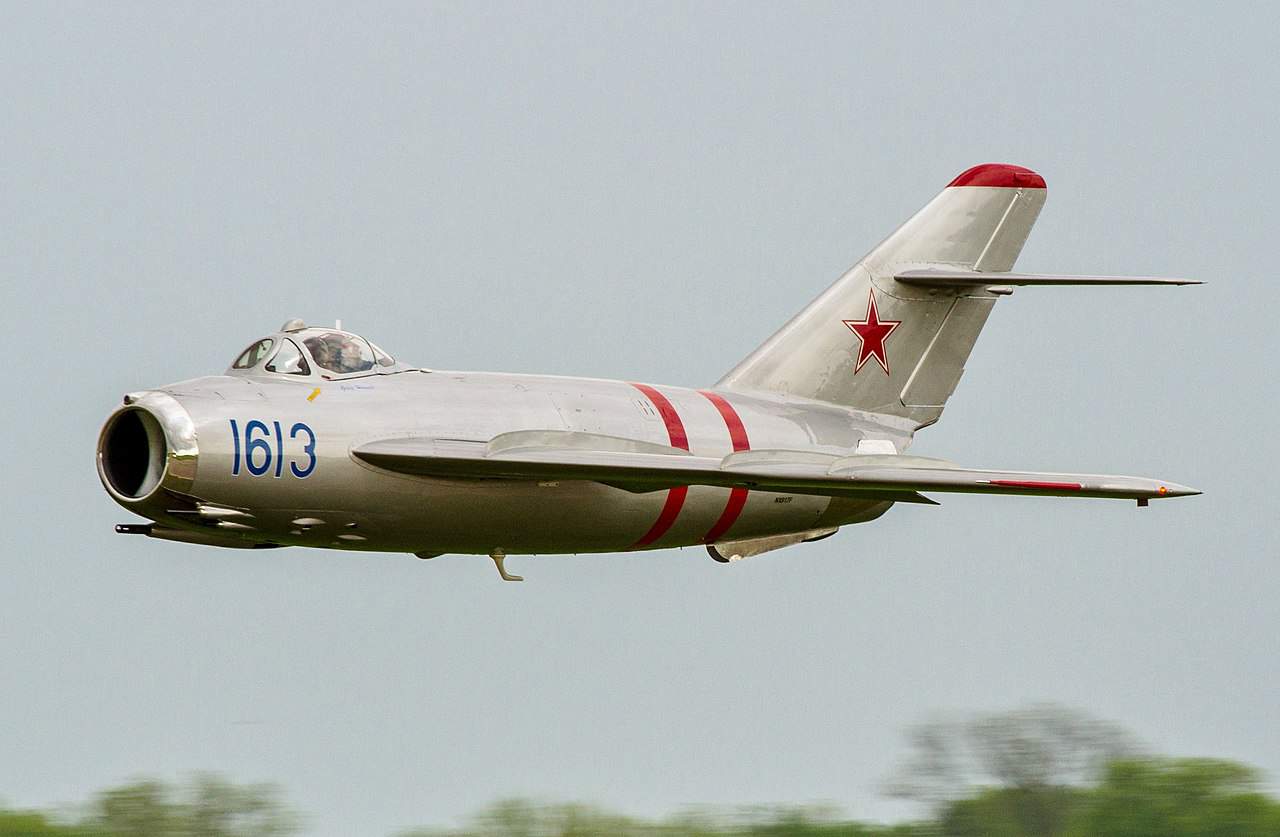
The Mikoyan-Gurevich MiG-17 (NATO name Fresco) is a single-seat Soviet jet fighter developed from the MiG-15. It first flew on 14 January 1950 and entered service in October 1952. Around 10,600 were built in the USSR, Poland and China, and it fought from the Taiwan Strait in 1958 to the skies over North Vietnam.
Live Fleet Activity (MG17)
Fetching live data…
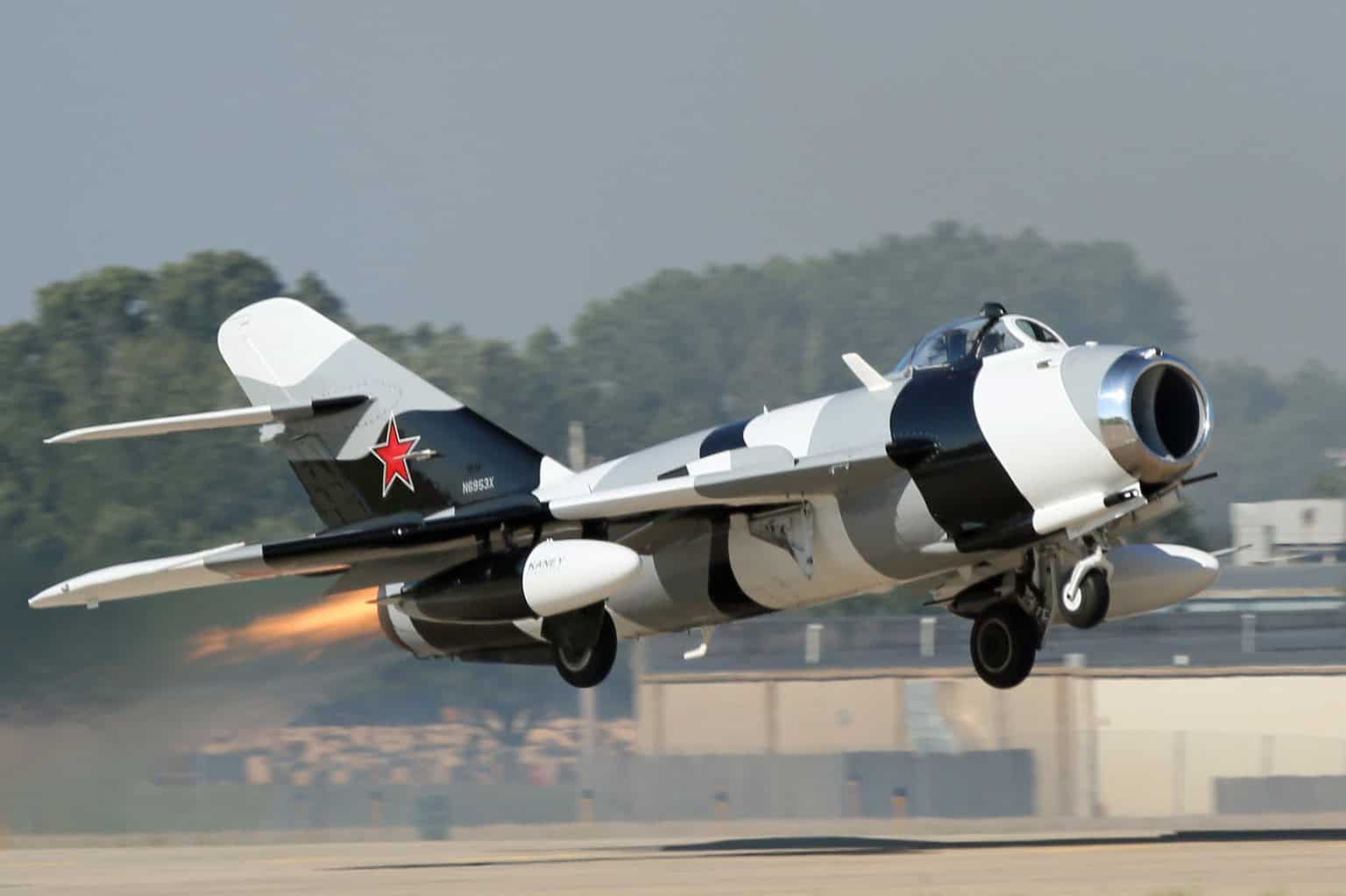


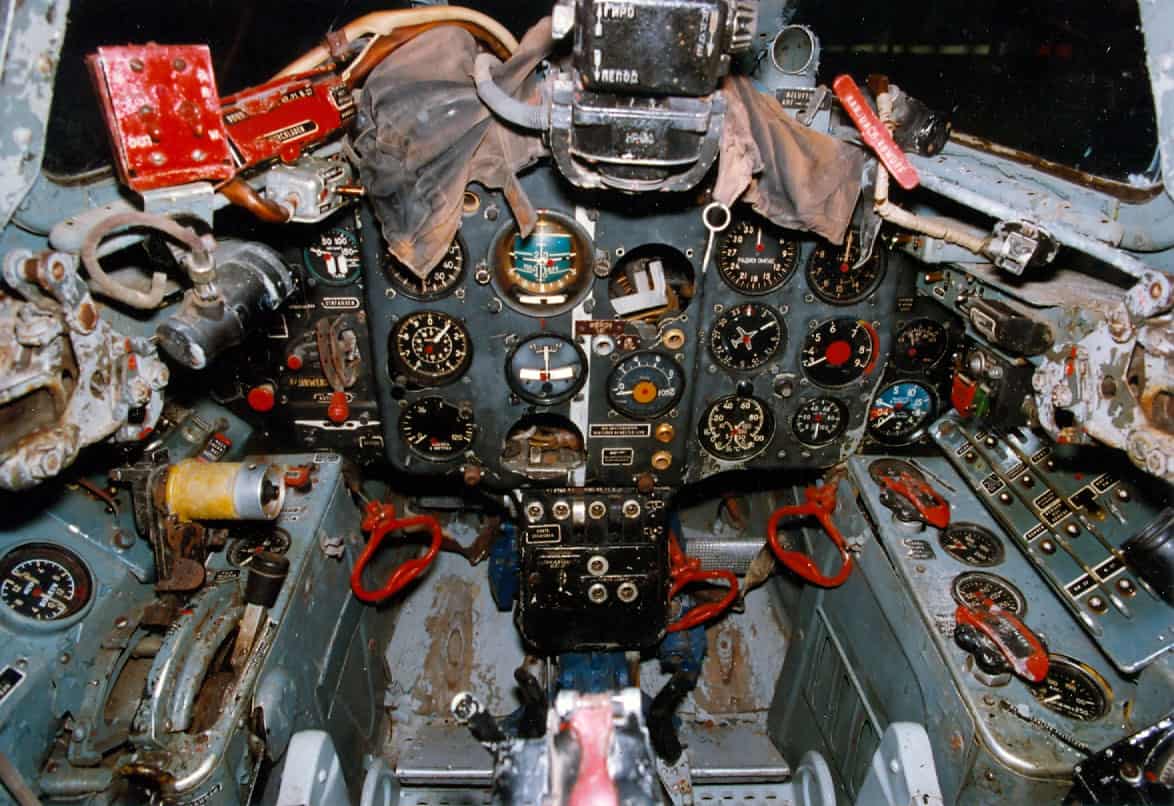
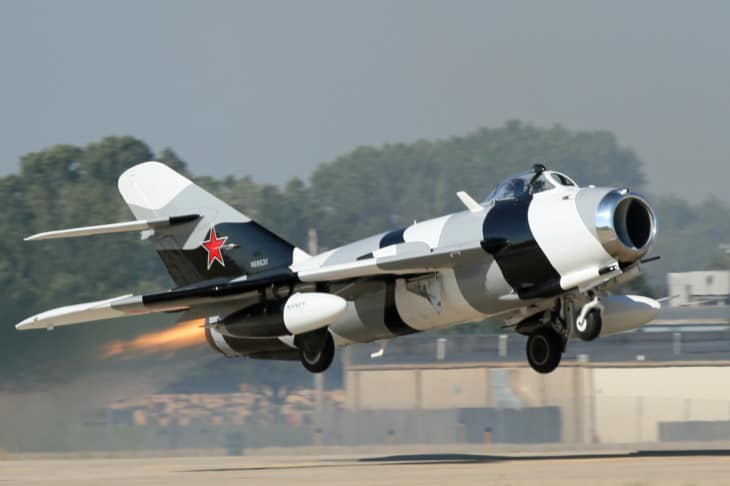
The Mikoyan-Gurevich MiG-17 (NATO reporting name Fresco) is the Soviet fighter that carried the MiG-15’s basic layout past the speed of sound’s doorstep. It was a single-seat, single-engine jet built in the thousands, and it was still shooting at American aircraft more than a decade after its first flight.
It is best remembered as the small, nimble gun fighter that North Vietnamese pilots used against F-105 Thunderchiefs and F-4 Phantoms over North Vietnam.
Mikoyan-Gurevich began work on a MiG-15 successor in 1949, to fix problems the earlier fighter showed in combat over Korea. The prototype, designated I-330 “SI”, first flew on 14 January 1950 with Ivan Ivashchenko at the controls.
The MiG-17 entered service in October 1952. It kept the MiG-15’s nose intake and single-engine layout, but the airframe behind it was new.
The wing was swept 45 degrees near the fuselage and 42 degrees on the outer panel, and the tail was redesigned for flight near the speed of sound. The result was a fighter that handled better at high speed than the MiG-15, though it was still a subsonic aircraft in level flight.
The first MiG-17s used a Klimov VK-1 turbojet with no afterburner. The MiG-17F switched to the VK-1F with an afterburner.
The VK-1F makes 7,600 lbf (34 kN) with the afterburner lit. That extra thrust is what let the F-model climb quickly and fight at height.
The full specification table for the aircraft is on this page, so only the figures that need context are explained here.
Top speed is quoted as about Mach 0.89 at sea level, which is why the type is described as a transonic fighter rather than a supersonic one. The panel’s maximum speed row carries the same figure in knots, mph and km/h.
The quoted range of 1,090 nm (1,250 mi · 2,020 km) assumes two drop tanks and a cruise at 39,000 ft. A fighter flying a combat sortie without tanks reaches far less, so treat the panel’s range as a ferry-style number, not a combat radius.
Service ceiling is 54,500 ft (16,600 m).
The MiG-17F carried two 23 mm Nudelman-Rikhter NR-23 cannon with 80 rounds each, and one 37 mm Nudelman N-37 cannon with 40 rounds. Two underwing pylons took up to 500 kg (1,100 lb) of stores, such as rocket pods or bombs.
That gun armament mattered in Vietnam. A MiG-17 pilot who got inside a jet’s turn radius did not need a missile lock, only a short, steady burst.

Four Soviet-built versions made up most of the production run. Wikipedia counts 5,467 MiG-17, 1,685 MiG-17F, 225 MiG-17P and 668 MiG-17PF built in the USSR by 1958.
The MiG-17P was an all-weather interceptor with a VK-1A engine and an RP-1 Izumrud radar. The Pima Air & Space Museum describes it as the first true all-weather radar-equipped interceptor available to the Soviet Union.
The MiG-17PF added the afterburning VK-1F engine to the radar fighter. The MiG-17PFU went a step further, dropping the guns for four rails carrying K-5 missiles.
Foreign-built versions are common too. Poland built the Lim-5 under licence, and China built the Shenyang J-5. Wikipedia says more than 2,600 were built under licence in Poland and China, and gives a total of 10,649 including Polish, Czechoslovak and Chinese variants.
Some individual production counts, such as the Lim-5 total, are given differently in different parts of the same source, so treat them as approximate.

The first combat came in the 1958 Taiwan Strait crisis, when Chinese MiG-17s clashed with Taiwanese F-86 Sabres. The MiG-17 also formed a major part of Arab air strength in the 1967 Six-Day War, where surviving Egyptian aircraft were used mainly for ground attack in Sinai.
Vietnam is where it earned its reputation. On 4 April 1965, four MiG-17s of the 921st Fighter Regiment shot down two F-105D Thunderchiefs during a strike on the Thanh Hoa Bridge.
Over the next seven years, MiG-17s claimed F-105s and F-4 Phantoms in numbers that are still argued over. The totals in published sources do not agree, so no single kill count is reliable.
What is not disputed is the pattern. A slower, gun-armed fighter could still hurt faster jets, which is why the F-105 and F-4 crews took it seriously.
It was also a stepping stone. The MiG-19 and MiG-21 followed it into the supersonic era, and its first combat, over the Taiwan Strait in 1958, was against the F-86 Sabre.
Wikipedia lists the type as in limited service. North Korea is the main military operator, flying Shenyang-built F-5 and FT-5 aircraft, and reports suggest less than half of them are airworthy.
Several African air arms are also listed as still flying it, including Mali, Guinea, Sudan and Tanzania. In the United States the FAA lists 17 privately owned MiG-17s, which turn up at air shows.

The MiG-17F is quoted at 590 kt (679 mph · 1,093 km/h) at sea level, about Mach 0.89. It was a high-subsonic fighter, so it did not break the sound barrier in level flight.
The original MiG-17 used the Klimov VK-1 turbojet. The MiG-17F and PF use the afterburning VK-1F, rated at 7,600 lbf (34 kN) with afterburner.
The MiG-17 has a redesigned wing swept 45 degrees inboard and 42 degrees outboard, plus a new tail for high-speed flight. It handles better near the speed of sound than the MiG-15 it replaced.
Wikipedia gives 10,649, including Polish, Czechoslovak and Chinese variants. More than 2,600 of those were licence-built in Poland and China.
The NATO reporting name is Fresco.
Yes, in limited numbers. North Korea and several African air forces are listed as operators, and 17 are privately owned in the United States.
Sources and references used for research and fact-checking.
.jpg)