

Table of Contents
One spy plane pass over western Cuba started the most dangerous 13 days of the Cold War. The aircraft type that flew it is still in service in 2026, and the Air Force is trying to retire it.
On the morning of Oct. 16, 1962, President John F. Kennedy was shown black-and-white photographs of Soviet missile equipment in fields near San Cristóbal, Cuba. They came from a single U-2 flight two days earlier, during which Air Force Maj. Richard Heyser crossed the Cuban mainland in about six minutes and took 928 pictures.
Eleven days after Kennedy saw them, on Oct. 27, a Soviet SA-2 missile brought down a second U-2 over eastern Cuba. Its pilot, Maj. Rudolf Anderson Jr., was the only one of the 11 U-2 pilots who flew over Cuba during the crisis to die in combat.
Why the U-2s Had Stayed Away From Western Cuba for Five Weeks
The Lockheed U-2 Dragon Lady had already found trouble in Cuba that summer. A flight on Aug. 29, 1962, photographed Soviet SA-2 surface-to-air missile sites at eight locations.
Two more incidents followed within days. On Aug. 30, a Strategic Air Command U-2 strayed over the Soviet island of Sakhalin, and on Sept. 9 a Taiwanese U-2 was probably lost to a surface-to-air missile over western China.
Secretary of State Dean Rusk and National Security Advisor McGeorge Bundy feared a missile in Cuba would down a U-2 and set off an international incident. Between that worry and bad weather, U-2 flights over Cuba stopped from Sept. 5 to Oct. 14, according to Air & Space Forces Magazine.
The CIA kept flying peripheral runs, photographing the island at a slant range from about 15 miles (24 km) offshore. That could not show what was being built in the interior.
On Oct. 12, the administration moved Cuba overflights from the CIA to the Air Force, which could offer a more plausible cover story if a pilot went down.
The missions went to the 4080th, a Strategic Air Command unit at Laughlin Air Force Base in Texas, flying U-2s borrowed from the CIA because they could climb 5,000 feet higher than the Air Force’s own.
Weather then held Heyser on the ground for four days. He finally took off from Edwards Air Force Base in California at 11:30 p.m. on Oct. 13.
928 Photographs From 72,500 Feet, and a Night the President Was Allowed to Sleep
Heyser flew the U-2’s maximum altitude profile and reached 72,500 feet (22,100 m). Cloud cover was about 25 percent, and his aircraft left no contrail.
A CIA account published in Studies in Intelligence puts the start of his crossing at 7:37 a.m. on Sunday, Oct. 14, and the northern beaches six minutes later. In that time his camera took 928 pictures covering a swath 75 miles (121 km) wide.
He had already crossed the Isle of Pines to the south, so his total time in Cuban airspace was longer: Air & Space Forces Magazine logs him entering at 7:31 a.m. and leaving at 7:43 a.m. He landed at McCoy Air Force Base near Orlando, Florida, after exactly seven hours in the air.
The film was flown to Washington, and the first prints reached the National Photographic Interpretation Center just before 10 a.m. on Oct. 15. Analysts found three medium-range ballistic missile sites near San Cristóbal, with eight large missile transporters and four erector launchers in tentative firing positions.
Why Kennedy found out a day late
The CIA reported the missile evidence to McGeorge Bundy at 8:30 p.m. on Oct. 15. Bundy chose not to tell the President that night, and briefed him at 8:45 a.m. on Oct. 16 instead.
Kennedy called his senior advisers together for a meeting before noon. CIA photo interpreter Arthur Lundahl stood at the President’s shoulder with three photographs pasted to briefing boards, labeled with arrows reading erector launcher equipment, missile trailers and tent areas.
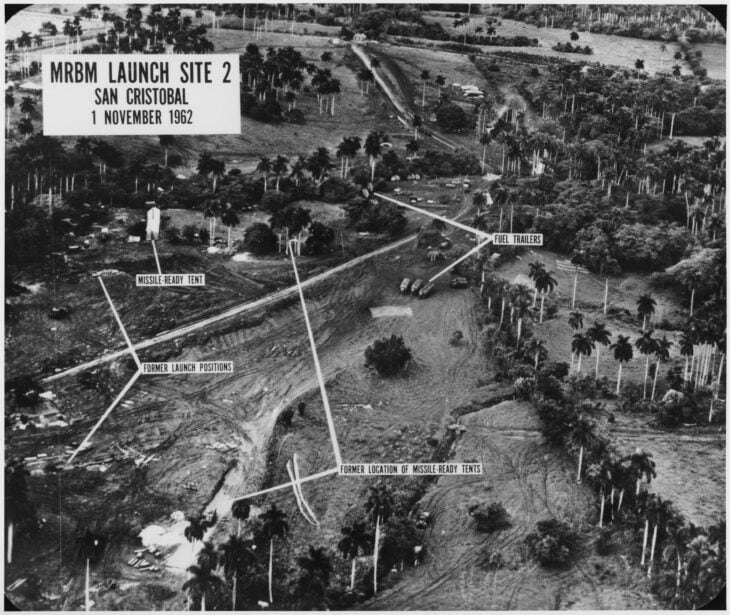
The missile behind those labels was the R-12, known to NATO as the SS-4 Sandal, with an effective range of about 1,200 miles (2,000 km).
Why One U-2 Loss on Oct. 27 Did Not Start a War
Kennedy went public on Oct. 22 and ordered a naval “quarantine” of Cuba, a word chosen to avoid the formal implications of a state of war. Over the island, U-2s were now flying as many as six missions a day.
Anderson had been Heyser’s backup pilot for the Oct. 14 mission. On Oct. 27, flying his sixth mission over Cuba, he took off from McCoy in U-2F serial 56-6676, the airframe numbered one after the jet Heyser had flown.
A Soviet SA-2 crew at Banes, in eastern Cuba, fired on him, and Anderson was killed. The launch was authorized by two Soviet generals in Havana, Leonid Garbuz and Stepan Grechko, who could not reach their commander, Issa Pliyev. Anderson was 35.

Kennedy’s advisers had planned to destroy any missile site that shot down a U-2. Kennedy did not allow the planned F-100 strike on Banes.
The same day, another American U-2 made an accidental 90-minute overflight of the Soviet Union’s far eastern coast. Soviet MiGs scrambled, and the U.S. launched F-102 interceptors armed with nuclear air-to-air missiles over the Bering Sea.
At 9 a.m. on Oct. 28, Soviet leader Nikita Khrushchev announced that the missiles would be dismantled and returned to the Soviet Union. Kennedy ordered that Anderson receive the Air Force Cross, the first ever awarded, and Cuba returned his body on Nov. 4.
The pattern of the crisis ran through one aircraft. A U-2 gave Kennedy the evidence and the days to decide what to do with it, and a U-2 loss was the moment those days came closest to running out.
The U-2 Still Flies in 2026, and the Air Force Wants the Last 23 Gone
Sixty-four years after Heyser’s flight, the Air Force still flies the U-2S. TWZ counted 23 in the inventory in June 2026, including three two-seat TU-2S trainers.
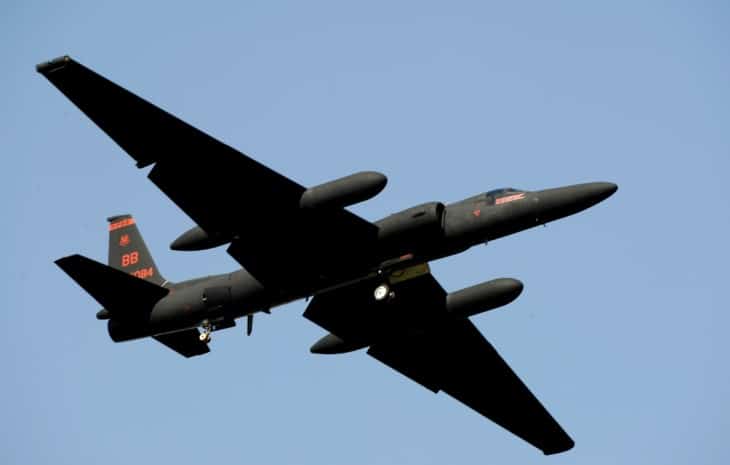

The fleet averages more than 43 years of age, and it has flown in support of Operation Epic Fury against Iran, according to Air & Space Forces Magazine. It has outlasted the faster SR-71 Blackbird, which was built to replace it and last flew for the Air Force in 1998.
The Air Force’s fiscal 2027 budget request, released in April 2026, would retire all 23 by the end of the fiscal year. A Pentagon force structure report called the aircraft “no longer viable for future high-end conflicts,” and the service did not say what would take over its missions.
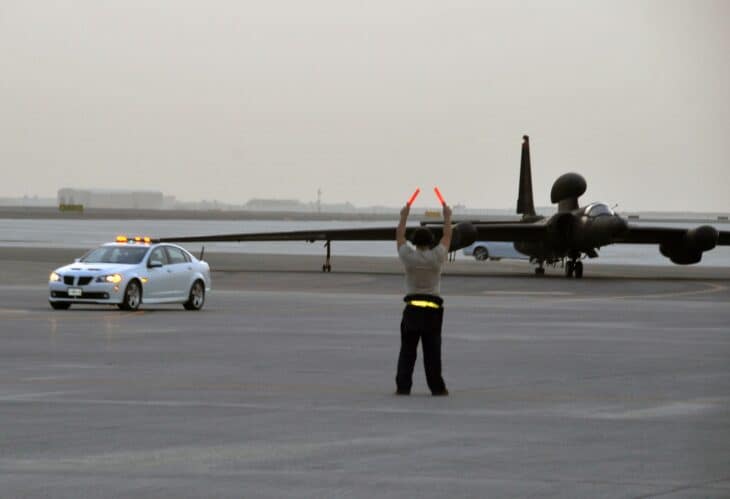

Congress has blocked earlier retirement attempts, and it is pushing back again. A House appropriations draft released in June 2026 would allow no more than two U-2 retirements in fiscal 2027 and add $81 million to fully restore four aircraft through depot maintenance.
That draft is not law until both chambers pass a final bill, and no final decision on the fleet had been reported when this story was written in mid-October 2026.
What the U-2 did in 1962 puts it at the top of our ranking of the most important spy planes ever flown, and its future is now being settled by a budget line rather than a missile.
Sources and references used for research and fact-checking.
- U.S. Department of State, Office of the Historian, Foreign Relations of the United States, 1961-1963, Volume XI, Cuban Missile Crisis and Aftermath, Document 16: Editorial Note
- CIA Studies in Intelligence (via FAS), The Cuban Missile Crisis of 1962: Presenting the Photographic Evidence Abroad
- Air & Space Forces Magazine, Airpower and the Cuban Missile Crisis
- Council on Foreign Relations, TWE Remembers: Maj. Richard Heyser Flies a U-2 Over Cuba
- Wikipedia, Richard S. Heyser
- Wikipedia, Rudolf Anderson
- Wikipedia, Cuban Missile Crisis
- John F. Kennedy Presidential Library, Off the Record Meeting on Cuba, October 16, 1962, 11:50 a.m.
- NPR (via VPM), Excerpt: One Minute to Midnight
- Air & Space Forces Magazine, U-2 Fleet, Half of A-10s Would Retire; Air Force Plans to Add 108 Planes in '27
- TWZ, Four U-2S Spy Planes Would Be Restored In Bill That Would Save The Dragon Lady Fleet
Get the Newsletter
The latest aviation news and stories sent to your inbox.
About the Author

Tim is the owner and lead editor of AeroCorner since 2019, overseeing aviation content covering aircraft, airlines, airports, and the broader aviation industry. Through years of researching, writing, editing, and publishing aviation-focused content, he has developed extensive practical knowledge of commercial aviation and air travel. Based in Asia and a frequent traveler himself, Tim also brings firsthand passenger experience to AeroCorner’s coverage. Outside of publishing, he has also explored aviation firsthand through hands-on flight training in New Zealand.