

Table of Contents
The bracelet led divers to the wreck of Antoine de Saint-Exupéry’s plane, and the wreck answered where he fell. It has never answered why.
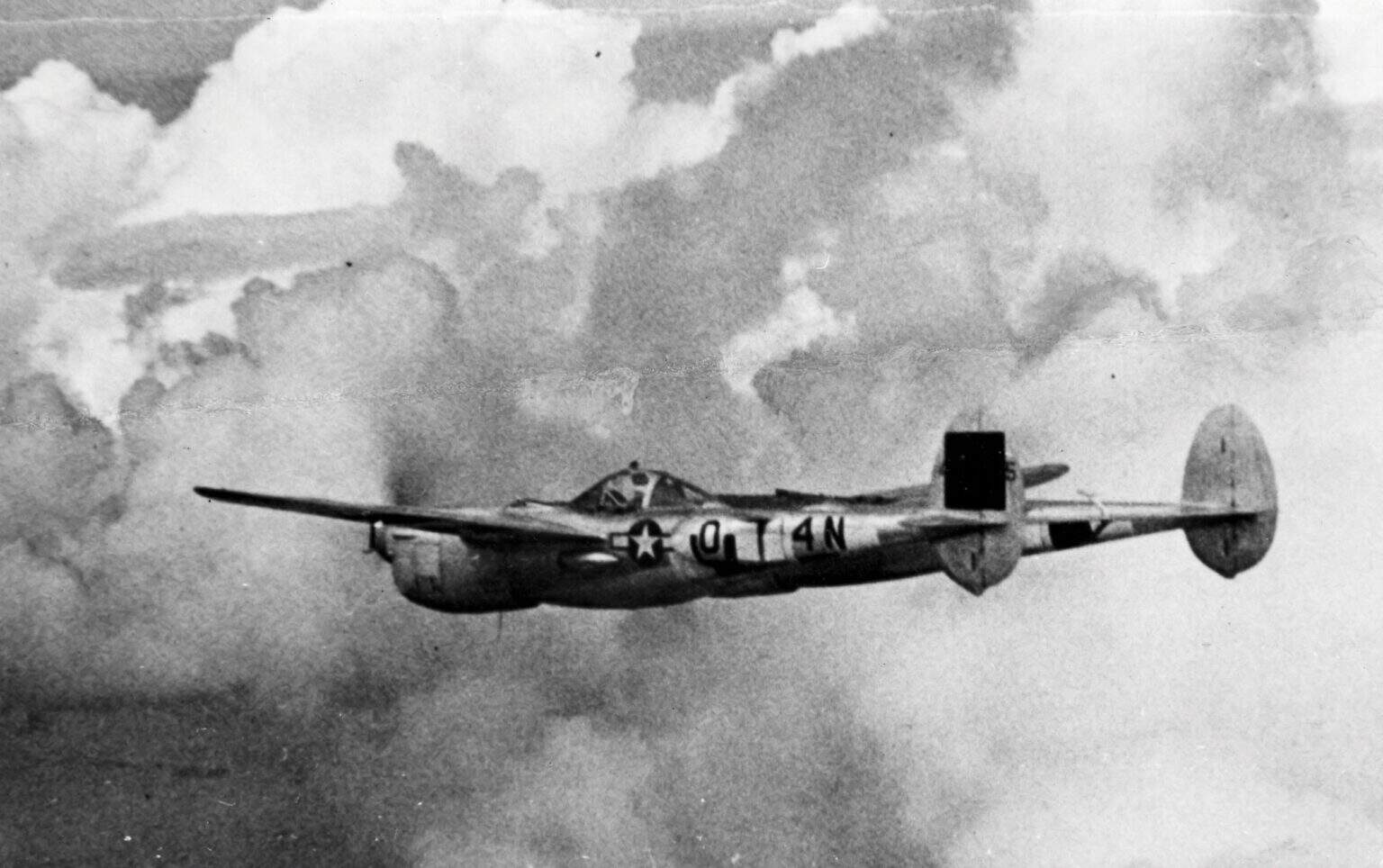
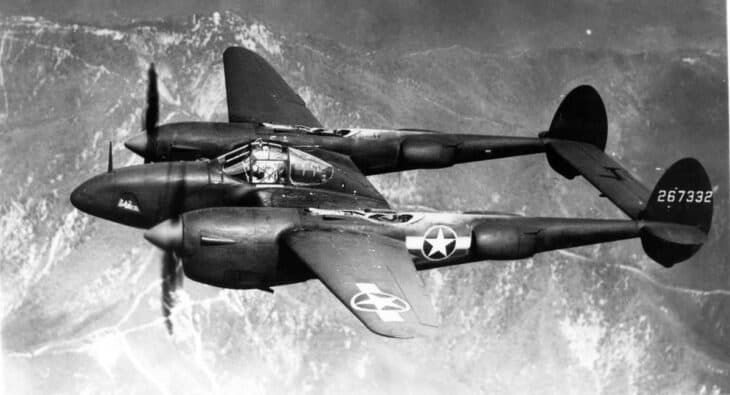
At 8:45 a.m. on July 31, 1944, Saint-Exupéry took off from Borgo, on Corsica, in an unarmed F-5B, the photo-reconnaissance version of the Lockheed P-38 Lightning. He was due back at 12:30 and never returned.
On September 7, 1998, the Marseille trawler Horizon hauled up a silver identity bracelet engraved with his name. Two years later a diver found the wreck off the island of Riou, and in 2003 a panel stamped “2734 L” proved it was his airplane.
Why a 44-Year-Old Writer Was Flying a P-38 Over Occupied France
By 1944, Saint-Exupéry was already one of the most famous pilots in the world. He had flown the mail in aviation’s open-cockpit era and turned it into books like Night Flight and Wind, Sand and Stars. The Little Prince was published in the United States in 1943.
He was also badly worn. In 1935 he crashed a Caudron Simoun in the Libyan desert during a Paris to Saigon record attempt, and he and his navigator, André Prévot, survived four days without water before Bedouin tribesmen rescued them, according to This Day in Aviation.
By 1943, the National WWII Museum notes, he was 43, with injuries that left him unable to turn his head to the left or to dress without help. A crash on his second flight in the F-5 did not keep him out of the cockpit for long, the museum adds, because his presence had tremendous publicity value.
He rejoined his old reconnaissance squadron, the 2/33, part of an American photo-reconnaissance wing commanded by Colonel Elliott Roosevelt, the president’s son. At 44 he was nine years over the age limit for its Lightnings, Air & Space magazine reported, and he got the slot by pulling strings.
He did not love the airplane. He called it “a flying torpedo that has nothing whatever to do with flying and, with all its dials and buttons, makes its pilot a sort of chief accountant.” Missions at 30,000 feet (9,100 m) in its unpressurized cockpit left him wrung out.
.jpg)
Sortie 33S176 and the Bracelet in the Net
That last morning, the squadron’s operations officer helped him into his flight suit and squeezed him into the cockpit. Sortie 33S176 was a mapping run over the Grenoble and Chambéry region, east of Lyon, ahead of the Allied landings in southern France.
The airplane was F-5B-1-LO serial 42-68223, Lockheed number 422-2734. Allied radar at Cap Corse tracked it into southern France. Eight days later he was listed as missing in action, presumed shot down by the enemy.
Searches over the next five decades ranged from the Alps to the Riviera. In 1992 a champagne house paid IFREMER, the French ocean research agency, to sweep the seabed between Corsica and the coast, and it found nothing.
Two P-38 wrecks found by divers in La Ciotat Bay, near Marseille, raised hopes in the 1990s. Both turned out to be fighters shot down on January 27, 1944, months before he disappeared.
Then came the Horizon. Its second mate, Habib Benamor, found the bracelet among the mullet and squid in a net trawled about 8 miles (13 km) south of Marseille, east of Riou. Skipper Jean-Claude Bianco scraped off the crust and read the name.
Luc Vanrell, a Marseille dive shop owner, had seen aircraft debris in that exact area and had assumed it was German. He searched a strip about a mile long and 400 yards (370 m) wide, in water so deep that divers get about 15 minutes on the bottom. The culture ministry puts the wreck at about 280 feet (85 m).
By May 2000 he had a Lightning wheel, a left landing gear and a tail boom fragment with the oval intake of the F-5B’s turbo-supercharger. He declared the find on May 12, 2000. The French government then blocked any salvage until 2003.
When divers finally raised nearly two dozen pieces in late 2003, one panel from the left turbocharger was stamped “2734 L”. A team guided by Culture Ministry archaeologist Patrick Grandjean found the same turbocharger number on a Lockheed drawing of his airplane, and Grandjean told the Christian Science Monitor: “We can be perfectly certain.”
The Shoot-Down Story the Wreck Does Not Back Up
In March 2008, Horst Rippert, an 88-year-old former Luftwaffe pilot with 28 victories, said he had done it. He told AFP he was flying a Messerschmitt Bf 109 near Toulon that day when he saw a lone Lightning below him, got behind it and fired.
“If I had known it was Saint-Exupery I would never have shot him down,” he said, The Local reported. Saint-Exupéry had been one of his favorite authors.
The story spread fast, and some accounts, including the WW2 Wrecks profile of Vanrell, still state the shoot-down as fact. It is not settled. No surviving German record confirms the kill Rippert said he radioed in, and the underwater archaeologists found no evidence of enemy fire on the recovered pieces.
Found is not the same as solved
The wreck proves where 42-68223 went into the sea. It does not prove a German pilot put it there. No bullet holes have been found, but only a small part of the airplane was raised, so gunfire cannot be ruled out either. The cause is still unknown.
The other explanations are just as unproven. In 2004, when the wreck was identified, an engine failure, a loss of control and even suicide were all still being discussed. Vanrell said only that the airplane had hit the sea very violently: “One might guess that it fell vertically from a great height.”
Even the bracelet drew doubt. A Louvre laboratory that examined it could not say whether it was genuine, and some believed it belonged to his wife, Consuelo, whose name is also engraved on it.
The family opposed raising the wreck at all. “That plane is a sepulchre that must be respected,” a nephew, Frédéric d’Agay, told Air & Space in 2001.
Where the Pieces Are Now
The recovered fragments went to the Musée de l’Air et de l’Espace at Le Bourget, outside Paris, according to WW2 Wrecks. Most of the airplane is still on the seabed, scattered by decades of trawling.
France declared him “Mort pour la France” in 1948, the French culture ministry’s underwater archaeology service records. In 2000, Lyon, the city where he was born, renamed its airport Lyon-Saint-Exupéry.
The book outlived the mystery. By 2023, The Little Prince had been translated into 552 languages and dialects, the Collège de France counted, placing it among the most translated works ever written.
That leaves his disappearance in a rare category. With Amelia Earhart, the search is still for the airplane. With Saint-Exupéry, the airplane was found, and the question only got narrower.
Vanrell himself has said the wreck was never the real point. In his words, “the cultural treasure that Saint-Exupéry has offered, are in his books, not in the remains of his aircraft.”
Sources and references used for research and fact-checking.
- Air & Space/Smithsonian, Fishing for Saint-Ex
- French Ministry of Culture, DRASSM, P38 flown by Saint-Exupéry (Bouches-du-Rhône)
- This Day in Aviation, 31 July 1944
- This Day in Aviation, Saint-Ex tag archive (Libyan desert crash, 1935)
- The National WWII Museum, The Little Prince's Last Flight: The Story of Antoine de Saint-Exupéry
- The Christian Science Monitor, France and its Little Prince
- The Local, WWII pilot regrets gunning down France's 'Little Prince'
- Wikipedia, Antoine de Saint-Exupéry
- WW2 Wrecks, Luc Vanrell: The story behind the discovery of Antoine de Saint-Exupéry's P-38 Lightning
- Collège de France, The Little Prince at Babel: translations in rare languages
Get the Newsletter
The latest aviation news and stories sent to your inbox.
About the Author

Tim is the owner and lead editor of AeroCorner since 2019, overseeing aviation content covering aircraft, airlines, airports, and the broader aviation industry. Through years of researching, writing, editing, and publishing aviation-focused content, he has developed extensive practical knowledge of commercial aviation and air travel. Based in Asia and a frequent traveler himself, Tim also brings firsthand passenger experience to AeroCorner’s coverage. Outside of publishing, he has also explored aviation firsthand through hands-on flight training in New Zealand.