

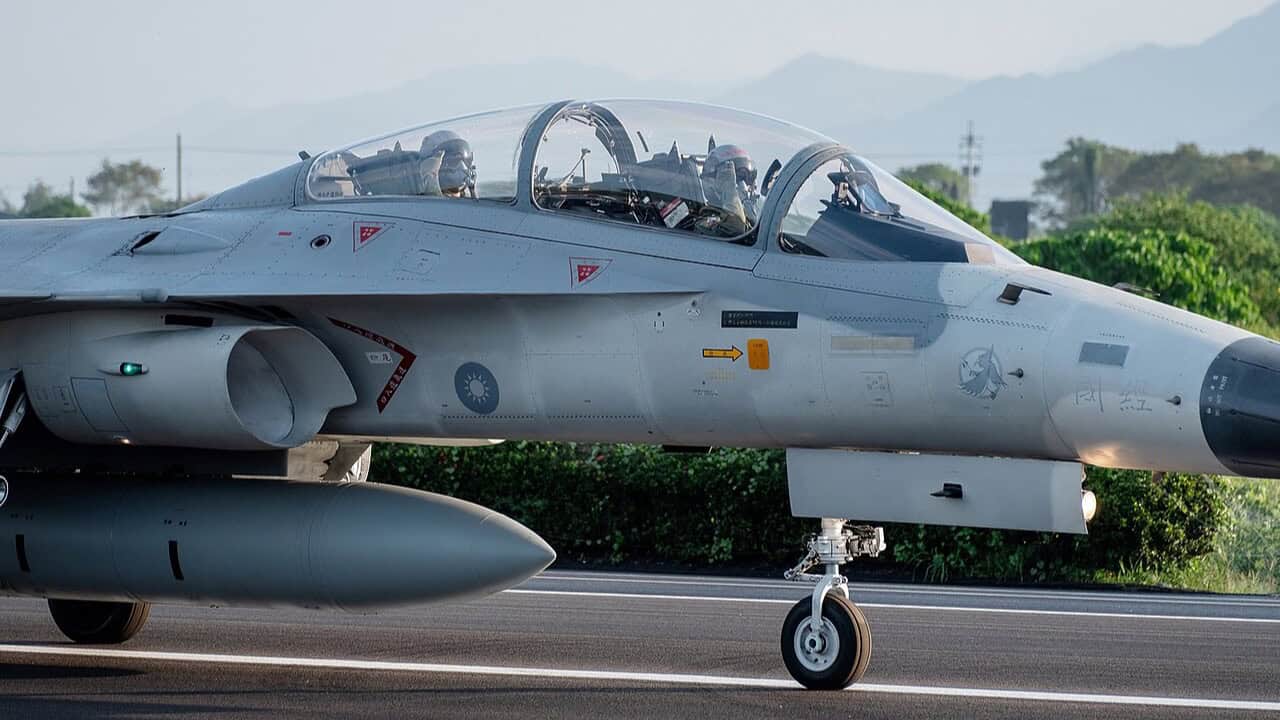
Table of Contents
The Republic of China Air Force flies 319 combat aircraft, and 138 of them are upgraded F-16Vs. That single type is the backbone of Taiwan’s air defense and the only one in the fleet with an AESA radar.
Behind it sit 129 locally built Ching-kuo fighters and 52 French Mirage 2000-5s. Those three types are the entire fighter force, and every one of them was designed in the 1970s or 1980s.
This is a full inventory of what the ROCAF actually operates as of September 2026, counted by aircraft in service rather than aircraft on order. Roughly 35,000 people serve in it, and it flies from six tactical wings spread across an island about the size of Maryland.
| Aircraft | Number | Role | Status |
|---|---|---|---|
| Lockheed Martin F-16V | 138 | Multirole fighter | Upgrade finished 2023 |
| AIDC F-CK-1 Ching-kuo | 129 | Multirole fighter | Built in Taiwan |
| AIDC T-5 Brave Eagle | 56 | Advanced jet trainer | 66 due by end of 2026 |
| Dassault Mirage 2000-5 | 52 | Interceptor | Service life under review |
| Beechcraft T-34C Turbo Mentor | 34 | Basic trainer | In service |
| Lockheed C-130H Hercules | 19 | Tactical airlift | Upgrade canceled 2026 |
| Sikorsky UH-60M Black Hawk | 14 | Search and rescue | In service |
| Lockheed P-3C Orion | 12 | Maritime patrol | Flown for the Navy |
| Northrop Grumman E-2K Hawkeye | 5 | Airborne early warning | One written off in 2022 |
| VIP and utility fleet | About 11 | Transport, survey, rescue | In service |
| General Atomics MQ-9B SkyGuardian | 2 | Surveillance drone | 4 on order |
| Lockheed Martin F-16 Block 70 | 66 on order | Multirole fighter | First 2 arrived August 2026 |
| Lockheed Martin C-130J Super Hercules | 10 planned | Tactical airlift | Chosen February 2026 |
How this list counts
Aircraft are ordered by the number currently in service, with types on order but not yet delivered grouped at the end. Only aircraft the air force itself operates are included. Taiwan’s AH-64E Apache and most of its UH-60M Black Hawks belong to the Army, not the ROCAF, so they do not appear here. Published totals that put Taiwan’s military aviation above 700 aircraft are counting the whole armed forces, including several hundred Army helicopters.
1. Lockheed Martin F-16V: 138 aircraft
.jpg)
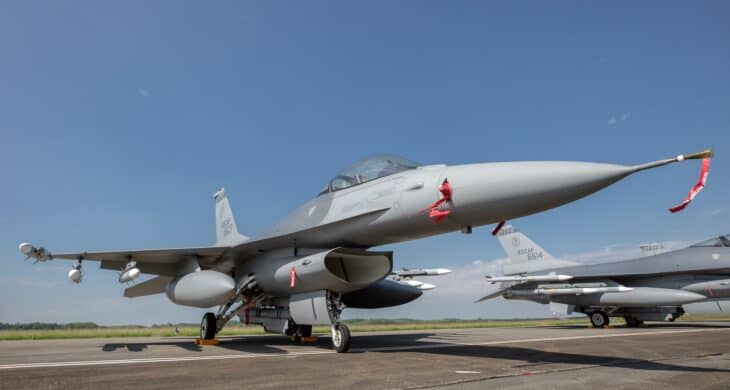
The F-16 is the aircraft Taiwan’s air defense is built around, and every one of them has been rebuilt. Under a program called Peace Phoenix Rising, 139 of the island’s aging F-16A/B Block 20 jets were retrofitted to the F-16V standard between 2016 and 2023.
That work gave them the AN/APG-83 active electronically scanned array radar, a new mission computer, and modern electronic warfare equipment. It was the largest F-16 foreign military sales retrofit since the fighter entered US service in 1979, and it finished at the end of 2023.
Taiwan received 150 of the F-16 Fighting Falcon in the late 1990s. Attrition over nearly three decades leaves 111 single-seat F-16As and 27 two-seat F-16Bs in service today.
The upgraded jets fly with the 4th Tactical Fighter Wing at Chiayi and the 5th at Hualien. They are the only Taiwanese fighters carrying an AESA radar, which is what makes them the force’s primary answer to China’s newer types.
The biggest F-16 rebuild ever done
Taiwan’s 139-aircraft retrofit is the largest F-16 upgrade program run through US foreign military sales since the fighter entered American service in 1979. The budget ran to about $4.5 billion, roughly what a country would spend buying a small fleet of new jets outright.
2. AIDC F-CK-1 Ching-kuo: 129 aircraft
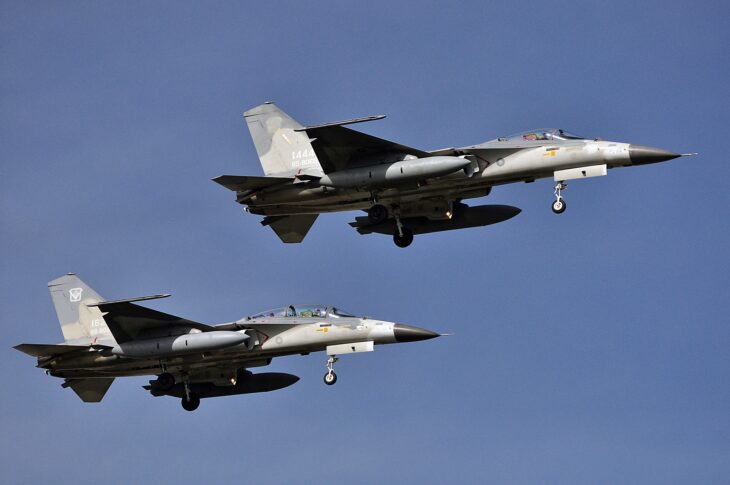

The Ching-kuo exists because Taiwan could not buy what it wanted. When Washington refused to sell the island advanced fighters in the 1980s, Taiwan built its own.
Aerospace Industrial Development Corporation delivered the result, formally the Indigenous Defense Fighter. It is a compact twin-engine multirole jet, and 129 remain in service: 103 single-seat F-CK-1Cs and 26 two-seat F-CK-1Ds.
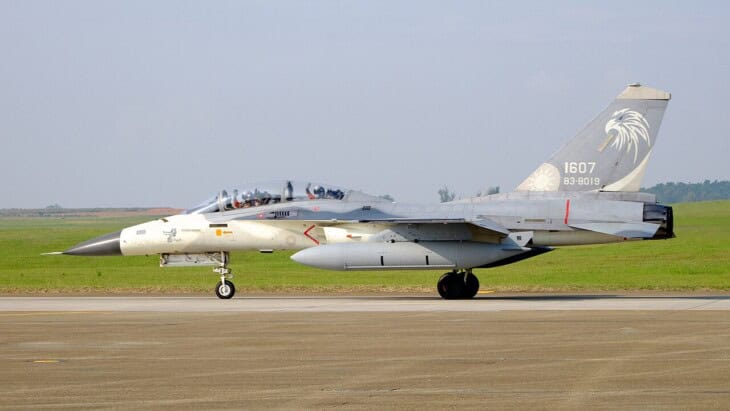
The C and D designations mark a mid-life upgrade that began in the 2000s. It added better avionics and mission computers, more fuel, and a larger weapons load.
The type equips the 1st Tactical Fighter Wing at Tainan and the 3rd at Ching Chuan Kang. Taiwan is one of very few countries that designs and builds its own fighter aircraft, a list otherwise dominated by far larger powers.
3. AIDC T-5 Brave Eagle: 56 aircraft
.jpg)
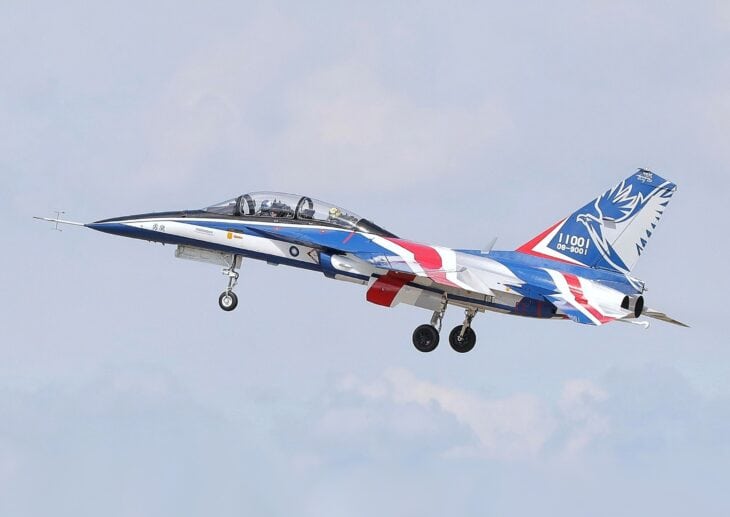
The Brave Eagle is the newest aircraft in the fleet and the second one Taiwan built for itself. It is an advanced jet trainer derived from the Ching-kuo, and it replaces both the elderly AT-3 trainer and the retired F-5 fleet.
Taiwan ordered 66 of them for NT$68.6 billion, about $2.2 billion, choosing a domestic design over buying a foreign trainer. As of May 2026, 56 had been delivered and the remaining 10 were in production.
The air force expects the full fleet in place before the end of 2026. One aircraft was lost in February 2025 when both engines failed and the pilot ejected safely over the sea, which briefly grounded the fleet.
The Brave Eagle also has a secondary light attack role, which matters more than it sounds. Ching-kuo production ended in 1999, so the Brave Eagle is the only combat-capable aircraft Taiwan still has in production at home.
4. Dassault Mirage 2000-5: 52 aircraft
.jpg)
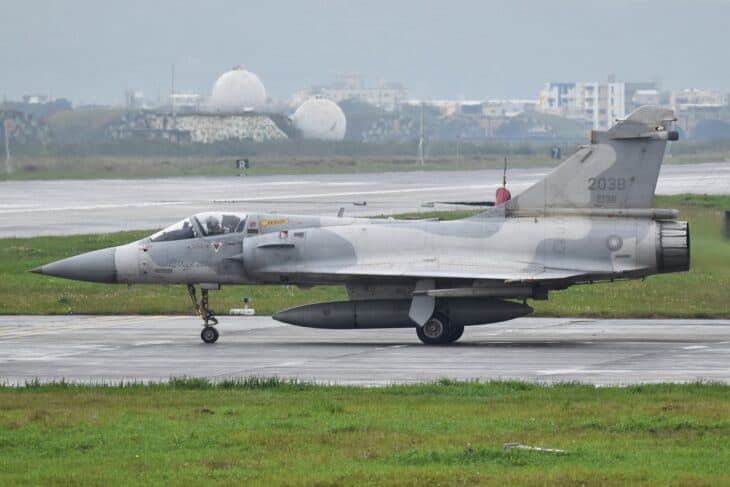
Taiwan ordered 60 Mirage 2000-5s from France in 1992, and 52 are still flying. The fleet splits into 43 single-seat 2000-5EIs and nine two-seat 2000-5DIs.
They serve with the 2nd Tactical Fighter Wing at Hsinchu, on the northwest coast, closest to the mainland. The Mirage 2000-5 is a pure interceptor by temperament, fast off the runway and built to climb hard, which is why it draws the northern intercept duty.
It is also the most expensive aircraft in the fleet to keep flying. Salt air, high sortie rates, and a long supply chain back to France have pushed readiness down and costs up for years.
Taiwan paid $4.77 million for a study, due in July 2026, on whether the Mirages can serve another 20 years. In June 2026 it signed Dassault to a follow-on support contract running from September 2026 to September 2031, with French technicians stationed at Hsinchu.
Three fighters, three supply chains
Taiwan is the only air force in the world flying American F-16s, French Mirage 2000s, and its own domestically built fighter at the same time. It is a logistical headache nobody would choose, and it exists because Taiwan has spent forty years buying whatever it was allowed to buy rather than what it wanted.
5. Beechcraft T-34C Turbo Mentor: 34 aircraft
%E5%88%9D%E7%B4%9A%E6%95%99%E7%B7%B4%E6%A9%9F.jpg)
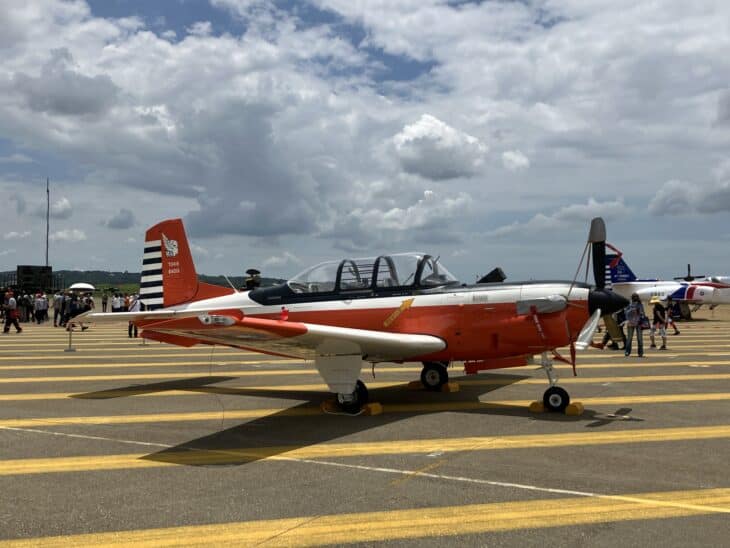
Every ROCAF pilot starts here. The T-34C is a single-engine turboprop basic trainer, and 34 are in service.
Students fly it before moving to the Brave Eagle and then to a frontline type. It is an unglamorous aircraft doing the job that decides how good the rest of the force is.
6. Lockheed C-130H Hercules: 19 aircraft
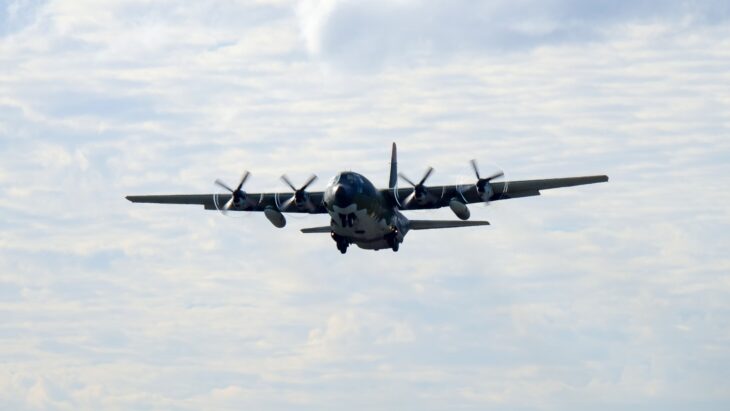

Taiwan’s 19 C-130Hs are its entire tactical airlift capability, and they are around 40 years old. For years the plan was to upgrade them.
In February 2026 the air force canceled that plan. An internal assessment found that modernizing four-decade-old airframes would deliver limited benefit for the cost, partly because the structures would need reinforcing anyway.
Instead Taiwan will buy 10 C-130J Super Hercules from the United States. The new aircraft will take the demanding work, including night operations, while the C-130Hs keep handling routine transport after limited local upgrades.
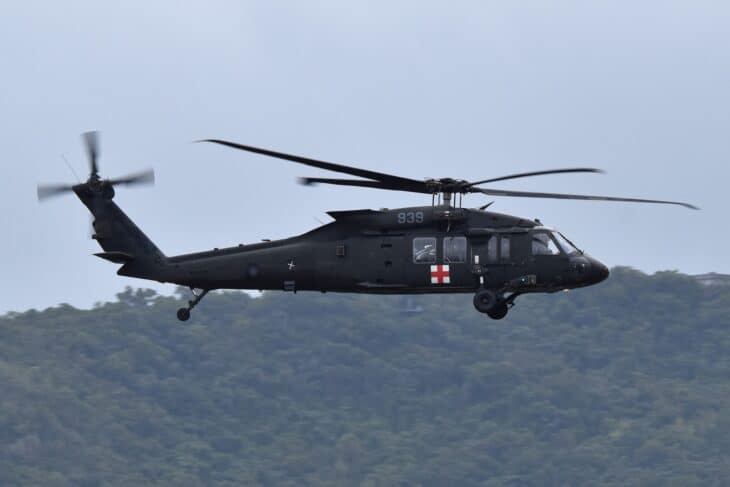
7. Sikorsky UH-60M Black Hawk: 14 aircraft
.jpg)
Taiwan ordered 60 UH-60M Black Hawks from the United States in 2010 for $3.1 billion. They were divided between the Army, the air force, and the civilian National Airborne Service Corps, and 14 of them serve with the ROCAF.
One was lost on January 2, 2020, when it flew into a mountainside in Wulai District on a VIP transport flight. Eight of the 13 people aboard died, including General Shen Yi-ming, Taiwan’s chief of the general staff.
The ROCAF machines fly combat search and rescue, the job of recovering downed aircrew. In peacetime they do a great deal of mountain and typhoon rescue work, which is how most Taiwanese people encounter their air force.
8. Lockheed P-3C Orion: 12 aircraft
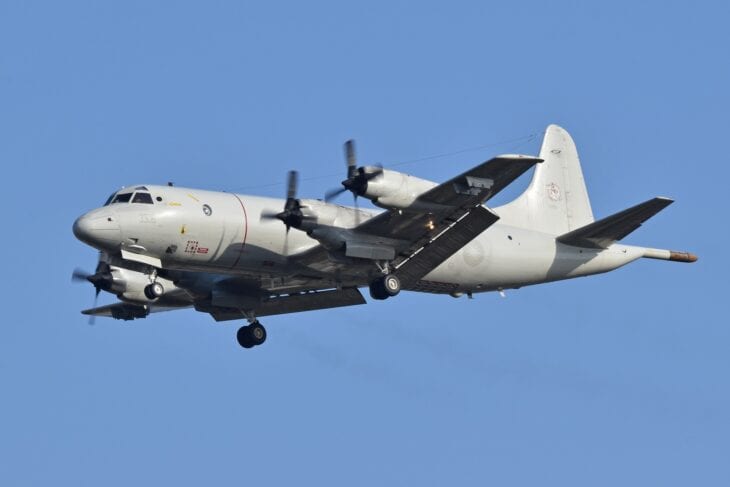

Taiwan’s 12 P-3C Orion submarine hunters are an organizational oddity. The air force operates them, but it does so on behalf of the Navy.
They fly with the 33rd Anti-Submarine Warfare Squadron of the 439th Combined Wing from Pingtung North. The US approved the sale in 2007 for nearly $2 billion, the first aircraft arrived in 2013, and the fleet was declared fully operational in December 2017.
A P-3C can stay airborne for about 12 hours with a range near 2,800 nautical miles. It carries torpedoes, depth charges, and Harpoon anti-ship missiles, which makes it a ship killer as much as a patrol aircraft.
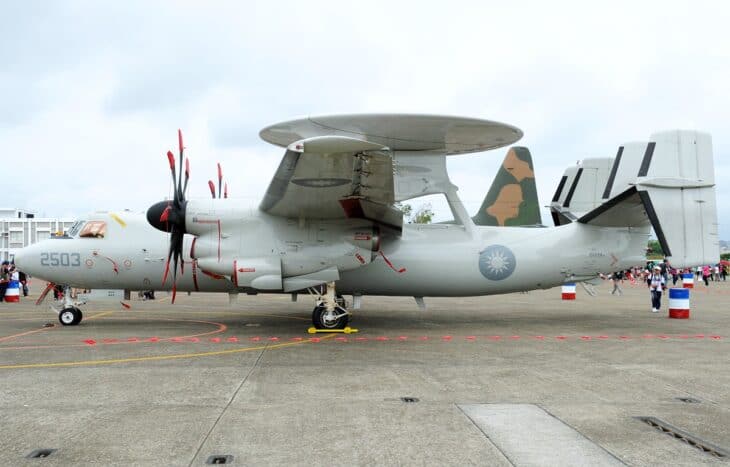
9. Northrop Grumman E-2K Hawkeye: 5 aircraft
_Aoki-1.jpg)
These five aircraft are the most valuable in the fleet and the ones Taiwan can least afford to lose. The E-2 Hawkeye is an airborne radar station, and it is how Taiwan sees an attack coming before ground radar would.
Taiwan had six. On November 25, 2022, one of them made a belly landing at Pingtung South Air Base after its landing gear failed to deploy and skidded off the tarmac.
Nobody was hurt, but the aircraft’s radar and electronics were wrecked. Repairs were estimated at around $65 million, and Taiwan decided to scrap the airframe instead.
In February 2025 Taiwan asked the United States to sell it six E-2D Advanced Hawkeyes. The stated reason is the E-2D’s better ability to detect stealth aircraft such as the Chengdu J-20, which China now flies in numbers.
A landing gear mistake cost 17 percent of the early warning fleet
A preliminary investigation found the 2022 Hawkeye accident was caused by human error, with the two-person crew failing to deploy the landing gear correctly. One procedural slip permanently removed a sixth of Taiwan’s airborne early warning capability, and four years later it has not been replaced.
10. The VIP and utility fleet: about 11 aircraft
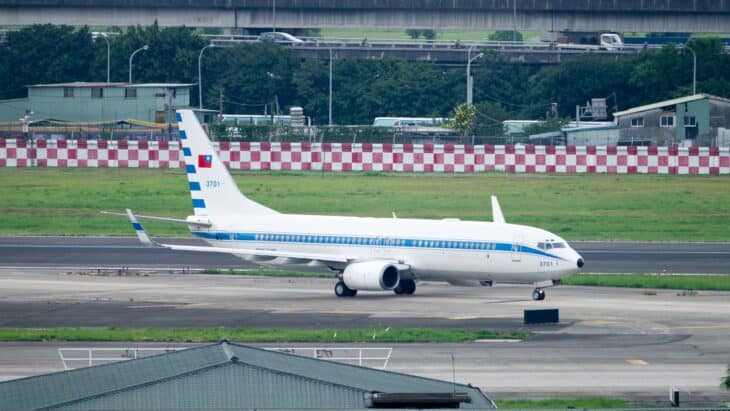

A handful of small fleets handle transport, survey, and rescue. Three Fokker 50s and a single Boeing 737-8AR fly government and presidential transport.
Two Beechcraft 1900C-1s do electronic surveillance work. Three Airbus EC225LPs and two Sikorsky S-70Cs round out the rescue and utility helicopter force.
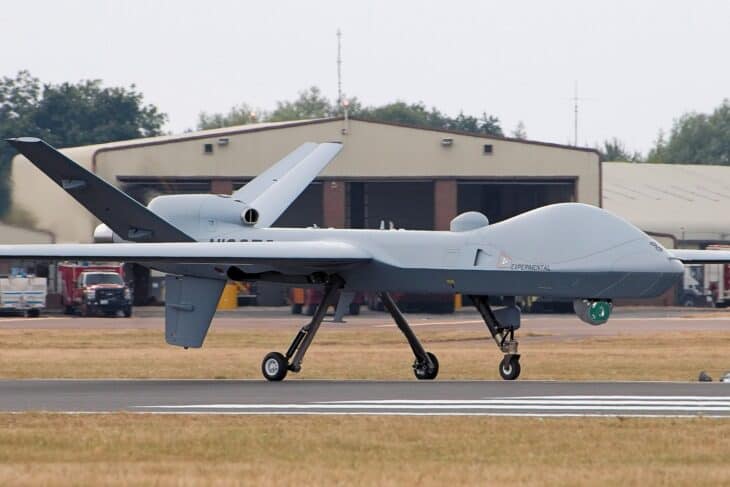
11. General Atomics MQ-9B SkyGuardian: 2 delivered, 4 on order
.jpg)
Taiwan is buying four MQ-9B SkyGuardians under a budget of NT$21.7 billion, about $687 million, spread across 2022 to 2029. The first pair was handed over in the United States on March 17, 2026.
Those two arrived in Taiwan by late June 2026 and are being assembled and flight tested before entering service. The second pair follows in 2027.
The ROCAF wants them for long-range, all-weather watching of Chinese air and naval movements. Four aircraft realistically means one on duty, one on standby, one training, and one in maintenance.
Taiwan also fields three locally developed NCSIST Teng Yun surveillance drones, its own answer to the same problem.
12. Lockheed Martin F-16 Block 70: 66 on order
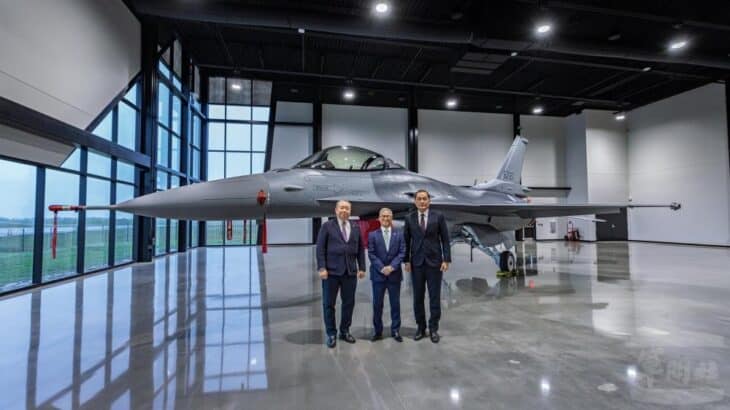

This is the order that will reshape the fleet, and it is running years late. Taiwan bought 66 new-build F-16C/D Block 70 fighters in 2019 under a program called Peace Phoenix Soaring, budgeting NT$247.2 billion between 2020 and 2026.
Lockheed Martin rolled out the first aircraft in March 2025. The first two jets did not leave the United States for Taiwan until August 17, 2026, bound for Chihhang Air Base in Taitung.
The delay traces to the relocation and restart of the F-16 production line in Greenville, South Carolina, plus workforce shortages and supply chain problems. Lockheed has added shifts running up to 20 hours a day to catch up.
Deliveries were supposed to finish by the end of 2026. They will now stretch into 2027 and 2028, which means Taiwan’s fighter force grows by a third only at the end of this decade.
Why the aircraft count is not the real measure
.jpg)
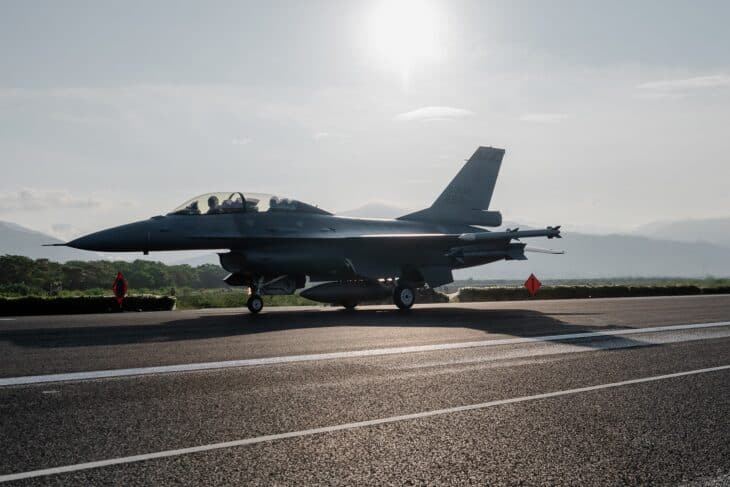
Comparing Taiwan’s 319 combat aircraft with China’s is the obvious move, and it is the wrong one. Taiwan’s problem is not how many jets it owns. It is whether those jets survive the first hour.
Every ROCAF air base sits within a few minutes’ missile flight of the mainland. A fighter destroyed in its shelter never enters the comparison at all, which is why so much of Taiwan’s air power spending goes into surviving rather than fighting.
The clearest expression of that is Chiashan, a tunnel complex carved into a granite mountain near Hualien on the east coast. Construction started in 1984, took about eight years, and cost on the order of a billion dollars.
Inside are five horizontal and five vertical tunnels with room to park, arm, and repair more than 200 aircraft, plus hospitals, command facilities, and months of food and fuel. Blast doors seal the exits, and the taxiway out can itself be used as an emergency runway.
During the Han Kuang 42 exercise from August 5 to 14, 2026, the air force flew six Mirage 2000s and eight Ching-kuos into the mountain while F-16s from Hualien flew cover. The point was to show Beijing that a first strike would not catch the fleet on open ramps.
Taiwan also maintains emergency runway strips on public roads, including a stretch of Provincial Highway 1 in Pingtung County and sections of Freeway 1 at Madou, Rende, Huatan, and Minsyong. Pilots practice landing, refueling, and rearming on them for the scenario where the real runways are cratered.
The pressure driving all of this is relentless and measurable. PLA aircraft flew 3,764 sorties into Taiwan’s air defense identification zone in 2025, up 22.4 percent on 2024, and each one may require a Taiwanese jet to launch and look.
That is the quiet cost of the standoff. Taiwan burns airframe hours and engine life on intercepts every week, on a fleet whose youngest fighters arrived in 2026 and whose oldest designs date to the Cold War.
For the wider picture of how the two forces stack up, see our breakdown of US vs China fighter jets and our ranking of the best Chinese fighter jets.
What about the F-35?
Taiwan has wanted the F-35 for years and has not been allowed to buy it. The United States has withheld it over two linked worries: that a sale would provoke Beijing, and that the aircraft’s technology could reach Chinese hands, whether through espionage on the island or through capture in a conflict. Washington’s answer has been to sell upgraded F-16s instead, which is why the Block 70 order matters so much. Taiwan is not on any published list of approved F-35 customers, and no sale has been announced as of September 2026.
What Taiwan retired, and what comes next
.jpg)
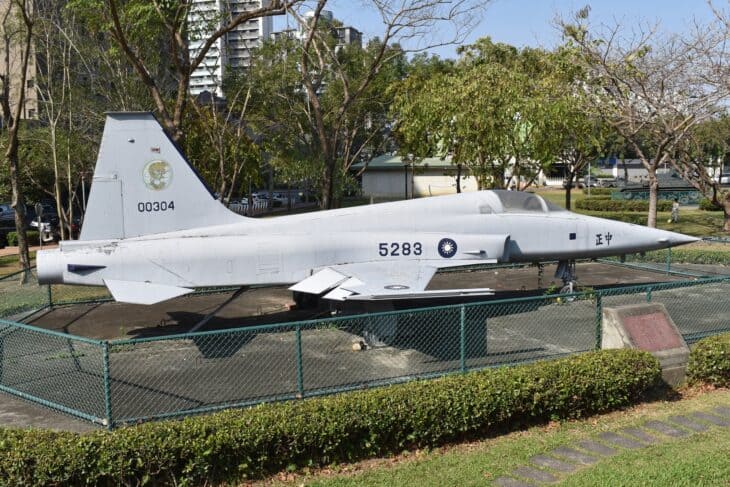
The ROCAF closed a 50-year chapter in 2025. On July 4 it retired the last Northrop F-5 Tiger IIs, with a farewell formation of F-5Fs and RF-5E Tigergazers flying along the east coast from Hualien.
Taiwan received more than 500 F-5s across several versions from 1965 onward, and built many of them under license. The Brave Eagle inherits the training role the Tigers held at the end.
Three programs now decide what the fleet looks like in 2030: the 66 Block 70 F-16s, the 10 C-130Js, and the six E-2D Hawkeyes Taiwan has requested but not yet been sold. All of it runs on a defense budget proposed at NT$949.5 billion for 2026, about $31 billion, or 3.32 percent of GDP.
If that budget passes, it would be the first time since 2009 that Taiwan spent more than 3 percent of its economy on defense. Compared against the fleets in our ranking of the largest air forces in the world, Taiwan’s is mid-sized, concentrated, and pointed at exactly one problem.
FAQ
Sources and references used for research and fact-checking.
- Wikipedia, List of equipment of the Republic of China Air Force
- Wikipedia, Republic of China Air Force
- Army Recognition, Taiwan Begins Receiving US F-16V Block 70 Fighters to Expand Air Defense Capacity and Readiness
- Air & Space Forces Magazine, First Phase of Taiwan F-16V Program Is Complete
- Zona Militar, Taiwan Air Force expects to complete T-5 Brave Eagle trainer fleet by the end of 2026
- Wikipedia, AIDC T-5 Brave Eagle
- Defense Express, Taiwan Pays $110K Per Mirage 2000-5 Annually for Maintenance
- The Defense Post, Taiwan Scraps C-130H Upgrade Program, Moves to Buy 10 C-130Js
- Taiwan News, Taiwan Air Force gives up on E-2K early warning aircraft due to repair cost
- GlobalSecurity.org (CNA), Taiwan requests to buy 6 E-2D advanced early warning aircraft from the U.S.
- Asian Military Review, Taiwan takes receipt of its first MQ-9Bs
- Taipei Times, First batch of SkyGuardian drones arrives in Taiwan
- Key Military, Taiwan's maritime patrol changeover
- Wikipedia, AIDC F-CK-1 Ching-kuo
- Defense News, Sikorsky Wraps Up Taiwan's Black Hawk Order
- Wikipedia, 2020 ROCAF UH-60M crash
- The War Zone, Extremely Rare Photos Inside Taiwan's Underground Fighter Jet Caves
- MiGFlug, Han Kuang 42: Taiwan Hides Jets in a Mountain
- CSIS ChinaPower Project, Tracking China's Increased Military Activities in the Indo-Pacific in 2025
- The War Zone, Taiwan Is Finally Saying Goodbye To Its F-5 Tiger II Fighters
- Focus Taiwan (CNA), Taiwan defense spending to reach 3.32% of GDP in 2026
- The National Interest, Why Won't America Sell F-35 Stealth Fighters to Taiwan?
- Wikipedia, United States Taiwan Defense Command
Get the Newsletter
The latest aviation news and stories sent to your inbox.
About the Author
Tim is the owner and lead editor of AeroCorner since 2019, overseeing aviation content covering aircraft, airlines, airports, and the broader aviation industry. Through years of researching, writing, editing, and publishing aviation-focused content, he has developed extensive practical knowledge of commercial aviation and air travel. Based in Asia and a frequent traveler himself, Tim also brings firsthand passenger experience to AeroCorner’s coverage. Outside of publishing, he has also explored aviation firsthand through hands-on flight training in New Zealand.