


Military Propellor Planes
The last E-2C: the carrier air wing's eye in the sky and airborne command post.
Updated: by Tim de Vries
The latest aviation news and stories sent to your inbox.
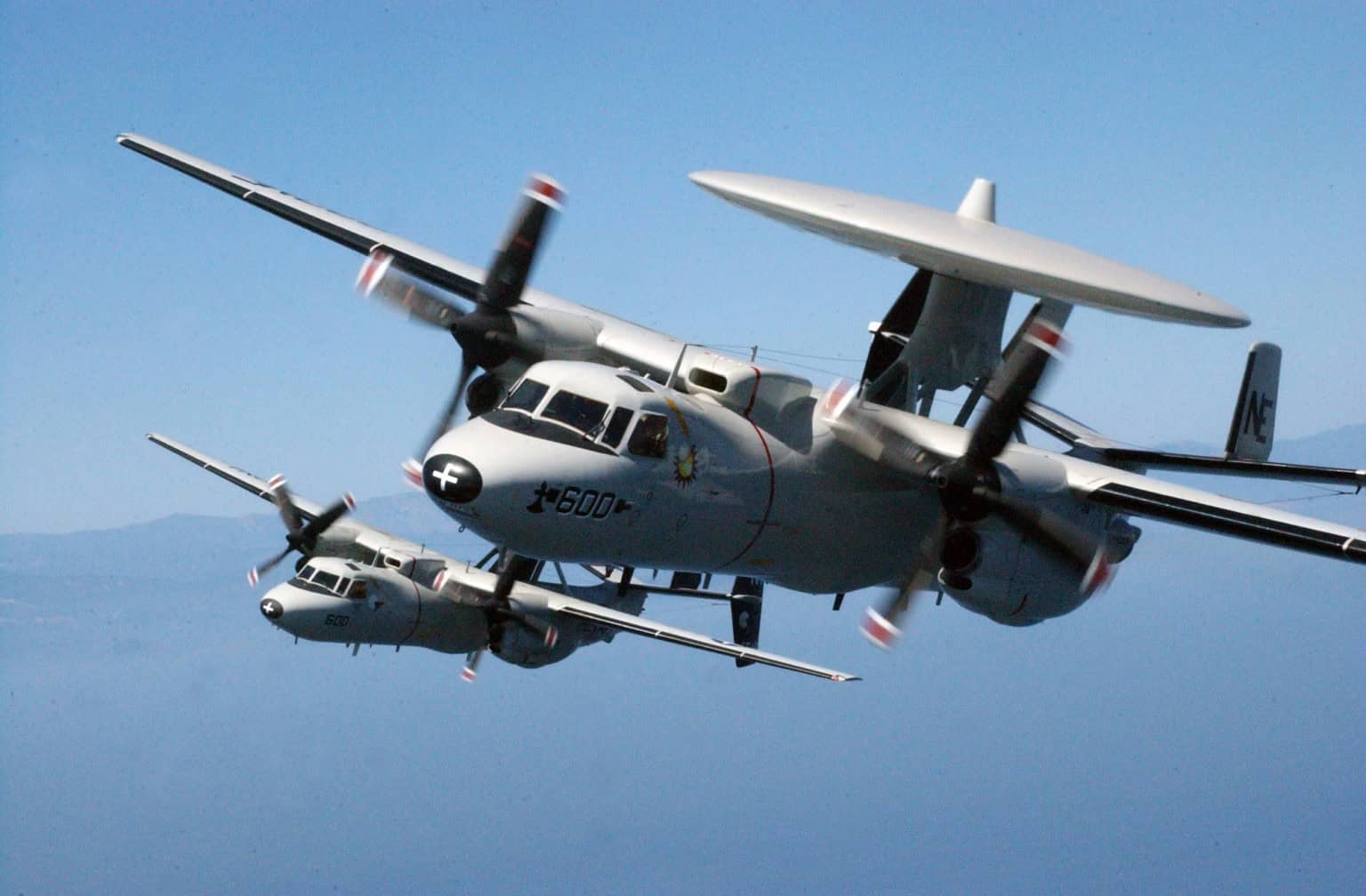
The E-2C Hawkeye 2000 is the final version of the U.S. Navy’s carrier-based airborne early warning and command-and-control aircraft, built around a 24-foot rotating radar dome. Delivered new from 2001 to 2009, it added a new mission computer, the Cooperative Engagement Capability and satellite communications. It was still deployed aboard U.S. carriers in mid-2026 as the E-2D Advanced Hawkeye took over.
Live Fleet Activity (E2)
Fetching live data…
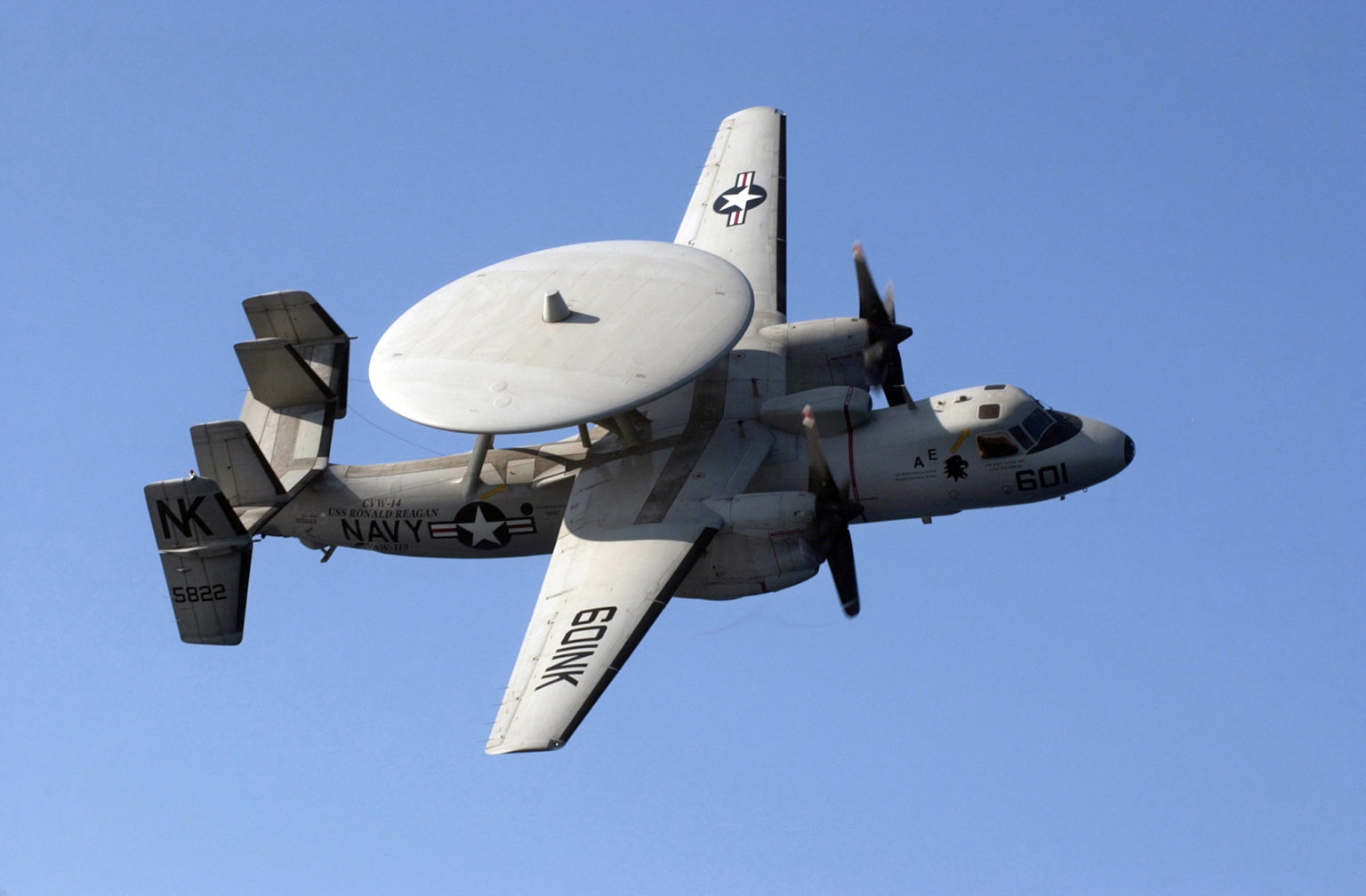
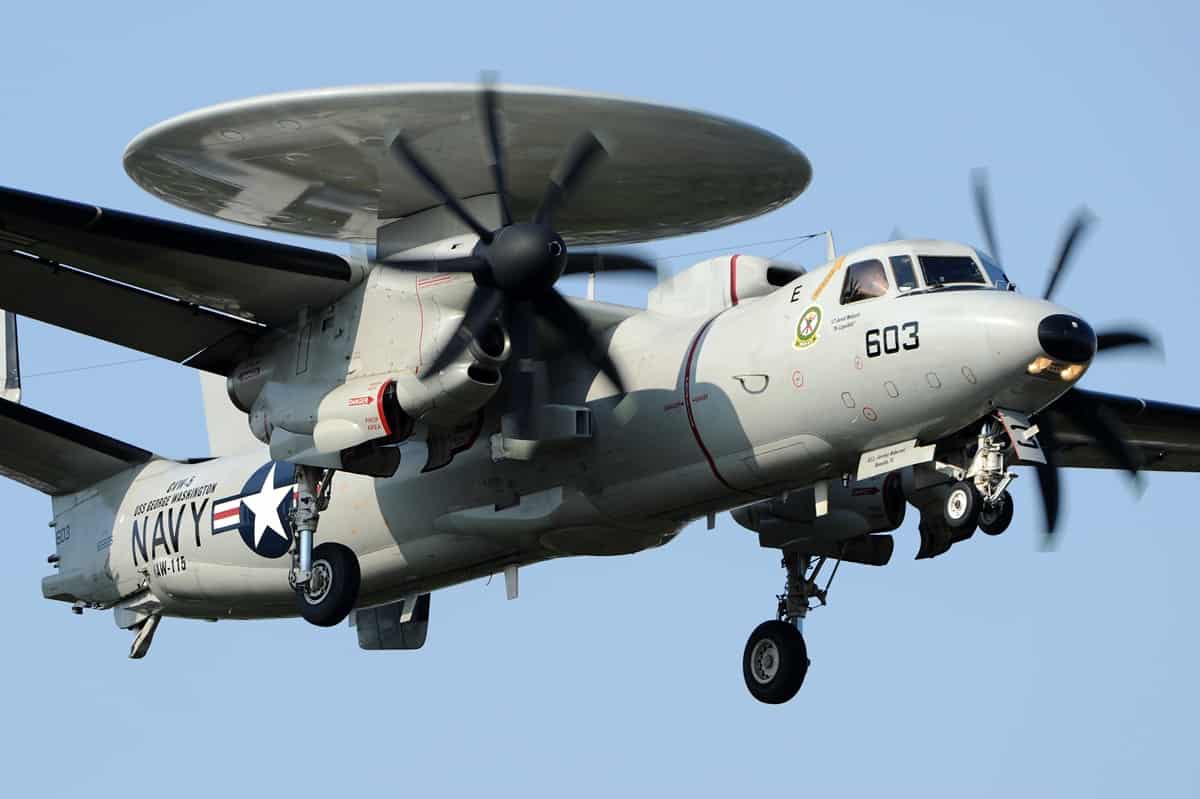
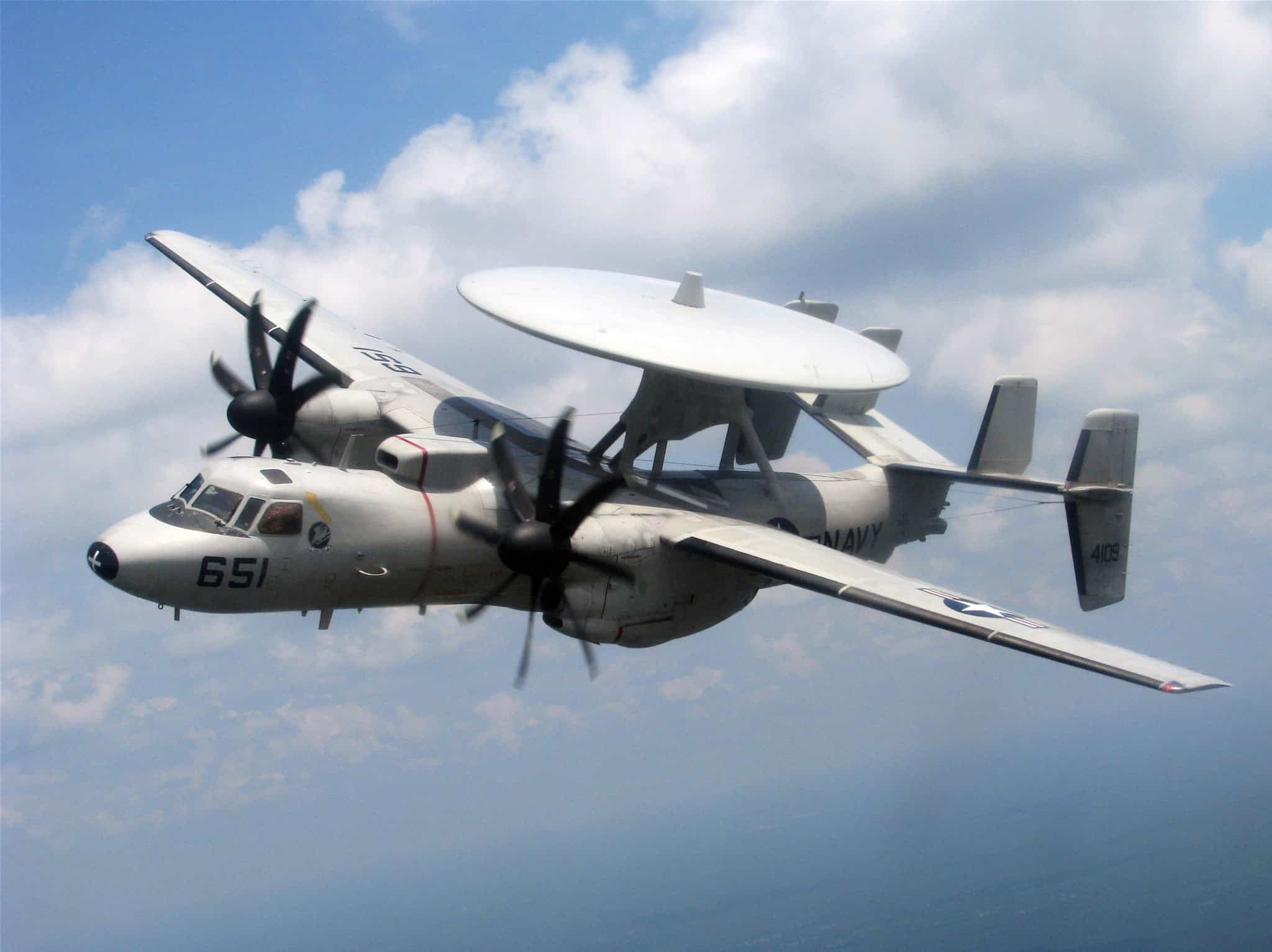
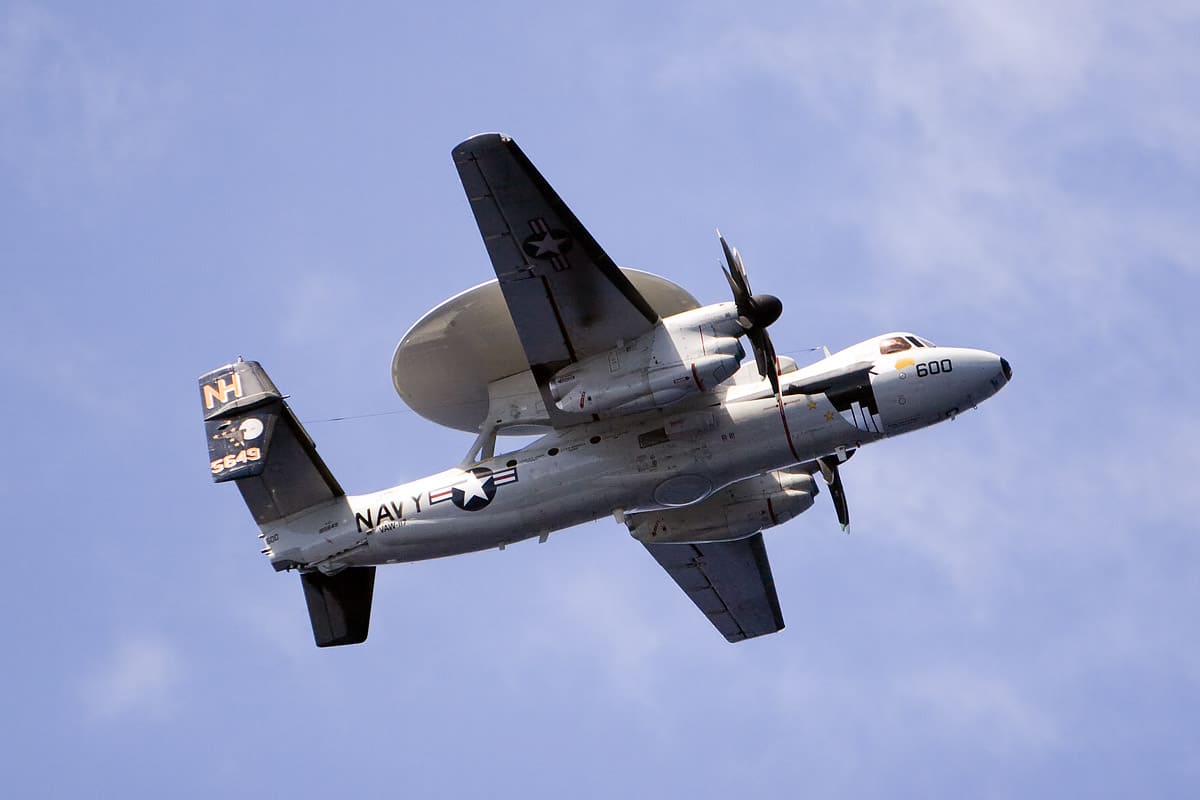


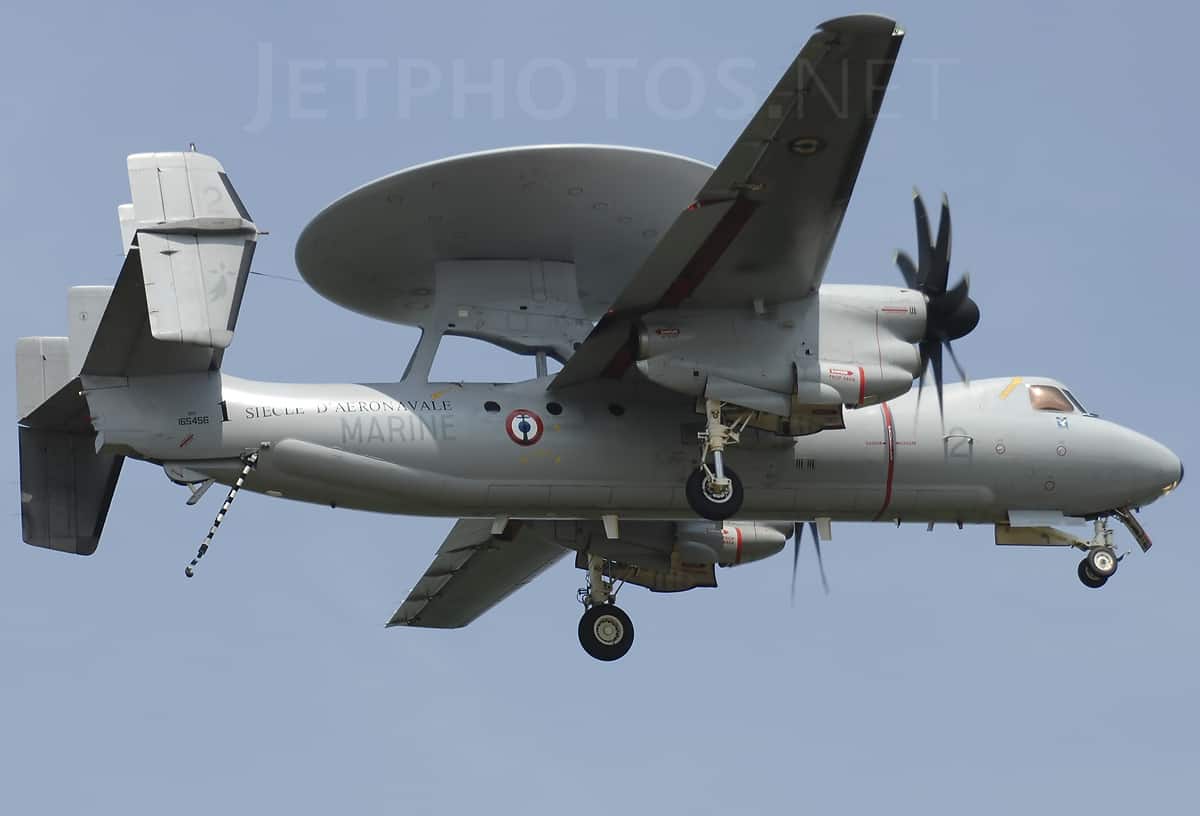
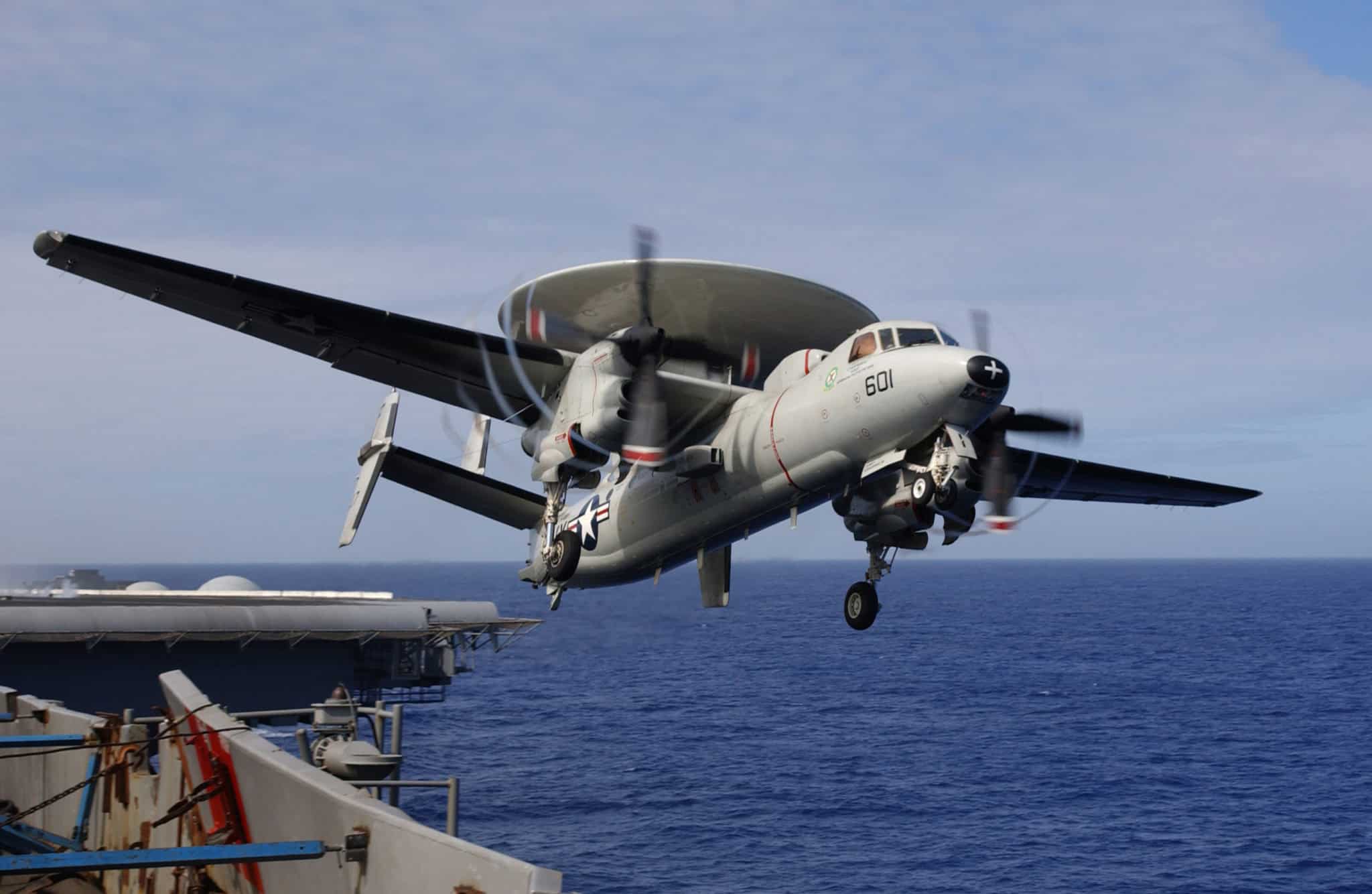

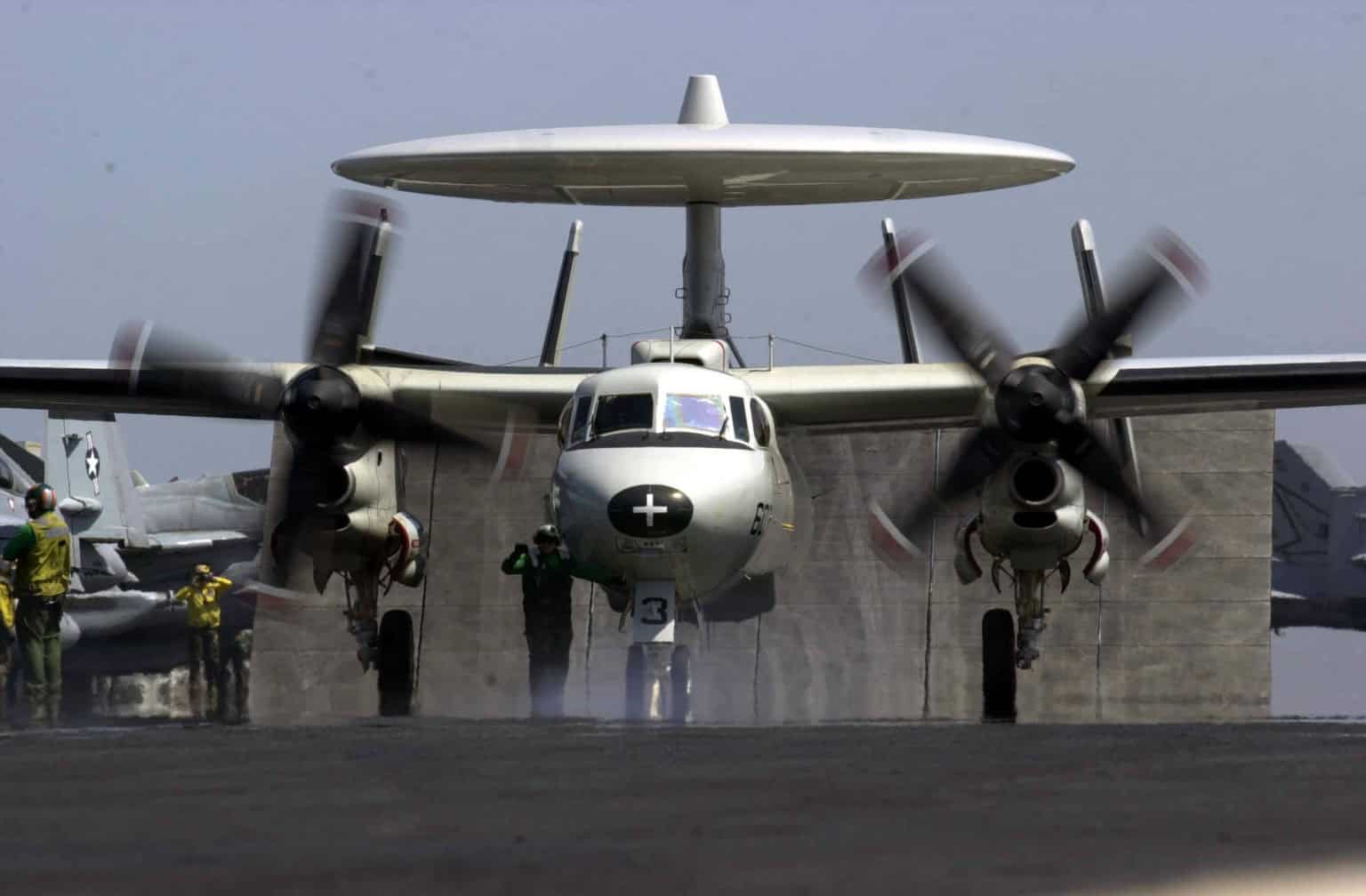
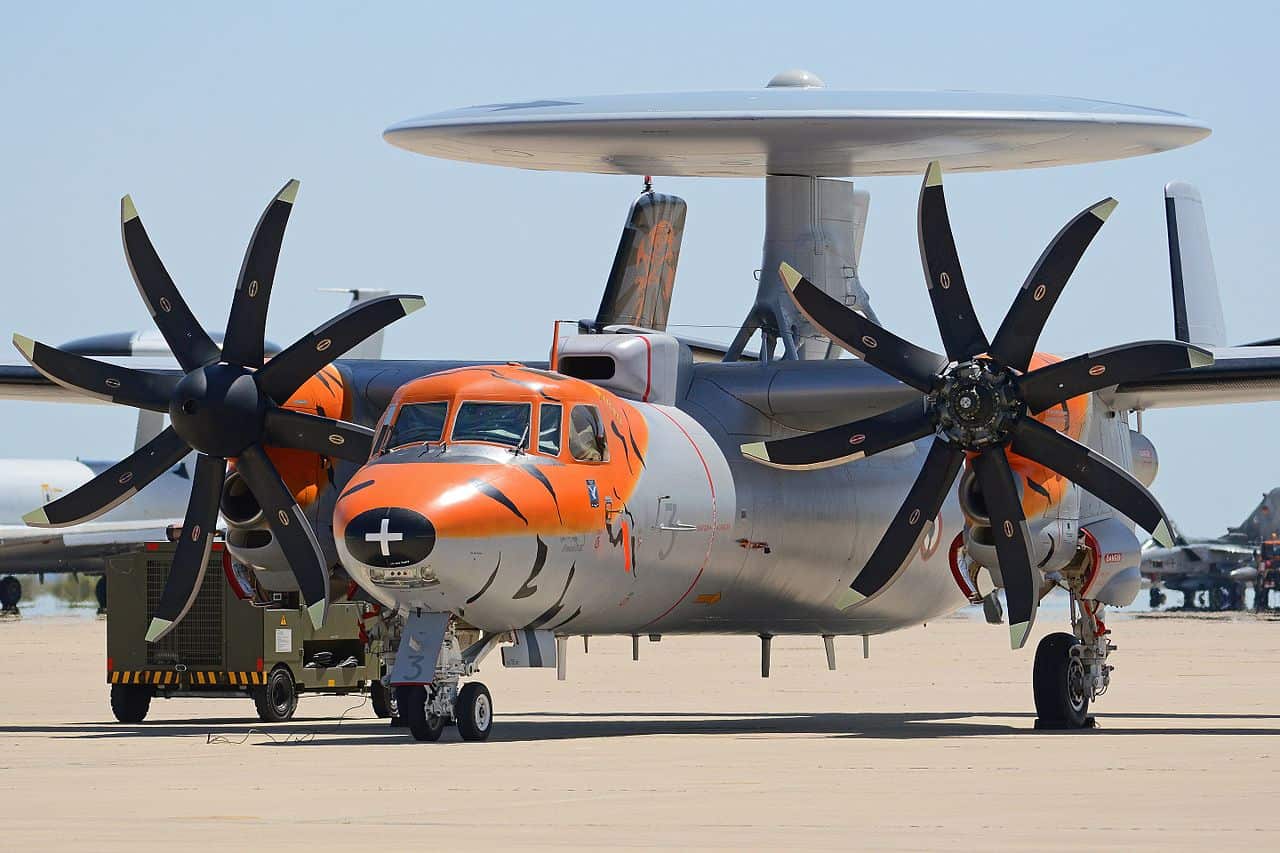


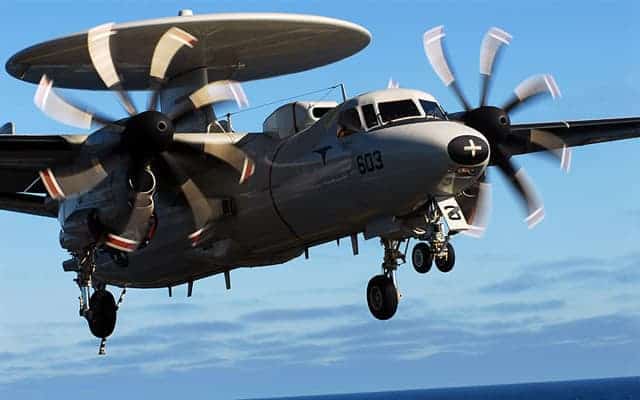
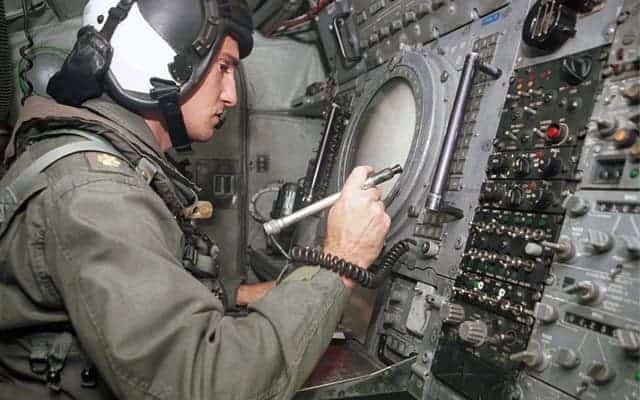
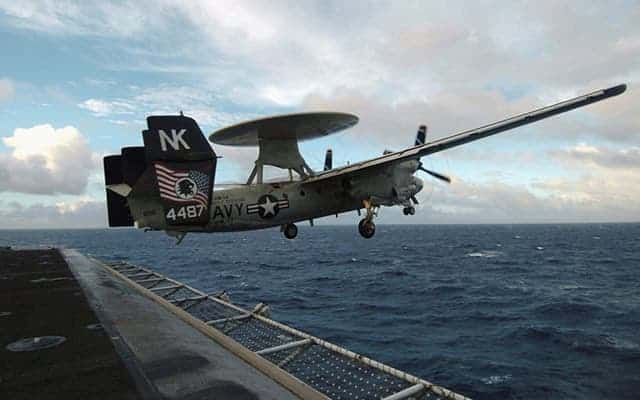
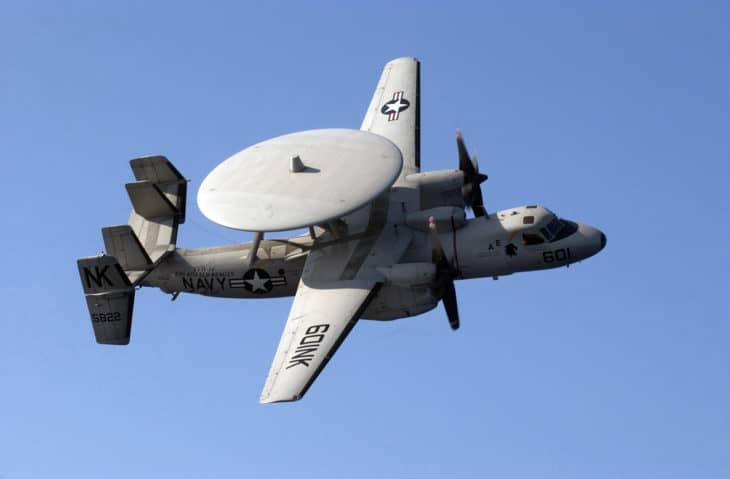
The Northrop Grumman E-2C Hawkeye is the U.S. Navy’s carrier-based airborne early warning and command-and-control aircraft. Its job is to see much further than the ships of a carrier strike group can, and then tell the fleet’s fighters where to go.
It does that from a 24-foot (7.3 m) rotating radar dome mounted above the fuselage, the feature that makes a Hawkeye recognizable from any angle. Five crew fly the mission: a pilot, a copilot, and three officers running the radar and the air picture from the rear cabin.
The Navy lists a long set of secondary jobs alongside early warning. These include strike and intercept control, surface surveillance, search-and-rescue coordination, communications relay and drug interdiction, and crews have even served as air traffic control when ground-based ATC was unavailable.
Crews call it the “Hummer,” after the distinctive drone of its two turboprops. It is one of the less glamorous types of military planes, but every U.S. Navy carrier air wing includes a squadron of them.
The Hawkeye 2000 covered on this page is the final E-2C configuration, delivered new from 2001 to 2009. The specification panel on this page describes that version.
The E-2 has come in four main versions. The E-2A entered service in January 1964, the E-2B was an upgraded rebuild of it, the E-2C became operational in 1973, and the E-2D Advanced Hawkeye reached initial operational capability in October 2014.
The E-2C itself went through several generations before the Hawkeye 2000. Group I introduced the AN/APS-139 radar and the T56-A-427 engine in 1988, Group II brought the AN/APS-145 radar in the early 1990s, and the Hawkeye 2000 kept that radar while replacing almost everything behind it.
The E-2D looks nearly identical from outside but is a different aircraft inside. It carries the AN/APY-9 radar, which adds electronic scanning to the rotodome’s mechanical rotation, along with a glass cockpit, improved T56-A-427A engines and, in U.S. service, the Hawkeye family’s first aerial refueling capability.
That matters when reading Hawkeye specifications online. Many “E-2 Hawkeye” figures in circulation are E-2D numbers, and they do not describe the E-2C Hawkeye 2000.
Northrop Grumman calls the Hawkeye 2000 the fifth-generation production E-2C. It kept the Group II baseline, including the AN/APS-145 radar, the improved IFF system, the JTIDS datalink and GPS navigation.
The heart of the upgrade is an open-architecture mission computer built on commercial off-the-shelf hardware. It feeds new operator workstations called the Advanced Control Indicator Set, or ACIS, which give each operator more control over how the air picture is displayed.
The most important addition was the Cooperative Engagement Capability, or CEC. It shares detailed target information between the Hawkeye and the strike group’s ships, and the Navy says the Hawkeye 2000 paired with shipboard Aegis formed the cornerstone of its sea-based theater air and missile defense.
The Hawkeye 2000 also gained integrated satellite communications, an upgraded electronic support measures suite, and a higher-capacity cooling system for its growing avionics load. A later glass-cockpit upgrade replaced the old instruments with large liquid crystal displays.
Outside, the easiest way to spot a modernized E-2C is its propellers. The eight-bladed NP2000 propeller, fitted from 2004, replaced the old four-bladed design and lets maintainers remove a single blade instead of the whole assembly.
The E-2C carries three primary sensors: the radar, the IFF system and a passive detection system that listens for enemy emitters. A central computer integrates all three into one air and surface picture.
The AN/APS-145 radar gives fully automatic overland detection and tracking, with a detection range that GlobalSecurity puts at more than 300 miles (480 km). Its surveillance envelope is often described as three million cubic miles.
The rotodome turns in flight to sweep that radar through a full circle. Three operator stations sit in the rear fuselage behind the cockpit: the combat information center officer, the air control officer and the radar operator.
Folding wings let the Hawkeye fit on a crowded flight deck. With the wings folded, the aircraft is only 29 feet 4 inches (8.94 m) wide, and the Grumman Sto-Wing fold turns the outer panels back along the fuselage so they clear the dome.
The full specification table for the aircraft is on this page, with most of its figures taken from Northrop Grumman’s own Hawkeye 2000 data sheet. Three figures in it differ from numbers widely quoted elsewhere, and the reason is almost always the variant.
The first is speed. The data sheet gives a maximum level speed of 338 knots (389 mph, 626 km/h) and a normal cruise of 259 knots (298 mph). The 350-knot figure seen on many sites comes from older E-2C material and from the E-2D specification.
The second is weight. The Hawkeye 2000 takeoff gross weight is 54,426 lb (24,687 kg). The Navy’s fact file lists a 53,000 lb (24,040 kg) maximum gross takeoff weight, while the 57,500 lb (26,082 kg) figure that circulates online comes from the heavier E-2D’s specification.
The third is range. The 1,541 nautical miles (1,773 miles) on this page is a ferry range, flown for distance alone. On a real mission the E-2C flies out to a station and orbits there, so the figure that matters is endurance, which the USS Midway Museum lists at about six hours.
A carrier radar plane does not need to be fast. It needs to climb to altitude, stay there for hours, and keep its radar turning over the fleet, which is exactly what a turboprop does well.
“It is designed for an over-the-horizon blue water long-endurance surveillance mission and persistence to keep the radar on station for as long as possible,” Capt. Gregory Machi, an E-2C pilot and in-service deputy program manager, said in Naval Aviation News. “Prop-driven aircraft give you that capability.”
The powerplant is the T56-A-427 turboprop, which the Navy lists as an Allison engine and Northrop Grumman as a Rolls-Royce. It is a good example of why turboprops are still used on missions where time on station beats speed.
The T56-A-427 has also set records. GlobalSecurity notes that it carried the E-2C to twenty altitude and time-to-climb world records in the medium turboprop category.
The Navy set its requirement for a carrier-based airborne early warning aircraft in 1956 and chose Grumman’s design in March 1957. The prototype first flew on October 21, 1960.
The Hawkeye replaced the Grumman E-1 Tracer, a radar version of the S-2 Tracker that served from 1954 to 1964. Unlike the Tracer, the Hawkeye was the first carrier aircraft designed from the outset for the early warning mission rather than adapted from another type.
The early E-2A was troubled. Its tightly packed avionics overheated and the program ran into serious reliability problems, so most E-2As were rebuilt to the improved E-2B standard.
The E-2C was the fix. Two converted E-2As served as prototypes, the first flying on January 20, 1971, and the E-2C entered Navy service with VAW-123 at NAS Norfolk, Virginia, in November 1973.
Grumman also used the Hawkeye’s basic layout for the C-2 Greyhound carrier transport, which features in the story of the C-130’s carrier landings.
The first new Hawkeye 2000 was delivered in 2001. The Navy’s 21st and final production Hawkeye 2000, aircraft A-205, was accepted at Northrop Grumman’s St. Augustine, Florida, plant on September 21, 2009, ending E-2C production after more than 35 years.
The E-2C fleet passed one million flight hours in August 2004. By March 2021 the Hawkeye 2000 was the only E-2C variant the Navy still supported.
Hawkeyes have flown in combat since the Vietnam War. In August 1981, a VAW-124 Hawkeye directed the two F-14 Tomcats that shot down two Libyan Su-22s over the Gulf of Sidra.
In 1986, E-2Cs directed the F-14 combat air patrol during the two-carrier strike on Libyan targets. In 1991 they provided airborne command and control for coalition air operations during Operation Desert Storm.
Through the 1990s E-2Cs supported Operations Northern and Southern Watch over Iraq and NATO’s Operation Deny Flight over the former Yugoslavia. After the September 11 attacks, they flew homeland defense surveillance and communications relay along the U.S. East Coast.
The type was still at war in its final years. VAW-123 flew its E-2Cs through a nine-month Red Sea deployment before retiring them in 2024.
On March 31, 2026, the USS George H.W. Bush strike group sailed from Norfolk for operations against Iran, with VAW-116’s E-2Cs aboard. After Operation Epic Fury, U.S. Fleet Forces commander Adm. Karl Thomas credited Hawkeyes with a key role in detecting Iranian missile and drone threats.
Yes, but only just in the U.S. Navy, and the answer is changing. The Navy has been replacing the E-2C with the E-2D squadron by squadron, and Naval Aviation News reported the E-2C as scheduled for sundown in 2026.
VAW-123 sent its last E-2Cs away in September 2024, two to the Davis-Monthan boneyard in Arizona and two to the VAW-120 training squadron. That left VAW-116, based at Naval Base Ventura County in California, as the last fleet squadron flying the type.
As of June 2026, VAW-116 was still flying E-2Cs from USS George H.W. Bush in the Arabian Sea. We have not found a public announcement of the final U.S. Navy E-2C flight as of September 2026.
Abroad, the E-2C has more life left. France flies three E-2C Hawkeye 2000s with Flottille 4F from Lann-Bihoué, deploying aboard the carrier Charles de Gaulle, and is the only country besides the United States to operate the Hawkeye from a carrier.
France’s three replacement E-2Ds entered production in December 2024, with deliveries due by 2028. On patrol, the Charles de Gaulle typically carries two of its three E-2Cs.
Japan bought 13 E-2Cs, which entered service at Misawa Air Base in January 1987, and has been adding E-2Ds alongside them. As of March 2023, the Japan Air Self-Defense Force operated 10 E-2Cs and six E-2Ds.
Egypt’s E-2Cs have been upgraded to Hawkeye 2000 standard. Taiwan flies the E-2K: its four original 1995 E-2Ts brought up to Hawkeye 2000 standard, plus two aircraft built new to that standard.
Mexico’s navy received three former Israeli E-2Cs in the 2000s. Northrop Grumman’s current operator list names Japan, France, Egypt and Taiwan and no longer includes Mexico, so the status of the Mexican aircraft is unclear.
Former operators include Israel, the first export customer, which ordered the Hawkeye in 1981, and Singapore, which replaced its four E-2Cs with Gulfstream G550-based early warning aircraft in 2012. The U.S. Coast Guard also flew E-2Cs for drug interdiction until a fatal accident in 1990.
U.S. Navy Hawkeye squadrons carry the VAW prefix. Their main bases are Naval Station Norfolk in Virginia and Point Mugu in California.
The fleet replacement squadron, VAW-120, trains new Hawkeye crews in Virginia. VAW-125 is forward-deployed with its E-2Ds at Marine Corps Air Station Iwakuni in Japan.
At sea, each carrier air wing traditionally deployed with a squadron of four E-2Cs, enough to keep at least one Hawkeye airborne around the clock. The Navy planned five E-2Ds per carrier as the new model arrived, a small part of how many planes an aircraft carrier carries.
The Navy’s fact file gives the E-2 a unit cost of $80 million. Like the rest of that fact file’s specifications, the figure reflects the E-2C, and the Navy does not state which year’s dollars it is quoted in.
The Hawkeye 2000 production contract gives a sense of scale. In April 1999, Northrop Grumman won a $1.305 billion multiyear contract for 21 Hawkeye 2000s, which also covered long-lead material for one French aircraft.
Taiwan’s deal for its first four E-2Ts, delivered in 1995, was reported at $749.5 million.
The E-2D costs considerably more. In July 2026 the Navy awarded Northrop Grumman a $1.19 billion contract for the first three Block II E-2Ds, a figure that is not a per-aircraft flyaway price.
The strangest Hawkeye loss came on July 8, 1991. A VAW-122 E-2C from USS Forrestal suffered an engine fire about 40 miles (64 km) southeast of Cyprus, and its five crew bailed out safely.
With the crew gone and the burning aircraft at risk of flying on toward a populated area, an F/A-18C Hornet from the same carrier shot it down with its 20 mm cannon. No one was hurt.
Other accidents have been fatal. A Coast Guard E-2C crashed at Naval Station Roosevelt Roads, Puerto Rico, on August 24, 1990, which led the Coast Guard to stop flying the type.
More recently, an E-2D crashed near Wallops Island, Virginia, on March 30, 2022. One crew member was killed and two were rescued by the Coast Guard.
The E-2D Advanced Hawkeye replaces the E-2C in the U.S. Navy. By May 2026 Northrop Grumman had delivered 70 E-2Ds to the Navy, which says it needs 86 Hawkeyes in all.
Production continues into a new version. The July 2026 Block II contract covers upgraded E-2Ds, the first due for delivery in 2030, and the Navy expects to fly the E-2D into the 2040s.
The Air Force briefly planned to buy E-2Ds too. In 2025 it said it would cancel the E-7 Wedgetail meant to replace its E-3 Sentry fleet and buy five E-2Ds as a stopgap, but after Operation Epic Fury it recommitted to the Wedgetail and the Hawkeye plan appears to have been dropped.
Other countries have gone different ways. Singapore replaced its E-2Cs with Gulfstream G550-based early warning jets, while China has introduced the carrier-based Xi’an KJ-600, which bears a striking resemblance to the Hawkeye.
In the U.S. Navy, the basic Hawkeye design has now served for more than six decades, and the Block II E-2D will carry it into the 2030s. It remains one of the key types of Navy planes on American flight decks.
E-2 Hawkeyes are the Navy’s carrier-based airborne early warning and command-and-control aircraft. They use a large rotating radar to detect aircraft, missiles and ships far beyond the fleet’s own sensors, then direct fighters, coordinate strikes and relay communications. They also handle search-and-rescue coordination, surface surveillance and drug interdiction.
Yes, but only the E-2D. E-2C production ended when the Navy accepted the last E-2C Hawkeye 2000 on September 21, 2009. The E-2D remains in production at Northrop Grumman’s St. Augustine, Florida, plant, and a Block II version was ordered in July 2026 with first delivery due in 2030.
The E-2D Advanced Hawkeye, which reached initial operational capability in October 2014. It adds the AN/APY-9 radar with electronic scanning, a glass cockpit, improved engines and aerial refueling. France is also replacing its three E-2Cs with E-2Ds, with deliveries due by 2028.
Yes, though it is nearing the end of its U.S. Navy career. As of June 2026, VAW-116, the last fleet squadron flying the type, was still operating E-2Cs from USS George H.W. Bush, and the Navy had planned the E-2C’s retirement for 2026. Abroad, France, Egypt and Taiwan fly E-2C-based Hawkeyes, and Japan still had 10 E-2Cs in March 2023.
U.S. Navy Hawkeye squadrons are based at Naval Station Norfolk in Virginia and Point Mugu in California, with VAW-125 forward-deployed at MCAS Iwakuni in Japan. They deploy aboard aircraft carriers as part of each carrier air wing.
The E-2C’s AN/APS-145 radar has a detection range of more than 300 miles (480 km), according to GlobalSecurity, and scans a surveillance envelope of about three million cubic miles. The Navy describes the E-2D’s newer AN/APY-9 radar as a two-generation leap in capability.
Northrop Grumman gives the E-2C Hawkeye 2000 a maximum level speed of 338 knots (389 mph, 626 km/h) and a normal cruise speed of 259 knots (298 mph). The higher 350-knot figure often quoted comes from older E-2C sources and the E-2D.
The Navy’s fact file lists a unit cost of $80 million, a figure that reflects the E-2C and carries no stated dollar year. The E-2D is considerably more expensive: a July 2026 contract for the first three Block II E-2Ds was worth $1.19 billion, though that total is not a per-aircraft flyaway price.
The nickname comes from the distinctive humming drone of its two turboprop engines, which sounds nothing like the jets around it on a carrier deck.
Five: a pilot and copilot on the flight deck, plus a combat information center officer, an air control officer and a radar operator at stations in the rear fuselage.
Sources and references used for research and fact-checking.


