

Table of Contents
The first piloted supersonic flight hinged on a 10-inch piece of broomstick, because the pilot could not close his own cockpit door with his right arm.
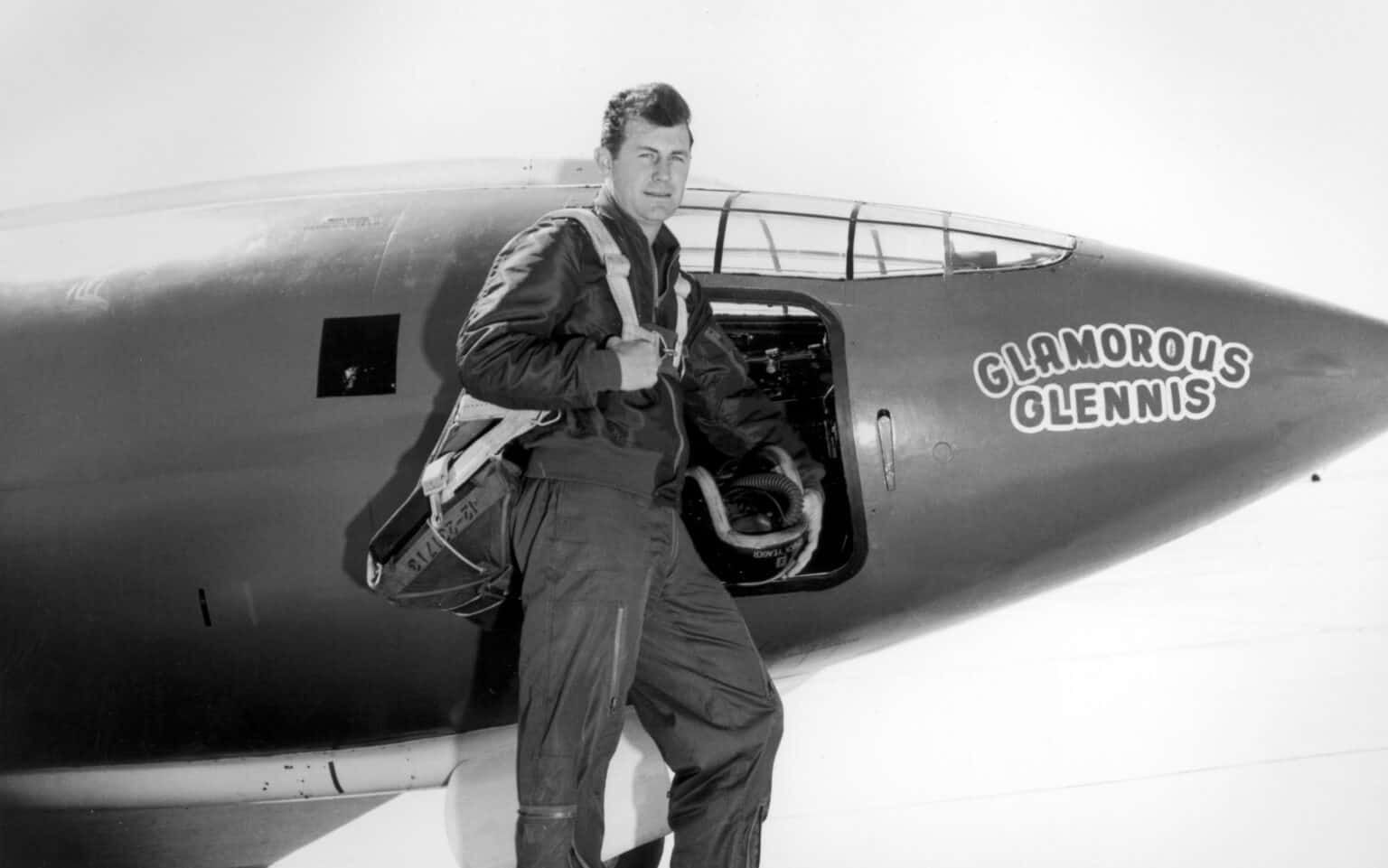
On October 14, 1947, Air Force Captain Chuck Yeager flew the Bell X-1 Glamorous Glennis faster than the speed of sound over the Mojave Desert. The Smithsonian puts the peak at Mach 1.06, about 700 mph (1,127 km/h), at 43,000 feet (13,100 m).
Two nights earlier, Yeager had cracked two ribs falling off a horse, and he told almost nobody. Project engineer Jack Ridley sawed 10 inches (25 cm) off a broomstick so Yeager could lock the X-1’s hatch with his good left hand.
The Air Force then kept the flight secret for eight months.
How a Horse, a Gate and a Broomstick Got Into the X-1 Story
On the evening of Sunday, October 12, 1947, Yeager and his wife Glennis had dinner at Pancho Barnes’s bar in the Mojave, then went riding. It was a moonless night. Racing her back, Yeager hit a gate, knocked himself out and cracked two ribs under his right arm.
He was afraid the injury would take him off the flight, so he had a civilian doctor in nearby Rosamond tape his ribs. The problem was the hatch.
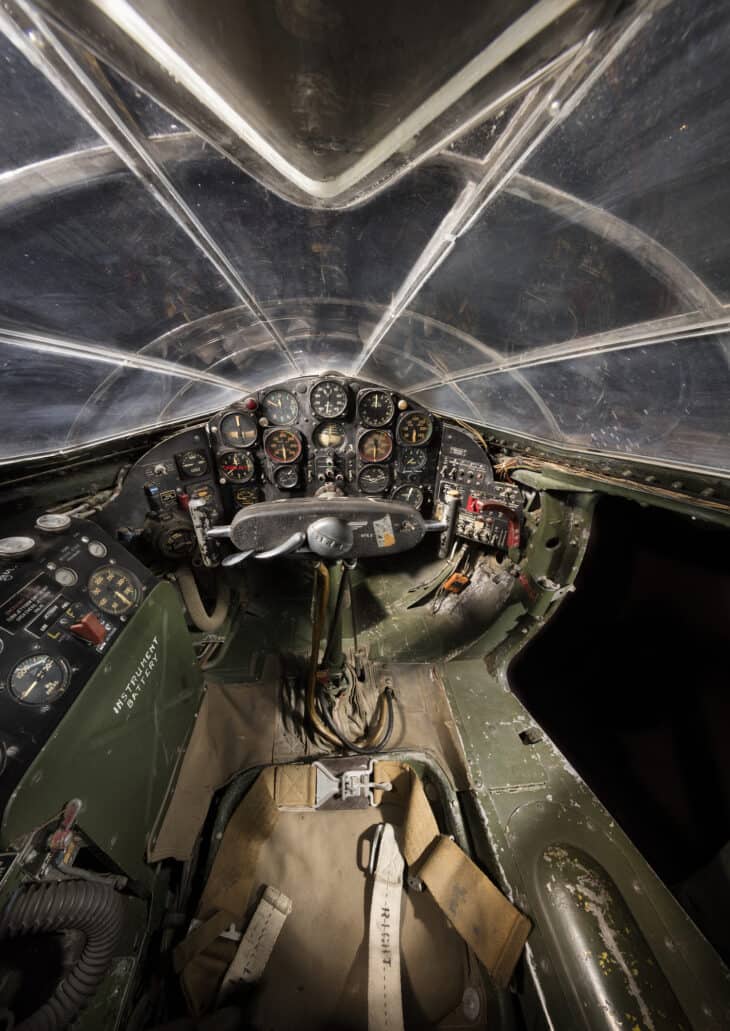
Sealing the X-1’s door meant holding it in place and slamming down a heavy locking lever with the right arm. With his ribs broken, Yeager could not do it. He confided in Ridley, who cut down a broom handle and wedged it into the lock so Yeager could work it with his left hand.
That Yeager was in the seat at all was something of an accident too. Bell’s own test pilot, Chalmers “Slick” Goodlin, had demanded $150,000 to push the X-1 through Mach 1. When the Army Air Forces took over the program, Colonel Albert Boyd picked the 24-year-old Yeager instead.
Yeager was a P-51 Mustang ace from World War II who had once shot down five enemy aircraft in a single mission. He had named his wartime fighters Glamorous Glen, after Glennis.
The stakes were not abstract. In September 1946, British test pilot Geoffrey de Havilland Jr. was killed when his DH 108 broke up in a high-speed dive. Yeager later said there were “at least a dozen different ways the X-1 can kill you.”
He was sitting on about 600 gallons (2,270 liters) of alcohol and liquid oxygen. The escape hatch sat just ahead of the ultra-thin wing, which could have cut him in half if he had tried to bail out.
The First Supersonic Flight, by the Numbers
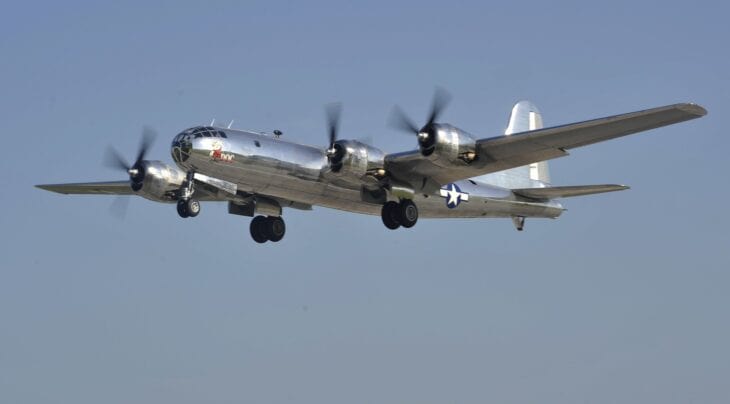
The X-1 never took off on that flight. A modified Boeing B-29 Superfortress spent 30 minutes climbing to 20,000 feet (6,100 m) above Rogers Dry Lake, then released the rocket plane from its bomb bay.

Yeager lit the four-chamber Reaction Motors XLR11, a 6,000-pound-thrust (26.5 kN) rocket, and climbed to his test altitude. It was the ninth powered flight of the X-1, and the Machmeter jumped from Mach 0.965 to 1.06.
He was under rocket power for only about 20 seconds. From release to touchdown on the lakebed, the world’s first piloted supersonic flight lasted 14 minutes.
Even the record books do not fully agree on the figures. The Smithsonian’s collection record says the drop came at 23,000 feet, while its own flight account and Yeager’s obituary say 20,000. Several accounts, including Yeager’s Guardian obituary, give the top speed as Mach 1.05 rather than 1.06.
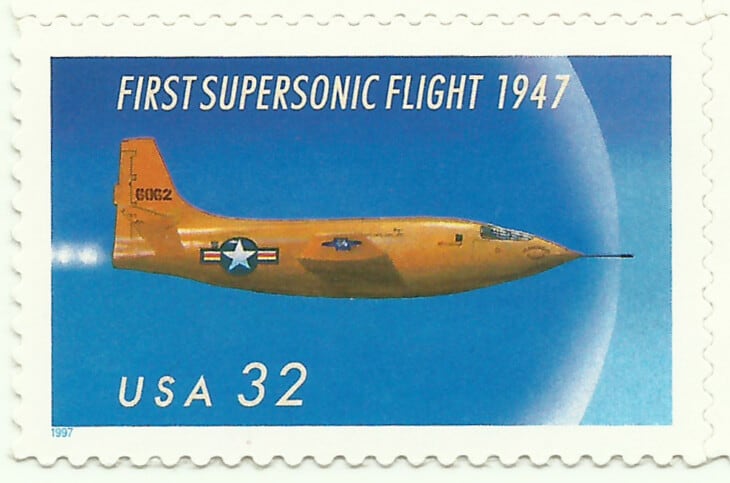
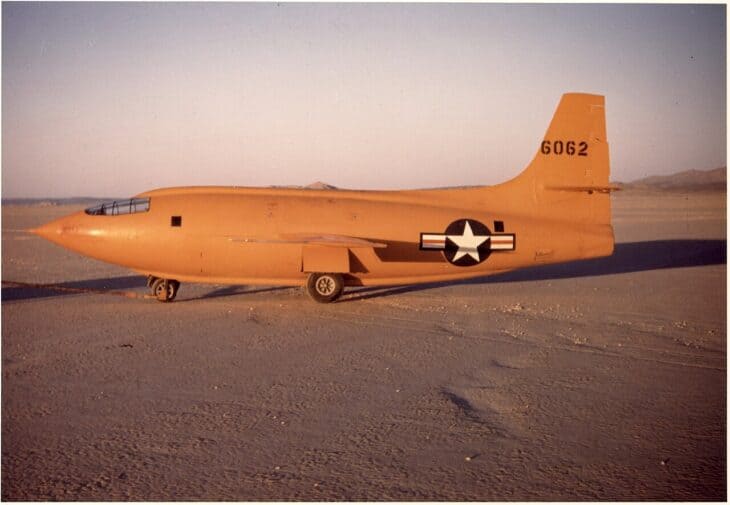
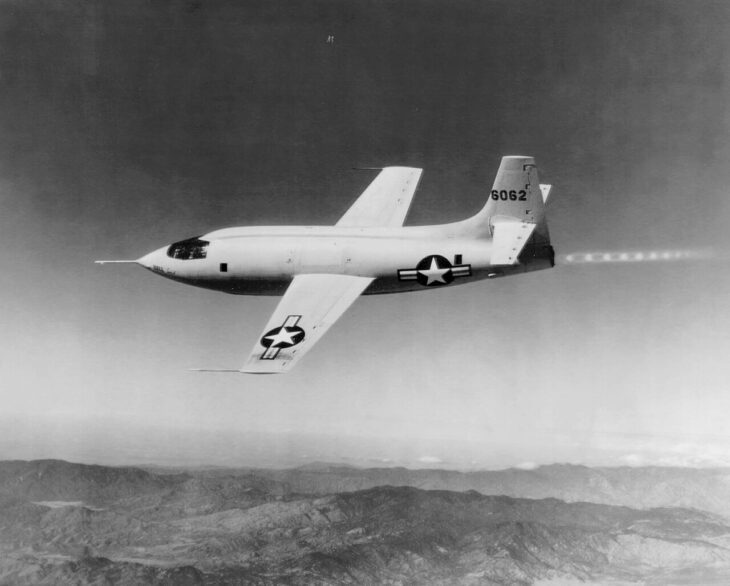
The airplane itself was small: about 31 feet (9.4 m) long, with a 28-foot (8.5 m) wingspan. Bell shaped its fuselage on a .50-caliber bullet, because bullets were known to stay stable above the speed of sound.
Bell built three XS-1s. Yeager’s, serial 46-062, flew 78 times in all. On March 26, 1948, he took it to Mach 1.45, about 957 mph (1,540 km/h).
Why the X-1 Flight Still Matters
The “sound barrier” was never a wall. It was a control problem. As earlier X-1 flights neared Mach 1, shock waves robbed the elevator of its effect, and Yeager pulled back on the controls with nothing happening.
The fix was already built in. NACA engineers John Stack and Robert Gilruth had told Bell to mount the elevator on an adjustable horizontal stabilizer, and moving the whole stabilizer gave Yeager back “just enough pitch control to keep me safe,” as he put it.
The program learned smaller lessons the hard way too. On the eighth powered flight, frost coated the inside of the windshield and a chase pilot named Dick Frost had to talk Yeager down. After that, the crew coated the glass with shampoo.
What the X-1 proved went straight into the next generation of combat aircraft, such as the North American F-100 Super Sabre, America’s first supersonic fighter. It also began the long line of X-planes that still runs today.
Was Yeager really first?
A competing story says North American test pilot George Welch dove the XP-86 prototype past Mach 1 about 20 minutes before Yeager’s flight that same morning. Estimates for that dive run only Mach 1.02 to 1.04, and no instrumented record confirms it. Yeager’s flight is the one that was measured, which is why it stands as the first.
Recognition came slowly. Aviation Week leaked the story in December 1947, but Air Force Secretary Stuart Symington did not confirm it until June 10, 1948. Yeager, Larry Bell and NACA’s John Stack shared the 1947 Collier Trophy.
Where Glamorous Glennis Is Now
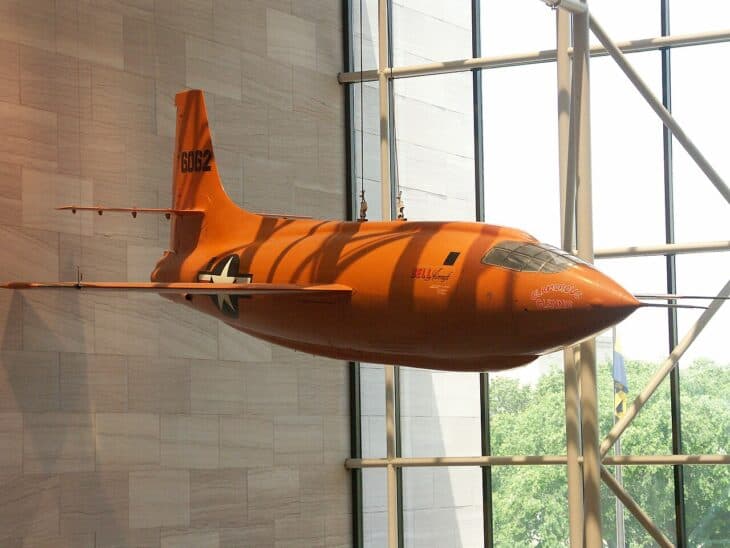
The Air Force gave the X-1 to the Smithsonian on August 26, 1950. It hangs in the Boeing Milestones of Flight Hall at the National Air and Space Museum in Washington, DC.
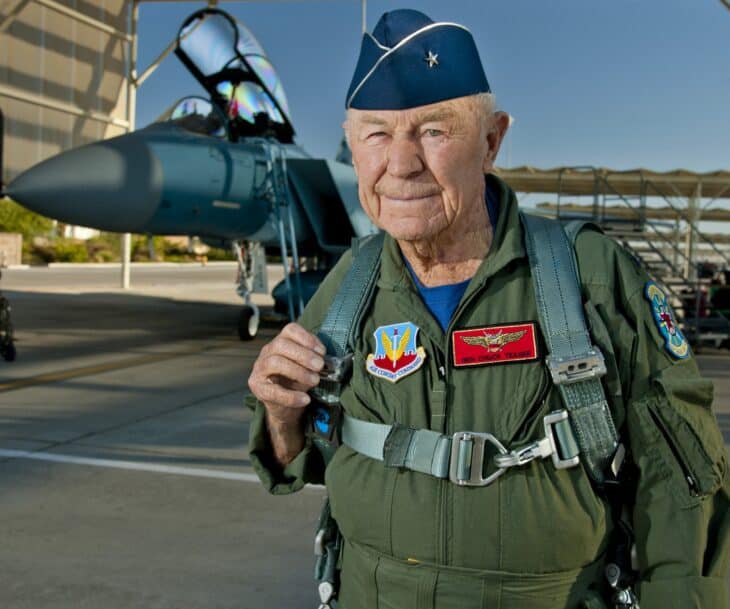
Yeager went past Mach 1 again on October 14, 1997, the 50th anniversary, in an F-15D Eagle named Glamorous Glennis III. He died on December 7, 2020, at 97.
Seventy-nine years after his flight, a civil aircraft still cannot legally do what the X-1 did over American soil. Federal rules have barred civil supersonic flight over the US since 1973, the ban that kept Concorde subsonic over the American mainland.
That may be changing. On July 2, 2026, the FAA proposed replacing the overland ban with a sonic-boom limit. As of October 2026, no final rule has been published.
Until then, going supersonic over US soil takes a special permit. That is how Hermeus’s uncrewed Quarterhorse Mk 2.1 reached Mach 1.21 over New Mexico in May 2026.
Yeager said the real barrier “wasn’t in the sky but in our knowledge and experience of supersonic flight.” Seventy-nine years on, the barrier is no longer the physics. It is the rulebook.
Sources and references used for research and fact-checking.
- Smithsonian National Air and Space Museum, Bell X-1 Glamorous Glennis
- Smithsonian National Air and Space Museum, Chuck Yeager Broke the Sound Barrier in the Bell X-1
- The Guardian, Chuck Yeager obituary
- The Washington Post, How Chuck Yeager Broke the Myth of a 'Sound Barrier'
- San Diego Air & Space Museum, Sound Barrier: The Men
- Wikipedia, Chuck Yeager
- Wikipedia, Bell X-1
- This Day in Aviation, 14 October 1947
- Federal Register, Enabling Supersonic Overland Flight (proposed rule)
Get the Newsletter
The latest aviation news and stories sent to your inbox.
About the Author

Tim is the owner and lead editor of AeroCorner since 2019, overseeing aviation content covering aircraft, airlines, airports, and the broader aviation industry. Through years of researching, writing, editing, and publishing aviation-focused content, he has developed extensive practical knowledge of commercial aviation and air travel. Based in Asia and a frequent traveler himself, Tim also brings firsthand passenger experience to AeroCorner’s coverage. Outside of publishing, he has also explored aviation firsthand through hands-on flight training in New Zealand.