


Table of Contents
A bookshelf is one of the few surfaces in a house that gets looked at every day. For an aviation fan, it is also one of the easiest places to turn a stack of paperbacks into a small, curated collection worth stopping for.
The trick is mixing categories instead of just lining up spines. Books, a small curio case, a logbook, a repurposed instrument, or a single framed boarding pass all read as one theme when they share a shelf.
These 25 ideas cover organizing the books themselves, building or buying display cases for smaller memorabilia, and staging the vignettes that tie a shelf together. Pick a handful that fit your space and your collection rather than trying to use all 25 at once.
01. Cast Metal Airplane Bookends
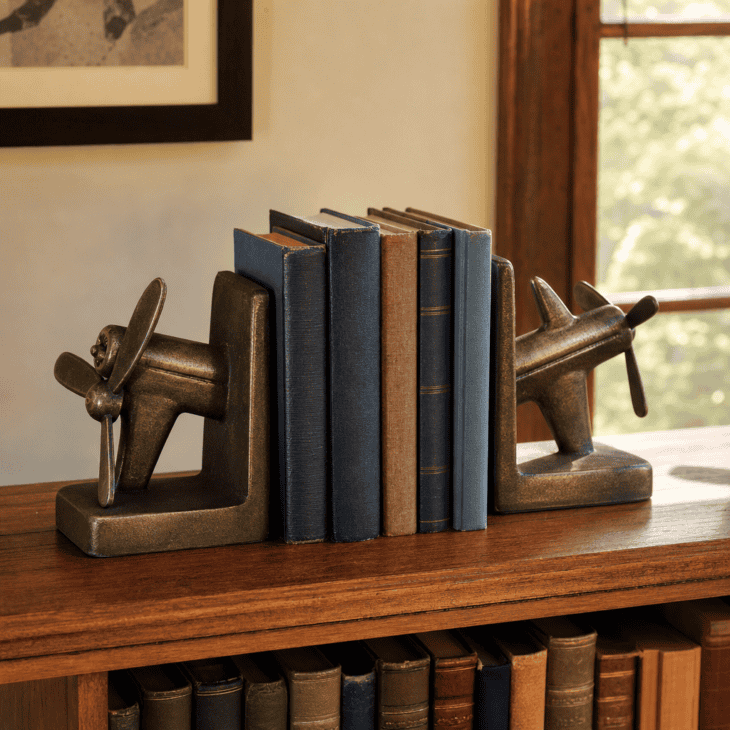
What it is A pair of solid cast bookends, usually bronze, iron, or resin, shaped as a simple propeller silhouette or a folded-wing jet outline. Most sets weigh two to four pounds each, heavy enough to hold up a full row of hardcovers without sliding.
Why it works Bookends are furniture a shelf already needs, so this idea replaces a plain object with one that carries the theme. A cast silhouette also reads as a solid, grown-up piece rather than a novelty toy.
How to get it Search “airplane bookends” through home goods retailers and antique dealers, who carry both new castings and genuine vintage pairs. Check the felt or rubber base pads before buying, since bare metal will scratch a wood shelf. Weigh the set against your book row, since a light pair will slowly creep under a full shelf of hardcovers. A slightly oxidized bronze finish tends to look more authentic than a bright polished one.
02. Rainbow Color-Blocked Book Spines

What it is A full shelf of books reordered by spine color rather than author or subject, moving gradually from warm reds through yellows and greens into blues. It works with any mix of hardcovers, so an aviation library needs no special editions to pull it off.
Why it works A color-sorted shelf reads as a single graphic object instead of a cluttered row of mismatched titles. It is also the fastest way to make a growing aviation book collection look intentional without buying a single new shelf.
How to get it Pull every book off the shelf and sort them into rough color families before you start placing anything back. Work warm to cool across the row, or dark to light if your collection skews neutral. Keep a small index card or phone photo of the order if you plan to add books later. Break up long color runs with a bookend or a single small object every foot or so.
03. Glass-Top Curio Case for Wings and Patches
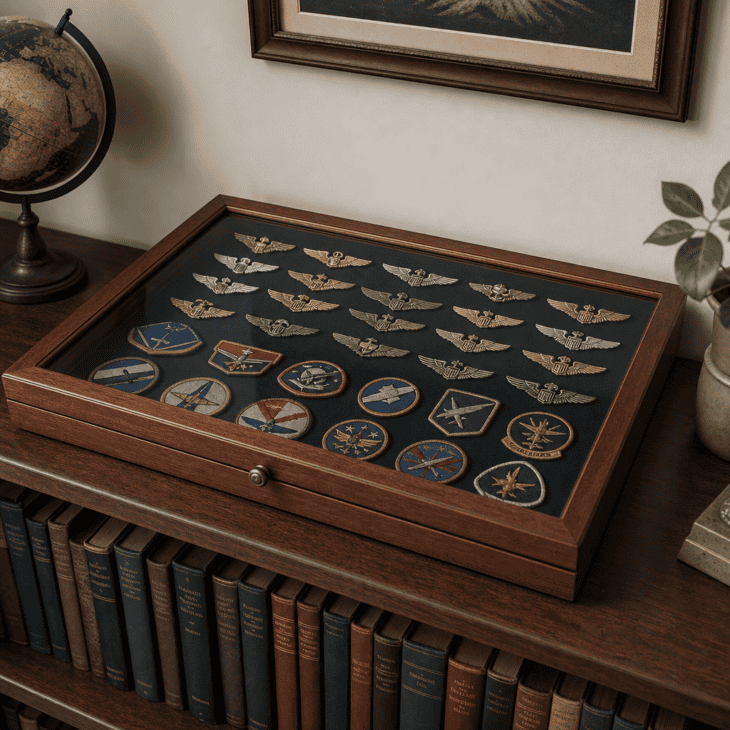
What it is A shallow, hinged glass-topped box, usually 12 to 18 inches wide, lined with dark felt or foam and sized to sit flat on a shelf rather than hang on a wall. It holds a set of pilot wing pins, embroidered patches, or lapel badges pinned in neat rows.
Why it works Small metal and fabric pieces get lost or tangled in a drawer, and a flat case is the one format that shows them all at once without hanging holes in the wall. It also seals out the dust that tarnishes metal wings over time.
How to get it Buy a jewelry-style display case with a felt or foam insert, sold widely for pin and medal collections. Pin each piece through the felt backing rather than gluing it, so the layout can change as the collection grows. Group wings by rank or era and patches by unit or airline for a cleaner read. Keep the case closed when not being handled, since felt attracts dust just as easily as an open shelf.
04. Framed Boarding Pass Shadow Box
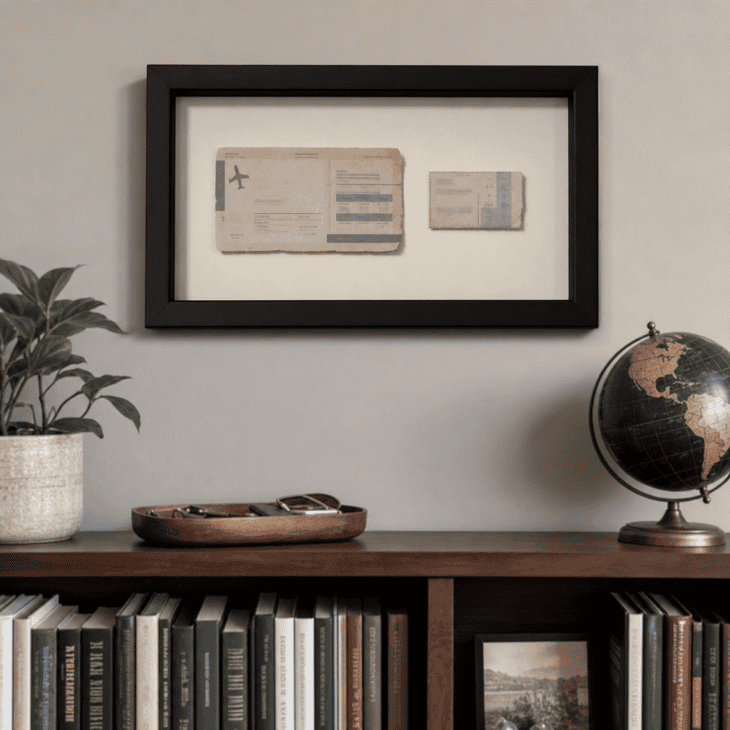
What it is A shallow shadow box frame, typically one to two inches deep, holding a single boarding pass, ticket stub, or luggage tag mounted on acid-free mat board. One or two items per box keeps the piece readable instead of cluttered.
Why it works Paper mementos from a first flight, a honeymoon trip, or a bucket-list destination usually end up flat in a drawer where nobody sees them. Framing one turns a scrap of paper into a small piece of personal history hung right above the books it belongs with.
How to get it Use acid-free mat board and UV-filtering glass so thin thermal-printed paper does not yellow or fade under normal room light. Center the item with generous white space rather than crowding the frame. Hang the box just above eye level so it reads as art, not a receipt. Rotate in a different keepsake every year or two if you keep more than one worth framing.
05. Globe and Logbook Reading Vignette

What it is A tabletop globe eight to twelve inches across, paired with a small brass compass or sextant replica and a short stack of leather-bound books. The three objects sit together at one end of a shelf rather than spread across the whole run.
Why it works A single well-chosen vignette does more work than a dozen scattered trinkets, since grouped objects tell a navigation story a lone globe cannot. It is one of the fastest ways to bring the same warm, brass-and-leather feel found in vintage aviation decor onto a single shelf.
How to get it Choose a globe with an antiqued ocean color rather than bright blue, since it reads warmer next to leather spines. Set the compass open and slightly angled so the needle catches the light. Stack three or four books at a height just below the globe so it stays the visual anchor. Keep the grouping to one shelf end so it does not compete with the rest of the collection.
06. Library Ladder Wall of Aviation Books

What it is A floor-to-ceiling bookcase fitted with a rolling library ladder on a wall-mounted brass or steel rail. It turns an otherwise unreachable top shelf into usable, displayable space instead of dead storage.
Why it works A serious aviation book collection outgrows a standard five-shelf case fast, and going vertical solves the space problem without spreading books across multiple rooms. The ladder itself is also a striking piece of furniture that signals a real aviation home office, not just a decorated corner.
How to get it Order a rolling ladder kit sized to your ceiling height, which most specialty hardware makers sell with the rail included. Reserve the top two shelves for lighter paperbacks and display pieces, since reaching heavy hardcovers up there gets old fast. Keep your most-used reference books on the bottom three shelves within easy arm’s reach. Have the rail professionally anchored into studs, since a loaded ladder puts real lateral load on the wall.
07. Backlit Display Niche Built Into the Case
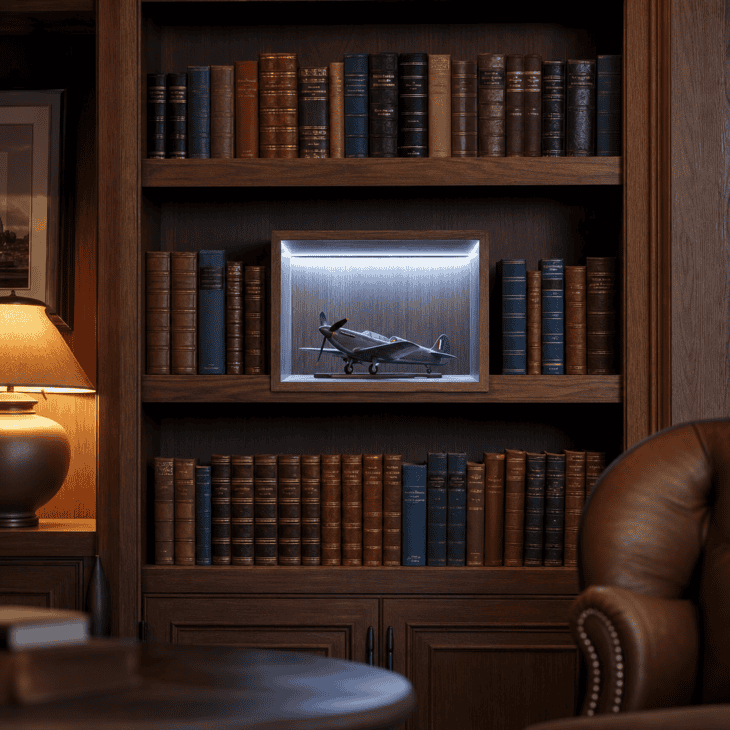
What it is A single square or rectangular cubby built into a run of otherwise ordinary bookshelves, roughly the width of one or two book widths, with a small LED puck or strip hidden at the back. One object, usually a small model or a framed photo, sits inside on its own.
Why it works A lit niche interrupts a long run of flat spines with a small moment of light and depth, drawing the eye without needing a whole separate cabinet. It is a lighter-touch way to give a favorite model airplane a spotlight than a full glass case.
How to get it If you are building or buying custom shelving, ask the carpenter to leave one bay a few inches deeper than the rest so a small object sits recessed. Fit a battery or low-voltage LED puck light at the back, wired or on a timer, rather than a bright bulb that washes out the object. Paint the back panel of that one bay a dark shade so the light has contrast to work against. Limit the niche to a single item so it stays a feature, not another shelf.
08. Vintage Altimeter Bookend
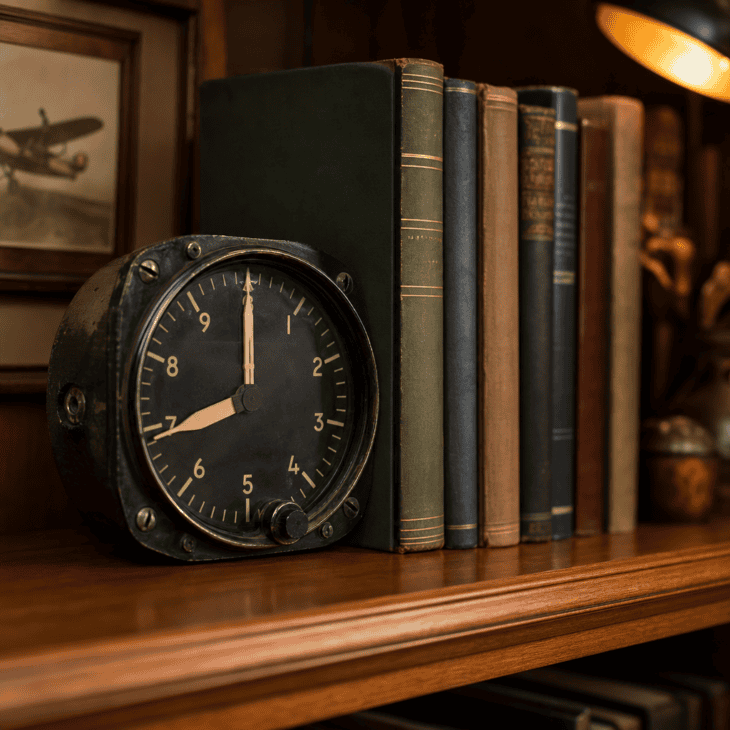
What it is A decommissioned cockpit instrument, most often an altimeter or airspeed indicator, mounted onto a flat metal base so its round dial and casing can prop up a row of books. Salvage sellers usually strip these of any live electronics before sale.
Why it works An instrument gauge is heavy, genuinely aviation, and functional all at once, which is a rare combination for a decor object. It fits the same repurposed-hardware instinct that drives a good pilot desk setup, just shifted from the desk to the shelf.
How to get it Look through aviation salvage dealers and surplus sites for decommissioned instruments explicitly sold as decor, since these are guaranteed non-functional and safe to display. Have the gauge mounted onto a stable flat base if it does not already come that way. Buy or make a matching second bookend so the pair frames the row evenly. Confirm the instrument face is intact glass or acrylic, since a cracked dial looks damaged rather than well-loved.
09. Open Atlas Stand With Route Map Backdrop

What it is An oversized atlas or vintage route book propped open on a small angled book stand rather than shelved flat, positioned directly under a framed antique air-route map on the wall behind it. The open pages and the framed map echo each other.
Why it works A closed atlas is just a thick spine among others, but an open one shows off the very thing that makes it special. Paired with a wall map from the same golden age of aviation, the pairing turns one shelf into a small geography exhibit.
How to get it Buy a plain wooden or acrylic book stand sized for a large-format atlas, sold widely for cookbooks and coffee-table books. Open the atlas to a striking map page and rotate it every few months so the same spread does not fade unevenly in sunlight. Hang a framed vintage route map directly above at roughly the width of the shelf below it. Keep the stand toward the center of the shelf so it does not get crowded by upright books on either side.
Keep paper out of direct sun
Boarding passes, timetables, and atlas pages fade fast in direct sunlight. Position paper memorabilia on an interior wall or shelf, and choose UV-filtering glass for anything framed.
10. Propped-Open Pilot Logbook Stand

What it is A personal or family pilot logbook, propped open on a small brass or wood stand to a meaningful entry, such as a first solo or a milestone flight. A short pen or a small paperweight often sits beside it.
Why it works Nothing on a shelf carries more weight than a real, handwritten record of actual flight hours. It turns a purely decorative shelf into one with a documented personal history behind it.
How to get it This idea needs no product beyond a simple book stand, since the logbook itself is the whole point. Choose one meaningful page rather than the most recent entry, so the display tells a specific story. Rotate the open page occasionally to protect it from sun fading and to keep the display feeling fresh. Store the logbook flat and closed the rest of the time if it is a genuine, irreplaceable record.
11. Staggered Floating Ledge Trio

What it is Three narrow floating ledges, each six to ten inches deep, mounted at different heights rather than in a single straight row. Each ledge carries one small stack of books plus a single object or frame, never a full row of spines.
Why it works A staggered layout reads as a designed composition rather than storage, closer to a curated aviation gallery wall than a bookcase. Limiting each ledge to a few items also forces every piece to earn its spot.
How to get it Mount three matching floating ledges at offset heights, roughly eight to twelve inches apart vertically and staggered left to right. Stack two to four books flat or upright on each, topped or flanked by one small object such as a model, a frame, or a small case. Step back and check the overall silhouette before committing to wall anchors, since the gaps matter as much as the shelves. Leave visible wall space between ledges so the arrangement can breathe.
12. Vintage Timetable Booklet Case
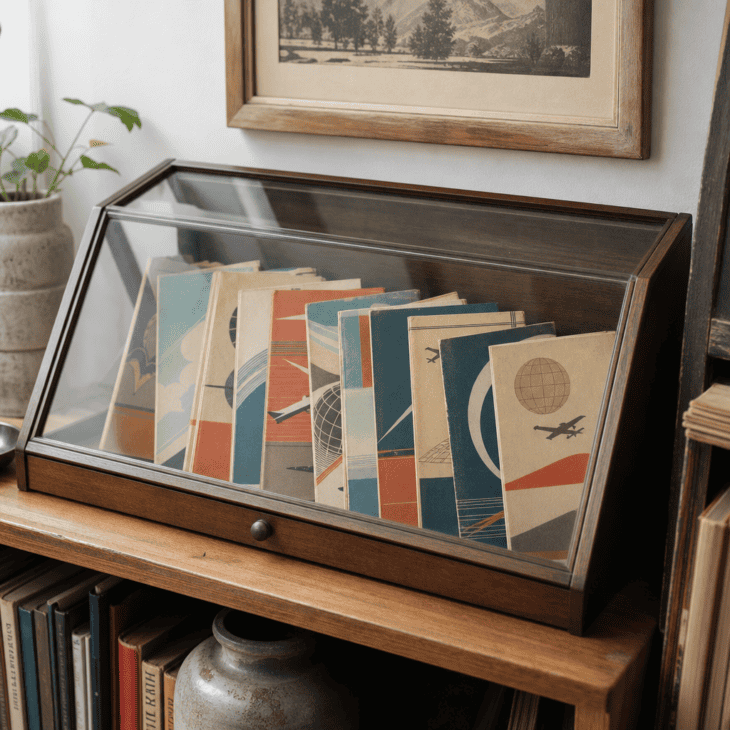
What it is A small angled glass-lid case, similar to a jewelry display box, holding a fanned arrangement of vintage folded timetable and route booklets from past decades of air travel. Six to ten booklets typically fill a case this size.
Why it works Timetable collecting is a genuine, long-running corner of aviation hobbyist culture, and a fanned display shows off the graphic design of each cover at once. It makes a natural centerpiece gift for aviation lovers who already collect them loosely in a drawer.
How to get it Source vintage timetables through collector forums, estate sales, or specialty paper ephemera dealers, since printed timetables have not been produced in decades. Fan the booklets slightly so each cover peeks out rather than stacking them flat. Keep the case closed and out of direct light, since old paper is thin and light-sensitive. Swap in a rotating set every season if your collection outgrows one case.
13. Stacked Coffee-Table Book Pedestal
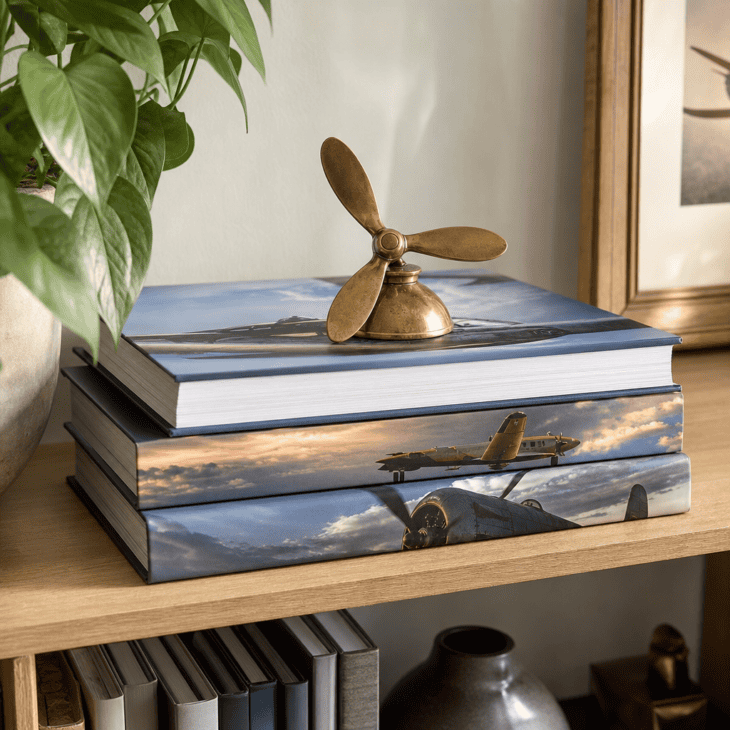
What it is Three large-format aviation photography or history books, stacked flat rather than shelved upright, with one small object such as a paperweight or miniature figure sitting on top. The stack itself acts as a mini pedestal.
Why it works Oversized books rarely fit standard shelf height anyway, so stacking them flat turns a storage problem into a design feature. It is a fast, low-cost way to add height and interest to an aviation living room side table or shelf.
How to get it Choose three books of decreasing size from largest at the bottom to smallest on top for visual stability. Pick covers in complementary colors, since the spines will not show. Add one small, heavier object on top so the stack does not look like an unfinished pile. Reserve this treatment for books you actually enjoy flipping through, since a flat stack invites browsing more than an upright spine does.
14. Rolling Ladder Reading Nook

What it is A small seating area built directly against a tall bookcase, pairing a single armchair, a floor lamp, and a side table with the shelving itself. The rolling ladder, where the case has one, becomes part of the furniture grouping rather than a separate fixture.
Why it works A shelf is a display, but a nook is a destination, and giving the books a chair to be read in nearby makes the whole corner feel used rather than staged. It also gives a tall case somewhere for the eye to land besides straight up.
How to get it Place a single comfortable chair at a slight angle to the bookcase rather than facing it head-on, which reads more natural. Add a floor lamp bright enough for reading, positioned over the shoulder rather than in front. Keep a small side table within arm’s reach for a current read and a mug. Leave a clear path to the ladder if the case has one, since a blocked ladder defeats its purpose.
15. Luggage Tag Shadow Box
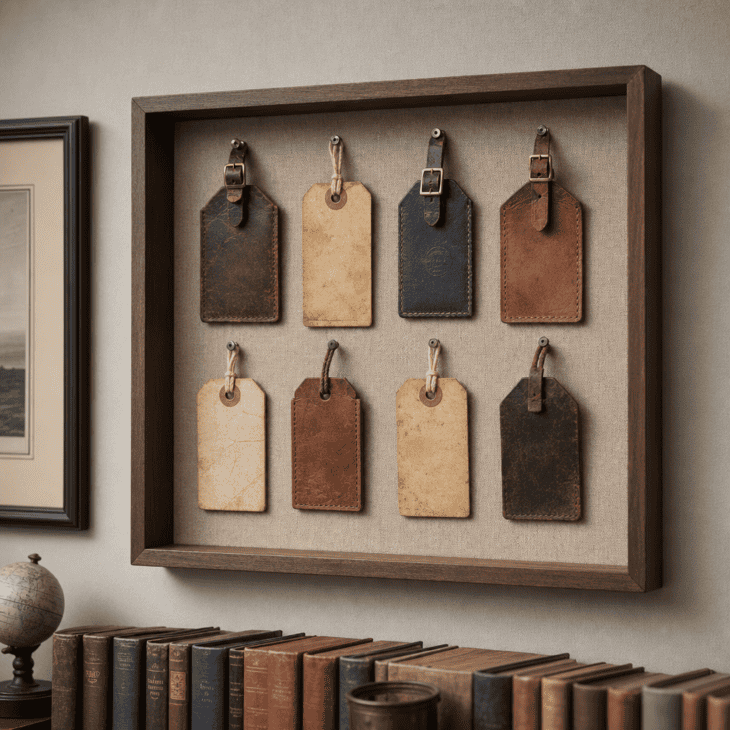
What it is A shallow shadow box, pinned inside with five to eight vintage leather or paper luggage tags arranged in an even grid on a fabric or cork backing. Tags can come from real trips or collected separately from vintage sellers.
Why it works Luggage tags are small, textural, and easy to overlook loose in a drawer, but grouped and framed they read as a deliberate travel archive. The leather straps and worn paper add texture that a flat photo print cannot match.
How to get it Collect tags from your own trips over time, or buy a small set from vintage luggage and ephemera sellers to start immediately. Arrange them in an even grid with consistent spacing rather than a scattered pattern. Pin through the tag’s existing hole so nothing gets punctured that was not already made for hanging. Leave room in the box to add tags from future trips if you are building the collection yourself.
16. Compass Rose Shelf Backing

What it is The plain back panel of an open bookcase, painted or papered with a large compass rose design in a muted color rather than left blank white or wood tone. Books and objects sit in front, so only fragments of the design show through the gaps.
Why it works Most bookcases waste their back panel entirely, and a subtle design there rewards a second look without shouting over the books themselves. Glimpsed between spines, a compass rose reads as a considered detail rather than a loud theme.
How to get it Order a printed compass rose wallpaper panel cut to fit the case’s back, or stencil one directly using a large compass rose template and craft paint. Keep the color muted, navy, brass, or faded gray, so it recedes behind the books rather than competing with them. Test the panel behind one shelf section before committing to the whole case. A removable wallpaper panel is the easier option if the bookcase is rented or likely to move.
17. Vintage Playing Card and Matchbook Tray
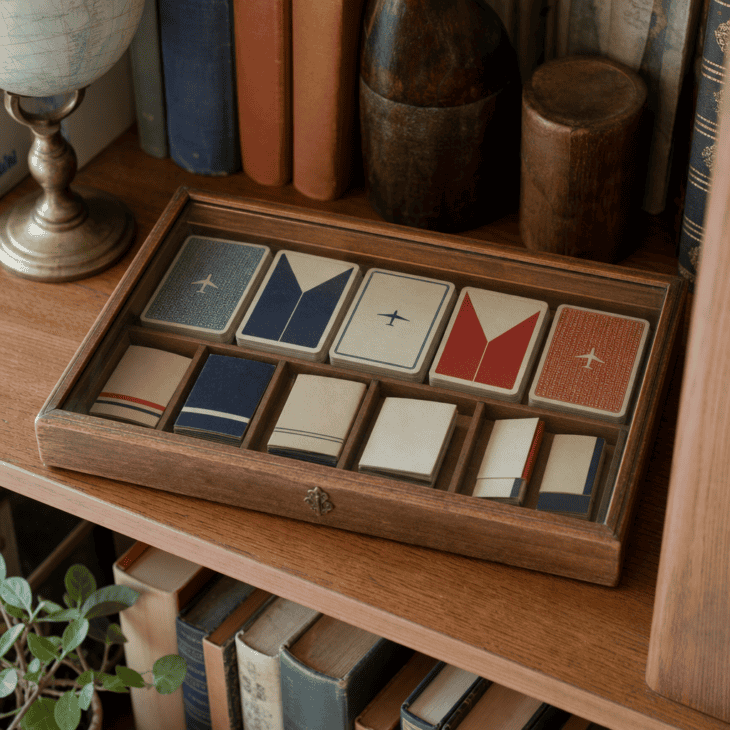
What it is A small, shallow glass-lidded tray, roughly the footprint of a paperback book, holding a loose collection of vintage in-flight playing card decks and matchbooks. The lid keeps everything from sliding when the shelf gets bumped.
Why it works Old airline playing cards and matchbooks are genuinely collectible ephemera, but loose in a box they get lost or scattered. A shallow tray shows them off exactly the way a coin collector would display a set of small, similar-sized objects.
How to get it Source vintage decks and matchbooks from ephemera dealers, estate sales, or collector marketplaces, since most predate current airline branding rules. Fan open one deck so the card backs are visible alongside the closed boxes. Choose a tray with a lid rather than an open dish if the shelf sees any foot traffic nearby. Keep the grouping loosely themed by decade for a more coherent look.
Acid-free backing matters
A pretty case still lets paper ephemera yellow if the backing board underneath is ordinary cardboard. Ask for acid-free mat and mounting board whenever you frame tickets, timetables, or tags for the long haul.
18. Wing-Shaped Floating Shelf Bracket
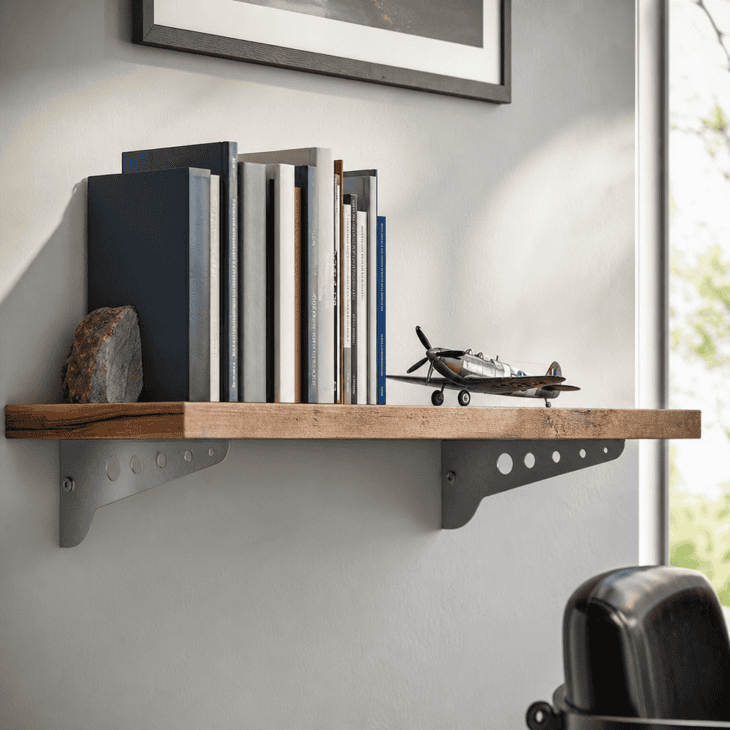
What it is A plain wood or metal floating shelf supported by two visible brackets cut into a simple swept-wing silhouette rather than a plain L-shape or hidden mount. The brackets sit exposed under the shelf edge as part of the design.
Why it works Most shelf hardware is meant to disappear, so using it as the theme instead is a small surprise that most guests notice on close inspection rather than first glance. It works especially well as a quieter cousin to a full piece of framed aviation wall art.
How to get it Search specialty hardware makers and Etsy metalworkers for “airplane wing shelf bracket,” since these are usually made to order in steel or brass. Confirm the bracket’s rated weight load against the books you plan to display, since a decorative cut can reduce strength compared to a solid L-bracket. Anchor into studs for anything longer than about two feet. Choose a finish, black, brass, or raw steel, that matches other metal accents already in the room.
19. Museum Vitrine for One Rare Piece

What it is A tall, narrow glass display case on its own small pedestal, standing beside rather than inside the bookcase, holding exactly one object. A built-in LED at the top lights the piece from above like a museum exhibit.
Why it works Every serious collection eventually has one piece, a rare model, a signed photo, or a genuine artifact tied to a famous aircraft, that deserves better than a shared shelf. Giving it a dedicated case signals which item in the room actually matters most.
How to get it Buy a standalone glass vitrine on a pedestal base, sized to the single object you plan to feature, rather than a shelf-mounted case meant for several. Position it beside the bookcase so it reads as an extension of the collection, not a separate display. Use the case’s built-in lighting if included, or add a small clip spotlight aimed down from above. Resist the urge to add a second object later, since the whole point is exclusivity.
20. Vintage Encyclopedia Reading Corner

What it is A complete, matched set of a vintage aviation or aircraft encyclopedia, identical cloth or leatherette bindings filling one shelf edge to edge. Sets typically run anywhere from six to twenty volumes depending on the publisher and era.
Why it works A matched set does something a mixed collection cannot: it fills a shelf with visual uniformity while still being genuinely useful reference material. It is also a natural entry point into other aviation hobby pursuits, since old encyclopedias are full of specifications and history worth digging into.
How to get it Search used booksellers and estate sale listings for a complete matched set rather than buying individual volumes, since a full run is worth more visually and historically than scattered numbers. Confirm all volumes are present and in the same edition before buying. Give the set its own full shelf rather than splitting it across two, so the uniform spines read as one unbroken line. Dust the cloth bindings gently rather than using any liquid cleaner, which can stain older cloth covers.
21. Barometer and Instrument Shelf Cluster

What it is A grouping of two to four small brass or steel instruments, such as a barometer, a ship’s-style clock, and a small pressure gauge, clustered together at one end of a shelf rather than spread out individually. Sizes typically range from three to six inches across.
Why it works Instruments share a material language, brass, dials, and glass, so grouping several together reads as a coherent cabinet-of-curiosities moment rather than a random collection of gadgets. The cluster also creates natural visual weight to anchor one end of a long shelf.
How to get it Collect pieces gradually from antique shops, estate sales, and specialty nautical or aviation instrument dealers, since matching finishes over time looks more authentic than buying a boxed set. Vary the heights slightly so the cluster has a natural silhouette rather than three flat faces in a row. Keep any working clock wound and set, since a stopped clock in a display reads as neglected rather than curated. Leave a little breathing room around the group so it does not blend into the books beside it.
22. Amenity Kit and Mini Bottle Case
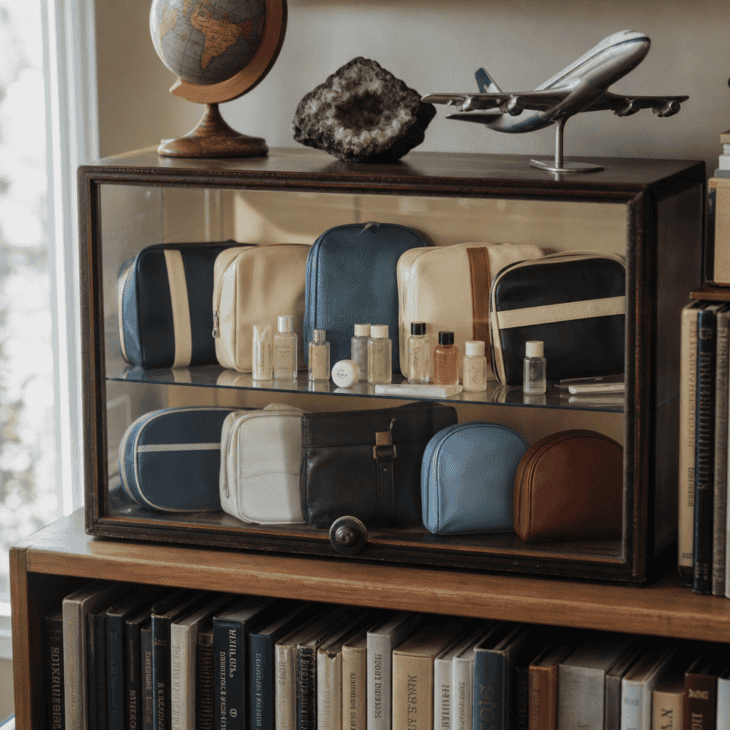
What it is A shallow glass-fronted display box, similar to a small curio cabinet, holding a row of vintage first- and business-class amenity kits alongside a few miniature toiletry bottles. Kits from past decades come in fabric pouches, hard cases, and printed bags of varying sizes.
Why it works Frequent flyers often accumulate amenity kits without meaning to, and most end up forgotten in a closet. Displayed together, the different pouch styles and eras form a small, oddly satisfying design history of premium air travel.
How to get it Start with kits from your own past flights before buying anything, since most travelers already have a few tucked away. Arrange them upright by size rather than flat, so each pouch’s design is visible. Add a few unopened miniature bottles between kits for texture and scale variety. Keep the case closed to prevent fabric pouches from collecting dust over time.
23. Squadron Patch Frame Beside the Case
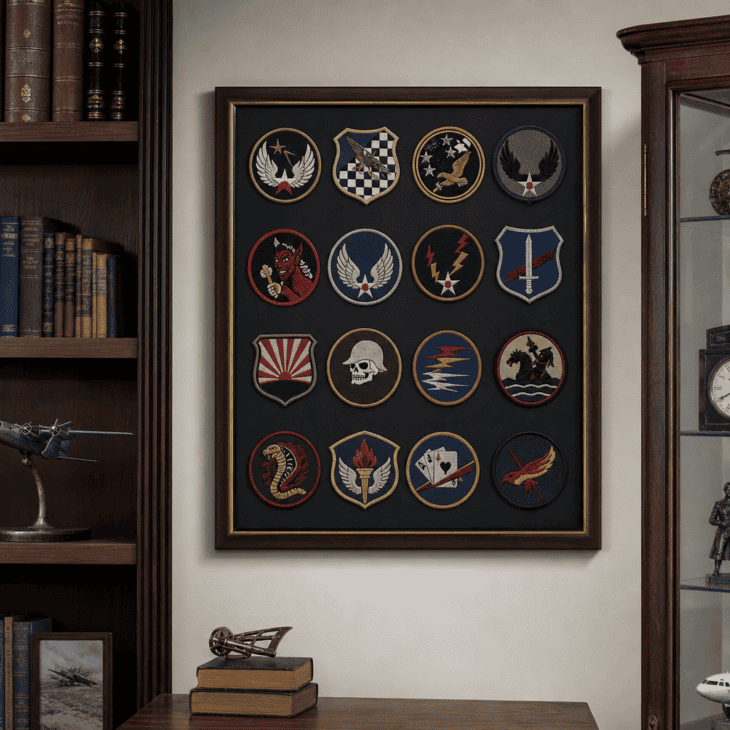
What it is A single large frame holding a neat grid of embroidered squadron, airline, or airshow patches, mounted directly on the wall next to the bookcase rather than inside it. Most frames this size hold twelve to twenty patches in even rows.
Why it works Patches picked up over years of airshows and hangar visits, the kind collected during a lifetime of plane spotting trips, do not fit neatly on a flat shelf. A frame extends the collection onto the wall so the shelf below stays uncluttered.
How to get it Have patches professionally mounted on a fabric or foam board inside a shadow-box style frame, since pins alone will sag fabric patches over time. Arrange them in an even grid by size rather than chronologically, which reads cleaner from across the room. Hang the frame at a height that lines up with the top of the adjacent bookcase. Leave a small gap of extra rows in the layout if the collection is still actively growing.
24. Uniform Button and Insignia Drawer
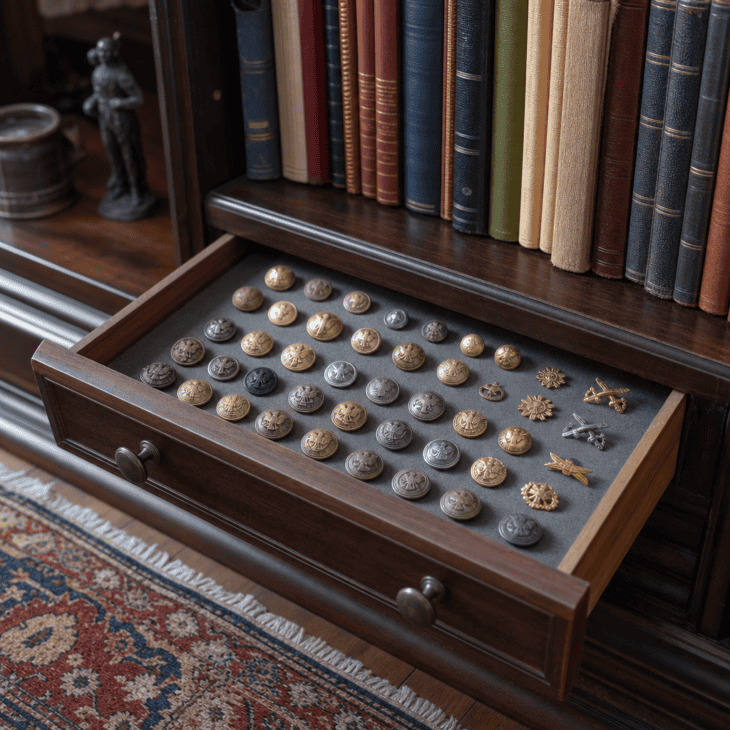
What it is A shallow, felt-lined drawer built into the base cabinet under a bookcase, holding vintage uniform buttons, rank insignia, and small metal pins arranged in rows rather than loose in a box. The drawer stays closed except when browsing.
Why it works Not every piece needs to be on permanent view, and tiny hardware in particular gets lost or scratched on an open shelf. A dedicated drawer protects delicate small pieces while keeping them exactly where the rest of the collection lives.
How to get it If your bookcase has a base cabinet, line one drawer with felt or a fitted foam insert cut to hold small items without rattling. Sort pieces by set or era into distinct sections rather than one loose pile. Add a thin layer of anti-tarnish paper underneath metal insignia if the drawer will stay closed for long stretches. Bring the drawer out occasionally to air the pieces and check for any tarnish forming.
25. Rotating Book-of-the-Month Ledge

What it is One narrow floating ledge, deep enough only for a single book resting face-out rather than spine-out, positioned separately from the main bookcase. It holds exactly one title at a time.
Why it works A spine-out shelf hides cover art entirely, and most aviation books have genuinely striking covers worth showing. Rotating the featured title also gives a static bookshelf a small, recurring reason to look again, the same instinct that fuels a good aviation bucket list of things to revisit.
How to get it Mount a single narrow picture-ledge shelf near eye level, separate from the main collection so it reads as its own feature. Pick a new title from your shelves each month based on season, an anniversary, or simply what you are currently reading. Add a small clip light or position the ledge under existing room light so the cover is well lit. Keep a small note of past picks if you want to avoid repeating the same book too often.
Sources and references used for research and fact-checking.
Get the Newsletter
The latest aviation news and stories sent to your inbox.
About the Author

Hanna writes AeroCorner's aviation-lifestyle and decor guides, turning a love of flight into ideas for your home, celebrations, and gift lists.