

Table of Contents
Most airplane coloring pages online are one blurry clip-art jet or a stack of near-identical side views. They fill ten minutes and then go in the bin.
This list has 25 different pages, from thick-lined cartoon planes for toddlers to adult mandalas and detailed airliners. Every page is a clean black outline on white, with no logos or airline markings, so every tail and fuselage is yours to design.
Each entry says what is on the page, why it suits a certain age or mood and how to print and color it. Save any image (right-click on a computer, press and hold on a phone) and print it at actual size on letter paper, 8.5 by 11 inches (21.6 by 27.9 cm). For more ways to keep young travelers busy, see these airplane activities for kids.
01. Simple Cartoon Airplane
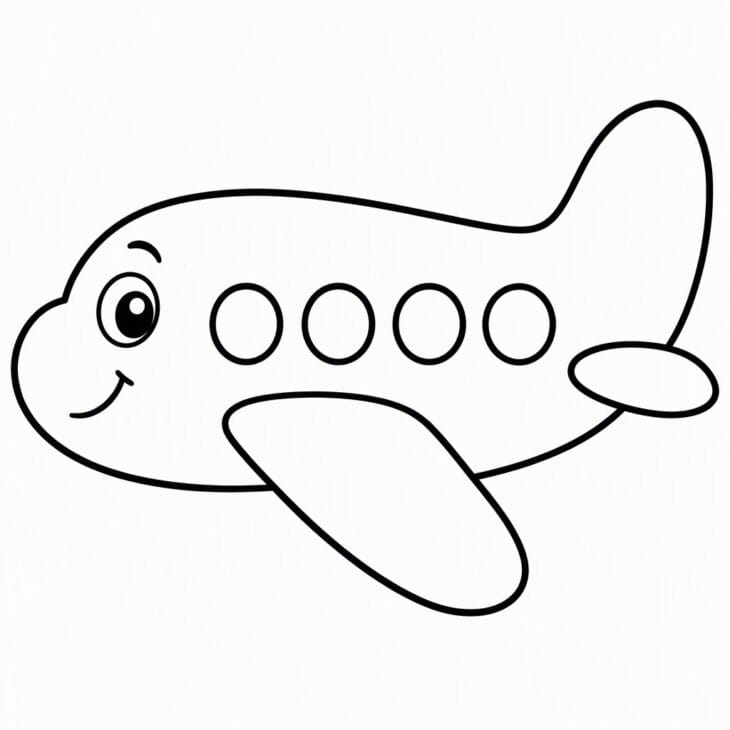
What it is A single side-view airplane with thick, rounded outlines, four large windows and a round tail, and nothing else on the page. Every shape is bigger than a crayon tip, which suits ages 2 to 4.
Why it works Large shapes let a toddler color without leaving the lines, which builds confidence in a first coloring session. With no background there is nothing to distract or overwhelm.
How to get it Save the image (right-click on a computer, press and hold on a phone) and print it at actual size on letter paper, 8.5 by 11 inches (21.6 by 27.9 cm). Chunky crayons or washable markers grip better than pencils at this age. Color the body first, then ask which windows should be day and which should be night. Hang the finished page at child height so it gets noticed.
02. Smiling Airplane With a Face
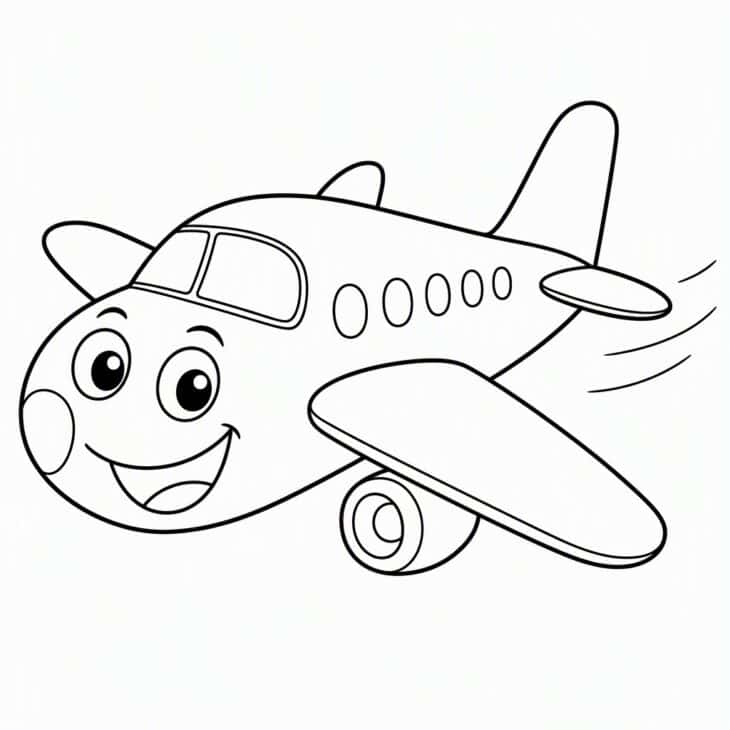
What it is A cartoon plane with a wide smile, big round eyes on the nose and a few swoosh lines trailing behind. The wings and tail stay simple, so the face is the main thing to color. It works best for ages 3 to 6.
Why it works A face turns coloring into storytelling, and kids start naming the plane and deciding where it is going. It is a good pick for children who find realistic aircraft dull.
How to get it Print one copy for each child so every plane ends up with a different personality. Ask for a name and a destination before the first crayon touches the page. Use markers for the eyes and smile, then crayons for the larger areas. Staple the finished pages together to make a small book of the plane’s adventures.
03. Airplane Flying Through Clouds
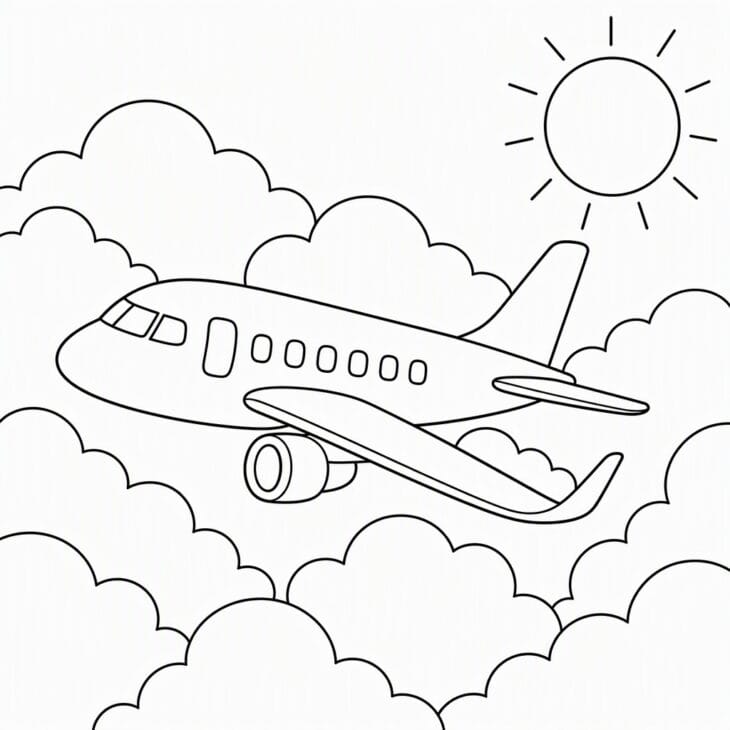
What it is A single jet crossing a sky of overlapping, puffy clouds with a round sun in the corner. The shapes are medium-sized, so it suits ages 3 to 6 who have moved past the chunkiest pages.
Why it works Clouds have no wrong color, so a child can make a pink sunrise, a gray storm or a rainbow sky. The overlapping outlines also teach kids to color one shape at a time.
How to get it Print on a laser printer or photocopier if you plan to use watercolors, because inkjet lines can bleed when wet. Plain crayons work fine on any paper. Try coloring the sky first in light strokes, then the plane in one strong color so it stands out. Ask the child what time of day it is in the picture and let the answer pick the colors.
04. Airplane Towing a Blank Banner
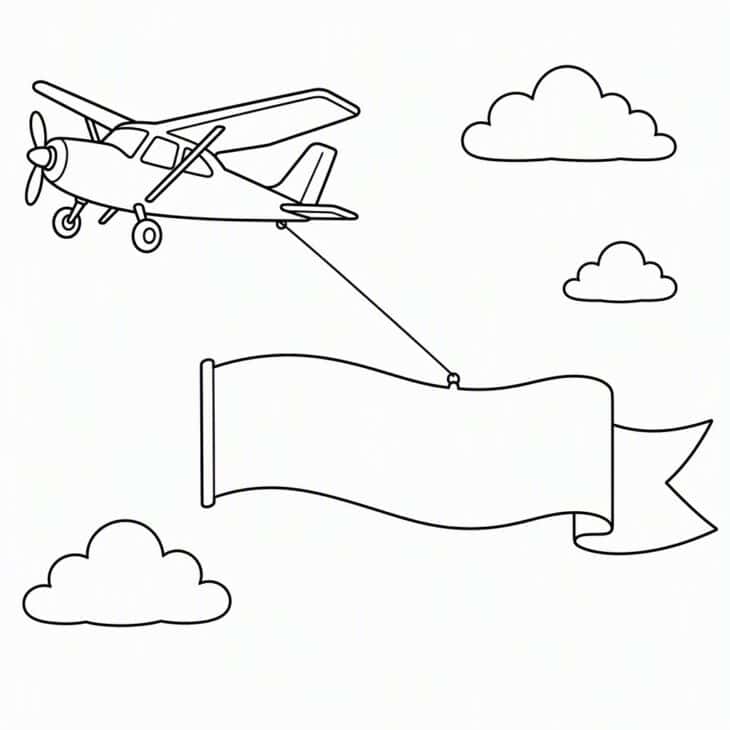
What it is A small propeller plane pulling a long, empty ribbon banner on a short tow line. The banner is blank on purpose, with room for a short name or message in hand lettering. It suits ages 5 and up, since the writing needs steady hands.
Why it works The blank banner turns a coloring page into a personalized card or sign. It is a quick way to make something for a birthday, a welcome home or a thank-you.
How to get it Print on light cardstock if you want to use it as a card. Write the message in pencil first, trace it with a marker, then color the plane and the banner background. Fold the sheet in half to make a greeting card, or tape it to a door as a sign. It also fits a party setup, like the ones in these airplane birthday party ideas.
05. Chunky Toy Airplane
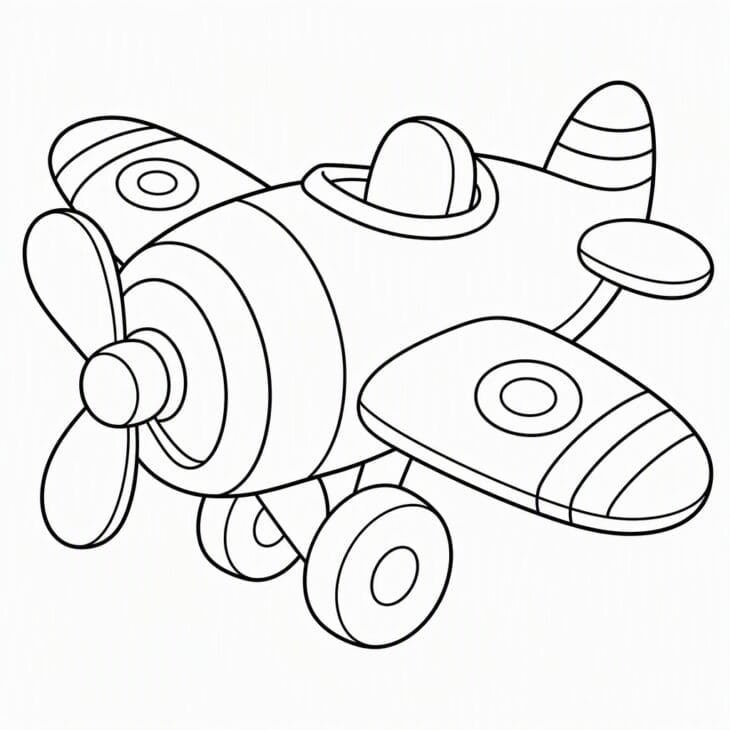
What it is A toy-style plane with a fat body, an oversized propeller and round wheels, drawn like a wooden toy. The wings carry stripes and dots to fill in, which makes it a good page for ages 3 to 5.
Why it works Stripes and dots give pattern practice, because kids have to alternate colors to make them look right. The rounded toy shapes are also easy to stay inside.
How to get it Dot markers or sponge daubers are the best fit for the circles on the wings. Print at actual size on plain paper and color the stripes in two alternating colors. Cut around the finished plane and glue it to a folded card to make a stand-up toy. Print two pages if you want to keep one to color again later.
Print tip
Choose actual size in the print dialog so the lines stay crisp and nothing is cropped. Use heavier paper if you plan to color with markers or paint.
06. Airliner at the Gate
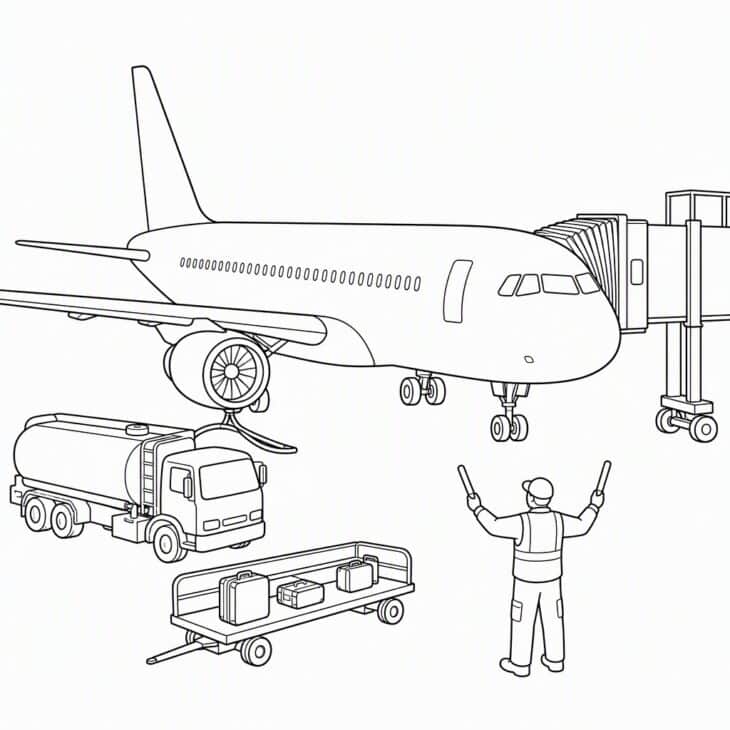
What it is A passenger jet parked at a gate with a jet bridge, a baggage cart, a fuel truck and a ground worker holding signal wands. The tail and fuselage carry no markings, so the airline is whatever the child invents. It suits ages 5 to 8.
Why it works Ground scenes show what happens before a flight, which kids rarely see. The blank tail invites them to design their own airline, name included, and that kind of invention keeps them at the page longer.
How to get it Print at actual size and use colored pencils for the small details on the trucks and the worker. Ask the child to design a tail logo with shapes and colors only, then pick a name for the airline. Add a destination board by writing three cities on the back of the page. Display it next to a window seat view page from later in this list.
07. Jumbo Jet Taking Off
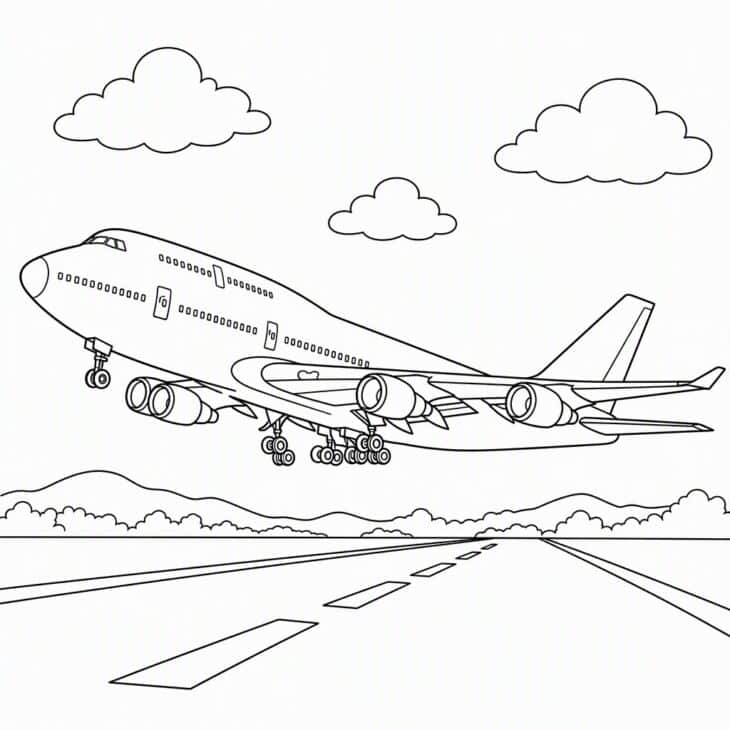
What it is A four-engine jumbo jet at the moment of takeoff, with its nose raised, its landing gear folding up and the runway stripes streaming beneath it. The humped upper deck is the shape made famous by the Boeing 747. Detail is medium, which suits ages 6 to 9.
Why it works The silhouette is instantly recognizable, so kids who know planes feel like experts. The four engines and the long fuselage also give lots of repeating parts to color.
How to get it Print at actual size and start with the biggest area, the fuselage, using a light base color. Use a darker pencil for the engines and the gear so they stand out. Color the runway last, leaving the center stripes white or yellow. If your child enjoys planes this large, talk about how many people they could carry while you color.
08. Barnstormer Biplane
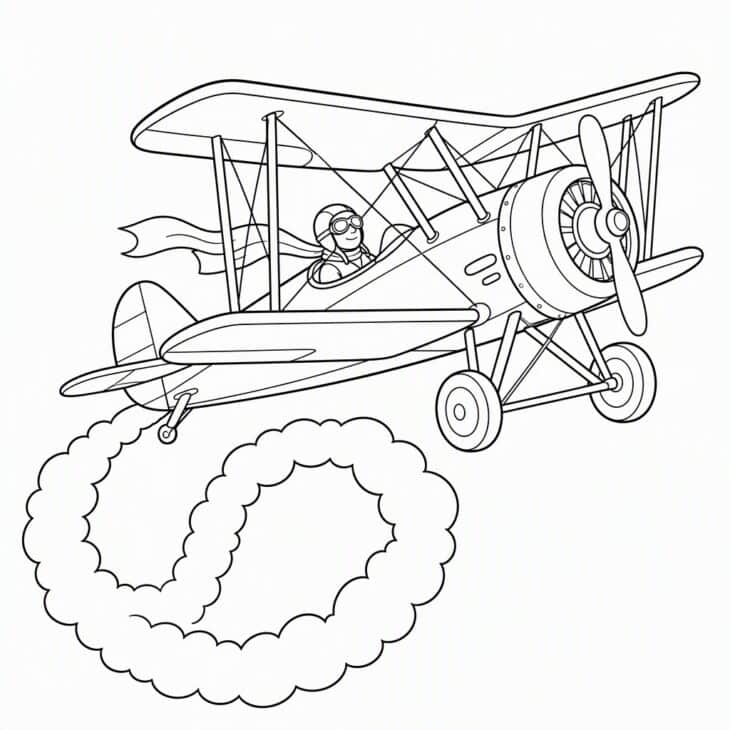
What it is A classic open-cockpit biplane with two stacked wings, bracing wires between them and a pilot whose scarf streams in the wind. A looping trail curls behind the plane. It suits ages 6 to 10.
Why it works The wires and struts add straight-line shapes that are good practice for careful coloring. Kids also tend to love the scarf and the loop-the-loop trail.
How to get it Print on plain paper and use colored pencils for the thin spaces between the wings. Pick one bright color for the wings and a contrasting one for the body. Color the smoke trail in a gradient by pressing lightly at one end and harder at the other. Add a sky with a flat wash of blue behind the plane when the main colors are done.
09. Seaplane on a Lake
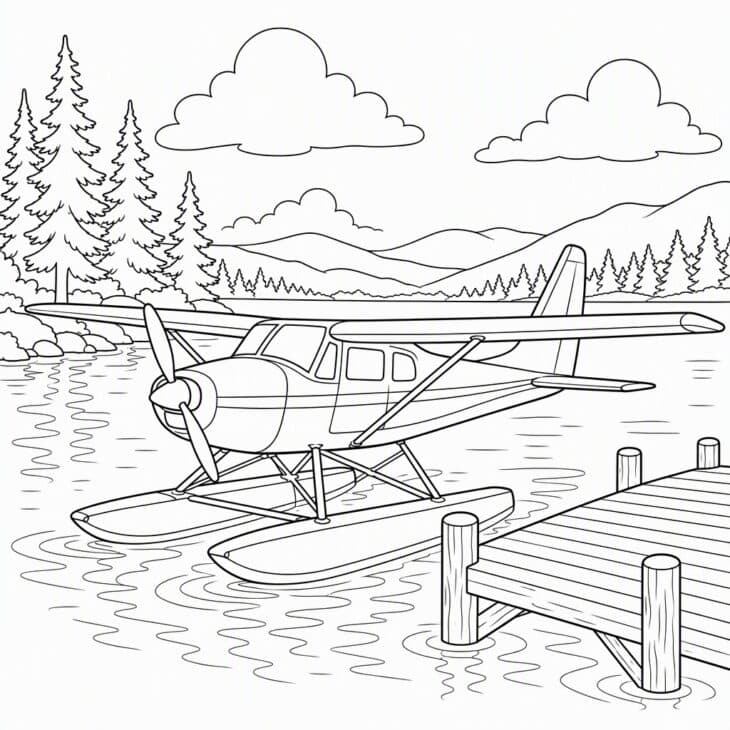
What it is A small seaplane resting on a calm lake beside a wooden dock, with water ripples around its two floats and pine trees along the shore. The scene is medium detail, which suits ages 5 to 9.
Why it works The mix of water, trees and hills gives a child several color choices in one page. It is also a good way to introduce the idea that some planes land on water instead of runways, a difference covered in seaplanes vs floatplanes.
How to get it Print at actual size and color the water first with horizontal strokes, so the ripples stay visible. Use two greens for the trees to give them depth. Leave a few white gaps on the water as sun sparkles. Ask your child whether it is a summer morning or an autumn evening and choose the colors to match.
10. Cargo Plane Loading Ramp
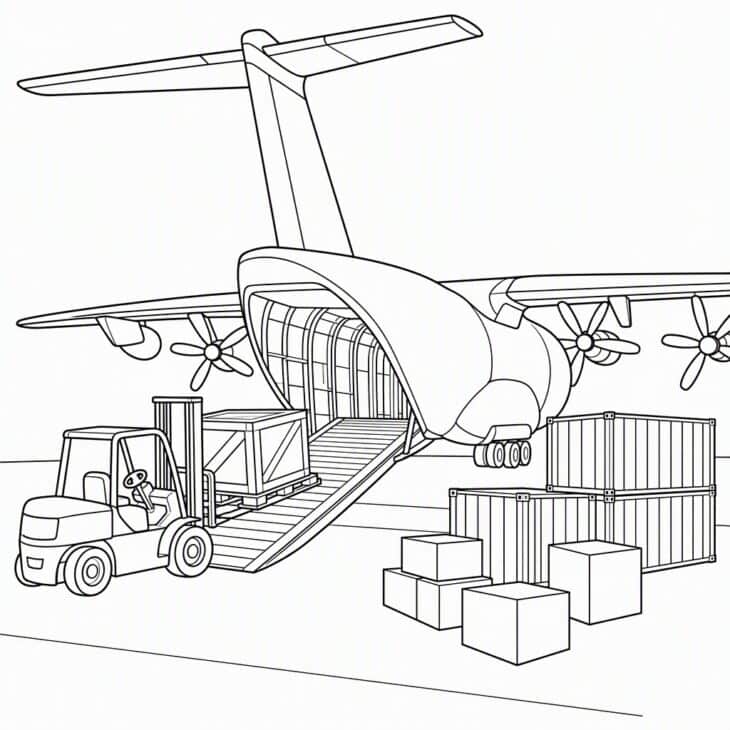
What it is A cargo plane with its rear ramp lowered, a forklift driving a crate aboard and a stack of boxes and shipping containers waiting beside it. It is detailed enough for ages 6 to 10, with many separate shapes.
Why it works Kids who like trucks and machines find this one easy to love, and it shows how freight really moves by air. The many boxes give a lot of small color decisions.
How to get it Print at actual size and use a different color for every crate, which makes the page look busy and fun. Color the forklift in a bright shade so it stands out against the plane. Add a made-up cargo list on the back, such as what is inside each box. Read about the real aircraft that do this work in types of cargo planes.
11. Propeller Plane Over Farm Fields
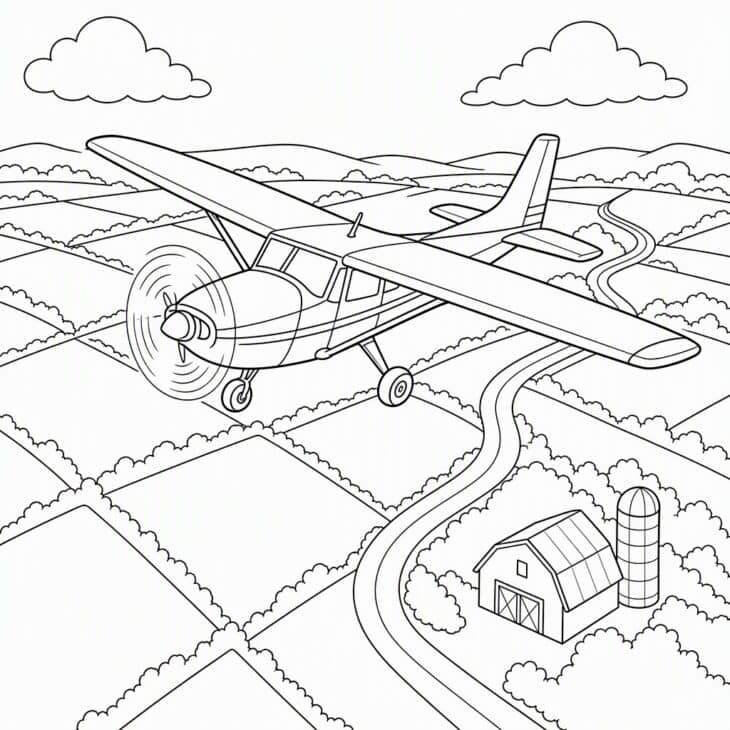
What it is A small propeller plane flying over a patchwork of rectangular fields, with hedgerows, a winding road, a barn and a silo below. Curved arcs at the nose show the spinning propeller. It suits ages 6 to 10.
Why it works The field shapes work like a quilt, so any color combination looks right. It also gives kids a look at what the ground looks like from a small plane.
How to get it Print at actual size and use greens, golds and browns for a realistic farm, or go bright for a quilt look. Color the fields in alternating shades so the borders stand out. Leave the propeller arcs light so the blur reads as motion. Learn how the blades work in types of aircraft propellers.
12. Airplane Over a City Skyline
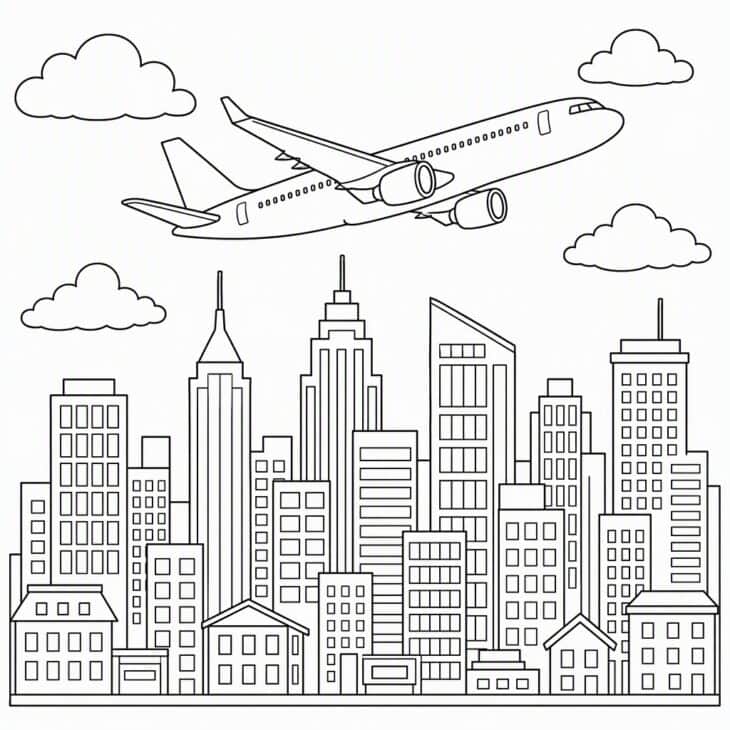
What it is A jet crossing a layered city skyline of skyscrapers and low buildings, each with a grid of windows. The skyline is a generic invention, not a real city. The detail is medium to high, which suits ages 7 to 10.
Why it works The window grids invite a game of which lights are on, which makes the page feel alive. Layered buildings also teach how to use light and dark colors for depth.
How to get it Print at actual size and use colored pencils for the windows, since markers can fill the small squares too fast. Color the back row of buildings in lighter shades and the front row in darker ones. Pick a time of day first: yellow windows on a dark sky for night, or no lights for noon. Add a moon or a sun in the corner if there is space.
13. Airport Scene With a Control Tower
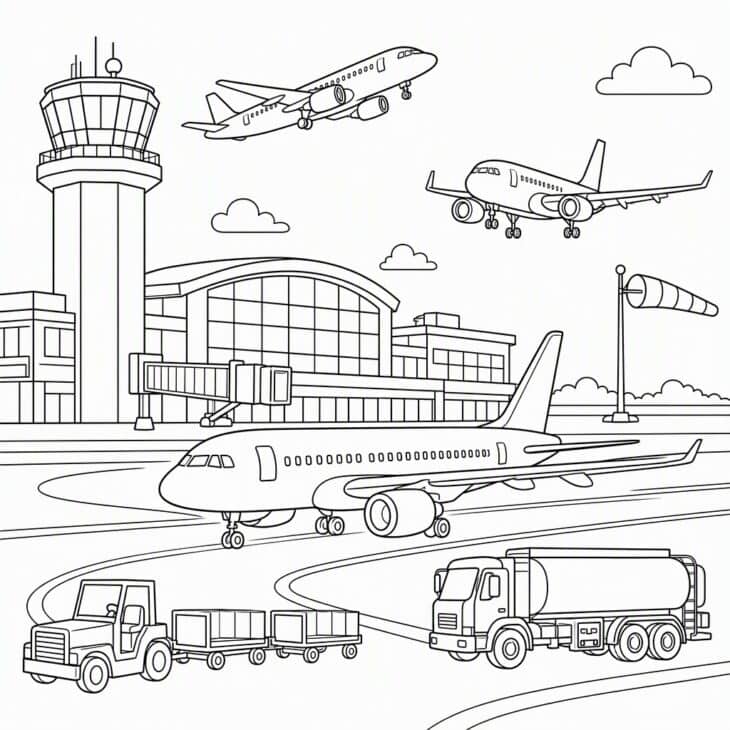
What it is A busy airport with a glass-topped control tower, a terminal, a windsock and service vehicles. Three planes are shown at different stages: taxiing, taking off and landing. It is a detailed page for ages 6 to 10.
Why it works The three stages of flight in one picture give kids a story to tell while they color. The tower is a good starting point for talking about who guides the planes, a topic that connects to the tallest air traffic control towers in the world.
How to get it Print at actual size and use colored pencils, since the scene has many small areas. Let the child decide which plane is which stage and color them in different shades to keep them apart. Color the tower cab in a pale blue for glass. Use a dark gray for the runway and leave the center lines white. Plan on two sittings for younger kids.
14. Window Seat View
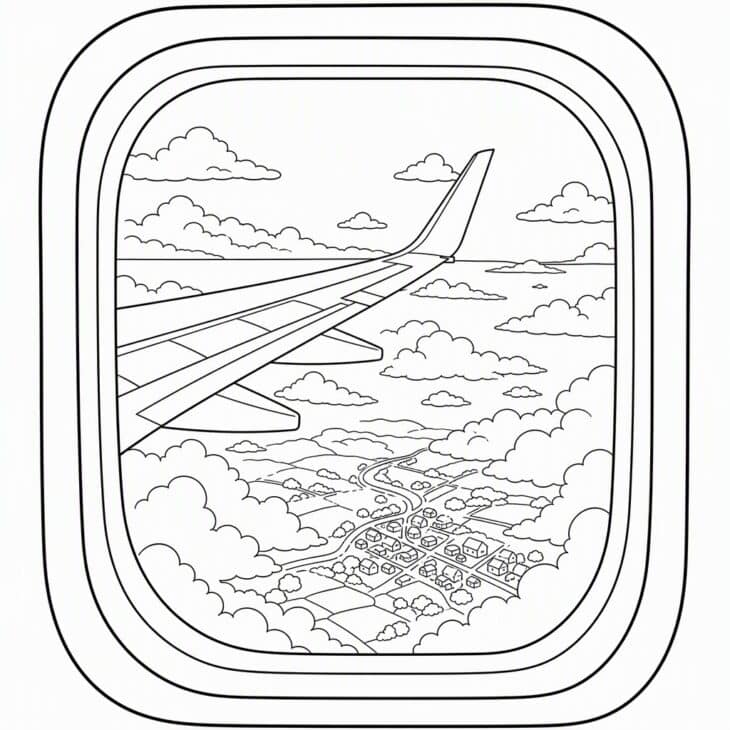
What it is The view from a window seat, with a rounded window frame, a wing stretching out into the picture and cloud tops below. A tiny town sits far down on the horizon. It suits ages 5 and up.
Why it works It is the view most kids see on a real flight, so it feels personal. The rounded frame also connects to why airplane windows are round, a good question to ask while you color.
How to get it Print two copies and take one on your next trip to color on the tray table. Pack a few colored pencils, because they do not melt or roll away like crayons. Try coloring what you can see from your own window, and compare it with the page. Use gray for the wing and white and pale blue for the clouds. Keep a clipboard or a hardcover book under the page for a firm surface.
15. Pilot Waving From the Cockpit
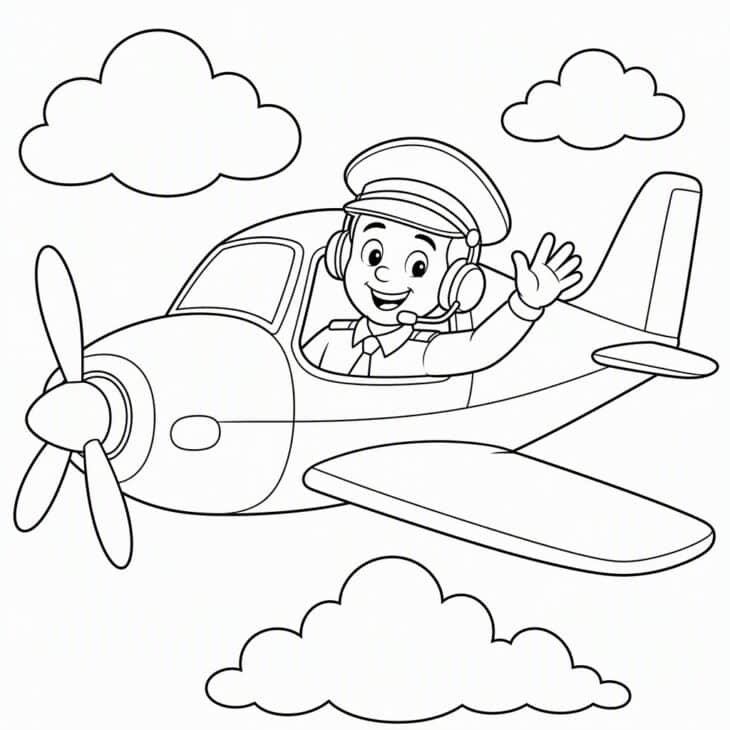
What it is A cartoon pilot in a peaked cap and headset, waving from the cockpit of a small plane with its propeller in front. A few clouds float behind. It suits ages 4 to 7.
Why it works Kids like drawing themselves into the picture, and a waving pilot makes it easy. It also starts a conversation about what pilots do, including why airliners carry two of them, covered in why airplanes have two pilots.
How to get it Print at actual size and ask the child to give the pilot a skin tone, hair color and hat that look like them. Use markers for the cap and headset and crayons for the larger areas. Add a name tag on the pilot’s chest in pencil. Display the finished page near a window to wave back.
Classroom tip
Print one page per student and let each child pick their own. A mix of simple and detailed pages keeps early finishers busy and slower colorers relaxed.
16. Airliner Cutaway Interior
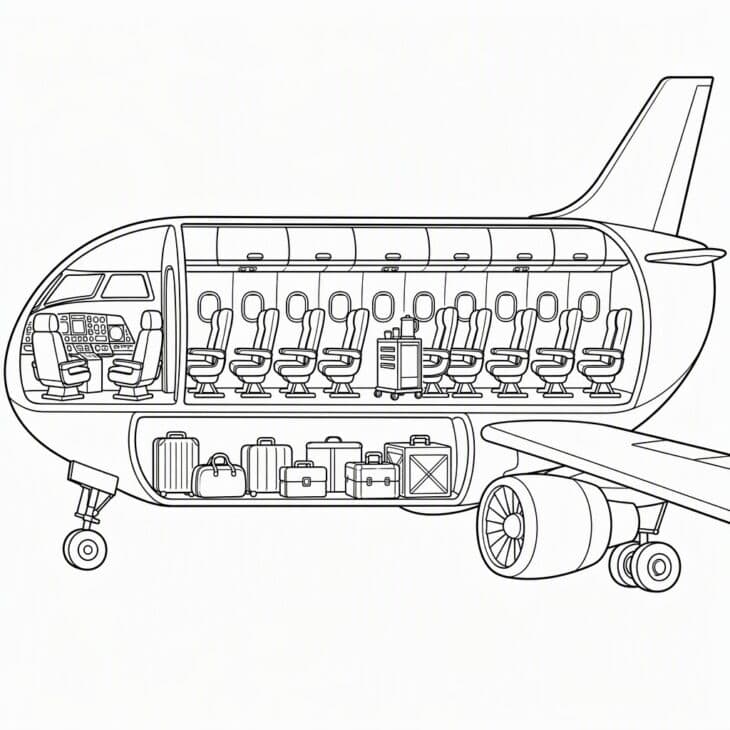
What it is A side cutaway of an airliner, showing the cockpit, rows of seats with overhead bins, a galley cart in the aisle and a cargo hold packed with suitcases below the floor. It is a high-detail page for ages 8 and up.
Why it works Most people have never seen the inside of a plane from this angle. The cutaway teaches how a plane is laid out while the child colors, with passengers up top and baggage below.
How to get it Print at actual size on slightly heavier paper, such as 24 lb or 90 gsm. Colored pencils work best for the small seats and bins. Give each seat row a different color so the rows are easy to count. Color the cargo hold in browns and grays for the suitcases. Count the rows together and guess how many passengers fit.
17. Early Flight Pioneer Biplane
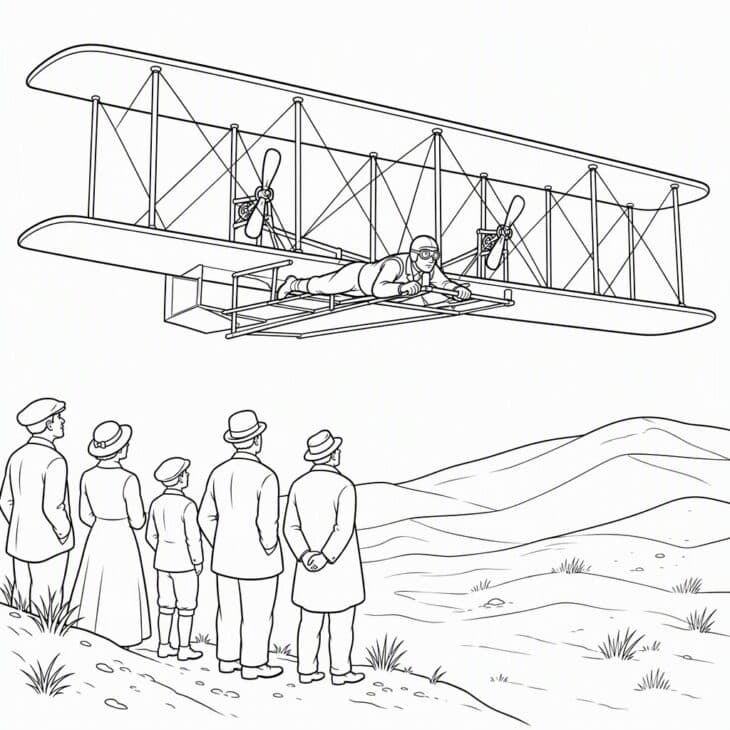
What it is A wood-and-fabric pusher biplane with the propellers behind the wings and the pilot lying flat on the lower wing, as on the 1903 Wright Flyer. Onlookers watch from a sand dune. Detail is medium, which suits ages 7 to 12.
Why it works Kids can see how different the first airplanes looked from the jets they know. The simple structure also makes the wings and struts easy to follow.
How to get it Print at actual size and use sepia and tan colored pencils for a historical look, or go bright for fun. Color the fabric wings in a pale cream and the wooden struts in brown. See a real early aircraft in person at one of the places in aviation museums to visit.
18. Airplane Over Mountains
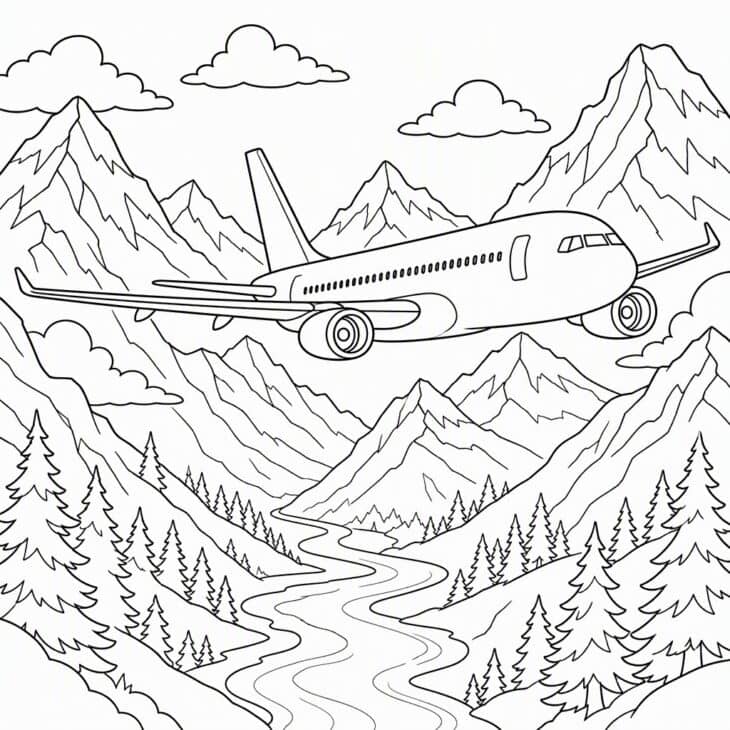
What it is A jet flying between snow-capped peaks, with a river winding through the valley and pine forest on the slopes. Clouds drift between the mountains. It suits ages 7 and up.
Why it works Large snowy areas can stay white or be colored in pastel blues and pinks, so the page works for beginners and more confident colorers alike. The depth of the valley also invites layered shading.
How to get it Print at actual size and color the far peaks in lighter shades than the near ones. Leave the snow white and shade only the sides of the peaks in light blue. Use dark green for the forest and a bright blue for the river. Try a sunrise version with pinks and oranges, then a night version with deep blues and purples.
19. Airplane Over a Tropical Island
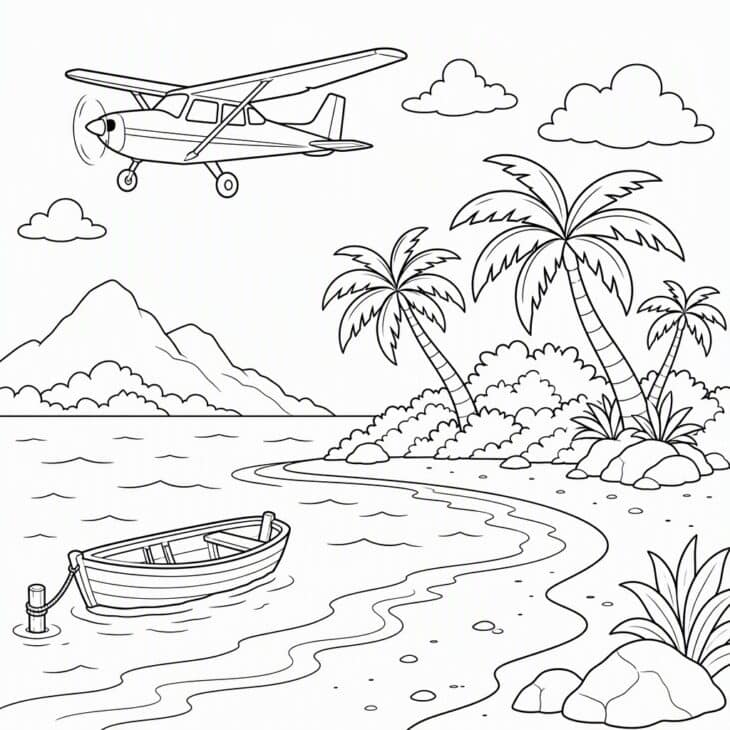
What it is A small plane flying over a tropical island with palm trees, a curved beach, a lagoon and a small wooden boat. The waves are drawn as simple curved lines. It suits ages 5 to 9.
Why it works Bright colors come naturally to a tropical scene, so it is a good page for kids who like to use every crayon in the box. The simple wave lines also give easy practice with curved strokes.
How to get it Print at actual size and color the lagoon in two shades of blue and green to show depth. Use yellow and light brown for the sand. Leave small white gaps on the waves to look like foam. Pair it with a snack from these airplane snack ideas for a tropical coloring afternoon.
20. Landing at Sunset
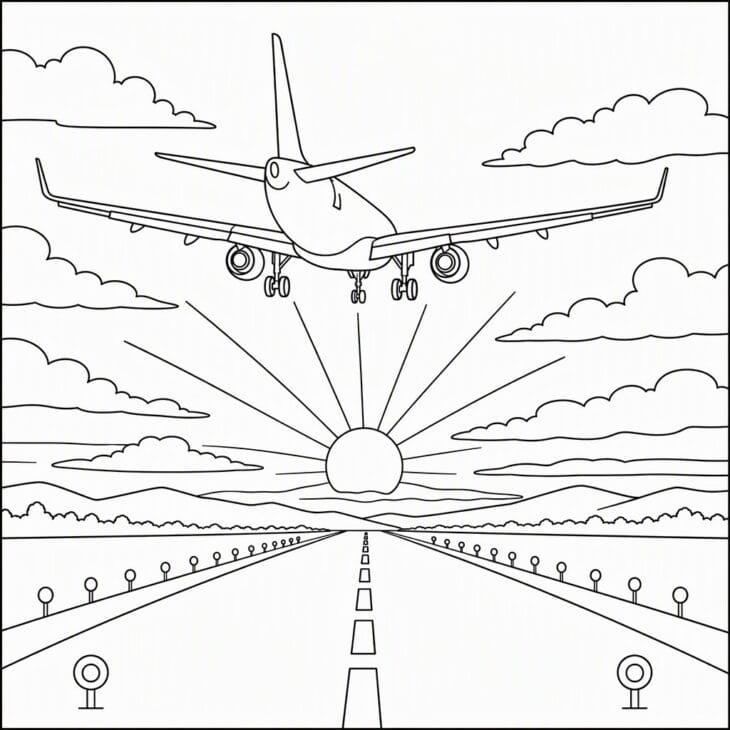
What it is A jet on final approach to a runway, with edge lights and a center line stretching toward the horizon. A low sun sends out long rays across layered bands of sky. It suits ages 7 and up.
Why it works The radiating rays and horizon bands invite blending from yellow through orange to purple, which is a good lesson in color gradients. The runway lines also draw the eye to the plane.
How to get it Print at actual size and use colored pencils so you can blend the colors in the sky bands. Start with yellow near the sun and press harder as you move outward. Color the runway lights in small dots of white and yellow. Learn what the painted lines and signs mean in runway markings and signs.
21. Airplane Mandala
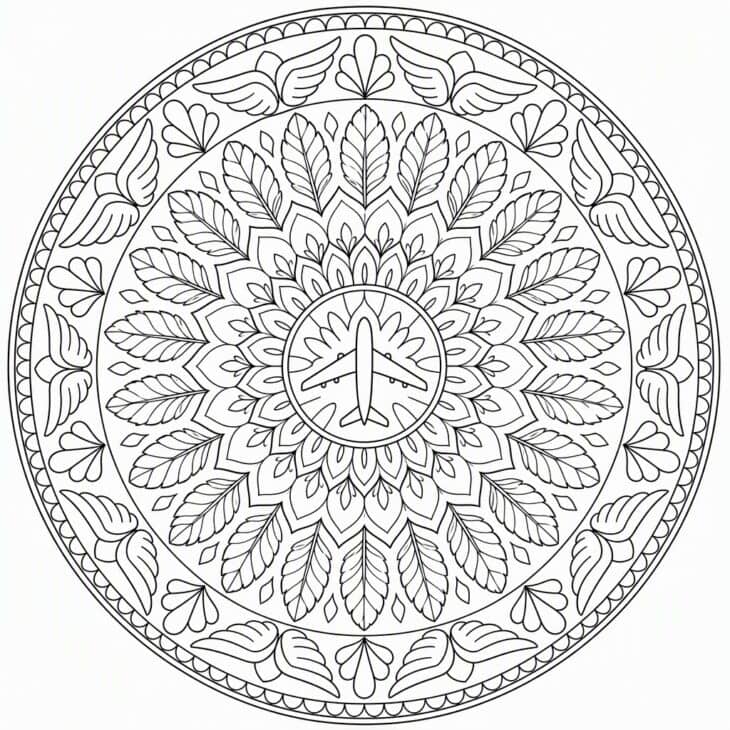
What it is A round mandala made of concentric rings of petals, feather shapes and wing patterns, with a small airplane at the center. The lines are fine and the pattern is symmetrical. It is for ages 10 and adults.
Why it works Repeating patterns make coloring a calming, focused activity. The airplane at the center ties it to a love of flying without making it a childish page.
How to get it Print on cardstock or heavy paper so gel pens and fine markers do not bleed through. Color from the center outward, one ring at a time. Pick a limited palette, such as three blues and a gold, for a polished look. Frame the finished page in a simple frame for a desk or a hallway.
22. Zentangle Patterned Airplane
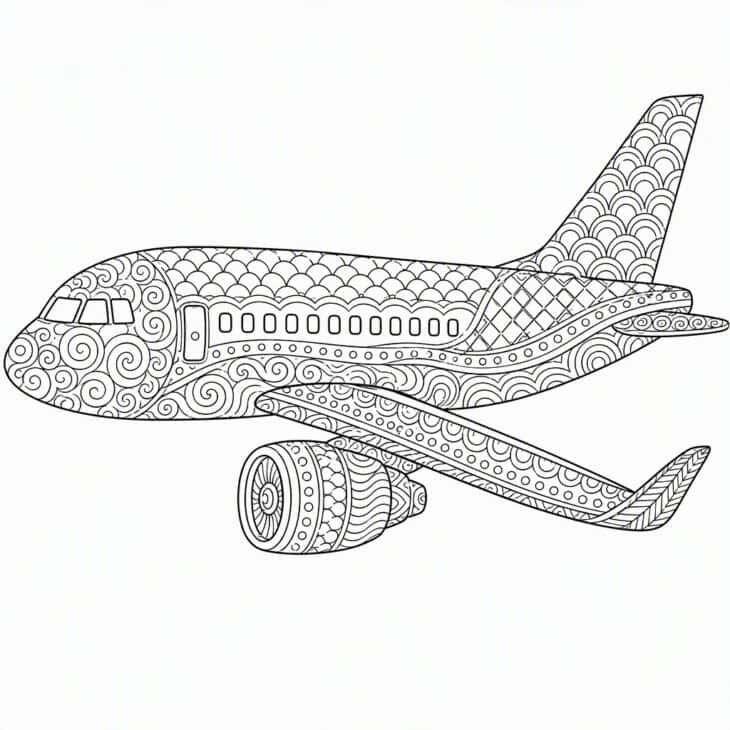
What it is A large side-view airplane with its body, wings, tail and engines each filled with a different pattern: scales, swirls, dots, checks and waves. The lines are fine and the detail is high. It suits ages 12 and adults.
Why it works Pattern pages are about slow, careful work, so the result looks complex even with a few colors. Each section can be a small project of its own.
How to get it Print on heavier paper and use fine-tip markers or gel pens. Choose one color family per section, such as warm tones for the wings and cool tones for the body. Take it in short sessions, one section at a time. Add shading with a pencil at the edge of each pattern for depth.
23. Detailed Airliner Close-Up
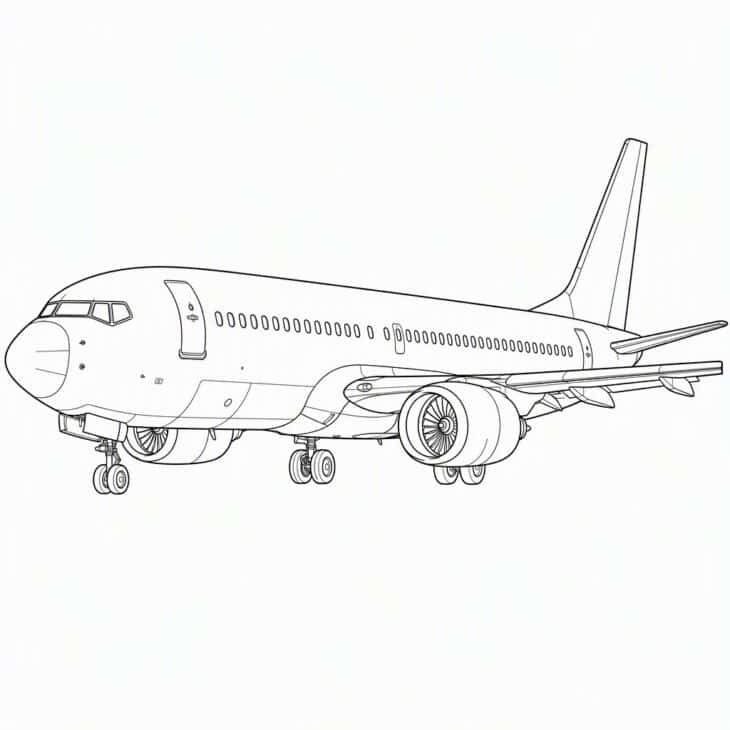
What it is A realistic three-quarter view of a twin-engine airliner, with every passenger window drawn, panel lines along the fuselage, door outlines and detailed engines and landing gear. It is a high-detail page for ages 10 and adults.
Why it works Plane enthusiasts get a lot out of this one, because the details are close to the real thing. Careful coloring can match the look of a real livery, or a made-up one.
How to get it Print at actual size on heavy paper and use colored pencils or fine markers. Color the fuselage in white or light gray for a realistic airliner and add a stripe or tail color for style. Use dark gray for the engine intakes and the tires. Keep a photo of a real airliner nearby to match the colors, or invent your own.
24. Stained Glass Airplane
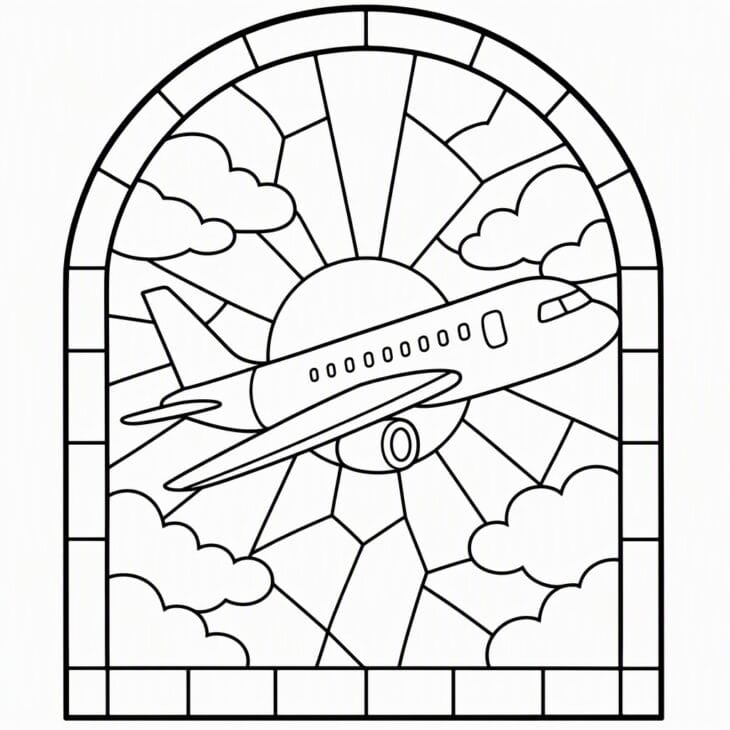
What it is A stained-glass style design with an airplane in the center and a sunburst of segmented panes around it. The thick dividing lines separate each small shape. It suits ages 8 and up.
Why it works The small panes make it easy to try bright, saturated colors without the page getting messy. The thick dividing lines also give a clean finished look.
How to get it Print at actual size and use bright markers or colored pencils, pressing firmly for strong color. Color neighboring panes in contrasting shades so the lines stand out. Cut out the finished page and tape it in a window so the light shines through the paper. Use gold or yellow for the center panes for a warm glow.
25. Paper Planes in Flight
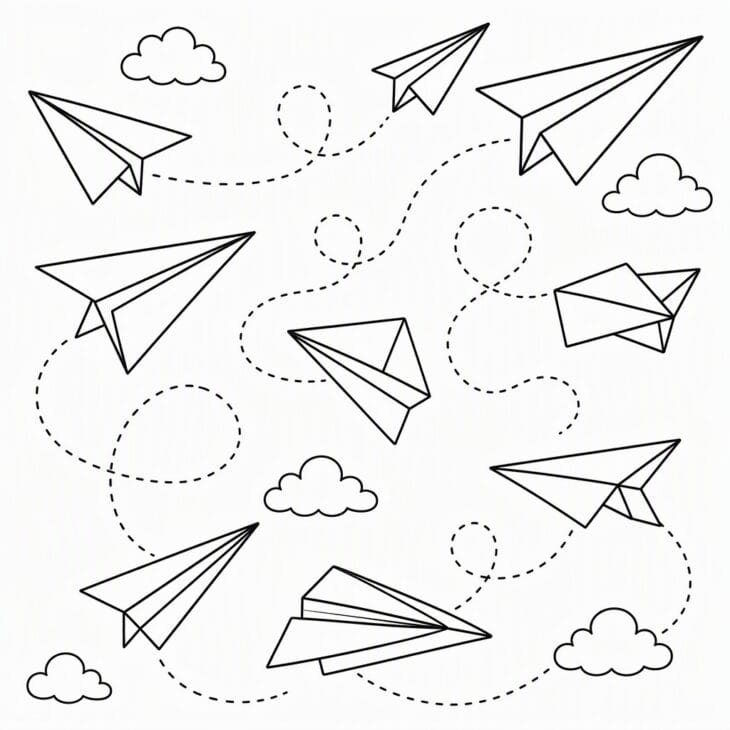
What it is A flock of paper planes of different folds swooping across the page, each trailing a dotted flight path. A few clouds fill the gaps. It suits ages 4 and up.
Why it works Paper planes are the first aircraft most kids ever build. This page pairs the fun of coloring with the fun of folding, and gives a reason to try both.
How to get it Print two copies, one to color and one to cut out and fold a real plane from. Use the designs in paper airplane designs to fold a plane that actually flies. Color each paper plane a different color and trace its flight path with a marker. Compare the page with what your real planes do when thrown.
Get the Newsletter
The latest aviation news and stories sent to your inbox.
About the Author

Hanna writes AeroCorner's aviation-lifestyle and decor guides, turning a love of flight into ideas for your home, celebrations, and gift lists.