

Table of Contents
An aviation museum is one of the few places where you can stand under the actual aircraft that changed history, close enough to count the rivets. Not a replica and not a photo, but the real airframe that flew the mission, set the record, or carried the president.
The range is enormous. Some of the best are free national institutions holding priceless collections, while others are volunteer-run warbird sheds where half the fleet still flies on weekends. Nearly every region has at least one worth a detour, and the gift shops alone can restock a shelf of vintage aviation decor.
This list runs loosely from the largest and most significant down through superb regional and international collections, with a mix of United States and overseas picks. Use it to build a trip, add a stop to one you already have planned, or simply find the one closest to you. Visiting them is one of the most rewarding ways to enjoy aviation as a hobby.
01. Smithsonian National Air and Space Museum, Washington, DC
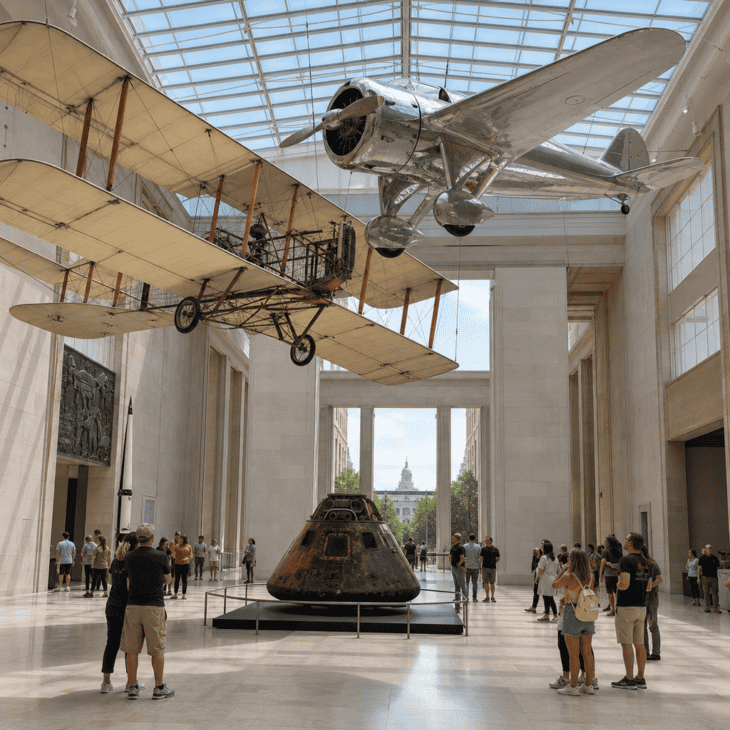
What it is The most visited aviation museum on earth sits on the National Mall and has just finished a floor-to-ceiling renovation that reopened every gallery in 2026. The collection includes the 1903 Wright Flyer, the Spirit of St. Louis, the Bell X-1, and the Apollo 11 command module Columbia. Admission is free but requires a timed-entry pass booked online.
Why it works No other building holds this density of genuinely world-changing machines, each one the first or the only of its kind. The rebuilt galleries pair the hardware with far better context than the old halls managed.
How to get it Reserve a free timed pass a few weeks ahead, since same-day slots go quickly. Take Metro to L’Enfant Plaza or Smithsonian and arrive at opening. Give it a half day at minimum, and treat the Udvar-Hazy Center near Dulles as a separate outing. It is the anchor of several aviation museums in and around Washington DC, so a long weekend is easy to fill.
02. Steven F. Udvar-Hazy Center, Chantilly, Virginia
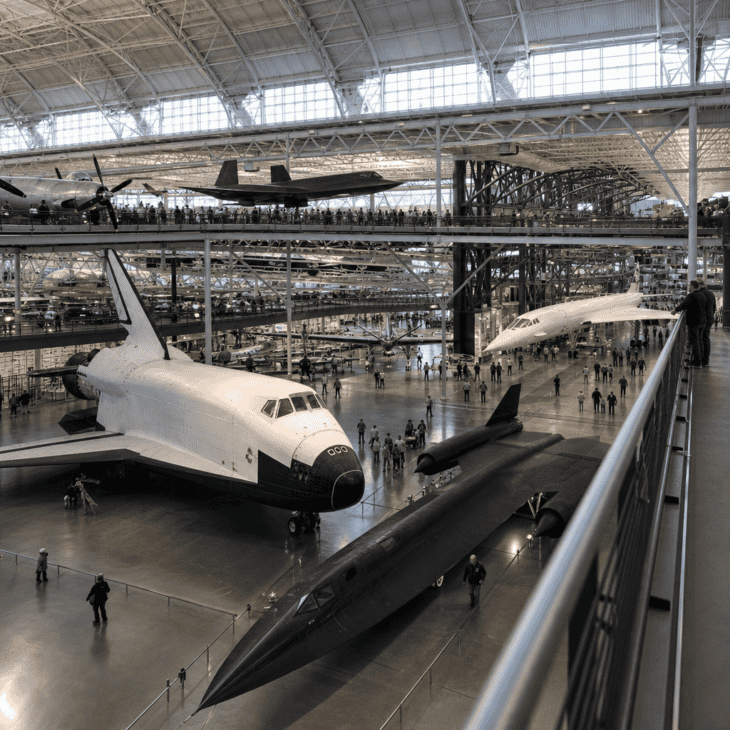
What it is The Smithsonian’s second site is a pair of vast hangars beside Washington Dulles airport that hold the aircraft too big for downtown. Space Shuttle Discovery, a Lockheed SR-71 Blackbird, the Concorde, the Boeing Dash 80, and the B-29 Enola Gay are all here. Admission is free and parking is around $15.
Why it works This is where scale lives. You can walk the full length of a Blackbird, stand beneath a real orbiter, and look down on a shuttle’s tiles from a raised gallery.
How to get it It is about 40 minutes from the city and easiest by car. There is no direct Metro, but a bus connects from the Wiehle-Reston East station. Climb the observation tower for a view over Dulles, then plan a full half day inside. It is the headline stop among aviation museums in Virginia.
03. National Museum of the United States Air Force, Dayton, Ohio
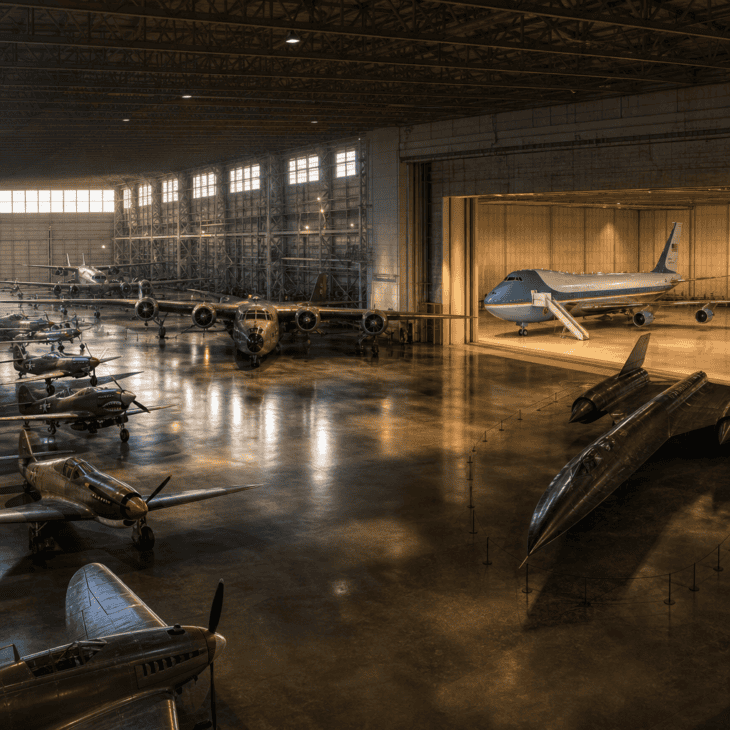
What it is The world’s largest military aviation museum, free to enter, spread across four enormous hangars at Wright-Patterson Air Force Base. More than 350 aircraft include the only surviving XB-70 Valkyrie, a B-2 Spirit, the restored Memphis Belle, and the presidential fleet with the Kennedy-era Air Force One, SAM 26000.
Why it works The presidential and research-aircraft galleries alone justify the trip, and few places let you board a retired Air Force One. Exhibits on the Tuskegee Airmen and on spaceflight round out a collection that covers a full century.
How to get it The museum is near the junction of I-70 and I-75 outside Dayton. It sits outside the secure part of the base, so no military ID is needed and entry is free. Budget two days to see everything, or focus on hangars three and four if you have one. A free bus links the far buildings, and it is the crown of aviation museums in Ohio.
04. National Naval Aviation Museum, Pensacola, Florida
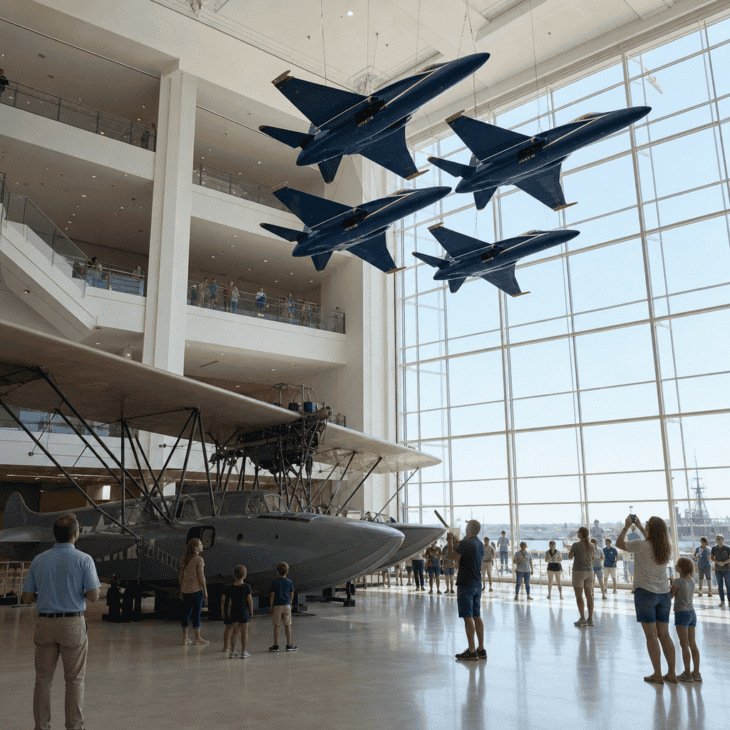
What it is The US Navy’s flagship aviation museum, on Naval Air Station Pensacola, and free to enter. It holds the NC-4 that made the first transatlantic crossing in 1919, four A-4 Skyhawks hung in a Blue Angels diamond, and the wood-paneled Cubi Bar Cafe rebuilt from a Philippines officers’ club.
Why it works The collection is deep and beautifully lit, and the Blue Angels practice overhead most weeks in season. Watching a demonstration from the flight line and then meeting the pilots is a rare combination.
How to get it Pensacola is an active base and public access has been limited since 2019, so check the museum website within a week of your visit for current entry rules. Time your trip to a Blue Angels practice, usually Tuesday or Wednesday mornings from March to November, and stay for the autograph session afterward. Allow most of a day. It is the standout among aviation museums in Florida.
Museums on active bases
A few of the best US collections sit on working military installations. Pensacola, and parts of others, can require a valid photo ID, advance registration, or a museum-run shuttle to get in. Always check the museum’s own website within a week of your visit rather than trusting older guides.
05. The Museum of Flight, Seattle, Washington
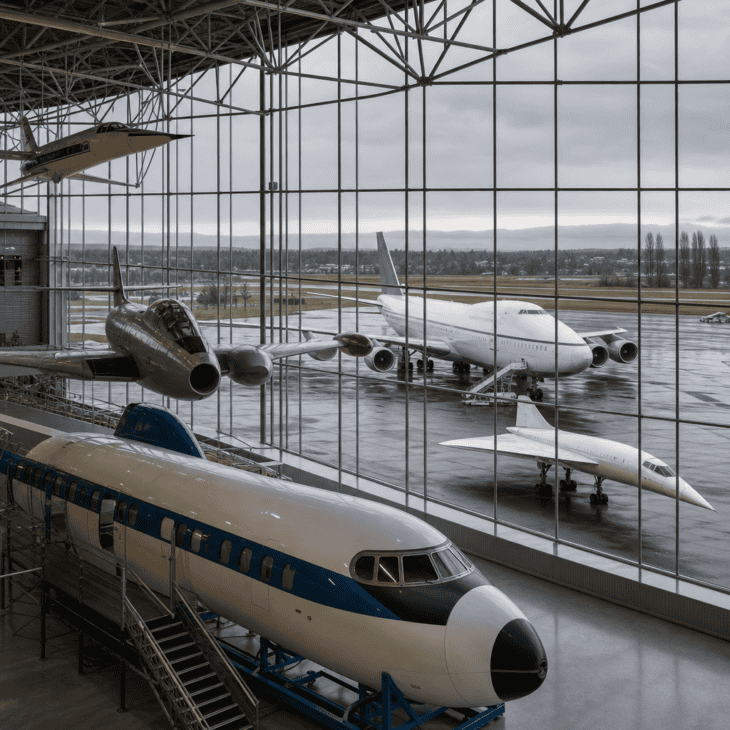
What it is An independent museum at Boeing Field, built around the original 1909 Boeing “Red Barn” factory. Highlights include the first jet Air Force One, a Concorde, the prototype Boeing 747, an early 787 Dreamliner, a Space Shuttle trainer, and a strong World War I and II collection. Admission is around $26.
Why it works You can walk through a presidential jet and the actual first 747, then step outside to an apron of retired airliners. The aviation-history depth is exceptional for a non-government museum.
How to get it It is about 10 minutes south of downtown Seattle by car or bus. The outdoor Aviation Pavilion aircraft are open-sided, so dress for weather. The first Thursday evening of each month is free and busy. It anchors a strong set of aviation museums in Washington State.
06. Pima Air & Space Museum, Tucson, Arizona
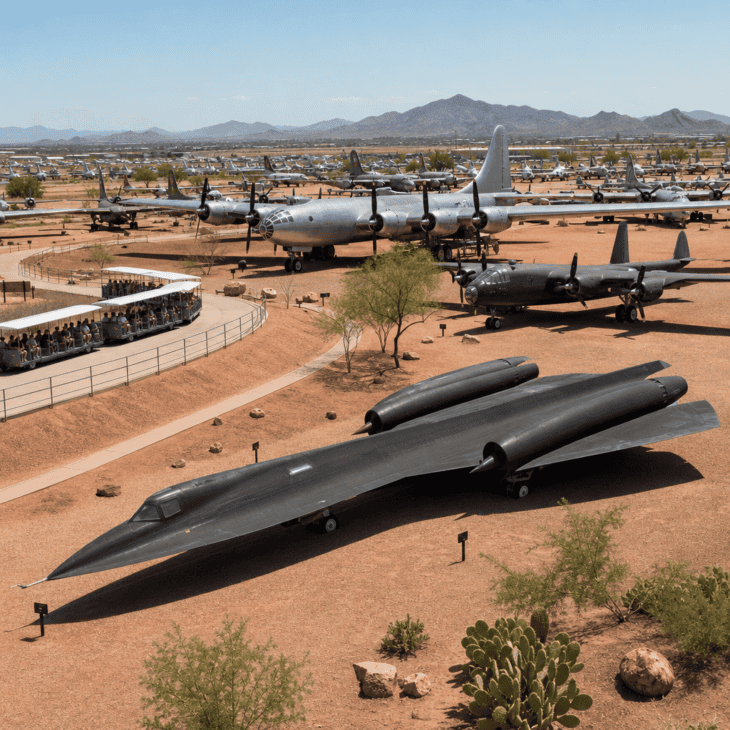
What it is One of the largest privately funded air and space museums in the world, with around 400 aircraft across 80 acres of Arizona desert and six indoor hangars. The collection runs from a B-36 Peacemaker and an SR-71 to a B-29 and rows of Cold War fighters. Admission is around $25.
Why it works The dry climate means most of the fleet sits outdoors where you can walk right up to it. It is also the public gateway to the vast military boneyard next door, a stop that appears on many an aviation bucket list.
How to get it The museum is in south Tucson, close to Interstate 10. The AMARG boneyard tram tour is booked separately through Pima, requires a photo ID reserved days in advance, and does not run on weekends. Allow a full day and start outside before the heat builds. A guided tram of the museum grounds is included with admission, and it is the centerpiece of aviation museums in Arizona.
07. Intrepid Museum, New York, New York
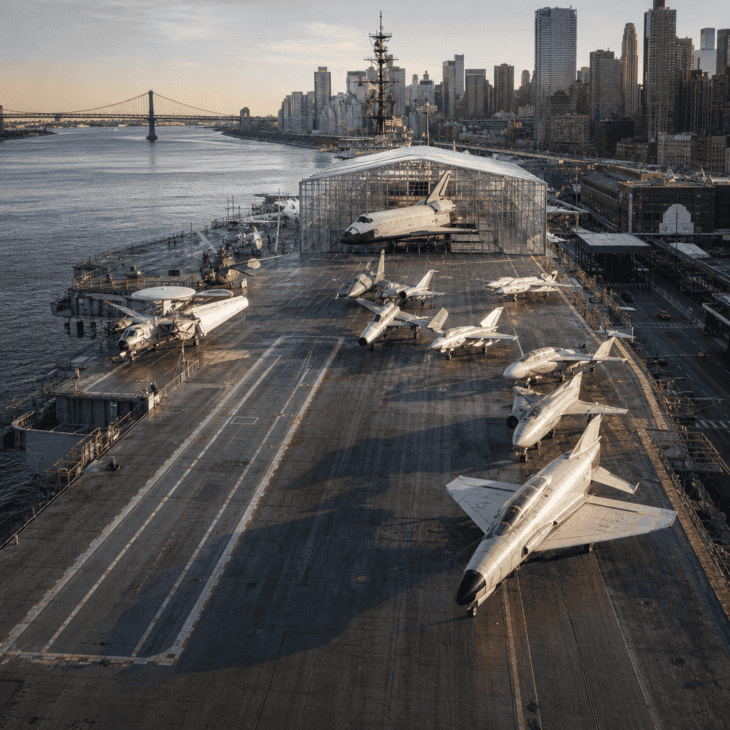
What it is A World War II aircraft carrier moored on the Hudson in Manhattan, with a flight deck of combat jets, the Space Shuttle Enterprise in its own pavilion, a Concorde on the pier, and a Cold War submarine alongside. Admission is around $36.
Why it works It is the only place you can tour a carrier, an orbiter, and a supersonic airliner in one afternoon, in the middle of New York City. The ship itself is the largest artifact in the collection.
How to get it The museum is at Pier 86 on the west side of Midtown, a walk or bus ride from the Times Square subway lines. Buy a timed ticket in advance, as walk-up lines are long in summer. The Enterprise pavilion and the submarine sometimes have separate queues, so start with those. For quieter collections, look upstate among aviation museums in New York State.
08. EAA Aviation Museum, Oshkosh, Wisconsin
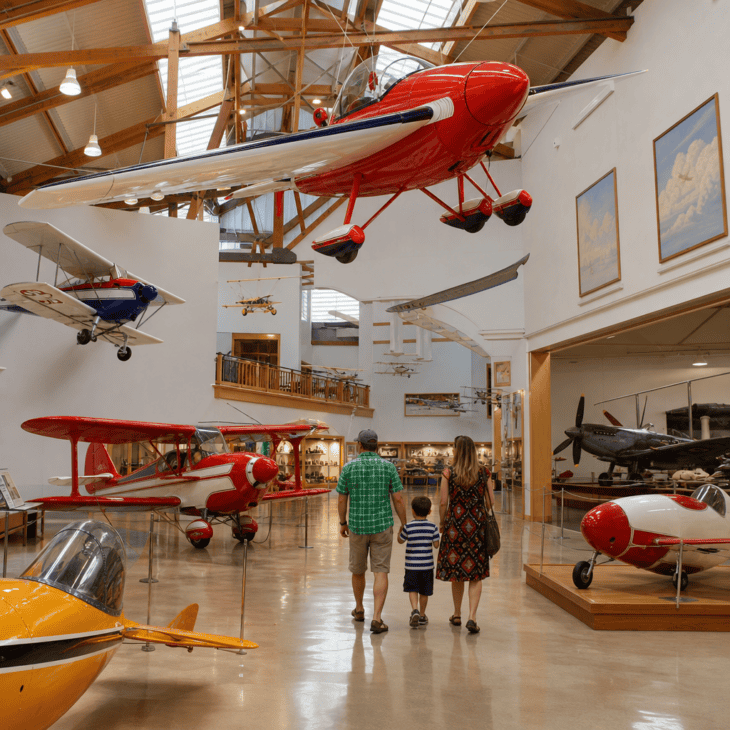
What it is The home museum of the Experimental Aircraft Association, next to Wittman Regional Airport. Around 200 aircraft cover a focus found nowhere else: homebuilts, air racers, aerobatic mounts, and a strong World War II Eagle Hangar. Admission is around $16 and free for EAA members.
Why it works It tells the story of ordinary people designing and flying their own aircraft, which no national museum really covers. In late July it sits at the center of AirVenture, one of the entries on any list of the best air shows in the US.
How to get it Oshkosh is about 90 minutes north of Milwaukee by car. The museum is open year round, and a quiet winter weekday is a lovely way to see it. Visit during AirVenture week only if you are ready for the crowds and the heat. In summer, the outdoor Pioneer Airport with its vintage hangars and flyable antiques is included.
09. Evergreen Aviation & Space Museum, McMinnville, Oregon
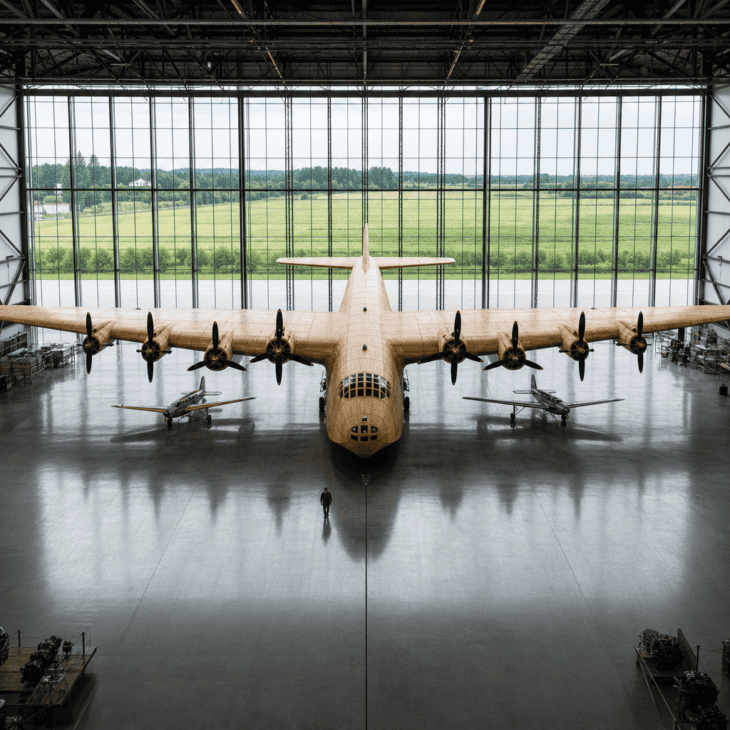
What it is A museum built around the Hughes H-4 Hercules, the all-wood Spruce Goose flying boat with a 320-foot wingspan, set in Oregon wine country. A separate space building holds an SR-71 and a Titan II missile, and there is an IMAX theater plus a water park with slides that drop out of a real 747 mounted on the roof.
Why it works The Spruce Goose is one of the largest aircraft ever built and flew only once, and this is the only place on earth to stand beneath it. The scale genuinely does not translate through photographs.
How to get it McMinnville is about 40 minutes southwest of Portland. The two buildings share a combined ticket at around $27, and a half day covers both. The water park is a separate admission and a separate building. It is a highlight of aviation museums in Oregon.
10. Planes of Fame Air Museum, Chino, California
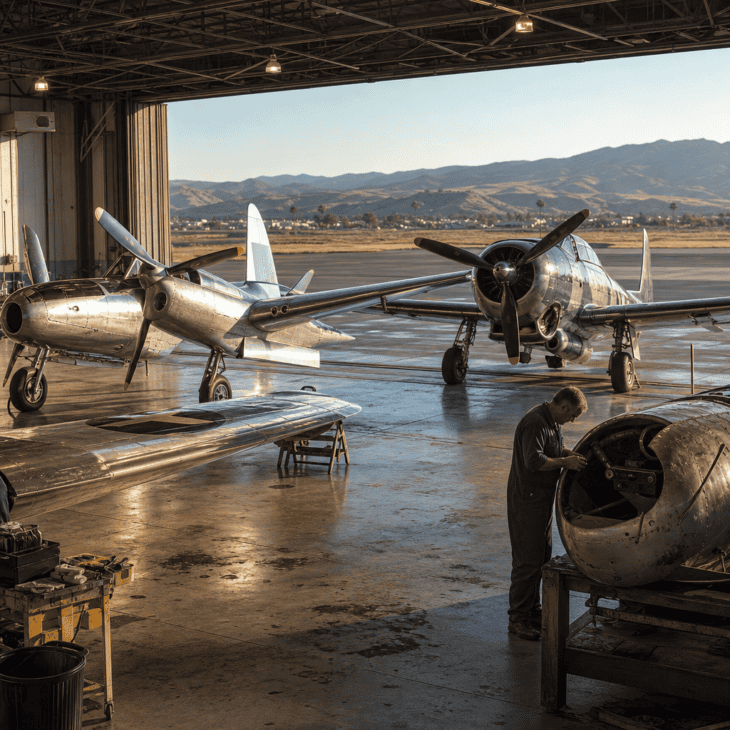
What it is A warbird collection at Chino Airport in Southern California where a large share of the fleet is still airworthy. It includes a flyable Japanese A6M Zero with its original engine, a P-38 Lightning, and several early jets. Admission is around $18.
Why it works Many of these aircraft fly on scheduled event days, and you can hear a Merlin or a big radial run up from a few feet away. The restoration hangars are part of the tour, not hidden away.
How to get it Chino is east of Los Angeles near Ontario, about an hour from downtown. Check the calendar for flying days and living-history weekends before you commit to a date. Yanks Air Museum sits on the same field, so plan to see both. Together they anchor the southern half of aviation museums in California.
11. Strategic Air Command & Aerospace Museum, Ashland, Nebraska
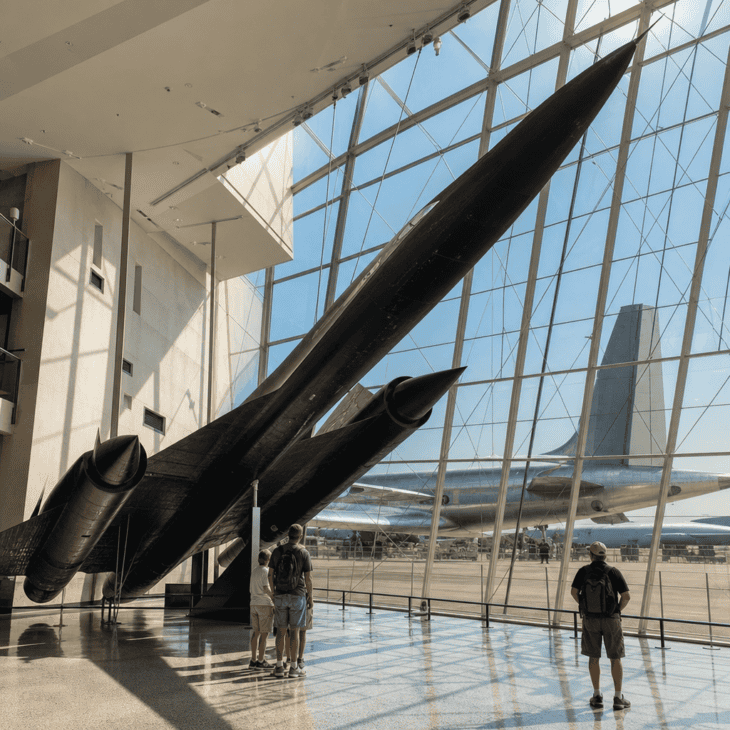
What it is A Cold War bomber museum right off Interstate 80 between Omaha and Lincoln. The centerpiece is an SR-71 in a glass atrium, and a B-36, a B-52, and a B-1 fill the two main hangars. Admission is around $18.
Why it works It preserves both the machines and the mindset of the nuclear standoff, told by the command that ran it. The restoration bay is visible from the floor, so you often see work in progress.
How to get it It is an easy highway stop about halfway across the state, roughly 30 minutes from either city. Two to three hours is enough for the full collection. It makes an ideal break on a cross-country road trip, and the kids’ interactive area buys parents some extra time.
12. Cradle of Aviation Museum, Garden City, New York
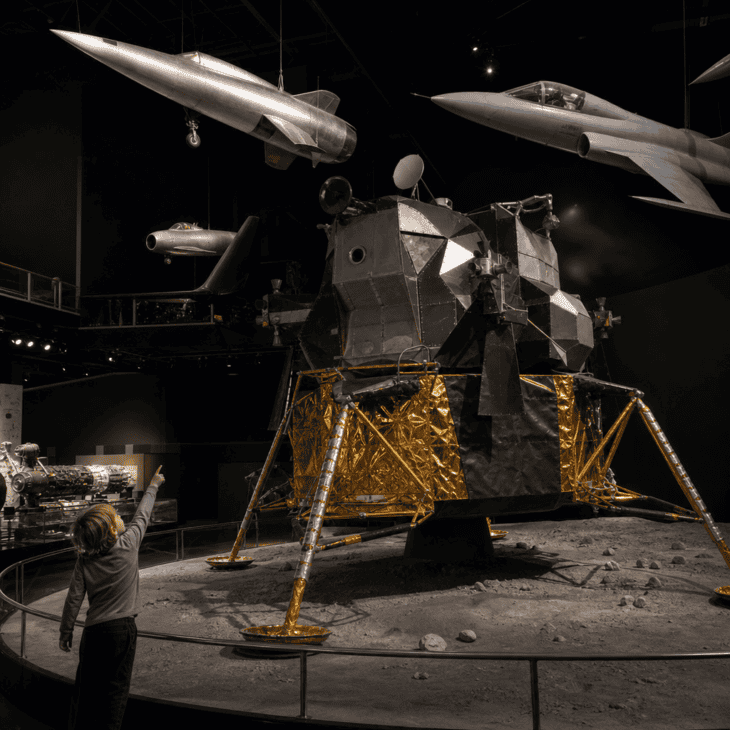
What it is Long Island’s aerospace museum, on the site of the airfields where Grumman and Republic built carrier fighters and lunar modules. It holds a genuine Apollo Lunar Module, LM-13, built for a cancelled mission, along with a deep collection of locally made aircraft. Admission is around $16.
Why it works Long Island built the machine that landed humans on the Moon, and this is where that story is told with the actual hardware. The early aviation halls cover the Gold Coast years when the region was the center of American flying.
How to get it The museum is in Nassau County near the old Nassau Coliseum, about 40 minutes from Manhattan by car or by Long Island Rail Road to Garden City. The planetarium is worth the add-on ticket. A children’s museum shares the building, which helps with younger visitors. Two to three hours covers the aviation and space galleries.
13. Wings Over the Rockies Air & Space Museum, Denver, Colorado
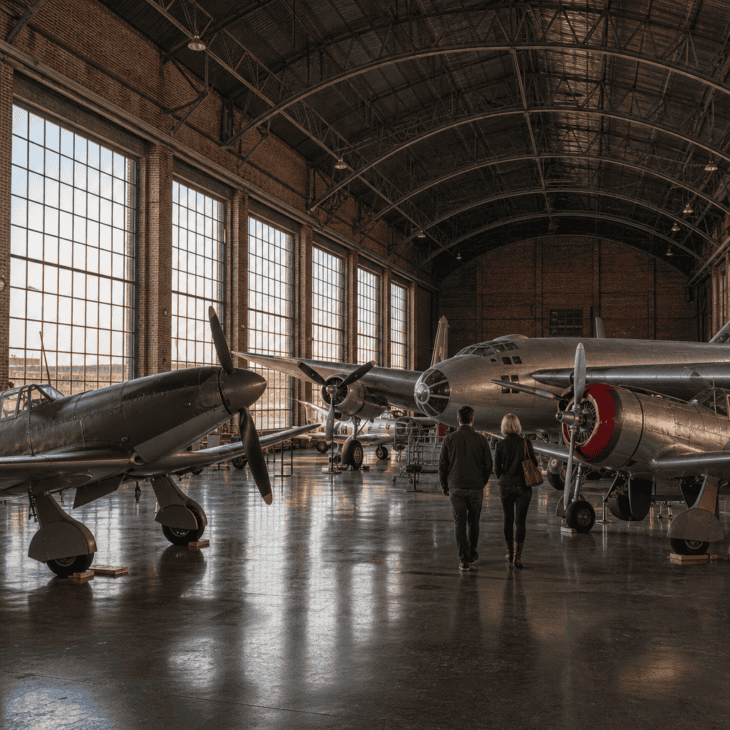
What it is A museum housed in an original hangar at the former Lowry Air Force Base in east Denver. The collection includes a B-52, a B-1A prototype, a range of trainers and missiles, and space hardware, with a second flight-experience campus near Centennial Airport. Admission is around $18.
Why it works It is a manageable, well-curated collection inside a genuine 1930s hangar, easy to fit into a Denver trip without a full day. The building itself is part of the exhibit.
How to get it The main museum is about 20 minutes from downtown Denver by car. Two hours covers it comfortably. The separate Exploration of Flight site has a working runway and offers scenic flights and simulator time. Combine the two if aviation is the focus of your visit.
14. Air Zoo, Portage, Michigan
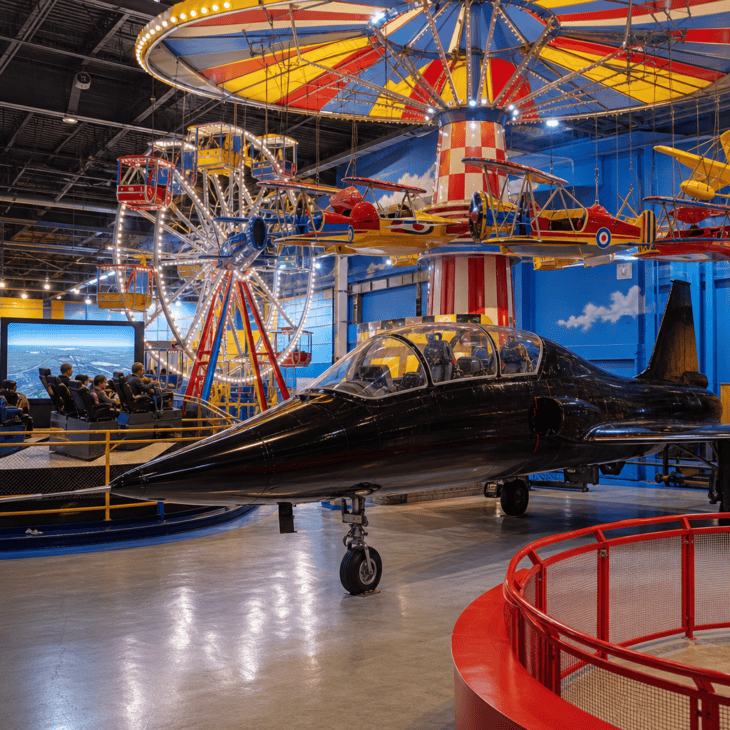
What it is An indoor museum near Kalamazoo that mixes aircraft with full-motion simulators and amusement-style rides. It holds the SR-71B, the only surviving two-seat Blackbird trainer, along with a World War II collection and space exhibits. Admission is around $17, with rides priced separately.
Why it works It is built to keep children engaged, but the Blackbird trainer and the on-site restoration program are serious aviation history. Few museums balance both audiences this well.
How to get it The museum is just off Interstate 94, roughly halfway between Chicago and Detroit. It makes a strong half-day stop on that drive. Buy a combination ticket if you want the rides and simulators. Plan around three hours if you are doing everything.
15. Museum of Aviation, Warner Robins, Georgia
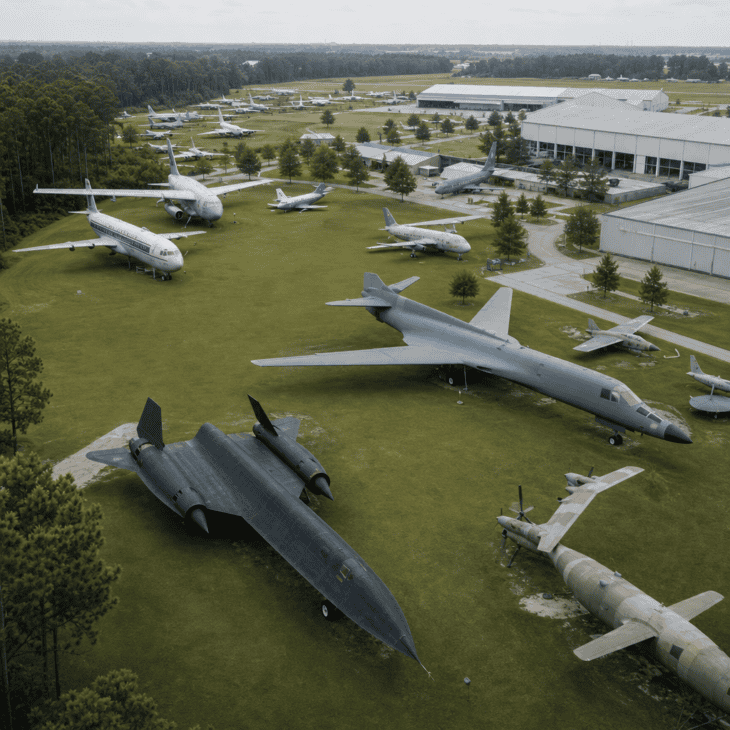
What it is The US Air Force’s field museum beside Robins Air Force Base in central Georgia, and the second largest in the Air Force system. It is free, sits outside the base fence so no military ID is needed, and fills four buildings with an SR-71, a B-1, and deep Vietnam and airlift collections.
Why it works It is a free, genuinely large collection that most travelers drive straight past on Interstate 75. The Vietnam-era holdings and the local base history are especially strong.
How to get it The museum is about 20 minutes south of Macon and well signed from I-75. Admission and parking are free. Allow a half day for all four buildings. It is the largest of the aviation museums in Georgia.
Free admission is common
Some of the largest collections cost nothing to enter: the Smithsonian’s two sites, the Air Force museums at Dayton and Warner Robins, and the Royal Air Force Museum in London. Budget your travel and your time, not your ticket.
16. Palm Springs Air Museum, Palm Springs, California
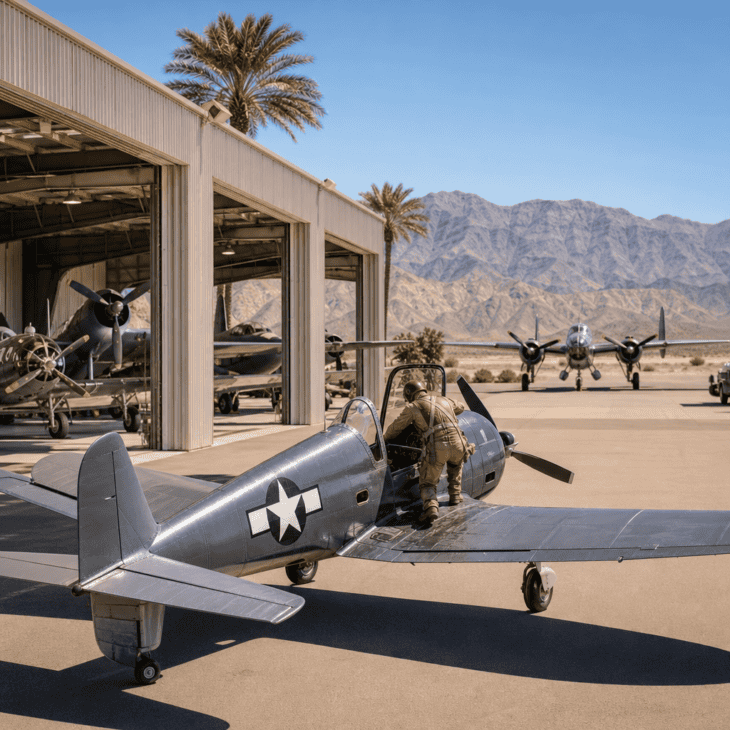
What it is One of the world’s largest collections of flyable World War II, Korea, and Vietnam aircraft, in partly climate-controlled hangars beside Palm Springs airport. Admission is around $22, and the museum sells paid rides in several of its warbirds.
Why it works The aircraft are display pieces and airworthy flyers at the same time, maintained and flown regularly rather than left static. Volunteer veterans often staff the exhibits.
How to get it Palm Springs is about two hours east of Los Angeles. Winter and spring are the comfortable seasons in the desert. Check the flight schedule and warbird ride availability well in advance, since seats are limited and weather dependent. Two to three hours covers the hangars.
17. New England Air Museum, Windsor Locks, Connecticut
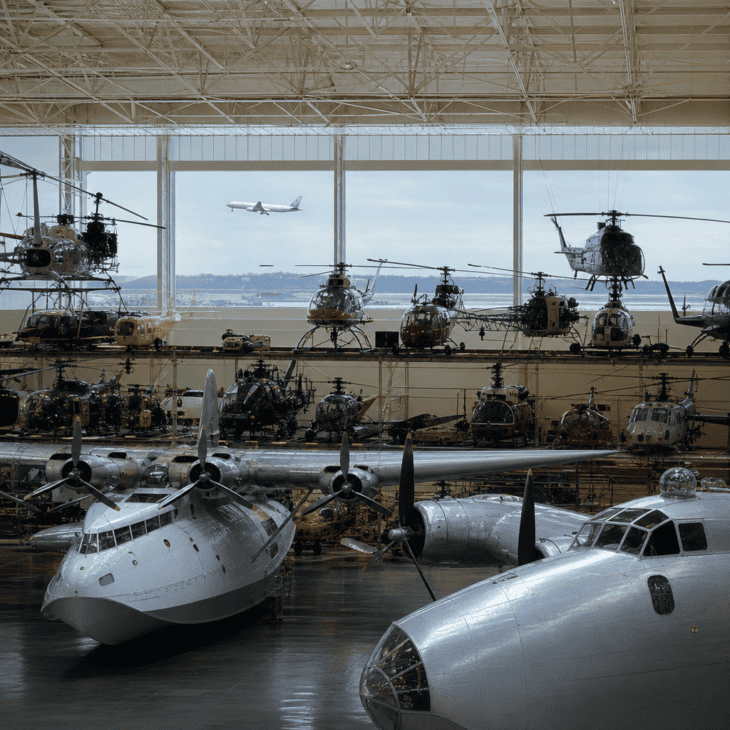
What it is The largest aviation museum in the Northeast, next to Bradley International Airport. It holds a B-29, a rare Sikorsky VS-44 flying boat, and the deepest early-helicopter collection anywhere, fitting for Igor Sikorsky’s home state. Admission is around $17.
Why it works The Sikorsky and rotary-wing holdings are genuinely without equal, and open-cockpit days let visitors climb into selected aircraft. The restoration hangar is open on many weekends.
How to get it The museum is about 15 minutes north of Hartford and directly beside Bradley Airport, which makes it an easy stop on a long layover if you leave your bags at the terminal. The location also makes it a good spot for plane spotting between exhibits. Allow about three hours.
Layover-friendly museums
Several strong collections sit within minutes of a major airport: the Museum of Flight at Boeing Field, New England Air Museum at Bradley, Frontiers of Flight at Dallas Love Field, and the National Museum of Flight near Edinburgh. A long connection is often enough time for a quick visit.
18. Frontiers of Flight Museum, Dallas, Texas
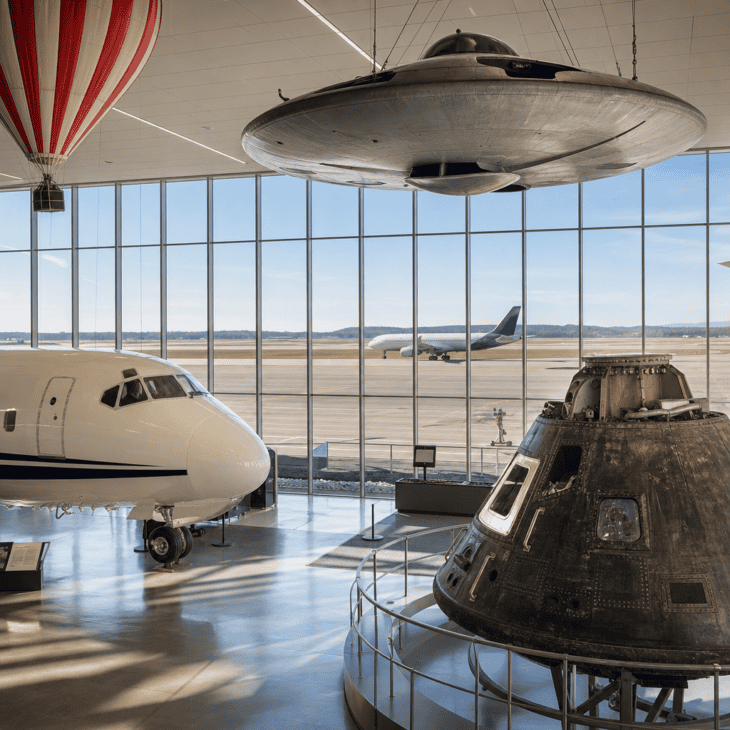
What it is A compact, story-driven museum at Dallas Love Field. Highlights include the Apollo 7 command module, an early Southwest Airlines Boeing 737, and the disc-shaped Vought V-173 “Flying Pancake.” Admission is around $12.
Why it works It is a tight, well-told survey from ballooning to spaceflight that you can complete in a half day without feeling rushed. The exhibits lean on narrative rather than sheer aircraft count.
How to get it The museum is at Love Field, minutes from downtown Dallas and easy to fit in before or after a flight. Parking is inexpensive and rarely full. For the bigger Texas collections in Fort Worth and Houston, see the wider list of aviation museums in Texas. Two hours is enough here.
19. Royal Air Force Museum London, London, United Kingdom
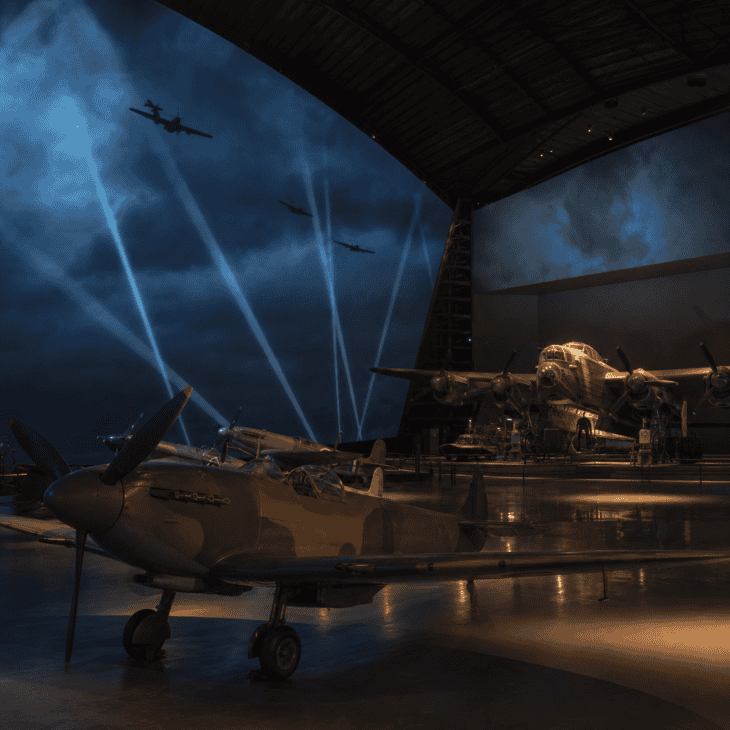
What it is The Royal Air Force’s national museum, on a former airfield in Colindale in north London, and free to enter. Its halls hold a Lancaster, a Vulcan, Battle of Britain fighters, and a strong first-generation jet collection.
Why it works It is a free, comprehensive account of British air power from wood-and-canvas biplanes to the Typhoon. The Battle of Britain hall in particular is well staged.
How to get it Take the Northern line to Colindale, then walk about 10 minutes. Admission is free, though donations and paid flight simulators are offered. A half day is plenty. The second RAF Museum site at Cosford in the Midlands holds the research aircraft and the surviving V-force bombers.
20. Imperial War Museum Duxford, Cambridgeshire, United Kingdom
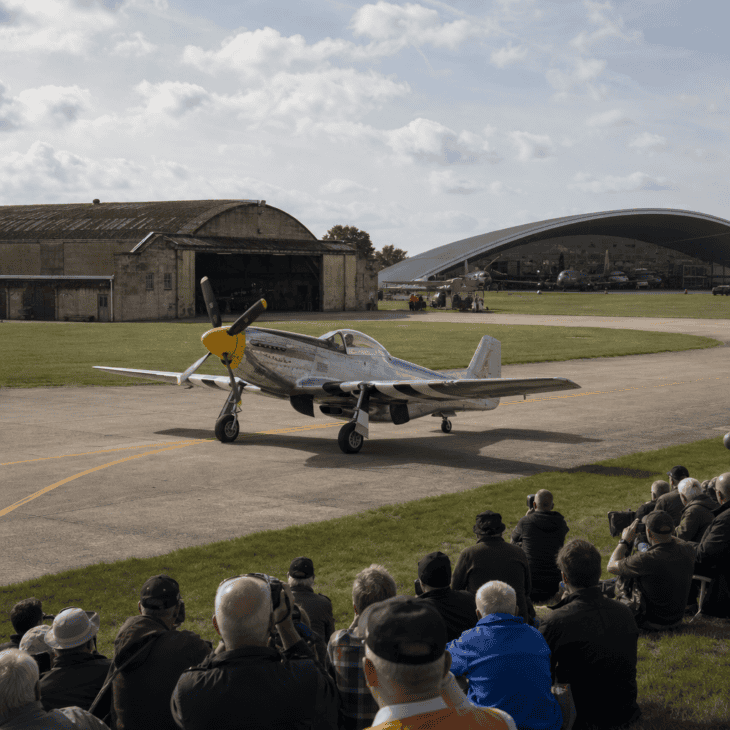
What it is Britain’s largest aviation museum, on a still-active former Battle of Britain airfield near Cambridge. It has a Concorde, an American Air Museum hall, and dozens of airworthy warbirds that fly at its regular air shows. Admission is around 25 pounds.
Why it works Aircraft take off and land here during the season, and the flying-day atmosphere on a historic fighter station is unmatched. Many of the famous aircraft people know from film and photographs are here in flying condition.
How to get it Duxford is just off the M11 south of Cambridge. A car is easiest, though a shuttle bus runs from Cambridge in summer. Check the flying-display calendar before choosing a date, since show days cost more and sell out. Give it a full day.
21. Musee de l’Air et de l’Espace, Paris, France
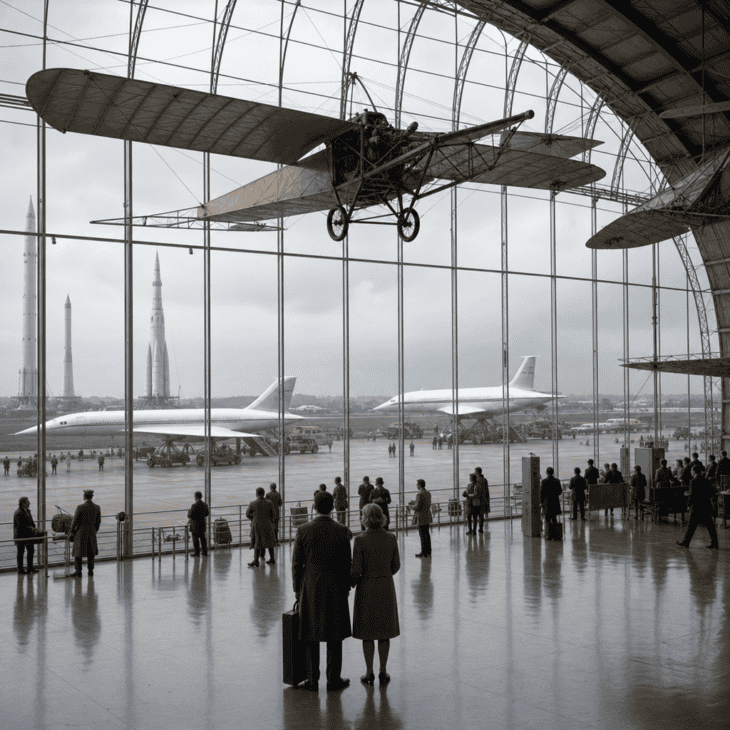
What it is One of the oldest and largest aviation museums in the world, founded in 1919, at Paris-Le Bourget airport. Two Concordes, a hall of pioneer-era aircraft, and Ariane rockets are on site, and the grand 1930s terminal building is a landmark in itself.
Why it works It traces powered flight from its French beginnings, with original machines from the first two decades that survive nowhere else. Le Bourget is also where the Paris Air Show still takes place every other year.
How to get it The museum is northeast of central Paris, reachable by RER line B to Le Bourget station and then a short bus ride. The main halls carry an admission charge, while some of the outdoor areas are free. Allow a half day, more if you want to board a Concorde.
22. Canada Aviation and Space Museum, Ottawa, Ontario
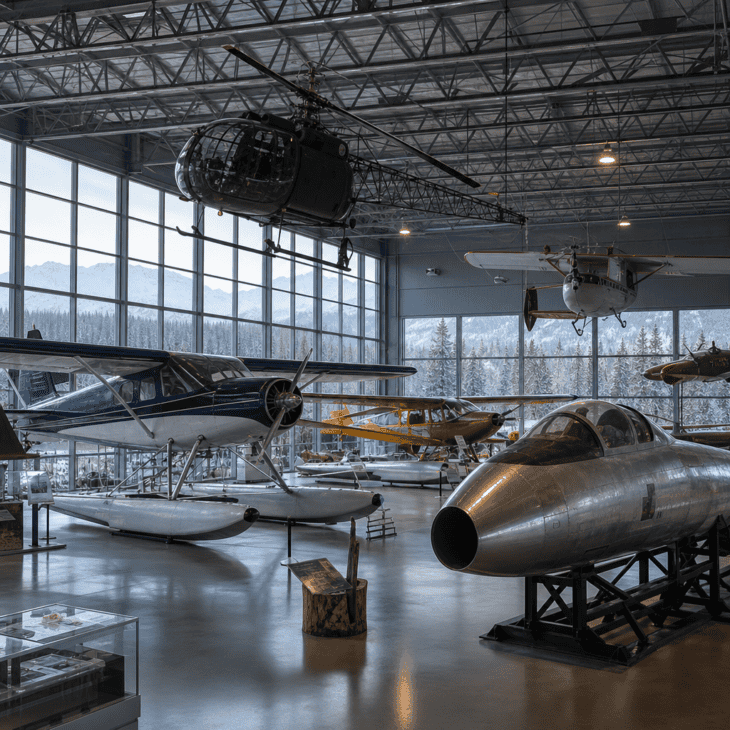
What it is Canada’s national aviation collection, in a hangar at the historic Rockcliffe airfield in Ottawa. It is strong on bush planes, World War II types, and Canadian designs, and it holds the surviving nose section of the Avro Arrow. Admission is around 15 Canadian dollars.
Why it works The bush-flying and cold-weather aviation story is told better here than anywhere, which matters because that flying opened up half a continent. The Arrow relics still draw a crowd decades after the program was cancelled.
How to get it The museum is about 15 minutes from downtown Ottawa by car or bus. Vintage biplane rides are offered from the adjacent grass field in summer. Two to three hours covers the hangar. Combine it with the capital’s other national museums on a weekend trip.
23. National Museum of Flight, East Fortune, Scotland
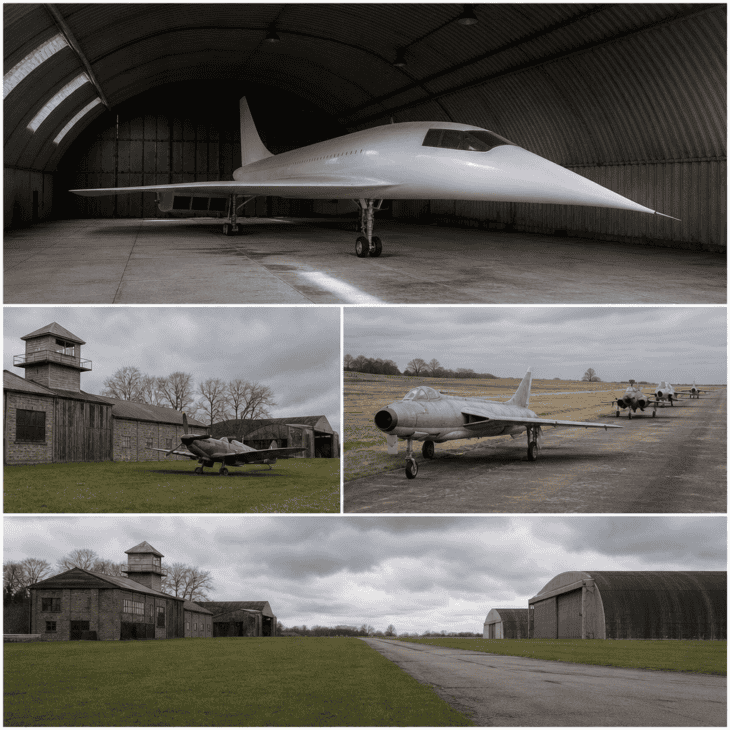
What it is Scotland’s aviation museum, on a strikingly complete World War II airfield east of Edinburgh. Its Concorde, G-BOAA, has a dedicated hangar, alongside a Vulcan, a Spitfire, and a run of Cold War jets displayed in the original wartime buildings.
Why it works The airfield itself is a preserved artifact, with its control tower, hangars, and huts largely as they were. Boarding the Concorde is the headline draw, and the queue moves quickly outside school holidays.
How to get it East Fortune is about 40 minutes from Edinburgh by car, or reachable by train to Drem and a short bus or taxi. It is part of National Museums Scotland, so a combined membership can pay off. Allow a half day, and check the date of the annual air show if you want the airfield in full swing.
24. Deutsches Museum Flugwerft Schleissheim, Oberschleissheim, Germany
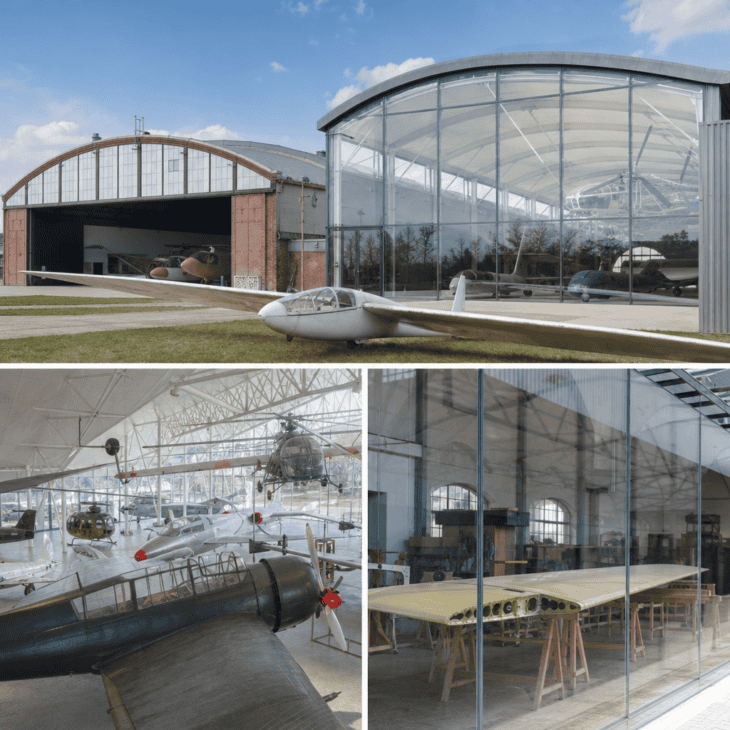
What it is The aviation branch of Munich’s Deutsches Museum, on the oldest preserved airfield in Germany. It covers gliders, jets, helicopters, and vertical-flight research, with a restoration workshop visitors can watch through glass. Admission is around 8 euros.
Why it works It is a focused engineering collection in a genuinely historic setting, and it is an easy half-day trip from central Munich. The early hangar building is a monument in its own right.
How to get it Take the S1 S-Bahn from Munich to Oberschleissheim, then walk about 15 minutes. Two hours is enough for the site. The main Deutsches Museum in the city center has been reworking its aeronautics hall in phases, so check what is open before planning a combined visit.
25. Polish Aviation Museum, Krakow, Poland
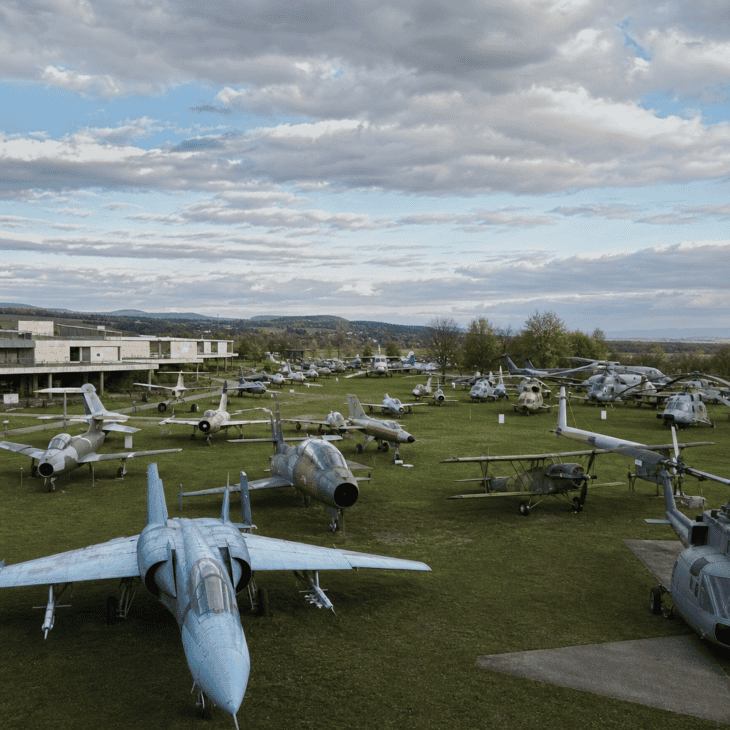
What it is A large open-air and hangar collection on the historic Rakowice-Czyzyny airfield in Krakow, one of the oldest in Europe. It holds more than 200 aircraft, including rare pre-war types and a group of prewar machines from a German collection that survived World War II.
Why it works It is often named among the world’s best aviation museums, and it displays aircraft that simply cannot be seen anywhere else. The setting on a century-old airfield adds to the appeal.
How to get it The museum is a short tram ride from Krakow’s old town. Admission is modest, and a full visit takes a half day between the outdoor rows and the main hall. Dress for the weather, since much of the collection is outdoors. It pairs well with a longer city trip.
Sources and references used for research and fact-checking.
- Smithsonian National Air and Space Museum, Plan Your Visit
- National Museum of the United States Air Force, Plan a Visit
- National Naval Aviation Museum, Visitor Information
- Pima Air & Space Museum, AMARG Boneyard Tours and Museum Visit
- Imperial War Museum Duxford, Plan Your Visit
- Royal Air Force Museum, Visit the Museum
Get the Newsletter
The latest aviation news and stories sent to your inbox.
About the Author

Hanna writes AeroCorner's aviation-lifestyle and decor guides, turning a love of flight into ideas for your home, celebrations, and gift lists.