

Table of Contents
An airplane and an aeroplane are the same machine: a powered, fixed-wing aircraft that is heavier than air. “Airplane” is the American spelling and “aeroplane” the British one. “Aircraft” is the umbrella word for everything that flies, so every airplane is an aircraft, but a helicopter, glider, balloon or drone is an aircraft and not an airplane.
The split is bigger than it sounds. About 1 in 7 aircraft on the US civil register is not an airplane at all, and the spelling war that seems settled is quietly moving in Britain.
We compared the three words as of October 2026 using the legal definitions in the FAA’s rulebook and ICAO’s Annex 7, Merriam-Webster’s dating, the FAA aircraft registry and Google Books usage data.
| Criterion | Aircraft | Airplane | Aeroplane |
|---|---|---|---|
| Legal meaning | “A device that is used or intended to be used for flight in the air” (14 CFR 1.1) | “An engine-driven fixed-wing aircraft heavier than air” (14 CFR 1.1) | “A power-driven heavier-than-air aircraft” lifted by fixed surfaces (ICAO Annex 7) |
| Covers helicopters, gliders, balloons and drones | Yes | No | No |
| Needs an engine | No | Yes | Yes |
| Official term in | Every rulebook: FAA, ICAO, UK, Canada | US federal rules (14 CFR) | ICAO, the UK Air Navigation Order, the Canadian Aviation Regulations |
| First known use (Merriam-Webster) | 1845 | 1906 | 1868 |
| Plural | aircraft | airplanes | aeroplanes |
| US books, 2022 | 3.2 times as common as both spellings combined | 93.5% of the two spellings | 6.5% of the two spellings |
| British books, 2022 | 5.6 times as common as both spellings combined | 53.4% of the two spellings | 46.6% of the two spellings |
| Valid US civil registrations, Oct 2026 | 310,792 (100%) | 266,542 (85.8%) | The same machines as “airplane” |
How we compared
Definitions are quoted from 14 CFR 1.1 (the FAA’s definitions part), ICAO Annex 7 (6th edition, 2012), the UK Air Navigation Order 2016 and the 1918 NACA nomenclature. First-use dates are Merriam-Webster’s. Book shares come from the Google Books Ngram Viewer, unsmoothed, single years: airplane divided by airplane plus aeroplane, in the American and British English corpora, which end in 2022. Registry figures count every record with status V (valid) in the FAA’s releasable aircraft database, downloaded October 6, 2026: types 4 and 5 (fixed wing, single and multi engine) are airplanes, everything else is not.
What each word means, legally
The FAA’s definitions part, 14 CFR 1.1, sets the two US terms side by side. An aircraft is “a device that is used or intended to be used for flight in the air.” An airplane is “an engine-driven fixed-wing aircraft heavier than air, that is supported in flight by the dynamic reaction of the air against its wings.”
That second definition has three tests, and a machine must pass all of them: it has an engine, its wings do not move, and it is heavier than air. Fail any one and it is still an aircraft, just not an airplane.
ICAO, the UN agency that sets international aviation standards, uses “aeroplane” for the same machine. Annex 7 defines it as “a power-driven heavier-than-air aircraft, deriving its lift in flight chiefly from aerodynamic reactions on surfaces which remain fixed under given conditions of flight.” The wording differs, but the three tests are the same.
ICAO’s “aircraft” is broader still: “any machine that can derive support in the atmosphere from the reactions of the air other than the reactions of the air against the earth’s surface.” That last clause rules out a machine that rides on a cushion of air pushed against the ground, such as a hovercraft.
On a US pilot certificate the words become a hierarchy. Under 14 CFR 61.5, airplane is one of seven aircraft category ratings, next to rotorcraft, glider, lighter-than-air, powered-lift, powered parachute and weight-shift-control, and single-engine land or multiengine sea is the class within it.
Even “airplane” once had a narrower sense. NACA’s 1918 nomenclature noted that the term was “commonly used in a more restricted sense” for machines with landing gear for land, and called the water-borne version a seaplane, a split our guide to seaplanes vs floatplanes picks up. Today’s rules fold both into airplane.
Takeaway: airplane and aeroplane have the same legal meaning on both sides of the Atlantic; aircraft is the category they sit in.
What counts as an aircraft but not an airplane
The UK’s official classification table splits aircraft into lighter-than-air (balloons and airships) and heavier-than-air, then by whether they have an engine. The aeroplane sits on the powered heavier-than-air branch, where it shares space with powered lift and rotorcraft, while gliders and kites sit on the unpowered one. ICAO’s definitions add the ornithopter, which flies on flapping wings.
A helicopter such as the Robinson R44 is an aircraft, and so is an unpowered sailplane, the subject of our explainer on how gliders fly. Neither is an airplane: one has rotating wings, the other has no engine.

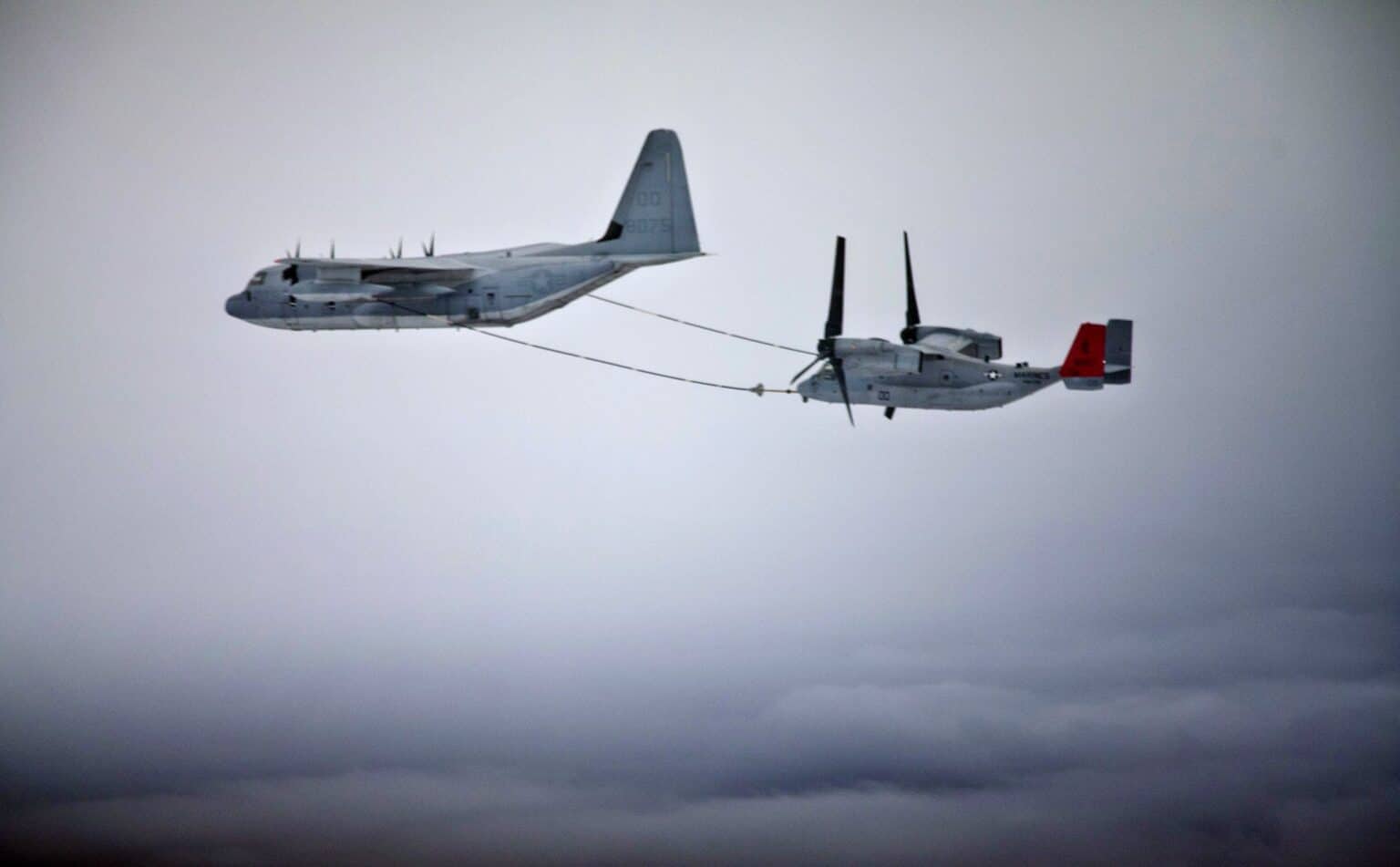
The edge cases are newer. A tiltrotor such as the V-22 Osprey fits the FAA’s separate “powered-lift” definition, and the UK’s classification lists “Powered Lift (Tilt Rotor)” as its own class next to the aeroplane.

Drones are aircraft too: 14 CFR 1.1 defines an unmanned aircraft as “an aircraft operated without the possibility of direct human intervention from within or on the aircraft,” which is why drones fall under aviation rules.
Myth: "aircraft" is just a fancier word for "airplane"
It is not a synonym. Of the 310,792 valid registrations in the FAA’s civil register in October 2026, 44,250 (14.2%) are not airplanes: 27,503 rotorcraft, 5,206 balloons, 4,827 gliders, 3,291 hybrid-lift aircraft, 1,896 powered parachutes, 1,046 weight-shift-control aircraft, 413 gyroplanes, 49 blimps and 19 others. Call those airplanes and a pilot will correct you.
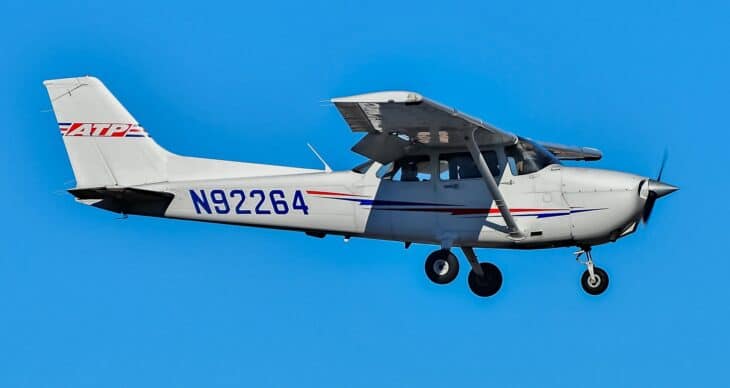
The register shows how lopsided the split is. Fixed-wing single-engine types alone account for 217,863 valid registrations, and the Cessna 172 Skyhawk is the most familiar shape among them.
Takeaway: about 6 in 7 US civil aircraft are airplanes, so the words overlap most of the time, which is exactly why people mix them up.
Spelling: why Americans say airplane and Brits say aeroplane
“Aeroplane” came first. Merriam-Webster dates it to 1868 and traces it to the French “aéroplane,” built from “aéro-” (air) and “-plane,” a flat surface. The “plane” in both words originally meant the wing, which is why the dictionary still lists “one of the main supporting surfaces of an airplane” as a meaning of plane.
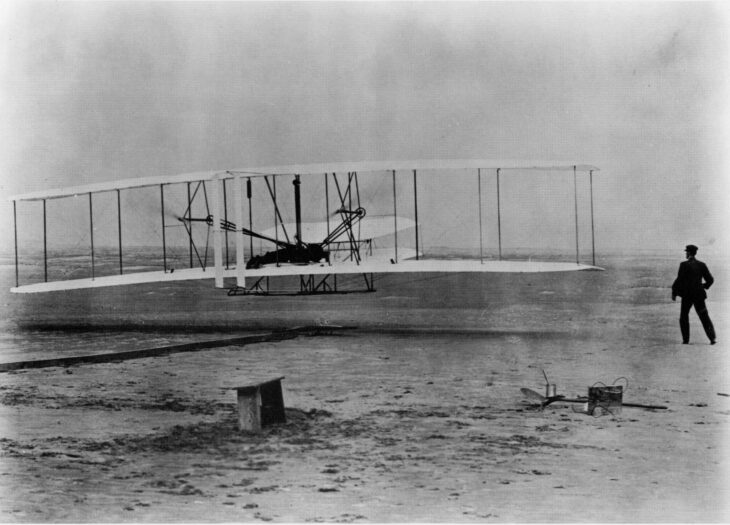
“Airplane” is the younger form, an alteration of aeroplane that Merriam-Webster dates to 1906. “Aircraft” is older than both, first recorded in 1845, more than half a century before the first powered airplane flight in 1903.
.JPG)
The US made the choice official. NASA says the National Advisory Committee for Aeronautics (NACA), its predecessor, formally adopted “airplane” in its Report No. 9 in 1916. The nomenclature NACA adopted on October 10, 1918, Report No. 25, settles it in three words: “Aeroplane: See Airplane.”
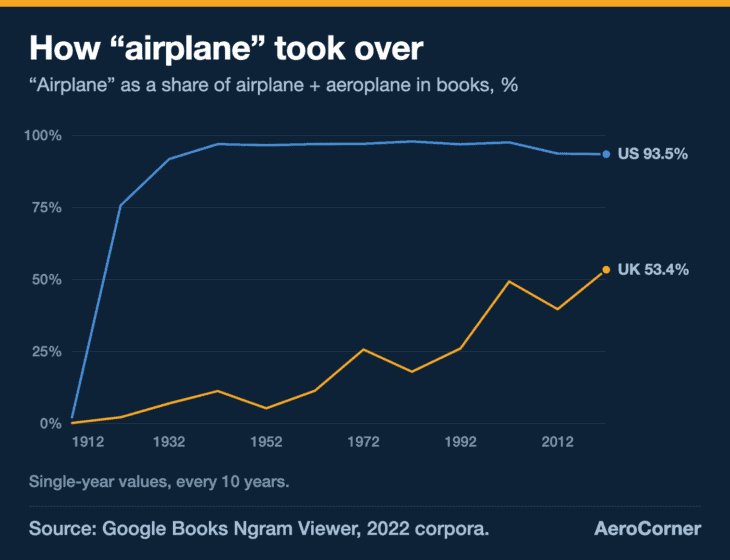
American books followed fast. In Google’s American English corpus, “airplane” was 9.4% of the two spellings in 1916, 45.8% in 1917 and 62.7% in 1918, and it has not fallen below 90% of them in any year since 1929.
It could have been a third word. In 1915 Charles Walcott, Secretary of the Smithsonian, wrote to the American Aeronautical Society proposing that the machines be called “langleys,” after his predecessor Samuel Langley.
Asked in a NASA history piece whether Walcott meant it, Tom Crouch, the National Air and Space Museum’s senior curator for aeronautics, said: “I think it was only partly tongue in cheek.”
Takeaway: “aeroplane” is not a misspelling, it is the original; the US standardized on “airplane” by committee and by 1918.
Who uses which word today
Regulators split cleanly by tradition. The FAA writes “airplane” in its definitions and in the category rating on a US pilot certificate. ICAO, the UK Air Navigation Order and Canada’s federal aviation rules write “aeroplane.”
Canada is the odd case. The usage guide Grammarist says “airplane” is preferred in American and Canadian English, and that “aeroplane is almost completely absent from American and Canadian publications.” Yet the Canadian Aviation Regulations say “aeroplane,” from ultra-light aeroplanes to private pilot privileges.
British books now print "airplane" more often
In Google’s British English book corpus, “airplane” has outnumbered “aeroplane” every year from 2013 to 2022, reaching 53.4% of the two spellings in 2022. It was 2.2% in 1922. The corpus counts books published in Britain, so it measures British print, not British speech.
Both countries agree on one thing. In 2022, “aircraft” appeared 3.2 times as often as both spellings combined in American books and 5.6 times as often in British ones, because it is the word aviation writing actually uses.
Takeaway: “airplane” is standard in the US and Canada and gaining in Britain, while “aeroplane” survives in international and Commonwealth rulebooks.
Grammar: plurals, “plane” and which word to write
“Aircraft” is the same in the singular and the plural: one aircraft, three aircraft. Merriam-Webster gives the plural as “aircraft,” so “aircrafts” is an error. Airplane and aeroplane take a normal “s.”
“Plane” is simply airplane shortened, and Merriam-Webster lists it that way. It carries the same meaning, so a helicopter is not a plane either.
For an American audience, write “airplane” and use “aircraft” when the sentence must include helicopters, gliders or drones, or when you mean the whole fleet. Our guide to the types of airplanes follows that rule. Use “aeroplane” only when quoting a British or ICAO source.
Takeaway: when in doubt, “aircraft” is never wrong, because it covers everything the other two do.
The difference in one sentence
Airplane and aeroplane are one machine, a powered fixed-wing aircraft, spelled the American and the British way; aircraft is every machine that flies on the air, from a Cessna to a hot-air balloon to a drone.
FAQ
Sources and references used for research and fact-checking.
- Legal Information Institute, Cornell Law School, 14 CFR 1.1 - General definitions
- Legal Information Institute, Cornell Law School, 14 CFR 61.5 - Certificates and ratings issued under this part
- International Civil Aviation Organization, Annex 7 to the Convention on International Civil Aviation: Aircraft Nationality and Registration Marks, Sixth Edition (2012)
- legislation.gov.uk, The Air Navigation Order 2016, Schedule 4, Part 1: Classification of aircraft
- Justice Laws Website, Government of Canada, Canadian Aviation Regulations (SOR/96-433)
- National Advisory Committee for Aeronautics, via NASA Technical Reports Server, Report No. 25: Nomenclature for Aeronautics (1918)
- NASA, Airplanes or Langleys? And Other Tales of the NACA
- Merriam-Webster, Airplane
- Merriam-Webster, Aeroplane
- Merriam-Webster, Aircraft
- Merriam-Webster, Plane
- Grammarist, Aeroplane vs. airplane
- Google Books, Google Books Ngram Viewer: airplane, aeroplane, aircraft (American English and British English, 1880-2022)
- Federal Aviation Administration, Releasable Aircraft Database and field descriptions
- Smithsonian National Air and Space Museum, How Things Fly, What is the difference between an aircraft and an airplane?
Get the Newsletter
The latest aviation news and stories sent to your inbox.
About the Author

Tim is the owner and lead editor of AeroCorner since 2019, overseeing aviation content covering aircraft, airlines, airports, and the broader aviation industry. Through years of researching, writing, editing, and publishing aviation-focused content, he has developed extensive practical knowledge of commercial aviation and air travel. Based in Asia and a frequent traveler himself, Tim also brings firsthand passenger experience to AeroCorner’s coverage. Outside of publishing, he has also explored aviation firsthand through hands-on flight training in New Zealand.