
Mid Size Passenger Jets
Airbus A318
ICAO: A318
Single-aisle long-range airliner, $129.5 million at 2018 list prices
Updated: by Tim de Vries
The latest aviation news and stories sent to your inbox.
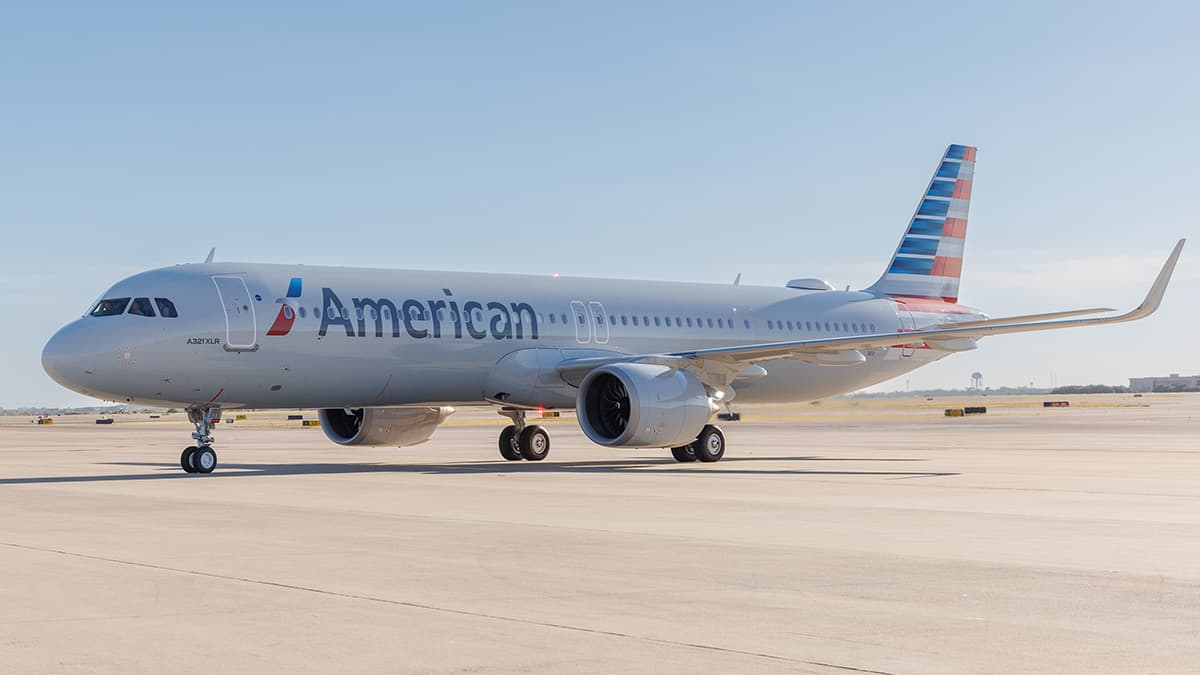
The Airbus A321XLR is the longest-range member of the A320 family, a single-aisle jet built to fly routes that used to need a widebody. Airbus quotes a range of up to 4,700 nautical miles, roughly 15 percent more than the A321LR, from a permanently installed rear centre fuel tank and a 101-tonne maximum takeoff weight. It carries 180 to 220 passengers in a typical two-class cabin and up to 244 in a single-class layout.
Live Fleet Activity (A21N)
Fetching live data…
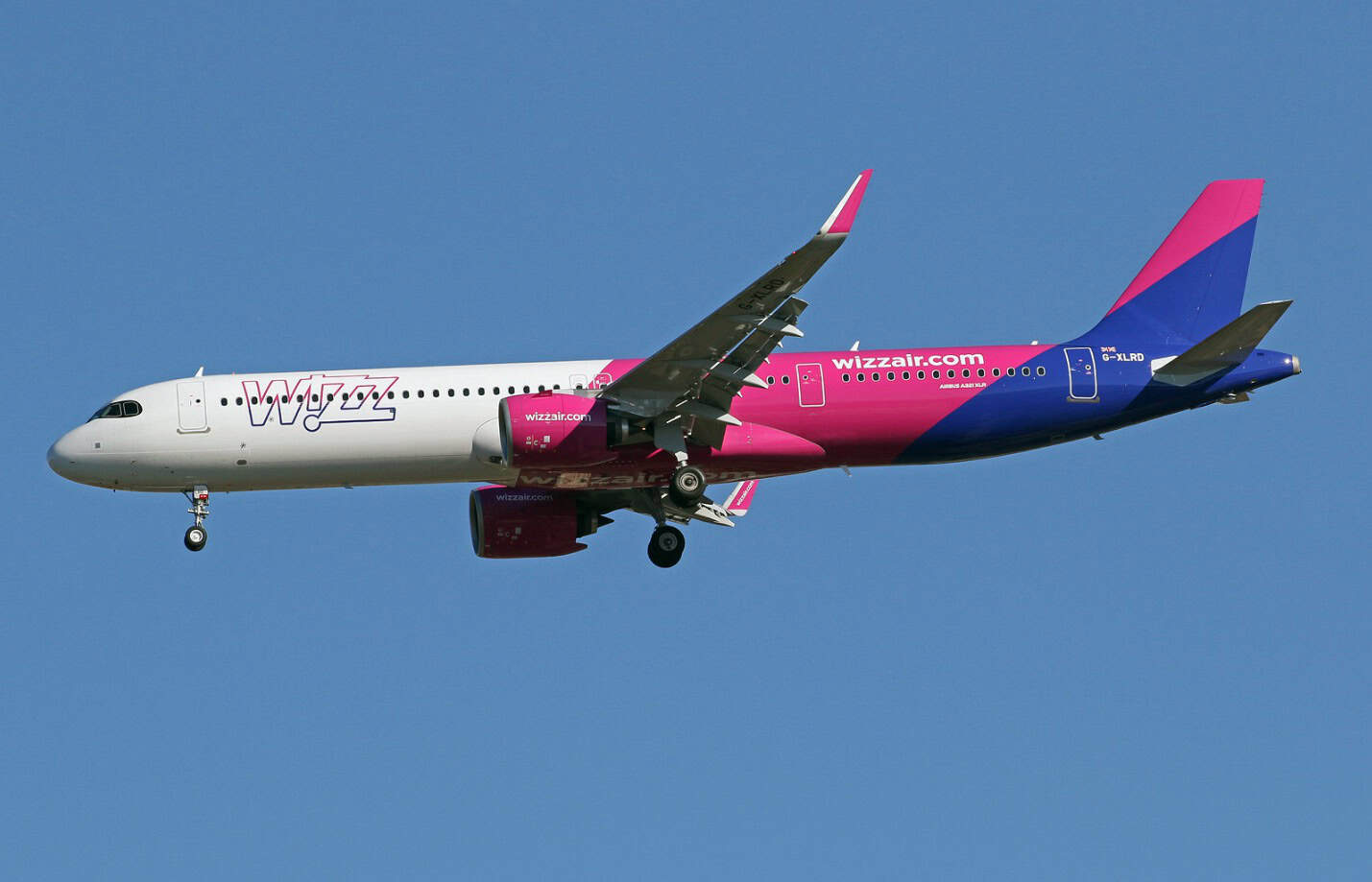


The Airbus A321XLR is the aircraft that let airlines put a single-aisle jet on routes that used to demand a widebody. Airbus sells it on a headline number, a range of up to 4,700 nautical miles, which is about 15 percent more than the A321LR could manage.
It reached airline service in November 2024 and now flies the Atlantic for Iberia, Aer Lingus, American and Air Canada, with Saudia using it across the Middle East and Europe. United begins its own transatlantic XLR flying in December 2026.
It is also the aircraft that started an argument about whether that headline range survives contact with a real airline schedule.
The XLR is not a new airplane. It is the third and longest-legged version of the A321neo, itself the stretched member of the A320neo family, and it shares almost all of its structure with the aircraft flying short domestic hops today.
Airbus offers the A321neo in three flavors. The standard neo is a short and medium haul machine, the A321LR added removable cabin tanks for genuine transatlantic reach, and the XLR goes further again with a permanently built-in tank and a heavier maximum takeoff weight.
On certificates and registries the XLR appears under its own designations, the A321-253NY with CFM engines and the A321-271NY with Pratt & Whitney engines. The suffix NY is what marks an airframe as an XLR. For air traffic control purposes it is not distinguished from the rest of the family and files as an A21N.
The central change is a fuel tank. The XLR carries a permanently installed rear center tank, the RCT, built into the fuselage behind the main landing gear at cargo hold level.
Airbus’s own planning manual puts the RCT at 13,100 liters of usable fuel, roughly the equivalent of four of the removable additional center tanks the A321LR used. The point of integrating it is weight and space: it holds four tanks’ worth of fuel for about the weight of one, and it occupies the hold space of two.
Carrying that much more fuel means carrying more weight, so the landing gear was strengthened to support a maximum takeoff weight of 223,000 pounds (101 tonnes). Airbus also reworked the inboard trailing edge flap, switching from a double-slotted to a single-slotted design, which cuts weight and drag while preserving takeoff performance at the higher weight.
None of this is exotic. That was deliberate, and it is why the XLR arrived as a variant rather than a clean-sheet design: high commonality with an aircraft already in mass production, at a fraction of the cost of a new type.
The three versions are the same length, the same wingspan and the same height, and they use the same two engine families. What separates them is fuel, weight and what that combination buys.
A standard A321neo is a roughly 3,400 nautical mile aircraft in a dense layout. The A321LR reaches about 4,000 nautical miles with 206 passengers using up to three removable cabin tanks. The XLR is quoted at up to 4,700 nautical miles, from the integrated RCT plus the higher 101 tonne takeoff weight.
The trade sits in the cargo hold. Because the RCT lives where freight used to, the XLR’s aft hold drops from five container positions to three, so the aircraft gives up revenue cargo space in exchange for the range. An optional forward additional center tank can be fitted on top of that, which takes more hold volume again.
The full specification table for the aircraft is on this page, above this article. A few of those figures get quoted against each other, so they are worth separating.
The 4,700 nautical mile range is Airbus’s figure for a lower-density long-haul cabin in favorable conditions. It is a capability maximum rather than a number an airline schedules against, which is the subject of the next section.
The fuel capacity shown is for a standard XLR, combining the wing tanks, the center tank and the permanent RCT. Fitting the optional forward tank raises the maximum to 10,500 US gallons.
Be careful with the RCT’s own capacity of about 3,400 US gallons. It is sometimes misreported as the whole aircraft’s fuel load, including in the previous version of this page.
The speeds are stored in knots. In the units Airbus and pilots actually use, the XLR cruises at Mach 0.78 and its maximum operating speed is Mach 0.82, the same as the rest of the A320neo family.
The maximum payload figure applies to a standard aircraft without the optional forward tank. Because maximum zero fuel weight does not change between the 97 tonne and 101 tonne variants, the heavier XLR does not carry more payload than the lighter one. It carries the same payload further.
The most interesting thing about the XLR in 2026 is that its largest American customer does not plan routes to Airbus’s range figure.
United ordered 50 XLRs in December 2019, explicitly to replace its Boeing 757-200 fleet on transatlantic routes. That substitution is a story in itself, since Boeing ended 757 production in 2004 on the argument that its newer jets covered the mission, and the aircraft that finally replaced the 757 came from Airbus.
Patrick Quayle, United’s senior vice president of global network planning, has said the airline is being very conservative with the aircraft’s range, and that the range presented during the marketing phase was greater than what United considers achievable with the aircraft as built.
Airbus had promoted Newark to Italy as the kind of mission the XLR opened up. Quayle’s assessment is that under United’s requirements the airplane cannot do that. The distances show why it is marginal: Milan Malpensa is about 3,485 nautical miles from Newark, Rome about 3,720, and Catania close to 4,000.
The schedule reflects the caution. United’s first international XLR services begin on 1 December 2026 from Washington Dulles to Amsterdam and Dublin, with Newark to Ibiza, Luxembourg and Marseille to follow. The longest of those, Newark to Marseille, is about 3,402 nautical miles, well inside the 4,700 nautical mile headline.
The gap is not one dramatic cut. Air Data News describes it as a narrower operational envelope than United expected, with roughly 200 nautical miles of performance penalties accumulating through development. Lie-flat business seats are heavy, premium cabins cut the passenger count, and westbound headwinds across the Atlantic lengthen the flight an airline has to plan for.
Other operators have been less cautious. Iberia already flies the XLR from Madrid to Santo Domingo, a sector of about 3,618 nautical miles, with 182 seats including 14 lie-flat business seats.
Airbus’s 4,700 nautical miles is a capability figure for a specific configuration and condition. United’s position is a commercial planning judgment about daily reliability, not a claim that the aircraft cannot fly the distance.
Airbus launched the XLR at the Paris Air Show on 17 June 2019, with deliveries expected from 2023. The first aircraft was rolled out in May 2022 and flew from Hamburg on 15 June 2022, the start of a three-aircraft flight test program.
Service entry then slipped a year, to 2024, because regulators pushed back on the integrated fuel tank. Putting a large permanent tank against the fuselage skin raised post-crash fire concerns, and the US Federal Aviation Administration approved a revised design under special conditions in December 2022.
EASA certified the CFM LEAP-1A powered XLR on 19 July 2024, and the FAA followed on 2 October 2024. The Pratt & Whitney GTF version was certified by EASA on 21 February 2025, so both engine options are now in service.
Iberia took the first aircraft on 30 October 2024. Two service entry dates then get confused with each other: the type’s first revenue flight was a short European hop from Madrid to Paris on 6 November 2024, while the first long-haul passenger flight was Madrid to Boston on 14 November 2024.
Airbus had secured more than 500 orders for the XLR by the end of March 2026, which makes it one of the most heavily ordered variants the company has launched.
Iberia was the launch operator, and Aer Lingus followed in the same IAG group, marketing the aircraft at up to 8,700 km or about 11 hours of flying. American Airlines says it was the first US carrier to receive the type, and began international XLR service from New York JFK to Edinburgh on 8 March 2026.
Air Canada took the first of 30 aircraft on 24 April 2026, fitted with Pratt & Whitney engines, and opened Montreal to Palma de Mallorca as its first new XLR route in June 2026. It is the first narrowbody in the Air Canada fleet with lie-flat business seats.
Saudia is the operator that shows what the aircraft is really for. It ordered 15, and on nine routes announced for 2026 the XLR does not replace a small jet but a large one, taking over Jeddah and Riyadh services previously flown by Boeing 787 and Airbus A330 widebodies.
The order book keeps moving. AirAsia signed for 50 firm aircraft with rights to 20 more in July 2025, a 12.25 billion dollar agreement with deliveries from 2028 through 2032, and Air India converted 15 existing A321neo orders to XLRs in January 2026 for delivery around 2029 and 2030.
Airbus Defence and Space is also developing a military derivative, the A321MPA maritime patrol aircraft, selected by France and built on the XLR airframe for its range and internal volume.
The XLR is certified for up to 244 passengers in a single-class, 28-inch-pitch layout, and Airbus quotes 180 to 220 in a typical two-class cabin. Almost nobody orders it that way.
Because the aircraft is bought for long-haul flying, operators fit heavy premium cabins and the seat counts come out low. Iberia and Air Canada both fly 182 seats, with 14 lie-flat business seats and 168 in economy, and Aer Lingus has 184 with 16 business and 168 economy.
The North American carriers go further. American fits 155 seats, with 20 Flagship Suite seats, 12 Premium Economy and 123 in the main cabin.
United’s is the most premium-heavy of all at 150 seats: 20 Polaris business suites with doors, 12 Premium Plus, 34 Economy Plus and 84 economy. Saudia is denser in business and lighter overall at 144 seats, 24 of them lie-flat.
That is the real cabin story. A jet certified for 244 people is crossing the Atlantic with 150, because the business case rests on premium revenue on thin routes rather than on volume.
On economics, the case is strong. Airbus claims 30 percent lower fuel burn per seat than previous generation single-aisle aircraft, and roughly half the trip cost of a modern widebody, which is what makes a route like New York to Edinburgh viable as a daily service.
It also has no direct competitor. Boeing suspended its middle-of-the-market project in 2022, and while the 737 MAX 10 carries a similar number of passengers, its range is about 3,100 nautical miles against the XLR’s 4,700, its field performance is considerably worse, and it was still waiting on FAA certification as of mid-2026.
The drawbacks are real too. The usable range is contested, the cargo hold is smaller than the A321neo’s just when the routes are longest and freight is most valuable, and eleven hours in a single aisle with four lavatories is a harder sell than the same trip on a twin-aisle jet.
There is no current list price, because Airbus stopped publishing them after 2018 under revised accounting standards. According to Cirium, the 2018 list price for the then-future XLR was 129.5 million dollars.
List prices are close to fiction in any case. Cirium put the aircraft’s market price at around 80 million dollars as of May 2024, and large customers negotiate well below list: United’s 2019 order for 50 aircraft was valued at about 7.1 billion dollars before discounts.
Cabin fit changes the number substantially. Twenty lie-flat business suites with privacy doors represent a large share of the delivered cost of a 150-seat jet.
They share the same fuselage length, wingspan and engines. The XLR adds a permanently installed rear center fuel tank, strengthened landing gear for a 101 tonne maximum takeoff weight and a revised inboard flap.
Together those take the range from about 3,400 nautical miles to a quoted 4,700. The trade is cargo space, since the tank occupies part of the aft hold.
Yes, and that is its main job. It has been flying Madrid to Boston since November 2024, and American, Aer Lingus and Air Canada all operate it across the Atlantic, with United starting in December 2026.
The practical limit is narrower than the headline range. United has built its initial network inside roughly 3,400 nautical miles, reaching far western Europe from the US East Coast rather than deeper continental destinations.
It is certified for a maximum of 244 in a single-class layout, but no long-haul operator uses anything close to that. Real cabins run from 144 seats at Saudia, 150 at United and 155 at American up to 182 at Iberia and Air Canada and 184 at Aer Lingus, because each carries a substantial lie-flat business cabin.
Commercially it has been a success, with more than 500 orders before the type was two years in service, and its seat-mile costs open routes a widebody cannot fill.
The reservations are its real-world range, which United publicly considers lower than advertised, the reduced cargo capacity, and the passenger experience of a single-aisle cabin on flights of ten hours or more.
Iberia took delivery on 30 October 2024 and flew the type’s first revenue service, Madrid to Paris, on 6 November 2024. The first long-haul passenger flight was Madrid to Boston on 14 November 2024.
Two options, the same as the rest of the A321neo family: the CFM LEAP-1A, certified on the XLR in July 2024, and the Pratt & Whitney GTF, certified in February 2025. Iberia’s launch aircraft have LEAP engines and Air Canada’s have the GTF, so both are in airline service.
Its service entry moved from 2023 to 2024 because of the rear center tank. Regulators raised post-crash fire concerns about a large permanent fuel tank integrated into the fuselage structure, and Airbus revised the design, which the FAA approved under special conditions in December 2022.
A standard XLR holds about 9,676 US gallons, combining the wing tanks, the center tank and the permanent rear center tank. With the optional forward additional center tank the maximum rises to 10,500 US gallons. The rear center tank alone accounts for roughly 3,400 US gallons of that total.
Sources and references used for research and fact-checking.