


Table of Contents
| F-15 Eagle | F/A-18 Hornet | |
|---|---|---|
| Built for | Air superiority: win the air battle and nothing else | Carrier-capable fighter and attack aircraft in one airframe |
| First flight | 27 July 1972 (F-15A) | 18 November 1978 (F/A-18A) |
| Service entry | 9 January 1976 | USMC 7 January 1983; US Navy 1 July 1984 |
| Number built (F-15A-D and F-15J/DJ vs F/A-18A-D) | 1,198 | 1,480 |
| Radar | AN/APG-63 pulse-Doppler, later AESA on some jets | AN/APG-73 on the C/D |
| Gun | 20 mm M61 Vulcan | 20 mm M61 Vulcan |
| Carrier capable | No | Yes |
| Air-to-air record | 104 kills, no losses through 2008 | Two MiG-21 kills in the 1991 Gulf War |
| Operators | USAF, Japan, Saudi Arabia, Israel | US Marine Corps, Finland, Spain, Canada, Kuwait, Malaysia, Switzerland |
Built for different jobs
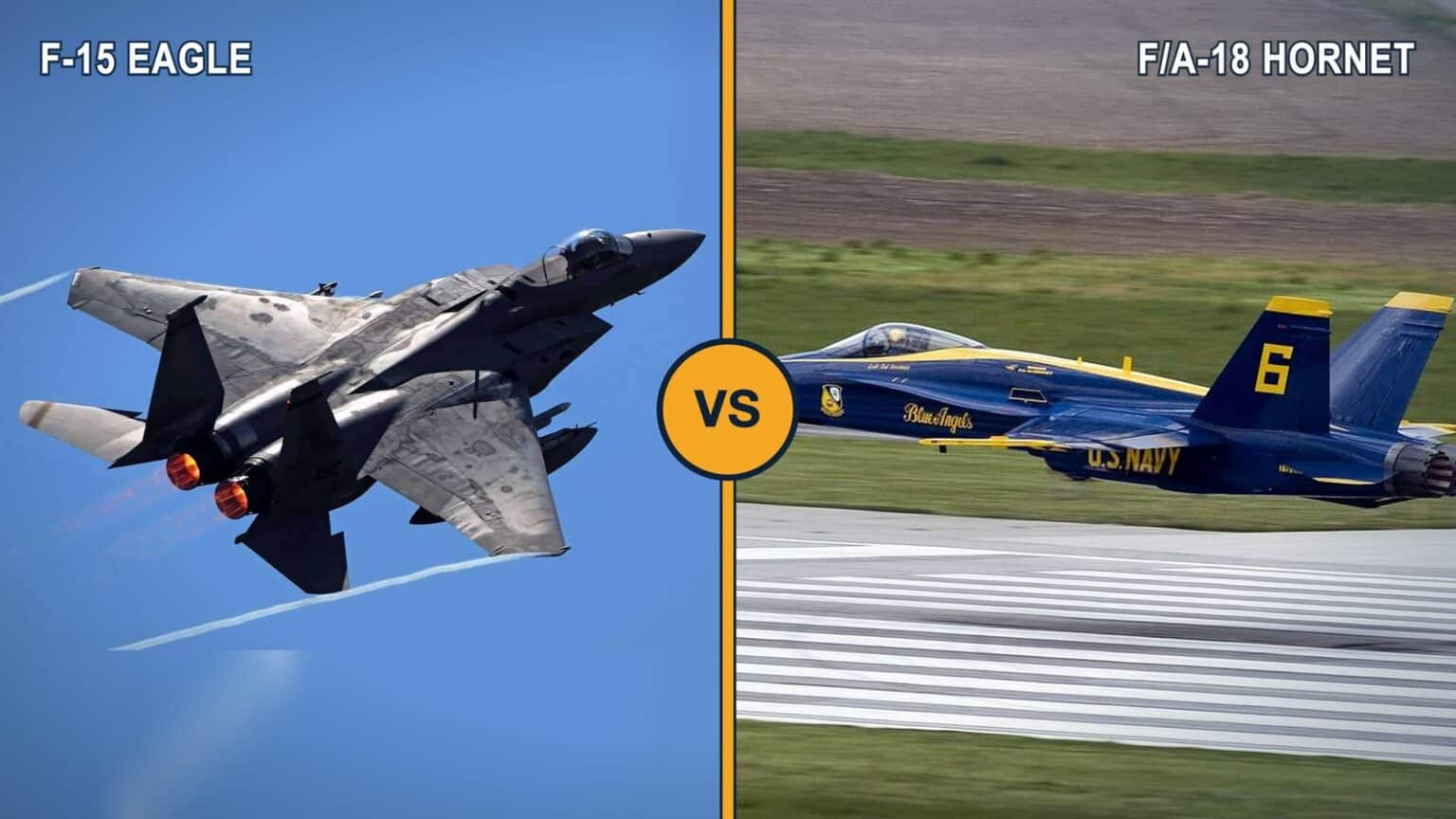
The F-15 Eagle was designed to win air superiority. The Air Force wanted a fighter that could beat anything in the sky, and the F-15A first flew on 27 July 1972. It entered service on 9 January 1976.
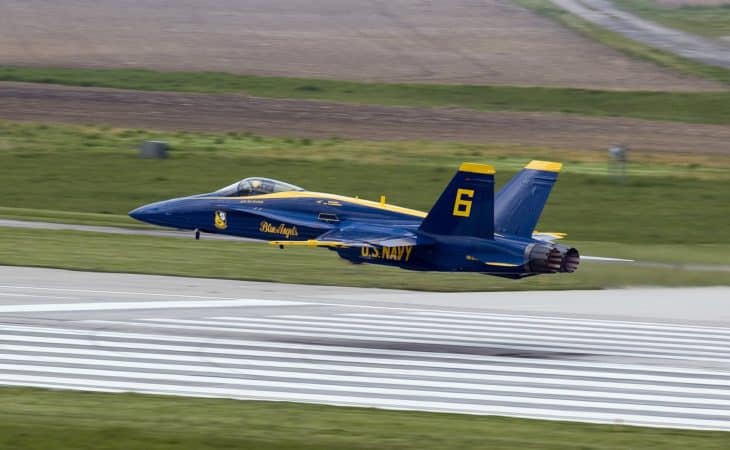
The F/A-18 Hornet started from a different brief. The Navy and Marine Corps needed one aircraft to replace both fighters and attack jets. The first F/A-18A flew on 18 November 1978 and reached the Marines on 7 January 1983.
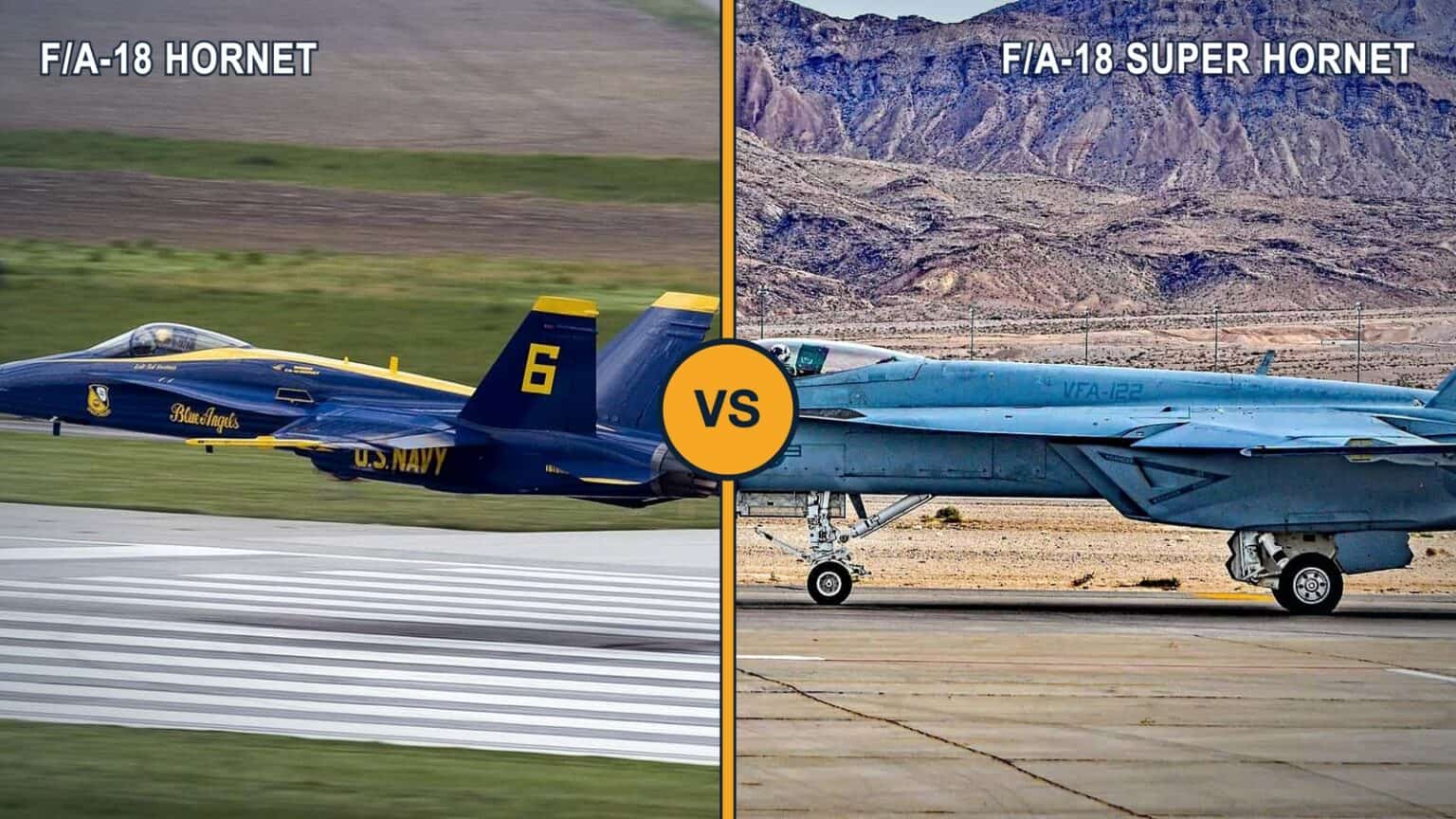
That gap explains most of what follows. This page compares the F-15C and D Eagle with the F/A-18C and D Hornet, the versions most people picture. The F/A-18E/F Super Hornet is a larger, newer design.
Which is faster, and which goes farther?
The Eagle is faster, climbs higher and flies farther. It tops out at 1,650 mph (2,656 km/h) and has a ceiling of 65,000 ft (19,800 m). The Hornet reaches 1,190 mph (1,915 km/h) and 50,000 ft (15,200 m).
Thrust shows the gap. The Eagle’s two Pratt & Whitney F100 engines make 2 × 23,770 lbf (106 kN). The Hornet’s two General Electric F404 engines make 2 × 17,750 lbf (79 kN).

The Eagle is also the heavier jet, with a maximum takeoff weight of 68,000 lb (30,800 kg) against 52,000 lb (23,500 kg) for the Hornet.
Range favors the Eagle by a wide margin: 3,450 mi (5,560 km) listed, against 1,250 mi (2,020 km). Those are listed ranges, not combat radius, and the Eagle’s figure assumes extra fuel tanks. In practice the Hornet needs a tanker sooner.
Radar, guns and missiles
The F-15 carries the Hughes AN/APG-63, a pulse-Doppler radar with a basic range of about 100 miles (160 km). Later upgrades added AESA versions on some jets. The Hornet C/D carries the AN/APG-73.
Both carry a 20 mm M61 Vulcan cannon. Both fire AIM-7 and AIM-120 radar missiles and AIM-9 heat-seekers, so the armament is similar. The Eagle’s advantage is the radar and the speed to use those missiles from a better position.
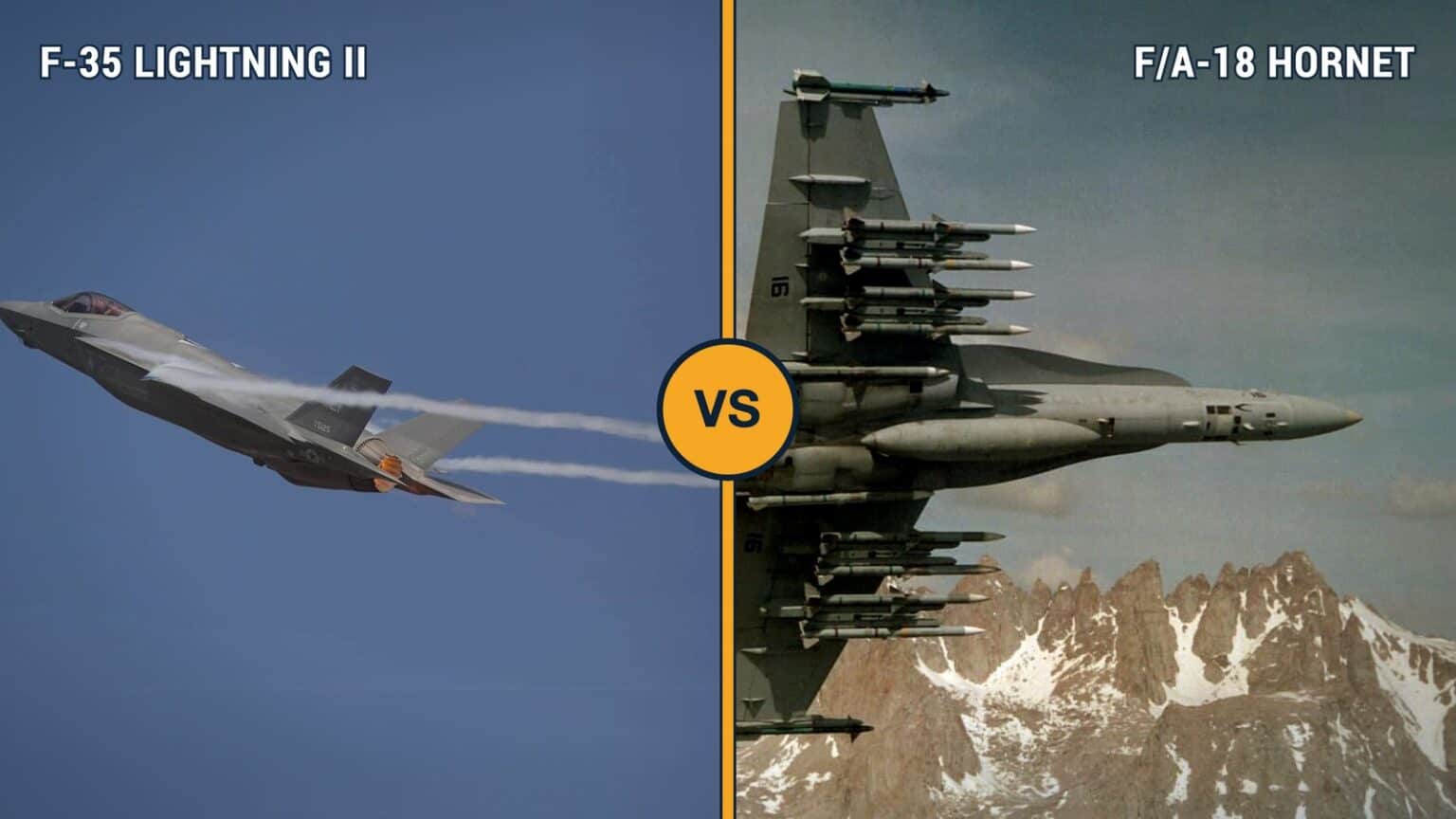
The Hornet’s edge is the ground. It carries up to 13,700 lb (6,210 kg) of weapons on nine stations, and it was designed to switch between air and ground roles in one sortie.
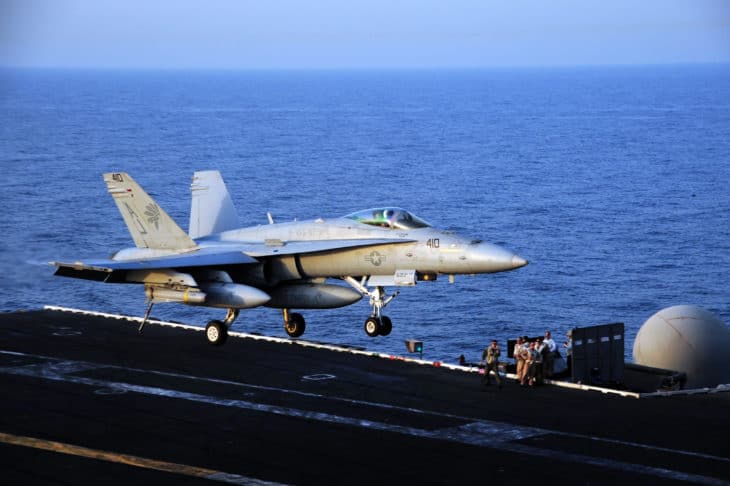

At sea: the Hornet’s trump card
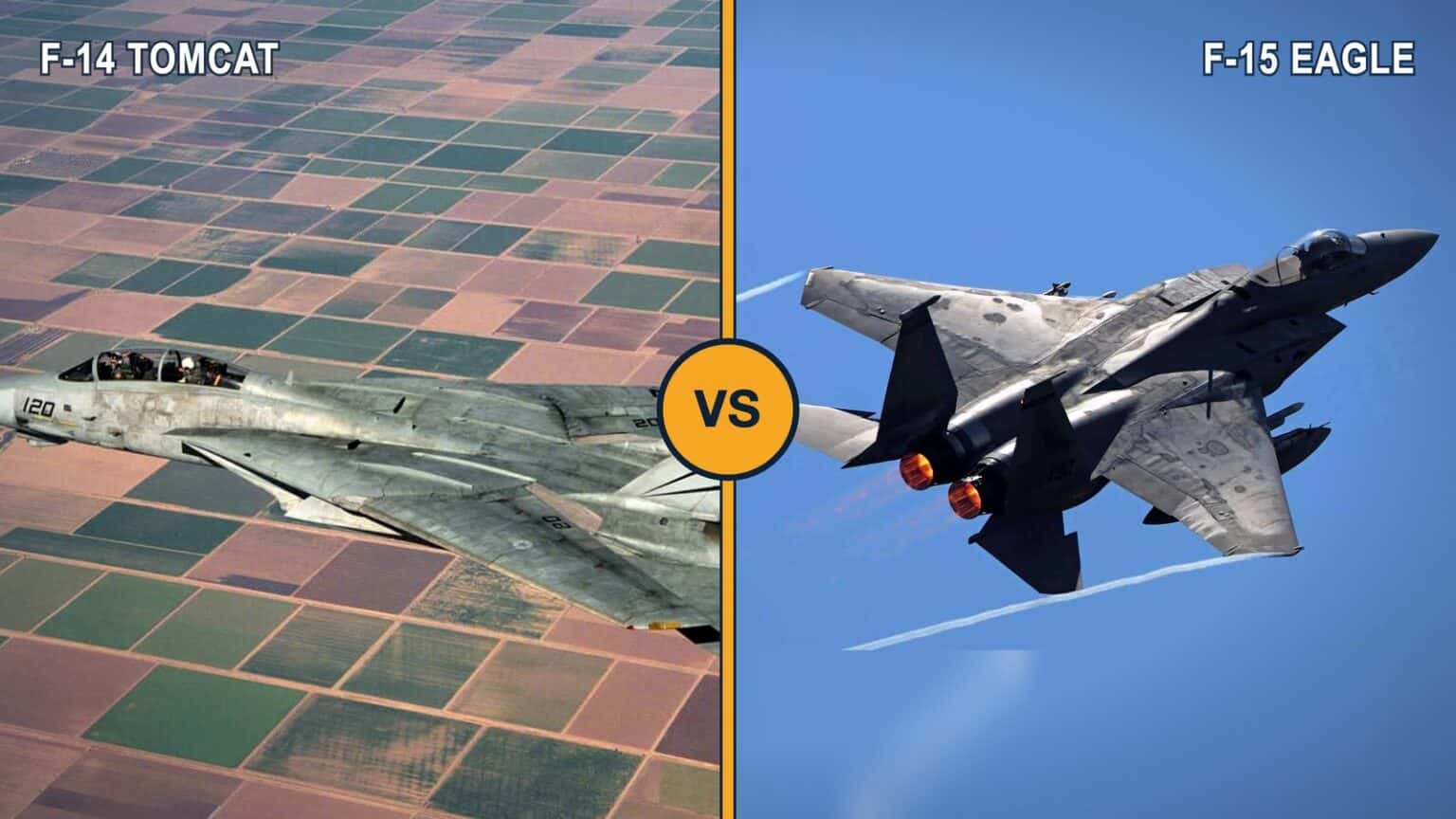
The F-15 has no tailhook, no folding wings and no carrier landing gear. The Navy studied a naval Eagle in 1973, but it came out nearly as expensive as the F-14 Tomcat.
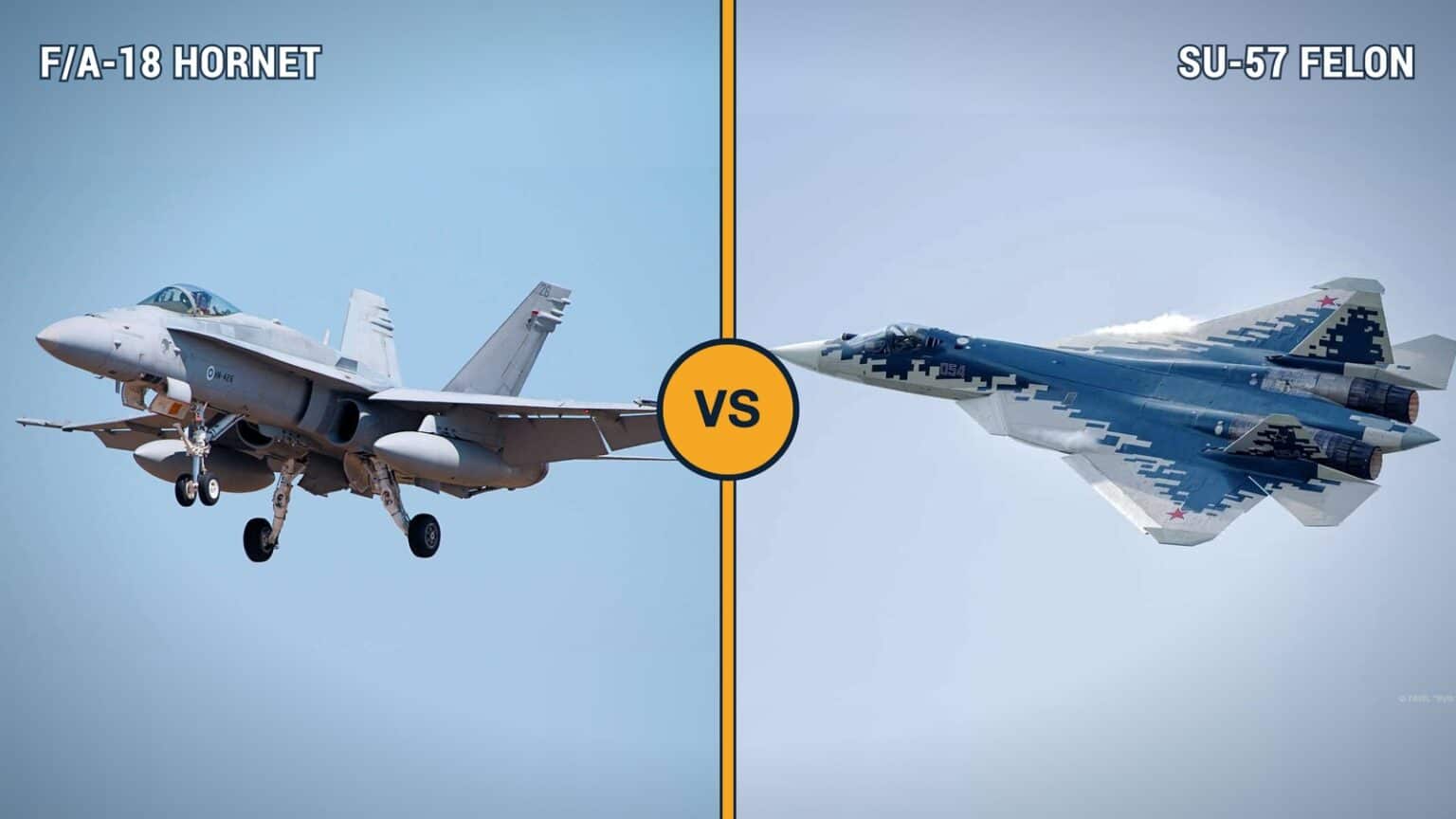
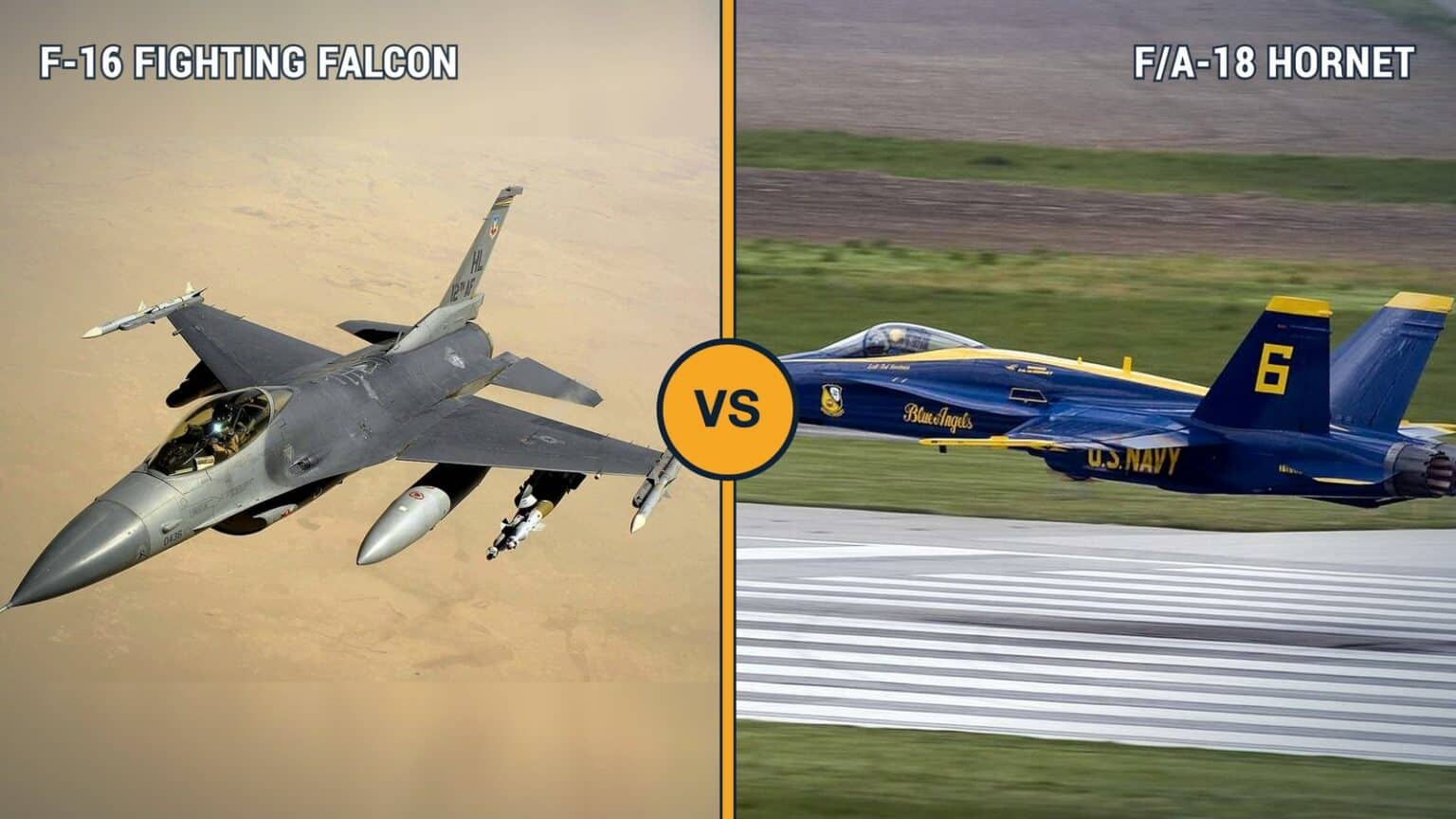
The Hornet was a carrier fighter from the start. The Navy flew it from 1984, and the Blue Angels switched to it in 1986, replacing the A-4 Skyhawk.
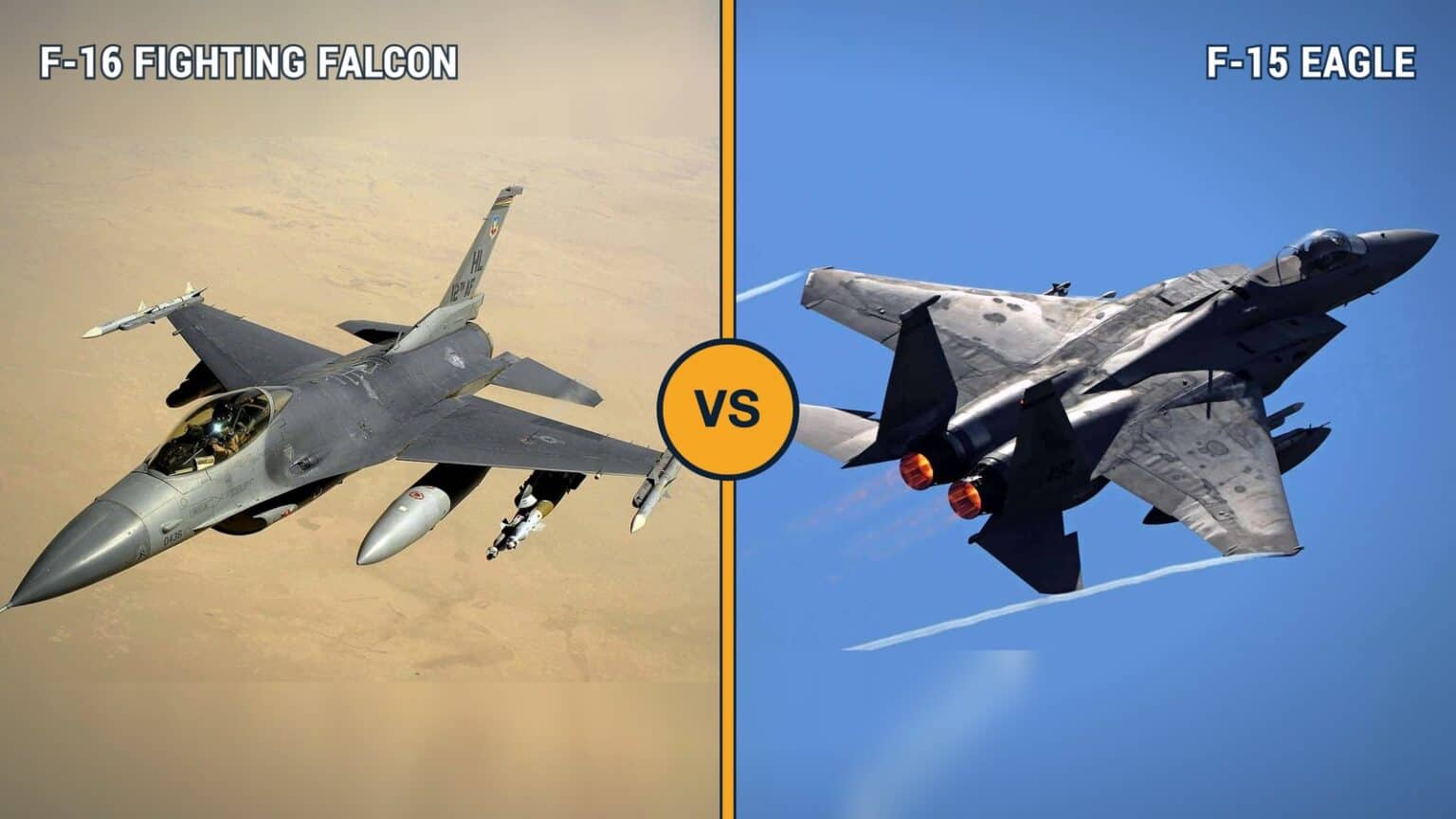
For a land-based air force with tankers and runways, that matters little. For a navy it decides everything. Our F-16 vs F-18 comparison covers how the Hornet stacks up against the Air Force’s other workhorse.
What each has done in combat
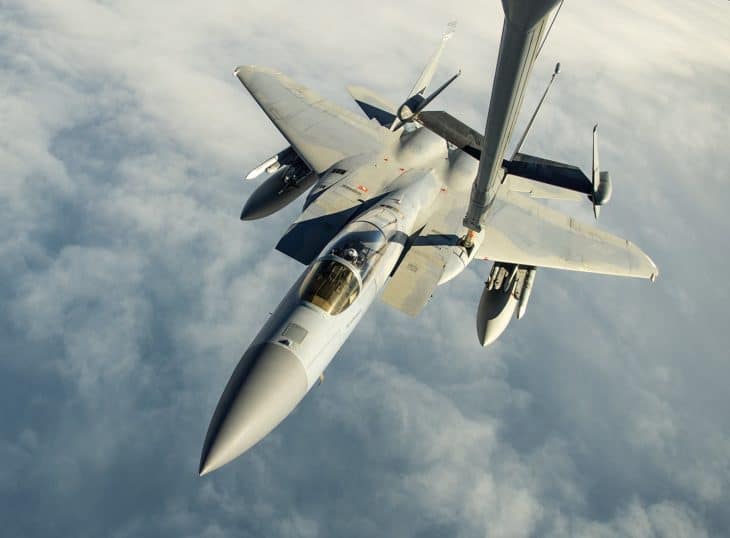
The Eagle’s record is the headline. Israeli pilots scored its first kill in 1979, and the type has 104 air-to-air kills and no losses to enemy aircraft through 2008.
In the 1991 Gulf War, F-15s took 36 of the USAF’s 39 air-to-air victories.
The Hornet’s first combat came in April 1986, when jets from USS Coral Sea flew missions over Libya. In the Gulf War, Hornets claimed two air-to-air kills, both MiG-21s.
On 17 January 1991, Lt. Cdr. Mark Fox and Lt. Nick Mongilio shot down both MiGs with AIM-7 and AIM-9 missiles. They then resumed their bombing run, each Hornet carrying four 2,000 lb bombs.
That one sortie sums up the type. The Eagle wins fights, and the Hornet fights and then bombs.
Which versions are people really comparing?
Searches for this matchup often mean different aircraft. The F-15 family includes the F-15E Strike Eagle, a two-seat strike variant with a weapon systems officer in the back seat. It is built for ground attack, not air superiority.
The Hornet family includes the F/A-18E/F Super Hornet, a larger new design that uses Hornet concepts. It is not the aircraft compared here. We use the F-15C and the F/A-18C because they are the two single-seat fighters that actually shared the same era.
Our Super Hornet page covers the newer jet, and the Eagle page lists its variants.
Where each stands today
The Air Force is replacing its older Eagles. Its last active-duty F-15C flight was on 24 January 2025, and it ordered the F-15EX in 2020, planning 144 aircraft.
The Navy retired its Hornets from active service on 1 February 2019. The US Marine Corps still operated 179 F/A-18C and D jets as of 2024, planning to replace them with the F-35 by 2030. Australia retired its Hornets in 2021.
Some of the Eagle’s best-known stories are about its toughness. In 1983 an Israeli F-15D collided with an A-4 Skyhawk and lost most of its right wing, and the pilot landed it safely at Ramon Airbase.


So which is better?
The short answer
Pick the F-15 for speed, range, radar and air-to-air dominance. Pick the Hornet for carrier operations and a jet that bombs as well as it fights. The Eagle wins the air battle; the Hornet does more jobs.
In a head-to-head air fight, the Eagle is the stronger aircraft on paper. It is faster, climbs higher and carries the bigger radar. Pilots, missiles and tactics decide real fights, and no record exists of the two meeting in combat.
The Hornet is the better choice if you need one aircraft for a carrier deck. It does the Eagle’s job well enough and a lot more besides.
For other Eagle matchups, see our F-16 vs F-15 comparison.
FAQ
Sources and references used for research and fact-checking.
About the Author

Tim is the owner and lead editor of AeroCorner since 2019, overseeing aviation content covering aircraft, airlines, airports, and the broader aviation industry. Through years of researching, writing, editing, and publishing aviation-focused content, he has developed extensive practical knowledge of commercial aviation and air travel. Based in Asia and a frequent traveler himself, Tim also brings firsthand passenger experience to AeroCorner’s coverage. Outside of publishing, he has also explored aviation firsthand through hands-on flight training in New Zealand.