

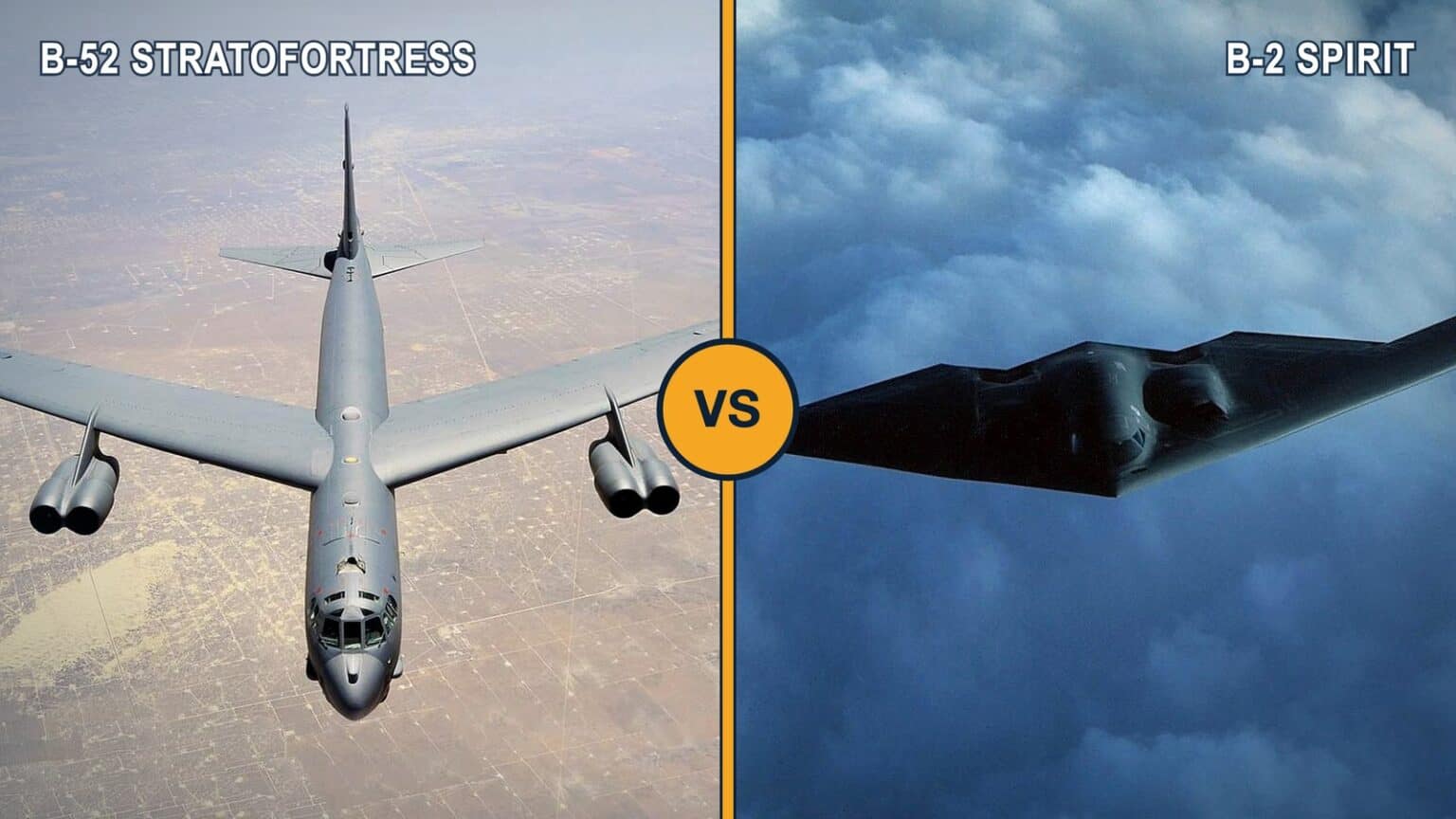
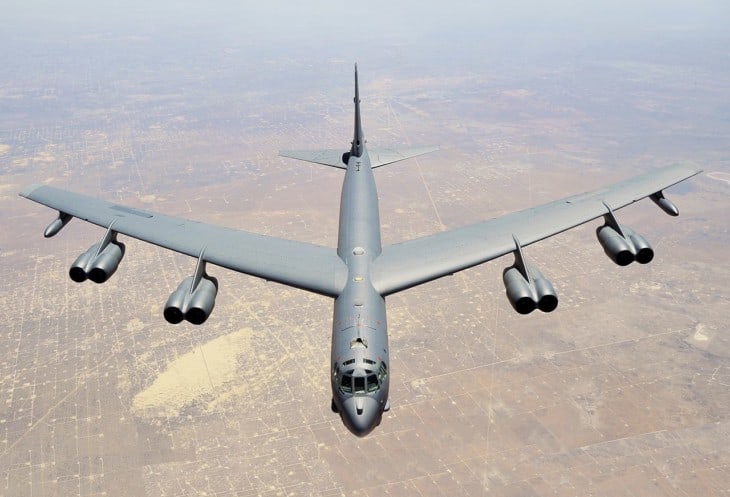
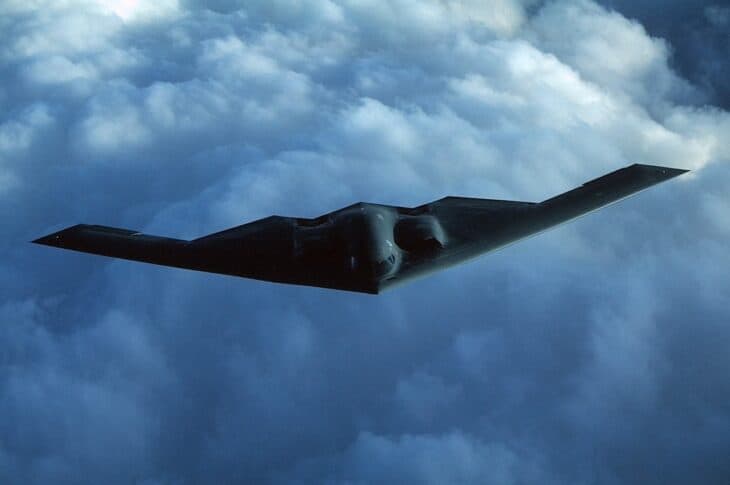
The B-2 Spirit is the better bomber against a defended enemy, because it is stealthy and can carry the 30,000 lb GBU-57 bunker buster. The B-52H Stratofortress is the better bomber everywhere else: cheaper to keep flying, more flexible, and planned to serve into the 2050s.
This page compares the B-52H, the only B-52 still in service, with the B-2A, the only B-2 variant.
General
Boeing B-52 Stratofortress
Manufacturer
Boeing
ICAO code
B52
Military code
B-52H
Produced
1952–1962
Price
$84 million (2012)
Engine
8 × Pratt & Whitney TF33-P-3/103
Engine type
Turbofan
Thrust
8 × 17,000 lbf · 76 kN
+97% (total)
Avionics
AN/ASQ-151 EVS, Sniper Advanced Targeting Pod, IBM AP-101
Wing tips
No winglets
Seats
5
Crew
—
Northrop Grumman B-2 Spirit
Manufacturer
Northrop Grumman
ICAO code
B2
Military code
B-2A
Produced
1987–2000
Price
$737 million (1997)
Engine
4 × General Electric F118-GE-100
Engine type
Turbofan
Thrust
4 × 17,300 lbf · 77 kN
-49% (total)
Avionics
Honeywell and GEC Avionics
Wing tips
No winglets
Seats
2
Crew
2
Dimensions
Boeing B-52 Stratofortress
Cabin width
—
—
—
Cabin height
—
—
—
Cabin length
—
—
—
Exterior length
159 ft 1 in
48.50 m
159 ft 1 in
48.50 m
+131%
Tail height
40 ft 8 in
12.40 m
40 ft 8 in
12.40 m
+139%
Fuselage diameter
9 ft 2 in
2.80 m
9 ft 2 in
2.80 m
Wing span
185 ft 0 in
56.40 m
185 ft 0 in
56.40 m
+8%
Baggage volume
—
—
—
Northrop Grumman B-2 Spirit
Cabin width
0 ft 0 in
0.00 m
0 ft 0 in
0.00 m
Cabin height
0 ft 0 in
0.00 m
0 ft 0 in
0.00 m
Cabin length
0 ft 0 in
0.00 m
0 ft 0 in
0.00 m
Exterior length
68 ft 11 in
21.00 m
68 ft 11 in
21.00 m
-57%
Tail height
17 ft 0 in
5.18 m
17 ft 0 in
5.18 m
-58%
Fuselage diameter
0 ft 0 in
0.00 m
0 ft 0 in
0.00 m
-100%
Wing span
172 ft 0 in
52.43 m
172 ft 0 in
52.43 m
-7%
Baggage volume
0 ft 0 in
0.00 m
0 ft 0 in
0.00 m
Weights
Boeing B-52 Stratofortress
Empty weight
185,000 lb
83,915 kg
185,000 lb
83,915 kg
+17%
Max payload
70,000 lb
31,800 kg
70,000 lb
31,800 kg
+17%
Fuel capacity
47,975 gal
181,605 L
47,975 gal
181,605 L
+92%
Max takeoff weight
488,000 lb
221,500 kg
488,000 lb
221,500 kg
+45%
Northrop Grumman B-2 Spirit
Empty weight
158,000 lb
71,668 kg
158,000 lb
71,668 kg
-15%
Max payload
60,000 lb
27,200 kg
60,000 lb
27,200 kg
-14%
Fuel capacity
24,925 gal
94,351 L
24,925 gal
94,351 L
-48%
Max takeoff weight
336,500 lb
152,500 kg
336,500 lb
152,500 kg
-31%
Performance
Boeing B-52 Stratofortress
Max cruise speed
565 kt · 650 mph
1,046 km/h
565 kt
650 mph
1,046 km/h
+3%
Max speed
565 kt · 650 mph
1,046 km/h
565 kt
650 mph
1,046 km/h
+3%
Cruise speed
442 kt · 509 mph
819 km/h
442 kt
509 mph
819 km/h
-9%
Rate of climb
6,270 ft/min
32 m/s
6,270 ft/min
32 m/s
+109%
Range
7,652 nm · 8,810 mi
14,170 km
7,652 nm
8,810 mi
14,170 km
+28%
Service ceiling
50,000 ft
15,200 m
50,000 ft
15,200 m
0%
Takeoff distance
—
—
—
Landing distance
—
—
—
Northrop Grumman B-2 Spirit
Max cruise speed
546 kt · 628 mph
1,011 km/h
546 kt
628 mph
1,011 km/h
-3%
Max speed
546 kt · 628 mph
1,011 km/h
546 kt
628 mph
1,011 km/h
-3%
Cruise speed
487 kt · 560 mph
902 km/h
487 kt
560 mph
902 km/h
+10%
Rate of climb
3,000 ft/min
15 m/s
3,000 ft/min
15 m/s
-52%
Range
6,000 nm · 6,900 mi
11,110 km
6,000 nm
6,900 mi
11,110 km
-22%
Service ceiling
50,000 ft
15,200 m
50,000 ft
15,200 m
0%
Takeoff distance
6,700 ft
2,040 m
6,700 ft
2,040 m
Landing distance
3,450 ft
1,050 m
3,450 ft
1,050 m
Boeing B-52 Stratofortress comparisons
Northrop Grumman B-2 Spirit comparisons
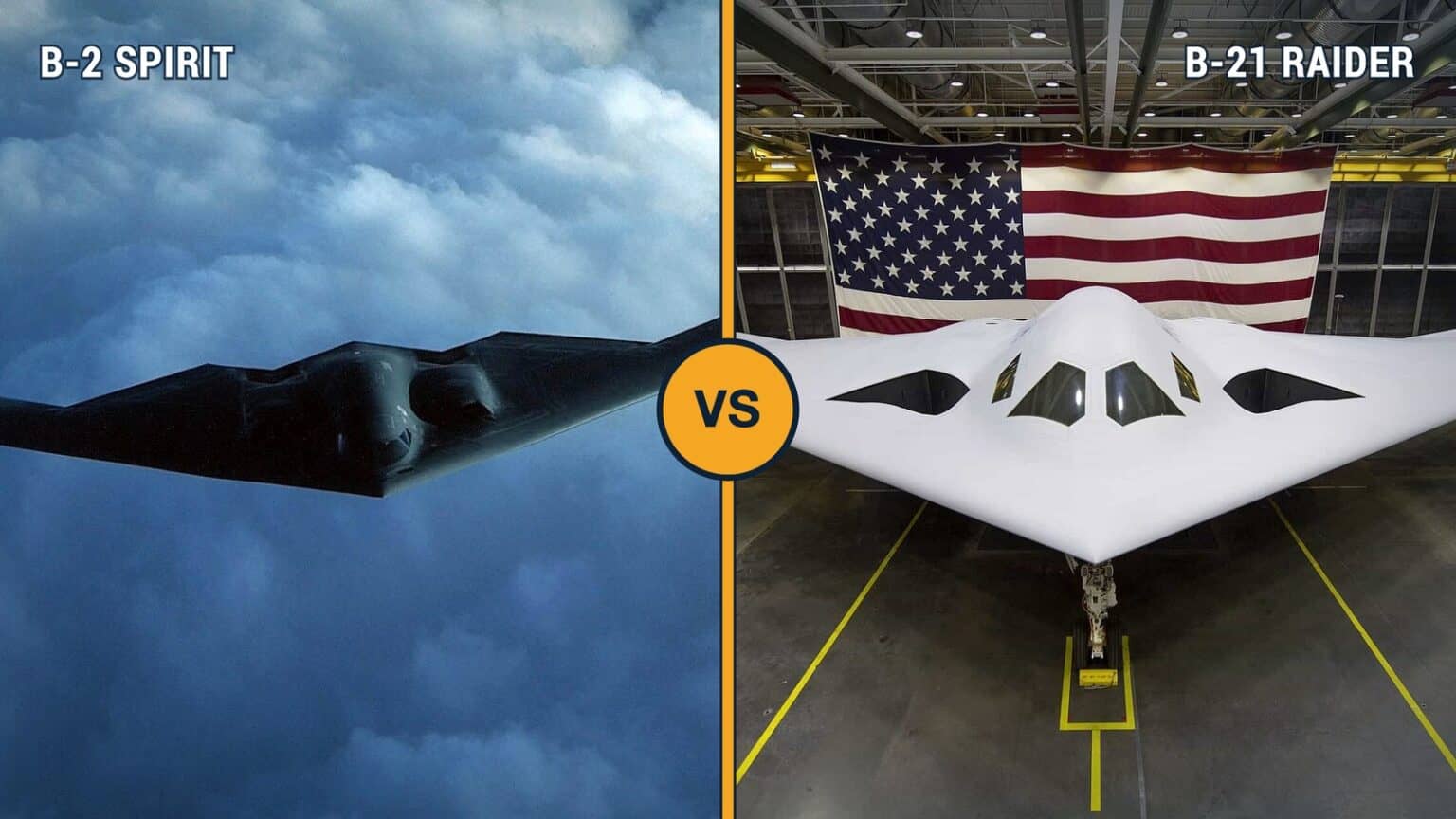
Table of Contents
| Measure | B-52H Stratofortress | B-2A Spirit |
|---|---|---|
| Built for | Nuclear deterrence, later conventional bombing | Penetrating heavily defended airspace to hit any target |
| Stealth | None | Low-observable flying wing |
| First flight | April 15, 1952 | July 17, 1989 |
| Built | 744, of which 102 were B-52Hs | 21 |
| In US service | About 76 (2024) | 19 (one lost in 2008, one not repaired after a 2022 accident) |
| Weapons carried | On wing pylons and in the bomb bay | In two internal bays |
| Nuclear role today | Yes, the AGM-86B cruise missile | Yes, B61 and B83 gravity bombs |
| Combat debut | Vietnam, 1965 | Kosovo, 1999 |
| Planned retirement | Into the 2050s, after re-engining | Replaced by the B-21 Raider |
How we compare the B-52 and the B-2
The B-52 and the B-2 are the two bombers the US Air Force would send first against a serious enemy, for very different reasons. One is a 1950s design that keeps getting new engines, radars and weapons. The other is a 1980s stealth design built to slip past air defenses.
We compare the B-52H and the B-2A. They are the only versions still flying. Where a point applies to one variant only, we name it.
Full specifications for the Boeing B-52 Stratofortress and the Northrop Grumman B-2 Spirit sit in our aircraft database.
Two bombers, two bargains
The B-2 gives you stealth and the one bomb that can reach the deepest bunkers. The B-52 gives you weapon variety, a bigger fleet and a plan that keeps it flying decades longer. Neither is a substitute for the other, which is why both are staying until the B-21 Raider arrives.
Which is better, the B-52 or the B-2?
It depends on the target. Against a heavily defended one, the B-2. For everything else, the B-52H.
The B-2 can get in unseen and has the only bomb built for the deepest bunkers. The B-52H is far more numerous, can launch missiles from outside enemy air defenses, and is cheap enough to fly in peacetime.
Where the B-52 Stratofortress wins
A longer future
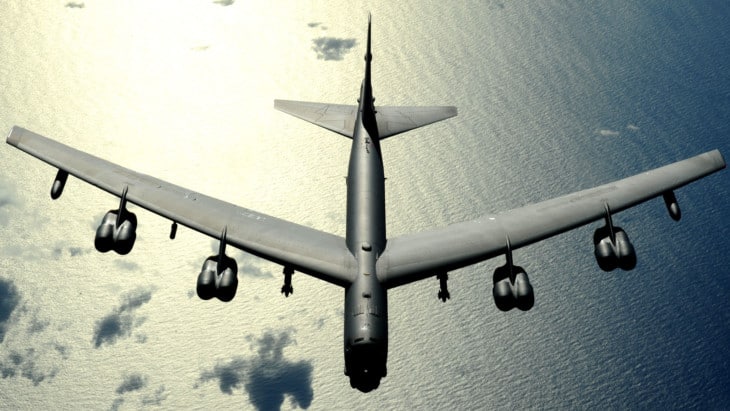
The USAF picked the Rolls-Royce F130 engine in September 2021 to re-engine the fleet. Upgraded aircraft become B-52Js, with initial operational capability planned for 2033.
A new radar and new cockpit displays are planned too. The bomber is expected to serve into the 2050s.
A bigger fleet
The USAF has about 76 B-52Hs and 19 B-2s. A larger fleet means more bombers can be in the air at once, and losing one hurts far less.
The B-2 fleet is the opposite case. It started at 21 aircraft and has lost two.
Weapon variety
The B-52H carries AGM-86 cruise missiles, AGM-158 JASSM missiles, JDAM bombs, Harpoon anti-ship missiles and Quickstrike naval mines. It can fire many of them from far outside enemy air defenses.
It is also in line for the new LRSO nuclear cruise missile, planned to replace the AGM-86.
Where the B-2 Spirit wins
Stealth
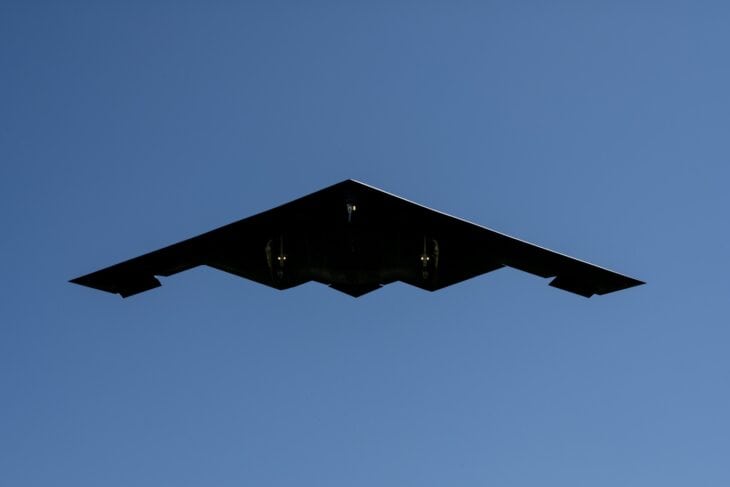
The B-2 is a flying wing built to be hard to detect on radar. That lets it fly into airspace where a B-52 would need the defenses suppressed first.
The B-52 has no stealth features. Its survival against a modern air-defense network depends on firing from standoff range.
Stealth also shapes how the two are used. The B-2 is kept for the missions where being seen would mean losing the aircraft, and the B-52 takes the rest.

The deepest bunkers
The B-2 is the only US bomber cleared to carry the 30,000 lb GBU-57 Massive Ordnance Penetrator. It carries up to two, one in each bay.
On June 22, 2025, seven B-2s flew from Missouri and struck Iran’s Fordow and Natanz nuclear sites with 14 of the bombs in Operation Midnight Hammer.
Crew and endurance
The B-2 flies with a crew of two, against five in the B-52H. With aerial refueling it has flown missions of more than 40 hours, as in the 44-hour flight to Afghanistan in 2001.
That means fewer people at risk, and a bomber that can go from Missouri to the other side of the world and back in one go.
Combat records
The B-52 has flown in Vietnam, the Gulf War, Kosovo, Afghanistan and Iraq. It dropped its first bombs in anger in 1965 and is still flying combat missions six decades later.


The B-2 made its combat debut over Kosovo in 1999. It has since flown in Afghanistan, Iraq and Libya, and in the 2025 Iran strikes.

How they work together
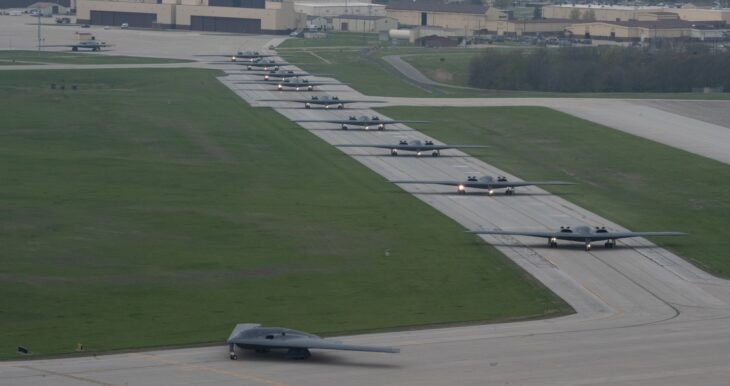
The two bombers are not rivals inside the Air Force. They cover different parts of the same mission, and a large strike usually needs both.
The B-2 goes first against targets protected by air defenses. Once those defenses are damaged, the B-52 can follow with a bigger and cheaper load of bombs and missiles.
Both also fly Bomber Task Force deployments. These send bombers to bases overseas to train with allies and signal to rivals, and the B-52 is the more common visitor because there are more of them.
Cost and upkeep
Stealth is expensive to keep up. The B-2’s radar-absorbent skin needs climate-controlled hangars and a lot of maintenance between flights.
The B-52 has a simple, well-understood airframe and a huge supply of spares. That is a large part of why the Air Force is willing to keep it for another three decades.
The Air Force has not published a cost per flight hour that we could verify for both types in the same year, so we do not compare one here.
The nuclear role
Both bombers are part of the US nuclear triad. The B-52H carries the AGM-86B cruise missile, which it can launch from far outside enemy territory.
The B-2 carries B61 and B83 gravity bombs, which it must drop over the target. That is why stealth matters so much for its nuclear mission.
The replacement: B-21 Raider
The Northrop Grumman B-21 Raider is meant to replace the B-2 and the B-1B. The B-52 is the exception: the USAF plans to keep it beside the B-21 into the 2050s.
For the full list of stealth bombers, see our stealth bombers ranked, and for the fleet count, how many B-2 bombers are left.
FAQ
Against a defended target, yes. The B-2 is stealthy and is the only US bomber that carries the 30,000 lb GBU-57. The B-52H carries a wider range of weapons, can fire from outside air defenses and is far more numerous.
Both are subsonic. Our spec table lists 650 mph for the B-52H and 628 mph for the B-2A. The difference does not decide their missions.
The B-52H, on our figures: 70,000 lb of payload against 60,000 lb for the B-2A. The B-52 carries weapons on wing pylons as well as inside, while the B-2 carries all of its load internally.
Nineteen are in US service. Northrop Grumman built 21, one was destroyed in a 2008 crash on Guam, and one damaged in a 2022 landing accident was not repaired.
No. The B-21 is planned to replace the B-2 and the B-1B. The USAF expects to fly re-engined B-52s into the 2050s.
Yes. The B-2 carries a toilet and a small galley, because missions can last more than 24 hours.
Sources and references used for research and fact-checking.
About the Author

Tim is the owner and lead editor of AeroCorner since 2019, overseeing aviation content covering aircraft, airlines, airports, and the broader aviation industry. Through years of researching, writing, editing, and publishing aviation-focused content, he has developed extensive practical knowledge of commercial aviation and air travel. Based in Asia and a frequent traveler himself, Tim also brings firsthand passenger experience to AeroCorner’s coverage. Outside of publishing, he has also explored aviation firsthand through hands-on flight training in New Zealand.