


Table of Contents
| Measure | B-36 Peacemaker | B-52 Stratofortress |
|---|---|---|
| Role | Piston-engined intercontinental bomber, with jet pods added | Jet-powered heavy bomber, nuclear and conventional |
| First flight | August 8, 1946 | April 15, 1952 (YB-52 prototype) |
| Into Strategic Air Command | June 26, 1948 | First B-52 delivered June 29, 1955 |
| Built | 388 | 744 of all models |
| Combat record | Never used in combat | Used in the Vietnam War and Operation Desert Storm |
| Status | Retired in 1959 | Only the B-52H still flies: 76 aircraft |
How we compare the B-36 and the B-52
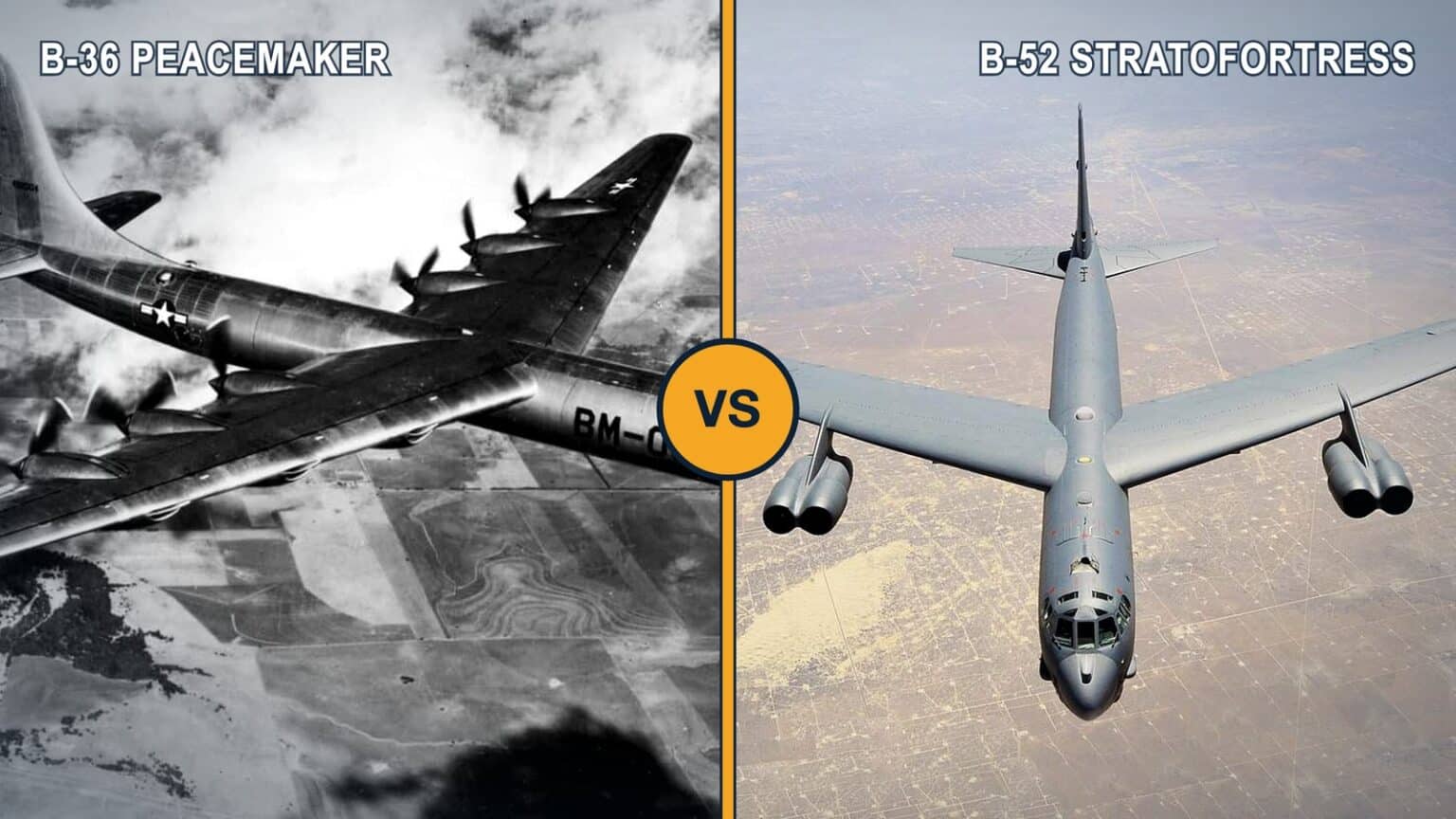
The B-36 and the B-52 were built for the same job, delivering nuclear weapons over intercontinental distances for Strategic Air Command. One handed that job to the other.
So this comparison covers what readers ask: which is bigger, which is faster, which flies farther, and why the B-52 won. Full specifications sit on our B-36 Peacemaker and B-52 Stratofortress pages.
The Peacemaker has the reach, the Stratofortress has everything else
The B-36 wins on wingspan, length and range. The B-52 wins on speed, ceiling and takeoff weight, and it is still in service. The B-36 was never used in combat.
B-36 vs B-52 size: which is bigger?
The B-36 is the bigger airframe. It is 162 ft 1 in (49.40 m) long against 159 ft 1 in (48.50 m) for the B-52, a gap of 3 feet.
The wing is the real difference. The Peacemaker spans 230 ft 0 in (70.10 m), about 45 feet (13.7 m) wider than the B-52’s 185 ft 0 in (56.40 m). Its tail stands 46 ft 9 in (14.25 m) high, against 40 ft 8 in (12.40 m).
Weight goes the other way. The B-52’s maximum takeoff weight is 488,000 lb (221,500 kg), against 410,000 lb (186,000 kg) for the B-36. Its empty weight is 185,000 lb (83,915 kg), against 166,165 lb (75,371 kg).

Where the B-36 Peacemaker wins
The Peacemaker beats the B-52 on three numbers: wingspan, range and payload. Each came from the same design choice, a huge wing and a lot of fuel.
Its range is 10,010 mi (16,110 km), against 8,810 mi (14,170 km) for the B-52. The Federation of American Scientists lists a 10,000-mile range for the type.
Its maximum payload is 86,000 lb (39,000 kg), against 70,000 lb (31,800 kg) for the B-52. At that load the combat radius falls to 1,757 nautical miles, according to the same source.
It also flew with six Pratt & Whitney R-4360 radial engines at 3,800 hp each, plus four General Electric J47 turbojets of 5,200 lbf each.

Myth check: the B-36 was not a failure
The Peacemaker never dropped a bomb in combat, which leads some to call it a waste. The Federation of American Scientists argues the opposite: that record is what it was built for, keeping the peace. It served from 1948 to 1959 and was retired only when the jet B-52 arrived.
Where the B-52 Stratofortress wins
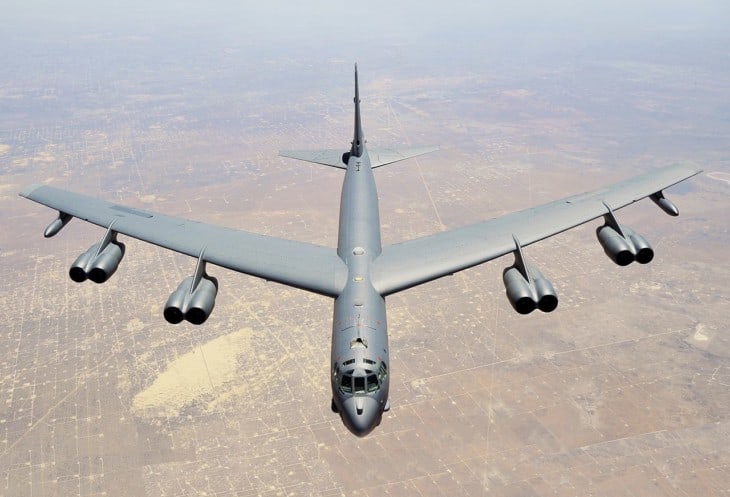
The B-52 is faster and flies higher. Its maximum speed is 650 mph (1,046 km/h), against 435 mph (700 km/h). Its ceiling is 50,000 ft (15,200 m), against 45,700 ft (13,900 m).
It also climbs faster, at 6,270 ft/min (32 m/s) against 1,995 ft/min (10 m/s). Eight Pratt & Whitney TF33 turbofans, each 17,000 lbf (76 kN), do the work of the Peacemaker’s ten engines.
Its range is shorter on paper, but aerial refueling removes that limit. The Federation of American Scientists says the B-52 was used in Vietnam and in Operation Desert Storm.

Cruise speed and the long way across
Cruise speed shows the gap better than top speed. The B-36 cruised at 230 mph (370 km/h), against 509 mph (819 km/h) for the B-52.
That meant a long intercontinental mission took far longer in a Peacemaker, with a crew of 13 aboard for the whole trip. The B-52 cruises more than twice as fast.
The fuselages differ too. The B-36’s is 11 ft 6 in (3.50 m) in diameter, against 9 ft 2 in (2.80 m) for the B-52.
Why the B-52 replaced the B-36
The B-36 was a piston bomber from the end of the propeller age. The first B-52 reached Strategic Air Command on June 29, 1955, and the Air Force replaced the B-36 with the B-52 in 1958 and 1959, when it had almost 500 B-52s.
The Peacemaker flew for about eight years in service. The B-52 has now flown for more than 70, and the Air Force intends to keep it flying beyond 2050.


Crew, fuel and cost compared
The two bombers differ most in how many people they needed. Our database lists 13 crew for the B-36 and 5 seats for the B-52.
Fuel tells the same story of two generations. The Peacemaker carried 36,400 gal (137,800 L) of aviation gasoline, while the B-52 carries 48,000 gal (181,600 L) of jet fuel.
Cost figures come from different years, so they cannot be compared directly. The B-36 is listed at $4.1 million in 1949 dollars, and the B-52 at $84 million in 2012 dollars.
The B-52 figure is a program estimate that reflects decades of upgrades. It is not an original price.
Which was the better bomber?
The B-36 was the better answer to the problem of 1948. It could fly from the United States to targets across the world and back with a heavy load, and no other bomber of its day matched its wing.
The B-52 was the better answer to every problem after that. Jet engines made it faster and let it fly higher, and it could be built in far greater numbers: 744 against 388.
That is why the Peacemaker lasted about eight years in service and the Stratofortress is still in use. The Air Force operates 76 B-52H bombers today, and it plans to modernize all of them.
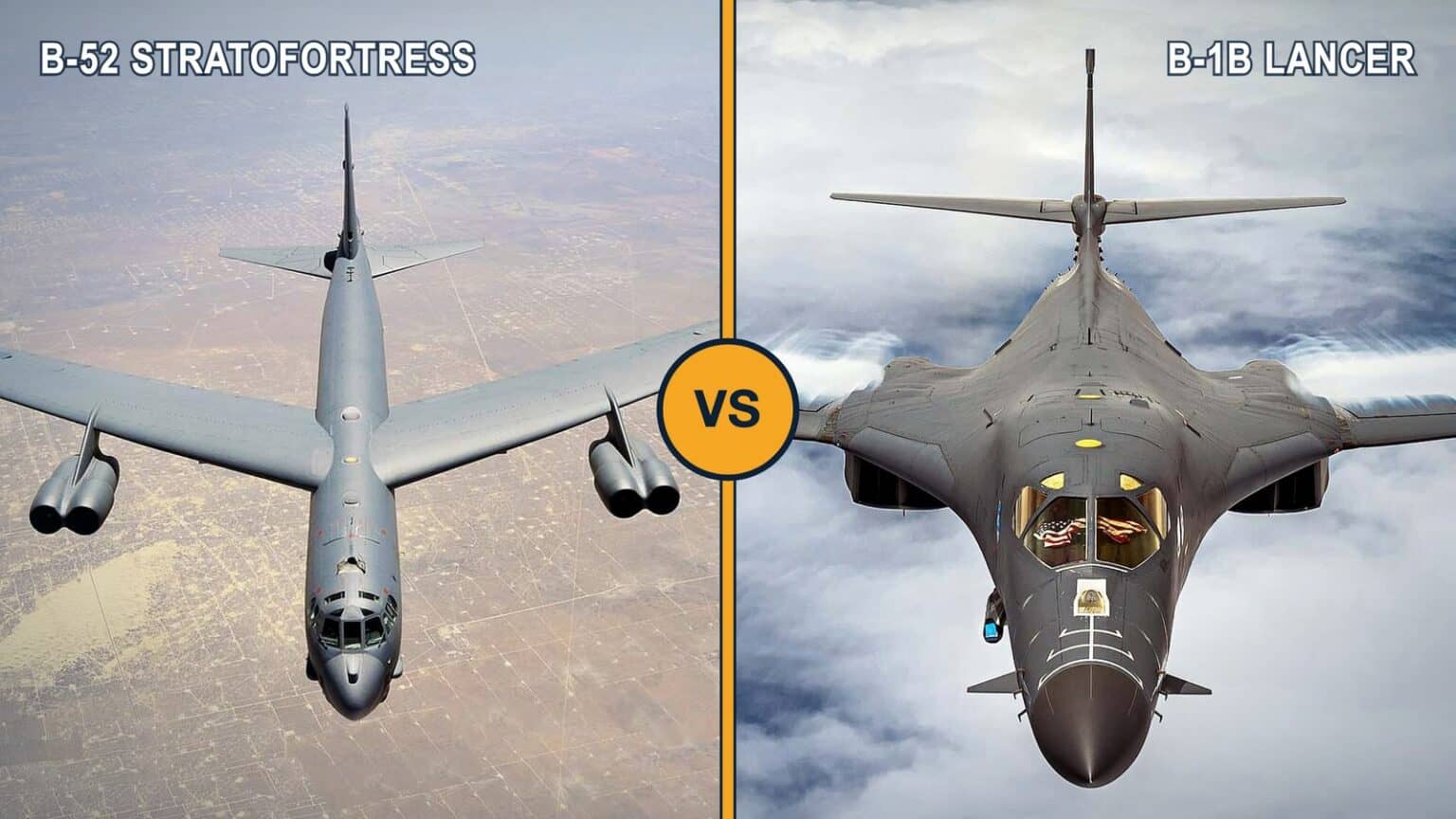
For more on the heavy bombers of the jet age, see our guide to the best bombers in the world.
FAQ
Sources and references used for research and fact-checking.
About the Author

Tim is the owner and lead editor of AeroCorner since 2019, overseeing aviation content covering aircraft, airlines, airports, and the broader aviation industry. Through years of researching, writing, editing, and publishing aviation-focused content, he has developed extensive practical knowledge of commercial aviation and air travel. Based in Asia and a frequent traveler himself, Tim also brings firsthand passenger experience to AeroCorner’s coverage. Outside of publishing, he has also explored aviation firsthand through hands-on flight training in New Zealand.