

Table of Contents
| Measure | B-52H Stratofortress | B-1B Lancer |
|---|---|---|
| Built for | Nuclear deterrence, later conventional bombing | Fast, low-level nuclear penetration, later conventional bombing |
| First flight | April 15, 1952 | December 23, 1974 (B-1A prototype) |
| Entered service | February 1955 (B-52H: May 9, 1961) | October 1, 1986 (B-1B initial operational capability) |
| Built | 744, last delivered in 1962 | 104 (4 B-1A, 100 B-1B) |
| In US service | About 76 (2024) | 45 (since the 2021 retirements) |
| Nuclear role today | Yes, the AGM-86B cruise missile | No, ended 1994 under START I |
| Combat debut | Vietnam, 1965 | Operation Desert Fox, 1998 |
| Planned retirement | Into the 2050s | About 2038, with the B-21 Raider replacing it |
How we compare the B-52 and the B-1
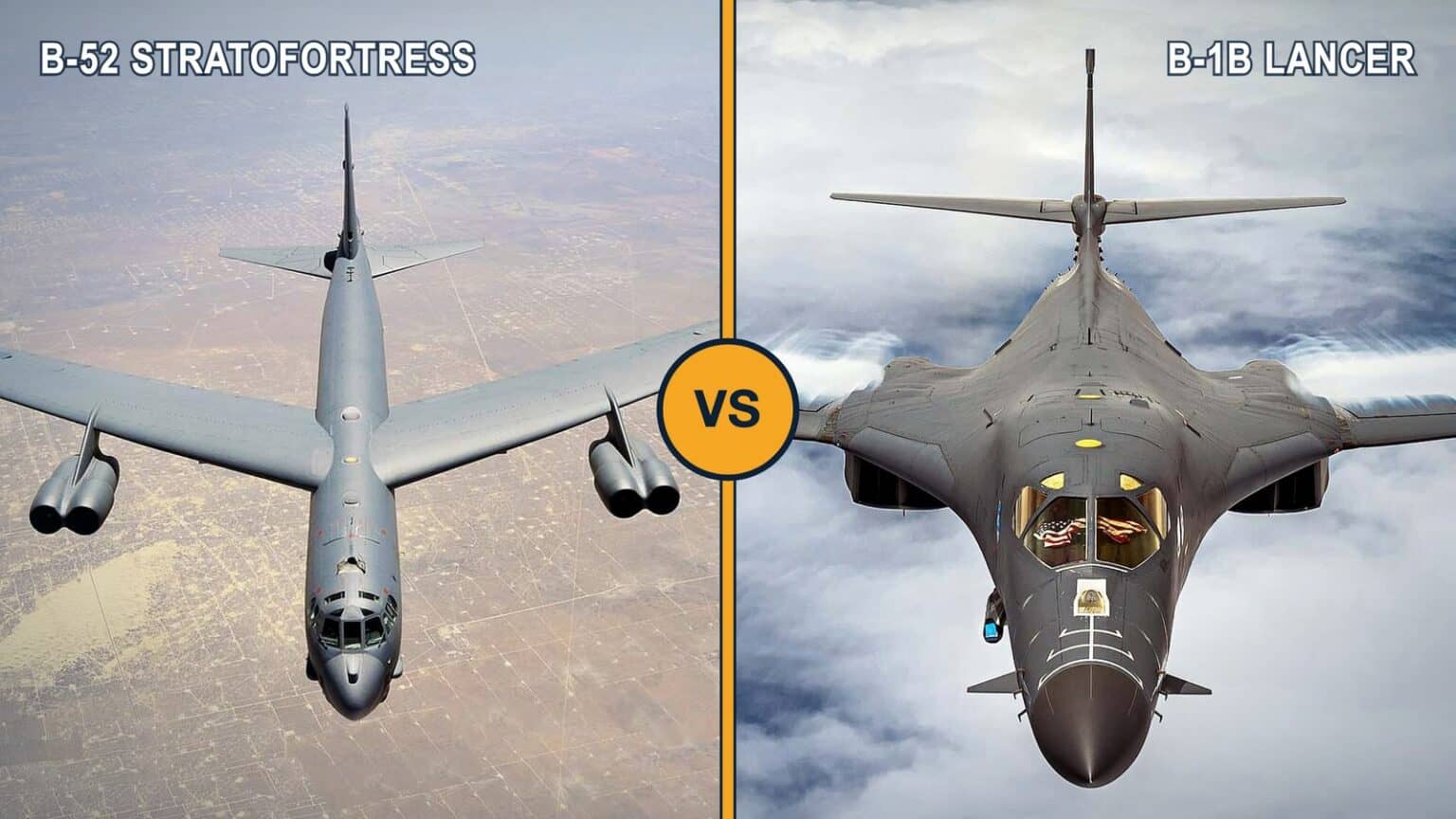
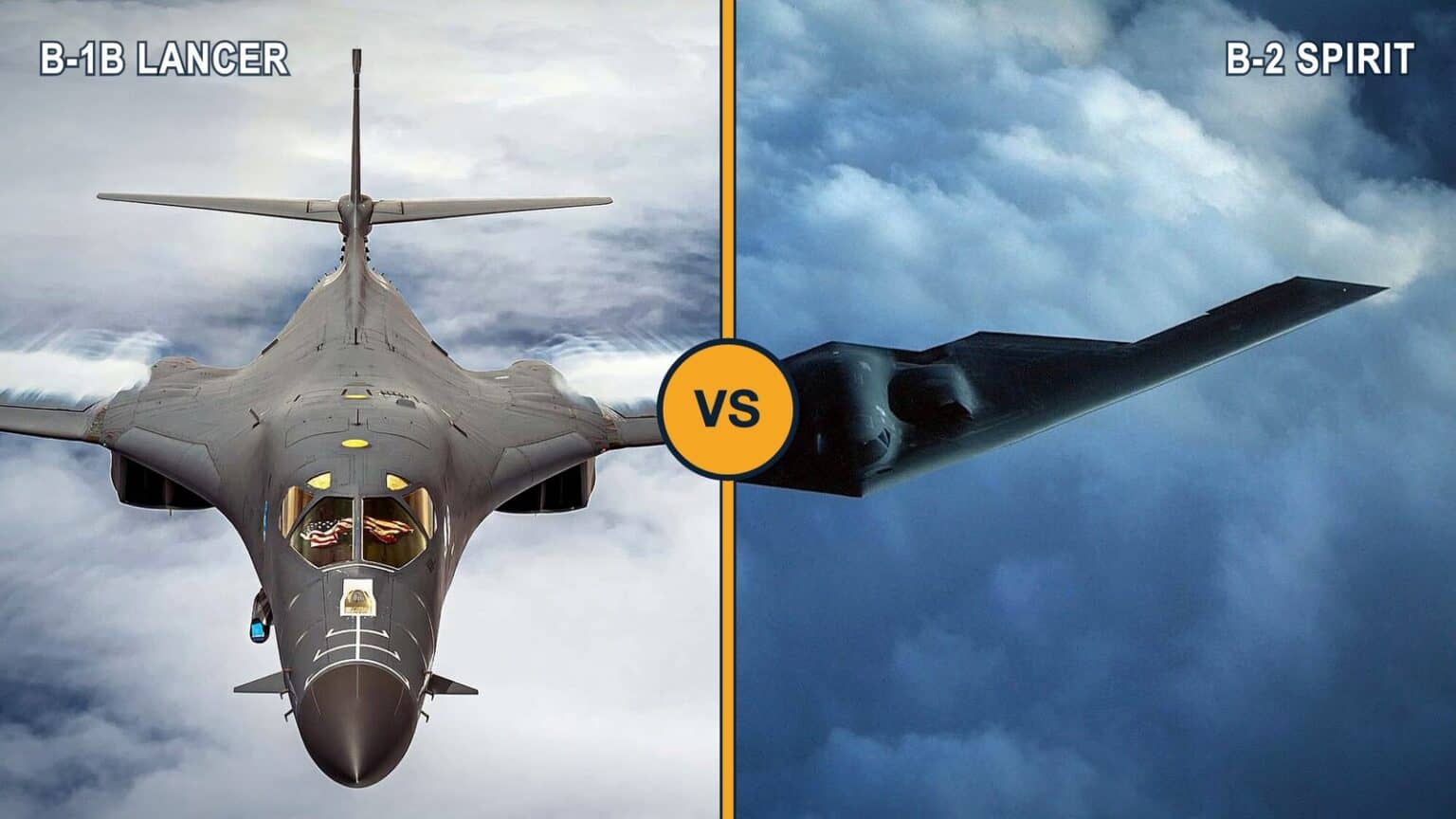
The B-52 and the B-1 are the two bombers that carry most of the US Air Force’s conventional bombing load. One is a 1950s design that keeps getting new engines and radars. The other is a 1970s design built to dash in low and fast.
We compare the B-52H and the B-1B. They are the only versions still flying. Where a figure applies to one variant only, we name it.
Full specifications for the Boeing B-52 Stratofortress and the Rockwell B-1B Lancer sit in our aircraft database.
Two bombers, two bargains
The B-1B gives you speed and a big bomb load on a younger airframe. The B-52H gives you reach, weapon variety and an upgrade plan that runs decades longer. Neither is stealthy, which is why both are being joined by the B-21 Raider.
Which is better, the B-52 or the B-1?
It depends on the job. For speed and getting to a target quickly, the B-1B. For staying power and flexibility, the B-52H.
The Lancer is supersonic and carries a very large conventional load. The Stratofortress is subsonic, but it can still launch nuclear cruise missiles, and it has the longer future.
The numbers are close on payload. Our spec table lists a 75,000 lb maximum for the B-1B and 70,000 lb for the B-52H.
Where the B-52 Stratofortress wins
A longer future
The USAF picked the Rolls-Royce F130 in September 2021 to re-engine the fleet. Upgraded aircraft become B-52Js, with initial operational capability planned for 2033.
A new radar, new cockpit displays and new pylons are planned too. The bomber is expected to serve into the 2050s.

The nuclear mission
The B-52H is the only one of the two still assigned a nuclear weapon, the AGM-86B cruise missile. Nuclear gravity bombs were removed from its capabilities.
The B-1B lost its nuclear role in 1994 under the START I treaty, and its nuclear capability was disabled by 1995.
A wider weapon list
The B-52H carries AGM-142, AGM-154 and AGM-158 missiles, many JDAM bombs, Harpoon anti-ship missiles and Quickstrike naval mines. It is also in line for the AGM-183A hypersonic missile and the new LRSO nuclear cruise missile.
The B-1B carries JDAMs, JASSM and LRASM missiles. A 2019 change raised its load from 24 to 40 weapons.


Readiness
In 2000 and 2001 the B-52 averaged an 80.5% mission-capable rate. The B-1B averaged 53.7%.
Those figures are two decades old. They show the B-52’s simple, well-understood airframe, not today’s readiness.
Where the B-1B Lancer wins
Speed
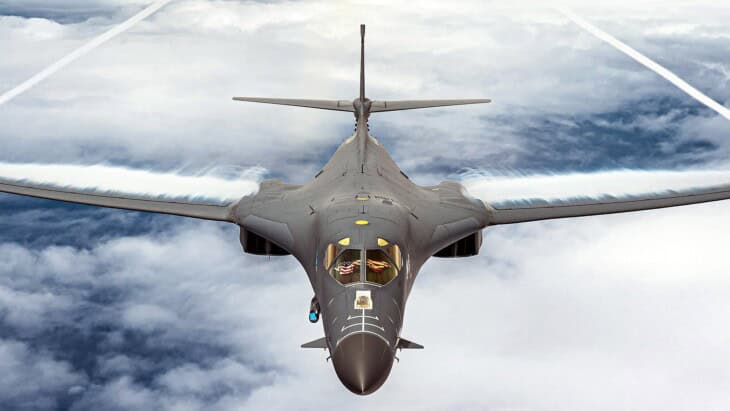
The B-1B is a supersonic bomber with variable-sweep wings. It tops out at Mach 1.25 at altitude, and its swept wings span 79 ft against 137 ft spread.
The B-52 was never designed for supersonic flight. Where timing matters, the Lancer gets there first.

A younger airframe
The last B-52H was delivered on October 26, 1962. The B-1B entered service in 1986, and 100 were built.
Age is not the whole story, since the B-52 gets new engines. But the Lancer’s structure is more than two decades newer.
Combat debut and a busy first war
The B-1B flew its first combat missions in Operation Desert Fox in December 1998, dropping unguided gravity bombs on Iraq.
In the first six months of Operation Enduring Freedom, eight B-1s dropped nearly 40% of the ordnance, including about 3,900 JDAMs.

How each bomber carries its weapons
The B-1B has three internal bomb bays that hold up to 75,000 lb of ordnance. Six external hardpoints take up to 50,000 lb more.
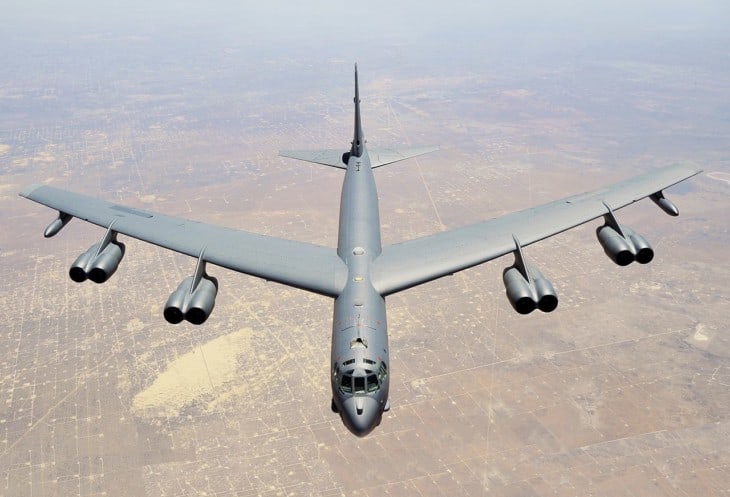
The B-52H works differently. It hangs weapons on underwing pylons, and 82 B-52Hs were also modified to carry eight more missiles on an internal rotary launcher.
Its internal weapons bay now supports precision munitions through MIL-STD-1760 upgrades.
Safety and reliability
The B-1B has had a harder service life. The Aviation Safety Network lists 15 accidents from 1984 to 2024, with 11 B-1s lost and 12 crew killed.
Engine failures in 1990 grounded B-1Bs not on nuclear alert for more than 50 days. The fault was traced to the first-stage fan, and every B-1B got modified engines.
The B-52 has a simpler layout. It flew 1,620 sorties in the Gulf War and delivered about 40% of the weapons the coalition dropped.
How they got here
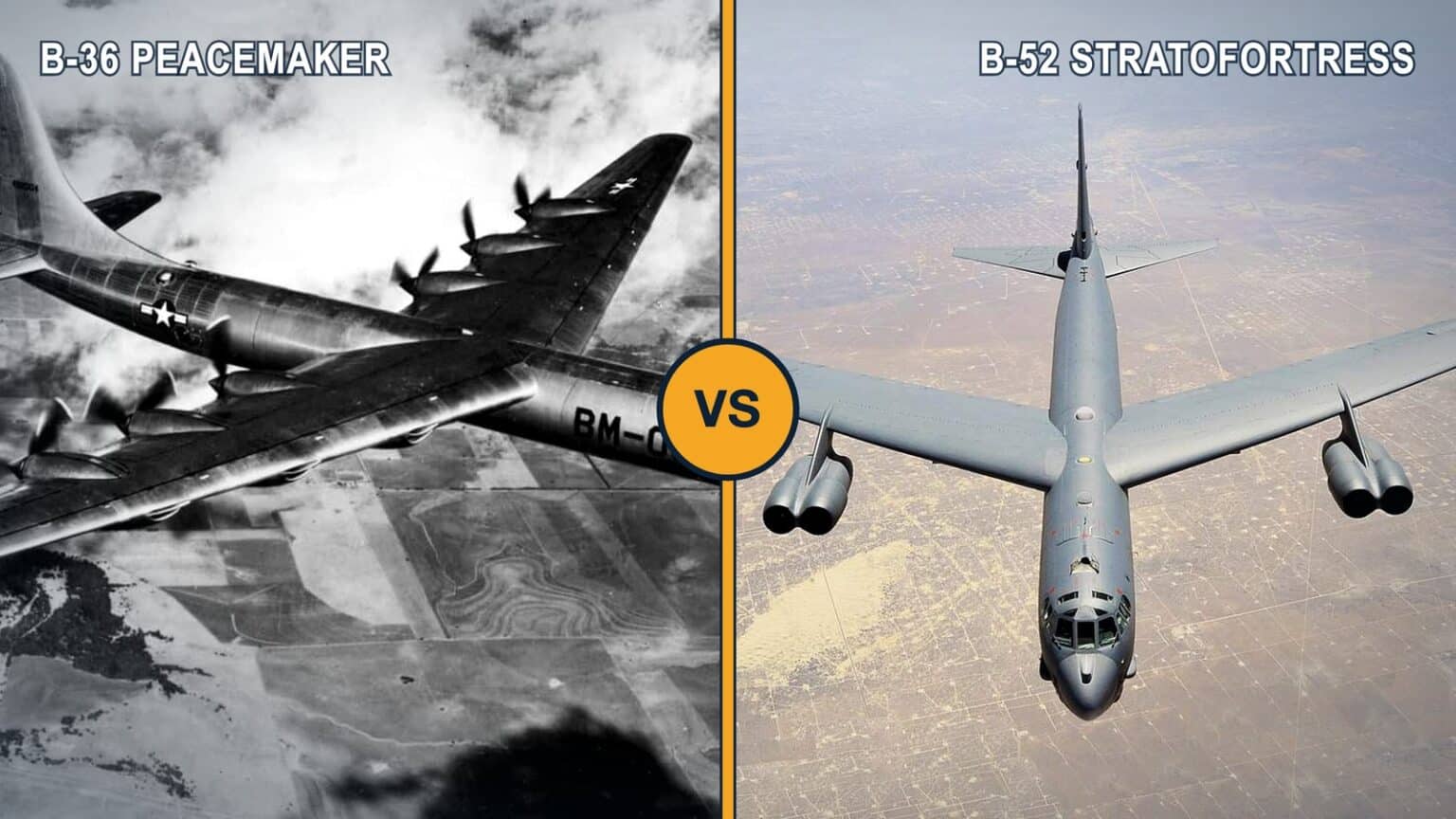
The B-52 first flew on April 15, 1952. The first combat mission, Operation Arc Light, came on June 18, 1965.
In Operation Linebacker II (December 18 to 29, 1972) B-52s flew 729 sorties and dropped 15,237 tons of bombs. 15 were shot down. 31 B-52s were lost across the Vietnam War.
The B-1A first flew on December 23, 1974. President Carter cancelled it on June 30, 1977, and President Reagan revived it as the B-1B on October 2, 1981.
The B-1B was the bomber built for low-level penetration of Soviet air defenses. That mission never came, and the aircraft became a conventional bomber in the 1990s.
Which will last longer?
The B-52. After the 2021 retirement of 17 aircraft, the USAF has 45 B-1Bs, and they may serve until about 2038. The B-21 Raider is meant to replace them.
The B-52 fleet of about 76 aircraft is set to fly into the 2050s. For a bomber first flown in 1952, that is a long career. Our guide to how many B-1 bombers are left has the full count.
FAQ
Sources and references used for research and fact-checking.
About the Author

Tim is the owner and lead editor of AeroCorner since 2019, overseeing aviation content covering aircraft, airlines, airports, and the broader aviation industry. Through years of researching, writing, editing, and publishing aviation-focused content, he has developed extensive practical knowledge of commercial aviation and air travel. Based in Asia and a frequent traveler himself, Tim also brings firsthand passenger experience to AeroCorner’s coverage. Outside of publishing, he has also explored aviation firsthand through hands-on flight training in New Zealand.