


Table of Contents
| Question | Tu-160 / Tu-160M | B-1B Lancer |
|---|---|---|
| Role | Standoff cruise-missile carrier | Conventional bomber, originally a low-level nuclear penetrator |
| First flight | 18 December 1981 | 23 December 1974 (B-1A); 18 October 1984 (B-1B) |
| Entered service | April 1987 | 1 October 1986 |
| Number built | 41, including 9 test aircraft | 104 including the B-1A prototypes |
| Combat debut | Syria, November 2015, Kh-101 cruise missiles | Iraq, Operation Desert Fox, December 1998 |
| Operators | Russia | United States |
| Nickname | White Swan | The Bone |
Which came first, the B-1 or the Tu-160
The B-1 did. The B-1B Lancer descends from the B-1A, which first flew on 23 December 1974.
President Carter cancelled the B-1A in 1977, and the program came back as the B-1B. It entered service on 1 October 1986.
The Tu-160 first flew on 18 December 1981 and entered service in April 1987. Tupolev built it for a Soviet competition launched in response to the US B-1 program.
Did the Soviets copy the B-1
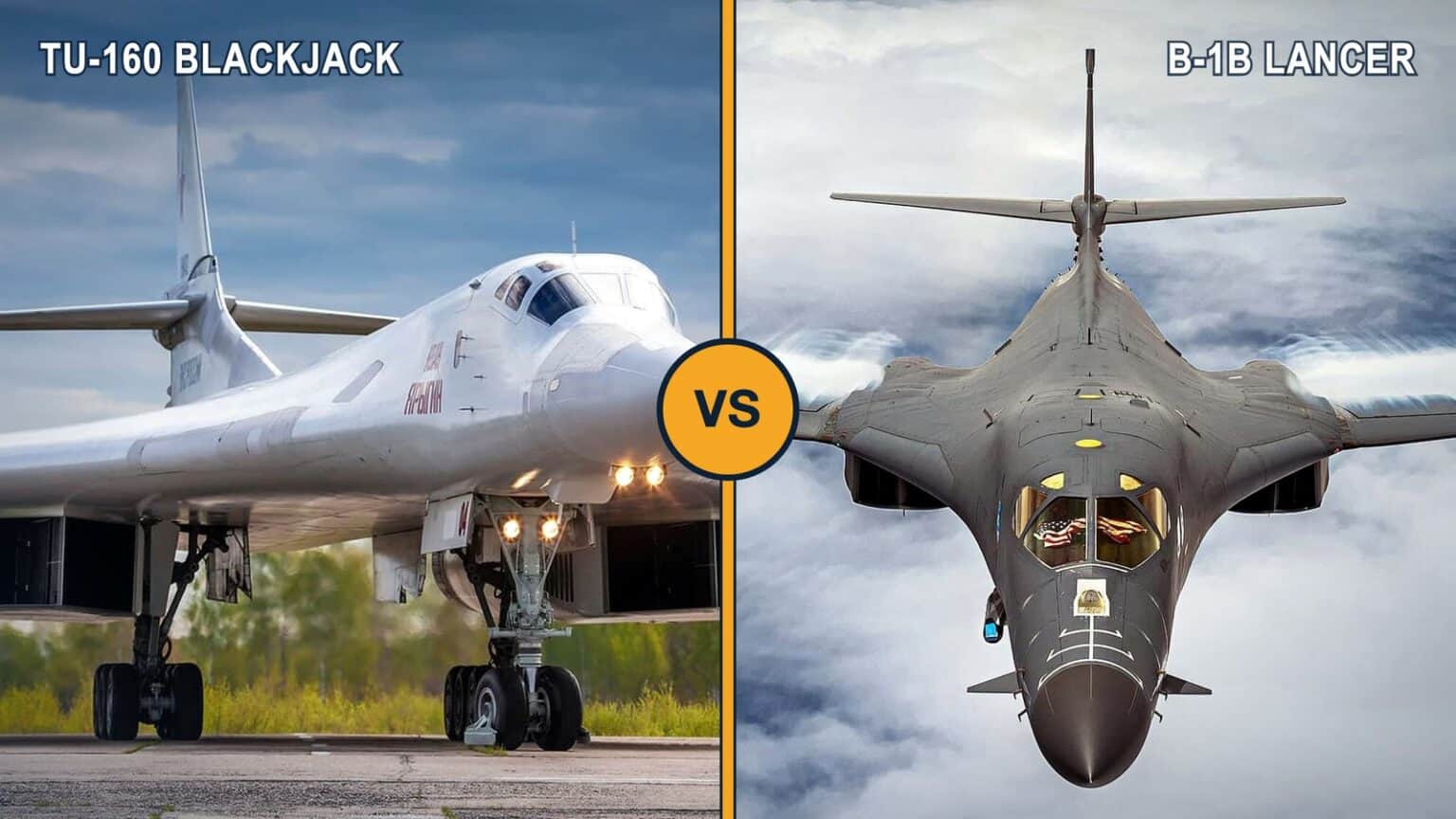
The shared look is no accident, but copying is the wrong word. Both aircraft are variable-sweep, blended-wing bombers, so physics pushed them toward the same shape.
The Tupolev design also reused some elements of the Tu-144 airliner, and the aircraft is a different class of machine from the B-1.

Role: missile truck versus bomb truck
The Tu-160 is mainly a standoff platform. It was built to launch nuclear and conventional cruise missiles from far away, and it was never designed as a low-level bomber.
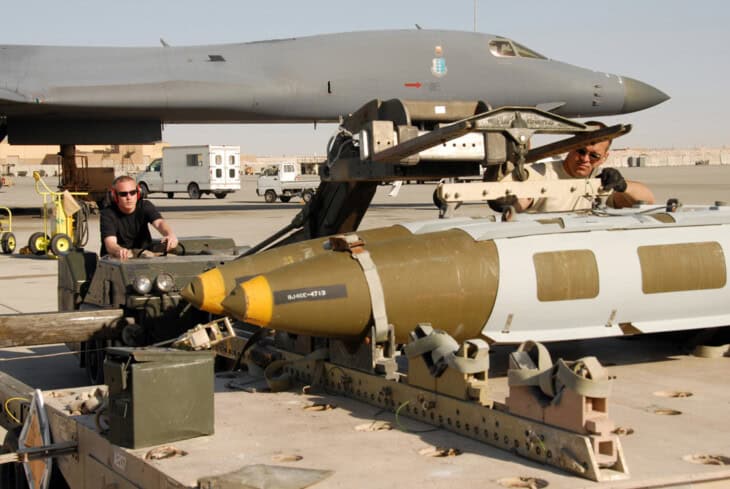
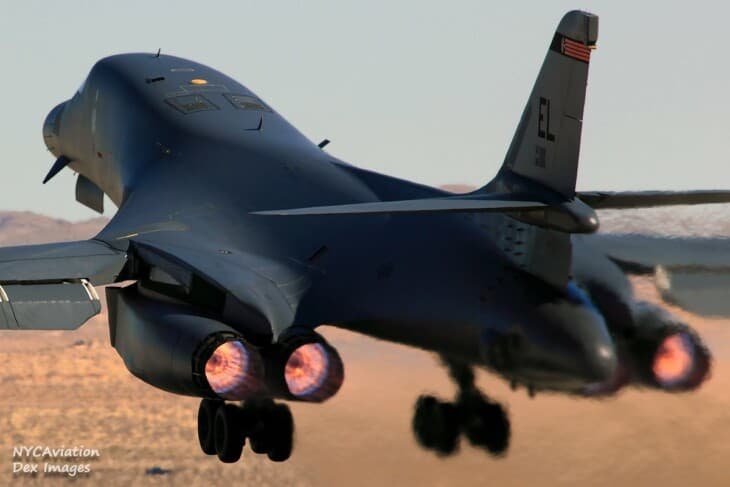
The B-1B grew into a conventional bomber. Its three internal bays carry up to 75,000 pounds, including the 2,000-pound GBU-31 JDAM.
The Tu-160 stayed a missile carrier. Its upgraded Tu-160M version can fire the long-range Kh-101 cruise missile.
Speed and stealth: Mach 2 against Mach 1.25
The Tu-160 kept its variable intake ramps and can reach about Mach 2.05 at altitude. Its four NK-32 engines are the most powerful ever fitted to a combat aircraft.
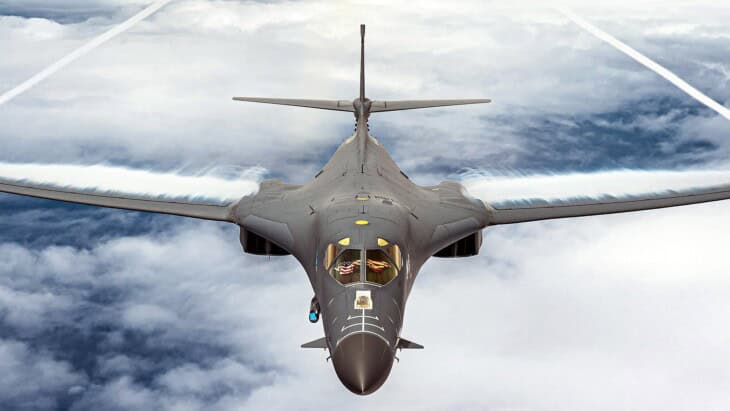
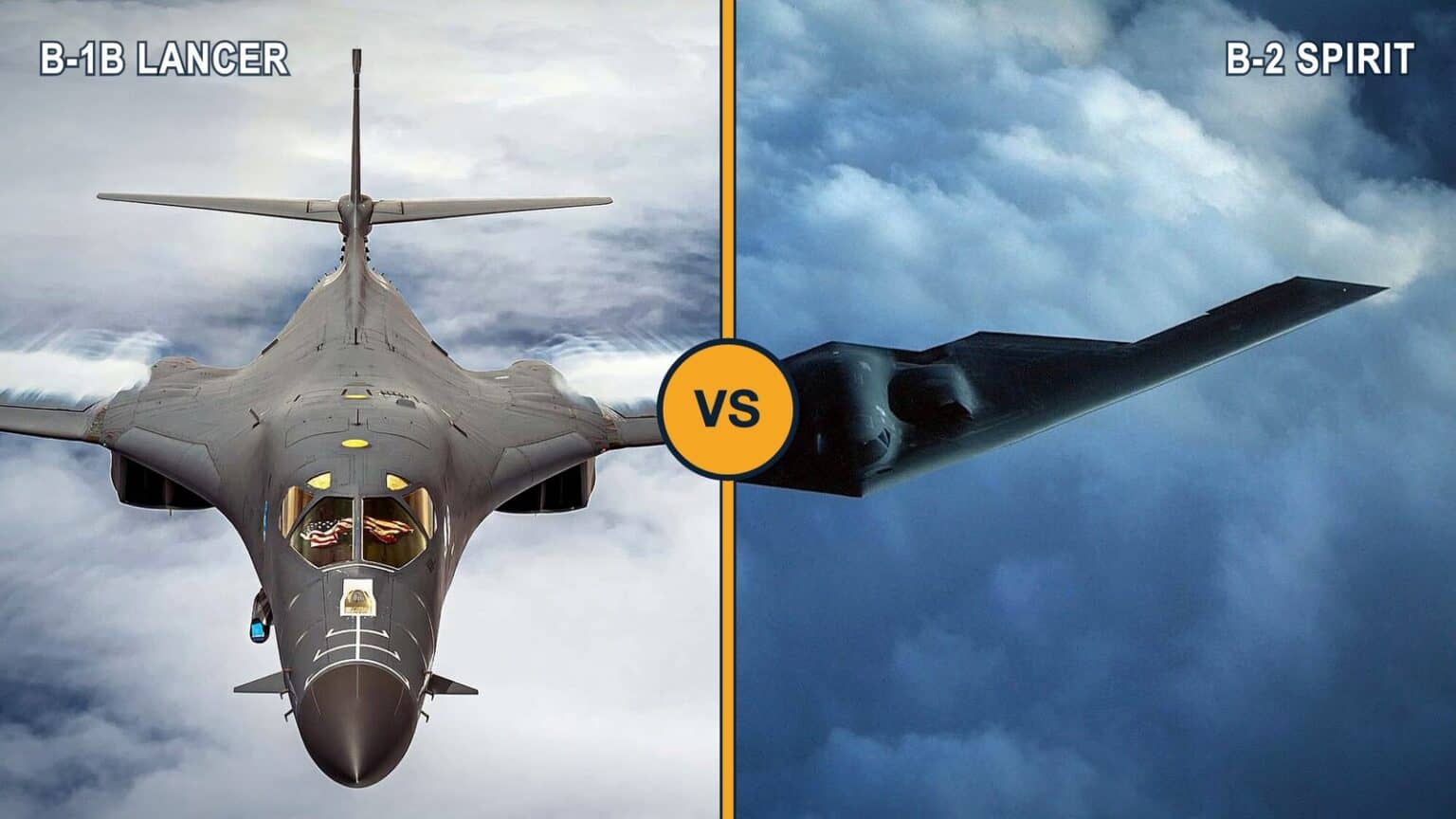
The B-1B gave up speed. The US Air Force cut its top speed to Mach 1.25 so it could present a smaller radar cross-section and fly low.
So the Tu-160 is faster and larger, while the B-1B is harder to spot on radar and was optimised to cross enemy territory at low altitude. The widget above lists the exact figures.
Range and the size gap
The Tu-160 is the larger aircraft. At 54 m long, it is longer than a Boeing B-52 Stratofortress.
It also flies farther on internal fuel, with a practical range quoted at around 7,600 miles (12,300 km) without refuelling. That is why Russia sends it on long deployments, including to Venezuela and South Africa.

How the wings and crews compare
Both bombers sweep their wings back for speed and forward for slow flight. The Tu-160 spreads to about 182 ft 9 in (55.7 m) and sweeps back to about 118 ft (36 m).
Each carries a crew of four. The Tu-160 has a pilot, co-pilot, bombardier and defensive systems operator in K-36LM ejection seats.
Titanium makes up around 30% of the Tu-160’s empty weight, and its swing-wing hinge alone weighs six tonnes. That is part of why the Soviet bomber is so heavy.
Upgrades and what comes next
Russia has been modernising the Tu-160 since the early 2000s. In 2002 the Defence Ministry and the Kazan plant agreed to modernise 15 aircraft, and the first Tu-160M was delivered in December 2014.
New-build Tu-160M2 airframes followed, with the first one flying under the name Pyotr Deynekin. Russia has said it wants to grow the fleet, but production has run behind its plans.
The B-1B is also being kept flying, and the Air Force may keep it in service until about 2038. Maintenance is the pain point, with one report citing 48.4 hours of repair per flight hour.
The cost of running it is high, and the Air Force has been retiring the oldest airframes to pay for the rest.
The Tu-160s Ukraine gave up
When the Soviet Union broke up in 1991, Russia inherited 13 Tu-160s and newly independent Ukraine inherited 19. Production had stopped in 1992.
The Ukrainian aircraft were effectively grounded for lack of spare parts, and Ukraine treated them as a bargaining chip in economic talks with Russia.
The B-1B has stayed with one operator, the US Air Force, since it entered service.
Russia is now the only operator of the Tu-160.
Combat record
The B-1B saw combat first. Its debut was Operation Desert Fox over Iraq in December 1998, followed by Operation Allied Force over Kosovo and then Afghanistan and the 2003 invasion of Iraq.
The Tu-160 made its combat debut in November 2015. Several Tu-160s and Tu-95MS bombers fired Kh-101 missiles at targets in Syria.
Both bombers have also flown as political signals, escorted by fighters as they crossed oceans and borders.
How many are left
The US Air Force operates 45 B-1B bombers as of 2025, after retiring 17 in 2021. We cover the count in how many B-1 bombers are left.
Russia still had 17 Tu-160s in service as of 2022. It has since restarted production of the upgraded Tu-160M2, and Ukraine claimed in June 2025 to have hit four of them with drones. Russian sources said damage was minimal.
For where both sit among the world’s heavy bombers, see our ranking of the best bombers in the world.
So which is the better bomber
For range, speed and standoff strikes, the Tu-160 is the stronger aircraft. For payload and flexibility, the B-1B is.
The B-1B also has the longer combat record. It has flown in several wars, while the Tu-160 has fired its missiles mostly from long range.
The verdict
The Tu-160 is larger and faster, and it carries cruise missiles. The B-1B carries more conventional weapons and has seen far more combat. They look alike because both chased the same swing-wing, blended-wing idea.
FAQ
Sources and references used for research and fact-checking.
About the Author

Tim is the owner and lead editor of AeroCorner since 2019, overseeing aviation content covering aircraft, airlines, airports, and the broader aviation industry. Through years of researching, writing, editing, and publishing aviation-focused content, he has developed extensive practical knowledge of commercial aviation and air travel. Based in Asia and a frequent traveler himself, Tim also brings firsthand passenger experience to AeroCorner’s coverage. Outside of publishing, he has also explored aviation firsthand through hands-on flight training in New Zealand.