

Table of Contents
| Factor | B-1B Lancer | B-2 Spirit |
|---|---|---|
| Stealth | None. A conventional design with variable-sweep wings | Low-observable flying wing |
| Nuclear weapons | None. Conventional only | Dual-capable, carries B61 and B83 bombs |
| First flight | B-1B: Oct. 18, 1984 | July 17, 1989 |
| Initial operating capability | Oct. 1, 1986 | 1997 |
| Fleet | About 44 aircraft, of 100 built | 19 to 20 aircraft |
| Bases | Dyess AFB, Texas, and Ellsworth AFB, South Dakota | Whiteman AFB, Missouri |
| Heaviest published conventional load | 75,000 lb (34,000 kg), the largest in the Air Force | Two 30,000 lb GBU-57 bunker busters, one per bay |
| Combat debut | Operation Desert Fox, Iraq, December 1998 | Operation Allied Force, Kosovo, 1999 |
| Cost per flight hour | About $63,000 | About $135,000 |
| Planned service | Funded through 2037 | No retirement date set |
Which Is Better: the B-1B Lancer or the B-2 Spirit?
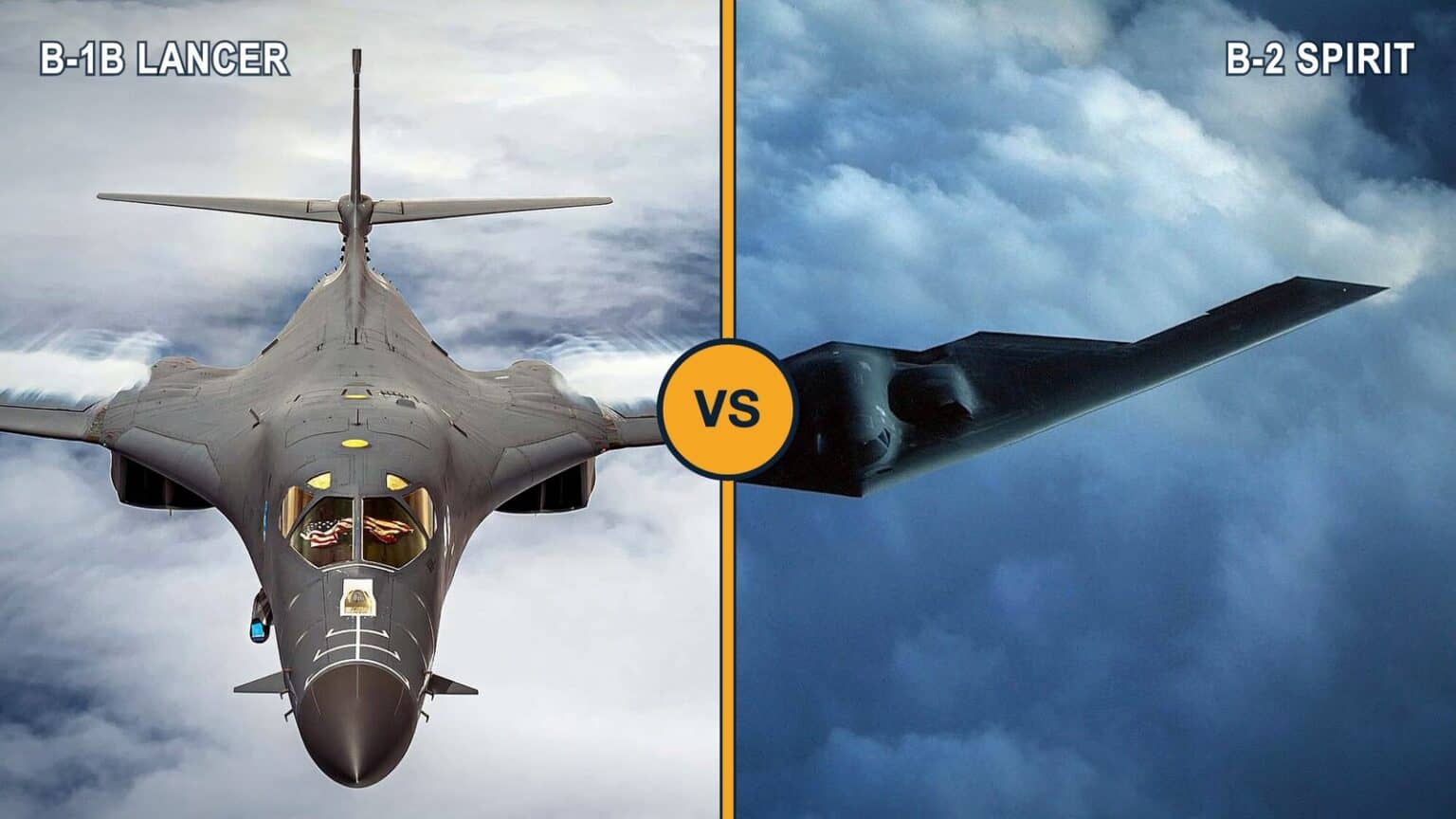
The B-2 Spirit is the better bomber for the hardest missions, because it is the only one of the two that is stealthy and nuclear-capable. The B-1B Lancer is the better bomber for volume, because it carries the largest conventional load in the Air Force and costs far less to fly.
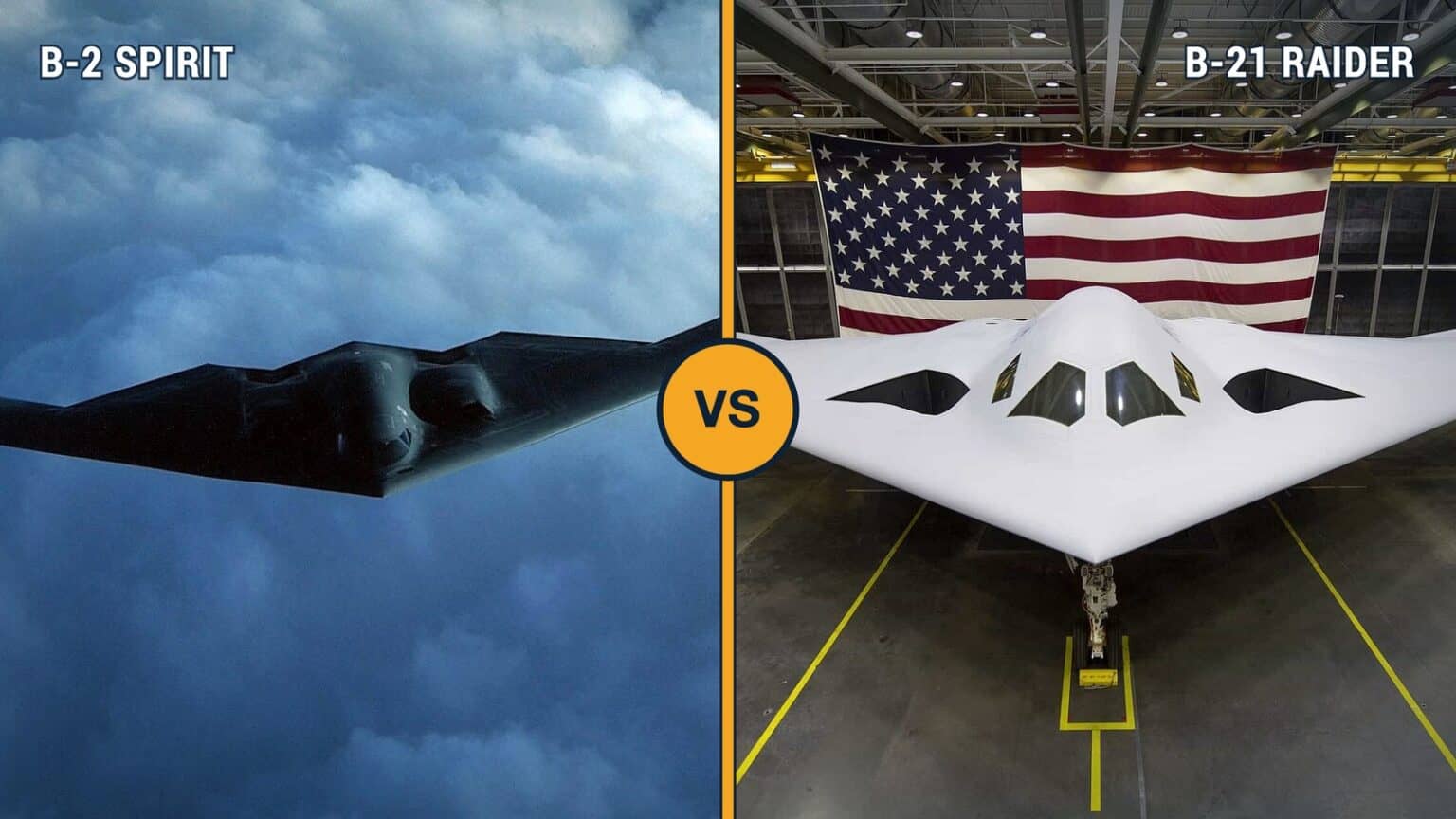
They are not rivals. The Air Force keeps both and plans to retire them as the B-21 Raider arrives.
The B-1 is not a stealth bomber
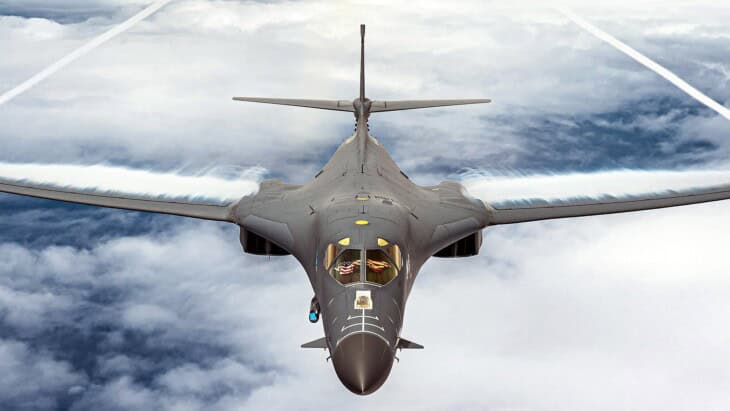
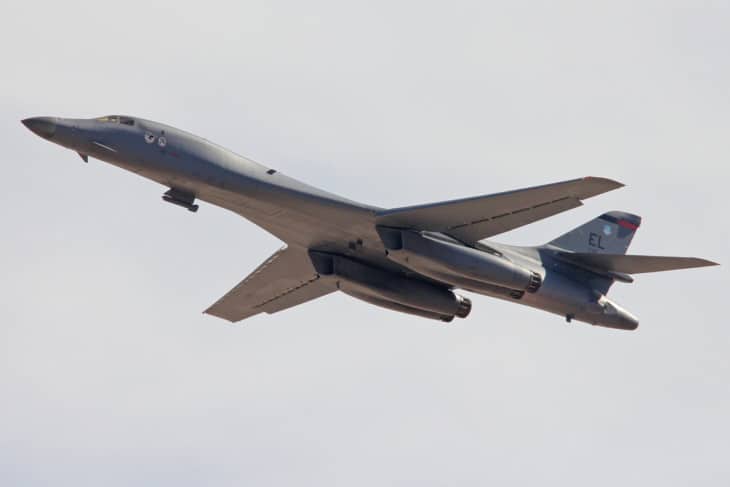
The B-1B is often called the B-1 stealth bomber. It is not stealth. The Air Force built it for speed and low-level flight, and only the B-2 is a stealth bomber in U.S. service today.
Where the B-1B Lancer Wins
The B-1B’s first advantage is weapons. The Congressional Research Service lists a 75,000 lb (34,000 kg) payload, the largest conventional load in the Air Force inventory.
Its second is speed. Its variable-sweep wings move from 15 degrees forward to 67.5 degrees aft, so it can fly low and fast with the wings back and cruise efficiently with them forward. The panel lists a top speed of 721 kt (830 mph, 1,335 km/h).

The third is cost. Air Combat Command figures from around 2010 put the B-1B at about $63,000 per flight hour, against about $135,000 for the B-2.
It also has a long war record. The B-1B flew its first combat missions in Operation Desert Fox in December 1998. In the first six months of the war in Afghanistan, eight B-1s dropped nearly 40 percent of the air-dropped ordnance, according to Wikipedia’s summary of Air Combat Command data.
Where the B-2 Spirit Wins
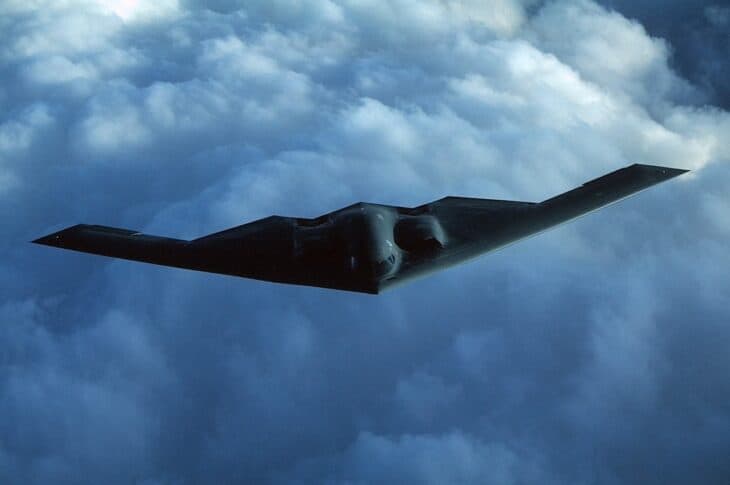
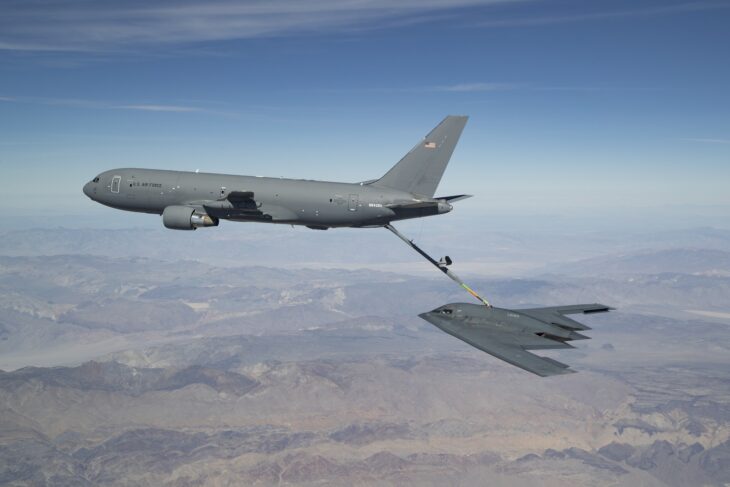
The B-2’s edge is stealth. It was built as a flying wing so it can reach targets that defenses would stop a B-1B from reaching.
Its record shows it. In Operation Allied Force in 1999, B-2s hit 33 percent of selected targets in the first eight weeks. In June 2025, seven B-2s took part in Operation Midnight Hammer against Iran, and six dropped 12 GBU-57 bunker-busting bombs on Fordow.

It is also the only one of the two that carries nuclear weapons. The Congressional Research Service says it carries B61 and B83 bombs, while the B-1B was converted to conventional-only work under 1990s arms treaties.
The price is upkeep. The B-2’s coating needs climate-controlled hangars, and Wikipedia reports maintenance of about 119 hours per flight hour in 1997, against 60 for the B-1B. The B-2 Spirit aircraft page lists its unit price as $737 million (1997), against $283 million (1998) for the B-1B. The two figures use different years.

B-1B vs B-2 Size and Crew
The B-1B is the longer aircraft at 146 ft 0 in (44.50 m), with a wingspan of 137 ft 2 in (41.80 m). The B-2 is only 68 ft 11 in (21.00 m) long, but its flying wing spans 172 ft 0 in (52.43 m).
The crews differ too. The B-1B carries four, and the B-2 carries two. The B-2 has the smaller crew because stealth was bought with a simpler airframe, with no tail and few external parts.
Their engines differ as well. The B-1B uses four General Electric F101-GE-102 engines at 30,780 lbf (137 kN) each. The B-2 uses four General Electric F118-GE-100 engines at 17,300 lbf (77 kN) each.
B-1B and B-2 Timeline
The B-1B entered service about a decade before the B-2. Their paths crossed in the 1990s, when the B-1B moved to conventional-only work and the B-2 became the nuclear stealth option.
Dec. 23, 1974
B-1A first flight. The prototype flies for the first time.
Oct. 18, 1984
First B-1B flight. The first production B-1B flies.
Oct. 1, 1986
B-1B initial operating capability.
July 17, 1989
B-2 first flight.
Dec. 17, 1993
First B-2 delivered. The B-2 reaches Whiteman AFB.
Dec. 1998
B-1B combat debut. Operation Desert Fox, Iraq.
1999
B-2 combat debut. Operation Allied Force, Kosovo.
June 2025
Operation Midnight Hammer. Seven B-2s join the strike on Iran.
2027
B-21 due at Ellsworth. The first operational B-21s are scheduled to arrive.
How Many B-1Bs and B-2s Are Left?
The Air Force has about 44 B-1Bs and 19 B-2s, according to Air & Space Forces Magazine. The Congressional Research Service counts 44 and 20. The B-2 numbers differ by whether a test aircraft is counted.
Both fleets are small. The Air Force built 100 B-1Bs and only 21 B-2s. For more on the B-2 fleet, see how many B-2 bombers are there.
What Each Bomber Is Used For
The B-1B is the Air Force’s conventional workhorse. It was designed as a nuclear bomber, but arms treaties pushed it into conventional-only service, and the Congressional Research Service notes a House provision that would study restoring its nuclear role.
The B-2 is the penetrating strike aircraft. It flies the long missions where surviving air defenses matters more than carrying the most bombs, and it is the only one of the two that can take part in the nuclear mission.
Neither does the job of the B-52, which the Congressional Research Service lists at 76 aircraft. Together the three bombers cover different parts of the same job.
Who Would Win, the B-1B or the B-2?
It depends on the mission. Against a dense air defense network, the B-2 is the one that can get through, which is why it flew the long missions to Kosovo and Iran.
Against an enemy with weak defenses, the B-1B wins on weapons per sortie and cost per hour. The Air Force plans to use both until the B-21 Raider is flying in numbers.
When Will the B-1B and B-2 Retire?
Later than planned. Both had been aimed at retirement in the early 2030s. The 2027 budget funds the B-1B through 2037, with $342 million over five years, and the B-2 with $1.35 billion and no retirement date, according to Air & Space Forces Magazine.
The B-21 Raider is due at Ellsworth Air Force Base in 2027, with Whiteman next. Until it arrives in numbers, both older bombers keep flying. For the wider picture, see the best bombers in the world.
FAQ
Sources and references used for research and fact-checking.
About the Author

Tim is the owner and lead editor of AeroCorner since 2019, overseeing aviation content covering aircraft, airlines, airports, and the broader aviation industry. Through years of researching, writing, editing, and publishing aviation-focused content, he has developed extensive practical knowledge of commercial aviation and air travel. Based in Asia and a frequent traveler himself, Tim also brings firsthand passenger experience to AeroCorner’s coverage. Outside of publishing, he has also explored aviation firsthand through hands-on flight training in New Zealand.