

Table of Contents
| Factor | B-2 Spirit | B-21 Raider |
|---|---|---|
| Role | Multi-role heavy bomber | Nuclear-capable penetrating strike stealth bomber |
| Status | In service, with 20 aircraft including one test aircraft | In flight test and initial production, with the first operational aircraft due at Ellsworth in 2027 |
| First flight | July 17, 1989 | Flight testing began in November 2023 |
| Planned fleet | 20 today | At least 100 |
| Operational base | Whiteman Air Force Base, Missouri, the only one | Ellsworth Air Force Base, South Dakota, named first |
| Weapons | Conventional or nuclear | Conventional and nuclear |
| Crew | Two pilots | Designed to accommodate manned or unmanned operations |
| Combat record | Allied Force, Enduring Freedom, Iraqi Freedom | None, not yet in service |
| Unit cost | About $1.157 billion per aircraft (fiscal 1998 dollars) | $692 million average unit procurement cost (2022 dollars) |
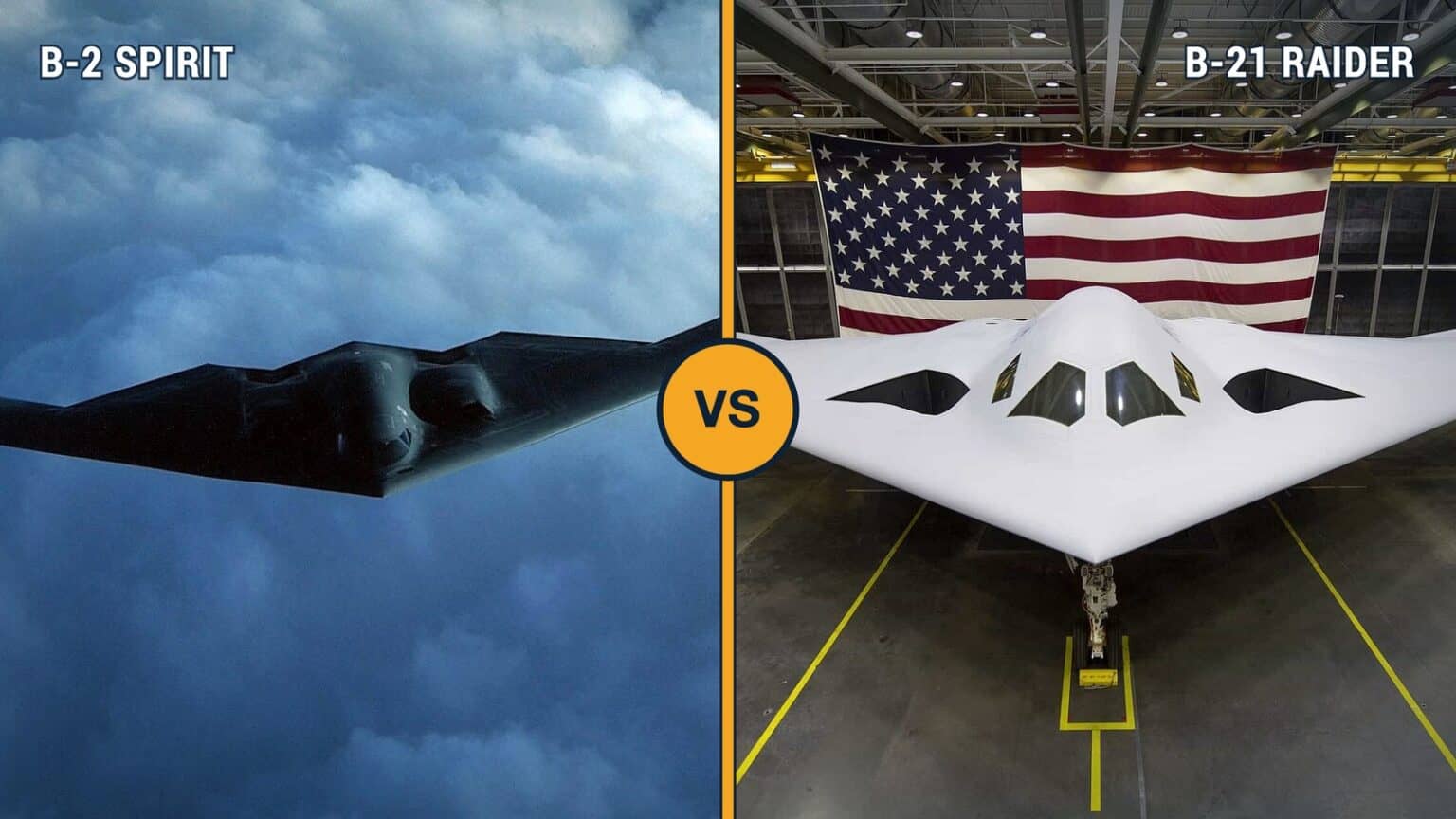
Which Is Better: the B-2 Spirit or the B-21 Raider?
Today, the B-2 Spirit is the better bomber because it is the only one of the two that is operational and proven in combat. The B-21 Raider is the better design bet, but it has not yet reached an operational base.
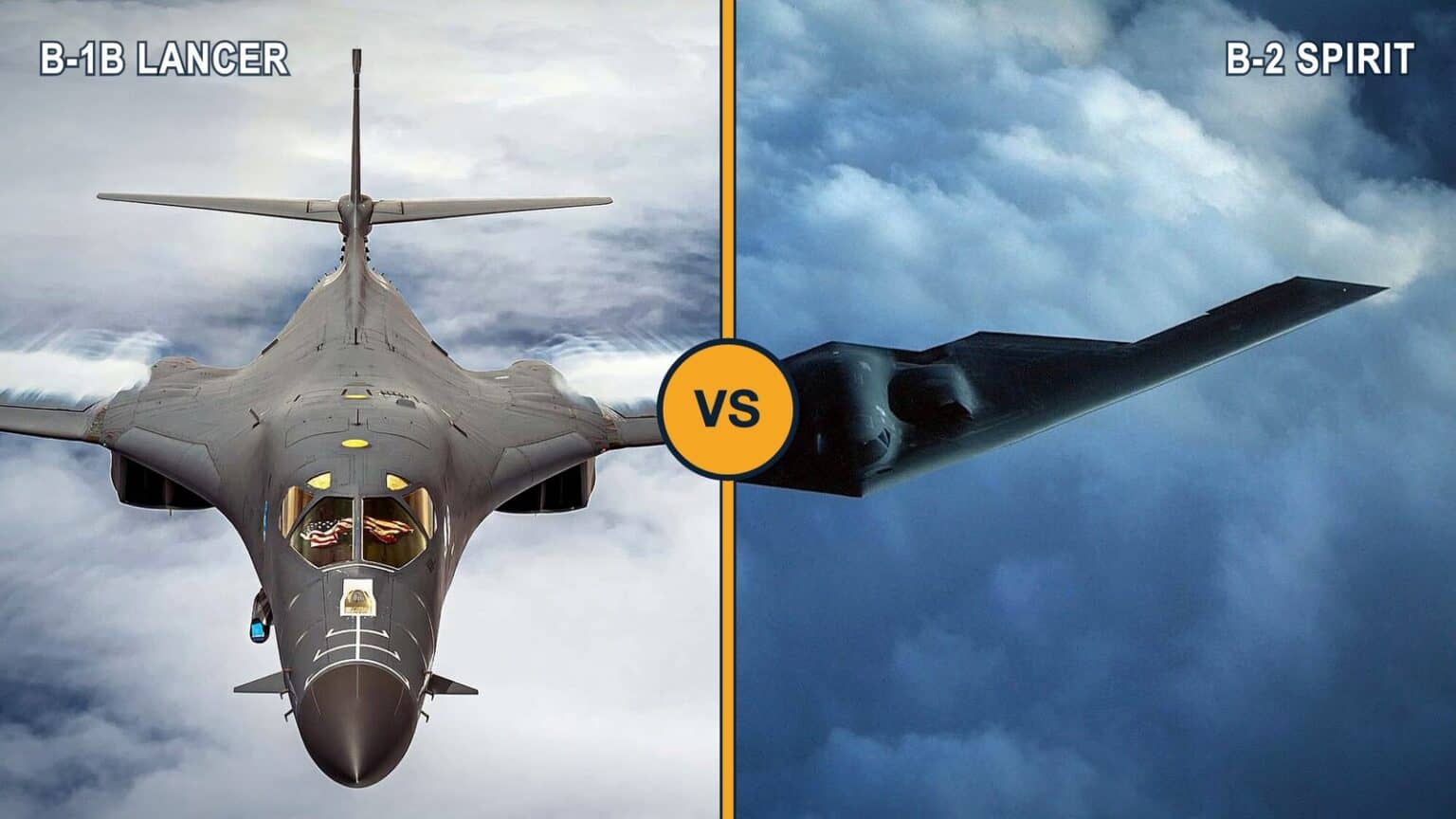
The Air Force is not choosing between them. It wants at least 100 B-21s to replace the aging B-1B Lancer and B-2 Spirit fleets over the coming decades.
The short version
The B-2 has the record and the B-21 has the runway. The B-2 has combat missions behind it and the B-21 has never flown one. The Air Force describes the B-21 as the backbone of its future bomber force alongside the B-52.
Where the B-2 Spirit Wins
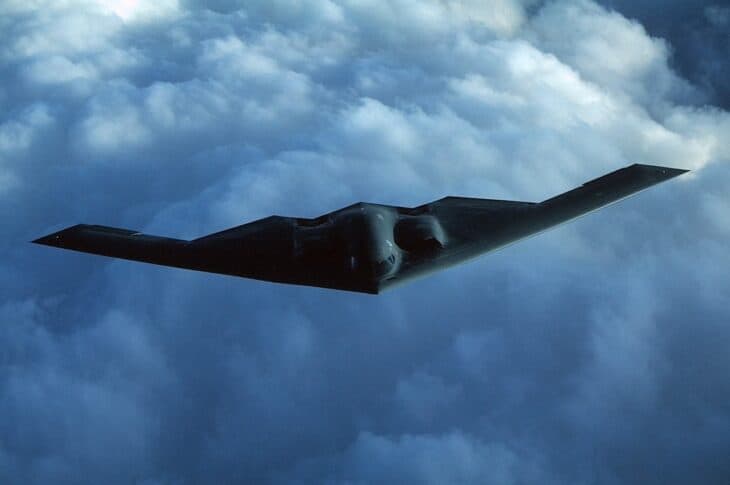
The B-2’s biggest advantage is that it has been tested by war. In Operation Allied Force, the Air Force says it destroyed 33 percent of all Serbian targets in the first eight weeks, flying nonstop to Kosovo from Missouri and back.
In Operation Iraqi Freedom it completed its first combat deployment, flying 22 sorties from a forward location and 27 from Whiteman while releasing more than 1.5 million pounds of munitions. It also flew one of its longest missions to date from Whiteman to Afghanistan and back in support of Operation Enduring Freedom.
The second advantage is published performance. The Air Force lists an unrefueled range of approximately 6,000 nautical miles (9,600 km), a payload of 60,000 pounds (27,200 kg) and a service ceiling of 50,000 feet (15,200 m).
It spans 172 feet (52.43 m), and four General Electric F118-GE-100 engines give it 17,300 pounds-force of thrust each (77 kN). The B-21 has no comparable public numbers.
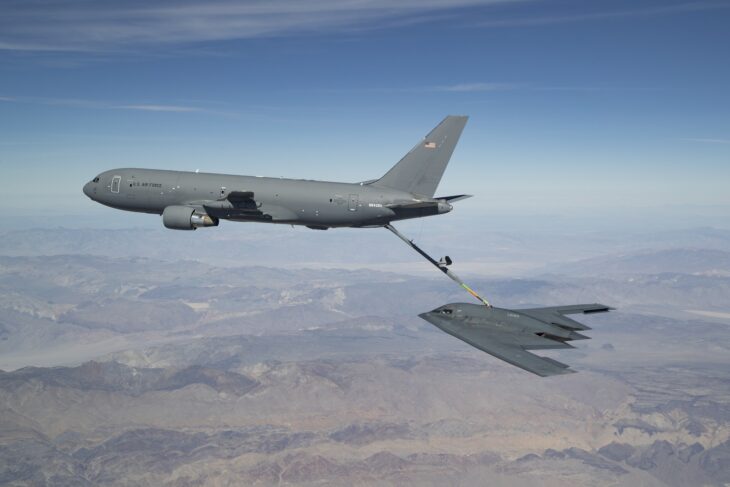

The B-2 also has a decades-long support system behind it. Whiteman delivered its first aircraft, Spirit of Missouri, on Dec. 17, 1993, and the fleet reached full operational capability in December 2003.


For a deeper look at the airframe, see the full B-2 Spirit aircraft page and our count of how many B-2 bombers are left.
Where the B-21 Raider Wins
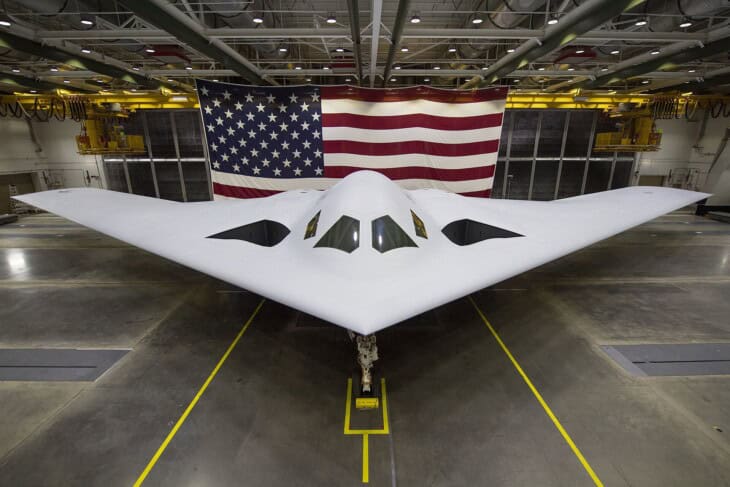
The B-21’s case rests on newness. The Air Force says it is designed with an open systems architecture, which lowers integration risk and lets the aircraft be upgraded as the threat environment changes.
It is also being built as part of a larger family of systems that includes intelligence and surveillance, electronic attack and communications, and it is designed to accommodate manned or unmanned operations. The B-2 fact sheet makes no such claims.
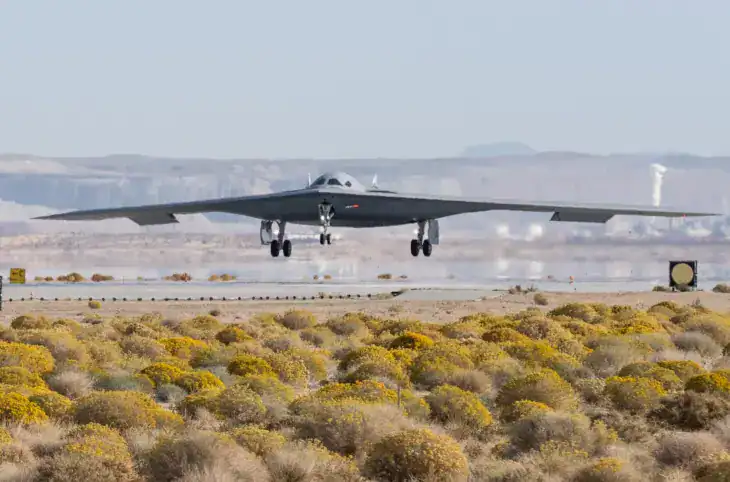
Northrop Grumman makes bigger claims, and they should be read as the manufacturer’s own. It calls the B-21 the world’s first sixth-generation aircraft to reach the skies, says it has demonstrated outstanding stealth in testing, and says its engines and sleeker airframe reduce reliance on tankers more than any previous bomber.
Northrop also says most test sorties return “code one,” meaning no maintenance issues, and that its low-observable processes will make the aircraft easier and cheaper to maintain than earlier stealth bombers. None of those claims has been independently measured in public.
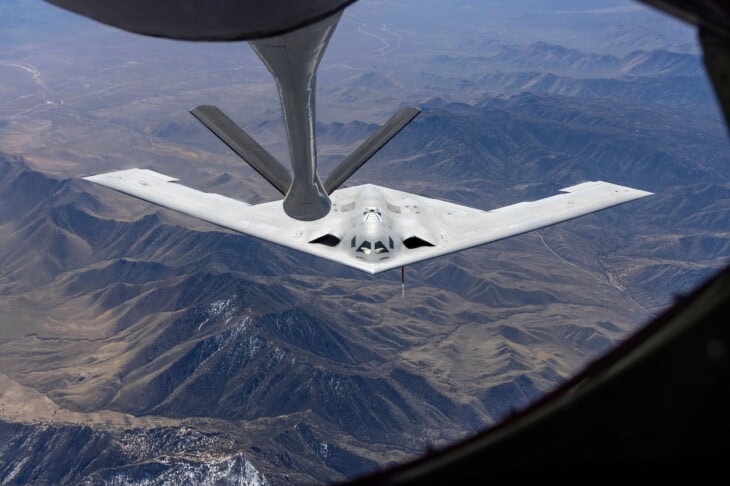
Production is the other edge. Military Times reports that the program increased its production capacity by 25 percent, with an eventual rate of about seven aircraft a year.
Details on the newer airframe are on our B-21 Raider aircraft page.
B-2 vs B-21 Stealth: What Is Actually Known
The B-2’s low observability comes from reduced infrared, acoustic, electromagnetic, visual and radar signatures. The Air Force credits its composite materials, special coatings and flying-wing design, and says many aspects of the process remain classified.
Northrop describes the B-21 as benefiting from more than three decades of strike and stealth technology innovation. Both aircraft are tailless and wing-shaped in photographs, so the family resemblance is real.
Where the comparison stops is data. In the Air Force fact sheets and Northrop pages reviewed for this article, neither aircraft’s radar signature is quantified, so any claim that one is stealthier by a set amount is speculation.
Why the B-21's size is not listed here
The Air Force’s B-21 fact sheet gives no wingspan, length, weight, speed or range. Figures that circulate online are outside estimates, so this page leaves them out rather than repeat them as fact.
Cost: $1.157 Billion vs $692 Million
The Air Force lists the B-2’s unit cost at approximately $1.157 billion in fiscal 1998 constant dollars. For the B-21 it lists an average unit procurement cost of $692 million in 2022 dollars, or $550 million in 2010 dollars.
The two numbers answer different questions. The B-21 figure divides all procurement funding, including support equipment, training, spares and engineering changes, across a minimum of 100 aircraft.
That makes it a program average and not a price tag for one aircraft. A fair comparison would need both figures converted to the same year and defined the same way, which the Air Force has not published.
B-2 and B-21 Timeline
The B-2 took more than eight years to go from rollout to initial operating capability. The B-21 has not reached that stage yet.
Nov. 22, 1988
B-2 rollout. The first B-2 is publicly displayed at Air Force Plant 42 in Palmdale, California.
July 17, 1989
B-2 first flight.
Dec. 17, 1993
First B-2 delivered. Spirit of Missouri arrives at Whiteman.
April 1997
B-2 initial operating capability.
Dec. 2003
B-2 full operational capability.
Oct. 27, 2015
B-21 contract. The Air Force awards Northrop Grumman the engineering and manufacturing development contract.
Dec. 2, 2022
B-21 unveiled. A ceremony in Palmdale, California, shows the aircraft publicly.
Nov. 2023
B-21 flight testing begins at Edwards Air Force Base, California.
2025
Second B-21 joins testing.
2027
First operational B-21s due on the ramp at Ellsworth Air Force Base, South Dakota.
Will the B-21 Replace the B-2?
Yes, that is the plan. The Air Force seeks at least 100 B-21s to replace the B-1B and the B-2 in the coming decades, and the 2019 basing decision named Ellsworth, Whiteman and Dyess as preferred main operating bases.
Ellsworth was confirmed as the first base in 2021. Until the B-21 is delivered in numbers, the B-2 stays the stealth bomber the Air Force can actually send.
For how both fit into the wider bomber force, see our ranking of the best bombers in the world.
FAQ
Sources and references used for research and fact-checking.
About the Author

Tim is the owner and lead editor of AeroCorner since 2019, overseeing aviation content covering aircraft, airlines, airports, and the broader aviation industry. Through years of researching, writing, editing, and publishing aviation-focused content, he has developed extensive practical knowledge of commercial aviation and air travel. Based in Asia and a frequent traveler himself, Tim also brings firsthand passenger experience to AeroCorner’s coverage. Outside of publishing, he has also explored aviation firsthand through hands-on flight training in New Zealand.