

Table of Contents
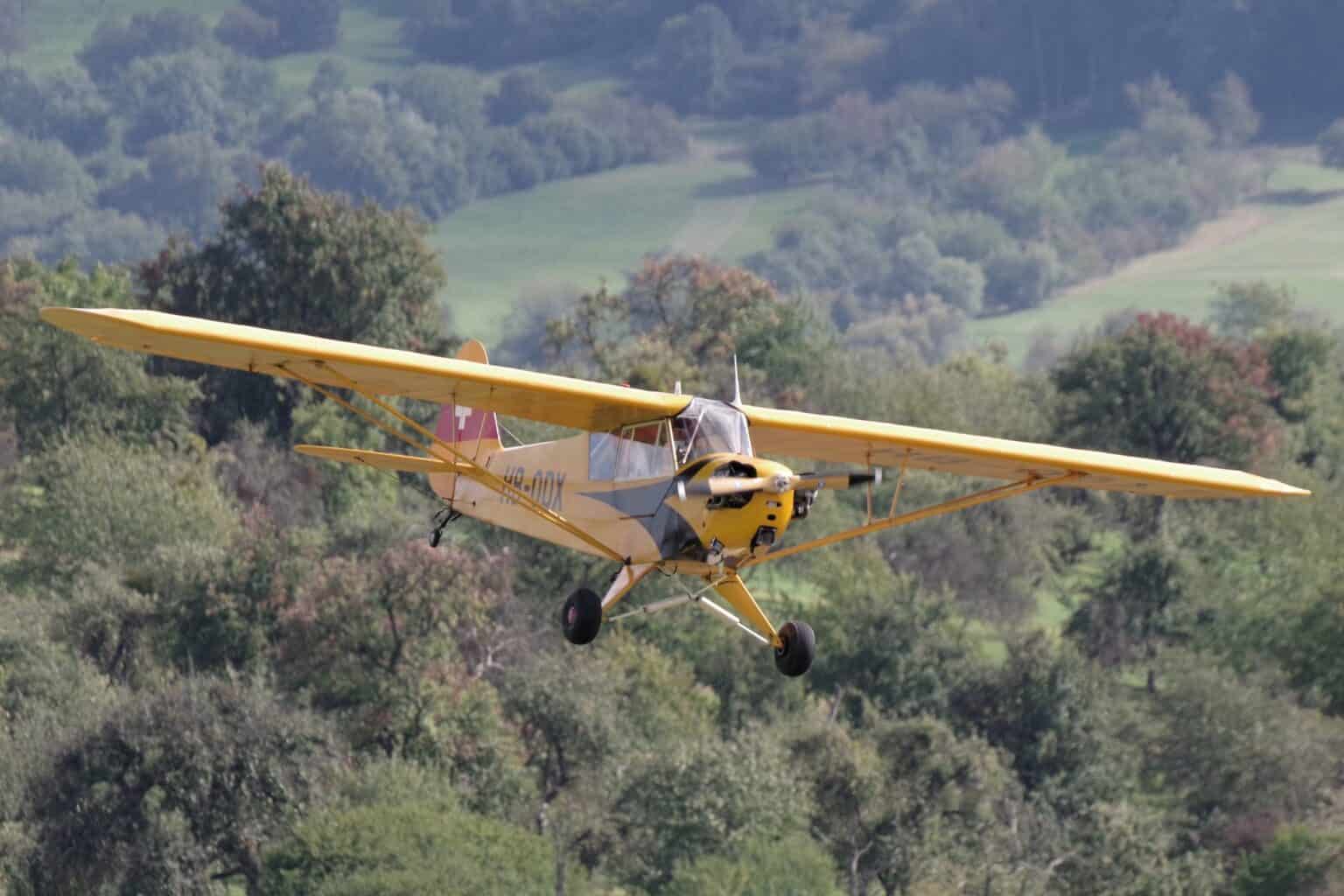
The most-built taildragger airplane is the Piper J-3 Cub. The Smithsonian’s National Air and Space Museum counts 19,888 Cubs built by the time production ended in 1947, nearly twice the total of any other civil tailwheel design.
This list ranks 13 taildraggers by one measure: how many were built. A taildragger, or “conventional gear” airplane, sits on two main wheels and a small wheel or skid under the tail, so its nose points up when it is parked.
Production counts are the fairest way to rank them, because they show which designs actually shaped how people learned to fly, worked the bush and flew for fun. Each entry also says whether you can still buy one new as of November 2026.
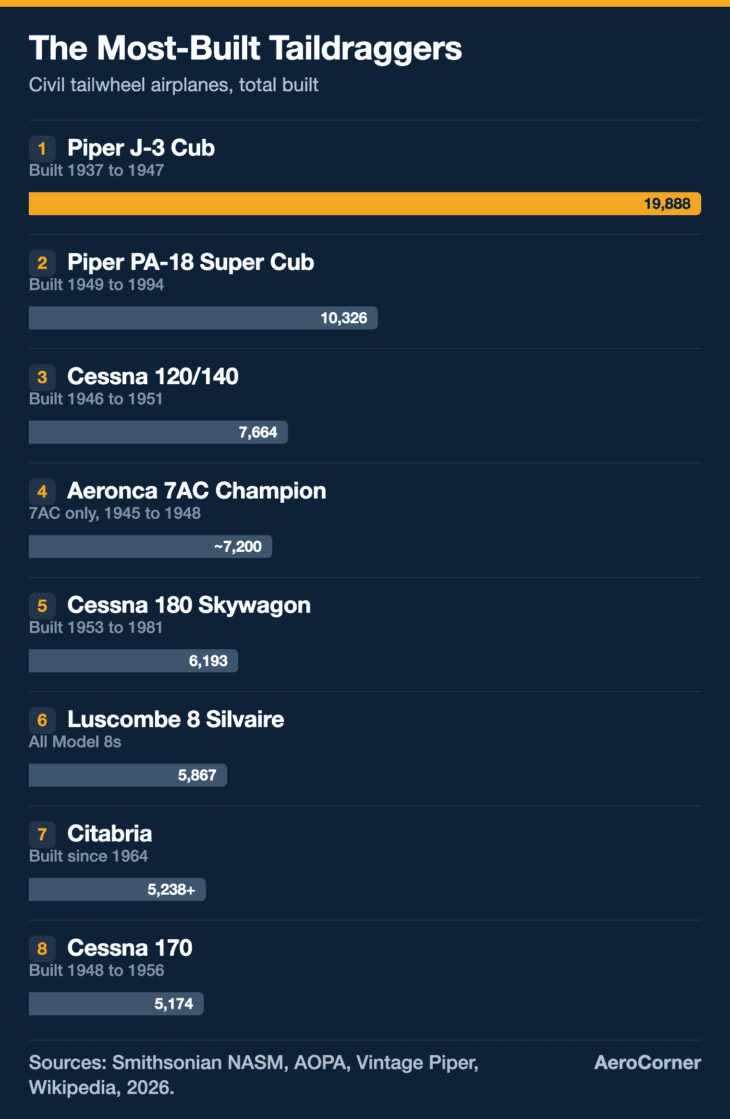
| Rank | Aircraft | Number built | Years built | Made new in 2026? |
|---|---|---|---|---|
| 1 | Piper J-3 Cub | 19,888 | 1937 to 1947 | No |
| 2 | Piper PA-18 Super Cub | 10,326 | 1949 to 1994 | No (modern derivatives are) |
| 3 | Cessna 120/140 | 7,664 | 1946 to 1951 | No |
| 4 | Aeronca 7AC Champion | About 7,200 | 1945 to 1948 | No |
| 5 | Cessna 180 Skywagon | 6,193 | 1953 to 1981 | No |
| 6 | Luscombe 8 Silvaire | 5,867 | 1938 to 1960 | No |
| 7 | Citabria | More than 5,238 | 1964 to today | Yes |
| 8 | Cessna 170 | 5,174 | 1948 to 1956 | No |
| 9 | Cessna 185 Skywagon | More than 4,400 | 1961 to 1985 | No |
| 10 | Taylorcraft B / BC-12D | More than 4,000 | 1938 to late 1940s | No |
| 11 | de Havilland Canada DHC-2 Beaver | 1,657 | 1947 to 1967 | No |
| 12 | Cessna 190/195 | About 1,100 to 1,180 | 1947 to 1954 | No |
| 13 | Aviat Husky | More than 650 (by 2008) | 1987 to today | Yes |
How this ranking works
Ranked by total number built, as published by museums, AOPA, type clubs and manufacturers. Where sources disagree, the table uses the most widely cited figure and the entry gives the range. The list covers civil fixed-wing taildraggers built in the United States and Canada, counted by family where the factory sold close variants together (Cessna 120/140, Cessna 190/195). Military trainers and World War II warbirds are covered separately at the end. Designs with no published total, such as Maule and the Pitts Special, are named there too.
1. Piper J-3 Cub: 19,888 built
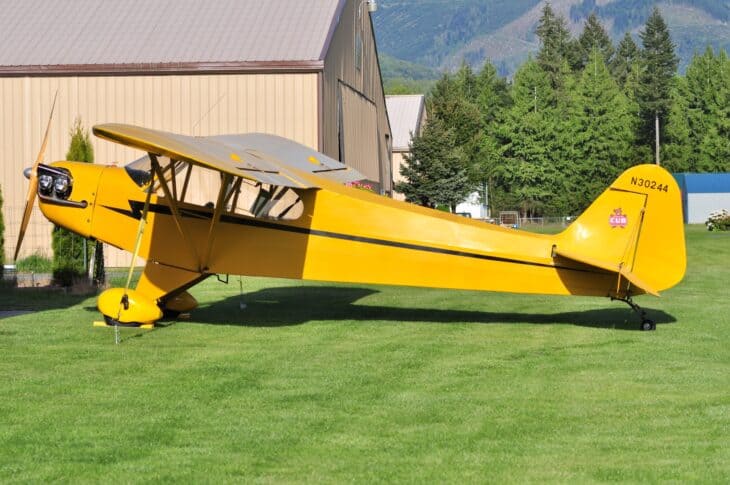

The Piper J-3 Cub is the taildragger most pilots picture, and the numbers back that up. The Smithsonian’s figure is 19,888 built by 1947, and AOPA notes that Piper turned out 10,000 Cubs between late 1937 and November 1941 alone.
It is a two-seat, tandem, high-wing airplane with a 65-horsepower Continental A-65 engine. Cruise is about 75 mph (121 km/h), slow enough that a stiff headwind can make it look parked over the highway.
Part of that total went to war as the L-4 Grasshopper, and Wikipedia puts L-4 output at about 5,413. Sources do not agree on exactly how the military airplanes are folded into the 19,888, so treat the split as approximate.
Where the name came from
According to the Smithsonian, the Cub got its name from an underpowered prototype: an airplane with a kitten engine, the thinking went, should be called a cub.
2. Piper PA-18 Super Cub: 10,326 built
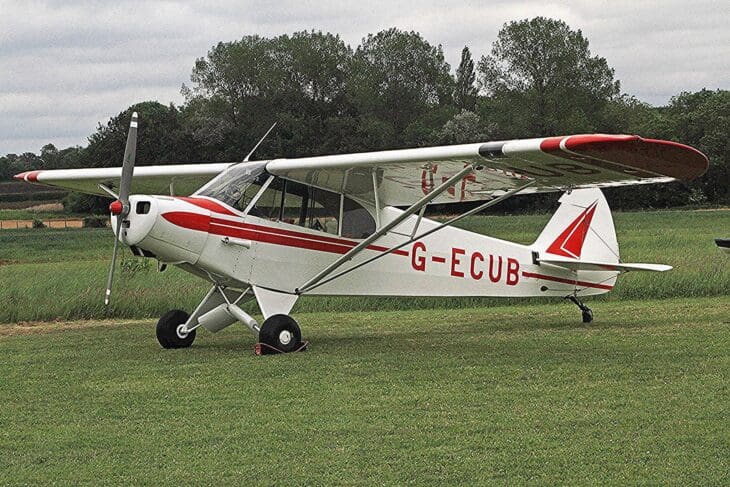
The PA-18 Super Cub took the J-3’s shape and gave it real power. Vintage Piper records 10,326 built between 1949 and 1994, with a gap in the 1980s, and all but 44 came out of Lock Haven, Pennsylvania.
The PA-18-150 uses a 150-horsepower Lycoming O-320, more than twice the J-3’s power, and cruises at about 115 mph (185 km/h) at 75% power. That extra muscle made the Super Cub a bush-flying favorite on short, rough strips.
Piper no longer builds it, but the shape lives on. CubCrafters builds the Carbon Cub and XCub families today, and its XCub is offered as a Part 23 certified airplane or a kit.
3. Cessna 120/140: 7,664 built
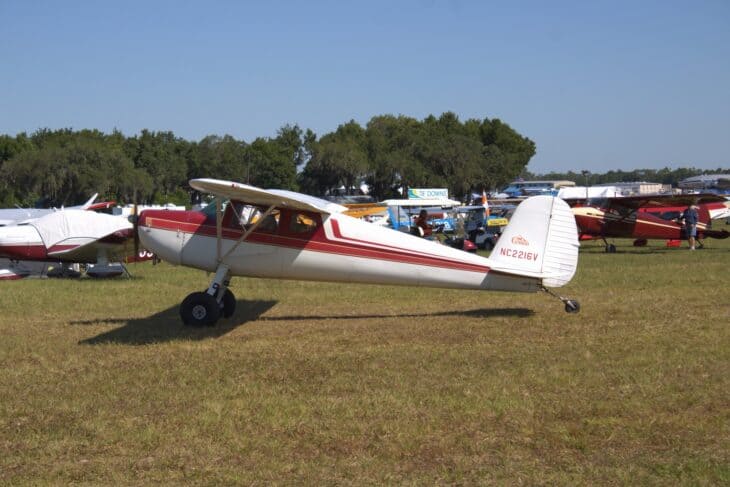

Cessna’s postwar two-seaters were its first big civil hit. Wikipedia counts 7,664 of the 120, 140 and 140A combined, and AOPA says more than 7,500 rolled out of Wichita between 1946 and 1951.
They seat two side by side on an 85-horsepower Continental C-85 and cruise at 105 to 110 mph (169 to 177 km/h). The 120 was the stripped-down version, sold without wing flaps.
They are also a lesson in what a taildragger demands. AOPA’s owner guide says, only half joking, that “100 percent of the fleet has probably been ground looped at least once.”
4. Aeronca 7AC Champion: about 7,200 built
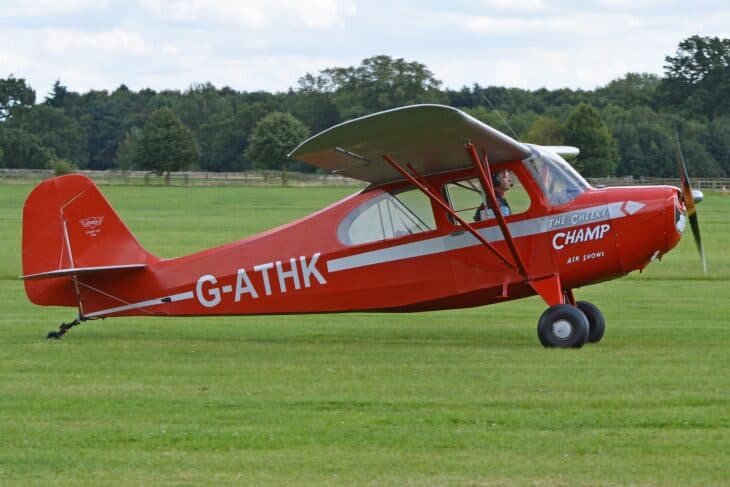
The Aeronca Champ was the Cub’s main rival, and in 1946 and 1947 it was built at a remarkable pace: about 30 a day, peaking at 50. Roughly 7,200 of the original 7AC were built between 1945 and 1948.
Count every Champ variant from every builder and the total passes 10,000. A 7AC seats two in tandem, runs on 65 horsepower and cruises around 85 mph (137 km/h), a little faster than the Cub on the same power.
The pilot sits in front, and Wikipedia credits that seat with 300 degrees of visibility. A revived Champ was built from 2007 until production stopped around 2018.
5. Cessna 180 Skywagon: 6,193 built
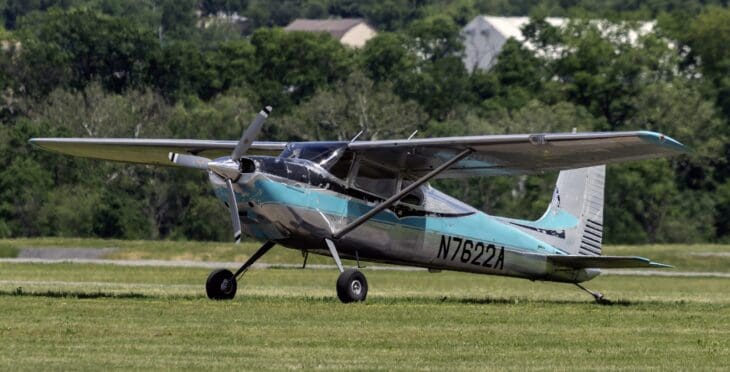

The Cessna 180 is the four-seat taildragger that does real work. AOPA puts production at 6,193 from 1953 to 1981, and more 180s operate in Alaska than in any other state.
It seats four to six and uses a 230-horsepower Continental O-470-R. Cessna first marketed it as “the businessman’s airplane,” a long way from the floats and gravel bars it is known for now.
Power and weight make it a handful on the ground. AOPA cites a 1980 to 1981 study that attributed 42% of Cessna 180 accidents to ground loops.
6. Luscombe 8 Silvaire: 5,867 built
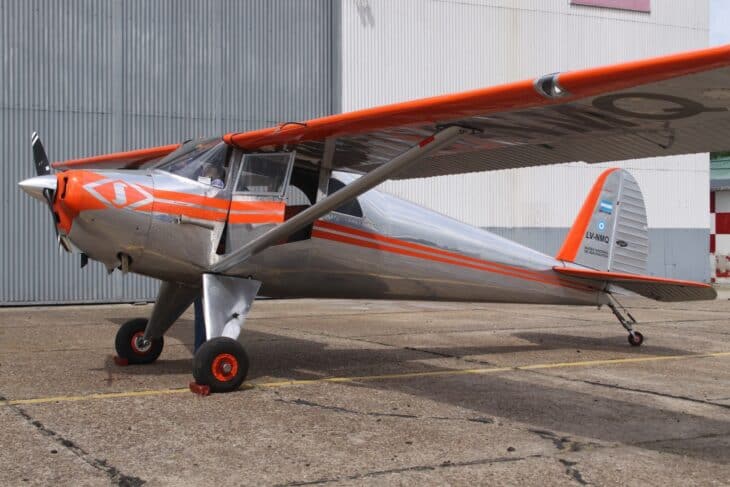

The Luscombe 8 is the sporty one. Wikipedia counts 5,867 in total, of which the original Luscombe company built 5,743, with the last airplane finished in May 1960.
The two-seat 8E uses an 85-horsepower Continental C-85, and AOPA says the 8E and 8F cruise at “a little better than 100 mph.”
Testrake Aviation bought the type’s assets in 2019 with a plan to restart production. As of November 2026 we found no sign of new Luscombe 8s being delivered.
7. Citabria: more than 5,238 built
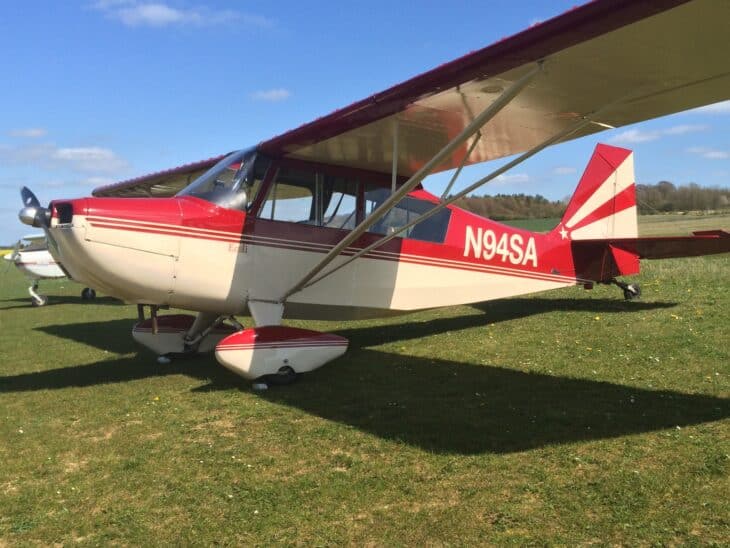

The Citabria is the highest-ranked taildragger you can still buy new. More than 5,238 have been built since 1964, and American Champion Aircraft of Burlington, Wisconsin, still lists Citabria models from 118 to 180 horsepower.
Its model names, such as the 150-horsepower 7GCAA, carry on the Aeronca 7-series line, so it is the Champ’s direct descendant. The 7GCAA cruises at about 125 mph (201 km/h) at 8,000 feet and is approved for basic aerobatics.
The same factory builds two siblings. The Scout is a 180-horsepower bush version, with more than 500 built by 2008, and the Decathlon is the fully aerobatic version with inverted fuel and oil systems.
8. Cessna 170: 5,174 built
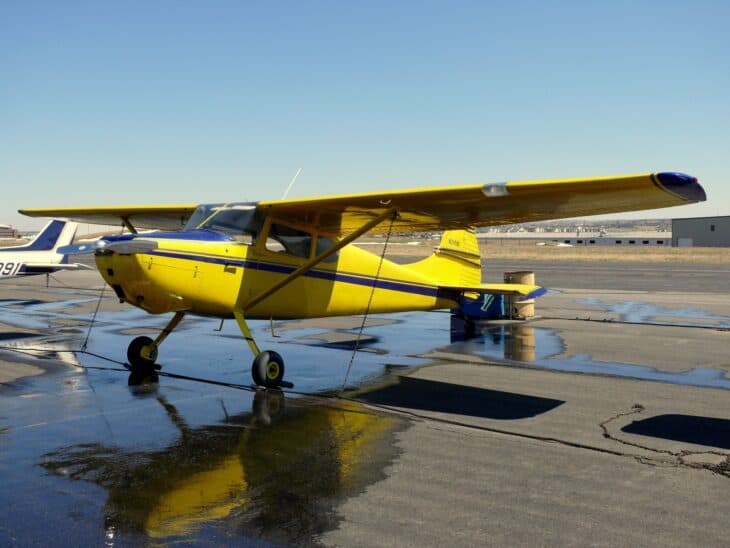

The Cessna 170 is the four-seat taildragger the Cessna 172 was developed from. Wikipedia counts 5,174 built from 1948 to 1956, and the International Cessna 170 Association says “over 5,000.”
It uses a 145-horsepower Continental O-300-A and cruises at about 118 mph (190 km/h) at 65% power, according to the owners’ club. AOPA counts 714 original 170s and 1,522 170As, with the 170B making up the rest.
A 170 that tested jet-age ideas
Between 1951 and 1955 Cessna modified 170s into boundary-layer-control research aircraft, the Models 309 and 319. The same concept was later used on the Lockheed F-104 Starfighter.
9. Cessna 185 Skywagon: more than 4,400 built
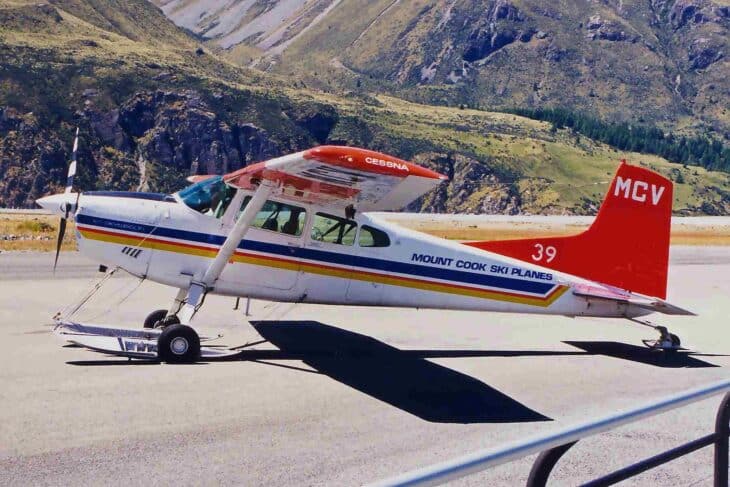

The Cessna 185 is the 180’s bigger, stronger brother, certified for six seats. Production ran from 1961 to 1985, and most sources say more than 4,400 were built, though Wikipedia’s own data box gives 3,916.
Early airplanes used a 260-horsepower Continental IO-470, later ones a 300-horsepower IO-520. AOPA quotes the handbook cruise as 141 knots at 8,000 feet on 70% power.
Production wound down sharply at the end: only eight were built in 1984 and 23 in 1985. The military U-17B version, of which 215 were built, could carry four rockets under each wing.
10. Taylorcraft B / BC-12D: more than 4,000 built
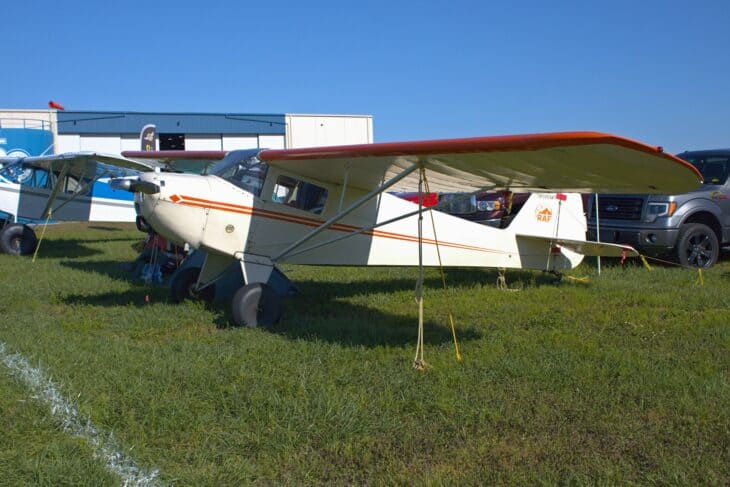

Taylorcraft was the third big name in postwar two-seaters, alongside Piper and Aeronca. The Pima Air and Space Museum says more than 4,000 BC-12-series airplanes had been built by 1946, the year the company went bankrupt as the postwar light-plane boom collapsed.
That is the weakest count on this list, because Taylorcraft sold many closely related models and no single source totals them cleanly. The BC-12D used a 65-horsepower Continental O-170-3 and topped out at about 105 mph (169 km/h).
Pima says that on the same power it ran as much as 15 or 20 mph faster than its rivals.
11. de Havilland Canada DHC-2 Beaver: 1,657 built
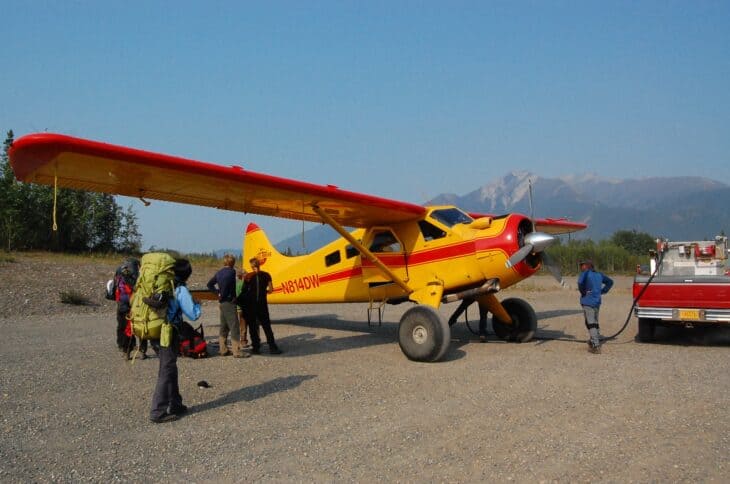

The DHC-2 Beaver is the biggest airplane on this list and the one with the most famous working life. De Havilland Canada built 1,657 between 1947 and 1967.
It carries a pilot and up to six passengers behind a 450-horsepower Pratt and Whitney R-985 Wasp Junior radial and cruises at about 143 mph (230 km/h).
A Beaver at the South Pole expedition
A Royal New Zealand Air Force Beaver supported Sir Edmund Hillary’s part of the 1958 Commonwealth Trans-Antarctic Expedition to the South Pole.
12. Cessna 190/195: about 1,100 to 1,180 built
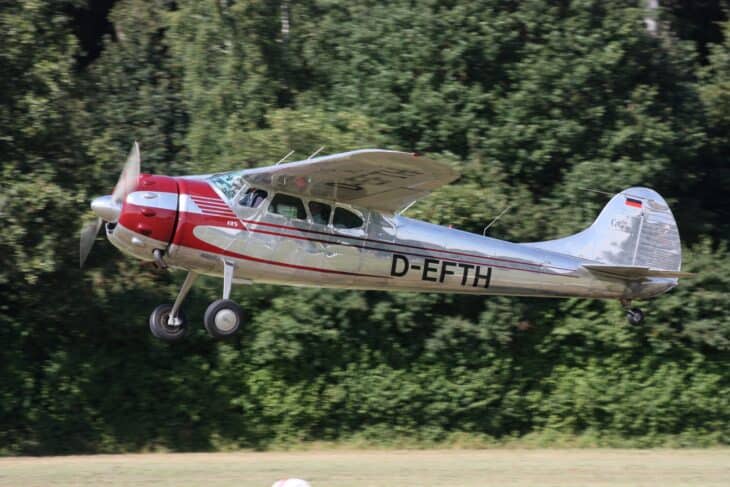

The Cessna 195 Businessliner is the art-deco taildragger, a radial-engined, five-seat cabin airplane. Wikipedia says 1,180 Model 190s and 195s were built from 1947 to 1954, while AVweb counts 1,099, nearly 80% of them 195s.
The top model uses a 300-horsepower Jacobs R-755 seven-cylinder radial, and AVweb calls it “an honest 140-knot machine.” The price rose from $12,750 in 1947 to $24,700 by the end of production.
13. Aviat Husky: more than 650 built
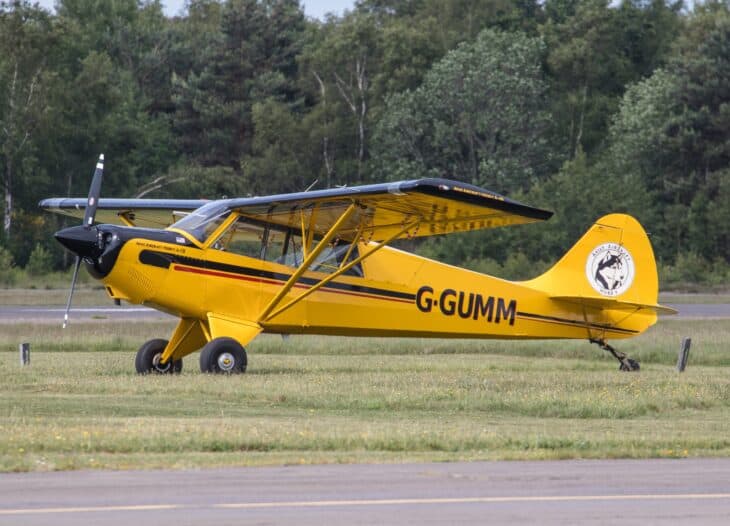
The Aviat Husky is the only design on this list drawn up in the modern era. It first flew in 1986, and more than 650 had been sold by 2008, the last total we could verify.
It is a two-seat, tandem bush airplane with 180 or 200 horsepower, and the A-1C cruises at about 140 mph (225 km/h). Aviat, in Afton, Wyoming, was listing 2026 Husky A-1C-180 and A-1C-200 airplanes as new inventory in November 2026.
It ranks last on numbers only because it is young. For a pilot shopping for a new, certified bush taildragger, it is one of the obvious choices, alongside the Scout and the Maule.
Why taildraggers are harder to handle on the ground
On a taildragger the center of gravity sits behind the main wheels, as AOPA and Flying magazine both explain. If the airplane starts to swerve on the runway, that weight keeps pushing it further around, and the result can be a ground loop: a sudden, uncommanded spin on the ground.
That is why US rules treat them separately. Under 14 CFR 61.31(i), a pilot cannot act as pilot in command of a tailwheel airplane without logged training and a logbook endorsement covering normal and crosswind takeoffs and landings, wheel landings and go-arounds.
Pilots who logged tailwheel pilot-in-command time before April 15, 1991, are exempt. Anyone who wants to fly bush airplanes for a living, as described in our guide to becoming a bush pilot, will meet this rule early.
What about the Maule, the Pitts and the warbirds?
Missing from the ranking, and why
Maule, the Pitts Special and CubCrafters all still build taildraggers, but none publishes a current production total we could verify, so they are not ranked. Maule says 2026 marks 64 years of production of its M-7, MX-7 and M-9 series. Aviat still sells new Pitts biplanes, alongside hundreds of homebuilt ones. Military trainers would also crowd the list: the Smithsonian says more than 10,000 Stearman trainers were built, and most World War II fighters, from the Spitfire to the Bf 109, were taildraggers too.
Many of these airplanes also turn up in our look at the different types of bush planes, since tailwheel gear and rough strips go together.
FAQ
Sources and references used for research and fact-checking.
- Smithsonian National Air and Space Museum, Piper J-3 Cub
- AOPA, Piper J-3 Cub fact sheet
- Wikipedia, Piper J-3 Cub
- Vintage Piper, PA-18 Super Cub
- Wikipedia, Piper PA-18 Super Cub
- Wikipedia, Aeronca Champion
- AOPA, Cessna 120/140 fact sheet
- Wikipedia, Cessna 140
- AOPA, Cessna 180 fact sheet
- Wikipedia, Luscombe 8
- AOPA, Luscombe 8 fact sheet
- Wikipedia, American Champion Citabria
- Wikipedia, American Champion Scout
- American Champion Aircraft, Aircraft lineup
- International Cessna 170 Association, History
- AOPA, Cessna 170 fact sheet
- Wikipedia, Cessna 170
- Wikipedia, Cessna 185 Skywagon
- AOPA Pilot, Cessna 185: the bush plane's bush plane
- Pima Air and Space Museum, Taylorcraft BC-12D
- Wikipedia, de Havilland Canada DHC-2 Beaver
- Wikipedia, Cessna 195
- AVweb, Cessna 195 Businessliner
- AOPA, Cessna 195
- Wikipedia, Aviat Husky
- Aviat Aircraft, Aviat Aircraft home and inventory
- Wikipedia, Pitts Special
- CubCrafters, CubCrafters aircraft
- Maule Air Inc., Maule Air
- Smithsonian National Air and Space Museum, Boeing-Stearman N2S-5 Kaydet
- Cornell Law School LII, 14 CFR 61.31 Type rating requirements, additional training, and authorization requirements
- AOPA, Don't let the ground loop get you
- Flying, What is a ground loop?
Get the Newsletter
The latest aviation news and stories sent to your inbox.
About the Author

Tim is the owner and lead editor of AeroCorner since 2019, overseeing aviation content covering aircraft, airlines, airports, and the broader aviation industry. Through years of researching, writing, editing, and publishing aviation-focused content, he has developed extensive practical knowledge of commercial aviation and air travel. Based in Asia and a frequent traveler himself, Tim also brings firsthand passenger experience to AeroCorner’s coverage. Outside of publishing, he has also explored aviation firsthand through hands-on flight training in New Zealand.