


Table of Contents
The cheapest certified airplane you can buy in 2026 is a Taylorcraft BC-12D, a two-seat taildragger from the 1940s. Flyable examples ask about $19,000 to $20,000, and the cheapest one listed this fall was $14,000.
Close behind are the Luscombe 8A, the Aeronca Champ and the Ercoupe, all two-seaters that still trade in the $20,000s. If you need four seats, the Stinson 108 and the Piper Tri-Pacer both start at about $39,000, and a Tri-Pacer listed at $35,000 was the cheapest flyable four-seater we found.
We ranked each airplane by what sellers are actually asking for a complete, flyable example right now, not by old price guides. That matters, because prices at the bottom of the market roughly doubled after 2020 and most “cheapest planes” lists still quote the old numbers.
| Rank | Airplane | Seats | Cheapest flyable ask | Typical asking range |
|---|---|---|---|---|
| 1 | Taylorcraft BC-12D | 2 | $14,000 | $19,000 to $20,000 |
| 2 | Luscombe 8A | 2 | $19,990 | $19,990 to $29,000 |
| 3 | Aeronca 7AC Champ | 2 | $19,000 | $24,500 to $37,000 |
| 4 | Ercoupe 415-C/D | 2 | $22,500 | $25,000 to $29,850 |
| 5 | Cessna 120 | 2 | $28,000 | $28,000 to $32,000 |
| 6 | Cessna 150 | 2 | $28,000 | $30,000 to $55,000 |
| 7 | Cessna 140 | 2 | $35,000 | $35,000 to $48,000 |
| 8 | Stinson 108 | 4 | $39,000 | $39,000 to $54,000 |
| 9 | Piper PA-22 Tri-Pacer | 4 | $35,000 | $39,500 to $52,500 |
| 10 | Grumman American AA-1 | 2 | $43,500 | $45,000 to $50,000 |
| 11 | Piper Cherokee 140 | 4 | $36,000 | $46,500 to $80,000 |
| 12 | Globe/Temco Swift | 2 | $49,500 | $49,500 to $57,500 |
| 13 | Mooney M20C | 4 | $42,500 | $65,000 to $98,000 |
How we ranked them
We read the current listings for each type on Barnstormers.com, most of them posted between early September and early October 2026, and ranked by the bottom of the typical asking range for a complete airplane that can fly. Projects, engineless airframes and partnership shares were left out. These are asking prices, not sale prices, so treat them as a ceiling you can negotiate down from. Ultralights and homebuilt kits are not certified aircraft and are covered separately below.
1. Taylorcraft BC-12D: about $19,000
The BC-12D is the cheapest certified airplane you can fly away today. The lowest flyable listing this fall was $14,000 for a hangared example with good logs, and two more asked $19,000 and $20,000.
The gap between those two is a useful lesson: the $19,000 airplane had an expired annual inspection, the $20,000 one had a current annual. Freshly restored BC-12Ds ask $34,500 to $45,000.
Taylorcraft introduced the BC-12D in 1945 and had built more than 4,000 by 1946, when the postwar light-plane market crashed and took the company into bankruptcy. It seats two side by side behind a 65 hp Continental A-65 and cruises at 90 to 95 mph (145 to 153 km/h).
There is a family connection to the Piper Cub. Gilbert Taylor sold his share of the company that built the Cub to William Piper for $5,000 in December 1935, then started Taylorcraft.
2. Luscombe 8A: from about $20,000

The Luscombe 8A is the cheapest all-metal airplane in this ranking. A 1946 example was listed at $19,990 this fall, and the typical range runs to about $29,000 for one restored in 2020.
The Luscombe 8 first appeared in 1937, and production ran until 1960. The 8A has a 65 hp engine, two side-by-side seats and a tailwheel, and Plane & Pilot lists its cruise at 104 mph (167 km/h).
Spend more and you get more engine. The later 8E and 8F asked $35,000 to $45,000 in the same listings.
3. Aeronca 7AC Champ: from about $24,500
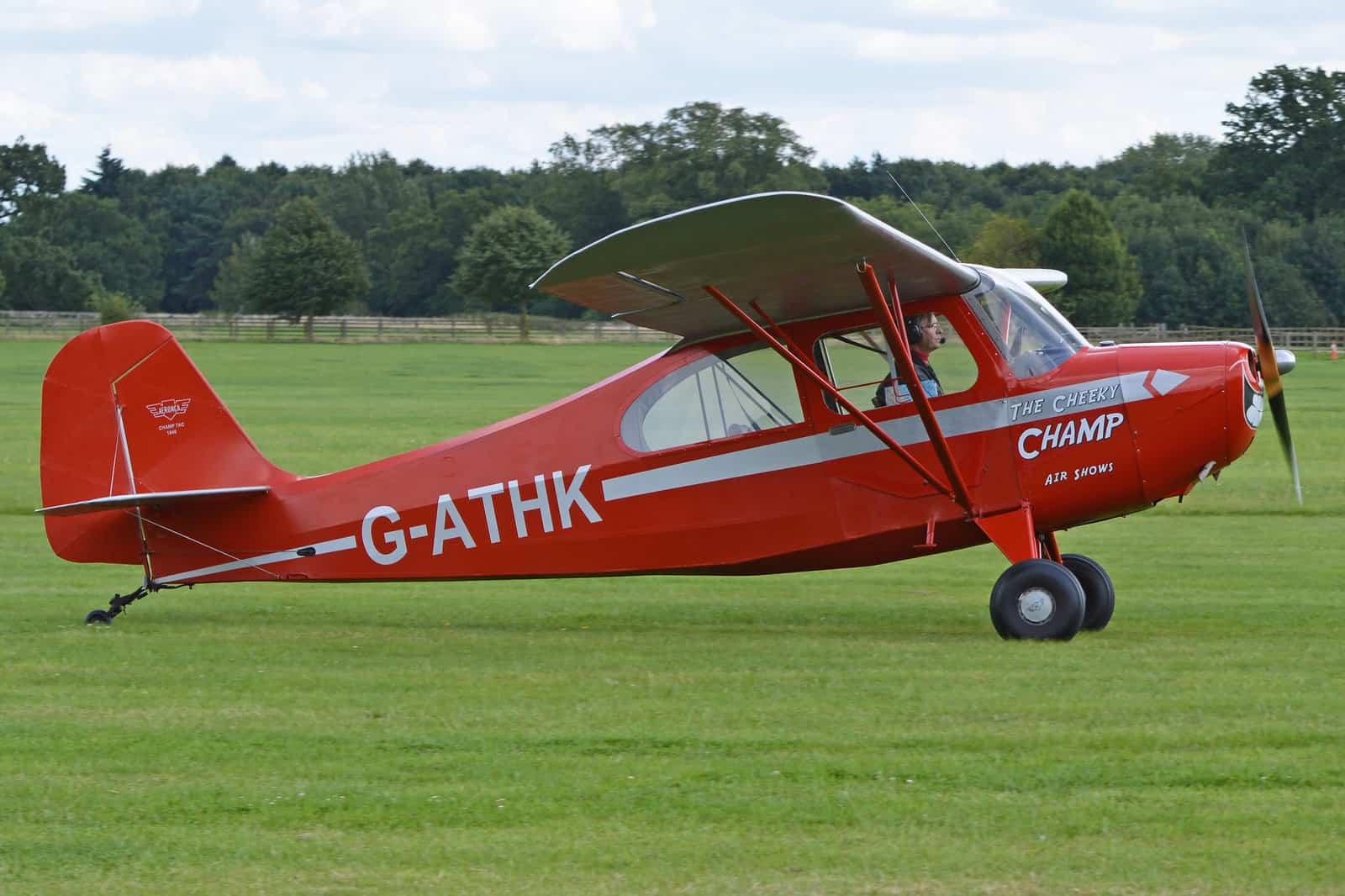
The Aeronca Champ is a tandem two-seat taildragger, and it is one of the most plentiful classics on the market. Typical asking prices run $24,500 to $37,000, and one 1946 example with a freshly overhauled engine was priced at $19,000 “for fast sale.”
The 7AC first flew in 1944 and was built from 1945 to 1949 alongside the 7BC and 7CC. It uses a 65 hp Continental A65, cruises at about 85 mph (137 km/h) and has a range of about 270 miles (435 km).
Restored Champs and engine conversions push the price up fast: a 108 hp conversion asked $37,000 and a 2024 restoration $59,800. AOPA counted more than 2,600 7AC Champs still on the FAA register in 2007, so there is always one for sale somewhere.
4. Ercoupe 415-C/D: from about $25,000

The Ercoupe is the cheapest tricycle-gear airplane in this ranking. A 1946 415-C listed as ready to fly asked $22,500, and seven current listings ran from $22,500 to $29,850.
Fred Weick designed it to be spin-proof. The original has no rudder pedals, the ailerons and rudder are linked, and a collar limits up-elevator travel so the wing cannot be pulled into a stall.
ERCO built about 5,000 of them between 1946 and 1948, and later builders took the total to nearly 5,800. The 75 hp 415-C and D cruise at about 100 mph (161 km/h) on a little over 5 gallons an hour.
Check the wings before you buy: two airworthiness directives, 2002-26-02 and 2003-21-01, cover corrosion there. The later Forney and Alon Aircoupes cost more, at $39,800 to $52,900 in this fall’s listings.
5. Cessna 120: from about $28,000
The Cessna 120 is the cheapest Cessna in this ranking. The three listed this fall asked $28,000 to $32,000.
It was the stripped-down version of the Cessna 140, with no electrical system and no flaps, and it listed at $2,695 new. Cessna built more than 7,500 of the two between 1946 and 1951.
Expect 105 to 110 mph (169 to 177 km/h) on 5 to 7 gallons an hour. It is a taildragger, and the former president of the type club told AOPA that “100 percent of the fleet has probably been ground looped at least once.”
6. Cessna 150: from about $30,000
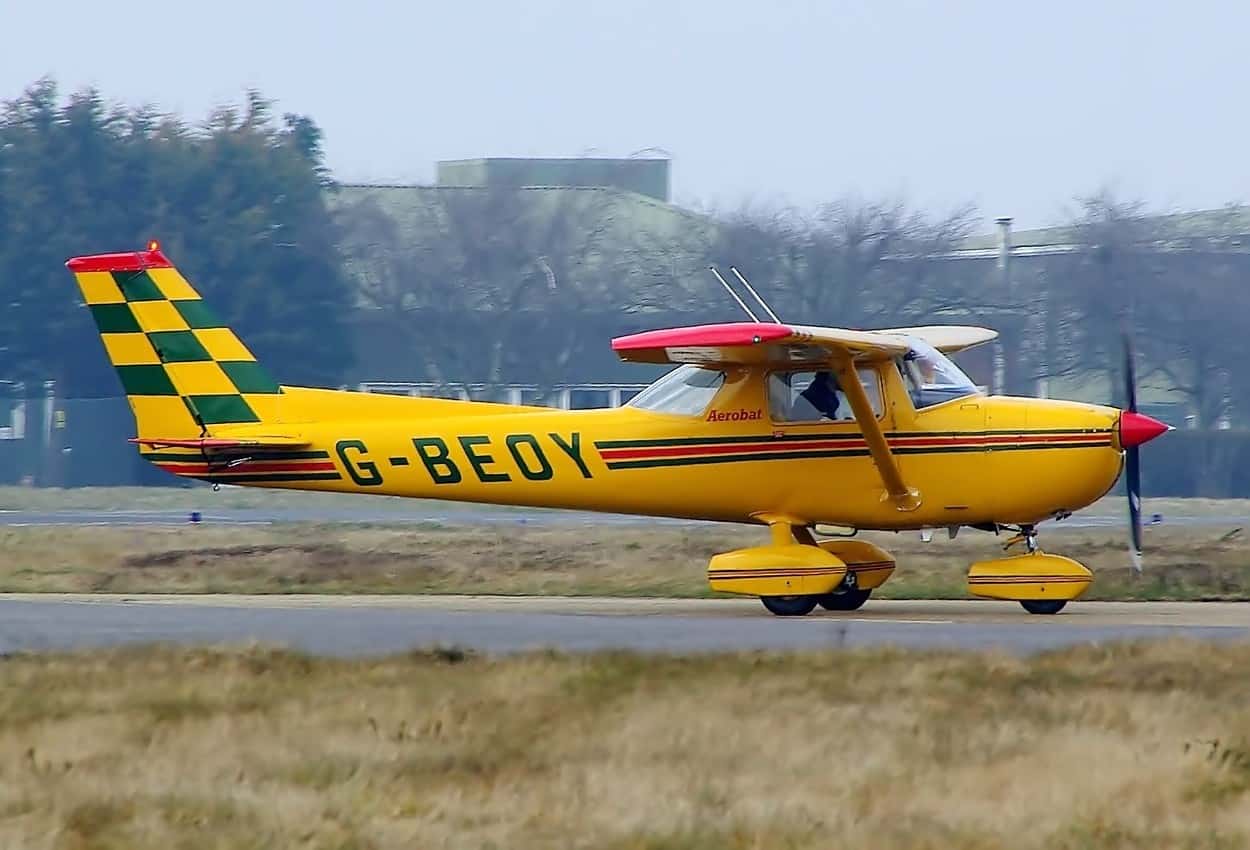
The Cessna 150 is the cheapest tricycle-gear trainer most buyers will actually find, because so many were built. More than 22,000 left the factory between 1959 and 1978, when the 152 replaced it.
Condition drives the price. A 1969 150K asked $28,000, a 150H with an engine past its overhaul time asked $32,500, low-time 150Ms asked $51,000 to $55,000, and well-equipped examples reached $86,000.
It seats two behind a 100 hp Continental O-200-A, and the first models cruised at 121 mph (195 km/h) at 75% power. A 1968 150H burns about 5.6 gallons an hour at that setting.
Its younger sibling costs more. Flyable Cessna 152s listed this fall started at $55,000.
7. Cessna 140: from about $35,000
The Cessna 140 is the better-equipped twin of the 120, with flaps and an electrical system, and it listed at $2,995 new. Current asks run $35,000 to $48,000.
The cheapest flyable one this fall already had a 108 hp engine conversion. The 1949 140A added all-metal wings, and only 525 were sold, so it is the rarer and usually pricier version.
8. Stinson 108: from about $39,000

The Stinson 108 is the cheapest four-seater in this ranking by typical price. A 1946 example with its original 150 hp Franklin asked $39,000, and a 108-2 with a fresh annual asked $54,000.
It appeared in 1946 as an improved four-seat version of the prewar Stinson Model 10. Piper bought the rights in December 1948 and ended production in 1950.
Plane & Pilot gives a cruise of 121 mph (195 km/h). The Station Wagon version took out the rear seats to carry up to 640 pounds (290 kg) of cargo.
9. Piper PA-22 Tri-Pacer: from about $39,500
The Tri-Pacer is the cheapest four-seater with tricycle gear in this ranking. The lowest flyable listing was $35,000 for a 1954 PA-22-135, and the typical range was $39,500 to $52,500.
It joined Piper’s line in 1951 with a 125 hp engine, then moved to 135, 150 and 160 hp. AOPA puts production at more than 7,600; other counts run above 9,000.
The 135 hp version cruises at about 107 knots. The fabric covering is the main thing to inspect: a “metalized” Tri-Pacer with a nearly new engine asked $89,500.
10. Grumman American AA-1: from about $45,000
The AA-1 Yankee is the sportiest airplane at this price, with a sliding canopy and a cruise of 117 knots on 6.3 gallons an hour. A 1968 Yankee asked $43,500, and most listings sat between $45,000 and $50,000.
It entered production late in 1968 as a two-seat trainer and sport plane with a 108 hp Lycoming. It lands fast for a trainer: AOPA advises not letting the approach speed drop below 74 knots.
11. Piper Cherokee 140: from about $46,500

The Cherokee 140 is the cheapest four-seat airplane most flight schools would recognize. Typical asks run $46,500 to $80,000, and a 1971 example with an engine past its overhaul time was listed at $36,000.
The FAA approved the PA-28-140 in February 1964, originally as a two-seater, with a 150 hp Lycoming O-320. A 1966 model cruises at about 117 knots on 8.1 gallons an hour.
A common claim is that the Cherokee replaced the Comanche. It did not. It started as a simpler replacement for the Tri-Pacer, and Piper kept its cabin 2 inches narrower than the Comanche’s so the two would not compete.
12. Globe/Temco Swift: from about $49,500
The Swift is the cheapest airplane with retractable landing gear in this ranking. Flyable GC-1Bs asked $49,500 to $57,500 this fall.
Globe and Temco built nearly 1,500 between 1945 and 1951. The GC-1B seats two behind a 125 hp Continental and cruises at about 120 knots, which makes it the fastest two-seater here.
Many owners fit bigger engines, and those cost more: a 210 hp “Super Swift” asked $120,000 to $124,500.
13. Mooney M20C: from about $65,000

The Mooney M20C is the cheapest way to go fast with four seats. Most listings ran $65,000 to $98,000, though one high-time example asked $42,500.
Introduced in 1962 with a 180 hp Lycoming and built through 1978, it has retractable gear. AOPA reports owners seeing 140 to 147 knots on about 8.5 gallons an hour.
It is the most common early Mooney, with 1,680 on the register when AOPA counted, so you can shop for condition rather than settling.
Why are cheap airplanes so much more expensive now?
Because used airplane prices jumped between 2020 and 2022 and never came back down. In early 2022, Sandhills Global reported that the average asking price of a used piston single in the US and Canada had risen from $187,000 to $225,000 in a year, while inventory fell by 40%.
Prices then flattened. Sandhills’ August 2026 data shows asking values down 1.6% on a year earlier, with inventory still nearly 12% below the year before.
The bottom of the market moved the most. Here is what Plane & Pilot quoted for the cheapest planes in 2019, next to what sellers asked this fall.
| Airplane | 2019 price quoted | 2026 asking range |
|---|---|---|
| Ercoupe | $18,000 or less | $25,000 to $29,850 |
| Cessna 150 | as little as $15,000 | $30,000 to $55,000 |
| Aeronca Champ | less than $25,000 | $24,500 to $37,000 |
| Luscombe 8E | $18,500 at the low end | $35,000 to $40,900 |
| Stinson 108 | $28,000 to $38,000 | $39,000 to $54,000 |
| Piper Cherokee 140 | as low as $21,000 | $46,500 to $80,000 |
| Beechcraft Skipper | around $25,000 | $69,500 (last listing seen, 2024) |
The $18,000 Cessna is gone
The Cessna 150-152 Club says a good Cessna 150 averaged about $18,000 in 2010, and that the $15,000 to $22,000 airplanes of that era became $30,000 to $40,000 airplanes after 2020. This fall, the cheapest flyable 150 on Barnstormers asked $28,000.
The cheap planes that aren’t cheap anymore
Six airplanes that used to appear on bargain lists, including earlier versions of this one, now cost too much to make the ranking. Each is still a good airplane; it just isn’t a cheap one.
Piper J-3 Cub: $45,000 to $62,000
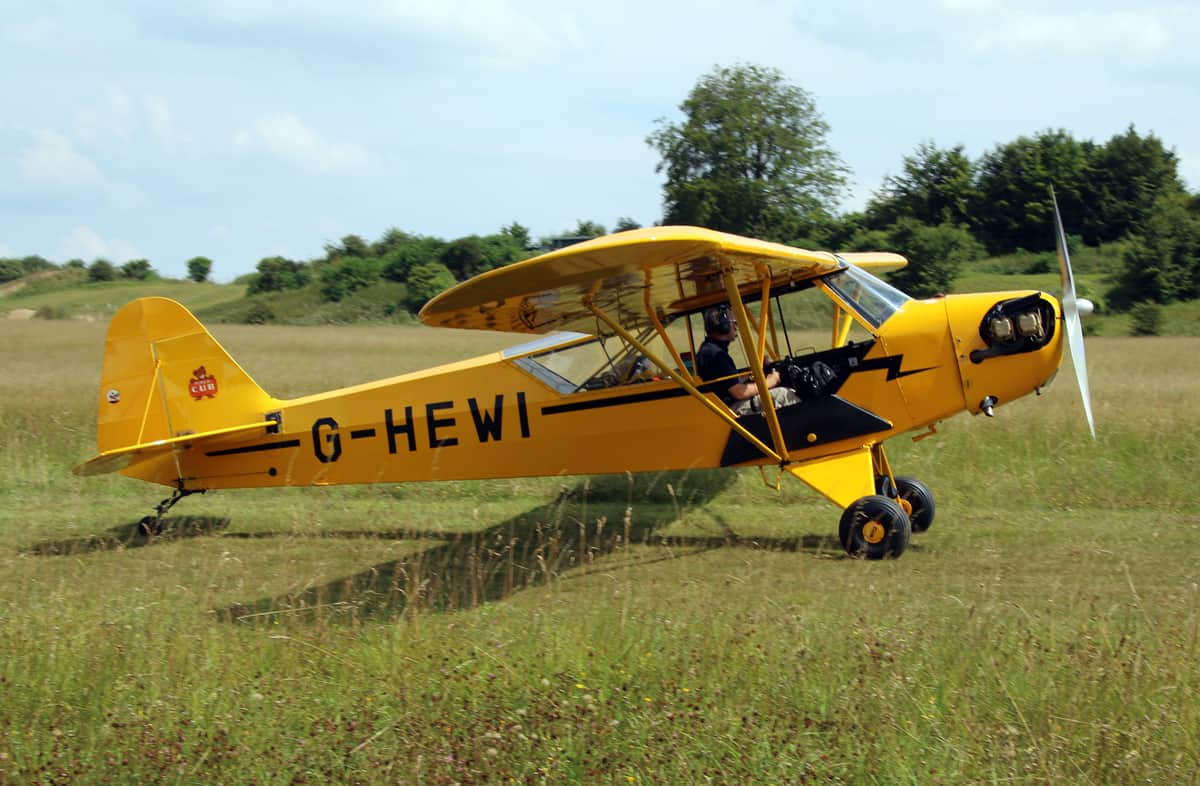
The J-3 Cub sold for about $1,300 when it was new, and 19,888 had been built when production ended in 1947. Today flyable Cubs ask $45,000 to $62,000, with the cheapest this fall at $39,000 for a 1941 example.
Its fame is the reason for the premium. The Smithsonian notes that 75% of the pilots in the wartime Civilian Pilot Training Program learned on Cubs.
Early Cessna 172: $52,000 to $100,000
The Cessna 172 is the most-produced airplane in history, with more than 45,000 built since its first flight in 1955. Even so, 1956 to 1967 models mostly asked $52,000 to $100,000 this fall, and the cheapest flyable one was a 1960 172A at $47,500.
The 1956 to 1959 “straight-tail” models use a 145 hp Continental O-300. A 1957 172 cruises at about 108 knots on 8 gallons an hour at 75% power.
Cessna 175 Skylark: $52,500 to $75,000

The Cessna 175 was built from 1958 to 1962, with 2,106 delivered. Its 175 hp Continental GO-300 is geared, and AOPA reports that most of those engines do not reach their 1,200-hour overhaul time.
That engine is why a 175 costs less than a comparable 172, and why many have been converted to a Lycoming O-360. Flyable examples asked $52,500 to $75,000 this fall.
Piper PA-38 Tomahawk: $68,500 and up
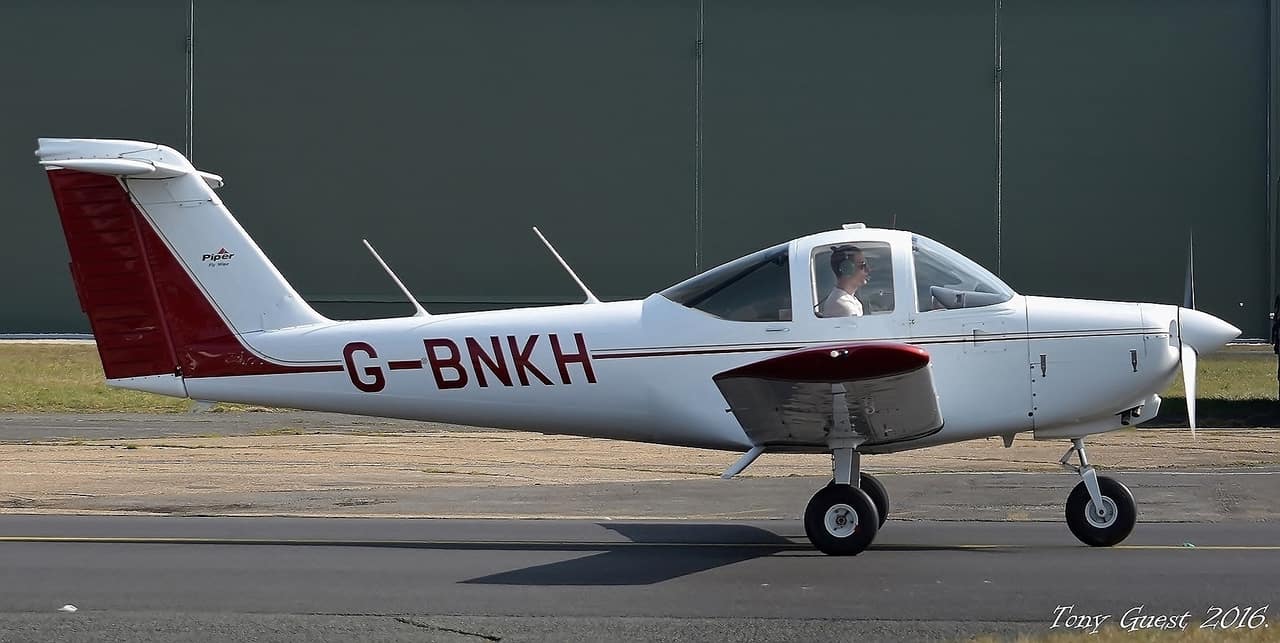
Only two Tomahawks were listed on Controller and GlobalAir this fall, at $68,500 for a 1978 model and $83,900 for a 1979. That is roughly double the $36,000 this article quoted for a Tomahawk in 2022.
The 112 hp trainer arrived for the 1978 model year with an airfoil that AOPA describes as having “rather abrupt stall and spin qualities.” FAA AD 83-14-08 required stall strips on serial numbers 38-78A0001 through 38-79A0582, not on the whole fleet.
Beechcraft 77 Skipper: hard to find at any price

Beechcraft built only 312 Skippers between 1979 and 1981, so finding one is now harder than paying for one. No Skipper was listed on Barnstormers, Controller or GlobalAir this fall.
The most recent price we could find was $69,500 for a 1979 example, which Plane & Pilot featured in 2024. It uses a 115 hp Lycoming O-235 and burns 7.4 gallons an hour at 75% power.
Cessna 182: $89,000 to $150,000

The Cessna 182 appeared on this list at $34,000 in 2022, but 1956 to 1972 Skylanes now mostly ask $89,000 to $150,000. The one cheaper outlier this fall was a 1957 skydiving airplane with 8,292 hours on the airframe, at $46,000.
Around 24,000 fixed-gear Skylanes have been built. The early ones use a 230 hp Continental O-470, and Plane & Pilot puts a Skylane’s fuel burn at 12 to 13 gallons an hour.
What does a cheap airplane cost to own?
More than the purchase price suggests, which is why our guide on how to buy your own plane starts with the budget. Flying magazine put the first-year cost of a Cessna 172 or Piper Archer flown 100 hours at $18,850 to $26,350 in May 2026, before any loan payments.
That total includes a T-hangar at $400 to $600 a month, insurance at $2,200 to $4,000 a year and an annual inspection that typically lands at $2,500 to $4,500. 100LL averaged $7.22 a gallon in May 2026, and Flying used an engine reserve of $17.50 per flight hour.
Smaller airplanes cost less to run. The Cessna 150-152 Club estimates about $60 an hour for a 150 flown 100 hours a year with no loan, rising to about $120 an hour with a $25,000 loan.
The cheapest airplane is rarely the best deal
A low asking price often means a tired engine, an expired annual or open airworthiness directives, and an engine overhaul alone can cost more than the gap between two listings. Price the engine time, the annual status and the paperwork before you compare asking prices.
Can you fly these with a sport pilot certificate?
Many of them, yes. Since October 22, 2025, the FAA’s MOSAIC rule lets sport pilots fly any airplane whose clean stall speed at maximum takeoff weight is 59 knots calibrated airspeed or less.
That airplane can have up to four seats, but a sport pilot may carry only one passenger. Retractable gear needs an additional instructor endorsement.
The FAA has not published a list of eligible types. AOPA says most four-seat singles qualify, including Cessna 172 and 182 models and most of the Piper PA-28 series, and the Cessna 150M’s clean stall speed of 48 knots is well inside the limit. Check the stall speed in your airplane’s own flight manual before you rely on it.
Is there anything cheaper than these?
Yes, if you step outside certified aircraft. Ultralights sit a step below this list on price, and our guide to the cheapest ultralight aircraft ranks them.
At the other end, if you need speed and range, the step up from a Mooney is a turbine. Our ranking of the cheapest turboprops starts where this list stops.
FAQ
Sources and references used for research and fact-checking.
- Barnstormers, Taylorcraft aircraft for sale (asking prices, September to October 2026)
- Barnstormers, Luscombe aircraft for sale (asking prices, September to October 2026)
- Barnstormers, Aeronca aircraft for sale (asking prices, September to October 2026)
- Barnstormers, Ercoupe aircraft for sale (asking prices, September to October 2026)
- Barnstormers, Cessna 120 for sale (asking prices, September to October 2026)
- Barnstormers, Cessna 150 for sale (asking prices, September to October 2026)
- Barnstormers, Cessna 140 for sale (asking prices, September to October 2026)
- Barnstormers, Stinson aircraft for sale (asking prices, September to October 2026)
- Barnstormers, Piper PA-22 Tri-Pacer for sale (asking prices, September to October 2026)
- Barnstormers, Grumman AA-1 Yankee for sale (asking prices, September to October 2026)
- Barnstormers, Piper PA-28 Cherokee for sale (asking prices, September to October 2026)
- Barnstormers, Globe and Temco Swift for sale (asking prices, September to October 2026)
- Barnstormers, Mooney M20C for sale (asking prices, September to October 2026)
- Barnstormers, Piper J-3 Cub for sale (asking prices, September to October 2026)
- Barnstormers, Cessna 172 for sale (asking prices, September to October 2026)
- Barnstormers, Cessna 175 Skylark for sale (asking prices, September to October 2026)
- Barnstormers, Cessna 182 for sale (asking prices, September to October 2026)
- Controller, Piper Tomahawk listings
- GlobalAir, Piper Tomahawk PA-38-112 for sale
- Plane & Pilot, Bargain buys: 1979 Beechcraft Skipper
- Plane & Pilot, 10 Cheapest Planes (2019)
- Cessna 150-152 Club, Cost of ownership
- Flying, The True Cost of the First 100 Hours
- Sandhills Global via EquipmentFA, Used piston-single and turboprop aircraft values increase sharply
- Sandhills Global via Controller, Used aircraft market report, August 2026 data
- Pima Air & Space Museum, Taylorcraft BC-12D
- AOPA, Aircraft guide: Taylorcraft BC-12
- AOPA, Aircraft fact sheet: Taylorcraft
- Wikipedia, Taylorcraft B
- AOPA, Aircraft fact sheet: Luscombe 8
- Plane & Pilot, Luscombe 8 used aircraft review
- Plane & Pilot, Aeronca 7AC Champion
- AOPA, Aircraft guide: Aeronca Champion 7AC
- AOPA, Aircraft fact sheet: Champ
- AOPA, Aircraft fact sheet: Erco Ercoupe
- AVweb, Used aircraft guide: Ercoupe and Cadet
- AOPA, Aircraft fact sheet: Cessna 120/140
- AOPA, Aircraft fact sheet: Cessna 150
- AOPA, Aircraft guide: Cessna 150M
- Plane & Pilot, Stinson 108 Voyager
- Wikipedia, Stinson 108
- AOPA, Aircraft fact sheet: Piper Tri-Pacer
- Wikipedia, Piper PA-22 Tri-Pacer
- AOPA, Aircraft guide: Piper Tri-Pacer
- AOPA, Aircraft fact sheet: American Aviation Yankee
- AOPA, Aircraft fact sheet: Piper Cherokee
- FAA, Type Certificate Data Sheet 2A13 (Piper PA-28)
- Plane & Pilot, 1966 Piper Cherokee 140
- Plane & Pilot, Globe/Temco Swift
- AOPA, Aircraft fact sheet: Mooney M20
- Smithsonian National Air and Space Museum, Piper J-3 Cub
- FLYER, Cessna 172 Skyhawk celebrates 65 years since first flight
- Plane & Pilot, 1957 Cessna 172 straight-tail Skyhawk
- AOPA, Aircraft fact sheet: Cessna 175
- AOPA, Tomahawk safety review
- Civil Aviation Authority of New Zealand, Piper PA-38 airworthiness directive schedule (FAA AD 83-14-08)
- AOPA, Aircraft fact sheet: Beechcraft Skipper
- Plane & Pilot, Used Cessna 182 Skylanes
- FAA, MOSAIC final rule fact sheet
- eCFR, 14 CFR 61.316: aircraft a sport pilot may operate
- AOPA, Post-MOSAIC guidance for sport pilots updated
Get the Newsletter
The latest aviation news and stories sent to your inbox.
About the Author

Salomon has been interested in aviation ever since his parents took him on a Boeing 720 to see his relatives. When he’s not writing his latest aviation article, he can be found planespotting, reading up on on aviation news or in the cockpit of his favorite aircraft!