

Table of Contents
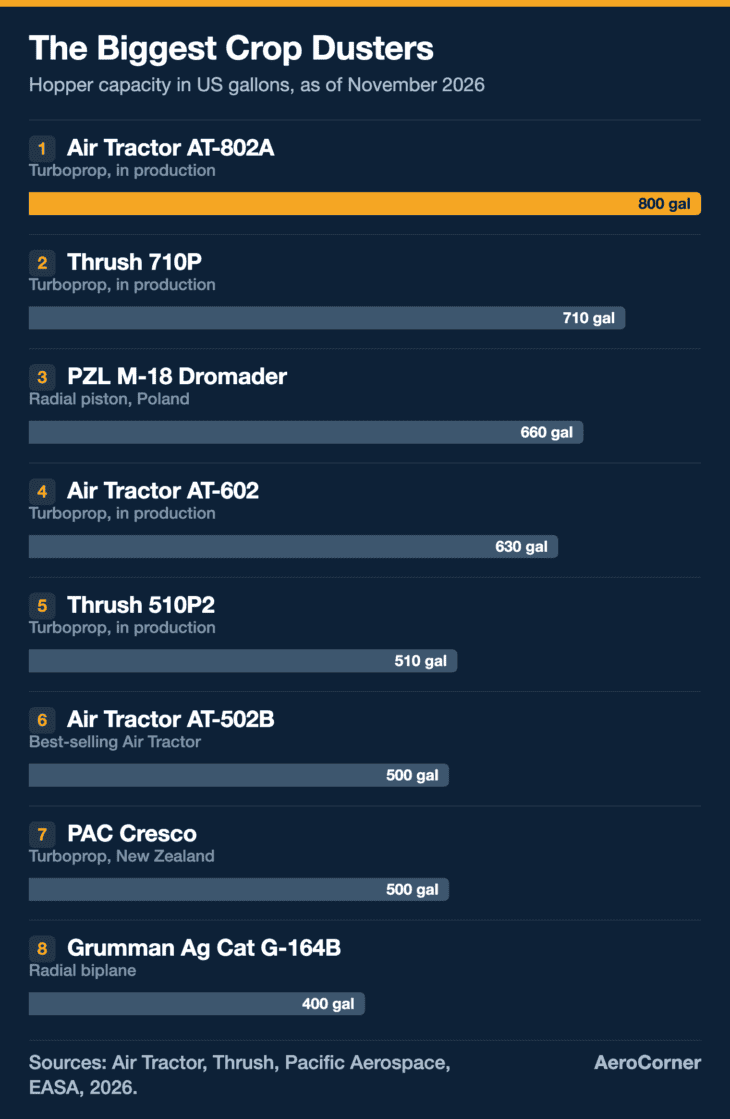
The biggest agricultural aircraft in production is the Air Tractor AT-802A, a single-engine turboprop that carries 800 US gallons (3,028 L) of spray in its hopper. That is more than five times what a Piper Pawnee, the classic crop duster of the 1960s, could carry.
This list ranks 12 agricultural aircraft by hopper capacity, the one number that decides how many acres a pilot can treat before landing to reload. It covers the turboprops working farms today and the piston classics that built the industry, with specs from the makers and the aviation authorities as of November 2026.
| Rank | Aircraft | Hopper capacity | Engine | Built in |
|---|---|---|---|---|
| 1 | Air Tractor AT-802A | 800 gal (3,028 L) | Turboprop, 1,295 shp | USA |
| 2 | Thrush 710P | 710 gal (2,687 L) | Turboprop, 1,300 shp | USA |
| 3 | PZL M-18 Dromader | 660 gal (2,500 L) | Radial, 980 hp | Poland |
| 4 | Air Tractor AT-602 | 630 gal (2,385 L) | Turboprop, 1,050 shp | USA |
| 5 | Thrush 510P2 | 510 gal (1,930 L) | Turboprop, 750 shp | USA |
| 6 | Air Tractor AT-502B | 500 gal (1,893 L) | Turboprop, 750 shp | USA |
| 7 | PAC Cresco | 500 gal (1,900 L) | Turboprop, 750 shp | New Zealand |
| 8 | Grumman Ag Cat (G-164B) | 400 gal (1,514 L) | Radial piston | USA |
| 9 | Cessna 188 AgTruck | 280 gal (1,060 L) | Piston | USA |
| 10 | Embraer EMB-203 Ipanema | 250 gal (950 L) | Piston, 320 hp | Brazil |
| 11 | Piper PA-36 Pawnee Brave | 225 gal (about 850 L) | Piston, 285 hp | USA |
| 12 | Piper PA-25 Pawnee | 150 gal (568 L) | Piston | USA |
How this ranking works
We rank purpose-built fixed-wing agricultural aircraft by liquid hopper capacity in US gallons, as published by the manufacturer where a spec page exists. Where a family came in several versions, the table names the one ranked, and a tie goes to the airplane built in greater numbers. Prototypes that never entered production, helicopters and drones are left out, and the Antonov An-2 is covered separately because its hopper is published by weight, not volume.
What makes an airplane an agricultural aircraft
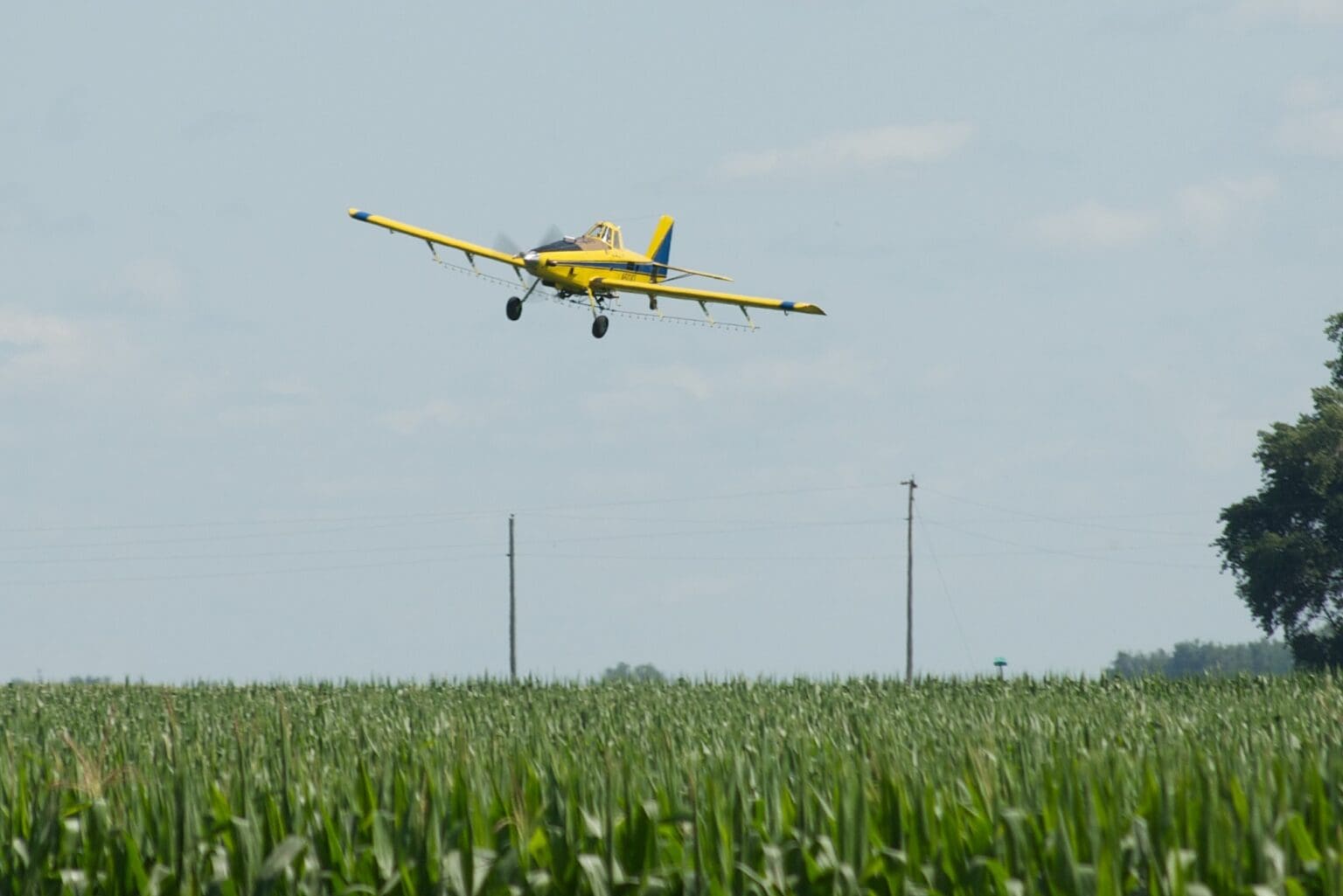
An agricultural aircraft, usually called a crop duster or ag plane, is built to spray or spread fertilizer, pesticide and seed from just above the crop. Most share one layout: a single engine, a single seat and a large chemical hopper ahead of the cockpit. The PAC Cresco, with its hopper behind the pilot, is the exception on this list.
Ag pilots work low over fields lined with power lines and trees, which is why crop dusting is one of the riskier jobs in aviation.
The work is bigger than most people assume. The National Agricultural Aviation Association counts about 1,560 aerial application businesses and 3,400 ag pilots in the US, treating some 127 million acres of cropland a year, about 28% of the cropland in production.
1. Air Tractor AT-802A: 800 gallons
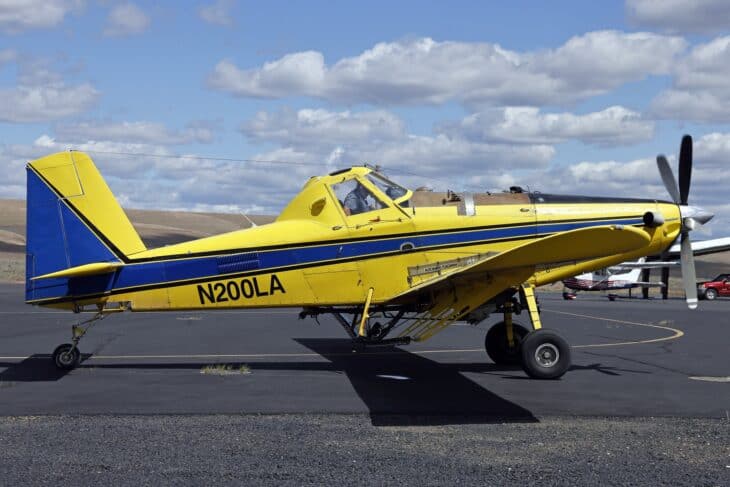
The AT-802A carries 800 US gallons (3,028 L) in its hopper and grosses 16,000 pounds (7,257 kg). A 1,295 shp Pratt & Whitney PT6A-65AG turboprop pulls it along at a working speed of 130 to 160 mph (113 to 139 knots).
Air Tractor founder Leland Snow began designing it in 1989 as a large single-engine airplane for aerial firefighting, and the first production AT-802A left the factory in Olney, Texas, in 1993. Air Tractor calls the 802 series the largest production single-engine agricultural airplane in the world.
Its size comes from that firefighting brief. The 1,000th AT-802 rolled out in January 2023, and the type is still on Air Tractor’s lineup alongside the amphibious AT-802F Fire Boss.
2. Thrush 710P: 710 gallons
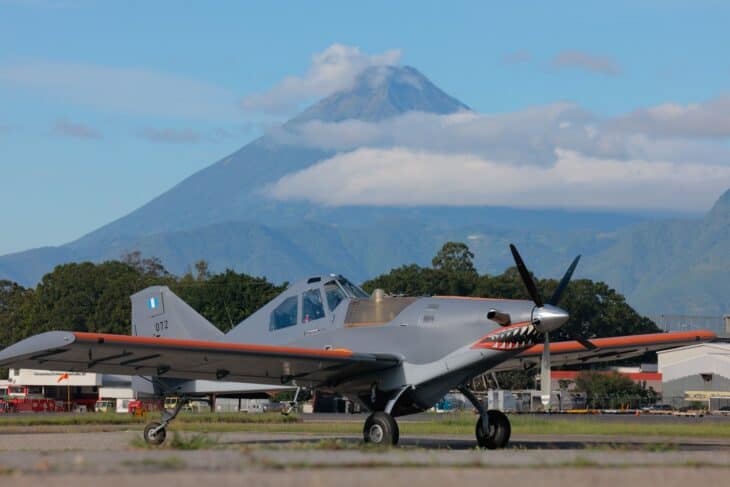
The Thrush 710P is the biggest airplane from Thrush Aircraft of Albany, Georgia, with a 710-gallon (2,687 L) hopper and a certified gross weight of 14,150 pounds (6,418 kg). It uses the same PT6A-65AG engine family as the AT-802A, rated here at 1,300 shp.
It carries about 89% of the AT-802A’s load at about 88% of its gross weight. Thrush says its aircraft are flown by more than 2,200 owners in some 80 countries.
One man designed both rivals
Leland Snow designed his first ag plane, the S-1, in 1951 and moved production to Olney, Texas. He sold the company to Rockwell-Standard in 1965, where his S-2R became the Thrush, and Thrush production moved to Georgia in 1970. Snow then left and started over with the Air Tractor AT-300 in 1972. Air Tractor and Thrush both trace back to him.
3. PZL M-18 Dromader: 660 gallons
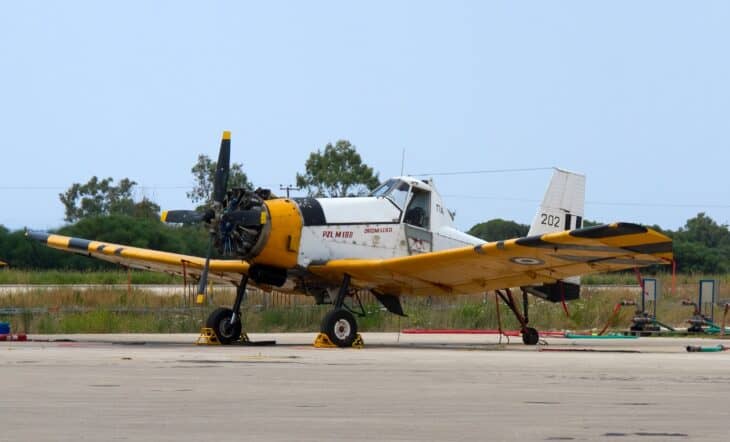

The Dromader is the heavyweight of the piston era. Built by PZL-Mielec in Poland, it carries about 660 gallons (2,500 L) behind a nine-cylinder PZL ASz-62IR radial rated at a minimum of 980 hp for takeoff.
Its European type certificate lists a normal maximum takeoff weight of 9,260 pounds (4,200 kg) and a normal hopper load of 3,307 pounds (1,500 kg), rising to 4,850 pounds (2,200 kg) in restricted firefighting use. The prototype first flew on August 27, 1976, and nearly 760 were built.
It ranks above the AT-602 on volume, and it is the only airplane in the top five that runs on a piston engine rather than a turboprop.
4. Air Tractor AT-602: 630 gallons
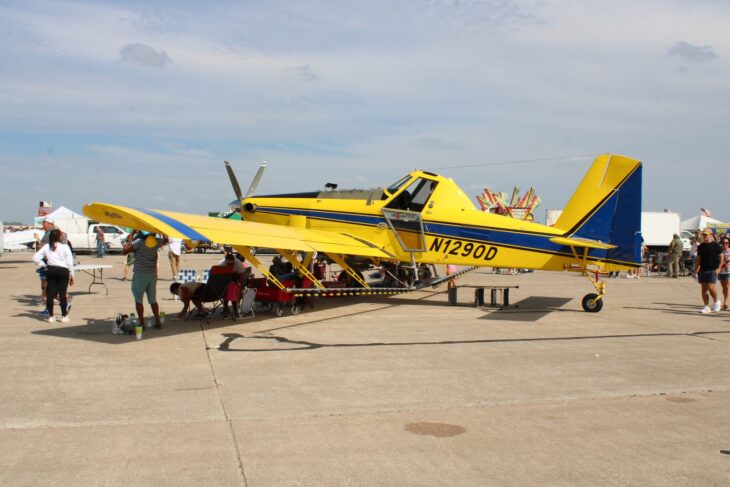

The AT-602 is the middle child of the Air Tractor range, with a 630-gallon (2,385 L) hopper, a 1,050 shp PT6A-60AG and a 12,500-pound (5,670 kg) gross weight. The FAA approved it on June 6, 1996.
New Zealand’s Civil Aviation Authority describes it as basically an AT-502A with a longer wingspan and a larger hopper.
5. Thrush 510P2: 510 gallons


The 510P2 is the second generation of the Thrush 510P, with a 510-gallon (1,930 L) hopper, a 750 shp PT6A-34AG and a certified gross weight of 10,500 pounds (4,763 kg). It is Thrush’s answer to the AT-502B, and it edges it by 10 gallons.
Thrush also built the 510G, which flew on November 23, 2010, with an 800 shp GE H80 engine in place of the Pratt & Whitney. It no longer appears on Thrush’s current lineup.
6. Air Tractor AT-502B: 500 gallons
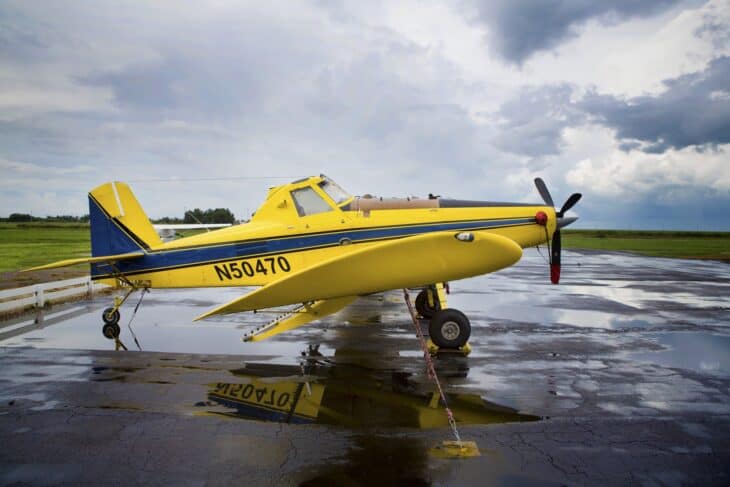

The AT-502B carries 500 gallons (1,893 L) on a 750 shp PT6A-34AG and grosses 9,400 pounds (4,263 kg). The FAA approved this version on December 8, 1992.
It is not the biggest Air Tractor, but it may be the most important one. Air Tractor markets it as the world’s most popular ag plane and says it has built well over 1,000 of the 502 series since 1987.
When the company delivered its 5,000th airplane on May 28, 2026, it was an AT-502B. The NAAA says 87% of US ag operators are pilots themselves, and what ag pilots really earn differs between hired pilots and owner-operators.
7. PAC Cresco: 500 gallons
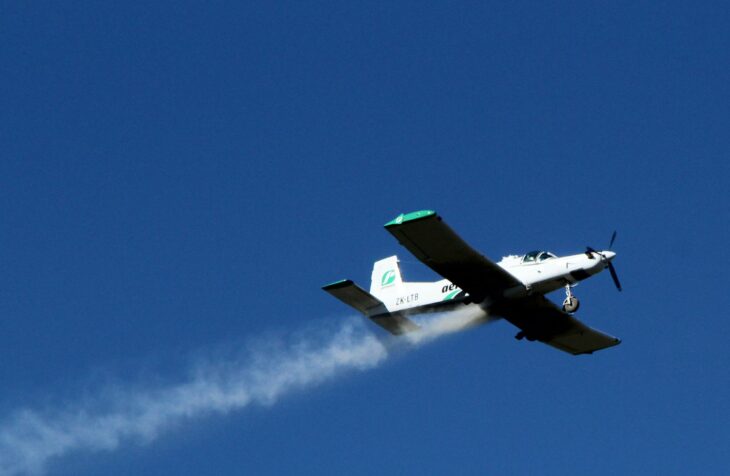

New Zealand’s Pacific Aerospace built the Cresco for topdressing, spreading fertilizer over hill country from the air. It carries 500 gallons (1,900 L) in a rear-mounted hopper, with a disposable load of 5,400 pounds (2,449 kg) and a 750 shp PT6 turboprop.
It first flew on February 28, 1979, and only about 40 were built. It ties the AT-502B on paper and ranks below it here because so few were made. Its predecessor, the piston Fletcher FU-24, first flew in 1954 and carried 320 gallons.
8. Grumman Ag Cat: 400 gallons
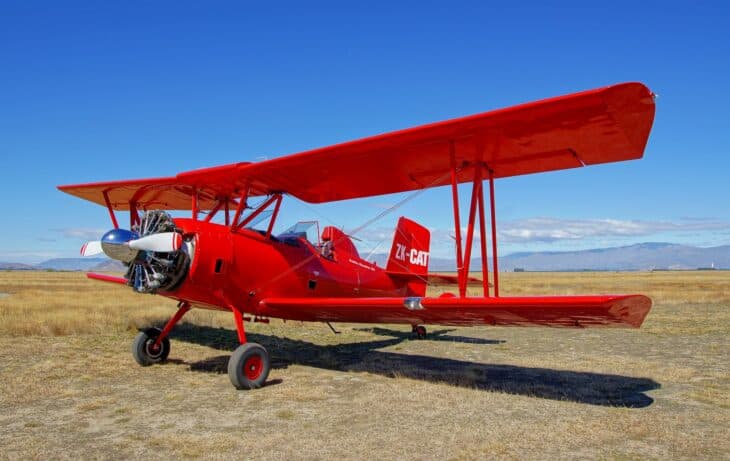

The Ag Cat is the biplane most people picture when they hear “crop duster.” The prototype flew on May 27, 1957, and nearly 2,700 were built, most of them by Schweizer under contract to Grumman.
Its hopper grew with each version. The Smithsonian’s National Air and Space Museum lists 217 gallons for the original and 247 for the G-164A, and the G-164B in our table carried 400 gallons (1,514 L).
9. Cessna 188 AgTruck: 280 gallons


The Cessna 188 was Cessna’s purpose-built ag plane, a low-wing single-seater sold as the AgWagon with a 200-gallon hopper and the AgTruck with 280 gallons (1,060 L). The Ag Husky, added in 1979, also carried 280 gallons.
Production ran from 1966 to 1983, and the commonly cited total is 3,976 airplanes, which makes the 188 one of the most-built ag aircraft on this list.
10. Embraer EMB-203 Ipanema: 250 gallons
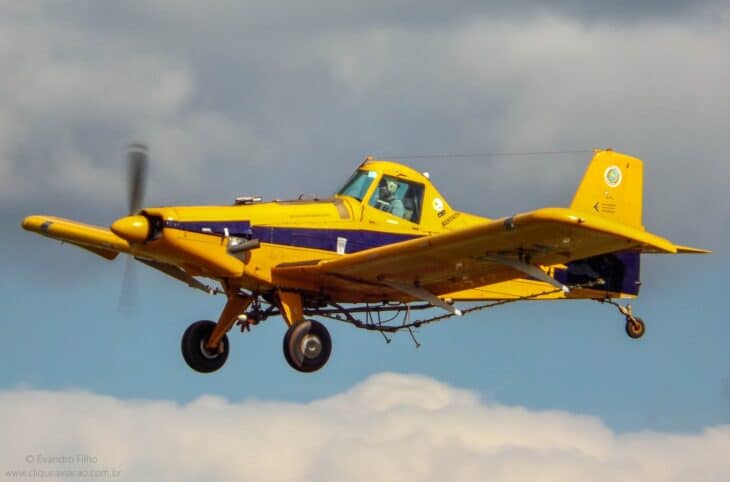

Brazil’s Ipanema carries about 250 gallons (950 L) behind a six-cylinder, 320 hp piston engine. It first flew on July 30, 1970, and Embraer says more than 1,700 have been produced, more than 1,100 of them still working.
Its claim to fame is fuel. Embraer’s subsidiary Neiva had the ethanol-powered Ipanema certified on October 19, 2004, and Embraer calls it the first series-produced aircraft in the world to fly on a biofuel, with more than 570 ethanol versions sold by 2024.
11. Piper PA-36 Pawnee Brave: 225 gallons

The Pawnee Brave was Piper’s bigger successor to the Pawnee, with a 225-gallon (1,900-pound) hopper and a 285 hp engine. Its prototype first flew on December 5, 1969.
Piper built 938 of them before production ended in 1981, a fraction of the original Pawnee’s total.
12. Piper PA-25 Pawnee: 150 gallons

The PA-25 Pawnee ranks last on capacity: the Pawnee D’s hopper carries 150 gallons (568 L), or 1,200 pounds of chemicals. On numbers built it beats every other airplane in this ranking, with roughly 5,000 produced between 1959 and 1981.
Pawnees still spray crops today, which helps explain why the Pawnee and the Ag Cat, not the Air Tractor, are still the shapes most people call a crop duster. If you have seen one skim a field, how low crop dusters are allowed to fly covers the rules.
What about the Antonov An-2?
The An-2 was built in greater numbers than any airplane on this list: the Smithsonian counts over 18,500 built in a nearly 50-year run, many under license in Poland and China. It is not ranked because it is a multi-role utility biplane whose ag versions publish their tank by weight, about 1,300 kg (2,900 lb) of chemicals in the Polish An-2R. A larger Air Tractor prototype, the AT-1002, is also left out because it is not on Air Tractor’s current lineup.
From war-surplus biplanes to turboprops: a short history
The first crop dusting flight took place on August 3, 1921, near Troy, Ohio. Army Lt. John A. Macready flew a modified Curtiss JN-4 Jenny over a six-acre grove of catalpa trees and spread lead arsenate to kill caterpillars, according to the FAA.
The first commercial operator followed four years later. Huff Daland Dusters began dusting peach trees in Montezuma, Georgia, on March 25, 1925, and C.E. Woolman, who took over the company in 1928, renamed it Delta Air Service, the forerunner of Delta Air Lines.
After World War II, surplus Boeing-Stearman trainers flooded the market. More than 10,000 had been built, and the Smithsonian notes that surplus trainers sold for as little as $250 before being converted to dusters.
Purpose-built designs followed: Snow’s S-1 in 1951, the Ag Cat in 1957 and the Pawnee in 1959. Turbine power arrived in 1977 with Air Tractor’s first turbine model, the AT-302.
Why hopper size decides the winner
An ag plane earns money per acre, and every trip back to the loading strip is time not spraying. A bigger hopper means fewer ferry legs, and every airplane on this list still in production carries at least 250 gallons.
Bigger airplanes cost far more, though: the NAAA puts the price of an ag aircraft anywhere from $100,000 to nearly $2 million, and the average operator runs just 2.3 of them.
Helicopters fill a niche the airplanes cannot. The NAAA reports that 84% of the US ag fleet is fixed-wing and 16% rotorcraft.
FAQ
Sources and references used for research and fact-checking.
- Air Tractor, AT-802A
- Air Tractor, Air Tractor celebrates serial No. 1,000 AT-802
- Air Tractor, AT-602
- Air Tractor, AT-502B
- Air Tractor, Air Tractor celebrates historic production milestone with delivery of 5,000th aircraft
- Air Tractor, Our heritage
- Air Tractor, Aircraft lineup
- EASA, Type Certificate Data Sheet EASA.IM.A.274, Air Tractor AT-802
- Civil Aviation Authority of New Zealand, Type acceptance report, Air Tractor AT-602
- Civil Aviation Authority of New Zealand, Type acceptance report, Air Tractor AT-400/500 series
- Thrush Aircraft, Thrush 710P
- Thrush Aircraft, Thrush 510P2
- Thrush Aircraft, About Thrush Aircraft
- GE Aerospace, GE's H80 engine makes its first flight on Thrush 510G aircraft
- EASA, Type Certificate Data Sheet A.056, PZL M18 Dromader
- State Aviation Museum of Ukraine, 50 years of the M18 Dromader agricultural aircraft
- Wikipedia, PZL-Mielec M-18 Dromader
- Pacific Aerospace, Cresco description
- Wikipedia, PAC Cresco
- Wikipedia, Fletcher FU-24
- Smithsonian National Air and Space Museum, Grumman G-164 Ag-Cat
- Wikipedia, Grumman Ag Cat
- Plane & Pilot, Cessna Ag Wagon, Ag Truck and Ag Husky
- Wikipedia, Cessna 188
- Embraer, Ipanema 203
- Aviation Pros (Embraer release), Embraer celebrates 20 years since the first ethanol-powered Ipanema aircraft was certified
- Wikipedia, Embraer EMB 202 Ipanema
- Plane & Pilot, Piper Pawnee Brave
- Wikipedia, Piper PA-25 Pawnee
- Wikipedia, Piper PA-36 Pawnee Brave
- Smithsonian National Air and Space Museum, Antonov An-2M Colt
- Wikipedia, Antonov An-2
- Smithsonian National Air and Space Museum, Boeing-Stearman N2S-5 Kaydet
- Smithsonian National Air and Space Museum, Agriculture in the air
- Smithsonian National Air and Space Museum, Huff-Daland Duster
- Delta Flight Museum, Huff Daland Duster
- FAA, 100 Years of Aerial Crop Dusting
- National Agricultural Aviation Association, Industry facts and FAQs
Get the Newsletter
The latest aviation news and stories sent to your inbox.
About the Author

Tim is the owner and lead editor of AeroCorner since 2019, overseeing aviation content covering aircraft, airlines, airports, and the broader aviation industry. Through years of researching, writing, editing, and publishing aviation-focused content, he has developed extensive practical knowledge of commercial aviation and air travel. Based in Asia and a frequent traveler himself, Tim also brings firsthand passenger experience to AeroCorner’s coverage. Outside of publishing, he has also explored aviation firsthand through hands-on flight training in New Zealand.