

Table of Contents
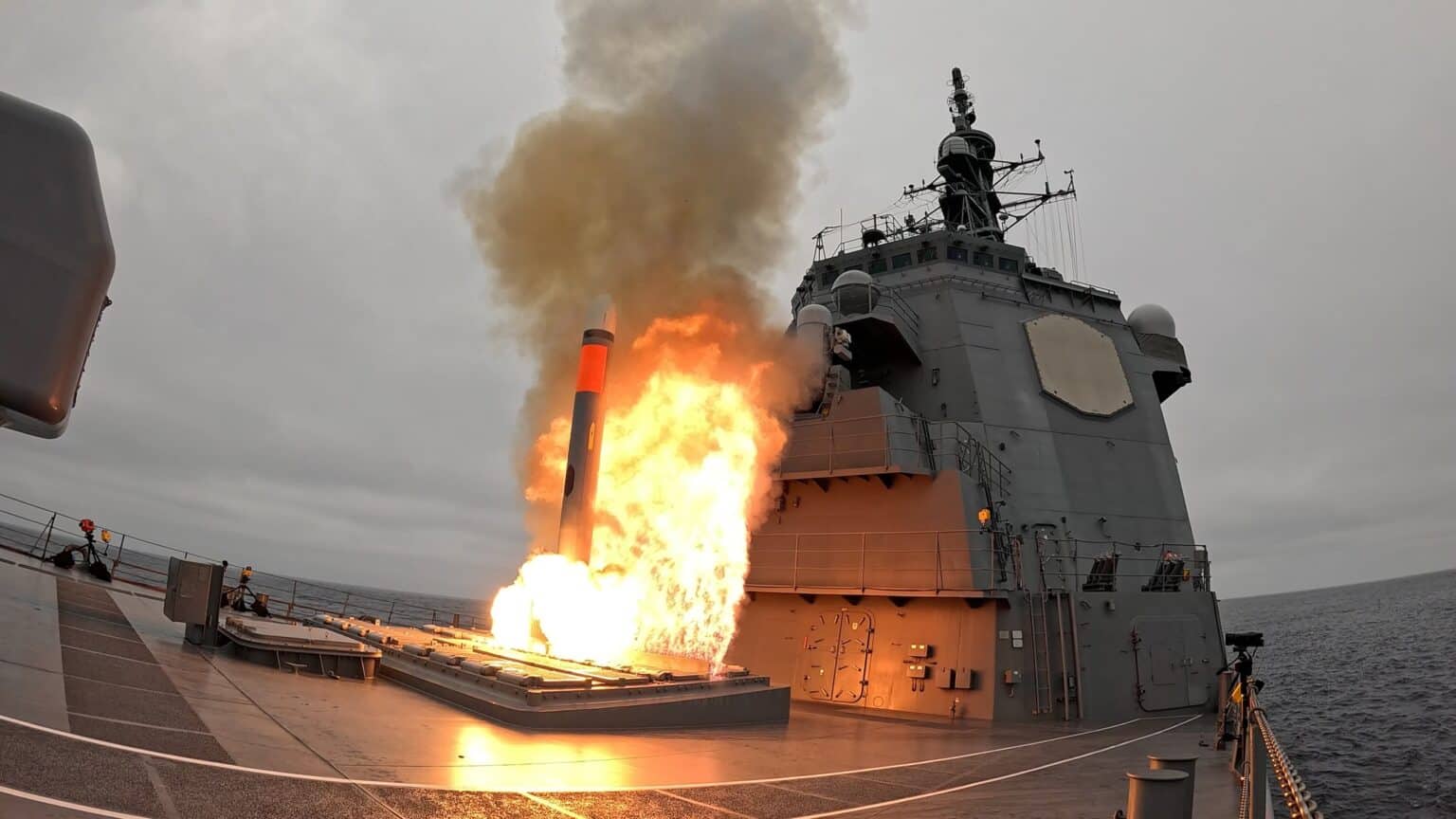
Japan’s longest-range missile is the American-built Tomahawk, which the US Navy credits with 1,000 miles (1,600 km). Japan received its first Tomahawks in March 2026, and the destroyer Chokai test-fired one in the Pacific on July 29, 2026.
Right behind it is a missile much coverage still calls the “upgraded Type 12.” On March 31, 2026 Japan deployed it at Camp Kengun in Kumamoto and renamed it the Type 25 surface-to-ship missile, with a reported range of about 620 miles (1,000 km).
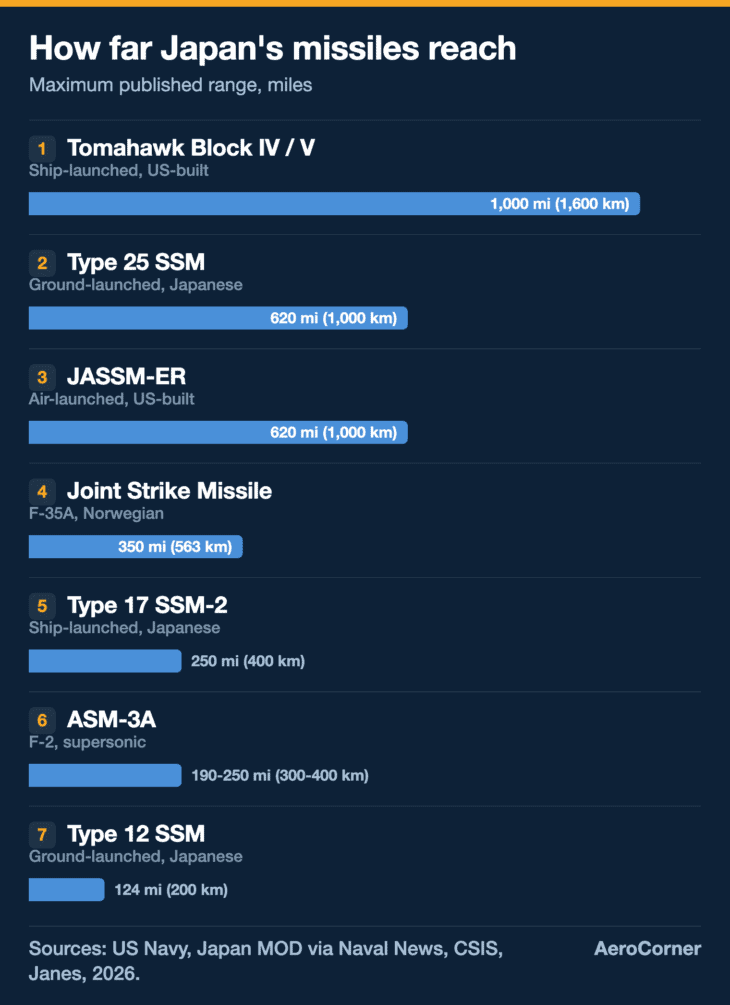
This list ranks the eight strike and anti-ship missiles Japan has in service or in delivery by one measure: maximum published range, as of November 2026. Japan’s missile defense interceptors, air-to-air missiles and the weapons still in development get their own sections below.
| Rank | Missile | Type | Maximum range | Status (Nov 2026) |
|---|---|---|---|---|
| 1 | Tomahawk Block IV / V | Ship-launched land-attack cruise missile (US-built) | 1,000 miles (1,600 km) | Delivered since March 2026; Chokai fired one July 2026 |
| 2 | Type 25 SSM (upgraded Type 12) | Ground-launched anti-ship and land-attack cruise missile | About 620 miles (1,000 km) | Deployed at Camp Kengun, March 31, 2026 |
| 3 | JASSM-ER | Air-launched stealth cruise missile (US-built) | About 620 miles (1,000 km) | On order for JASDF fighters |
| 4 | Joint Strike Missile (JSM) | Air-launched cruise missile for the F-35A (Norwegian) | Up to 350 miles (563 km) | First batch delivered March 2026 |
| 5 | Type 17 SSM-2 | Ship-launched anti-ship missile | 250 miles (400 km) | In service on Mogami frigates and Maya destroyers |
| 6 | ASM-3A | Supersonic air-launched anti-ship missile, F-2 | 190 to 250 miles (300 to 400 km) | Deliveries to the JASDF from 2025 |
| 7 | Type 12 SSM | Ground-launched anti-ship missile | 124 miles (200 km) | In service |
| 8 | Type 25 HGP (HVGP Block 1) | Rocket-boosted hypersonic glide weapon | “Several hundred kilometers” (not published) | Deployed at Camp Fuji for training, March 31, 2026 |
How this ranking works
Missiles are ranked by the top of their published range. Japan withholds exact figures for its own weapons, so domestic missiles use the range the Defense Ministry or JASDF has disclosed, as reported by Naval News, Janes and Yomiuri. US and Norwegian missiles use the maker’s or the US government’s figure. Where two missiles tie, the one already deployed in Japan ranks first. The Type 25 HGP ranks last because Japan only says several hundred kilometers. Interceptors and air-to-air missiles are covered separately.
1. Tomahawk Block IV / V
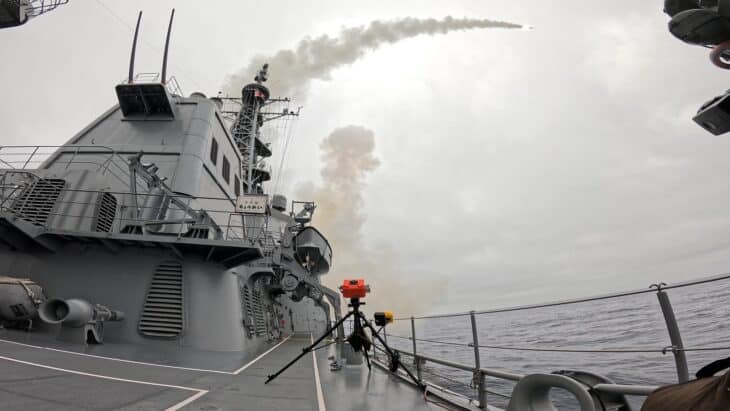

The Tomahawk gives Japan the longest reach it has ever had. The US Navy’s fact file lists the Block IV and Block V at 900 nautical miles (1,000 statute miles, 1,600 km), flying at high subsonic speed and very low altitude.
The US approved the sale in November 2023: up to 200 Block IV and 200 Block V missiles for $2.35 billion. Naval News reports the Block IVs arrive between fiscal 2025 and 2027 and the Block Vs between fiscal 2026 and 2027, and that Japan plans no Tomahawk buys beyond those 400.
Defense Minister Shinjiro Koizumi said the first missiles arrived in March 2026. Chokai, modified in the United States, fired one on July 29 and returned home to Sasebo on August 30. Japan has funded the same upgrade for four more Aegis destroyers, covered in our guide to Japan’s navy and its ship classes.
Third surface navy to fire a Tomahawk
Chokai’s July 2026 launch made Japan the third country outside the United States, after Australia and the Netherlands, to fire a Tomahawk from a surface warship, according to Naval News. The UK fires them only from submarines.
2. Type 25 Surface-to-Ship Missile
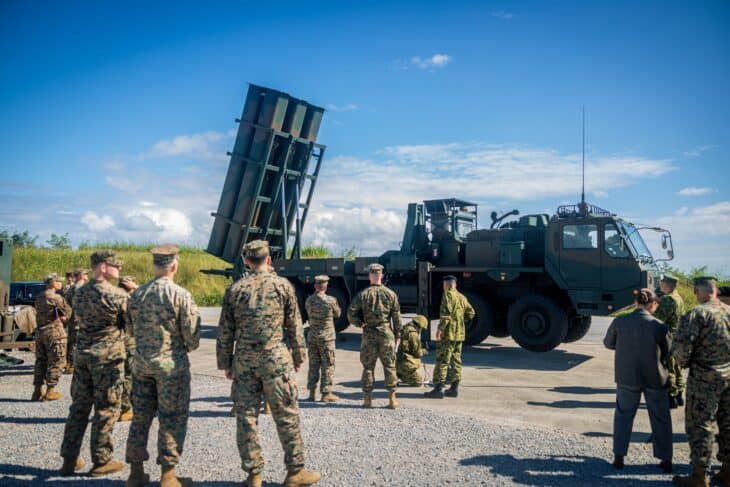

The Type 25 is one of Japan’s first two homegrown stand-off missiles, both deployed on the same day, and it is built by Mitsubishi Heavy Industries. It began life as the “upgraded Type 12,” and its range of about 620 miles (1,000 km) is five times the original’s.
Naval News reports a stealthier shape and an in-flight retargeting link over satellite, so ground controllers can redirect it toward a ship that has moved. It is built to hit warships, but Japan also expects it to strike land targets such as missile launch sites.
Japan has no range long enough to test it at home, so it fired seven at the Point Mugu Sea Range in California between October 8 and November 27, 2025.
The 5th Surface-to-Ship Missile Regiment at Camp Kengun took the first rounds on March 31, 2026. In October 2026 it set up its launchers in a public drill for the first time, during the Keen Sword exercise.
A ship-launched version for the destroyer Teruzuki and an air-launched version for upgraded F-2 fighters at Hyakuri come next, planned for fiscal 2027 according to the Defense Ministry plans Yomiuri reported in October 2026. Yomiuri also notes the range could put China’s coast and North Korea within reach.
3. JASSM-ER
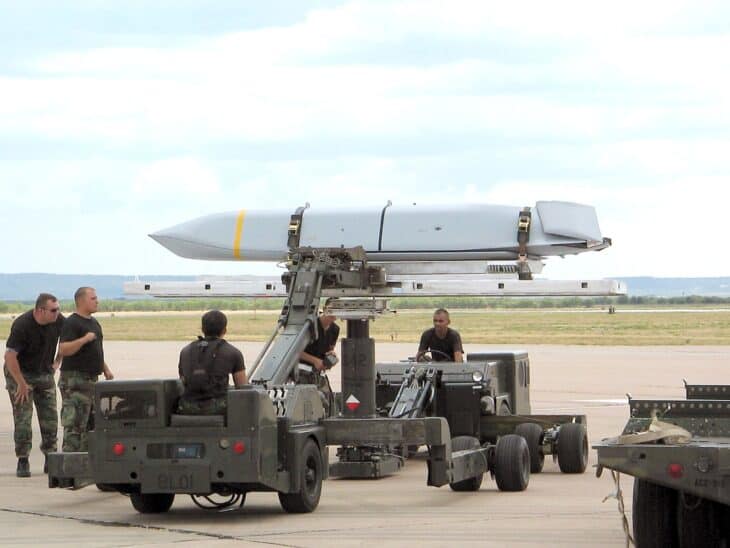

The Lockheed Martin JASSM-ER is a stealthy air-launched cruise missile that CSIS credits with about 620 miles (1,000 km). It ties the Type 25 on range but ranks below it because it is not yet operational on a Japanese jet.
In January 2025 the US approved Japan’s request for up to 16 more AGM-158B JASSM-ERs, for $39 million. The notice says they are for JASDF fighters “including but not limited to” the F-15J and the F-35A and F-35B.
Japan’s F-15Js are being upgraded to carry it. Turning an air-defense fighter into a cruise missile carrier is one of the clearest signs of how far Japan’s posture has moved, as our ranking of every JASDF aircraft explains.
4. Joint Strike Missile
Kongsberg’s Joint Strike Missile was designed from the start to fit inside the weapons bay of an F-35A, so the jet stays stealthy while carrying it. The Defense Post gives a range of up to 350 miles (563 km) at high subsonic speed, with a 260-pound (118 kg) warhead.
Japan has signed contracts for the JSM since 2019, the fifth follow-on order coming in December 2025. A JASDF transport collected the first batch in Norway in March 2026; the quantity was not disclosed.
5. Type 17 Ship-to-Ship Missile (SSM-2)
The Type 17 is the navy’s version of the Type 12, with double the range: 250 miles (400 km), per the US Naval Institute’s Proceedings. It is Japan’s standard anti-ship missile at sea today.
Each Mogami-class frigate has space for eight, and the Maya-class destroyers carry it too. It is less glamorous than the Tomahawk, but it is the missile Japanese warships would actually fire at an enemy fleet. Our ranking of the world’s anti-ship missiles shows where that class of weapon fits.
6. ASM-3A
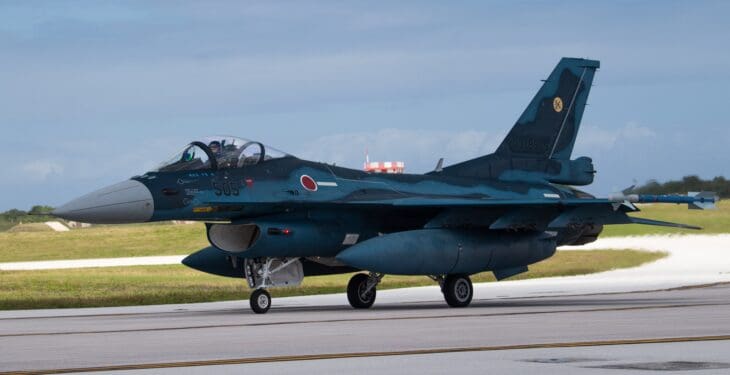

The ASM-3A is Japan’s supersonic anti-ship missile for fighters. Janes estimates the baseline ASM-3’s top speed at Mach 3, and the JASDF told Janes in May 2025 that the extended-range ASM-3A reaches about 190 to 250 miles (300 to 400 km).
It is about 20 feet (6 m) long, weighs about 2,070 pounds (940 kg), and can hit ships or ground targets. Mitsubishi Heavy Industries was due to deliver an undisclosed number by the end of 2025 for the Mitsubishi F-2, and a longer-range ASM-3 (Kai) is already in development.
7. Type 12 Surface-to-Ship Missile
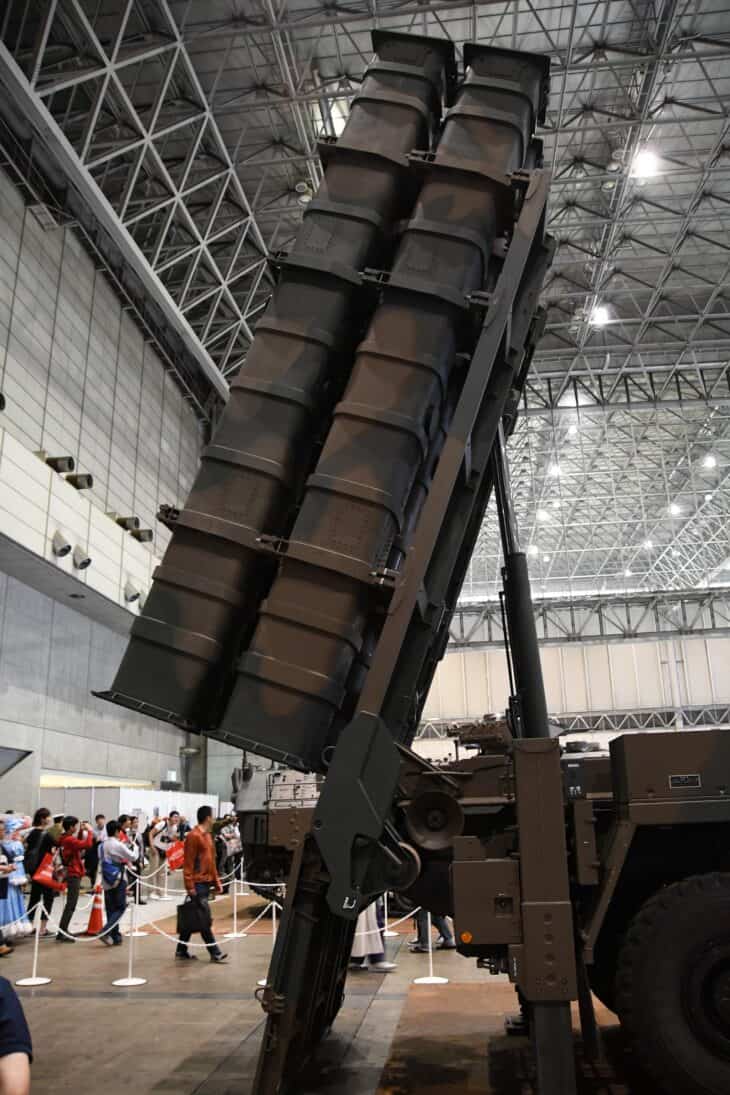

The original Type 12 is the truck-mounted Mitsubishi missile that the Type 25 grew from. Naval News puts its range at about 124 miles (200 km).
For years it was Japan’s main coastal defense missile, and it remains in service. Its short reach is the reason the Type 25 exists: 124 miles protects the islands it sits on, while 620 miles lets a unit in Kyushu cover the waters around Japan’s southwestern islands.
8. Type 25 Hyper Velocity Gliding Projectile
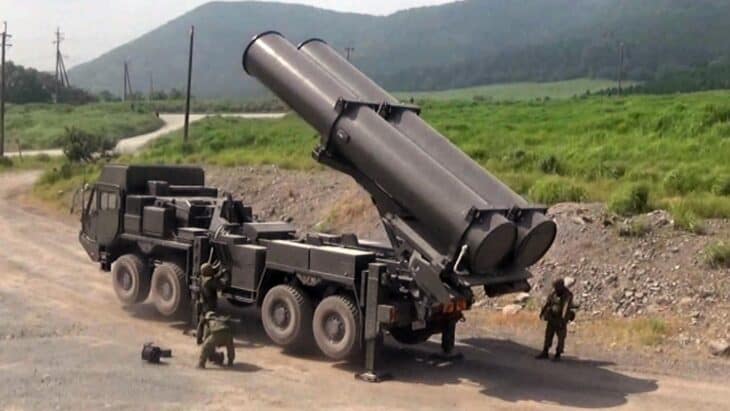

The Type 25 HGP is Japan’s first hypersonic weapon in service. A rocket boosts a glider that then travels at very high speed on an unpredictable path, which makes it hard to intercept.
It ranks last only because Japan has not published a number: the Block 1 at Camp Fuji has “a range of several hundred kilometers,” and is used mainly for training and writing doctrine. Units at Camp Kamifurano in Hokkaido and Camp Ebino in Miyazaki are planned for fiscal 2026, and longer-range versions are in development.
Does Japan have ballistic missiles or nuclear weapons?
No. The Nuclear Threat Initiative says Japan has no ballistic missile program and is building counterstrike capability with cruise missiles instead. Japan’s Three Non-Nuclear Principles commit it to not possessing, producing or allowing nuclear weapons onto its territory. Every missile on this list carries a conventional warhead.
Why Japan Is Buying Long-Range Missiles Now
For decades Japan’s missiles were short-range and defensive. That changed with the three security documents adopted in December 2022, which ordered ground- and ship-launched stand-off missiles fielded by fiscal 2027.
Japan calls it “counterstrike capability”: the means to hit enemy missile launch sites and invasion fleets from a distance. The fiscal 2026 defense budget, approved by the cabinet on December 26, 2025, is a record ¥9.04 trillion ($58 billion), with about ¥973 billion in contracts for stand-off defense.
Japan’s Missile Defense Interceptors
Japan’s best-known missiles are the ones that shoot other missiles down. The SM-3 Block IIA, carried by its Aegis destroyers, was co-developed with the United States, with Japan responsible for the nosecone and the second- and third-stage motors, according to CSIS, which puts its reach at about 1,550 miles (2,500 km).
The destroyer Maya fired the first one from a Japanese ship near Hawaii on November 16, 2022, and hit its target outside the atmosphere. In 2026 the two governments agreed to raise SM-3 Block IIA production in Japan about fourfold.
Two new 128-cell Aegis System Equipped Vessels will carry SM-3 Block IIA and SM-6 interceptors. Naval News reports the first is due to commission in March 2028. Japan is also developing the rocket motors for the Glide Phase Interceptor, a US-Japan hypersonic interceptor agreed in May 2024.
On land, Japan relies on Patriot PAC-3 batteries and the domestic Type 03 Chu-SAM, a medium-range missile that the fiscal 2026 budget funds a plan to give anti-ballistic missile capability. Our explainer on the Patriot missile system covers how PAC-3 works.
Japan builds Patriot missiles for America
Mitsubishi Heavy Industries builds about 30 PAC-3 interceptors a year under license from Lockheed Martin. After Japan relaxed its export rules in December 2023, it completed its first delivery of the missiles to the United States in November 2025, to refill American stocks.
Air-to-Air Missiles
Japan’s F-15Js and F-2s carry two domestic air-to-air missiles: the radar-guided AAM-4B for medium range and the infrared AAM-5 for dogfights. The AAM-4’s fins are too large for the F-35’s internal bay, so Japan’s stealth fighters use the American AIM-120 AMRAAM instead.
In January 2025 the US approved up to 1,200 AIM-120D-3 and C-8 missiles for Japan, worth $3.64 billion. In October 2026 the two governments agreed to set up final assembly of AMRAAMs in Japan. Our ranking of air-to-air missiles compares them with rivals.
What Comes Next: Hypersonic and Precision Missiles
The biggest leap is a hypersonic guided missile with a dual-mode scramjet, designed to cruise above Mach 5 while maneuvering. Development began in 2023 with deployment targeted by 2032, and Naval News reports the fiscal 2026 budget holds ¥73.2 billion for development plus ¥30.1 billion for initial procurement.
Japan began a new surface-to-ship and surface-to-surface precision missile in 2025, which its makers say will pick specific aim points on a target, as the US LRASM does. Our guide to hypersonic missiles that actually exist shows how Japan’s program compares.
Before Guided Missiles: The Piloted Ohka
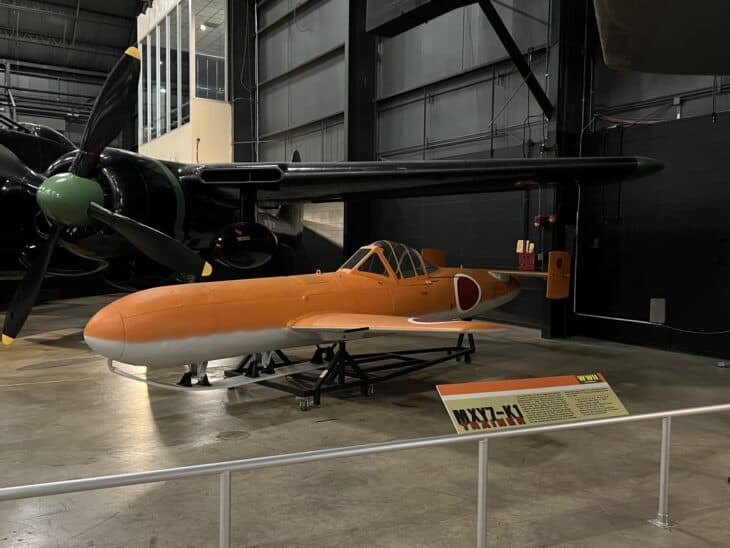

Before guided missiles, Japan built the Yokosuka MXY7 Ohka of 1945, a rocket-powered glider flown into ships by a pilot. Carried under a G4M bomber and released near the target, it carried a 2,646-pound (1,200 kg) warhead and reached 615 mph in a powered dive, according to the National Museum of the US Air Force.
Its combat debut on March 21, 1945 “ended disastrously,” in the Smithsonian’s words. On April 12, 1945 an Ohka sank the destroyer USS Mannert L. Abele off Okinawa, the first US warship sunk by one, with 84 sailors lost.
FAQ
Sources and references used for research and fact-checking.
- US Navy, Tomahawk Cruise Missile fact file
- Naval News, Japan Conducts First Tomahawk Live-Fire Aboard JS Chokai
- Stars and Stripes, Japan's first Tomahawk-capable destroyer returns home after US upgrades
- Naval News, Japan Deploys New Longer-Range Missiles, Formally Designates Type 25 Systems
- Naval News, Japan Completes All Improved Type 12 Anti-Ship Missile Tests
- Naval News, Japan to Field Multiple Advanced Coastal Defense Missiles by 2032
- Asia News Network (The Yomiuri Shimbun), Japan holds 1st public drill with Type-25 antiship missile
- Defense News, Japan sprinkles fresh missiles across its islands to fend off would-be attackers
- CSIS Missile Defense Project, JASSM
- Defense Security Cooperation Agency, Japan: Joint Air-to-Surface Standoff Missiles with Extended Range
- The Defense Post, Japan Takes Delivery of First Joint Strike Missiles for F-35A Fighters
- US Naval Institute Proceedings, Japan's Multimission Mogami-Class Frigates
- Wikipedia, Type 12 surface-to-ship missile
- Janes, DSEI Japan 2025: MHI to deliver ASM-3A missiles to Japan's air force
- CSIS Missile Defense Project, Japan to Begin Mass Production of Antiship Missile
- Japan Ministry of Defense, Defense Programs and Budget of Japan, FY2026
- Naval News, Japan Approves Record Defense Budget for Fiscal Year 2026
- CSIS Missile Defense Project, SM-3
- Japan Maritime Self-Defense Force, Ballistic missile defense test results, November 2022
- Japan Ministry of Defense, Japan-US DICAS 2.0 outcomes
- Naval News, Japan lays keel of both ASEV missile defense ships
- Defense News, US and Japan sign agreement to co-develop hypersonic interceptor
- The Defense Post, Japan delivers Patriot interceptors to US
- Al Jazeera, Japan eases curbs on weapons exports
- Wikipedia, AAM-4
- Defense Security Cooperation Agency, Japan: AIM-120D-3 and AIM-120C-8 AMRAAM
- Breaking Defense, US, Japan ink agreements for AMRAAM production, SM-3 production boost
- Nuclear Threat Initiative, Japan missile overview
- Ministry of Foreign Affairs of Japan, Three Non-Nuclear Principles
- National Museum of the US Air Force, Yokosuka MXY7-K1 Ohka
- Smithsonian National Air and Space Museum, Kugisho MXY7 Ohka (Cherry Blossom) 22
- US Navy, Wreck site identified as World War Two destroyer USS Mannert L. Abele
- The National WWII Museum, Japan's Kamikaze Pilots in WWII
Get the Newsletter
The latest aviation news and stories sent to your inbox.
About the Author

Tim is the owner and lead editor of AeroCorner since 2019, overseeing aviation content covering aircraft, airlines, airports, and the broader aviation industry. Through years of researching, writing, editing, and publishing aviation-focused content, he has developed extensive practical knowledge of commercial aviation and air travel. Based in Asia and a frequent traveler himself, Tim also brings firsthand passenger experience to AeroCorner’s coverage. Outside of publishing, he has also explored aviation firsthand through hands-on flight training in New Zealand.