

Table of Contents
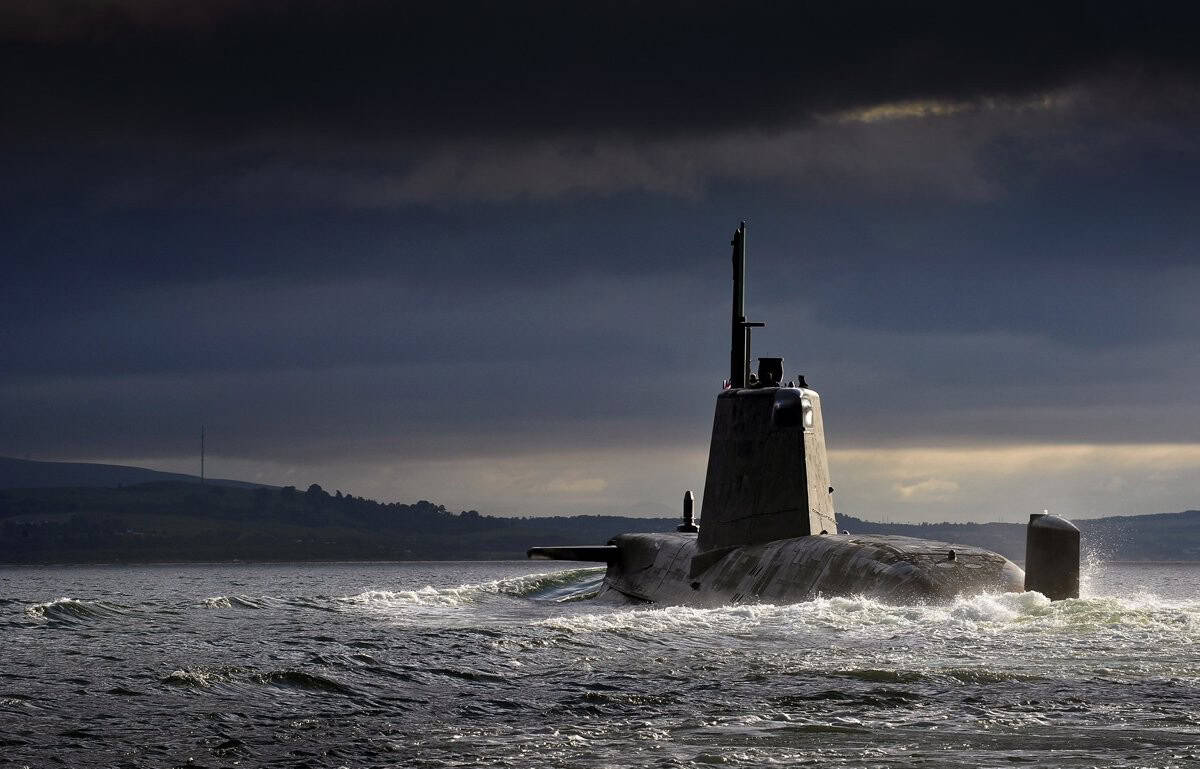
The most important British submarines are the four Vanguard-class boats that carry the UK’s Trident nuclear missiles. At least one has been on patrol at all times since 1969, a mission the Royal Navy calls Operation Relentless.
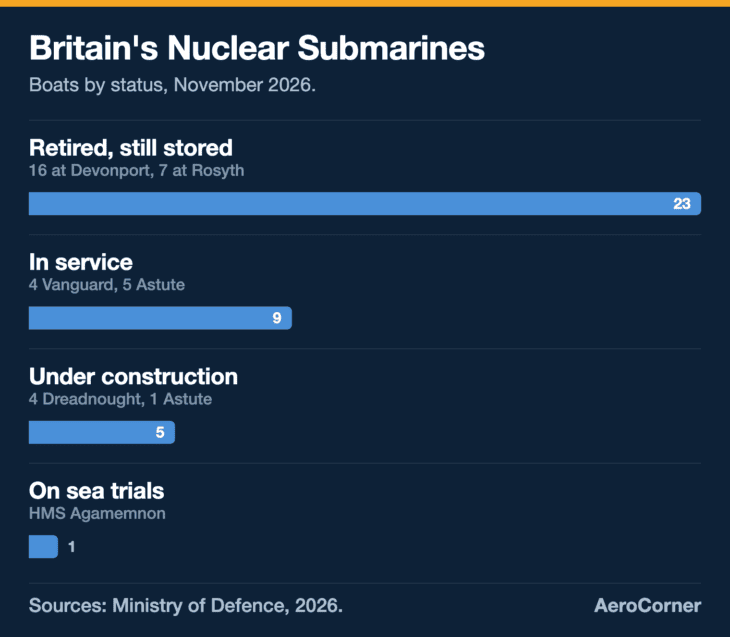
The Ministry of Defence counted 9 submarines in the Royal Navy on April 1, 2026: 4 ballistic missile submarines and 5 Astute-class attack submarines. Every one is nuclear-powered. A sixth Astute, HMS Agamemnon, is on sea trials, and 23 retired nuclear submarines are still tied up in two dockyards waiting to be scrapped.
This list ranks every submarine class Britain sails or is building by the fighting value it brings as of November 2026. It then ranks the retired classes that came before, from the first British nuclear boat to the one that sank a cruiser in the Falklands War.
| Rank | Class | Type | Boats | Status, Nov. 2026 |
|---|---|---|---|---|
| 1 | Vanguard | Ballistic missile submarine | 4 | In service since 1993 |
| 2 | Astute | Attack submarine | 7 planned | 5 in service, 1 on trials, 1 building |
| 3 | Dreadnought | Ballistic missile submarine | 4 | Building, first due early 2030s |
| 4 | SSN-AUKUS | Attack submarine | Up to 12 | Planned, from the late 2030s |
| 5 | Trafalgar | Attack submarine | 7 | Retired 2009 to 2025 |
| 6 | Swiftsure | Attack submarine | 6 | Retired 1992 to 2010 |
| 7 | Resolution | Ballistic missile submarine | 4 | Retired by 1996 |
| 8 | Churchill | Attack submarine | 3 | Retired by the early 1990s |
| 9 | Valiant | Attack submarine | 2 | Retired by 1994 |
| 10 | Dreadnought (S101) | Attack submarine | 1 | Retired 1980 |
How this ranking works
The four current and future classes are ranked by the fighting value they bring the Royal Navy in November 2026: the mission, how hard it would be to replace, and how many boats exist or are coming. The retired nuclear classes follow, ranked by what they changed. Counts of boats in service follow the Ministry of Defence, which counted five Astutes on April 1, 2026, and still listed five in-service Astutes in September 2026. HMS Agamemnon is commissioned but counted separately because she is still on trials. The diesel Upholder class, sold to Canada, is covered at the end.
1. Vanguard Class: Four Boats That Carry the Deterrent
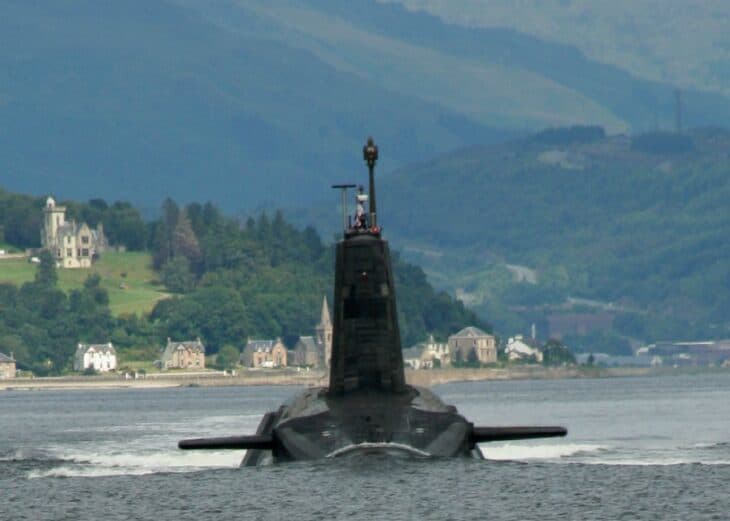

HMS Vanguard, Victorious, Vigilant and Vengeance are Britain’s only nuclear weapons platform. Since the Royal Air Force retired its last nuclear bomb in 1998, every British warhead has gone to sea in one of these four boats.
Each is 492 feet (150 m) long, displaces 15,900 metric tons submerged and carries a crew of about 135. The boats have 16 missile tubes for the US-built Trident II D5, but since the 2010 defense review they have sailed with no more than 8 missiles and 40 warheads each.
All four were built at Barrow-in-Furness between 1986 and 1999 and are based at HM Naval Base Clyde, at Faslane in Scotland. The Royal Navy has operated them since 1993.
They rank first because no other British weapon guarantees a nuclear response. Their age is the problem: one refit ran about four years late, so the other boats sailed patrols of up to 205 days, against a planned 99, to keep one at sea.
2. Astute Class: The Hunter-Killers That Struggle to Get to Sea

The Astute class are Britain’s nuclear-powered attack submarines, built to hunt submarines and ships, guard the Vanguards and fire Tomahawk cruise missiles at targets on land. Each is 318 feet (97 m) long, displaces about 7,400 metric tons submerged and can make 30 knots under water.
They have six torpedo tubes and room for up to 38 Spearfish torpedoes and Tomahawks. A crew of about 98 can stay dived for as long as the food lasts, typically around 90 days, because the Rolls-Royce PWR2 reactor makes its own power, air and water.
Five are in service: Astute, Ambush, Artful, Audacious and Anson, commissioned between 2010 and 2022. Anson sailed to Australia under the AUKUS pact and docked at HMAS Stirling near Perth in February 2026.
Keeping them at sea is the struggle. In late June 2026, according to a 19FortyFive survey of the fleet, all five were alongside at once: Ambush had not been to sea since August 2022, and Astute had waited for a dry dock in Devonport since June 2025. The Ministry of Defence does not publish submarine availability.
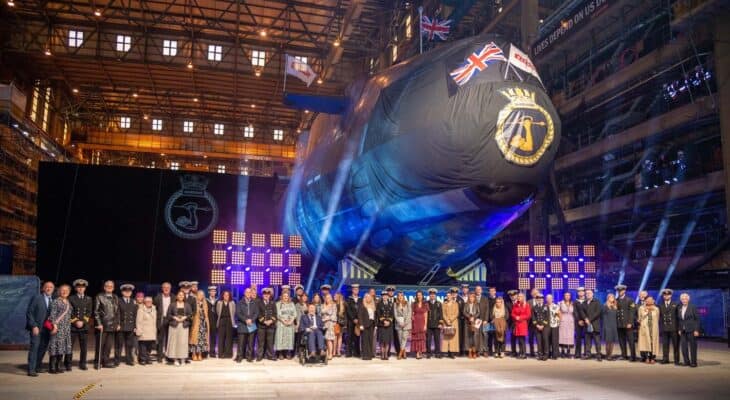
The sixth boat, HMS Agamemnon, was commissioned by the King on September 22, 2025, 12 years after her keel was laid. She left Barrow on September 25, 2026, dived at sea for the first time on the way north and reached Faslane on October 2. The seventh and last, Achilles, is still under construction and is projected for 2028 or early 2029.
Four months with no attack submarine at sea
According to Navy Lookout, Agamemnon’s delivery voyage in late September 2026 was the first time any Royal Navy attack submarine had been at sea since HMS Anson returned to Devonport on May 27. The Astute class ranks second only because the deterrent comes first, not because the boats lack capability.
Navy Lookout expects Agamemnon to be ready for operations toward the end of 2027 if her trials take as long as Anson’s 15 months. How the Astute compares with its rivals is in our ranking of the best attack submarines in the world.
3. Dreadnought Class: The Biggest Submarines Britain Has Ever Built
Four Dreadnought-class boats, HMS Dreadnought, Valiant, Warspite and King George VI, are being built at Barrow to replace the Vanguards. At 504 feet (154 m) and 17,200 metric tons, they will be the largest submarines the Royal Navy has ever operated.
Each will carry 12 missile tubes for Trident II D5, four fewer than a Vanguard, and a new Rolls-Royce PWR3 reactor. Steel was cut for the fourth boat, King George VI, in September 2025.
In July 2026 the government announced £8.4 billion for the next stage, which takes HMS Dreadnought through sea trials and into service in the early 2030s. The program’s estimate is £41 billion including a £10 billion contingency, and £23.2 billion had been spent by March 2026.
Dreadnought ranks third only because no boat has been delivered. Once the first one is, the Vanguards’ marathon patrols can end. How these boats compare with the world’s other giants is in our list of the largest submarines in the world.
4. SSN-AUKUS: Up to 12 Attack Boats Shared With Australia
SSN-AUKUS is the attack submarine that will replace the Astute class, designed with Australia and armed with American Mark 48 torpedoes. In June 2025 the Ministry of Defence said Britain would build up to 12, and Australia plans 5 of its own.
The boats will displace more than 10,000 metric tons, carry a vertical launch system for cruise missiles and use the same PWR3 reactor as Dreadnought. The first British boat is due to start construction at Barrow in 2027 and enter service in the late 2030s.
The Defence Nuclear Enterprise’s goal is one SSN-AUKUS every 18 months, double the current build rate, while Dreadnoughts are built alongside. That target, not the design, decides whether Britain ever again has enough attack submarines.
5. Trafalgar Class: The Last Boats Retired in 2025
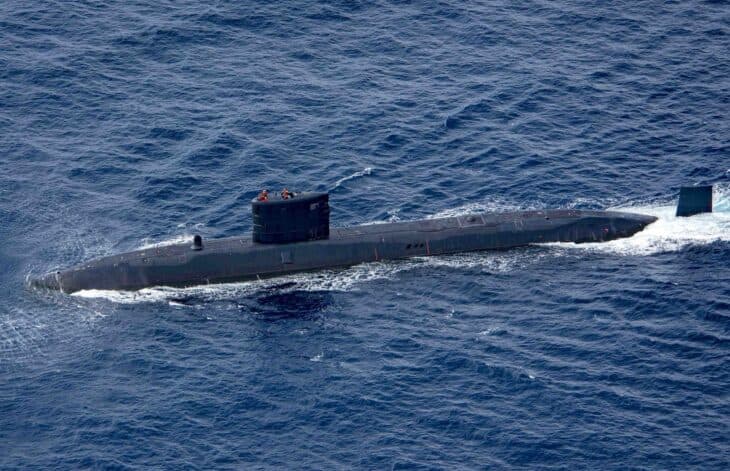

Seven Trafalgar-class attack submarines were commissioned between 1983 and 1991. Each was 280 feet (85 m) long and displaced about 5,300 metric tons submerged, with five torpedo tubes for Spearfish and Tomahawk.
They fired Tomahawks in combat over Afghanistan, Iraq and Libya. HMS Turbulent launched 30 during the 2003 invasion of Iraq, and HMS Triumph struck Libyan air defenses three times in March 2011.
Triumph was the last of the class in service. She was decommissioned in Devonport in July 2025, and all seven boats are now awaiting disposal.
6. Swiftsure Class: The First Boat Being Taken Apart
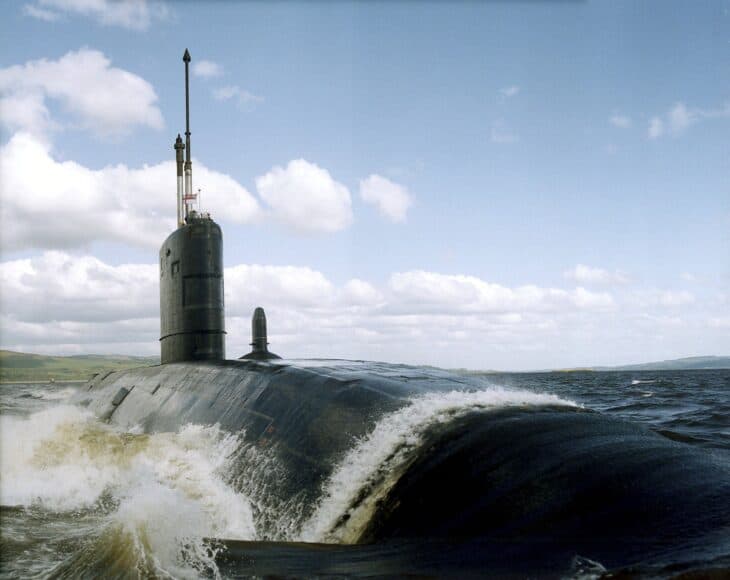

Six Swiftsure-class attack submarines served from 1973 to 2010. They were the first Royal Navy submarines built with a shrouded pump-jet instead of a conventional propeller.
HMS Swiftsure herself left service early, in 1992, after damage to her pressure hull during trials. She is now the demonstrator for Britain’s submarine dismantling project at Rosyth, where her fin was cut off and removed in June 2025.
7. Resolution Class: The Boats That Started the Patrol
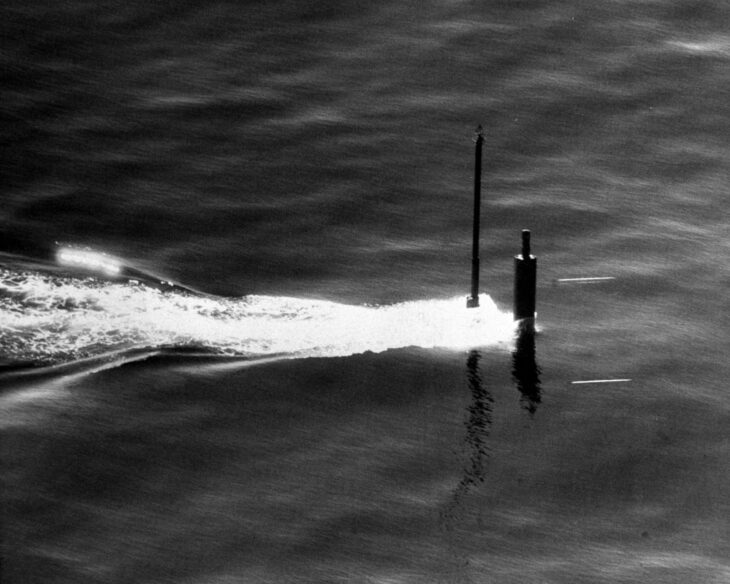

HMS Resolution, Repulse, Renown and Revenge carried Britain’s Polaris missiles, 16 each. They were built at Barrow and Birkenhead between 1964 and 1968, and they began the continuous patrol in 1969 that the Vanguards still keep up.
Each was 425 feet (130 m) long and displaced about 8,400 tons submerged. The Vanguard class replaced them with Trident in 1996, and all four are still laid up.
8. Churchill Class: The Submarine That Sank a Cruiser
The three Churchill-class boats were improved copies of the Valiant class, 285 feet (87 m) long and displacing 4,900 tons submerged. They served from the 1970s until the early 1990s.
One of them, HMS Conqueror, made history on May 2, 1982, when she torpedoed the Argentine cruiser General Belgrano during the Falklands War. It was the first time a nuclear-powered submarine had sunk an enemy ship with torpedoes, and Conqueror is now at Devonport awaiting dismantling.
9. Valiant Class: The First All-British Nuclear Boats
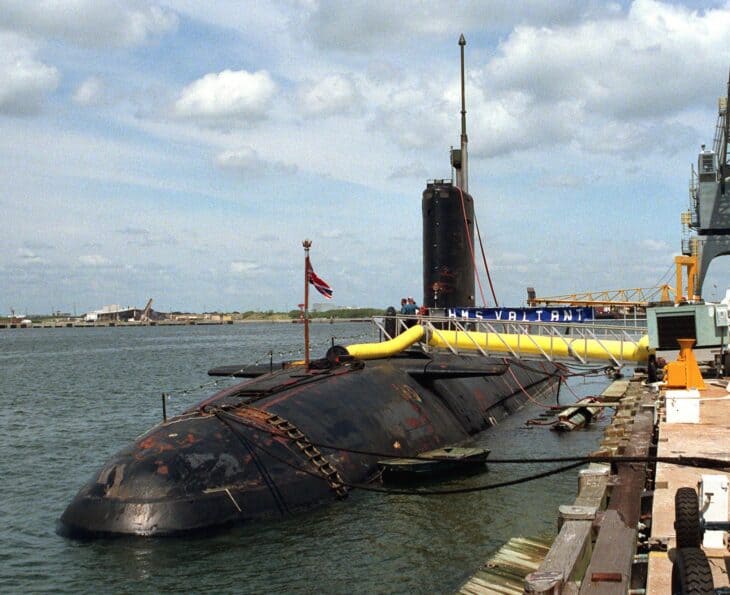

HMS Valiant, commissioned in 1966, and HMS Warspite, a year later, were the first British nuclear submarines with a British reactor. Both were built at Barrow and served until 1994.
Their machinery sat on padded “rafts” that isolated its noise from the hull. US Admiral Hyman Rickover dismissed the idea at first, and the Royal Navy gained a lead in submarine quieting that the US Navy took years to match.
10. HMS Dreadnought (S101): Britain’s First Nuclear Submarine
This HMS Dreadnought was launched by Queen Elizabeth II on Trafalgar Day 1960 and commissioned in April 1963. She ran on an American S5W reactor, supplied under the 1958 US-UK Mutual Defence Agreement.
She was 265.7 feet (81 m) long, displaced 4,000 tons submerged and served until 1980. She has been laid up at Rosyth ever since, and her name now passes to the first of the new missile boats.
Does Britain have 10 submarines, or diesel ones?
Neither, for now. HMS Agamemnon is commissioned, so some counts give six Astutes and ten boats, but the Ministry of Defence still listed five in-service Astutes in September 2026 because she is on trials. And Britain has no conventional submarines at all: the four diesel-electric Upholder-class boats left Royal Navy service in 1994 and went to Canada, where they serve as the Victoria class.
Why 23 Retired Submarines Are Still Waiting
Since 1980, 23 nuclear-powered submarines have left Royal Navy service, and none has been fully dismantled yet. Sixteen are stored at Devonport in Plymouth, and seven at Rosyth in Fife.
All seven at Rosyth have had their reactor fuel removed, but only four of the sixteen at Devonport have, so 12 retired boats still hold spent fuel. The Ministry of Defence is rebuilding the defueling capability it needs to empty them.
Those 23 are exactly the retired classes on this list: 7 Trafalgars, 6 Swiftsures, 4 Resolutions, 3 Churchills, 2 Valiants and the first Dreadnought. How the rest of the fleet, from carriers to patrol boats, stacks up is in our guide to the Royal Navy in 2026, and the American comparison is in our ranking of US Navy submarines.
FAQ
Sources and references used for research and fact-checking.
- Ministry of Defence, Defence Nuclear Enterprise 2026 Annual Update to Parliament
- Ministry of Defence, UK armed forces equipment and formations 2026
- Ministry of Defence and Submarine Delivery Agency, Submarine Dismantling Project
- Navy Lookout, Royal Navy submarine HMS Agamemnon arrives at Faslane after first dive at sea
- The Lochside Press, HMS Agamemnon arrives at Faslane
- 19FortyFive, In late June 2026, all five of Britain's in-service nuclear attack submarines were tied up alongside
- Wikipedia, Astute-class submarine
- Wikipedia, HMS Agamemnon (S124)
- Wikipedia, Vanguard-class submarine
- Wikipedia, Dreadnought-class submarine
- Wikipedia, SSN-AUKUS-class submarine
- Wikipedia, Trafalgar-class submarine
- Wikipedia, HMS Triumph (S93)
- Wikipedia, Swiftsure-class submarine
- Wikipedia, Resolution-class submarine
- Wikipedia, Churchill-class submarine
- Wikipedia, HMS Conqueror (S48)
- Wikipedia, Valiant-class submarine
- Wikipedia, HMS Dreadnought (S101)
- Wikipedia, Upholder/Victoria-class submarine
Get the Newsletter
The latest aviation news and stories sent to your inbox.
About the Author

Tim is the owner and lead editor of AeroCorner since 2019, overseeing aviation content covering aircraft, airlines, airports, and the broader aviation industry. Through years of researching, writing, editing, and publishing aviation-focused content, he has developed extensive practical knowledge of commercial aviation and air travel. Based in Asia and a frequent traveler himself, Tim also brings firsthand passenger experience to AeroCorner’s coverage. Outside of publishing, he has also explored aviation firsthand through hands-on flight training in New Zealand.