

Table of Contents
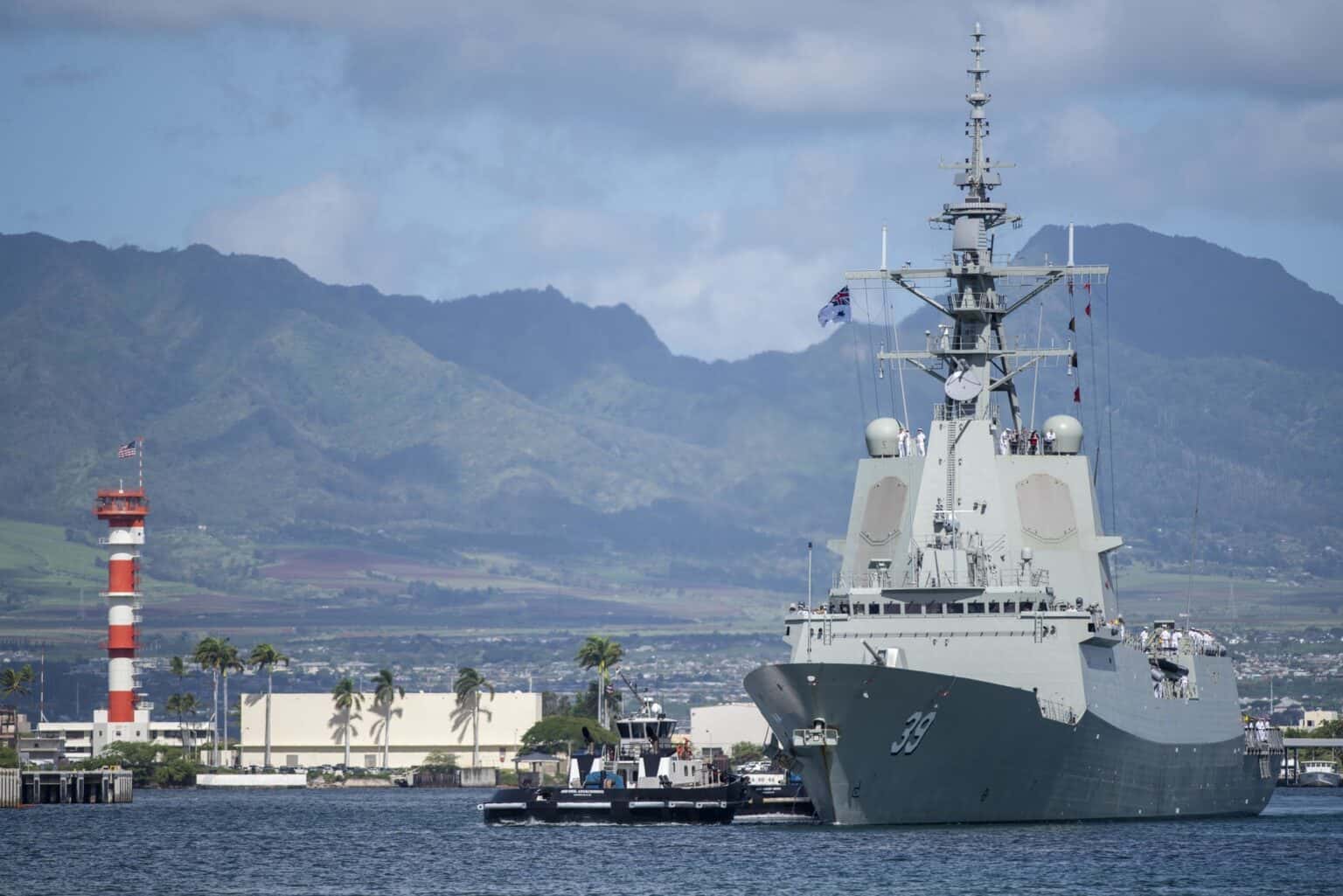
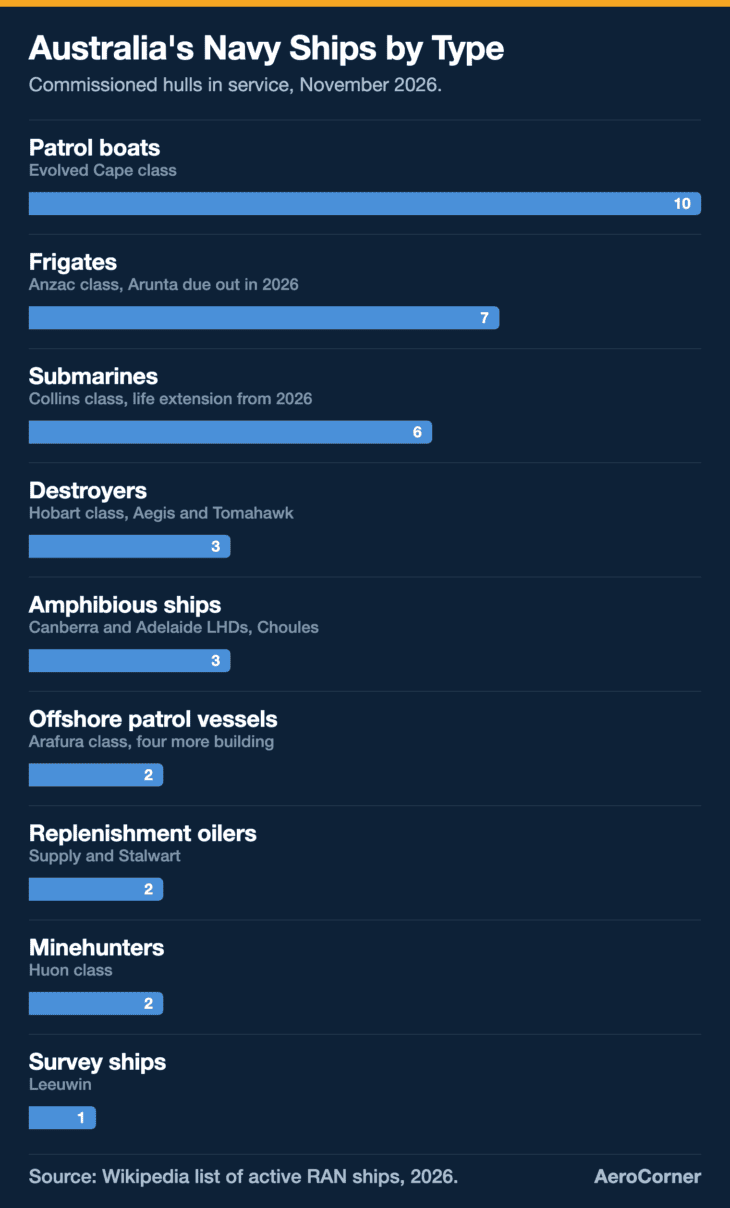
The Royal Australian Navy (RAN) is a medium-sized fleet with an outsized job. Its sharpest weapons are three Hobart-class Aegis destroyers, the only Australian warships that fire the Tomahawk cruise missile, and six Collins-class submarines that are being kept in service until American nuclear boats arrive from 2032.
Around them sail two 757-foot (230.8 m) landing helicopter docks, seven Anzac-class frigates, two fleet oilers and a patrol force that is being rebuilt. As of November 2026, the navy is also between fleets: the frigates are aging out years before their replacements, Japanese-designed Mogami frigates and Adelaide-built Hunter frigates, arrive.
This guide ranks every commissioned class by fighting value, with hull counts, the ships that joined in 2026 and the ships and submarines on order.
| Rank | Class | Type | Hulls in service | Status, November 2026 |
|---|---|---|---|---|
| 1 | Hobart | Aegis air warfare destroyer | 3 | Tomahawk-capable; Aegis upgrade planned |
| 2 | Collins | Diesel-electric submarine | 6 | Life extension began May 2026 |
| 3 | Canberra | Landing helicopter dock | 2 | Active |
| 4 | Anzac | Frigate | 7 | Arunta scheduled to leave in 2026 |
| 5 | Supply | Replenishment oiler | 2 | Active |
| 6 | Choules | Landing ship dock | 1 | Active |
| 7 | Arafura | Offshore patrol vessel | 2 | Eyre joined May 2026; four more building |
| 8 | Evolved Cape | Patrol boat | 10 | Active |
| 9 | Huon | Minehunter | 2 | Huon and Gascoyne retired 2024 |
| 10 | Leeuwin | Survey ship | 1 | Sister Melville retired 2024 |
How this ranking works
Classes are ranked by fighting value in November 2026: what each one carries, how modern it is, and how much the fleet would lose without it. One Aegis destroyer outranks ten patrol boats. Hull counts come from open-source fleet lists checked against 2026 reports. Ships run under contract by civilian crews, the sail training ship Young Endeavour and ships still on order are left out of the ranking and covered at the end.
1. Hobart Class: Australia’s Tomahawk Destroyers
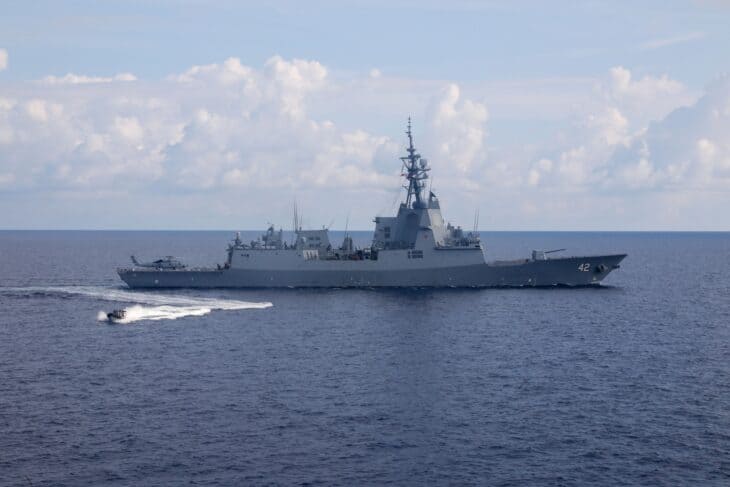

The three Hobart-class destroyers are the most powerful surface warships Australia has. Hobart was commissioned on September 23, 2017, Brisbane on October 27, 2018, and Sydney on May 18, 2020.
Each is 483 feet (147.2 m) long, runs at more than 28 knots, and is built around the American Aegis combat system with an AN/SPY-1D(V) radar. A 48-cell Mk 41 vertical launcher carries SM-2 area-defense missiles and quad-packed ESSM short-range missiles, and the ship has a hangar for one MH-60R helicopter.
They rank first because of what they can now hit. Brisbane test-fired a Tomahawk off San Diego during a deployment to the US West Coast, and the navy announced it on December 10, 2024. Australia is spending about A$1.3 billion on more than 200 of the missiles.
The third Tomahawk navy
Before Brisbane’s shot, only the United States and the United Kingdom had fired the Tomahawk. Australia plans to fire it from the Hobarts first and from its Virginia-class submarines in the 2030s, giving the navy a long-range land-attack weapon for the first time.
Their weakness is numbers. Three hulls cannot cover two oceans, and one is usually in maintenance. An Aegis upgrade to Baseline 9, estimated at up to A$5.1 billion, is planned to keep them current, and the SM-6 and the Naval Strike Missile have both been announced for the class.
For how these ships compare with the American fleet they were designed to work with, see our guide to every US Navy destroyer class.
2. Collins Class: Six Submarines Kept Alive for AUKUS
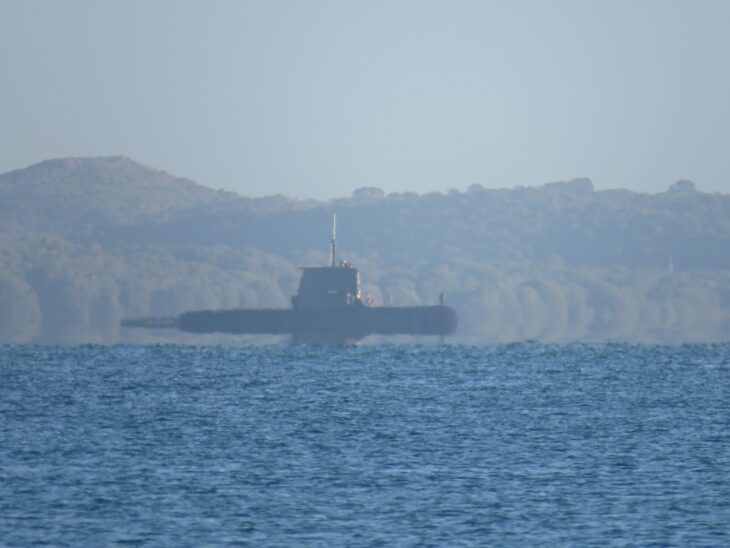

Australia’s six Collins-class boats were the largest conventionally powered submarines in the world when they were commissioned. Each is about 254 feet (77.4 m) long and displaces about 3,400 tonnes submerged.
They were built by the Australian Submarine Corporation in Adelaide from a Swedish Kockums design. Collins was commissioned on July 27, 1996, and Rankin, the last, on March 29, 2003, and each carries 22 weapons, a mix of Mark 48 torpedoes and Sub-Harpoon anti-ship missiles, for its six bow tubes.
The class was meant to retire around 2026. Instead, on May 19, 2026, the government started a life-of-type extension, beginning with HMAS Farncomb, that adds about 15 years of service. Naval News puts the cost at A$11 billion over ten years, with new batteries and diesel engines expected.
Submarines rank this high because they are the hardest Australian ships to find and can wait unseen off a distant coast for weeks. How the Collins boats measure up against other fleets is in our ranking of the largest submarines in the world.
3. Canberra Class: The Navy’s Biggest Ships
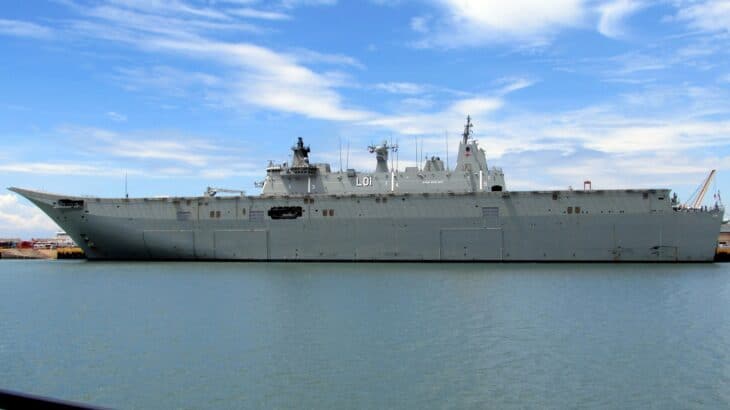

HMAS Canberra and HMAS Adelaide are landing helicopter docks, flat-topped amphibious ships that carry troops, vehicles and helicopters. Each is 757 feet (230.8 m) long and displaces 27,500 tonnes at full load.
They are based on the Spanish Navy’s Juan Carlos I. Navantia built the hulls in Spain, and BAE Systems Australia fitted out the island and interiors at Williamstown, Victoria, before Canberra was commissioned on November 28, 2014 and Adelaide on December 4, 2015.
Each can carry 1,046 troops, or up to 1,600 in overload, and up to 18 helicopters with the hangar full. Each also has a crew of 358, including 62 Army personnel who run the landing force side of the ship.
Are the Canberras aircraft carriers?
No. They look like small carriers, and the government studied putting F-35B jets on them in 2014 and 2015. The study found the changes would cost too much, and the idea was dropped before the Defence White Paper was finished. They fly helicopters only, so Australia has no aircraft carrier in 2026.
For the ships that do launch jets, see our ranking of the best aircraft carriers in the world.
4. Anzac Class: The Workhorse Frigates Running Out of Time
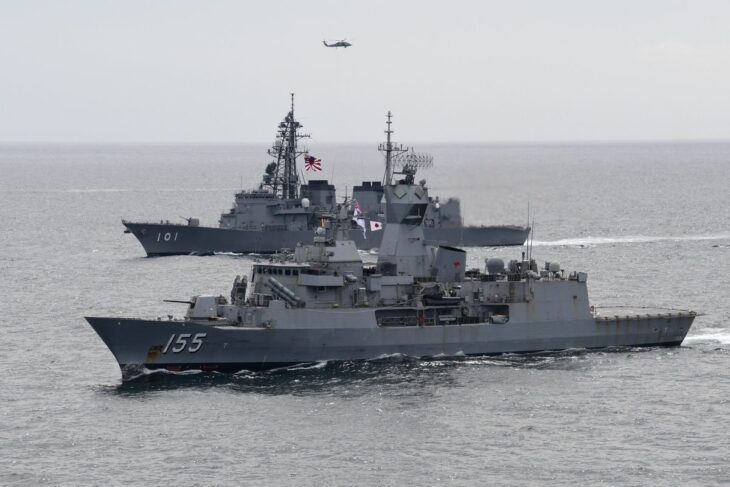

The Anzac class is a German MEKO 200 design built at Williamstown. Australia took eight and New Zealand two, and each is 387 feet (118 m) long with a 5-inch gun, an MH-60R helicopter and an 8-cell Mk 41 launcher holding 32 ESSM missiles.
An upgrade finished by 2017 gave all eight CEA Technologies’ CEAFAR phased-array radars, so the class punches above its 3,600-tonne size in air defense. Some ships have since been armed with the Naval Strike Missile.
Their problem is age. HMAS Anzac was decommissioned on May 18, 2024, and HMAS Arunta, the oldest still in service, was scheduled in 2024 to follow in 2026. We found no public report of its decommissioning by mid-November, so seven are counted here, and the remaining ships will get no more major upgrades.
5. Supply Class: The Oilers That Keep the Fleet at Sea
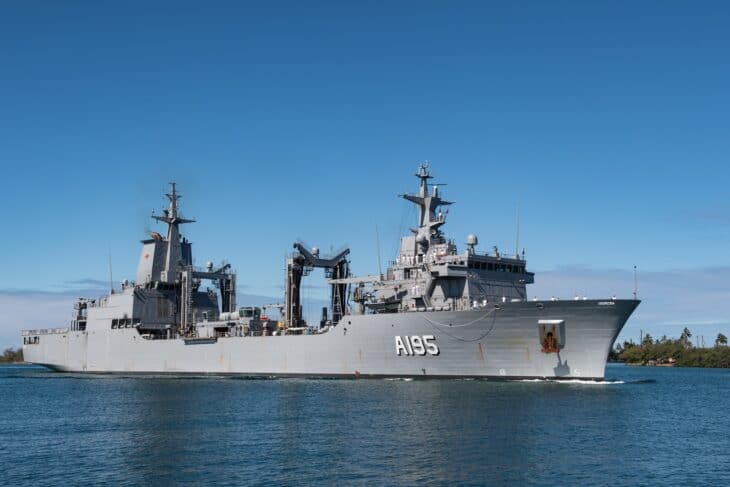

HMAS Supply and HMAS Stalwart refuel and resupply warships at sea, which is what lets a destroyer or an amphibious group operate far from an Australian port. Both were commissioned in 2021, Supply on April 10 in Sydney and Stalwart on November 13 in Western Australia.
They are based on the Spanish Navy’s Cantabria, built by Navantia at Ferrol, and are 571 feet (173.9 m) long and 19,500 tonnes. Two ships for two oceans is a thin margin, but without them the fleet above would be tied to the coast.
6. HMAS Choules: A Second-Hand Royal Navy Landing Ship
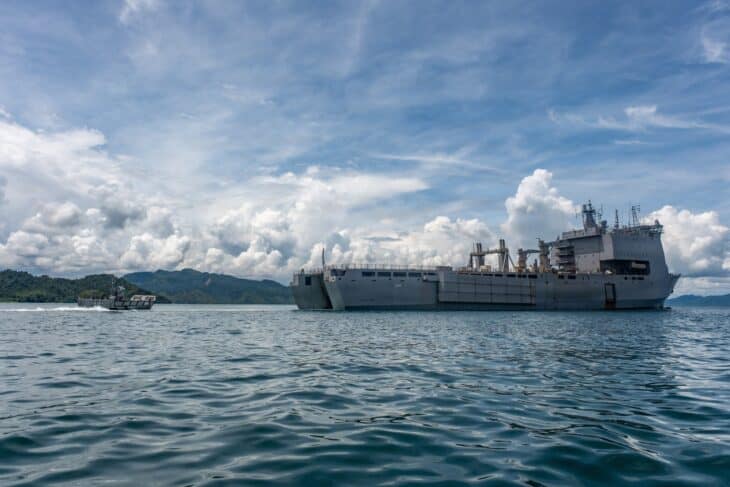

Choules began life as RFA Largs Bay, a British Bay-class landing ship. Australia bought it for £65 million (about A$100 million) in 2011 and commissioned it on December 13, 2011.
At 579 feet (176.6 m), it carries up to 356 troops and vehicles as heavy as 32 M1A1 Abrams tanks. A transformer failure kept it out of service from June 2012 until April 2013.
7. Arafura Class: The New Offshore Patrol Ships
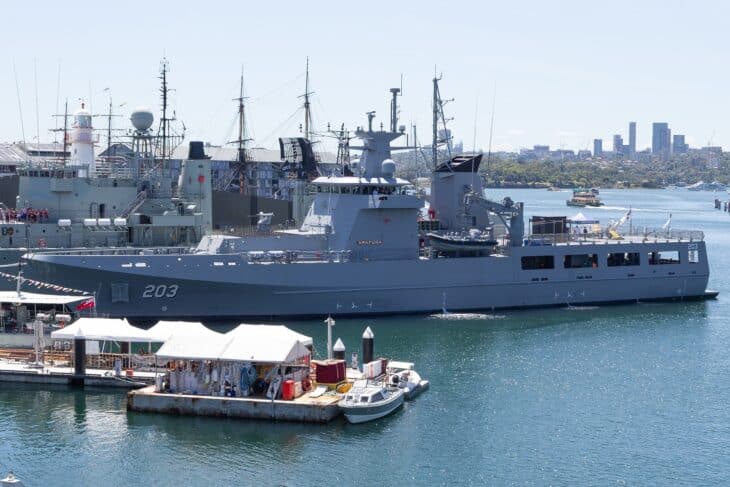

The Arafura class is the navy’s new 262-foot (80 m) offshore patrol vessel, built for border protection, fisheries patrols, surveillance and disaster relief. HMAS Arafura was commissioned in 2025, and HMAS Eyre on May 30, 2026 at HMAS Stirling in Western Australia.
Six are planned, and the other four are being built at Henderson in Western Australia. They rank above the patrol boats because they can stay out much longer in the rough water of Australia’s northern approaches.
8. Evolved Cape Class: The Coastal Patrol Boats
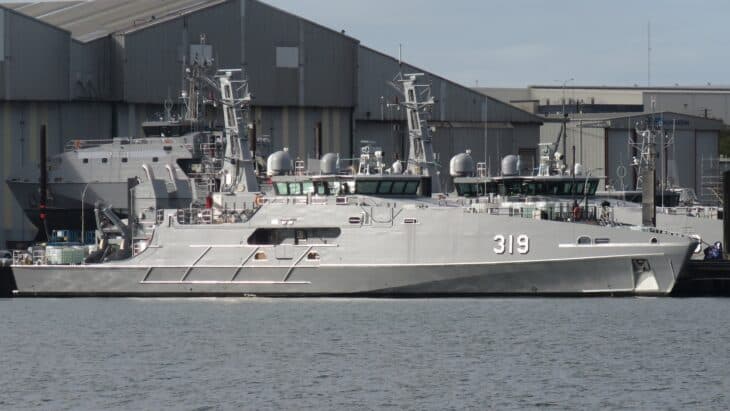

Ten Evolved Cape-class patrol boats, each 190 feet (57.8 m) long, are listed in the fleet, commissioned from 2022 to 2026. They are the most numerous hulls in the navy.
They patrol Australia’s coastal waters, which is constant work but lightly armed work. That is why ten of them sit below two oilers on this list.
9. Huon Class: The Last Two Minehunters
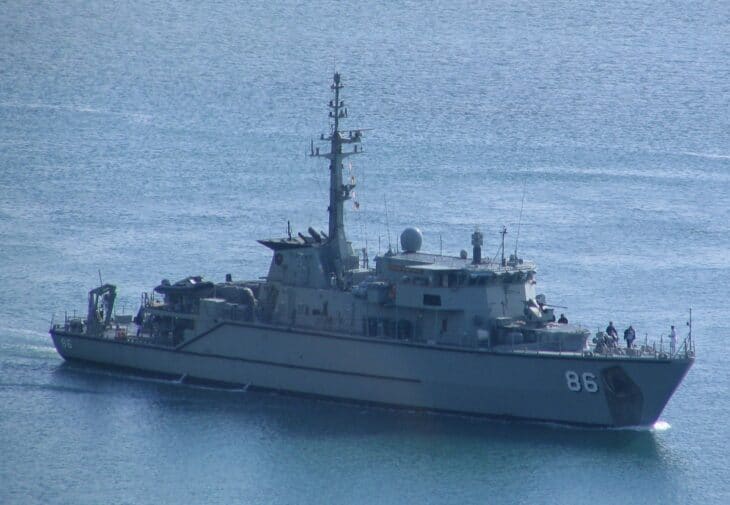

Only HMAS Diamantina and HMAS Yarra remain in the Huon class after Huon and Gascoyne left service in 2024. Each is 172 feet (52.5 m) long and displaces 720 tonnes at full load.
Two ships is a small hedge against mines in the approaches to Sydney, Darwin or Fremantle. Mine warfare is a niche, but it is the kind a navy only misses when it is too late.
10. HMAS Leeuwin: The Last Survey Ship
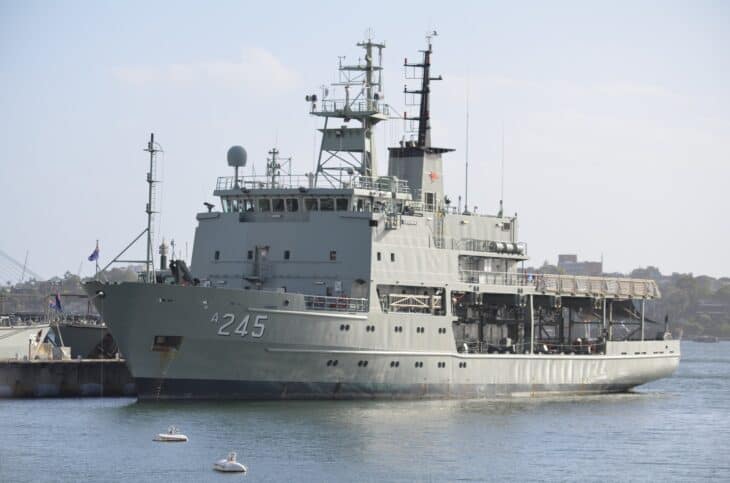

HMAS Leeuwin, commissioned in 2000 and 234 feet (71.2 m) long, maps the seabed that submarines and warships navigate by. Its sister ship Melville was retired in August 2024, leaving one commissioned hydrographic ship.
The Fleet Air Arm: 36 Seahawks
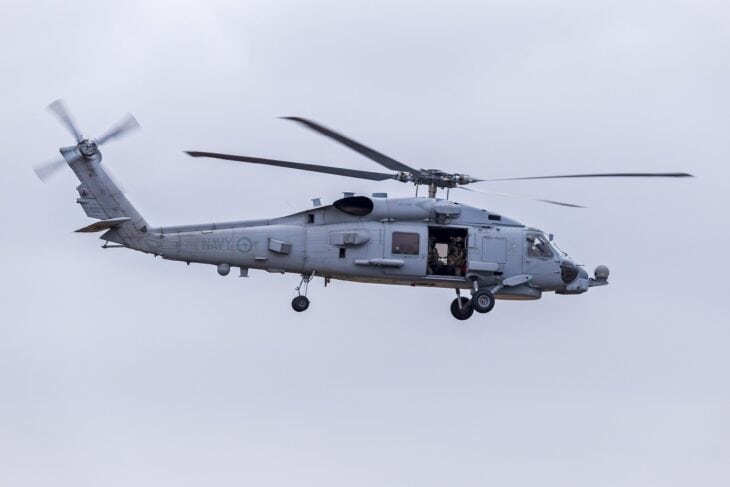

Every Australian destroyer and frigate carries the Sikorsky MH-60R Seahawk, the navy’s submarine-hunting and anti-ship helicopter. In April 2025 the navy had 23 in service and 13 on order, for a planned fleet of 36, with all 13 due by the end of 2026.
No. 816 Squadron flies them on deployment and No. 725 Squadron trains the crews. The new aircraft re-equip No. 808 Squadron, which gave its MRH90 Taipans to the Army in 2022.
The navy’s fixed-wing combat jets belong to the air force. See our guide to every aircraft the Royal Australian Air Force flies for the F-35As, Super Hornets and Growlers that would cover the fleet.
What Is Coming: Mogami Frigates, Hunter Frigates and Virginia Submarines
The 2024 surface fleet review set a target of three Hobarts, six Hunter-class frigates, 11 general purpose frigates and six large optionally crewed surface vessels. Almost none of the new ships will arrive before 2029.
General purpose frigates. In April 2026, Australia signed with Mitsubishi Heavy Industries for the first three of 11 upgraded Mogami-class frigates, built in Japan, with the lead ship due in 2029. Each has 32 launch cells, an MH-60R and a crew of 92, about half an Anzac’s, and later ships are planned for Western Australia.
Hunter class. Six anti-submarine frigates are being built by BAE Systems at Osborne, Adelaide, where steel for the first ship was cut in mid-2024. BAE says HMAS Hunter will be delivered in 2032, and more than half of its 78 hull units were in production by October 2025.
Nuclear submarines. At the 2026 Shangri-La Dialogue in Singapore, Australia and the United States agreed that Australia will receive three in-service Virginia-class attack submarines from 2032. The first Australian-built SSN-AUKUS boat is due in the early 2040s, which is why the Collins boats must last that long.
Why the next ten years are the thin ones
Anzac left in 2024, Arunta was scheduled to go in 2026, and the first Mogami does not arrive until 2029 or the first Hunter until 2032. Until then, Australia’s main surface fleet is three destroyers and a shrinking group of frigates built in the 1990s and 2000s.
How Australia’s fleet compares with China, Japan and the United States by ship count and tonnage is in our ranking of the largest navies in the world.
FAQ
Sources and references used for research and fact-checking.
- Wikipedia, List of active Royal Australian Navy ships
- Wikipedia, Hobart-class destroyer
- Breaking Defense, With first test fire, Aussies join tiny Tomahawk club with US, UK
- Wikipedia, Collins-class submarine
- Naval News, Australia begins life extension effort for Collins submarines
- Wikipedia, Canberra-class landing helicopter dock
- Wikipedia, Anzac-class frigate
- Asia Pacific Defence Reporter, Babcock completes Class Renewal Survey on HMAS Arunta
- Second Line of Defense, The Royal Australian Navy's Hull Gap Decade
- Wikipedia, Supply-class replenishment oiler
- Wikipedia, HMAS Choules
- Naval News, Royal Australian Navy commissions newest offshore patrol vessel HMAS Eyre
- Naval News, Australia: O Romeo, Romeo, wherefore art thou Romeo?
- Defence Industry Europe, Australia signs contract for three Japanese-built upgraded Mogami frigates
- BAE Systems, Building momentum: Over half of the first Hunter class frigate is now in production
- The Nightly, Pat Conroy reveals why Australia wanted three used US Virginia-class submarines under AUKUS
Get the Newsletter
The latest aviation news and stories sent to your inbox.
About the Author

Tim is the owner and lead editor of AeroCorner since 2019, overseeing aviation content covering aircraft, airlines, airports, and the broader aviation industry. Through years of researching, writing, editing, and publishing aviation-focused content, he has developed extensive practical knowledge of commercial aviation and air travel. Based in Asia and a frequent traveler himself, Tim also brings firsthand passenger experience to AeroCorner’s coverage. Outside of publishing, he has also explored aviation firsthand through hands-on flight training in New Zealand.