

Table of Contents
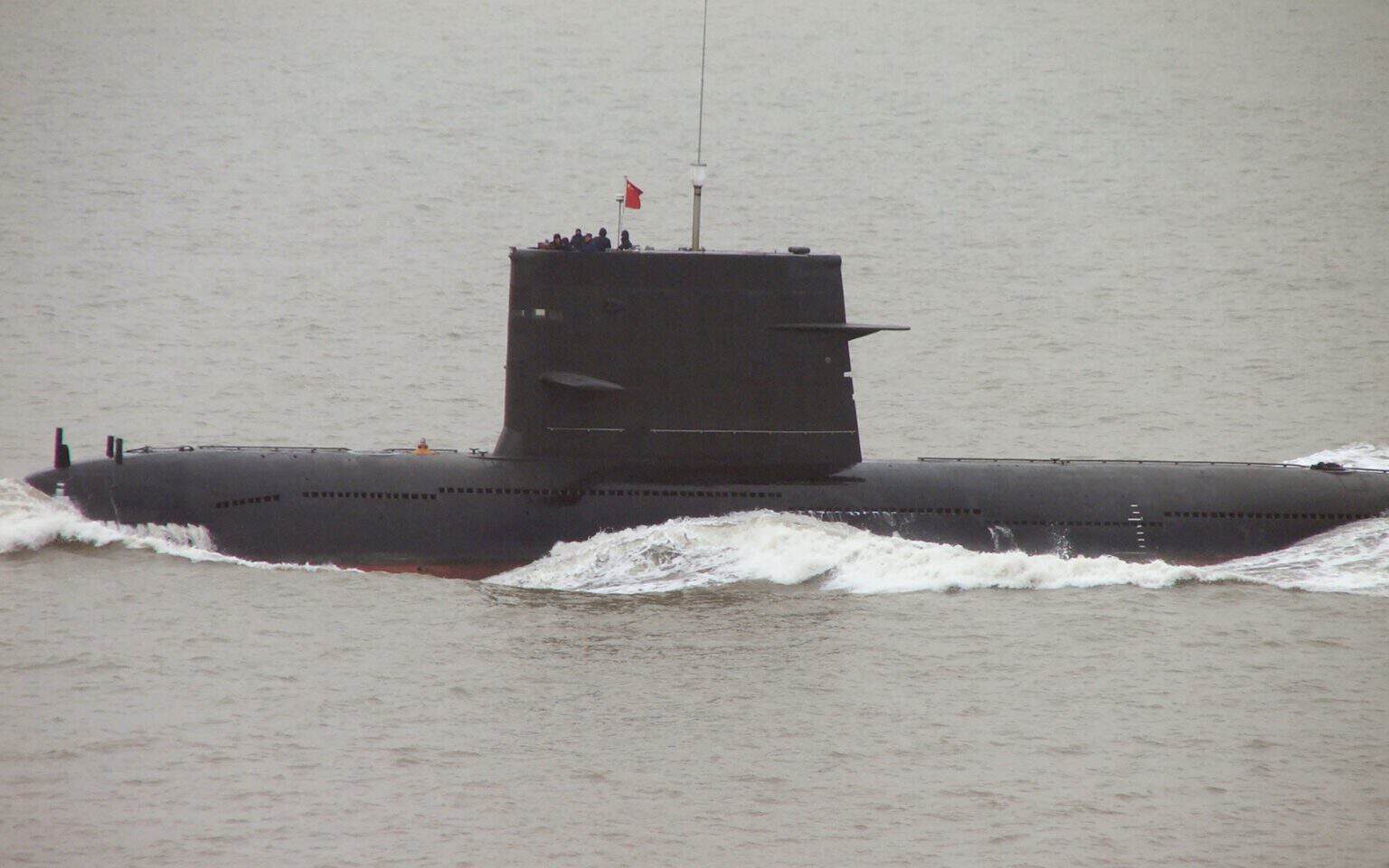
Between 2021 and 2025, Chinese shipyards launched 10 nuclear-powered submarines. American yards launched seven over the same five years.
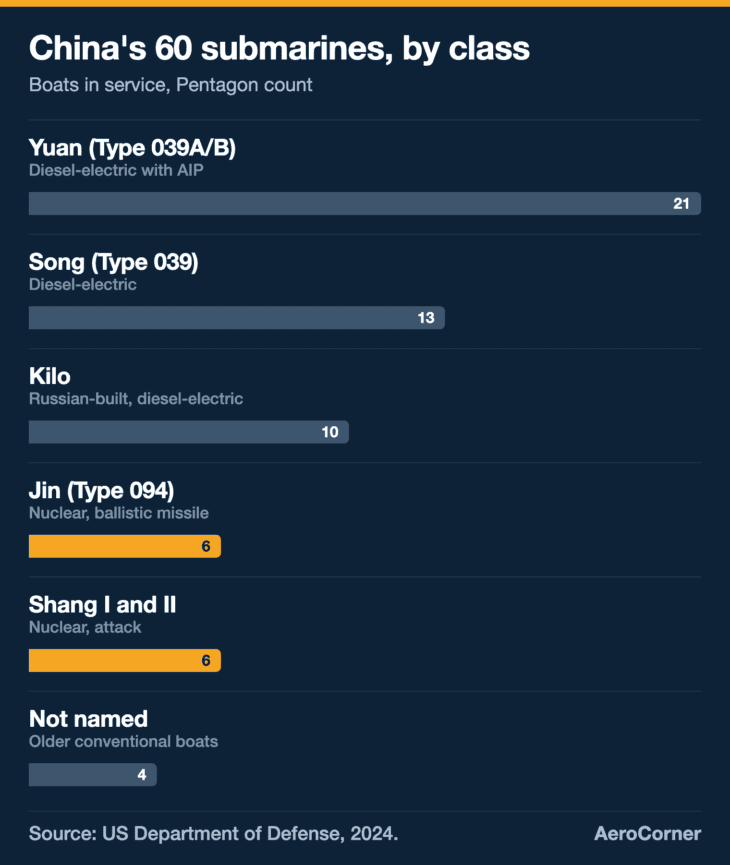
That build rate is new, but the fleet it feeds is still mostly diesel. China has about 60 submarines, according to the Pentagon’s December 2024 report to Congress: six nuclear ballistic missile submarines, six nuclear attack submarines and 48 diesel or air-independent boats.
How Many Submarines Does China Have?
The Pentagon’s last published count is 60, in its 2024 China Military Power Report, released in December 2024. Twelve are nuclear-powered and 48 run on diesel engines and batteries, many of them with air-independent propulsion (AIP), which lets a conventional boat stay submerged longer without surfacing to run its diesels.
The December 2025 edition of the same report gave no new submarine count. The Federation of American Scientists noted that it “includes no mention of China’s ballistic missile submarines,” because the report changed format to cover only new information.
China's submarines at a glance
About 60 in service (Pentagon, December 2024). Nuclear: 6 Jin-class ballistic missile submarines and 6 Shang-class attack submarines. Conventional: 48 diesel and AIP attack submarines. The Pentagon expected 65 by 2025 and 80 by 2035. The IISS Military Balance 2025 counts 58.
China’s Submarine Fleet by Class
The Pentagon report names most of the fleet class by class. The diesel boats are the bulk of it, and the Yuan family is the largest single group.
| Class | Type | Power | Boats |
|---|---|---|---|
| Jin (Type 094) | Ballistic missile submarine | Nuclear | 6 |
| Shang I and II (Type 093, 093A) | Attack submarine | Nuclear | 6 |
| Yuan (Type 039A/B) | Attack submarine | Diesel-electric with AIP | 21 |
| Song (Type 039) | Attack submarine | Diesel-electric | 13 |
| Kilo (Russian-built) | Attack submarine | Diesel-electric | 10 |
| Not named by the report | Older conventional boats | Diesel-electric | 4 |
| Total | 60 |
The six Jin-class boats are the ones that matter most to Washington. Each can carry up to 12 submarine-launched ballistic missiles, and the Pentagon calls them China’s “first credible sea-based nuclear deterrent.”
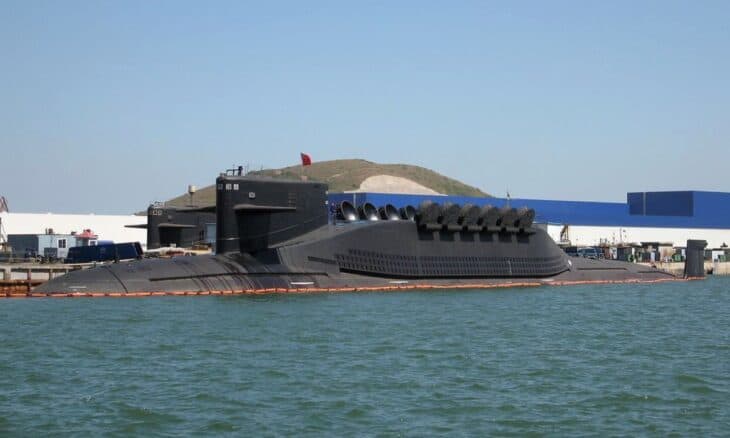

Six boats is also the number that lets China keep one at sea at all times, the Pentagon says, and the Jins are already flying deterrent patrols. A JL-2 missile reaches about 3,900 nautical miles (7,200 km), so a Jin would have to sail into the mid-Pacific to threaten the western United States.
The newer JL-3 changes that. Chinese sources claim a range of more than 5,400 nautical miles (10,000 km), which the Pentagon says would let a Jin target parts of the continental US from Chinese coastal waters.
The conventional boats have a different job. They are built for the seas close to China, and the Pentagon believes the Song and Yuan classes, like the nuclear Shang, carry a submarine-launched version of the YJ-18 anti-ship missile.
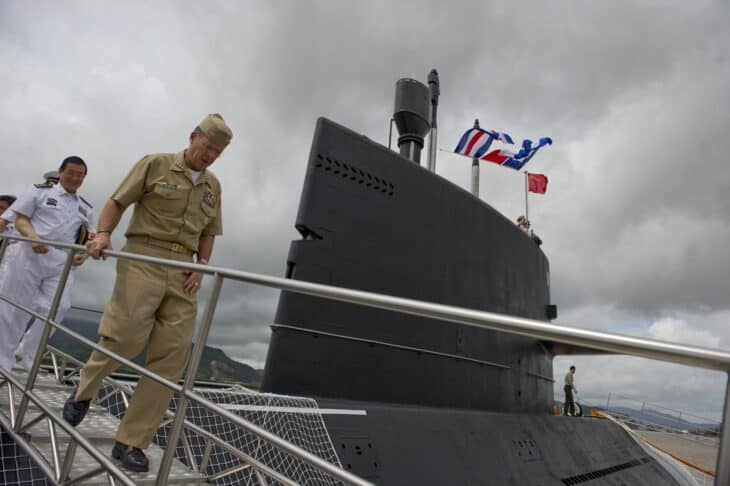

The Kilos are a reminder of where the force started. China bought 12 of them from Russia between the mid-1990s and mid-2000s, and retired the first two in late 2021. For how the PLA Navy’s submarines fit beside its carriers and destroyers, see our guide to the Chinese Navy, ship by ship.
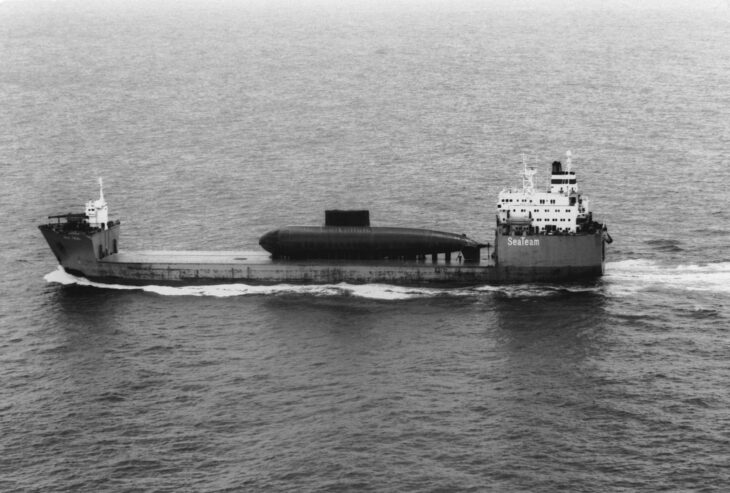

Why Other Sources Give 58, 61 or 66
Search for this question and you will find at least four numbers. Each one counts something slightly different, at a different date.
- 58, IISS Military Balance 2025. Twelve nuclear boats, the same as the Pentagon, but 46 conventional boats instead of 48. Neither publishes a hull list, so the two-boat gap cannot be traced to one class.
- 60, the Pentagon, December 2024. The official US figure and the one used in this article.
- 61, Global Firepower 2026. A single total, with no split between nuclear and diesel boats.
- 66, Wikipedia. The PLA Navy Submarine Force article gives 66 with no date attached, and flags its own figures as needing an update.
A second trap is launched versus in service. A submarine is launched when its hull goes into the water, then spends months fitting out and on sea trials before it joins the fleet. Counts built from satellite photos of shipyards run ahead of the Pentagon’s in-service number.
The 65-by-2025 number was a forecast
Many pages say China has 65 submarines. That figure comes from a Pentagon projection that the force would grow to 65 by 2025. No later official count has confirmed it, and the 2025 report did not update it.
Where the Number Is Going
The Pentagon’s own forecasts show how fast the plan moves. Its 2024 report expected 25 or more Yuan-class boats by 2025, up from the 21 it counted, and three Type 093B hulls operational by the same year.
The Pentagon expects about 80 submarines by 2035, because China’s shipyards are building faster than old hulls retire. Most of the new work is nuclear.
- Type 093B Shang III. The Pentagon counted four launched between May 2022 and January 2023. The IISS says nine have now been launched since 2022, and the US classifies them as guided-missile submarines.
- More Jin-class boats. Early 2026 satellite imagery showed six Type 094s, but the IISS says China almost certainly launched a seventh in 2024 and an eighth in 2025.
- Type 096. The next ballistic missile submarine, which the Pentagon expects China to operate alongside the Jin class in the 2030s.
- Type 041 Zhou. A new conventional design whose first boat sank at its pier as it prepared for sea trials, a loss the Pentagon confirmed in its 2025 report.
The US Office of Naval Intelligence expects China to operate 13 nuclear attack submarines and up to eight ballistic missile submarines by 2030. When the Pentagon or the IISS publishes a fresh count, this page will be updated.
How China’s Submarine Fleet Compares With the US
China has fewer submarines than the US Navy on most counts, and far fewer nuclear ones. The IISS Military Balance 2025 credited the US with 65 submarines, 14 of them ballistic missile boats, and every one of them nuclear-powered. Our count of how many submarines the US has breaks that fleet down by class.
The gap that worries American planners is the build rate. The IISS found China launched three submarines in 2016 to 2020 against seven American ones, then overtook the US with 10 to 7 in 2021 to 2025.
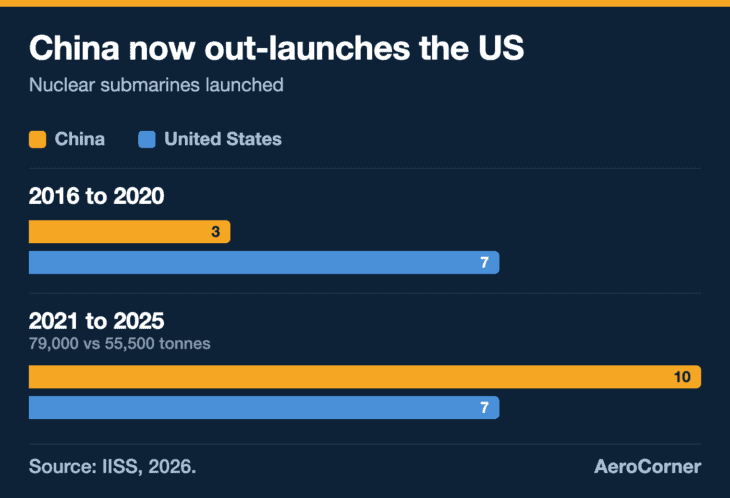
By tonnage the shift is just as clear: 79,000 tonnes of Chinese submarines against 55,500 American tonnes in 2021 to 2025. Meanwhile the Congressional Research Service expects the US attack submarine force to bottom out at 47 boats in 2030.
Submarines are only part of the picture. China’s surface fleet is growing too, led by its three aircraft carriers, and the biggest boats on both sides appear in our ranking of the largest submarines in the world.
FAQ
Sources and references used for research and fact-checking.
- US Department of Defense, Military and Security Developments Involving the People's Republic of China 2024
- Federation of American Scientists, The Pentagon's (Slimmed Down) 2025 China Military Power Report
- Andrew S. Erickson, Department of War Just Released 2025 China Military Power Report: Full Text and Key Points
- CNN (via KEYT), China is building submarines faster than ever, think tank says
- Breaking Defense, China building more nuclear subs than America: IISS report
- Naval Technology, How is China able to produce so many submarines?
- Global Firepower, Submarine Fleet Strength by Country (2026)
- Wikipedia, People's Liberation Army Navy Submarine Force
Get the Newsletter
The latest aviation news and stories sent to your inbox.
About the Author

Tim is the owner and lead editor of AeroCorner since 2019, overseeing aviation content covering aircraft, airlines, airports, and the broader aviation industry. Through years of researching, writing, editing, and publishing aviation-focused content, he has developed extensive practical knowledge of commercial aviation and air travel. Based in Asia and a frequent traveler himself, Tim also brings firsthand passenger experience to AeroCorner’s coverage. Outside of publishing, he has also explored aviation firsthand through hands-on flight training in New Zealand.