

Table of Contents
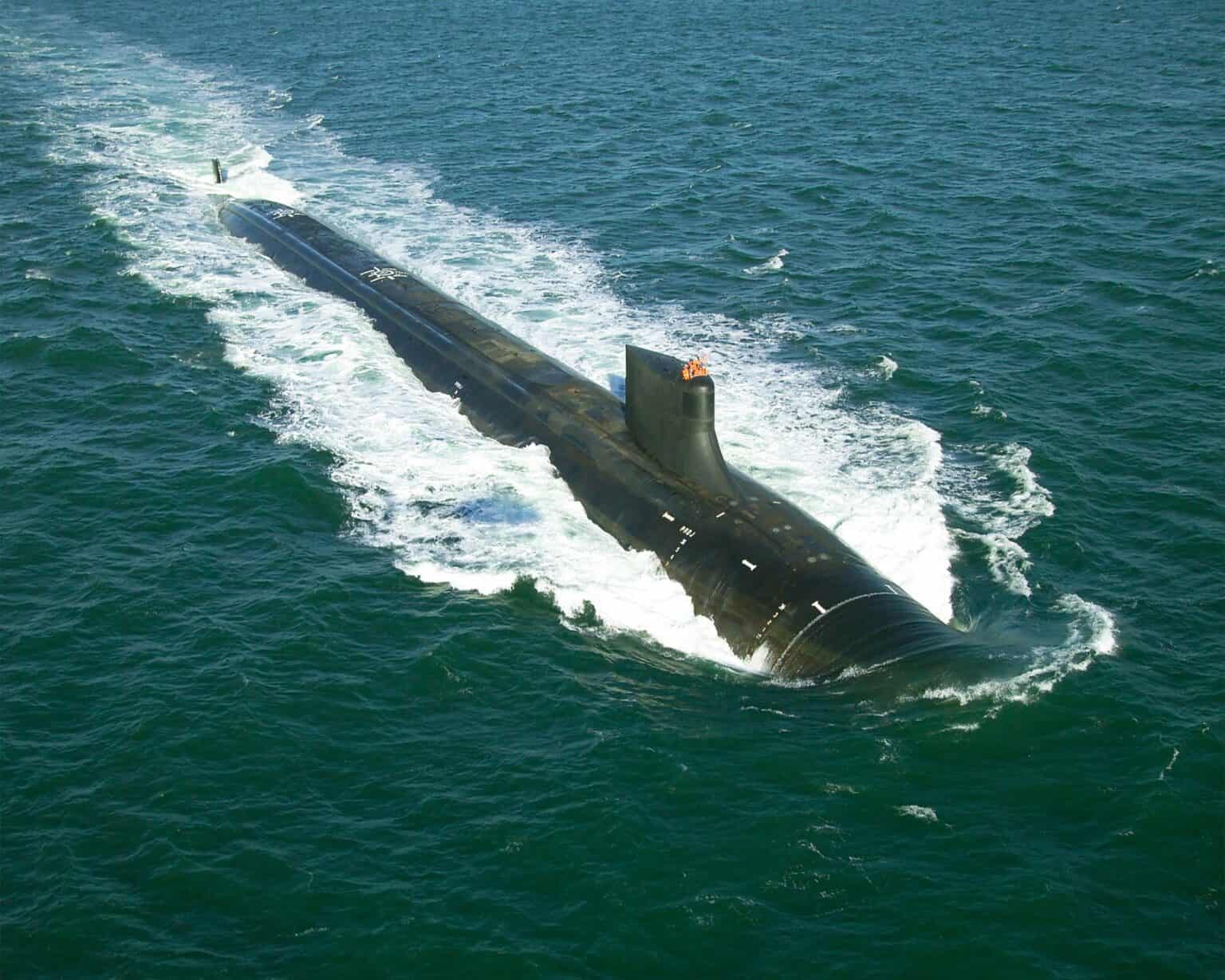
The best submarine in the world in 2026 is the US Navy’s Virginia class. It is not the biggest or the most heavily armed, but 26 boats are in commission, each one hunts ships and submarines and strikes land targets with Tomahawk missiles, and nothing else that capable is in production at that scale.
The most powerful submarine is a different question, and the answer is the Ohio class. Its 14 ballistic missile boats carry about 70 percent of the United States’ deployed nuclear warheads, according to the Navy’s Strategic Systems Programs director in April 2026.
This list ranks 12 submarine classes in service as of November 2026, across every role: attack boats, ballistic missile boats, guided missile boats and diesel-electric boats. The measure is fighting value: stealth and sensors, weapons, and how many boats a navy can actually send to sea.
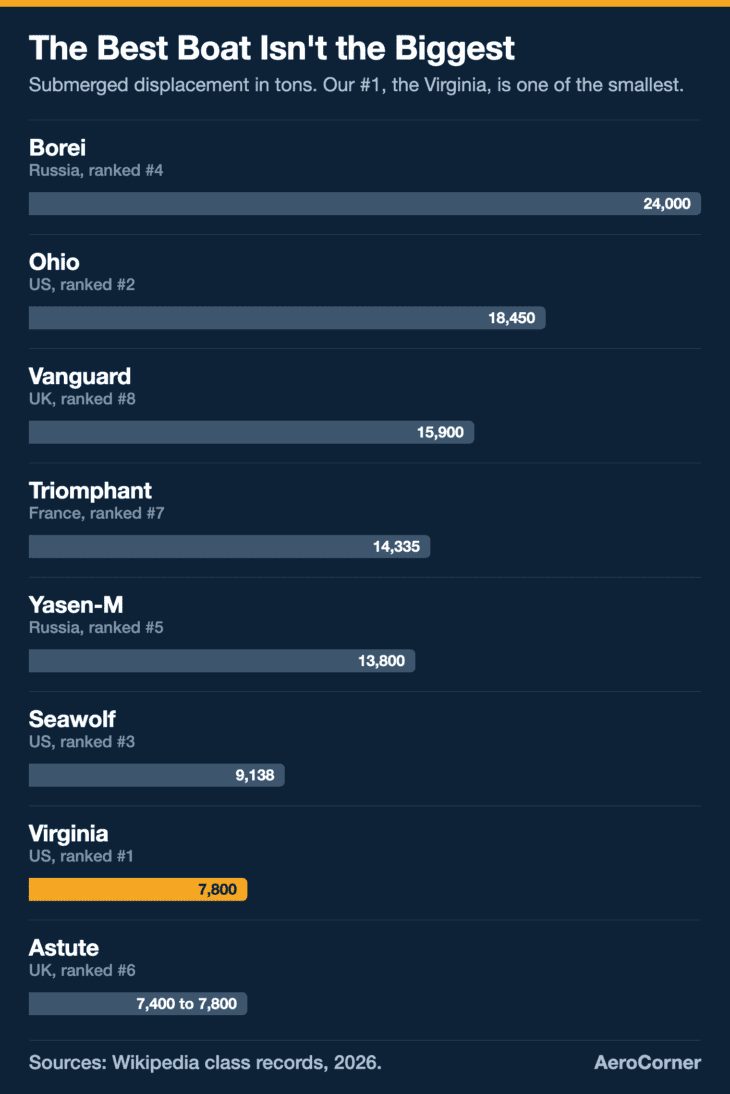
| Rank | Class | Navy | Type | Submerged displacement | In service, Nov. 2026 |
|---|---|---|---|---|---|
| 1 | Virginia | US | Attack (SSN) | 7,800 tons | 26 |
| 2 | Ohio | US | Ballistic and guided missile | 18,450 tons | 14 SSBN, 3 SSGN |
| 3 | Seawolf | US | Attack (SSN) | 9,138 tons | 3 |
| 4 | Borei / Borei-A | Russia | Ballistic missile (SSBN) | 24,000 tons | 8 |
| 5 | Yasen / Yasen-M | Russia | Guided missile attack (SSGN) | 13,800 tons | 5 |
| 6 | Astute | UK | Attack (SSN) | 7,400 to 7,800 tons | 6, the sixth on trials |
| 7 | Triomphant | France | Ballistic missile (SSBN) | 14,335 tons | 4 |
| 8 | Vanguard | UK | Ballistic missile (SSBN) | 15,900 tons | 4 |
| 9 | Suffren | France | Attack (SSN) | 5,200 tons | 4 |
| 10 | Type 094 / 094A | China | Ballistic missile (SSBN) | 11,000 tons (estimate) | 6 |
| 11 | Taigei and Soryu | Japan | Diesel-electric (SSK) | 3,000 tons surfaced (Taigei) | 5 Taigei, 12 Soryu |
| 12 | Type 212A | Germany, Italy | Diesel-electric with fuel cells | 1,830 tons | 10 built |
How this ranking works
Submarines do two very different jobs. Attack boats hunt ships and other submarines; ballistic missile boats hide for months and carry a nation’s nuclear deterrent. We rank both on fighting value: published stealth features and sensors, weapons load, and how many boats a navy can put to sea in November 2026. Noise levels, real top speeds and diving depths are classified everywhere, so no figure here is a secret one. Classes not yet in service, such as the US Columbia, are covered at the end, not ranked.
1. Virginia Class (US): The Best Submarine in the World
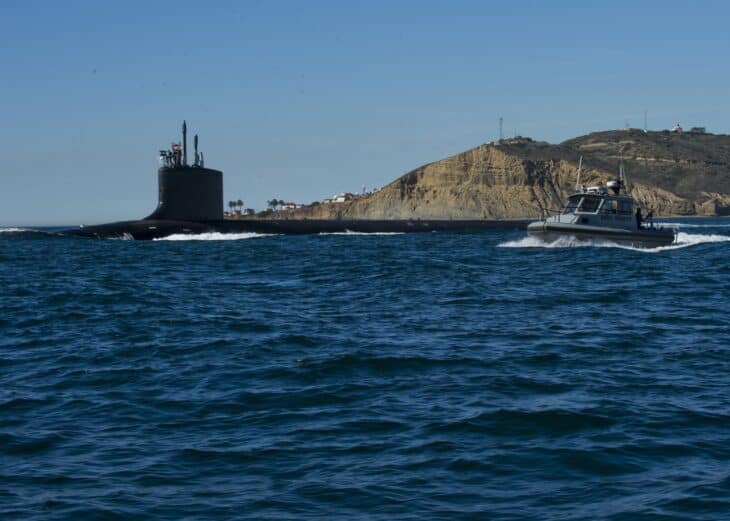

The Virginia wins on a combination no other navy matches: modern stealth, a full land-attack arsenal and numbers. The Block I to IV boats are 377 feet (115 m) long and displace about 7,800 tons submerged.
USS Virginia was commissioned in October 2004, and 26 boats are now in service, the latest USS Idaho (SSN-799), commissioned on April 25, 2026. Every boat carries 12 Tomahawk cruise missiles alongside its torpedoes, and the Block V boats add the Virginia Payload Module, four more tubes holding 28 extra Tomahawks.
That payload module is how the Virginia will take over the job of the retiring Ohio guided missile boats below. How it ranks against the other hunter-killers is in our list of the best attack submarines in the world.
2. Ohio Class (US): The Most Powerful Submarine in the World
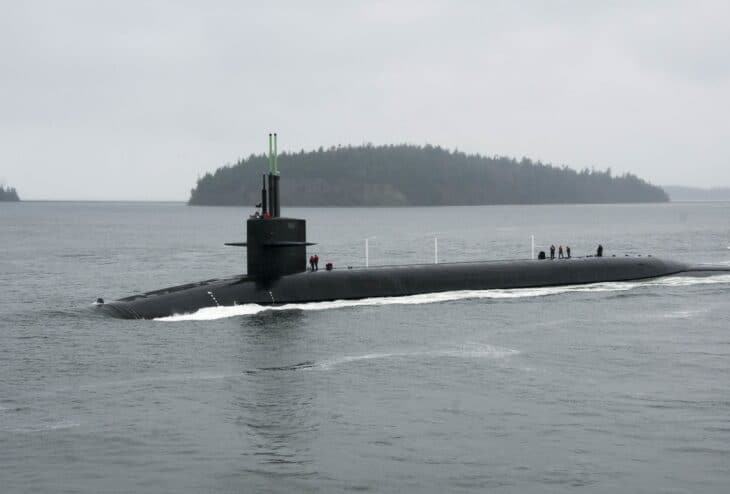
Eighteen Ohio-class boats were built, and they are the backbone of American nuclear deterrence. Each is 560 feet (170 m) long and displaces 18,450 long tons submerged, the largest submarines in the US fleet.
Fourteen are ballistic missile submarines (SSBNs). Each was built with 24 missile tubes, and four per boat were deactivated in 2017 under the New START treaty, leaving 20 Trident II D5 missiles with a range of about 4,600 miles (7,400 km).
The other four were converted to guided missile submarines (SSGNs), each with 22 tubes holding up to 154 Tomahawks. USS Georgia returned to Kings Bay in July 2026 to begin retirement, and Ohio, Florida and Michigan are scheduled to follow in fiscal years 2027, 2028 and 2029.
The Ohio ranks second, not first, only because it is old. The boats were designed for 30 years of service and have been stretched to 42, according to Navy testimony to Congress in April 2026. The full US fleet is in our guide to every US Navy submarine class.
197 tests and counting
The Navy reported 197 successful flight tests of the Trident II missile carried by the Ohio class, the most recent in April 2025. Its 14 ballistic missile boats carry about 70 percent of the United States’ deployed nuclear warheads.
3. Seawolf Class (US): The Best Hunter Ever Built, Three Times
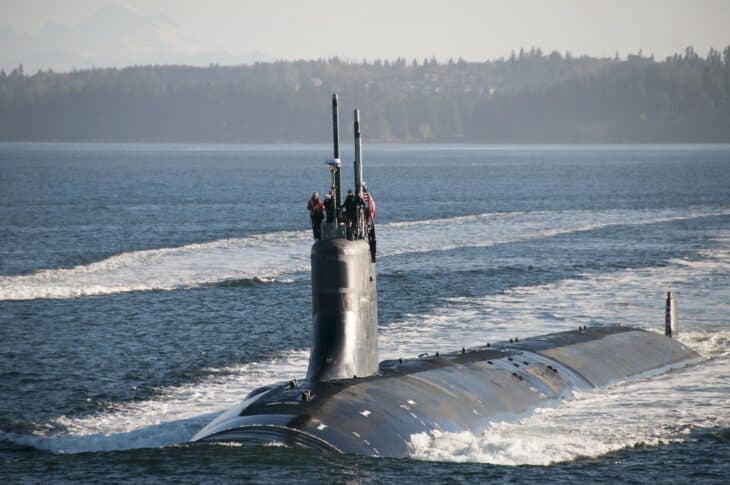

Boat for boat, the Seawolf may still be the most capable submarine hunter afloat. It was designed for the Cold War hunt against Soviet submarines, with a published maximum speed of 35 knots and a speed of 20 knots while running silent.
It has eight torpedo tubes, twice as many as a Virginia, and room for up to 50 torpedoes, Harpoons and Tomahawks. The standard boat displaces 9,138 tons submerged and is 353 feet (108 m) long.
It ranks third for one reason: there are only three. The Navy once planned 29, but the end of the Cold War stopped construction at Seawolf, Connecticut and Jimmy Carter, and three boats cannot cover what 26 Virginias can.
4. Borei-A Class (Russia): The Biggest Boat on the List
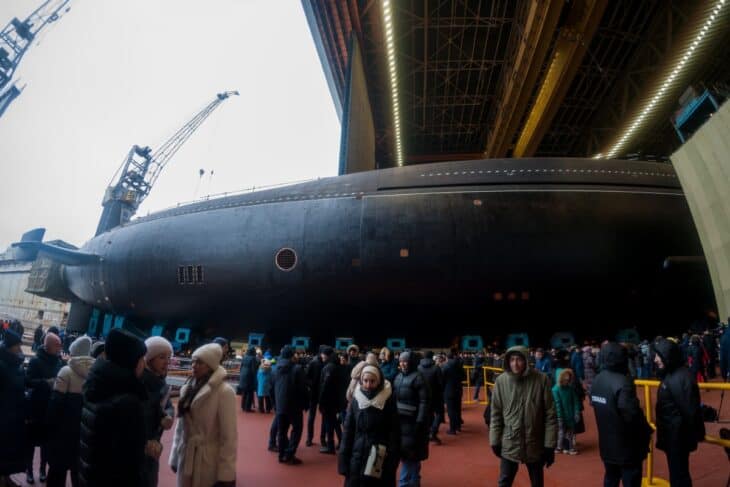

The Borei is Russia’s modern ballistic missile submarine, built to replace the Soviet-era boats of the Cold War. At 24,000 tons submerged and 557 feet (170 m) long, it is the largest boat on this list.
Each carries 16 Bulava missiles with a published range of about 5,150 miles (8,300 km). Eight are in service: three original Project 955 boats and five improved Borei-As, the latest Knyaz Pozharskiy, handed over at Sevmash on July 24, 2025.
Two more, Dmitry Donskoy and Knyaz Potemkin, are still building. The Borei ranks below the Ohio on numbers, eight boats against 14, but it is the one area where Russia’s navy has kept pace, as our guide to the Russian Navy sets out.
5. Yasen-M Class (Russia): The Most Heavily Armed Attack Submarine
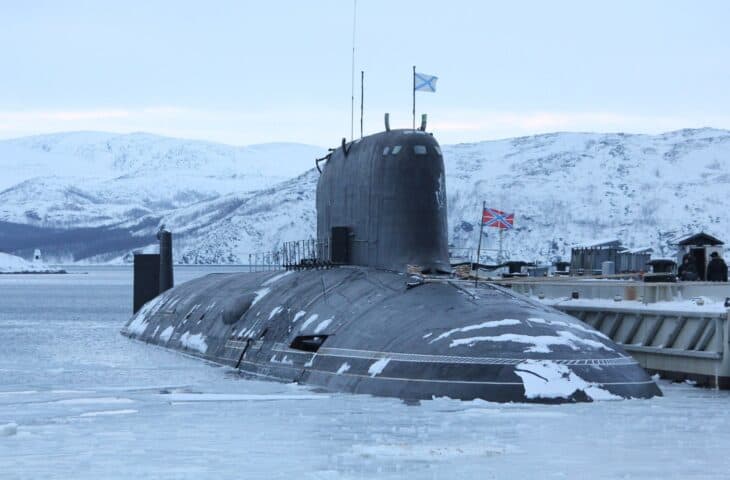

The Yasen is Russia’s best hunter and the best-armed attack submarine afloat. Its eight vertical launch silos hold up to 32 Zircon hypersonic or Oniks anti-ship missiles, or 40 Kalibr cruise missiles.
The improved Yasen-M is 427 feet (130 m) long and displaces 13,800 tons submerged, with a crew of 64 and a published test depth of up to about 1,970 feet (600 m). Five boats are active, from Severodvinsk in 2014 to Arkhangelsk in December 2024.
The sixth, Perm, has been on sea trials since August 2025, and Russia’s navy chief said in July 2026 that it would join the Pacific Fleet by the end of the year. Five boats cannot cover what the American fleet can, which is why the Yasen sits behind the US and Borei boats.
6. Astute Class (UK): The Best Sonar on the List
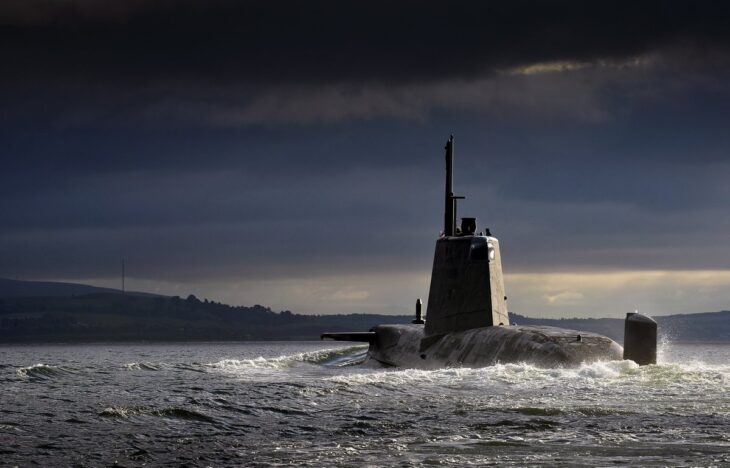
The Astute’s strength is listening. Its Sonar 2076 suite, which builder BAE Systems has called the best sonar in the world, is backed by more than 39,000 acoustic tiles on the hull to mask the boat’s own sound.
Each boat is 318 feet (97 m) long, displaces 7,400 to 7,800 tons submerged and carries up to 38 Spearfish torpedoes and Tomahawk missiles. Six have been commissioned, but the sixth, HMS Agamemnon, only left Barrow for her first sea trials in September 2026.
That is the Astute story in one line: excellent boats, slow to arrive. Britain’s wider fleet is in our guide to the Royal Navy.
7. Triomphant Class (France): The Newest Missile on the List
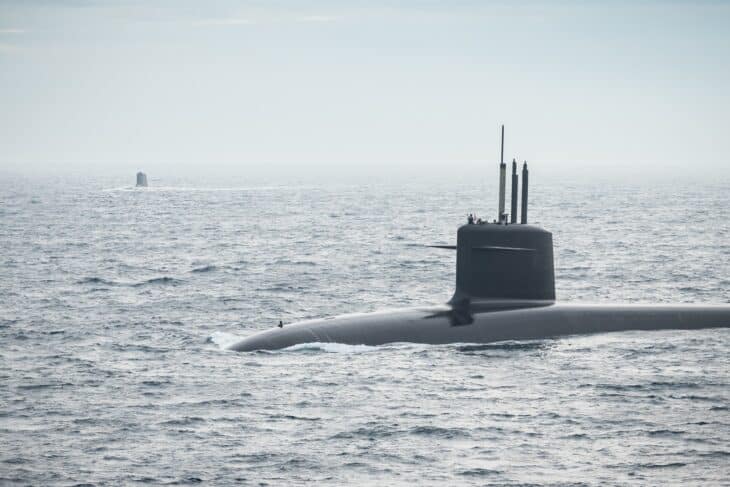

France’s four Triomphant-class boats carry its entire sea-based nuclear deterrent. Each is 453 feet (138 m) long, displaces 14,335 tons submerged and carries 16 M51 missiles.
The upgraded M51.3 entered operational service in late 2025, with a range of 5,000 to 6,200 miles (8,000 to 10,000 km). The boats are younger than Britain’s too: the first was commissioned in 1997 and the last, Le Terrible, in 2010.
That fully loaded, newer missile is why the Triomphant ranks ahead of the Vanguard. Its successor will be the third-generation L’Invincible class, and the rest of the fleet is in our guide to the French Navy.
8. Vanguard Class (UK): 217 Days Under Water
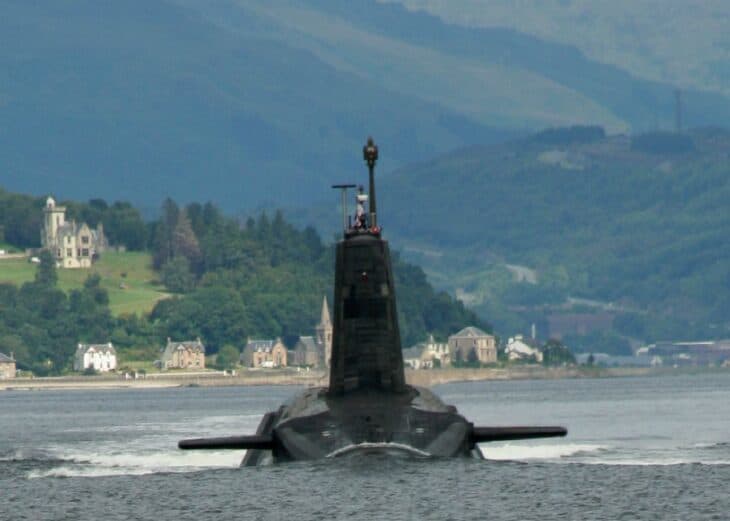

Britain’s four Vanguard-class boats carry the UK’s only nuclear weapons. Each is about 492 feet (150 m) long and displaces 15,900 tons submerged, with 16 missile tubes.
Under the 2010 defense review, the Royal Navy loads only eight of those tubes with Trident II missiles, carrying a total of 40 warheads. The boats were commissioned between 1993 and 1999.
Their Dreadnought-class replacements are not expected before the early 2030s. Until then, four boats from the 1990s carry the whole load, and their patrols keep getting longer.
A record patrol, finished this month
HMS Vengeance returned to Faslane on November 15, 2026 after a reported 217 days under water, beating the 205-day patrol HMS Vanguard finished in April. The boats were designed around three-month patrols.
9. Suffren Class (France): Small, New and Gaining Pace
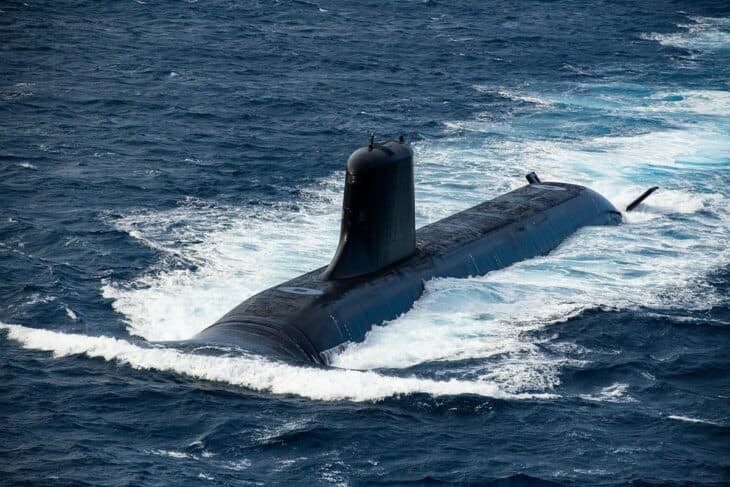

France’s Suffren class, also called Barracuda, is the smallest nuclear submarine on this list at 5,200 tons submerged and about 326 feet (99.5 m) long. It is also one of the newest, with a pump-jet propulsor and a crew of 65.
It carries the MdCN land-attack cruise missile, with a range of more than 620 miles (1,000 km), alongside torpedoes and Exocet anti-ship missiles. Naval Group delivered the fourth boat, De Grasse, on June 24, 2026, and two more are planned.
10. Type 094A (China): The Deterrent That Can Reach the US
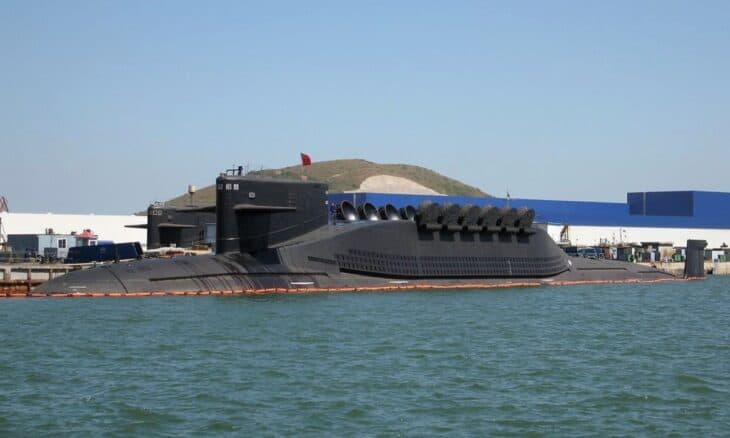

The Type 094, known in the West as the Jin class, gave China its first credible sea-based nuclear deterrent, the Pentagon said in 2022. Six are in service, with the first commissioned in 2007 and deterrence patrols beginning in December 2015.
Each carries 12 missiles. The boats were built for the JL-2, with a range of about 4,500 miles (7,200 km), and by late 2022 may have been rearmed with the JL-3, reported at more than 6,200 miles (10,000 km).
Western estimates put the boat at about 449 feet (137 m) long and 11,000 tons submerged. It ranks tenth because it is the least proven boat on the list: China publishes almost nothing about it, and its deterrence patrols are barely a decade old. China’s wider fleet is in our guide to China’s navy.
11. Taigei and Soryu Classes (Japan): The Best Non-Nuclear Submarines
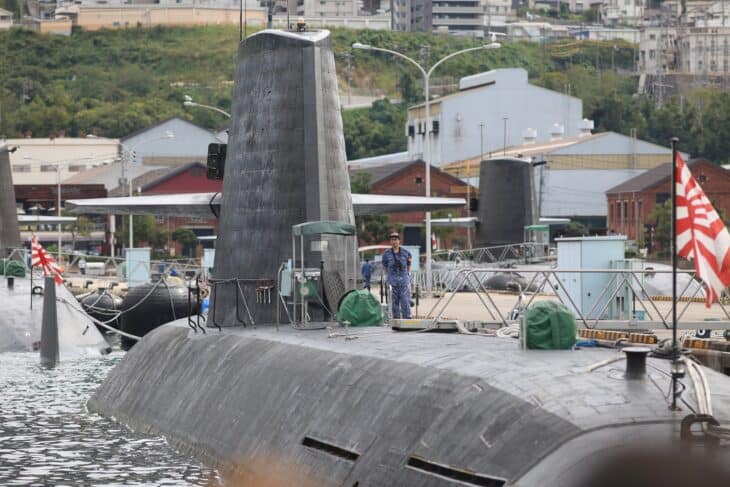

Japan builds the best conventional submarines in the world, and it has 17 boats in these two classes. The Soryu class, 12 boats commissioned from 2009 to 2021, is 276 feet (84 m) long and displaces 4,200 tons submerged.
The last two Soryus, Oryu and Toryu, swapped lead-acid batteries for lithium-ion, and Oryu was the first lithium-ion battery submarine in the world. The newer Taigei class is built around those batteries from the start, which keep a boat fast and quiet under water for longer.
Five Taigeis have been commissioned, the latest, Chogei, on March 10, 2026, each with six torpedo tubes. No diesel boat can match a nuclear submarine’s sustained speed under water, which is why Japan sits below every nuclear class here, and its fleet is in our guide to Japan’s navy.
12. Type 212A (Germany and Italy): Weeks Under Water Without Air
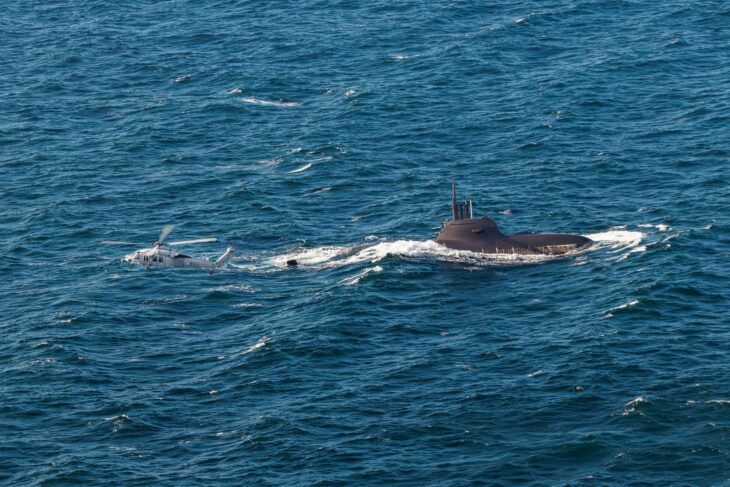

The Type 212A uses hydrogen fuel cells, a form of air-independent propulsion, to stay submerged for weeks without raising a snorkel. It displaces just 1,830 tons submerged and is 184 feet (56 m) long.
Its hull is built from non-magnetic steel, which makes it harder to find with the magnetic sensors carried by maritime patrol aircraft. Ten were built, six for Germany and four for Italy.
In 2013, the German boat U-32 spent 18 days in a submerged transit without snorkeling, a record for a non-nuclear submarine. Its successor, the Type 212CD, is building for Norway and Germany, with the first delivery expected in 2029.
What About the Biggest Submarines?
Many “best submarine” lists simply rank the giants. Size is not quality. The largest boat here, the Borei, displaces three times as much as the top-ranked Virginia.
Big submarines are big because they carry big ballistic missiles, not because they hunt better. The giants are ranked in our list of the largest submarines in the world.
Nobody publishes the number that matters
The most important figure for any submarine is how much noise it makes, and every navy keeps it secret. Published top speeds and test depths are often rounded or understated too. Any list that claims to rank submarines by exact stealth figures is guessing. This one ranks only on what navies, auditors and builders have put on the record.
The Submarines Coming Next
The US Columbia class will replace the 14 Ohio SSBNs with at least 12 boats, each 560 feet (171 m) long, 20,810 long tons submerged and fitted with 16 Trident tubes. The first, District of Columbia, was about 65 percent complete in February 2026, when the Navy said it was driving toward delivery in 2028, a year later than first planned.
Britain’s Dreadnought class follows in the early 2030s, then France’s L’Invincible class, and Russia’s Arcturus class from 2037, according to its designer, Rubin. Japan has two more Taigeis launched, due in 2027 and 2028.
The one near-miss for this list is India’s Arihant class, which now has three ballistic missile boats after INS Aridhaman was reportedly commissioned in April 2026. Its boats are smaller and its longer-range K-4 missile is still in testing, as our guide to India’s navy explains.
FAQ
Sources and references used for research and fact-checking.
- US House Armed Services Committee, Statement of Vice Adm. Johnny Wolfe, Director, Strategic Systems Programs, before the House Armed Services Subcommittee on Strategic Forces (April 22, 2026)
- Wikipedia, Ohio-class submarine
- The War Zone, Prized Ohio Class Guided Missile Submarine USS Georgia Heading Into Retirement
- Army Recognition, USS Georgia SSGN-729 Ohio-class submarine retirement
- Wikipedia, Columbia-class submarine
- The Defense Post, US Navy's first Columbia-class submarine delivery slips to 2028
- Wikipedia, Virginia-class submarine
- Wikipedia, Seawolf-class submarine
- Wikipedia, Borei-class submarine
- Militarnyi, Russia commissions fifth Borei-A class nuclear submarine
- Wikipedia, Yasen-class submarine
- Wikipedia, Russian submarine Perm
- Wikipedia, Astute-class submarine
- Naval News, Royal Navy's 6th Astute-Class SSN HMS Agamemnon Begins Sea Trials
- Wikipedia, Triomphant-class submarine
- Wikipedia, Vanguard-class submarine
- The Maritime Executive, 217 Days Underwater: British Bomber Returns from Record Patrol
- Popular Science, Nuclear submarine returns from record-breaking 217 days underwater
- Wikipedia, Suffren-class submarine
- Naval Group, Naval Group delivers the fourth Barracuda-class nuclear attack submarine (SSN)
- Wikipedia, Type 094 submarine
- Wikipedia, Soryu-class submarine
- Wikipedia, Taigei-class submarine
- Wikipedia, Type 212 submarine
- Arms Control Today, India Commissions Third Ballistic Missile Submarine
Get the Newsletter
The latest aviation news and stories sent to your inbox.
About the Author

Tim is the owner and lead editor of AeroCorner since 2019, overseeing aviation content covering aircraft, airlines, airports, and the broader aviation industry. Through years of researching, writing, editing, and publishing aviation-focused content, he has developed extensive practical knowledge of commercial aviation and air travel. Based in Asia and a frequent traveler himself, Tim also brings firsthand passenger experience to AeroCorner’s coverage. Outside of publishing, he has also explored aviation firsthand through hands-on flight training in New Zealand.