

Table of Contents
On the night of March 9 to 10, 1945, 334 B-29s crossed Tokyo at altitudes their crews feared were suicidal, with their defensive guns stripped out to make room for more fire bombs. By morning, about 16 square miles (41 km²) of the city had burned to the ground.
The general who ordered it was Curtis LeMay. On December 7, 1964, the Japanese government awarded the same man the First Class, Grand Cordon of the Order of the Rising Sun.
That contradiction runs through his whole career. This is the aviation side the biographies skim: the navigator who found a liner at sea, the tactics he invented over Germany, and the nuclear bomber force he built that never had to fly the war it was ready for.
Who Was Curtis LeMay?
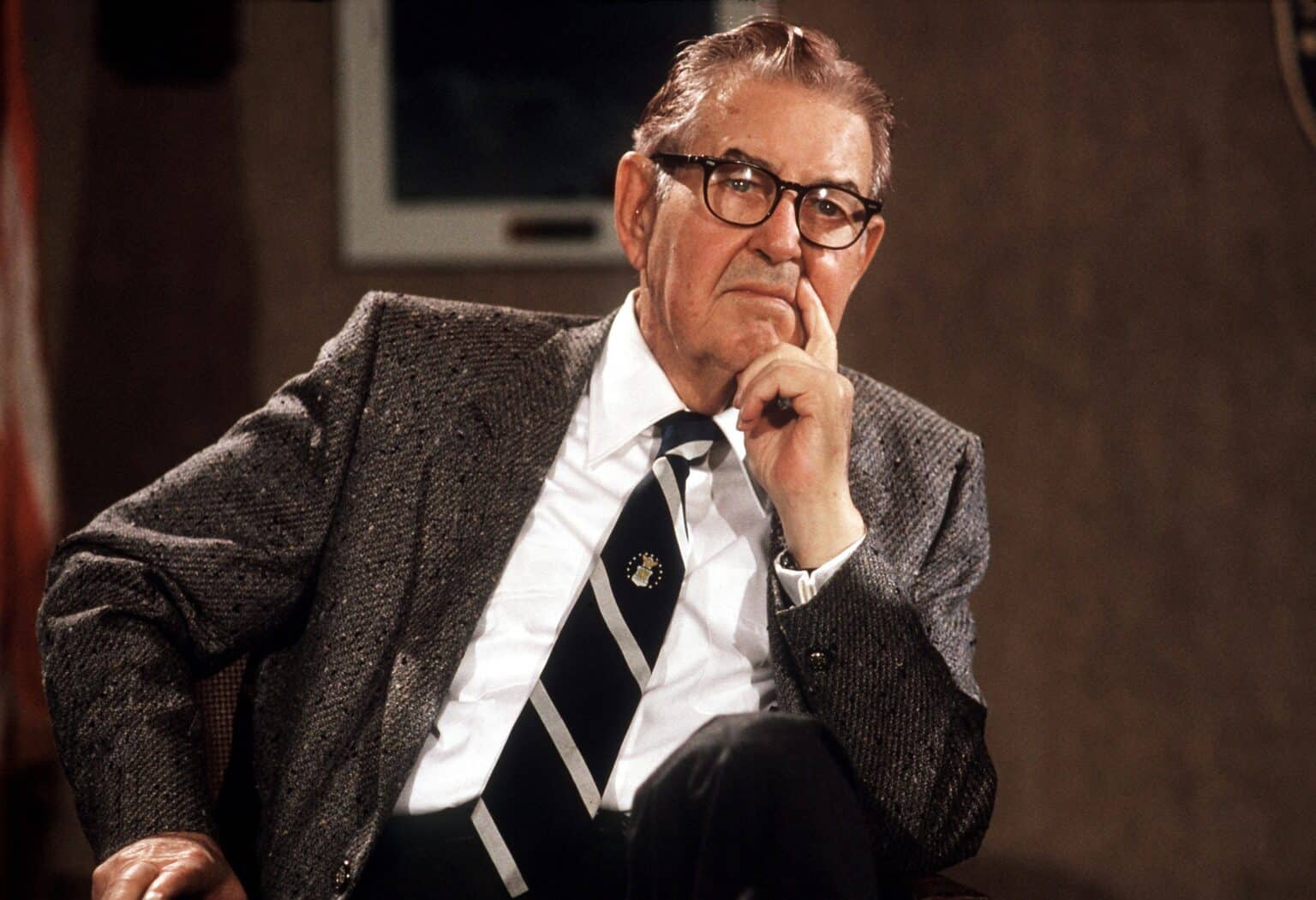
Curtis Emerson LeMay (1906 to 1990) was the US Air Force general who led the B-29 firebombing campaign against Japan, commanded Strategic Air Command (SAC) from 1948 to 1957, and served as the fifth Air Force chief of staff from 1961 to 1965.
He was also a working aviator to the end: a pilot, navigator and bombardier who kept flying jets as a four-star general. In 1968 he ran for vice president on George Wallace’s third-party ticket.
Curtis LeMay at a glance
Born November 15, 1906, in Columbus, Ohio. Flying cadet in 1928, commissioned in October 1929. Led the 305th Bombardment Group over Europe from 1942, then the B-29 campaign against Japan from 1944. Commanded Strategic Air Command from October 1948 to June 1957. Air Force chief of staff from 1961 until he retired on February 1, 1965. Died October 1, 1990, at March Air Force Base, California.
He Started in Fighters and Made His Name as a Navigator
LeMay worked his way through Ohio State’s civil engineering program and joined the Air Corps because it was the cheapest way to learn to fly. His first posting was the 27th Pursuit Squadron at Selfridge Field, Michigan, flying Boeing P-12 fighters.
He decided fighters were defensive weapons and that wars would be won by bombers, and he moved to bombers in 1937. At Langley Field he sharpened his navigation and then taught himself the secret Norden bombsight, which made him a pilot, navigator and bombardier in one.
On May 12, 1938, he navigated three early B-17s out over the Atlantic to intercept the Italian liner Rex, more than 700 miles from shore. The point was to show that land-based bombers could find ships at sea, and the Navy was not pleased.
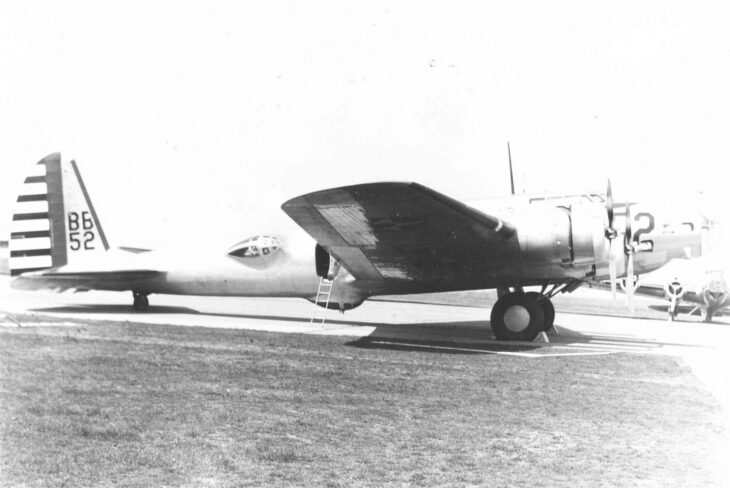

That same year he was lead navigator on the B-17 goodwill flights to South America, which won the 2nd Bomb Group the Mackay Trophy. Before Pearl Harbor he also pioneered ferry routes across the South Atlantic to Africa and the North Atlantic to England.
The Tactics He Invented Over Germany
In 1942 LeMay formed and trained the 305th Bombardment Group and took it to England with the Boeing B-17 Flying Fortress. By one account he was the only pilot in the group who had flown a B-17 before.
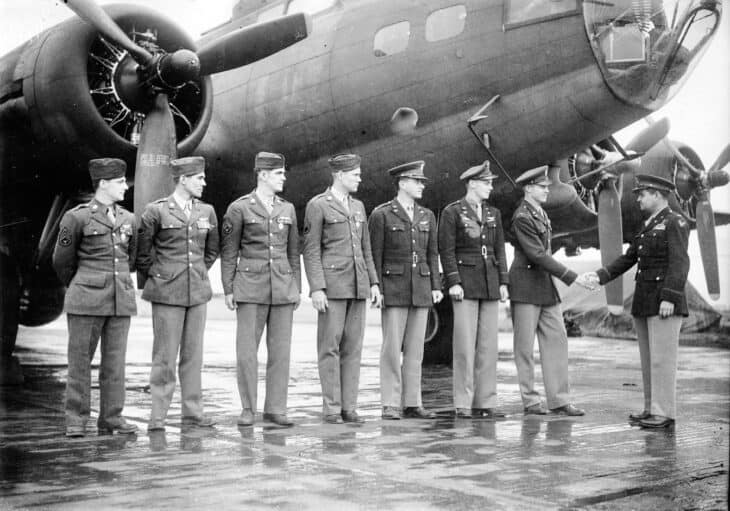

His first big change was banning evasive maneuvers on the bomb run. Crews protested, but a long, straight run put more bombs on target, so fewer missions had to be flown again, and overall losses fell.
His second was the combat box, a staggered formation that let each bomber’s guns cover the others. Both ideas became standard across the Eighth Air Force and were later adapted for the B-29.
He led from the front. On August 17, 1943, he led the force of 146 B-17s that struck Regensburg, deep in Germany and beyond fighter escort, then carried on to bases in North Africa. Twenty-four bombers were lost, and LeMay received the Distinguished Service Cross.
Why He Sent the B-29s Over Tokyo Low and at Night
In 1944 LeMay took over the Boeing B-29 Superfortress campaign against Japan, first from India and China and then from the Mariana Islands. What he found was failing: his bombers were landing bombs near their targets only about 5% of the time.
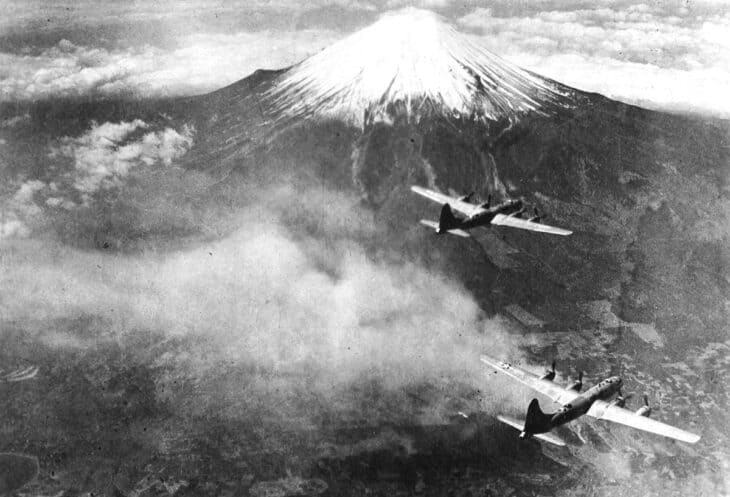

Above about 20,000 feet (6,100 m), the jet stream over Japan blew bombs off course, and the weather was often cloudy. LeMay’s answer was to abandon high-altitude daylight precision bombing for low-level night attacks with incendiaries on cities built largely of wood and paper.
He stripped most of the guns and gunners out of the B-29s and sent them in at 5,000 to 9,000 feet (1,500 to 2,700 m). He did not tell Hap Arnold, the head of the Army Air Forces, beforehand, reasoning that Arnold could always fire him if it failed.
The most destructive air raid of World War II
Operation Meetinghouse, March 9 to 10, 1945: 334 B-29s, 14 lost. About 16 square miles (41 km²) of Tokyo burned. The US Centennial of Flight Commission gives 83,793 dead and 40,918 injured, and many accounts put the dead at around 100,000.
Fire raids on dozens more Japanese cities followed through August. LeMay never pretended not to understand what they meant: “I suppose if I had lost the war, I would have been tried as a war criminal,” he said afterward.
He came home in record style. On September 18 to 19, 1945, he flew one of three stripped B-29s nonstop from Hokkaido to Chicago, 5,840 miles (9,400 km), the longest nonstop flight the Army Air Forces had made. Each bomber took off at 144,000 pounds (65,300 kg), the heaviest load an American aircraft had carried.
How He Built Strategic Air Command
In 1947 LeMay took command of US Air Forces in Europe, and when the Soviets blockaded Berlin in 1948 he started the airlift, soon flown with Douglas C-54 Skymasters. It was first nicknamed the “LeMay Coal and Feed Delivery Service,” though he soon handed the operation to logistics specialist William Tunner.
On October 19, 1948, he took over SAC, the command responsible for delivering America’s atomic bombs. His first move was a full practice mission, and not a single crew completed it correctly.
Over the next nine years he rebuilt it around relentless training, tough standards, spot promotions for crews who performed, and better housing for the families who lived with the 24-hour schedule. He also fought Congress for money, and usually won.
| Strategic Air Command | When LeMay arrived (1948) | When LeMay left (1957) |
|---|---|---|
| Personnel | Fewer than 52,000 | 224,000 |
| Aircraft | 837 | About 2,700 |
| Intercontinental bombers | 35 B-36s and 35 B-50s | 127 B-36s and 243 B-52s |
| B-47 jet bombers | Not yet in service | 1,501 B-47s and RB-47s |
| Tankers | Two squadrons getting converted KB-29s | 742 KC-97s and 24 KC-135s |
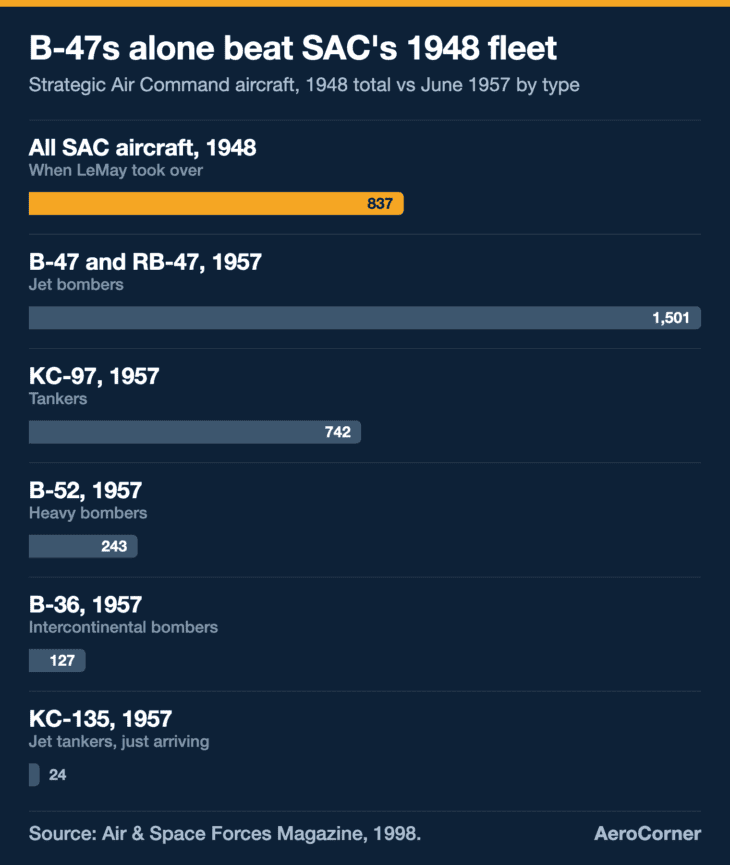
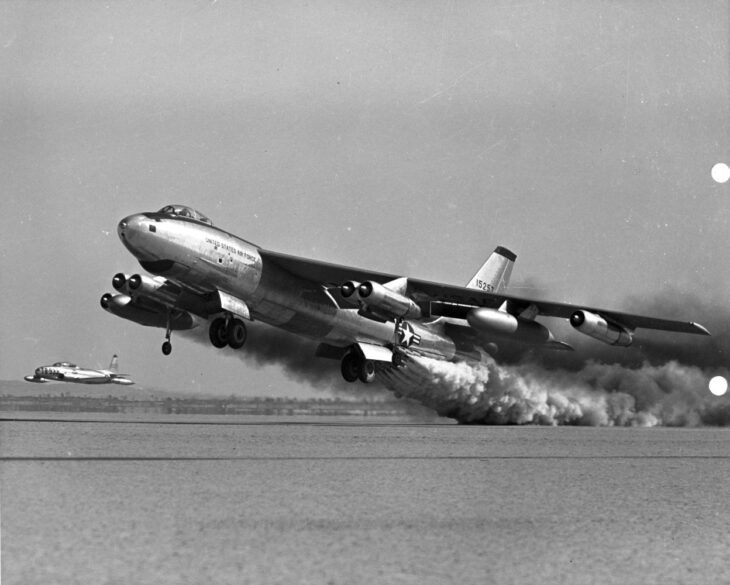
The Boeing B-47 Stratojet was the backbone of that force, while the Convair B-36 Peacemaker was being replaced by the Boeing B-52 Stratofortress. In 1956 and 1957 LeMay began testing 24-hour ground alert, with bombers and tankers kept ready to launch at short notice.

On October 29, 1951, at 44, he became the youngest American four-star general since Ulysses S. Grant. He commanded SAC until June 30, 1957, the longest tenure of any US military commander since Winfield Scott.
The general who kept setting records
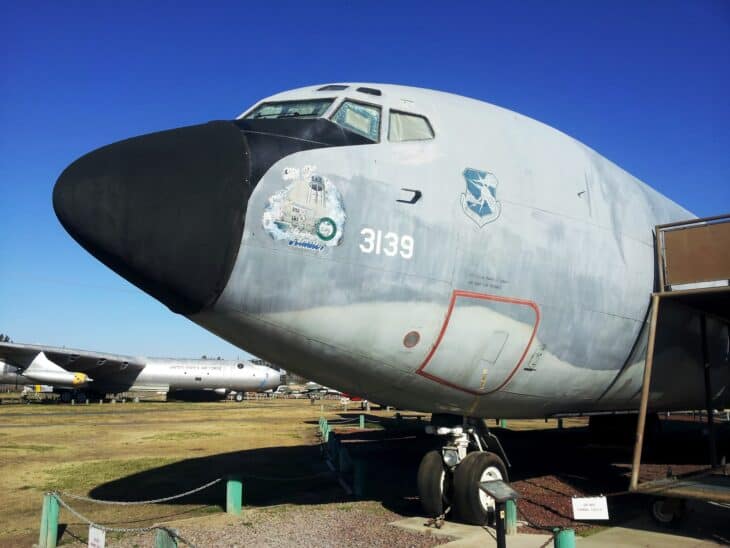
LeMay never stopped flying. In November 1957, now vice chief of staff, he flew a Boeing KC-135 Stratotanker nonstop from Westover Air Force Base, Massachusetts, to Buenos Aires: 6,322.85 miles (10,175 km) in 13 hours, 2 minutes and 51 seconds, a record-setting flight.

He was also a keen amateur radio operator who chatted on the ham bands from SAC bombers. Working with Heathkit and Collins Radio engineers, he made single sideband radio the SAC standard in 1957, because it worked far better than AM for crews flying long distances from base.
Then there was the cigar. Life magazine reported that when a pilot asked him to put it out because fuel fumes in the fuselage could explode, LeMay growled, “It wouldn’t dare.” The scene ended up in the 1955 film Strategic Air Command.
The Fights He Lost as Chief of Staff
LeMay was sworn in as chief of staff on June 30, 1961, with John F. Kennedy watching, and clashed with Kennedy’s team almost at once. He thought ballistic missiles were no substitute for crewed bombers.
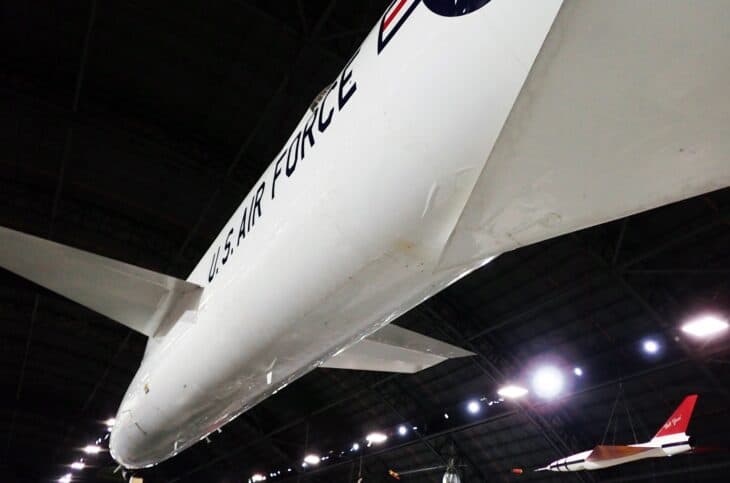
He lost the battles for the Skybolt air-launched missile and the XB-70 Valkyrie, the bomber meant to replace the B-52. His summary of his priorities was blunt: “Flying fighters is fun. Flying bombers is important.”

During the October 1962 crisis that began with a U-2’s photos of missile sites in Cuba, he pushed to bomb the sites and opposed the naval blockade. When the crisis ended peacefully, he called it “the greatest defeat in our history.”
He wanted a sustained bombing campaign against North Vietnam and got Rolling Thunder’s limited one instead. He retired on February 1, 1965.
1928
Flying cadet. Enters the Air Corps; commissioned in October 1929.
1938
The Rex intercept. Navigates three B-17s to find an Italian liner more than 700 miles out at sea.
Aug 17, 1943
Regensburg. Leads the B-17 shuttle raid deep into Germany and on to North Africa.
Mar 9-10, 1945
Tokyo. Sends 334 B-29s in low at night with incendiaries.
Sep 1945
Hokkaido to Chicago. Flies a B-29 nonstop on a record 5,840-mile trip home.
Oct 19, 1948
Takes over SAC. Commands it for almost nine years.
Nov 1957
KC-135 record. Flies nonstop from Massachusetts to Buenos Aires.
1961 to 1965
Chief of staff. Fights McNamara over bombers, missiles and Cuba.
1968
Vice presidential run. George Wallace’s running mate; the ticket takes 46 electoral votes.
Oct 1, 1990
Dies at March AFB, California. Buried at the Air Force Academy Cemetery.
The Myth: Did LeMay Say “Bomb Them Back to the Stone Age”?
The myth
LeMay is remembered for wanting to “bomb them back to the Stone Age.” The words are real, but they come from a book he wrote with a co-author, and LeMay always denied that they said what he meant.
The line is in his 1965 autobiography, Mission with LeMay, co-written with MacKinlay Kantor. It says North Vietnam should be told to “draw in their horns and stop their aggression, or we’re going to bomb them back into the Stone Age.”
LeMay later told the Washington Post: “I never said we should bomb them back to the Stone Age. I said we had the capability to do it.” Air & Space Forces Magazine’s 1998 profile of him called the phrase “a product of literary license.”
The caricature grew from there. The US Centennial of Flight Commission notes that two of the trigger-happy generals in Dr. Strangelove were based on his image: the cigar, the colorful language, and a face frozen into a frown by Bell’s palsy.
The 1968 campaign did not help. As Wallace’s running mate he talked openly about using nuclear weapons, Wallace’s own staff came to see him as a liability, and the ticket still took 13.5% of the vote and five states.
Why Japan Decorated the Man Who Burned Its Cities
The 1964 Order of the Rising Sun marked the 10th anniversary of the Japan Air Self-Defense Force. The Japan Defense Agency recommended it to thank the head of the US Air Force, a customary honor for American officers who had helped build Japan’s postwar forces.
As Nippon.com notes, the Japanese public at the time was not really aware that the American chief of staff had supervised the raids of 1945.
It was not even his most surprising foreign medal. His official Air Force biography also lists the Soviet Order of the Patriotic War, 1st Degree, awarded to the general who later drew up SAC’s plans for a nuclear war against the Soviet Union.
His business aviation venture was a quieter one. In 1964, his last full year in uniform, he joined the founding board of Executive Jet Aviation, the company now called NetJets, alongside Enola Gay pilot Paul Tibbets and actor James Stewart.
The cigar and the Stone Age line are what most people remember. The man who rebuilt the bomber war twice and then built SAC belongs among the most famous pilots in history for reasons that rarely make the caricature.
Sources and references used for research and fact-checking.
- U.S. Air Force, General Curtis Emerson LeMay
- Air & Space Forces Magazine, LeMay
- U.S. Centennial of Flight Commission, Air Power: Curtis E. LeMay
- U.S. Centennial of Flight Commission, Curtis E. LeMay (KC-135 record flight photo)
- Wikipedia, Curtis LeMay
- Wikipedia, 1945 Japan-Washington flight
- Nippon.com, Considering Japan-US Relations in a Milestone Year
Get the Newsletter
The latest aviation news and stories sent to your inbox.
About the Author

Tim is the owner and lead editor of AeroCorner since 2019, overseeing aviation content covering aircraft, airlines, airports, and the broader aviation industry. Through years of researching, writing, editing, and publishing aviation-focused content, he has developed extensive practical knowledge of commercial aviation and air travel. Based in Asia and a frequent traveler himself, Tim also brings firsthand passenger experience to AeroCorner’s coverage. Outside of publishing, he has also explored aviation firsthand through hands-on flight training in New Zealand.