


Table of Contents
A new airliner carries a list price of about $100 million for the smallest Boeing 737 MAX to $442.2 million for the Boeing 777-9. Almost nobody pays that. Airlines typically pay around half: appraiser IBA valued a newly delivered 737 MAX 8 at about $47.4 million in 2021.
Even half is a lot of money, and the metal is not the reason. Planes are expensive to make because a new design swallows tens of billions of dollars (Boeing’s 787 program had consumed $32.2 billion by 2015), certification takes years of flight testing, each engine lists at about $13 million, and the factories build only hundreds of jets a year.
The price on the sticker is not the price
An older version of this page put the Boeing 737-800 at $89.1 million. That was Boeing’s list price for the smaller 737-700; the 737-800 listed at $106.1 million. Both makers have since stopped publishing list prices at all, and the deals airlines actually sign run at roughly half.
How much does a new plane cost?
Boeing’s last public price table put an “average price” on each model, reflecting a range of options and configurations. It was set in early 2019 and stayed unchanged on boeing.com until Boeing took it down in mid-2023. Airbus published its last list in January 2018.
On those lists, the 737 MAX 7 was $99.7 million and the 737 MAX 10 was $134.9 million. The Airbus A350-1000 listed at $366.5 million and the A380 at $445.6 million.
| Aircraft | Maker’s last list price | Appraised value, new |
|---|---|---|
| Airbus A320neo | $110.6 million (2018) | $49.4 million (IBA, 2021) |
| Boeing 737 MAX 8 | $121.6 million (2019) | $47.4 million (IBA, 2021) |
| Airbus A321neo | $129.5 million (2018) | $57.3 million (IBA, 2021) |
| Boeing 787-9 | $292.5 million (2019) | $160 million (IBA, Q1 2026) |
| Boeing 787-10 | $338.4 million (2019) | $168 million (IBA, Q1 2026) |
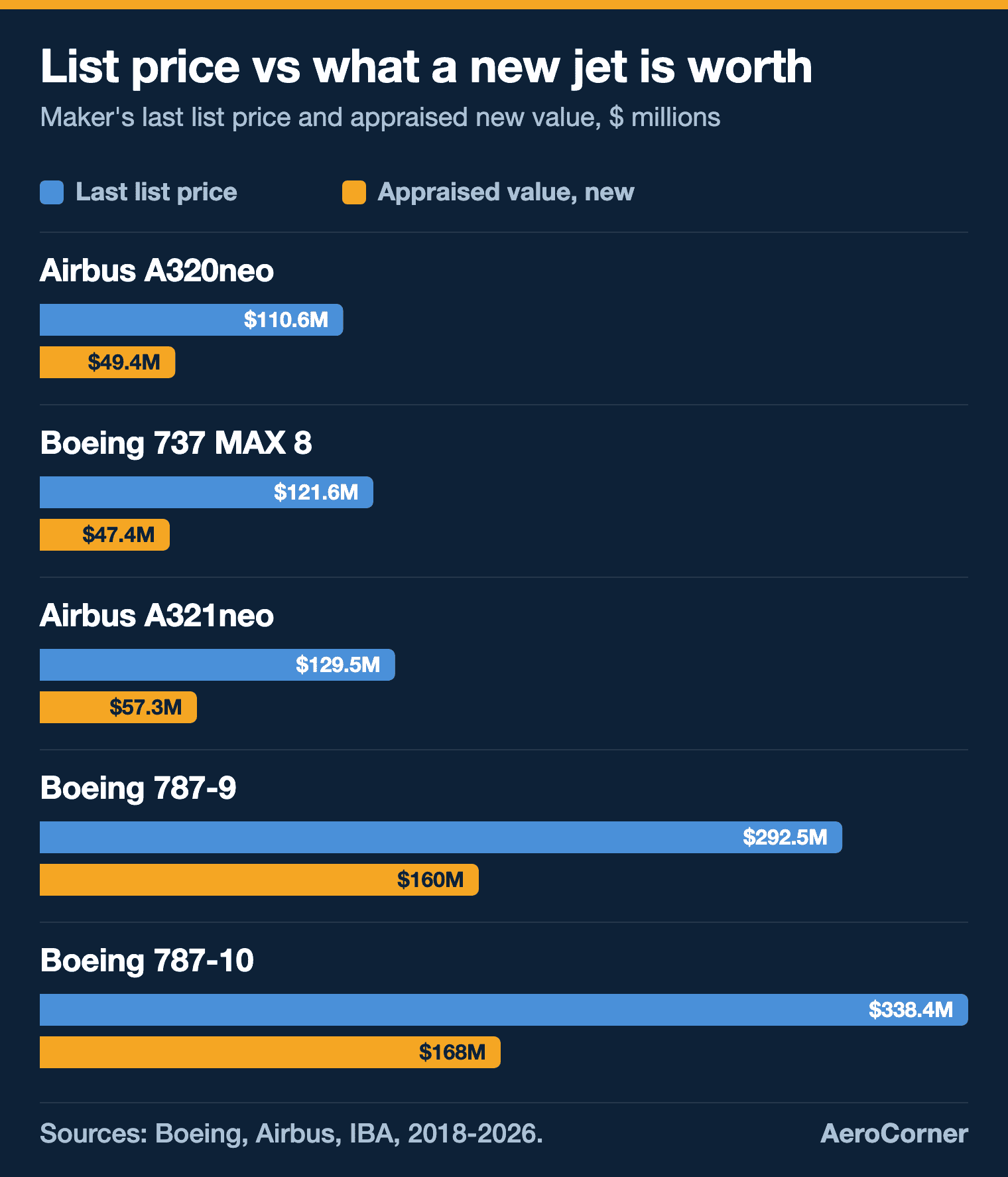
Military jets are priced differently again, through government contracts rather than catalogs. Our breakdown of what a fighter jet costs covers those, and the most expensive aircraft in the world ranks the record holders.
Why airlines almost never pay the list price
A list price is an opening number for negotiation, not a sale price. In 2019, Reuters reported that “the rule of thumb is that aircraft sell for about half their advertised catalogue price,” and Airbus’s own figures put the average discount close to 50 percent.
The gap showed up in Airbus’s accounts. Its order backlog was worth 460 billion euros at book value, against 997 billion euros at list prices a year earlier. Leeham News wrote in 2018 that discounts used to average about 45 percent, that 50 percent had become the norm, and that some deals reached 60 or 65 percent off list.
In the 2020 slump, Leeham reported a 737-8 priced at $38 million, about 69 percent below its $121.6 million list, and said normal pricing was “well into the $40m range” for the MAX 8.
That is why the makers quit publishing. Airbus commercial chief Christian Scherer called catalog prices “relatively meaningless” when Airbus stopped. Orders are still announced “at list prices,” though: IAG cited a $397 million list price for each 787-10 it ordered, while appraiser IBA valued a new 787-10 at about $168 million.
The bill before the first sale: development
The biggest cost of a new airliner is spent before a single one is sold. When Boeing launched the 787 Dreamliner, its global suppliers agreed in December 2003 to take on half of an estimated $10 billion development cost, according to the Associated Press.
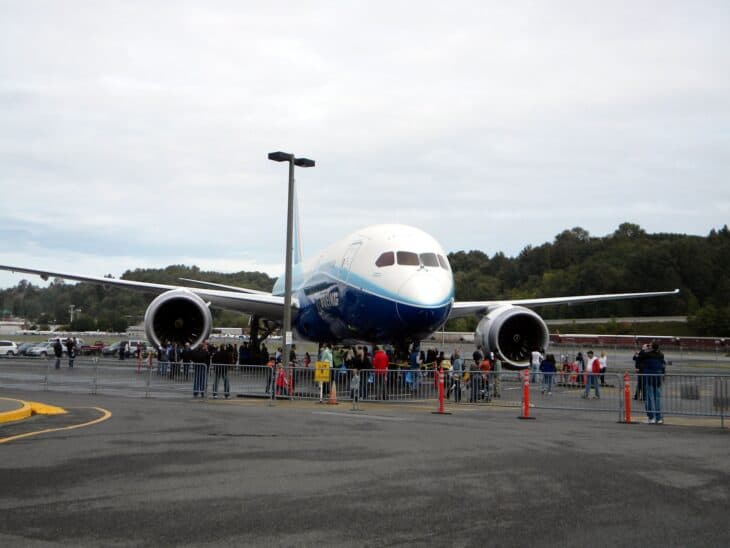
The estimate did not hold. By the third quarter of 2015, The Herald in Everett counted $32.2 billion spent on making 787s. That was $28.3 billion in deferred production costs plus $3.9 billion of non-recurring costs such as tooling.
Airbus had its own lesson with the A380. Roughly 25 billion euros went into the superjumbo, according to AFP. Airbus ended the program in 2019, and only 251 were built.
The 777X shows the bill is still rising. Boeing took a $6.5 billion charge on the program in early 2021 and a further $4.9 billion in October 2025, bringing 777X charges to about $15 billion. As of October 2026, Boeing says the first delivery remains on track for 2027.
Why the first planes off the line lose money
Early airframes cost far more to build than later ones. Boeing’s program accounting spreads that cost over a planned production run, which for the 787 was 1,300 airplanes.
The cost of building early units above what they sold for is parked on the balance sheet as “deferred production” and recovered from later, cheaper units. For the 787, that balance reached $28.5 billion at the end of 2015. It only started to shrink in the third quarter of 2016, once Boeing was building each 787 for less than its selling price.
Put simply, the price of a new jet has to pay back the losses on the first few hundred. A maker that sells fewer than planned never recovers them.
Certification: years of testing before a plane can carry anyone
No airliner carries passengers until regulators sign off on its design. For the 787, six flight test airplanes flew more than 4,645 hours, and FAA technical experts logged more than 200,000 hours of work on the type certification.
The 777-9 shows how long this can take. By July 2026, Boeing’s four test aircraft had flown more than 4,800 hours on about 1,700 flights, and the company said 50 percent of planned certification testing was complete.
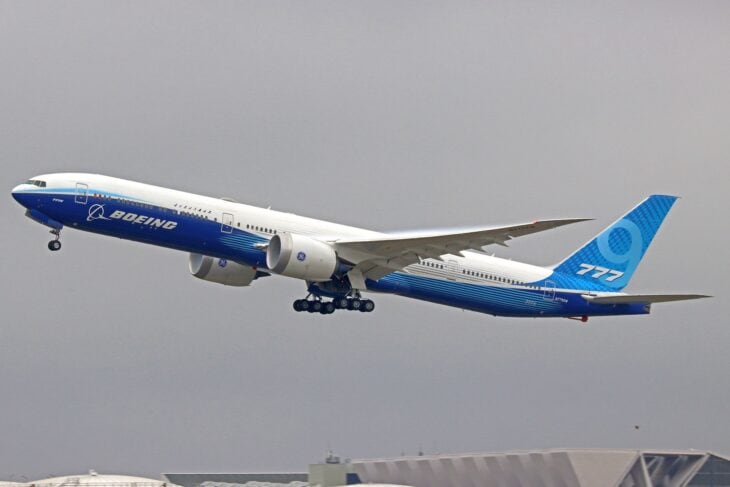
Every one of those hours is flown on aircraft that cannot yet earn revenue, and the cost is recovered from the airplanes sold afterward.
Millions of parts from hundreds of suppliers
A Boeing 747-8 is made of about six million parts, built by more than 550 suppliers in almost 30 countries, according to Boeing. Even a 737 has about 400,000 parts from more than 325 suppliers.
Each of those parts has to be made and documented to an approved standard, then tracked through final assembly. Our guide to how airplanes are made walks through that assembly process from the first wing spar to delivery.
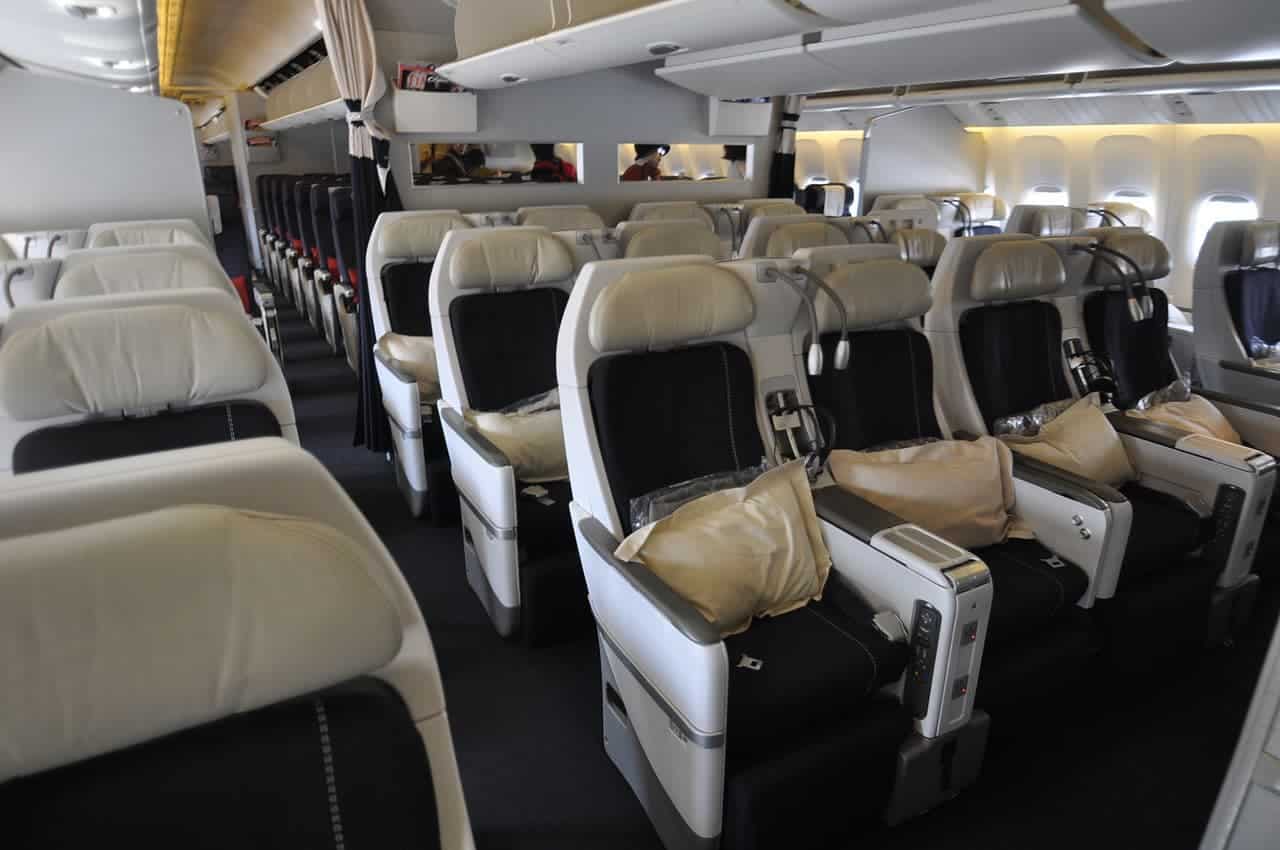
The cabin adds its own bill. Seats, galleys and entertainment systems come from specialist suppliers, and an airline’s choice of cabin is one of the options that moves a jet’s price within Boeing’s “average” figure.
The engines: the most expensive part of a plane
Engines are the single most expensive component. When American Airlines picked the CFM LEAP-1A for 100 A320neo-family jets in 2014, CFM valued the order at $2.6 billion at list price, or about $13 million per engine for the 200 engines those jets need.
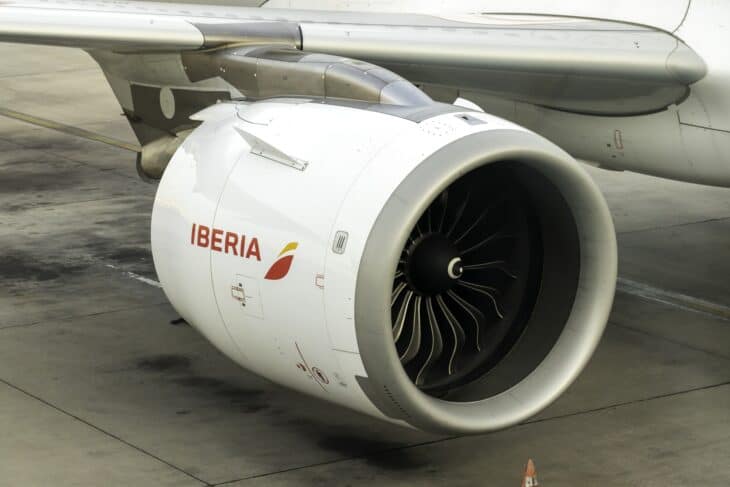

The 737 MAX engine is priced the same way. AerCap’s 2015 order for 200 LEAP-1B engines was worth $2.7 billion at list price, about $13.5 million each. Our explainer on how a jet engine works shows what all that money buys.
Engines are also becoming a bigger share of what a plane is worth. In June 2026, The Week reported that lessor Avolon puts a pair of engines at up to 80 percent of a new plane’s market value, against 20 to 30 percent in the past, as reported by the Financial Times.
Two makers, a few hundred planes a year
Large jets are built in tiny numbers by industrial standards. Airbus delivered 793 commercial aircraft in 2025 and Boeing delivered 600. In 2024 the split was 766 to 348.
At those volumes, the billions spent on design, tooling and certification are spread over relatively few airplanes, and each one carries a large share. The market is also a duopoly, which our Boeing vs Airbus comparison covers in detail, so airlines buying large jets mostly choose between two makers.
Why small planes cost so much too
Light aircraft follow the same logic at a smaller scale. A new Cirrus SR22 lists at $937,900 for 2026, the turbocharged SR22T at $1,069,900, and an SR22T GTS at $1,304,900.
The Cessna 172 Skyhawk shows the climb. When Cessna restarted production in 1996, the Skyhawk’s base price was $124,500. By 2012, Plane & Pilot listed a base price of $307,500.
Low volume is one reason. General aviation production in the US fell from 18,000 aircraft in 1978 to only 555 in 1993, according to the White House statement on the General Aviation Revitalization Act. GAMA counted 1,782 piston airplanes shipped worldwide in 2025.
Liability is another. Cessna stopped building piston singles in 1986, in part because of unlimited product liability exposure and high insurance costs. The 1994 act set an 18-year limit on lawsuits over older aircraft, and Cessna reopened 172 production at a new factory in Independence, Kansas, in July 1996.

Is it cheaper to build your own plane?
Yes, and it is legal in the US. FAA rules allow an amateur-built aircraft when the major portion of it has been fabricated and assembled by people who took on the project for their own education or recreation.
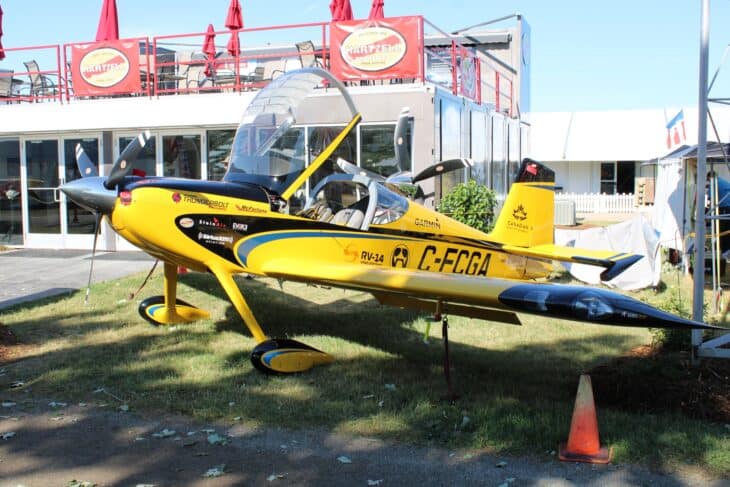
Kits make that practical. Van’s Aircraft lists the standard RV-14 airframe kit at $64,000 to $64,300, though that excludes the engine, propeller and avionics, which add considerably more. Our ranking of the best kit planes shows which designs builders actually finish.

FAQ
Sources and references used for research and fact-checking.
- Boeing (archived by the Wayback Machine), About Boeing Commercial Airplanes: Prices
- 24/7 Wall St., Boeing 777X, 787, 737 Filling Order Book
- Aviation News EU, Airbus aircraft 2018 average list prices
- AeroTime, Why did Airbus stop publishing aircraft list prices?
- Leeham News, Pontifications: Aircraft prices, rents plunge
- Reuters via The Star, How much is a jet worth? Half price, Airbus figures show
- Leeham News, Pontifications on aircraft discounts
- IBA, Tracking Airbus and Boeing narrowbody aircraft values in 2021
- Aviation A2Z, Why a $397 million Boeing 787 may really cost around $170 million
- The Herald (Associated Press), From the start, Boeing 787 program was rushed
- The Herald (Everett), Boeing has spent $32 billion making 787s
- Boeing (SEC filing), Boeing fourth-quarter 2015 results
- The Motley Fool, Boeing delivers 500th Dreamliner, back on track
- Boeing (SEC filing), Boeing Form 10-K for 2016
- IndustryWeek (AFP), Grand finale: Airbus delivers last A380 superjumbo
- Boeing, Boeing Reports Third-Quarter Results (2025)
- RTÉ, Boeing takes $5 billion hit on delayed 777X programme
- Boeing, Boeing Reports Third-Quarter Results (2026)
- Boeing, Certification progress reported on 737 MAX and 777-9
- FAA via AviationPros, FAA approves production of Boeing 787 Dreamliner
- Boeing, Boeing celebrates delivery of 50th 747-8
- Boeing, Boeing celebrates global supplier partners on delivery of 7,500th 737
- CFM International, American Airlines selects CFM's LEAP-1A engine to power 100 aircraft
- GE / CFM International, AerCap places $2.7 billion CFM LEAP-1B order
- The Week, Aircraft engine prices are the latest bane for airlines
- Airbus, Airbus reports 766 commercial aircraft deliveries in 2024
- Boeing, Boeing announces fourth-quarter deliveries (2024)
- Airbus, Airbus reports 793 commercial aircraft deliveries in 2025
- Boeing, Boeing announces fourth-quarter deliveries (2025)
- Cirrus Aircraft, 2026 SR22 North America price list
- Cirrus Aircraft, 2026 SR22T North America price list
- Aviation Week, Cessna unveils prices, details of Skyhawk, Skylane single-engine aircraft
- Plane & Pilot, Cessna Skyhawk
- The American Presidency Project, Statement on signing the General Aviation Revitalization Act of 1994
- AVweb, Cessna hits 7,000 in 10
- AOPA, 50th anniversary of the 172
- GAMA, GAMA releases 2025 aircraft shipment and billing report
- Cornell Law School LII, 14 CFR 21.191: Experimental certificates
- Van's Aircraft, Kit Prices and Lead Times
Get the Newsletter
The latest aviation news and stories sent to your inbox.
About the Author

Tim is the owner and lead editor of AeroCorner since 2019, overseeing aviation content covering aircraft, airlines, airports, and the broader aviation industry. Through years of researching, writing, editing, and publishing aviation-focused content, he has developed extensive practical knowledge of commercial aviation and air travel. Based in Asia and a frequent traveler himself, Tim also brings firsthand passenger experience to AeroCorner’s coverage. Outside of publishing, he has also explored aviation firsthand through hands-on flight training in New Zealand.