

Table of Contents
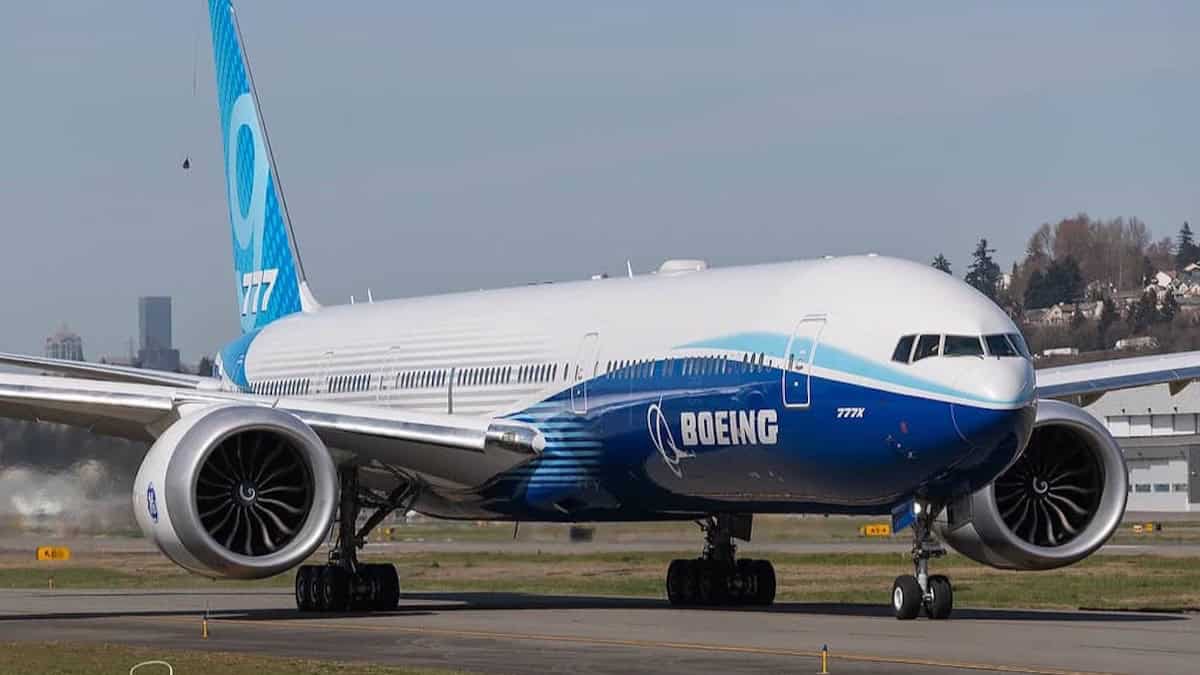
Boeing has designed the airplane, flown it for more than six years, and parked dozens of finished examples outside its Everett factory. What the 777X has never done is carry a fare-paying passenger.
Boeing launched the 777X at the Dubai Airshow in November 2013 with 259 orders and commitments worth $95 billion. The first one was supposed to enter airline service in 2020.
As of September 2026 the program has a backlog of more than 600 aircraft and not one delivery. Boeing has written off roughly $15 billion against it.
And in July 2026, Emirates told Boeing it will not accept the first ten 777-9s built for it. Those jets were finished years ago and have been standing outside ever since.
The Jet Was Designed Under One Rulebook and Has to Be Certified Under Another
The 777X is a stretched, re-winged development of the Boeing 777-300ER, with a carbon-fiber wing so long that the tips fold up to fit an airport gate. Its GE9X engines carry a 132-inch fan, the largest GE has built.
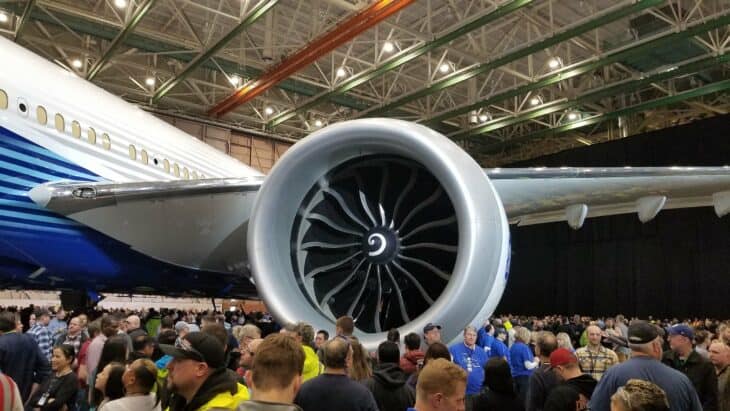
The first delay was ordinary engineering trouble. GE found a durability problem in the GE9X compressor in 2019, and Boeing pushed entry into service from 2019 to 2020.
Then the ground moved. The two 737 MAX crashes in 2018 and 2019 produced a new certification regime in the United States, and the 777X had to clear it.
Boeing rolled the first aircraft out in March 2019 and flew it on January 25, 2020, before most of that new scrutiny landed. The airplane it built and the rulebook it now has to satisfy are separated by several years.
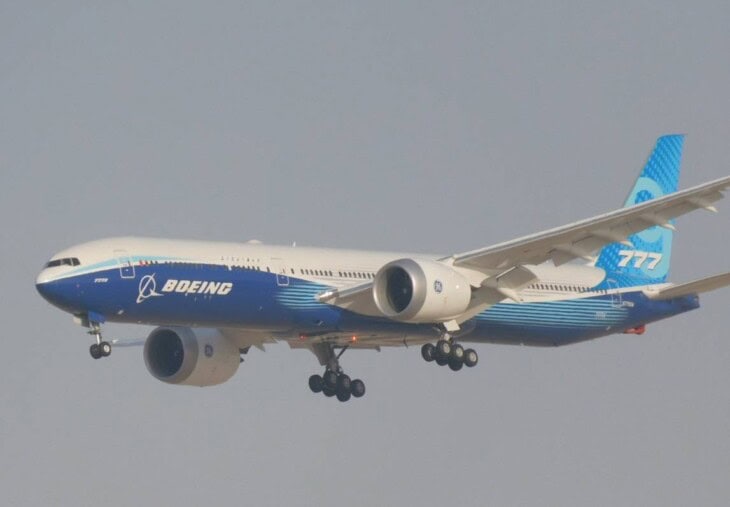
In early 2021 Boeing moved the date to late 2023, citing updated certification requirements and the pandemic. In June 2021 the FAA wrote to Boeing about an uncommanded pitch event during testing and about the design’s maturity, and the date went to 2024.
It slipped to 2025 in April 2022, to 2026 in October 2024 after a machinists’ strike, and to 2027 in October 2025. Each slip was announced as a fresh assessment of how long certification would take, not as a new technical fault.
Fifteen Billion Dollars, Six Hundred Orders, Zero Deliveries
The October 2025 slip alone cost Boeing a $4.9 billion pre-tax charge. Cumulative charges and write-downs on the program reached about $15 billion by early 2026.
Industry estimates put the total development cost of the entire Airbus A350 family at around $15 billion too. The two figures measure different things, since Boeing’s is charges booked against delays and expected losses rather than development spending, but the scale is the point.
Boeing has run up that number on a derivative of an airplane that first flew in 1994.
The order book has held up anyway. Wikipedia’s order tally put the backlog at 646 aircraft across three variants as of July 2026: 526 of the 777-9, 85 of the 777-8F freighter, and 35 of the shorter 777-8. None has been delivered.
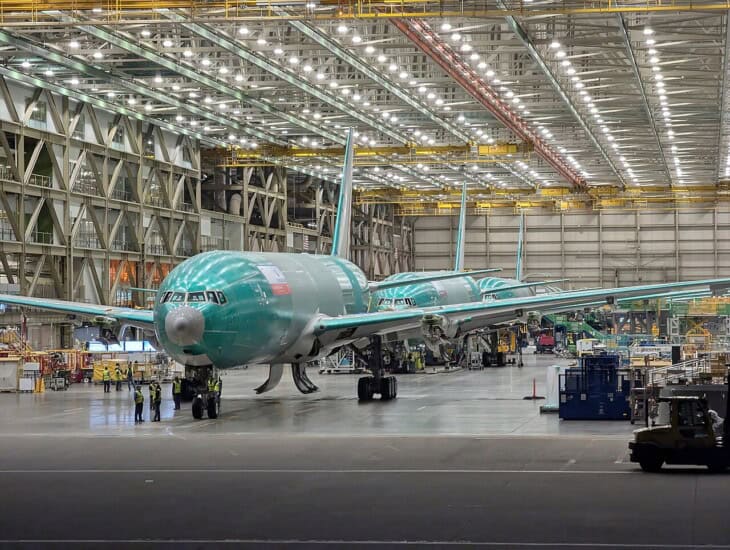
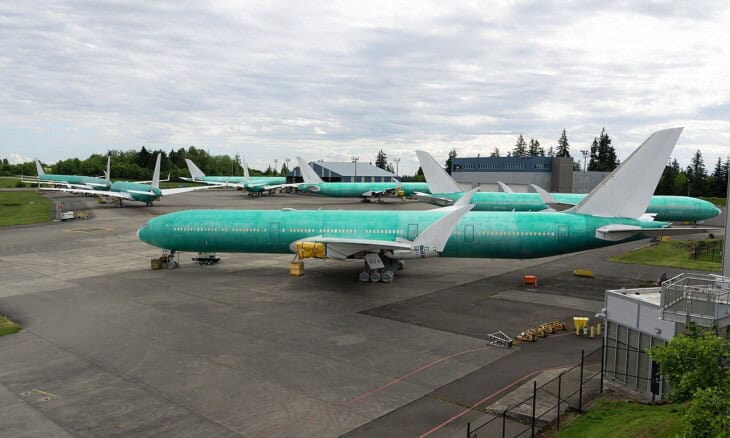
Boeing kept building airframes through the delay and then stopped. Production was paused for much of 2022 and 2023, by which point a substantial inventory of finished and near-finished 777-9s was sitting on the ramp in Washington state.
The airplanes exist. They just cannot be sold.
Estimates of how many early-build 777-9s are in storage vary by source, running from roughly 30 to about 40 airframes parked at Paine Field and other Washington sites. Simple Flying reported in 2026 that the stranded inventory has tied up more than $5 billion in working capital.
The flight-test campaign itself is genuinely far along. Boeing said in July 2026 that the test fleet had logged more than 4,800 flight hours across about 1,700 flights, and that the full-scale fatigue test had already passed one complete airframe lifetime.
But the same update put planned certification testing at only 50 percent complete, with the last type inspection authorization and the ETOPS-related approvals still outstanding. We covered that certification progress report when Boeing published it.
Why Emirates Turned Down Ten Finished Airplanes
Emirates is the 777X’s most important customer by a wide margin, with about 270 on order, roughly 235 of them 777-9s. The airline built its entire long-haul plan around the airplane.
At the Farnborough Airshow on July 21, 2026, Emirates president Sir Tim Clark said the airline would not take the first ten or eleven jets built for it. Aviation Week first reported the decision.
Clark’s objection was not the delay itself. It was what years of open-air storage had done to jets that were already a generation behind the current build standard.
“They’re going to need a complete upgrade on the mod status because, since they were produced, there’s quite a lot that has happened to the airframe and all the other bits and pieces.”
“They have been standing on their wheels with their engines, of course, for some time. We last saw them a few years ago, parked outside, all greened up, and you know, looking very sad.” Sir Tim Clark, Emirates, July 21, 2026
By the time those particular aircraft could be handed over, they would be around eight years old. An airline taking delivery of a brand-new jet does not expect to start its service life with a heavy maintenance check.
The economics are worse than they look. Bringing an early airframe up to standard means opening finished cabins and sealed structure, and industry reporting suggests that on some of these jets the rework would cost more than building a fresh one.
So Emirates has spent the wait doing the expensive alternative. It has poured money into refitting its A380 fleet and its 777-300ERs, and taken Airbus A350s to plug the gap.
One Engine Seal Is Holding Up the Last Approval
Speaking at the Morgan Stanley Laguna conference on September 16, 2026, Boeing chief executive Kelly Ortberg said certification flight testing would likely finish early in 2027, and that some testing may spill into next year.
The specific blockage is a seal. Ortberg said the holdup on ETOPS approval is “related to the mid-seal issue we’ve got with the engine,” and that “until we get the mid-seal certification plan complete, we can’t get authorization to start ETOPS.”
ETOPS is what lets a twin-engine airliner fly long stretches away from a diversion airport. Without it, a 777-9 cannot do the transoceanic flying Emirates and Lufthansa bought it for.
GE Aerospace has said the mid-seal proved less durable than expected in testing, that certification can proceed using the existing part, and that an improved design is already shipping to Boeing. Its chief financial officer expected FAA approval of the new part within months.
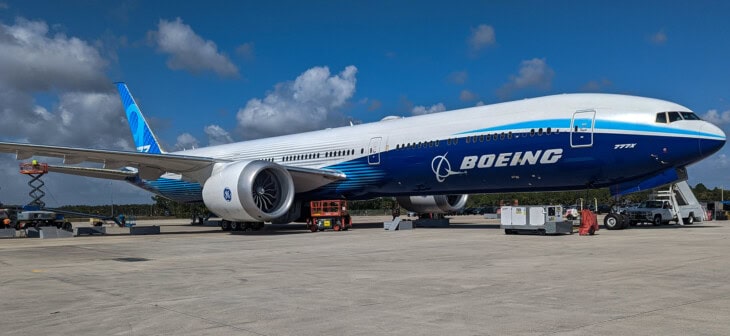
There is also a labor risk on the calendar. Boeing’s engineering union has until October 6, 2026 to reach a contract, and Ortberg warned that if it strikes, “the 777 certification program shuts down until we get the engineers back.”
Boeing still says the first delivery happens in 2027, to Lufthansa, whose first production 777-9 flew in May 2026. Analyst Richard Aboulafia of AeroDynamic Advisory thinks that is possible but “probably not until very late in the year,” and with fewer aircraft than planned.
Meanwhile the airplane the 777X was meant to replace refuses to leave. In September 2026 the FAA agreed to let Boeing build 35 more 777 freighters that miss the coming international CO2 standard, because the 777-8F that was supposed to take over is not ready either.
That is the real cost of a thirteen-year development program. Boeing is now paying to keep a 1990s airplane in production to cover for the 2020s airplane it has already built and cannot sell.
Sources and references used for research and fact-checking.
- Leeham News and Analysis, Examining Why Boeing's 777X Certification Timeline Is Likely Slipping
- Boeing, Certification progress reported on 737 MAX models, 777-9
- Wikipedia, Boeing 777X
- Wikipedia, List of Boeing 777X orders and deliveries
- Simple Flying, Confirmed: Boeing 777X To Enter Service In 2027 After 7-Year & $15 Billion Delay
- Airways, Seven years on: Boeing 777X Certification Delay Pushes Toward 2027
- Simple Flying, Why The Boeing 777X's Delayed Certification Costs More Than An Entire Airbus A350 Program
- Simple Flying, How A 7-Year Delay Made 30 Already-Built Boeing 777-9s Financially Obsolete
- Simple Flying, Emirates Refuses 10 Pre-Built Boeing 777Xs Over Rework Costs
- Aviation Week, Emirates Plans To Reject Early-Build Boeing 777-9s
- The National, Emirates airline boss uses Farnborough to air industry frustrations over jets and engines
Get the Newsletter
The latest aviation news and stories sent to your inbox.
About the Author

Tim is the owner and lead editor of AeroCorner since 2019, overseeing aviation content covering aircraft, airlines, airports, and the broader aviation industry. Through years of researching, writing, editing, and publishing aviation-focused content, he has developed extensive practical knowledge of commercial aviation and air travel. Based in Asia and a frequent traveler himself, Tim also brings firsthand passenger experience to AeroCorner’s coverage. Outside of publishing, he has also explored aviation firsthand through hands-on flight training in New Zealand.