

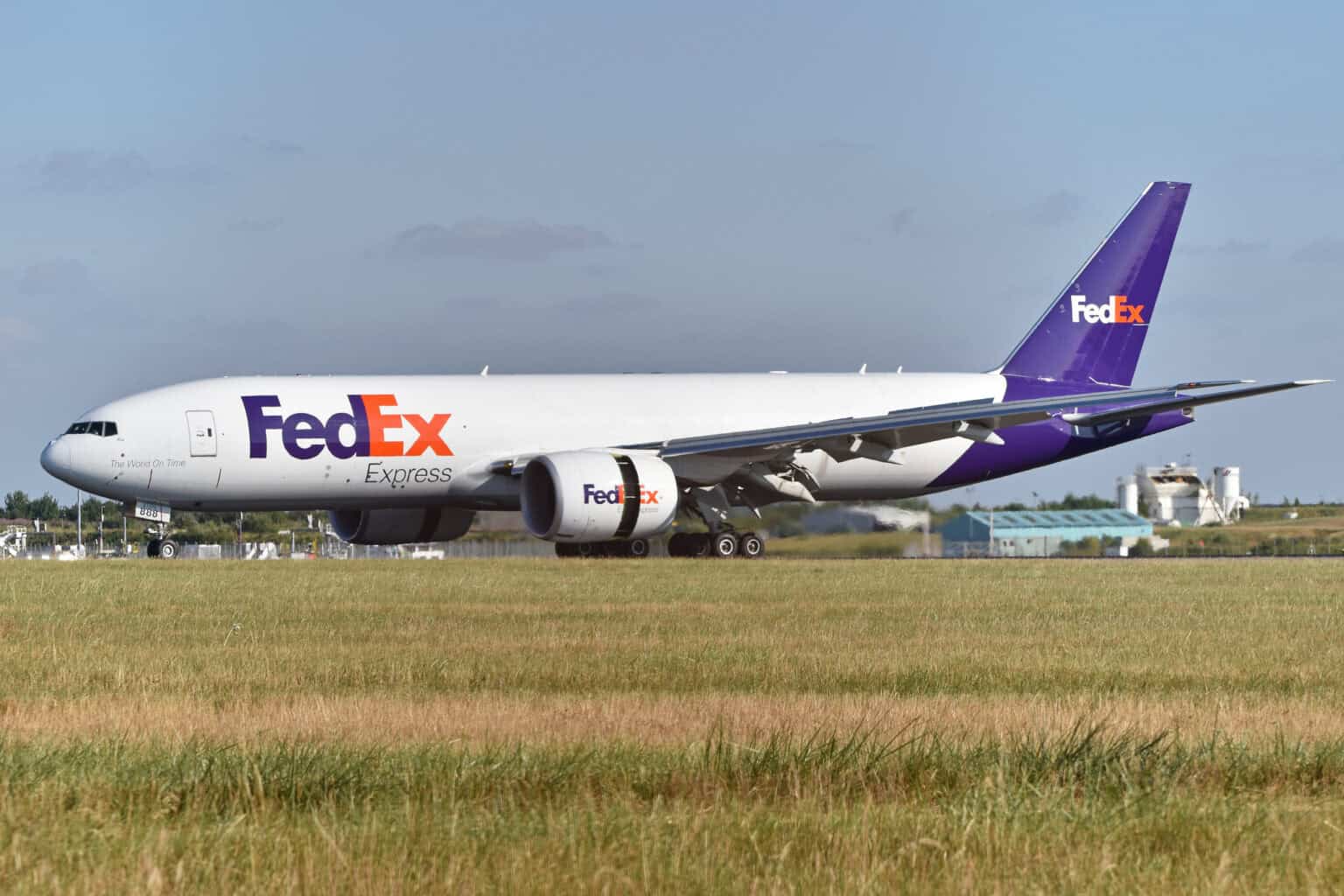
The Federal Aviation Administration has granted Boeing an exemption that lets up to 35 newly built 777 Freighters receive airworthiness certificates after January 1, 2028. That is the date the 777F stops meeting US airplane fuel efficiency rules. The decision, Exemption No. 26705, was signed on September 15, 2026, and posted to the public docket a day later.
Without it, Boeing could not deliver a new 777F from 2028 onward. The exemption runs until January 1, 2031, giving Boeing room to keep the line going until its replacement, the 777-8F, is ready. FlightGlobal first reported the grant.
Why the 777F needed an exemption
The rule behind the deadline is 14 CFR part 38, the US version of the International Civil Aviation Organization’s carbon dioxide standard for airplanes. The FAA finalized it in February 2024. It covers airplanes manufactured after January 1, 2028, and new designs, but not jets already in service.
The standard works on the airframe, not the engine alone. Each type gets a fuel efficiency metric, and an in-production design that falls short can no longer be built for new certificates once the cutoff arrives. According to Boeing’s petition, the 777 Freighter cannot meet those limits.
That is the catch for Boeing. The 777-8F, the dedicated freighter meant to replace the 777F, is not ready yet. Boeing has said it will follow the 777-9 by about two years, which puts its service entry around 2029, Simple Flying reported.
What Boeing argued, and what the FAA checked
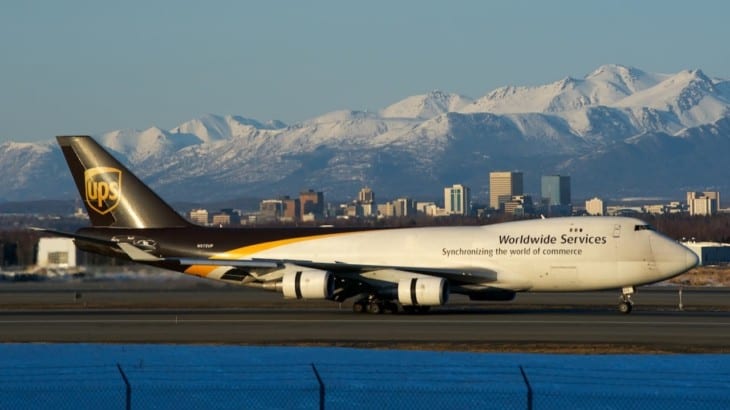
Boeing petitioned in December 2025 and followed up with proprietary data in February 2026. It called the 777F the only large widebody freighter in production. It said blocking new builds would push cargo airlines to keep flying older jets like the 747-400F, which Boeing says burns up to 37% more fuel per trip.
Boeing also put the economic stakes at more than $15 billion in potentially lost US export value. It said the 777 program as a whole supports more than 100,000 American jobs. Those are Boeing’s own estimates, and the FAA did not publish its own version of them.
The FAA did run its own emissions check. In 2024, it found, about eighty 777Fs flew roughly 4% of freighter operations on US domestic flights and international departures from the US, yet burned about 16% of the fuel. The FAA notes that fuel burn depends on the missions a type flies, not just how many are in service.
Adding 35 more, and assuming no older freighters retire in the meantime, could raise that freighter fuel burn by about 8%. Measured against all commercial flying, the agency called the effect a negligible fraction of a percent and ruled it “de minimis.”
Reality check
The FAA’s 8% figure is a conservative worst case that assumes the new 777Fs add to the fleet rather than replace older freighters. Boeing’s own analysis did not put a number on the emissions saved by retiring older jets, so neither side of that trade has been quantified in public.
The public comment period drew 15 comments, 13 of them on topic. GE Aerospace, industry groups and the US Chamber of Commerce backed the request, and one individual opposed it on environmental grounds. The FAA consulted the Environmental Protection Agency in August 2026 before deciding.
The conditions attached
The grant comes with five conditions. Boeing must report the serial number of every exempted jet, and the FAA will list them on the 777F type certificate data sheet. Each exempted airplane’s flight manual must also record the exemption.
The international condition may matter most. The European Union Aviation Safety Agency asked that exempted jets be published in an official register, as ICAO guidance requires. The FAA says 35 airplanes fall within ICAO’s recommended ceiling for this type, but each foreign regulator decides for itself whether to accept them.
For cargo airlines, that means an exempted 777F bought for international routes still needs approval from every country it flies into. The FAA expects about two jets a month, so the 35 slots could be used up in roughly 18 months. If the 777-8F slips further, Boeing would have to return to the same docket to ask for an extension.
Sources and references used for research and fact-checking.
- FAA, Grant of Exemption No. 26705, The Boeing Company (Docket FAA-2025-5699)
- Regulations.gov, Docket FAA-2025-5699: Boeing 777F petition for exemption from 14 CFR part 38
- FAA, FAA Finalizes Rule to Reduce Carbon Pollution from New Jets and Turboprops
- Federal Register, Airplane Fuel Efficiency Certification (final rule, 2024-02330)
Get the Newsletter
The latest aviation news and stories sent to your inbox.
About the Author

Tim is the owner and lead editor of AeroCorner since 2019, overseeing aviation content covering aircraft, airlines, airports, and the broader aviation industry. Through years of researching, writing, editing, and publishing aviation-focused content, he has developed extensive practical knowledge of commercial aviation and air travel. Based in Asia and a frequent traveler himself, Tim also brings firsthand passenger experience to AeroCorner’s coverage. Outside of publishing, he has also explored aviation firsthand through hands-on flight training in New Zealand.