

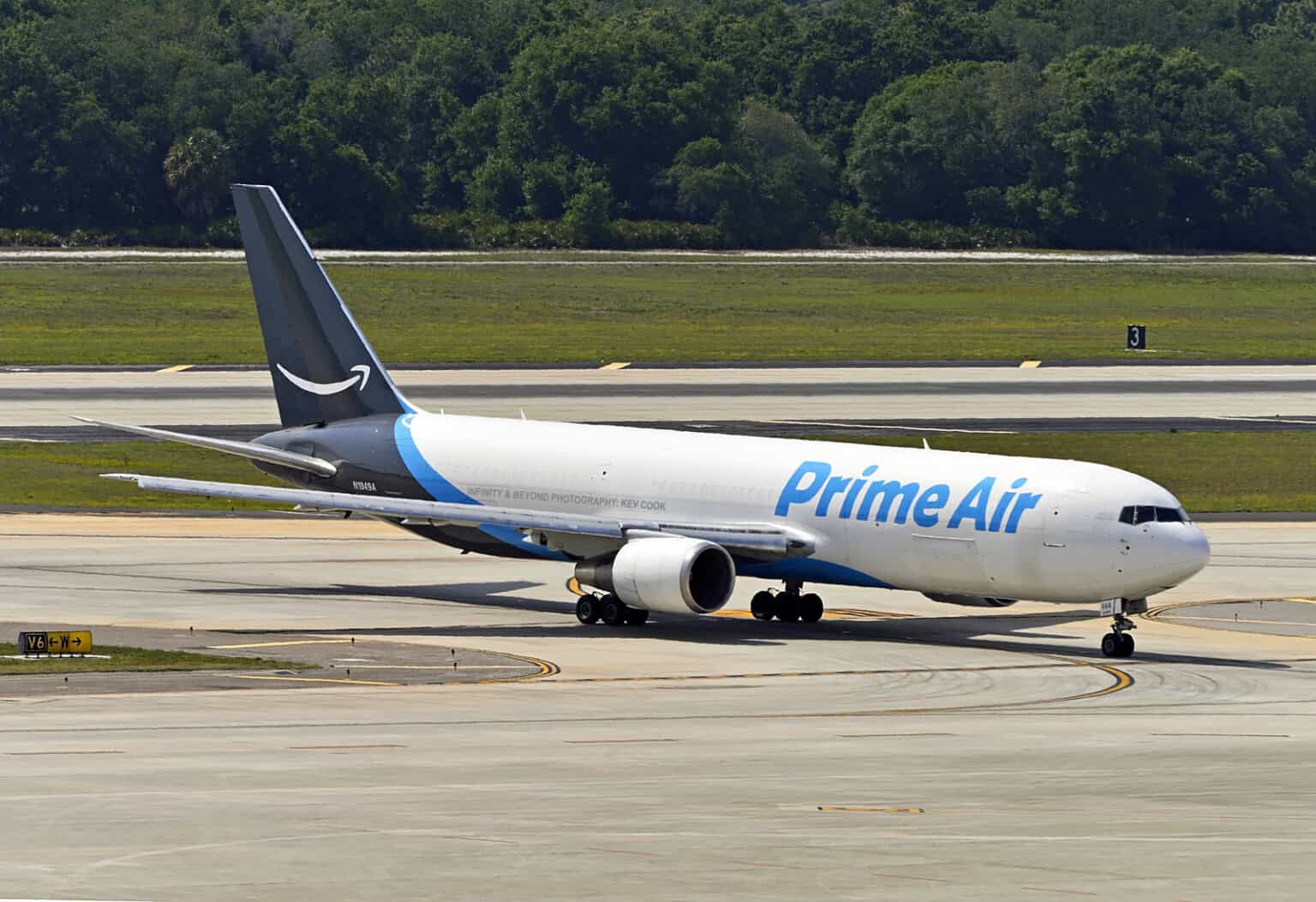
On September 17, 2026, the FAA published a final airworthiness directive covering certain Boeing 767-300F freighters, after a supplier reported that some titanium cargo track crown fittings had suspect material certifications.
AD 2026-18-08 takes effect on October 22 and applies to 43 airplanes on the US register. Operators must either X-ray the fittings to identify what they are actually made of, or replace every one of them.
A Notice of Escapement
The trigger was what the industry calls a notice of escapement, meaning a supplier telling its customers that parts left the factory when they should not have. In this case the problem was paperwork rather than a known defect.
The FAA puts it plainly in the rule: the supplier “did not have correct material records to make sure that type design specified material was used.” Nobody has established that the fittings are the wrong alloy. Nobody can currently establish that they are the right one.
That is why the remedy is a measurement rather than a repair. An X-ray fluorescence spectrometer reads the elemental composition of a metal part in place, so an operator can confirm a fitting is the specified Ti-6Al-4V alloy without pulling it out of the airplane.
What It Costs
The inspection route is far cheaper than the replacement route, which is the point of offering both. The FAA’s own estimates are below.
| Action | Labor | Parts | Per aircraft | US fleet |
|---|---|---|---|---|
| XRF spectrometer inspection | 92 hours at $85 | None | $7,820 | Up to $336,260 |
| Replace all crown fittings | 156 hours at $85 | $63,540 | $76,800 | Up to $3,302,400 |
Any fitting that fails the X-ray check has to be replaced with one made of the correct alloy, at up to $76,800 per airplane. The FAA said it has no way to estimate how many aircraft will need that work.
Why a Cargo Fitting Matters
Cargo track crown fittings are part of what holds freight pallets to the floor of the main deck. On a freighter they are structure, not furniture.
The FAA spells out the failure chain: a cargo track failure could allow uncommanded movement of a pallet, damaging critical systems in the sidewall or ceiling of the main cargo compartment. A loose pallet on a freighter deck is a heavy object moving toward the controls.
The agency adds that the fittings are a principal structural element, so material that is not to specification could leave them unable to sustain limit loads, which “could significantly affect controllability of the airplane.”
The directive is uncontested by the people who fly and build the type. Boeing, FedEx Express and the Air Line Pilots Association all told the FAA they supported the proposal without changes.
The question the FAA declined to answer
The Foundation for Aviation Safety asked the agency to identify the root cause of the supply chain error, explain how it was found, and say what would stop it happening again. The FAA called those questions general in nature and ruled broader supply chain concerns outside the scope of this AD. The fittings on 43 airplanes get checked; how the paperwork failed in the first place stays unaddressed here.
The rule has been a long time coming. The FAA proposed it on February 17, 2026, drawing on a Boeing alert bulletin issued back on October 17, 2025.
The 767 freighter remains the backbone of express cargo in the United States, which is what makes a quiet paperwork problem worth a federal rule. The same fleet has drawn scrutiny before, including the Amazon 767 runway overrun in Miami this month.
Sources and references used for research and fact-checking.
Get the Newsletter
The latest aviation news and stories sent to your inbox.
About the Author

Tim is the owner and lead editor of AeroCorner since 2019, overseeing aviation content covering aircraft, airlines, airports, and the broader aviation industry. Through years of researching, writing, editing, and publishing aviation-focused content, he has developed extensive practical knowledge of commercial aviation and air travel. Based in Asia and a frequent traveler himself, Tim also brings firsthand passenger experience to AeroCorner’s coverage. Outside of publishing, he has also explored aviation firsthand through hands-on flight training in New Zealand.