

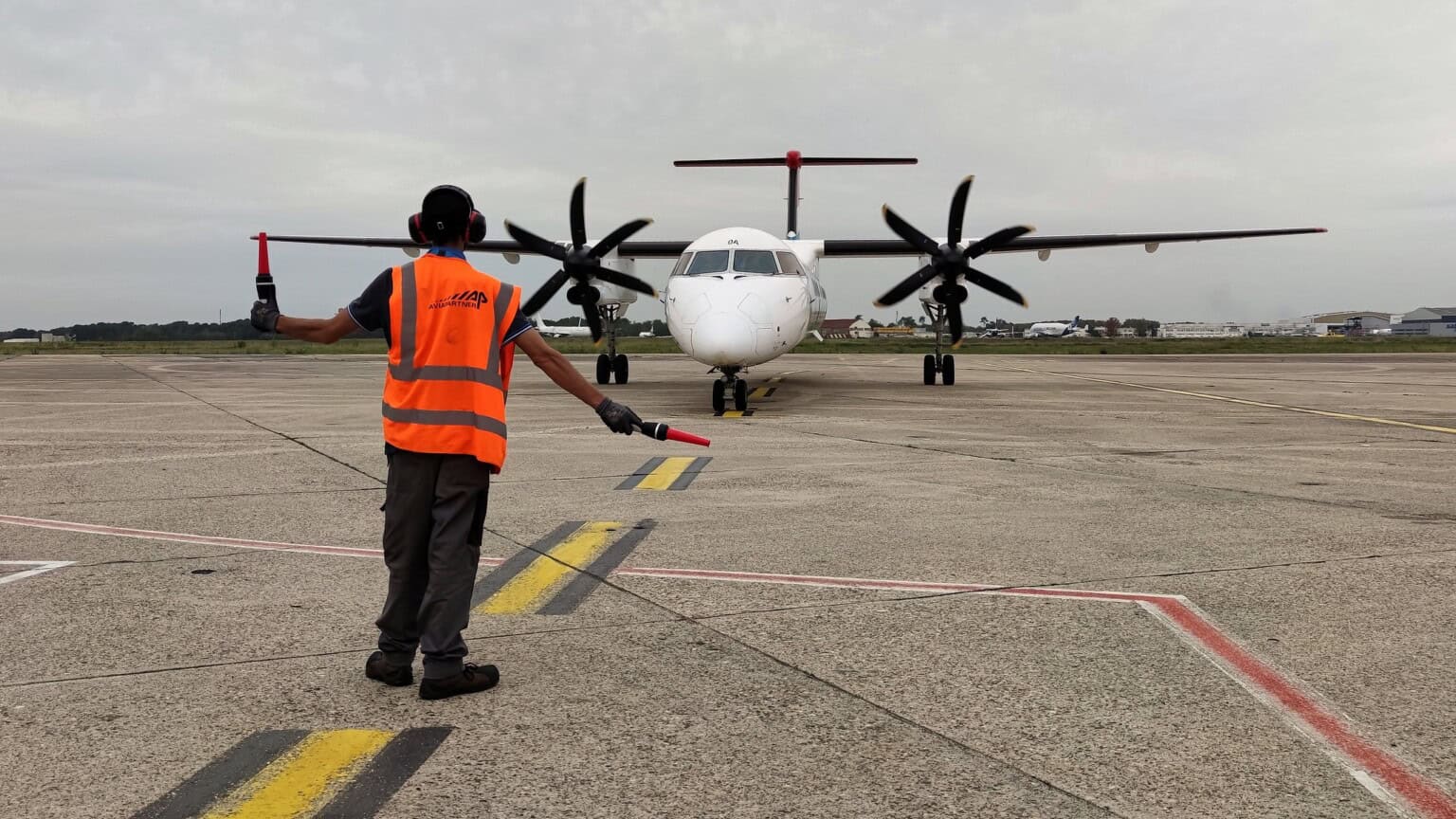
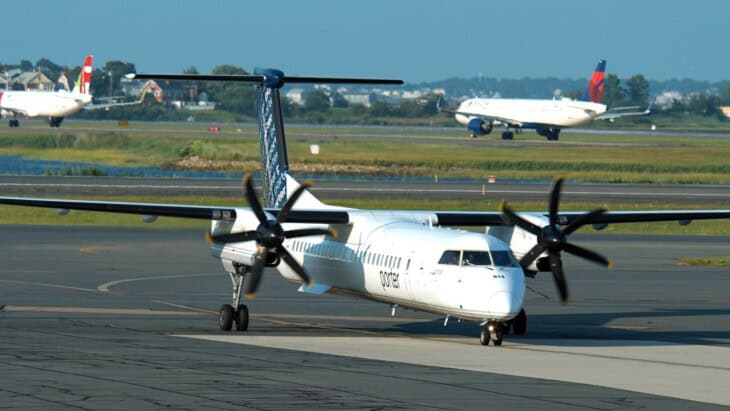
The Federal Aviation Administration proposed an airworthiness directive on September 16, 2026 covering certain De Havilland Aircraft of Canada DHC-8-401 and DHC-8-402 airplanes, the turboprop most passengers know as the Dash 8-400 or Q400. At issue is a single bracket inside the wing fuel tank that may never have been sealed.
The omission surfaced during work on an earlier fuel system service bulletin. Instructions for fay, fillet and rivet dome sealing had been left out for one bracket on the inboard surface of the tank rib at wing station 42.
Why an Unsealed Bracket Matters
Without that sealing, fuel can escape the wing tank and reach the wing dry bay. A dry bay is what the name suggests: a compartment next to the tank that is meant to stay free of fuel.
Transport Canada, whose directive the FAA is adopting, puts the risk plainly. A significant leak “may expose the dry bay to unacceptable concentration of fuel vapor that may pose a risk of explosion/ignition.”
The remedy is not complicated. Operators would carry out a detailed visual inspection of bracket assembly part number 85714524-001, looking for signs of fuel leakage and confirming that the fillet seal and the fastener dome seal are actually present, then apply sealant where it is missing.
What it costs
The FAA estimates 24 work hours per airplane, or $2,040, and $71,400 across the 35 airplanes it counts on the US register. Applying sealant where it turns out to be missing adds about $560 per airplane.
Who Still Flies a Dash 8-400 in America
Not a scheduled airline. Horizon Air retired the last of its Q400s on January 26, 2023, exactly 22 years after its first commercial flight with the type, and moved to an all-Embraer 175 fleet.
The FAA puts the affected US fleet at 35 airplanes. The agency’s public aircraft registry returns 26 airframes on the Dash 8-400 series type codes with valid registrations, and the FAA does not publish the list behind its own estimate.
Most of those 26 are registered to trustee banks rather than to operators, which is routine for aircraft between leases or waiting on a sale. The type has spent the years since Horizon’s retirement changing hands rather than flying a US schedule.
The most active US operator is not a carrier at all. ConocoPhillips Alaska flies three Q400s from Anchorage to the Kuparuk and Alpine oil fields on the North Slope, 600 miles (970 km) away, each configured for 60 passengers.
Those airframes came out of the Horizon fleet, as the National Business Aviation Association reported when the shuttle converted to the type. Portland Community College holds another retired airframe, donated when the fleet was broken up.
A Type Out of Production, but Not Out of Service
De Havilland Canada stopped building the Dash 8 after vacating its Downsview plant in Toronto in 2022. It has said it intends to restart the line in Wheatland County, Alberta by 2033.
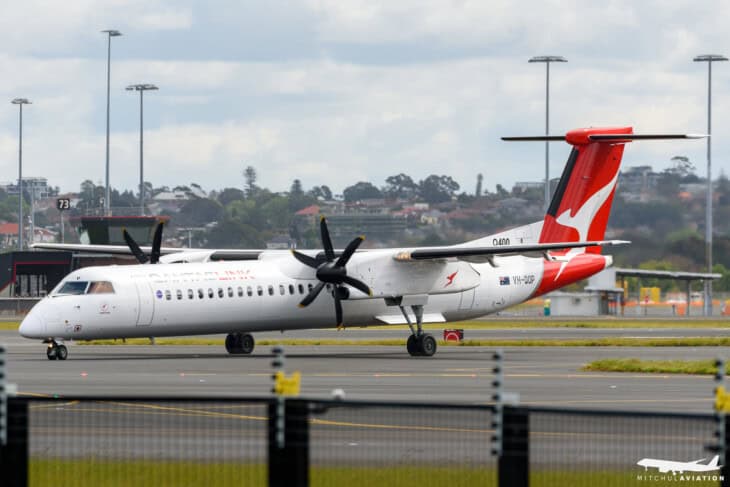
That production gap is part of why a directive like this one still matters. The airplane remains a daily workhorse in Canada, Norway, Australia and across Africa and Asia, which is also why turboprops are still used on routes jets cannot serve economically.
The route this problem travelled is standard practice. Transport Canada issued the original directive, and the FAA is proposing to adopt it by reference for US-registered aircraft, the same mechanism behind its proposal on Pilatus PC-12 emergency exits last month.
This is a proposal, not a rule
The FAA issued this as a notice of proposed rulemaking under docket FAA-2026-8810, and comments are open until November 2, 2026. It would adopt Transport Canada AD CF-2025-69, dated December 22, 2025, by reference, and the compliance details can still change before a final rule.
Sources and references used for research and fact-checking.
- Federal Register, Airworthiness Directives; De Havilland Aircraft of Canada Limited (Docket No. FAA-2026-8810)
- FAA, Releasable Aircraft Registration Database (ACFTREF and MASTER files)
- ConocoPhillips Alaska, ConocoPhillips Global Aviation
- Alaska Airlines, With the E175 flying Horizon's future, we bid farewell to the Q400
Get the Newsletter
The latest aviation news and stories sent to your inbox.
About the Author

Tim is the owner and lead editor of AeroCorner since 2019, overseeing aviation content covering aircraft, airlines, airports, and the broader aviation industry. Through years of researching, writing, editing, and publishing aviation-focused content, he has developed extensive practical knowledge of commercial aviation and air travel. Based in Asia and a frequent traveler himself, Tim also brings firsthand passenger experience to AeroCorner’s coverage. Outside of publishing, he has also explored aviation firsthand through hands-on flight training in New Zealand.