

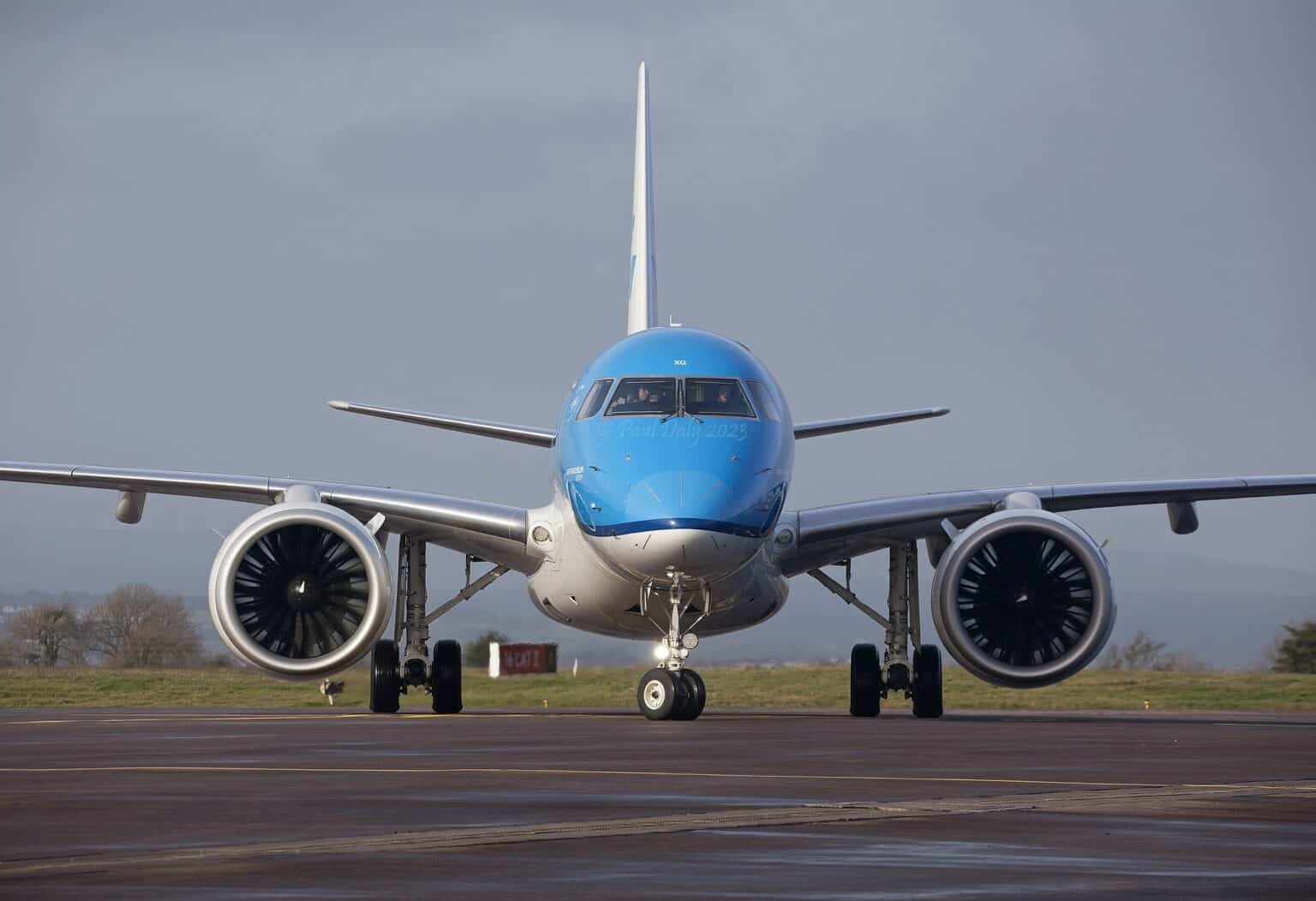
The Federal Aviation Administration has proposed a new airworthiness directive covering Pratt & Whitney PW1500G and PW1900G geared turbofans, the engines under the Airbus A220 and Embraer’s E2 jets. The proposal was signed on September 15, 2026, went on public inspection the next day, and is scheduled to publish in the Federal Register on September 17.
It was prompted by six reports of clashing found on the high-pressure compressor’s second or third stage rotor, where the rotor had been in contact with the variable stator vanes beside it. The FAA estimates 215 engines installed on airplanes of US registry are affected.
What the FAA Found
The chain starts with a worn bushing set rather than with the rotor itself. A manufacturer investigation found that wear on the compressor’s variable stator vane bushing set let a vane rock forward.
Once the vane rocks, the inner locating ring that positions it can touch the rear rim of the spinning compressor rotor. That contact, the FAA says, can lead to failure of the first, second or third stage rotor.
The agency’s description of the consequence is blunt. Left unaddressed, it writes, the condition “could result in uncontained part release, damage to the engine, damage to the airplane, and loss of control of the airplane.”
What Operators Would Have to Do
The first borescope inspection would fall due before an engine reaches 8,000 flight hours, or within 1,000 flight hours after the rule takes effect, whichever comes later. After that, the checks repeat at intervals no longer than 1,000 flight hours.
Technicians would examine the rear rim surfaces of the first, second and third stage rotors for circumferential wear, scratching or damage showing earlier contact with the vane locating ring. Any damaged rotor would have to come off before the airplane flies again.
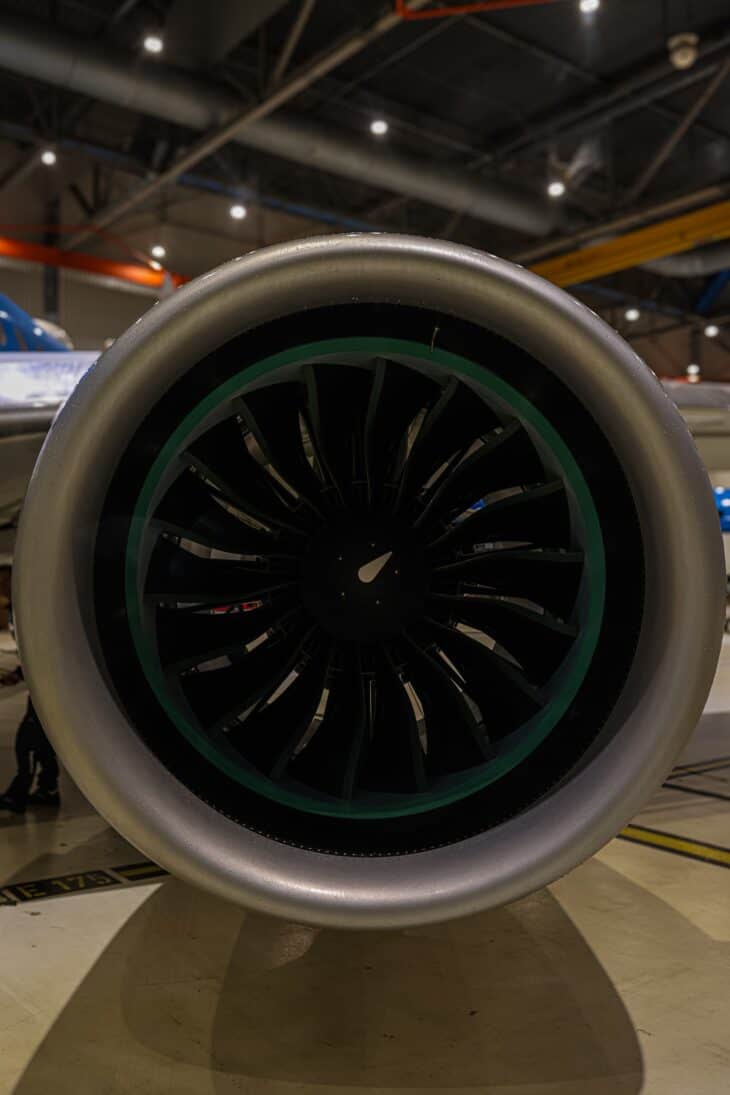
The permanent fix is a new bushing set, and it waits for a shop visit. The directive would require fitting one the next time the compressor’s front case is split open, which then ends the repeat borescope requirement for that engine.
Not every engine on the model list is caught. The proposal reaches only engines whose compressor module serial numbers appear in two Pratt & Whitney alert service bulletins dated July 13, 2026, and it exempts engines that already received either of two earlier service bulletins.
What it costs
The FAA puts a borescope inspection at 3 work hours, or $255 per engine, and $54,825 across US operators. Replacing the bushing set runs to $20,385 per engine, or $4,382,775 across US operators. If an inspection turns up a damaged rotor, replacing one costs between $258,950 and $316,050.
Why This Lands Almost Entirely on the A220
The two engine families sit under two very different airframes. The PW1500G powers the Airbus A220-300 and its shorter sibling, while the PW1900G powers the Embraer E190-E2 and the larger E195-E2.
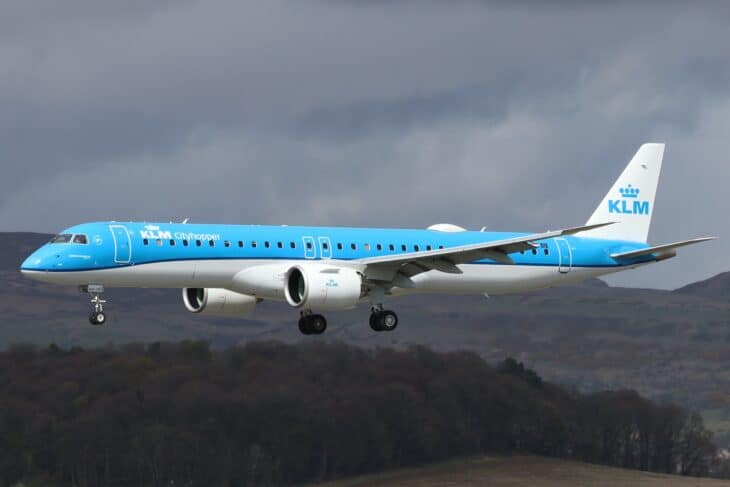
In the United States that split decides who reads this directive, because no US airline operates the E2. Scope clauses in mainline pilot contracts cap regional aircraft at 86,000 pounds (39,000 kg) of maximum takeoff weight, and the E2 family sits above that line.
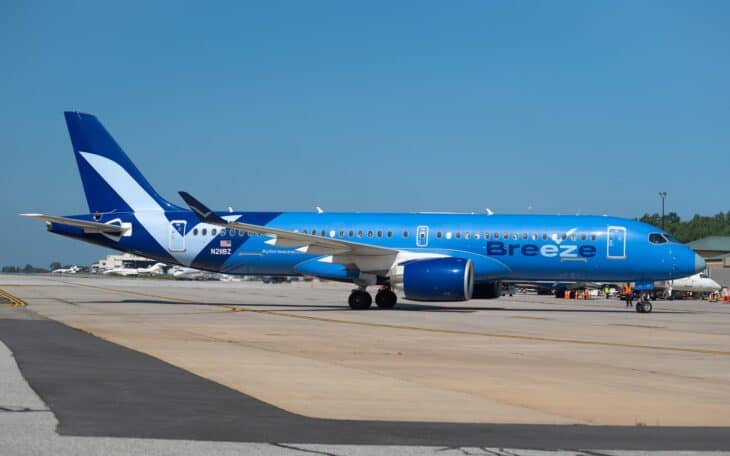
So the 215 engines the FAA counted are effectively A220 engines, flying for Delta Air Lines, JetBlue and Breeze Airways. The PW1900G half of the proposal is felt abroad instead, at operators such as Porter Airlines, Azul and KLM Cityhopper.

Spare geared turbofans are already scarce, which is what gives a routine-looking inspection its edge. Engine availability drove Air New Zealand’s grounded aircraft and its full-year loss, and any rotor this directive pulls off a wing competes for the same limited pool.
The borescope itself is the cheap half of the answer. It is a camera on a flexible probe, fed through an access port so the compressor can be examined with the engine still on the wing, the same approach the FAA proposed for CFM56 turbine seals three days earlier.
This is a proposal, not a rule
Nothing here is binding yet. The FAA issued this as a notice of proposed rulemaking under docket FAA-2026-8816, with comments due 30 days after publication. The agency also calls it an interim action and says Pratt & Whitney is developing further mitigations, so the final rule may not look like this one.
The proposal was first reported by FlightGlobal, which noted that the inspections it would mandate are ones Pratt & Whitney has already set out in its own service bulletins.
Sources and references used for research and fact-checking.
Get the Newsletter
The latest aviation news and stories sent to your inbox.
About the Author

Tim is the owner and lead editor of AeroCorner since 2019, overseeing aviation content covering aircraft, airlines, airports, and the broader aviation industry. Through years of researching, writing, editing, and publishing aviation-focused content, he has developed extensive practical knowledge of commercial aviation and air travel. Based in Asia and a frequent traveler himself, Tim also brings firsthand passenger experience to AeroCorner’s coverage. Outside of publishing, he has also explored aviation firsthand through hands-on flight training in New Zealand.