

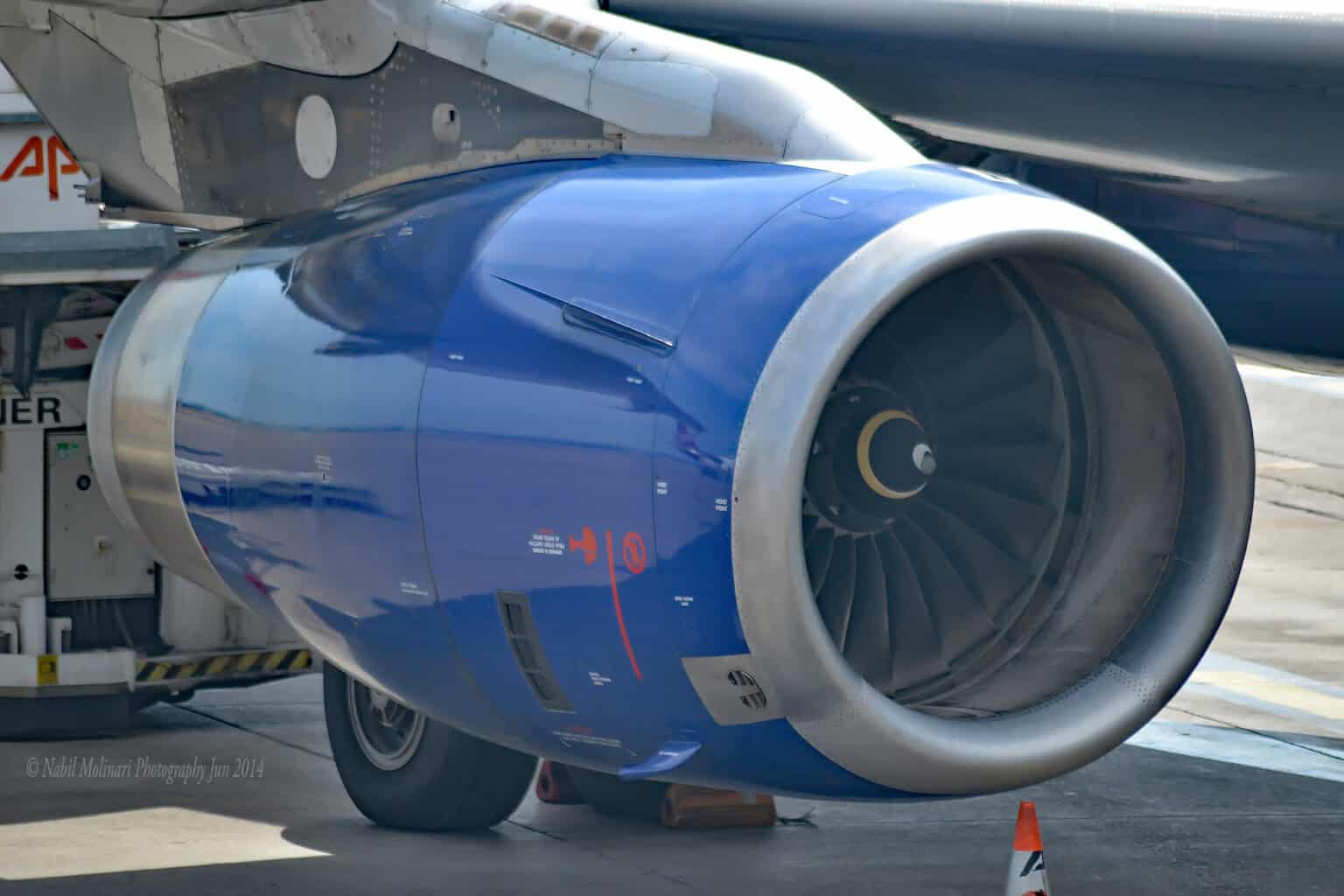
The Federal Aviation Administration published an airworthiness directive on August 20, 2026 requiring operators of International Aero Engines V2500 turbofans to replace a full set of third stage high pressure compressor rotor blades that the manufacturer found were wearing and then fracturing in service. The rule, AD 2026-17-03, takes effect on September 24 and reaches 1,462 engines installed on aircraft of US registry.
The V2500 is one of the two engine choices on the original Airbus A320 family and, in its D5 forms, the powerplant of the McDonnell Douglas MD-90. Aviation Week put the global civil V2500 fleet at roughly 5,340 engines, so the US figure is only a slice of what the fix will eventually touch.
What the Directive Actually Requires
The AD covers ten V2500 variants, from the V2522-A5 up to the V2533-A5, but only those carrying third stage blades with part number 6A8353 or 6A8688. Engines already running later hardware are outside it.
At the next engine shop visit after the effective date where the third stage rotor is exposed, operators must replace the entire blade set. Two paths qualify: fitting blades with part number 6C8368 or 6C8403, or installing existing blades modified to the -001 standard, which carries the improved coating.
The FAA priced the reworked route at $30,085 per engine, which is one work hour of labor plus $30,000 in parts, or roughly $44 million across US operators. A set of entirely new blades is estimated at $225,000.
What "next shop visit" means here
The AD sets no calendar deadline. A V2500 only exposes its third stage compressor when the engine is inducted into a shop and torn down, so compliance happens one engine at a time across years of ordinary overhauls. The FAA said explicitly that it expects no downtime or scheduling disruption, because the work fits inside maintenance that was already going to happen.
A Wear Problem the Earlier Fix Did Not Settle
The FAA describes the unsafe condition as blades susceptible to shroud wear and blade failure. The reports behind the rule, the agency said, included engine fires, unplanned engine removals, aborted takeoffs and in-flight shutdowns.
Aviation Week counted more than 50 third stage blade fracture events between 2014 and 2024, attributed to high cycle fatigue, and reported that Pratt & Whitney traced the answer to the coating process itself rather than to the blade shape.
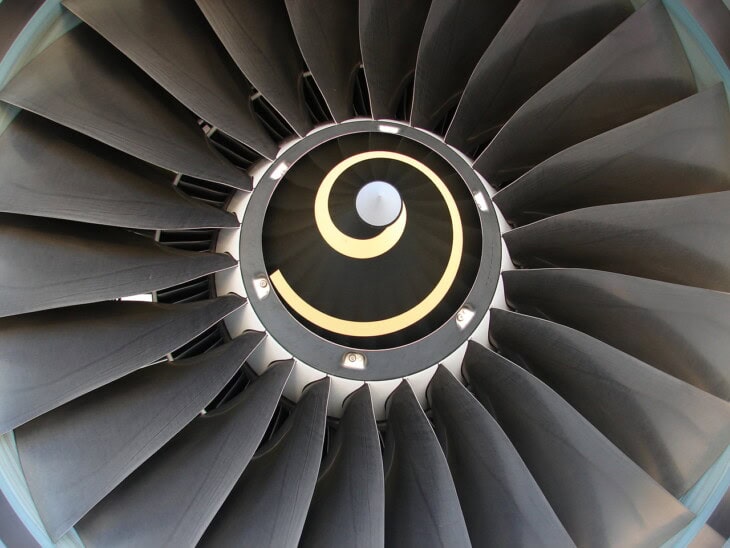
Here is why that matters. Deep inside a turbofan, the high pressure compressor squeezes air through a stack of bladed stages, and the third stage blades in this engine carry mid-span shrouds, the small clappers that touch a neighbouring blade partway up the aerofoil.
Those contact faces are what damp the blade’s vibration. When the coating on them wears away, the blades move more freely than the design intended, and high cycle fatigue does the rest.
The answer was a tougher coating, applied by a high velocity oxygen fuel process instead of the older detonation gun method, per Aviation Week’s account of Pratt & Whitney’s analysis. Similar durability lessons shaped the newer geared turbofan generation that replaced the V2500 on the A320neo.
2014 to 2024
The failures accumulate. Operators report more than 50 third stage blade fracture events tied to high cycle fatigue, per Aviation Week, including engine fires and in-flight shutdowns.
October 4, 2024
A service bulletin, not a mandate. IAE issues SB V2500-ENG-72-0716 introducing the replacement blades. Compliance is voluntary.
November 18, 2025
The FAA proposes a rule. The NPRM is published in the Federal Register with a 45 day comment period.
August 20, 2026
Final rule published. AD 2026-17-03 is adopted essentially as proposed, and EASA follows with its own directive.
September 24, 2026
Effective date. From this point, any qualifying shop visit that exposes the third stage rotor triggers a full blade set replacement.
Operators Pushed Back, and Mostly Lost
Seven parties filed comments on the proposal: the Air Line Pilots Association, American Airlines, United Airlines, IndiGo, Lufthansa Technik, SIA Engineering Company and the Citizens Rulemaking Alliance. ALPA backed the rule without changes.
Lufthansa Technik argued the directive was not needed at all, saying the current blade standard fails less dangerously than older hardware did, with the clapper breaking off or the fracture occurring above the platform rather than below it. The FAA disagreed and kept the rule, citing the risk of engine fire, reduced control of the airplane and in-flight shutdown.
The MRO also warned that a parts shortage was likely and asked for repetitive inspections as an alternative. The FAA rejected that too, saying the parts manufacturer had assured it that production was increased and no shortage was expected, and that no inspection currently exists that could catch the problem instead.
United Airlines won the one substantive change. It asked the FAA to tie the requirement to engines inducted for a shop visit after the effective date, rather than to a blade exposure date that is hard to track, and the agency rewrote the compliance paragraph accordingly.
For passengers, none of this is visible. It is the ordinary machinery of continued airworthiness: a wear mode shows up in service data, the manufacturer engineers a better part, and years later the regulator makes the better part compulsory.
Sources and references used for research and fact-checking.
Get the Newsletter
The latest aviation news and stories sent to your inbox.
About the Author

Tim is the owner and lead editor of AeroCorner since 2019, overseeing aviation content covering aircraft, airlines, airports, and the broader aviation industry. Through years of researching, writing, editing, and publishing aviation-focused content, he has developed extensive practical knowledge of commercial aviation and air travel. Based in Asia and a frequent traveler himself, Tim also brings firsthand passenger experience to AeroCorner’s coverage. Outside of publishing, he has also explored aviation firsthand through hands-on flight training in New Zealand.