

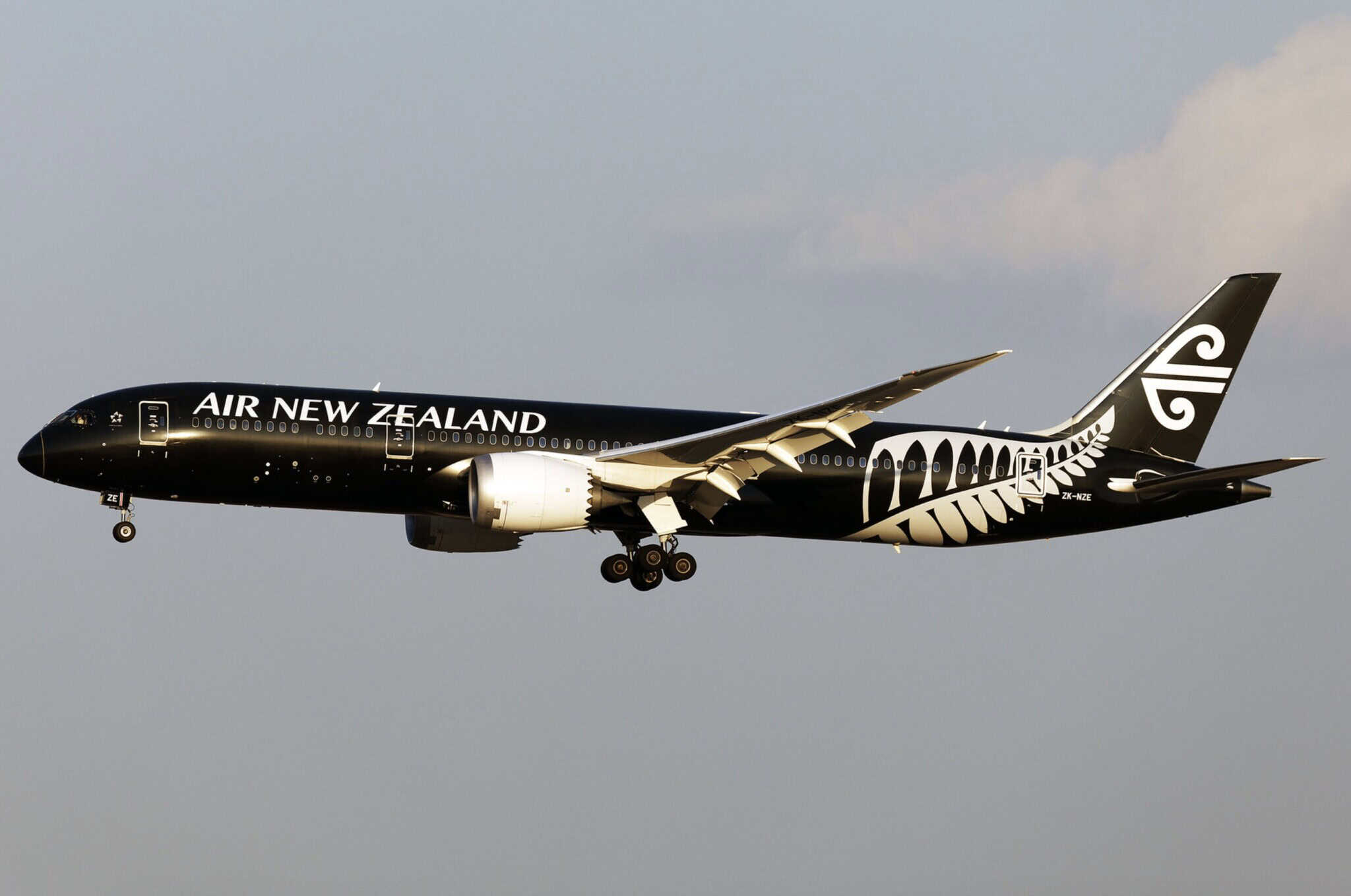
Air New Zealand reported a loss before tax of NZ$336 million for its 2026 financial year on August 28, 2026, its first full-year loss since 2022. The airline also booked a net loss after tax of NZ$242 million, a swing of roughly NZ$500 million from the NZ$164 million pre-tax profit it posted a year earlier. At recent exchange rates the pre-tax figure is about US$200 million.
Revenue rose, but costs rose faster
Operating revenue increased 3.9 percent to NZ$7 billion, with passenger revenue up 4.8 percent to NZ$6.1 billion. Demand was not the problem. Operating costs climbed 11.8 percent over the same period, and that gap is the story of the result.
Air New Zealand attributed the loss to four main pressures. Higher jet fuel prices cost about NZ$135 million before tax, after the airline said fuel ran roughly NZ$328 million above plan on the back of Middle East instability. Engine availability problems cost about NZ$190 million. Aviation system charges rose NZ$83 million to NZ$720 million, and maintenance costs rose NZ$139 million in what the airline called a peak maintenance year.
The board declared no final dividend, in line with its capital management framework. Chief executive Nikhil Ravishankar said it had been “a very challenging year for aviation,” and that the result reflected those pressures.
The engine groundings behind the number
The NZ$190 million engine line has the longest tail. Air New Zealand’s Boeing 787s are powered by Rolls-Royce Trent 1000 engines, and its Airbus A320neo and A321neo narrowbodies use the Pratt & Whitney PW1100G geared turbofan. Both engine families have known durability problems that force parts off the wing earlier than planned.
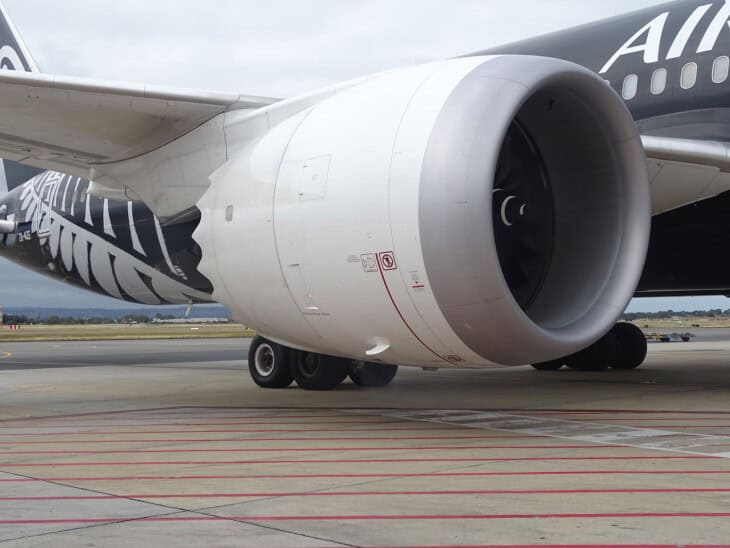
When an engine comes off early, it joins a global queue at an overhaul shop, and the wait can run to many months. The airline then has a choice: park the aircraft, or lease a replacement engine or jet at a premium. Air New Zealand did both.
The airline said up to eight aircraft were grounded at any one time during the year, with as many as five narrowbodies parked, and international long-haul capacity down 3.6 percent. A grounded aircraft still carries its ownership cost while earning nothing, and the airline keeps paying crews, leases and airport fees on a smaller flying schedule. That is how a maintenance problem becomes a financial one.
Ravishankar said the engine challenges are now “substantially behind us,” according to reporting by FlightGlobal. Two A320neos remain grounded on Pratt & Whitney issues, down from six at the peak, and the last 787 in long-term storage returned to service in late June 2026.
Same week, different result
Qantas reported its own full-year result days earlier, with a profit that fell but stayed firmly positive. The two carriers face the same fuel market, but Qantas has far less exposure to the Trent 1000 and geared turbofan groundings that pulled Air New Zealand’s capacity down.
Air New Zealand did not give an earnings forecast for its 2027 financial year, citing fuel price volatility and continued Middle East uncertainty, with jet fuel trading near US$150 a barrel. It expects about NZ$135 million in annualised savings from 2027 as a cost programme takes effect, and said on-time performance improved to 84 percent in the second half of the year.
Provisional outlook
The 2027 savings and recovery figures are the airline’s own projections, made without formal earnings guidance. Fuel prices and Middle East airspace conditions could move them in either direction.
Sources and references used for research and fact-checking.
Get the Newsletter
The latest aviation news and stories sent to your inbox.
About the Author

Tim is the owner and lead editor of AeroCorner since 2019, overseeing aviation content covering aircraft, airlines, airports, and the broader aviation industry. Through years of researching, writing, editing, and publishing aviation-focused content, he has developed extensive practical knowledge of commercial aviation and air travel. Based in Asia and a frequent traveler himself, Tim also brings firsthand passenger experience to AeroCorner’s coverage. Outside of publishing, he has also explored aviation firsthand through hands-on flight training in New Zealand.