

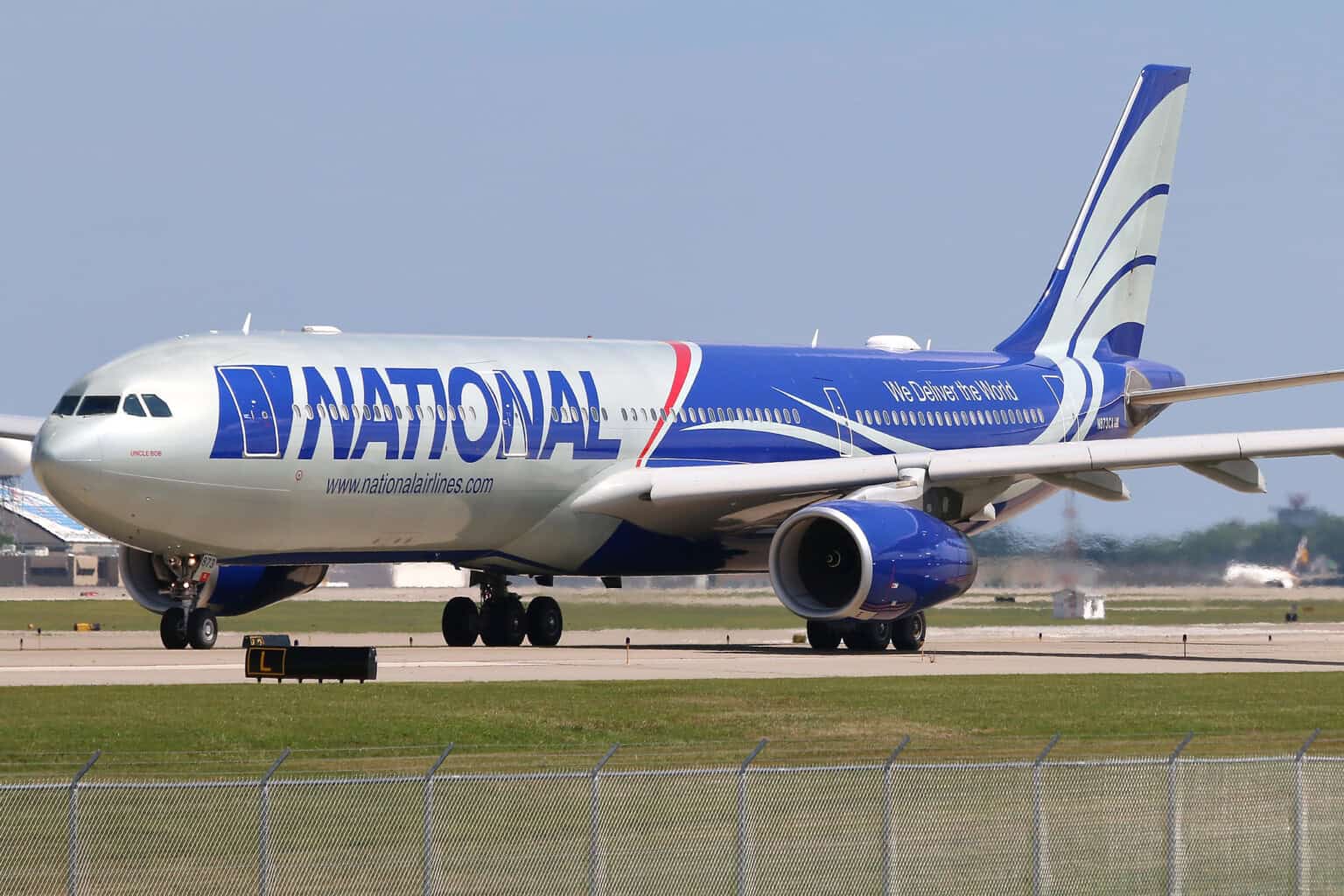
The FAA published a new airworthiness directive for the Airbus A330 on September 17, 2026, after cracked and broken restraint brackets for the anti-ice piccolo tube turned up during maintenance on certain nacelle inlet cowls. AD 2026-18-09 takes effect on October 22, 2026.
It applies to all A330-243, A330-243F, A330-341, A330-342 and A330-343 airplanes. The FAA estimates 70 aircraft on the US registry are affected.
What a piccolo tube actually does
The leading edge of an engine inlet has to stay clear of ice. The usual way to manage that is to bleed hot air off the engine compressor and pipe it into the lip.
A piccolo tube is the perforated distribution pipe that sprays that hot air along the inside of the lip skin. It gets the name because it is drilled like the instrument.
On the A330, a feed pipe carries the hot air to a spray ring inside the inlet. The restraint brackets in question are a precautionary fitting whose only job is to stop that feed pipe disengaging from the spray ring under certain conditions.
That is why a cracked bracket matters out of proportion to its size. It is a backstop, and a backstop that has already failed gives no warning when the thing it was guarding lets go.
The failure chain the FAA describes
A cracked or missing restraint bracket allows the thermal anti-ice feed pipe to disengage from the spray ring. That reduces the effectiveness of the thermal anti-ice system, which allows ice to build up on the inlet lip skin, which the FAA says could result in damage to the engine and reduced control of the airplane.
Ice shed from an inlet lip does not simply melt away. It goes straight down the intake, which is the same reason every category of airframe icing is treated as a dispatch-limiting condition rather than a nuisance.
What operators have to do
The AD splits the fleet by part. Some affected parts have to be modified outright. Others get repetitive special detailed inspections, which in this case means borescope inspections of the nacelle inlet cowl, with modification required depending on what the inspection finds.
Modifying the part terminates the repeat inspections. Replacing the affected part with a serviceable one counts as compliance with the modification.
Inspectors are looking for two things: a feed pipe fully or partially disengaged from the spray ring, or a feed pipe correctly engaged but with one or both restraint brackets cracked, severed or missing. The AD also bans one specific repair, FRSZ026, on any affected part, and limits when affected parts may be installed.
The FAA puts the required work at up to five work hours per aircraft, with parts costing up to 11,673 dollars. That is up to 12,098 dollars per airplane and up to 846,860 dollars across US operators.
Why only some A330s
The five listed variants are the Rolls-Royce Trent 700 members of the family. In Airbus model numbering, the middle digit identifies the engine, and a 4 means the Trent, so the A330-341, -342 and -343 are the Trent-powered A330-300s and the -243 and -243F are their A330-200 and freighter equivalents.

Nacelle inlet hardware is built around a specific engine installation, so a defect in one manufacturer’s inlet does not travel to the General Electric or Pratt and Whitney versions of the same airframe. That is a familiar pattern: the FAA proposed 787 fan cowl inspections on the same engine-specific basis in August.
The directive follows EASA AD 2025-0164, issued on July 29, 2025, which the FAA adopted through its bilateral agreement with the European agency. The FAA proposed the US version on June 29, 2026 and adopted it with only minor editorial changes.
One comment arrived during the rulemaking, from the Air Line Pilots Association, which supported the proposal without change.
Sources and references used for research and fact-checking.
Get the Newsletter
The latest aviation news and stories sent to your inbox.
About the Author

Tim is the owner and lead editor of AeroCorner since 2019, overseeing aviation content covering aircraft, airlines, airports, and the broader aviation industry. Through years of researching, writing, editing, and publishing aviation-focused content, he has developed extensive practical knowledge of commercial aviation and air travel. Based in Asia and a frequent traveler himself, Tim also brings firsthand passenger experience to AeroCorner’s coverage. Outside of publishing, he has also explored aviation firsthand through hands-on flight training in New Zealand.