

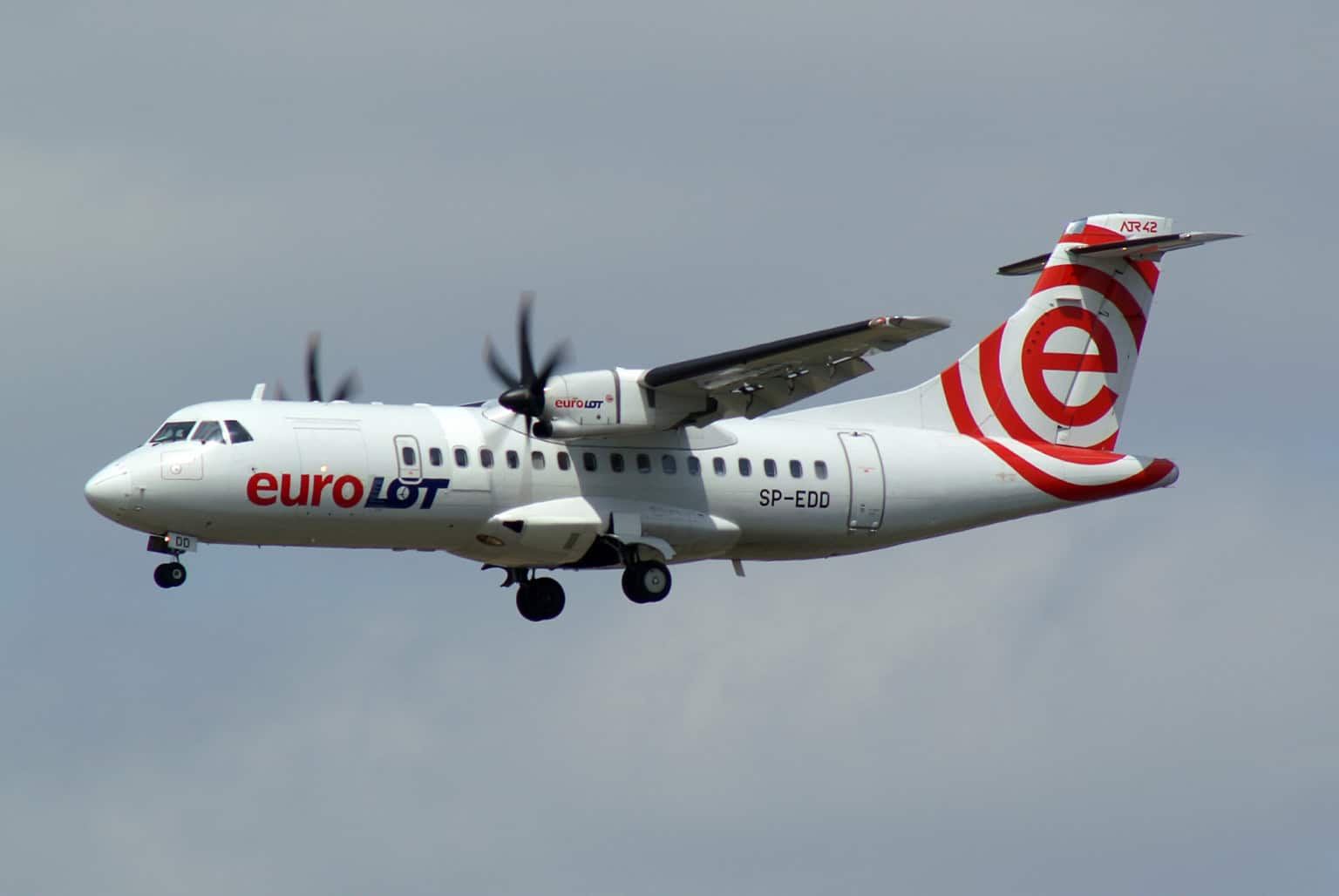
The FAA has proposed an airworthiness directive for every ATR 42 and ATR 72 after reports of the nose landing gear retracting without a command. The proposal, published in the Federal Register on September 17, 2026, would require a one-time leakage test of certain landing gear selector valves and replacement of any that fail.
The rule copies a European directive that has been in force since March. The FAA estimates it would affect 32 airplanes on the US register.
What the FAA says went wrong
According to the FAA’s proposal, uncommanded nose gear retractions were reported in service. A preliminary investigation found that too much internal leakage inside the landing gear selector valve can retract the gear “under specific configurations.”
The FAA warns that, left unaddressed, the fault could cause loss of the landing gear and loss of control on the ground or right after touchdown. That could damage the airplane and injure the people on board.
Neither the FAA nor EASA has said how many events were reported, where they happened, or which airlines were involved. Both agencies say the root cause is still under investigation.
Proposed, and interim
This is a proposed rule, not a final one. The FAA calls it an interim action: the test results airlines report are meant to help find the root cause, and more rulemaking may follow.
Which valves and which airplanes
The directive covers the ATR 42-200, -300, -320 and -500, and the ATR 72-101, -102, -201, -202, -211, -212 and -212A. That list reaches the current production aircraft too, because the ATR 72-600 is technically an ATR 72-212A and the ATR 42-600 is an ATR 42-500 in its 600 version.

The ATR 42-400 is in the European directive but not the US one, because the FAA never certified that model.
The test only applies to airplanes carrying an affected valve. EASA AD 2026-0046 defines that as part number 100-5383Y-00 (or 100-5383Y00) with serial number 1929 or lower, or serial numbers 1934 to 1937.
Valves that already passed an inspection, or were re-identified under Safran Service Bulletin 32-0001, are excluded. The test itself follows ATR Airworthiness Operator Message 2025/11.
When the test is due
The deadline is tied to how many flights the valve has made. An affected valve must be tested before it passes 5,500 flight cycles since new, or within six months of the directive taking effect, whichever is later, but not before it reaches 5,000 cycles.
If an operator does not know a valve’s cycle count, the test is due within six months. A valve that leaks beyond the limits must be replaced before the next flight, and every result, including a pass, has to be reported to ATR within 30 days.
The FAA puts the test at two work-hours, or $170 per airplane. A replacement adds an estimated $12,155, almost all of it the $11,900 part, and the FAA notes that ATR says some costs may be covered under warranty.
Why a leaking valve can move the gear
On a hydraulic landing gear, the selector valve is the switch between the cockpit gear lever and the actuators. It sends hydraulic pressure to the “down” side or the “up” side of each actuator.
Internal leakage means fluid gets past seals inside the valve instead of staying on the side it was sent to. The regulators have not explained the exact sequence. Their concern is that the leak lets the nose gear retract when it should stay down.
Because the test window is set in flight cycles, a regional operator can reach it quickly. One cycle is one takeoff and landing, and a turboprop flying several short sectors a day adds them far faster than a long-haul jet.
The type is still selling: India’s FLY91 ordered 40 ATR 72-600s this month. In the US, FedEx Express flies ATR 72 freighters. Comments on the proposal are due by November 2, 2026, under docket FAA-2026-8813.
Sources and references used for research and fact-checking.
Get the Newsletter
The latest aviation news and stories sent to your inbox.
About the Author

Tim is the owner and lead editor of AeroCorner since 2019, overseeing aviation content covering aircraft, airlines, airports, and the broader aviation industry. Through years of researching, writing, editing, and publishing aviation-focused content, he has developed extensive practical knowledge of commercial aviation and air travel. Based in Asia and a frequent traveler himself, Tim also brings firsthand passenger experience to AeroCorner’s coverage. Outside of publishing, he has also explored aviation firsthand through hands-on flight training in New Zealand.