

Table of Contents
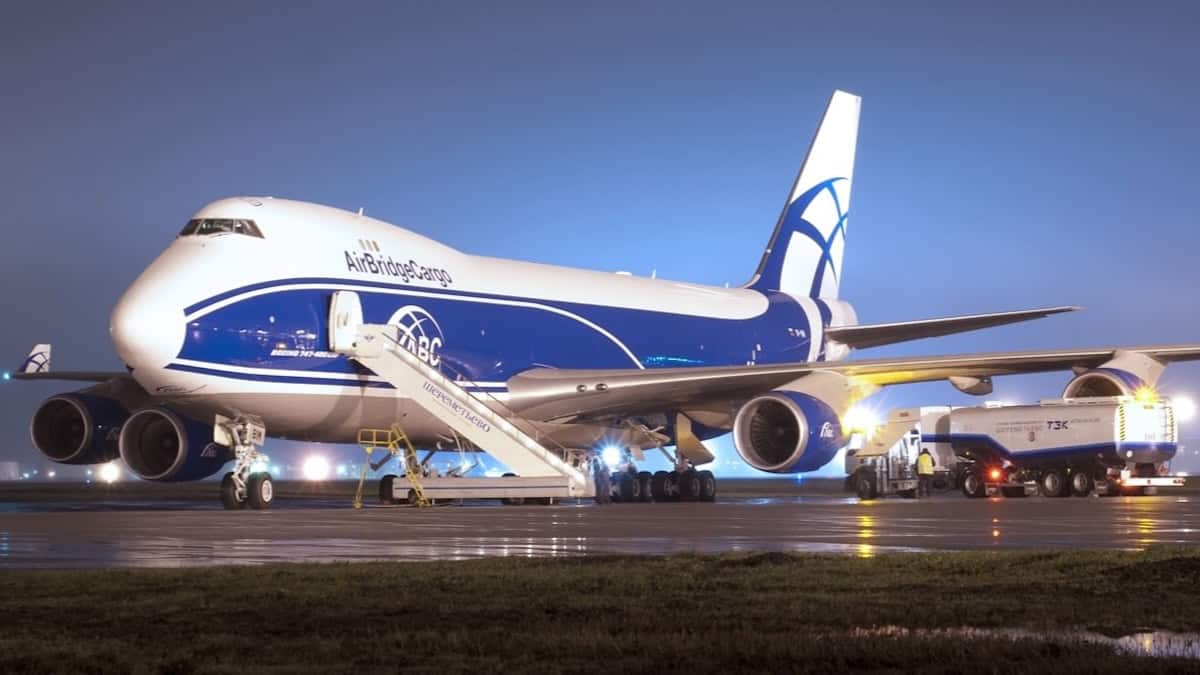
Watch a Boeing 747 being refueled before a long-haul departure and the scene looks almost casual. A truck pulls up under the wing, a technician connects a hose, and the jet drinks quietly while the cabin is cleaned and catered.
What goes into those wings is staggering. A fully fueled 747 carries enough fuel to fill thousands of car tanks, and that fuel weighs nearly as much as the airplane itself.
Here is how much fuel each version of the 747 holds, where it all goes, and why a jet that can carry this much almost never leaves with its tanks full.
How Much Fuel Does a 747 Hold?
A Boeing 747-400 holds 57,285 US gallons (216,847 liters) of usable fuel when it has the optional tail tank, according to Boeing’s own airport planning documents. Without the tail tank it holds 53,985 gallons (204,355 liters).
The largest capacities belong to the long-range 747-400ER at 63,460 gallons (240,222 liters) and the newer 747-8 at 63,034 gallons (238,609 liters). At the roughly 6.7 pounds per gallon Boeing’s figures work out to, a full 747-400 is carrying about 384,000 pounds (174,000 kg) of fuel.
| 747 version | Usable fuel (US gal) | Liters | Fuel weight |
|---|---|---|---|
| 747-400, standard | 53,985 | 204,355 | 361,699 lb (164,097 kg) |
| 747-400, with tail tank | 57,285 | 216,847 | 383,809 lb (174,128 kg) |
| 747-400ER | 63,460 | 240,222 | 425,182 lb (192,898 kg) |
| 747-8 (passenger) | 63,034 | 238,609 | 422,327 lb (191,603 kg) |
| 747-8F (freighter) | 59,734 | 226,117 | 400,217 lb (181,572 kg) |
The answer at a glance
A 747 holds between about 54,000 and 63,500 US gallons of usable fuel, depending on the version. The 747-400ER and 747-8 hold the most. A full load weighs 360,000 to 425,000 pounds, close to the weight of the empty airplane.
To put the volume in everyday terms, 57,285 gallons would fill more than 3,800 cars with 15-gallon tanks. The 747 needs every drop of it to cross oceans: our Boeing 747-400 page lists a range of 7,285 nautical miles.
Where a 747 Keeps All That Fuel
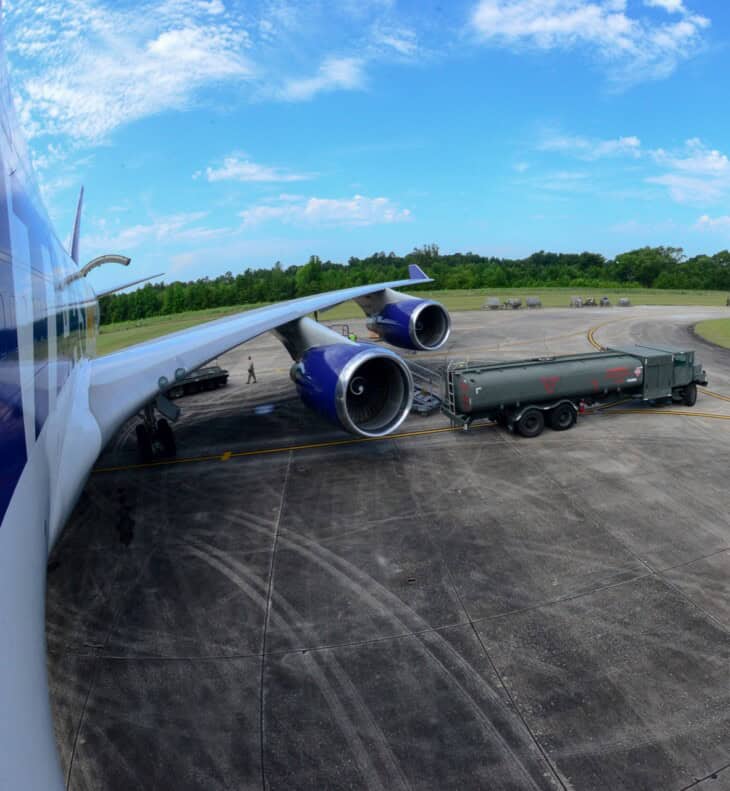
Almost all of it sits in the wings. The 747’s wing structure is itself the fuel tank, a design known as a wet wing, with sealed compartments rather than separate bladders.
On the 747-400, each wing carries two main tanks, numbered 1 to 4 from left to right, and each normally feeds the engine with the same number. Reserve tanks sit farther out toward the tips, and a large center wing tank fills the wing box where it passes through the fuselage.
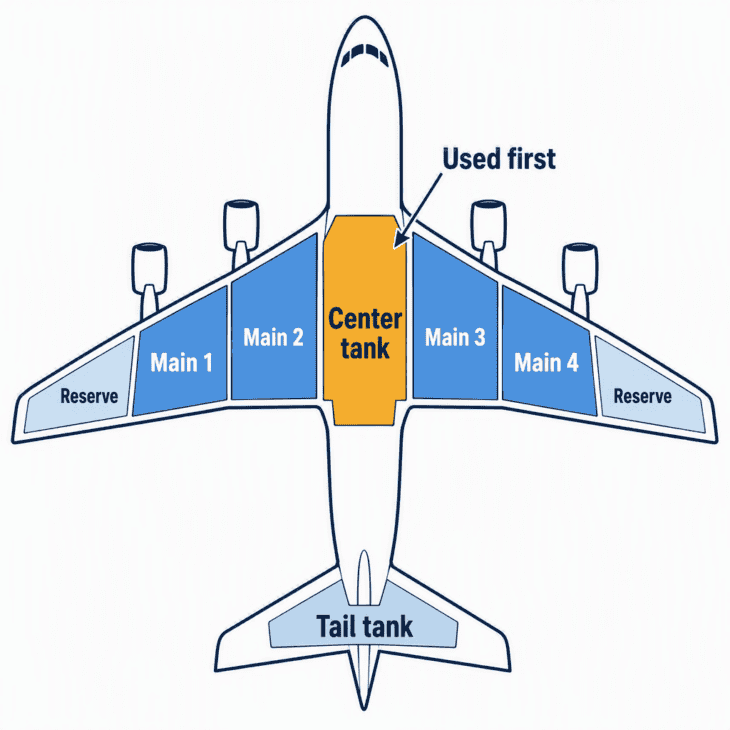
On long flights, the center tank is typically emptied first. Keeping fuel out in the wings for longer helps the structure, because that weight pushes down on the same wing that lift is bending upward.
Why the number changes between versions
The 747-400 added an optional tank inside the horizontal stabilizer that holds 3,300 gallons (12,490 liters). Boeing said that tail fuel alone buys about 350 extra nautical miles of range.
The 747-400ER went further and gave up cargo space for fuel. Its 63,460-gallon figure includes two body tanks of 3,060 gallons each, installed in the forward cargo hold.
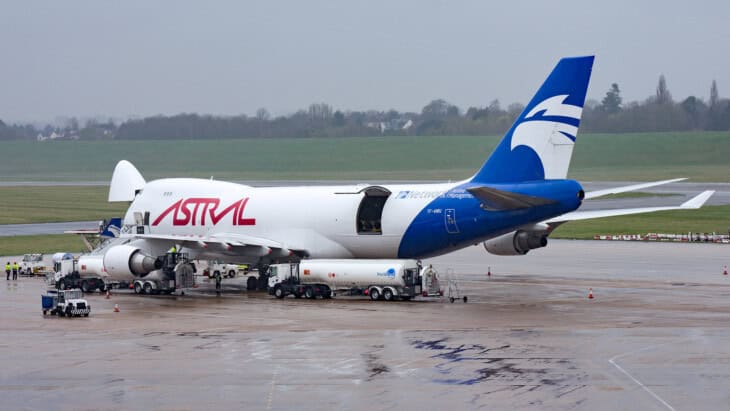
The 747-8 passenger jet reaches a similar total, and Boeing’s figure for it includes a tail tank. The 747-8 Freighter holds less, at 59,734 gallons, because Boeing did not design it with tail tanks at all.
The Fuel Weighs Almost as Much as the Airplane
Gallons hide the real story, which is weight. Boeing lists the operating empty weight of a three-class, 400-seat 747-400 at 394,660 pounds (179,014 kg), and a full load of fuel with the tail tank weighs 383,809 pounds (174,128 kg).
That puts the fuel within about 11,000 pounds of the empty airplane. Fuel alone would make up about 44% of the jet’s 875,000-pound (396,893 kg) maximum takeoff weight.
Full tanks mean less room for passengers and cargo
Add a full fuel load to an empty 747-400 and only about 96,500 pounds (43,800 kg) remain before the jet hits its maximum takeoff weight. Boeing rates the same aircraft to carry up to 147,840 pounds of payload, so filling the tanks means leaving about a third of that capacity behind.
The same squeeze applies to the rest of the family. A full 747-8 leaves about 79,400 pounds (36,000 kg) for payload, against a structural limit of 167,700 pounds (76,067 kg).
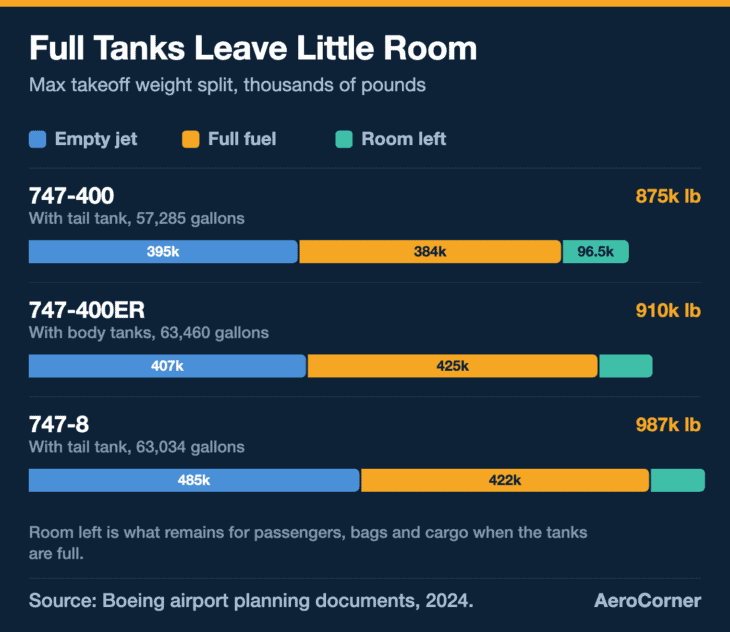
This is why a full fuel load is the exception, not the rule. Most flights carry only the fuel the trip needs plus legally required reserves, a figure worked out for every departure in the airline’s fuel decision.
Does a 747 Really Burn a Gallon of Fuel Every Second?
Roughly, yes, on a heavy long-haul flight. The pilot site Flight Deck Friend puts 747 cruise burn at 10 to 11 tonnes an hour, and at Boeing’s fuel weight that works out to about 3,300 to 3,600 gallons an hour.
Divide by 3,600 seconds and you get between 0.9 and 1 gallon (3.5 to 3.8 liters) every second. Takeoff and climb burn fuel faster than that, and the descent burns much less.
The catch in the famous figure
A gallon a second describes a heavy 747 at cruise. The burn rate depends on how much the airplane weighs, so the same jet on a shorter trip, carrying a fraction of its fuel, burns noticeably less.
Boeing’s own example shows the lighter case. A 747-400 flying 3,500 statute miles (5,630 km) with 126,000 pounds (56,700 kg) of fuel aboard, about a third of its capacity, averages around five gallons per mile.
Five gallons a mile sounds wasteful until you share it out across several hundred seats. Our guide to how much fuel aircraft use compares that per-seat figure with cars, business jets and fighters.
Why Carrying Fuel Costs Fuel
Here is the part most people never consider: every pound of fuel on board has to be lifted and carried by burning other fuel. The heavier the airplane, the more lift it needs, and the more drag and fuel burn that lift creates.
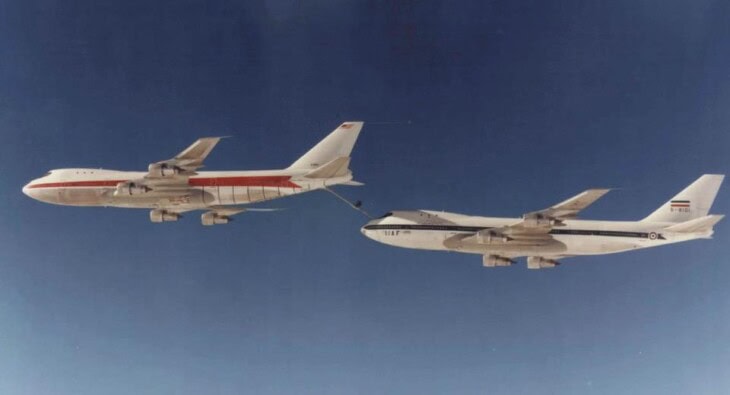
Airbus puts a number on it in its fuel economy guide for pilots. Across its fleet, adding weight equal to 1% of maximum takeoff weight cuts the distance flown per unit of fuel by about 1%.
Over a long sector the effect adds up quickly. On a 6,000-nautical-mile flight in a four-engine A340-500 or -600, Airbus calculates that trimming 1% of maximum takeoff weight saves 1,920 kg (about 4,200 pounds) of fuel.
The same physics governs the 747. Fuel loaded for the final hours of a flight is carried through every hour before it, and it raises the burn rate the whole way.
That cost is why airlines weigh up “tankering,” carrying extra fuel to avoid buying it at an expensive destination. Airbus’s formula says it only pays when the price saving beats the cost of the extra fuel burned and any added flight time.
What happens when a full 747 has to land early
Weight matters on the way down too. A 747-400 can take off at up to 875,000 pounds but is rated to land at no more than 630,000 pounds (285,763 kg).
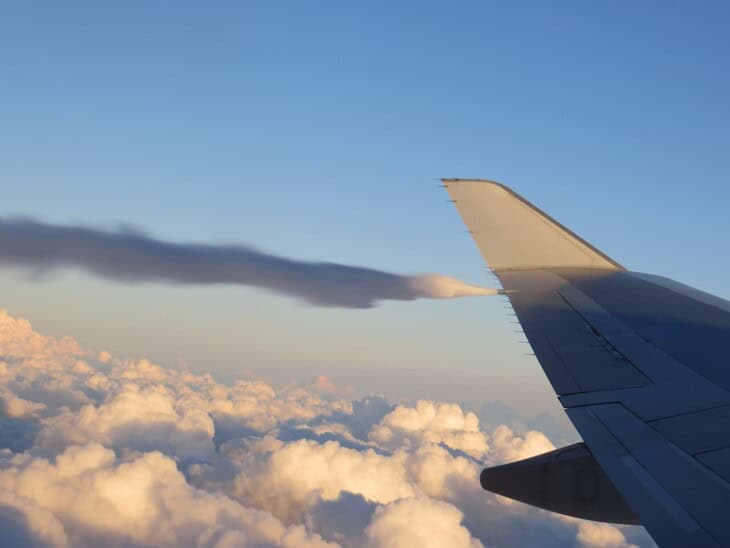
That 245,000-pound gap is why the 747, like most four-engine jets, is built with a fuel jettison system. If a heavy 747 has to return soon after takeoff, the crew can dump fuel through outlets near the wingtips until the jet is below its maximum landing weight.
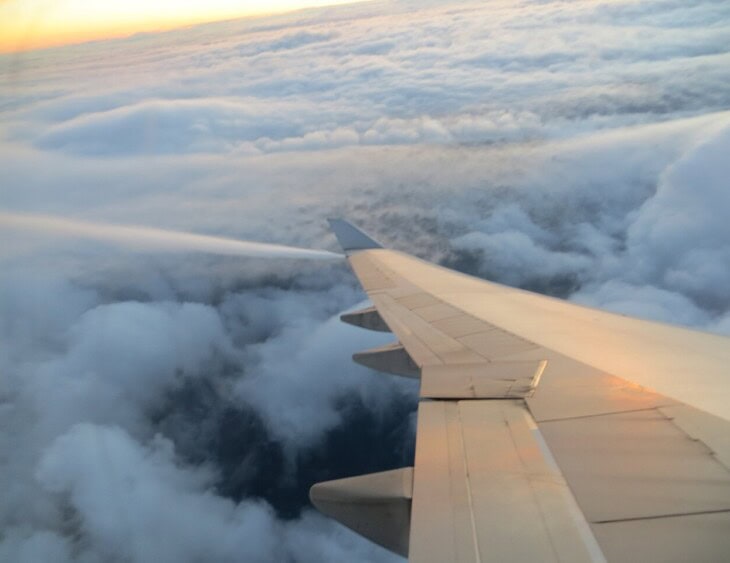
Pilots quote 747 dump rates of roughly one to two tons a minute. At that pace, dumping 100 tons takes somewhere between about 50 minutes and well over an hour.
So the next time you watch a fuel truck parked under a jumbo jet’s wing, remember the numbers. The tanks can hold more than 60,000 gallons on the biggest versions, but on most flights they are only partly filled.
Every gallon an airline leaves out is one it does not have to burn just to carry the rest.
Sources and references used for research and fact-checking.
- Boeing, 747-400 Airplane Characteristics for Airport Planning (D6-58326-1, Rev F)
- Boeing, 747-8 Airplane Characteristics for Airport Planning (D6-58326-3, Rev D)
- Boeing, 747 Fun Facts (archived)
- Flight Deck Friend, How Much Fuel Does a Jumbo Jet (Boeing 747-400) Burn?
- Airbus, Getting to Grips with Fuel Economy, Issue 4
- Boeing-747.com, Boeing 747-400 Fuel System
- Fly Away Simulation, Why Is Aircraft Fuel Stored in the Wings?
- Wikipedia, Fuel dumping
Get the Newsletter
The latest aviation news and stories sent to your inbox.
About the Author

Tim is the owner and lead editor of AeroCorner since 2019, overseeing aviation content covering aircraft, airlines, airports, and the broader aviation industry. Through years of researching, writing, editing, and publishing aviation-focused content, he has developed extensive practical knowledge of commercial aviation and air travel. Based in Asia and a frequent traveler himself, Tim also brings firsthand passenger experience to AeroCorner’s coverage. Outside of publishing, he has also explored aviation firsthand through hands-on flight training in New Zealand.